














Dad's Day Out: How to Choose a Safe, Comfortable Baby Carrier
How dads can pick a safe, comfortable and stylish baby carrier. Learn about fit, healthy hips, the TICKS rule, age stages and official safety rules.

On this page
- Key points
- Why a baby carrier is great for dads
- Types of baby carriers compared
- How to choose a comfortable carrier for a dad's body
- Keeping your baby's airway open: the TICKS rule
- Healthy hips and spine: the M-position
- Carrying positions by age and stage
- Official safety advice in Australia, the UK, the US and Canada
- Common mistakes dads make (and how to fix them)
- Pre-outing safety checklist for dads
- Frequently asked questions
- Sources
Short answer: A good baby carrier for dads spreads weight evenly across the shoulders and hips. It has wide padded straps, a supportive waistband and easy-to-adjust buckles. Most importantly, it keeps your baby upright, close enough to kiss, with a clear airway and legs in an "M" shape.
A carrier lets you head out with both hands free. You can walk the dog, catch a train, or grab lunch without wrestling a bulky pram. Many dads also love the simple, rugged look of modern buckle carriers in plain colours like charcoal, olive or navy.
Key points
- Comfort: Look for padded shoulder straps and a wide waistband that sits on your hips, not your waist.
- Fit: Choose adjustable straps so the carrier fits broad shoulders and can be shared with your partner.
- Airway safety: Follow the TICKS rule. Your baby's face must always be visible and their chin off their chest.
- Hip health: Support your baby's thighs from knee to knee. Their knees should sit higher than their bottom.
- Age stages: Newborns face inward only. Wait for strong head control before facing out or carrying on your back.
- Heat check: A carrier acts like an extra layer of clothes. Dress your baby lightly on warm days.
Why a baby carrier is great for dads
Heading out with a baby can feel like packing for a weekend trip. A pram is handy for long walks on flat paths. Yet a pram can be a pain on crowded footpaths, stairs, buses or bush trails. A baby carrier solves that problem fast.
Carrying your baby also helps you bond. Babies calm down when they hear your heartbeat and feel your warmth. For dads who do not breastfeed, babywearing offers a special way to settle a fussy baby. You can rock, walk and soothe your child while keeping your hands free for a snack or a coffee cup (just be careful with hot drinks).
Many dads worry that baby carriers look fussy or hard to put on. Old-style wraps with metres of fabric can feel daunting at first. Today, plenty of carriers use simple clips, clean lines and neutral colours. You can find styles that look more like quality hiking gear than nursery kit.
Baby Carriers & Wraps worth a look
Real products from our catalogue. We don't show star ratings or review counts; check the current price, stock and reviews on Amazon before you buy.
 Reviewed
4baby 3 Way Baby Carrier
A very low-cost carrier with 3 positions, for babies 3.6 to 9 kg.
Read our full review →
BabyBjörn Baby Carrier Mini 3D Jersey
Newborn baby carrier
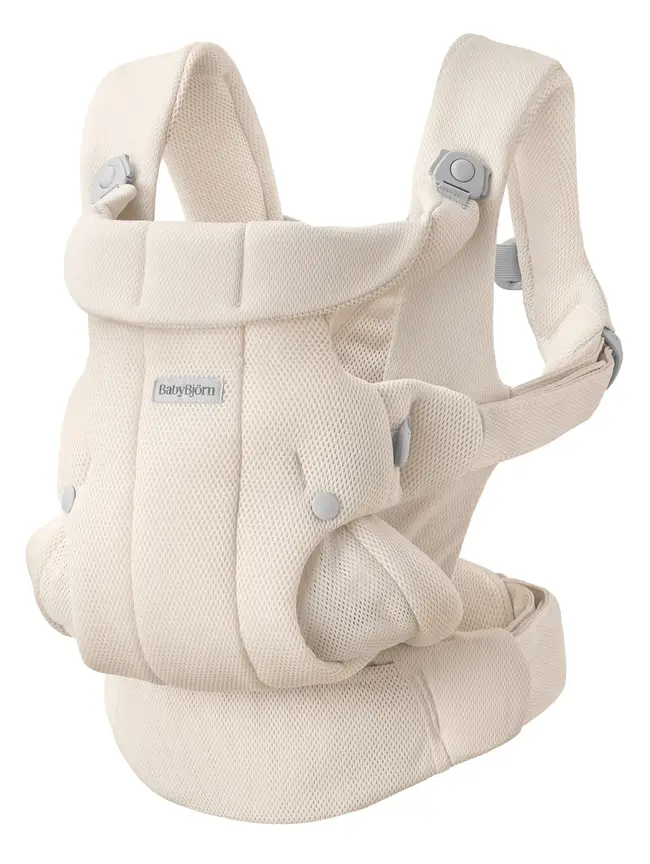
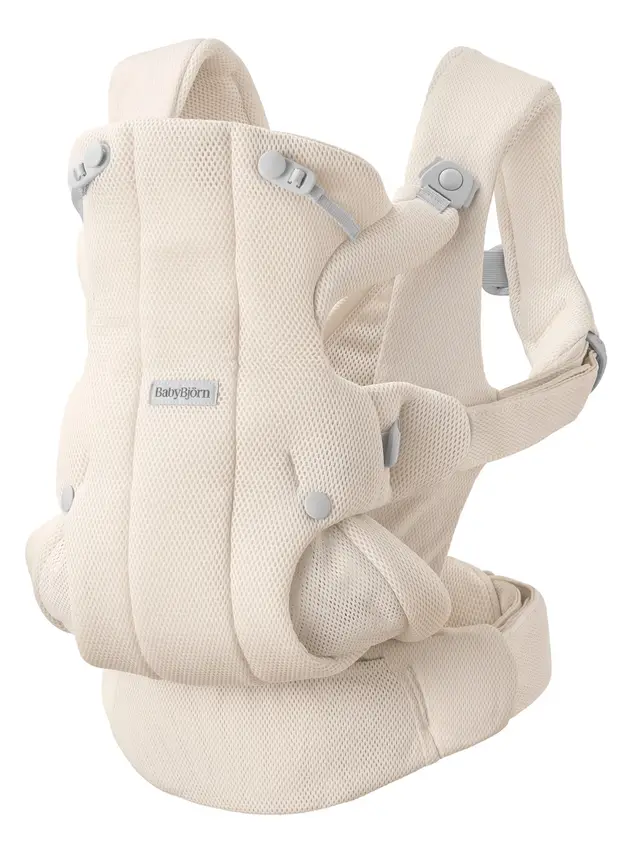
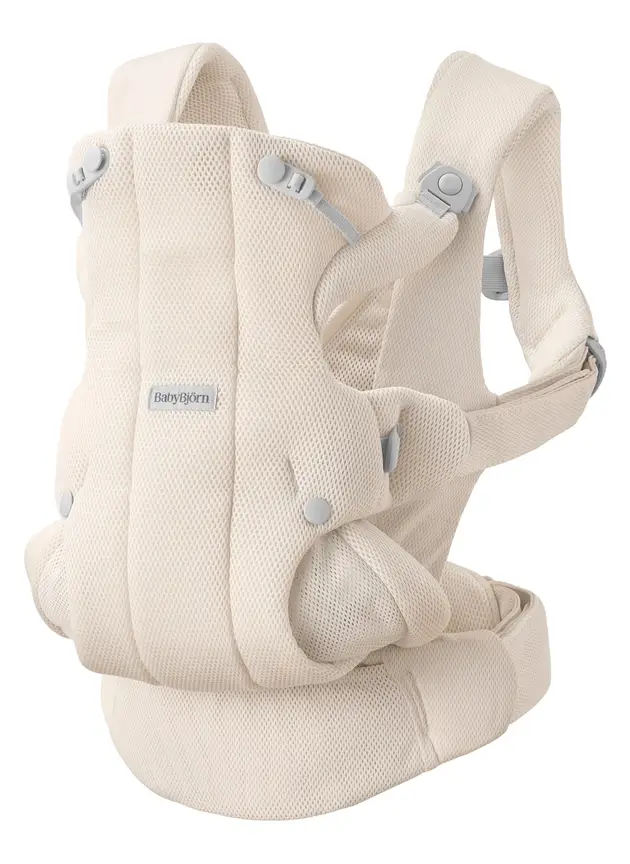
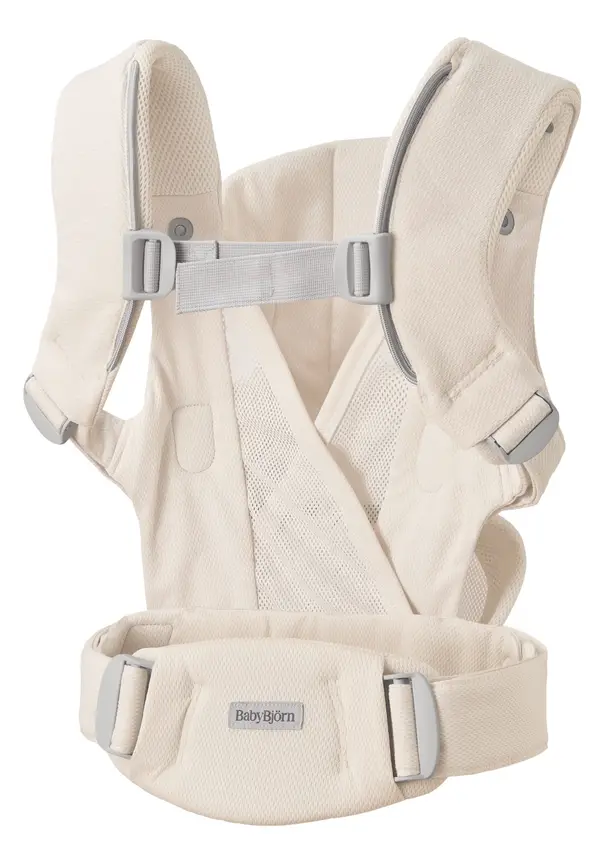
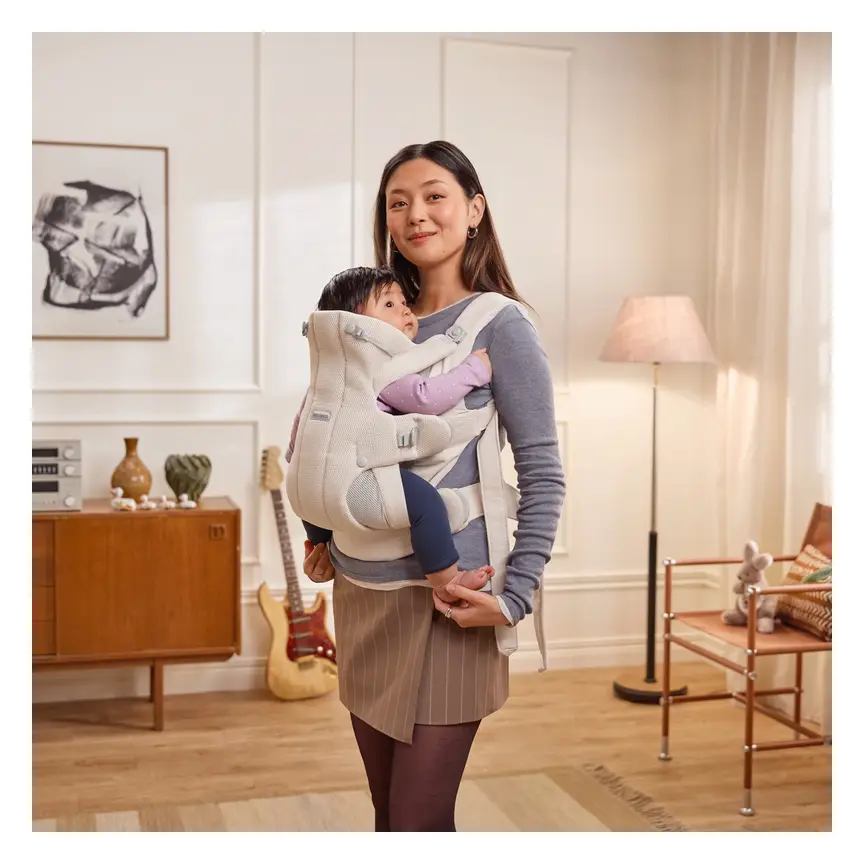
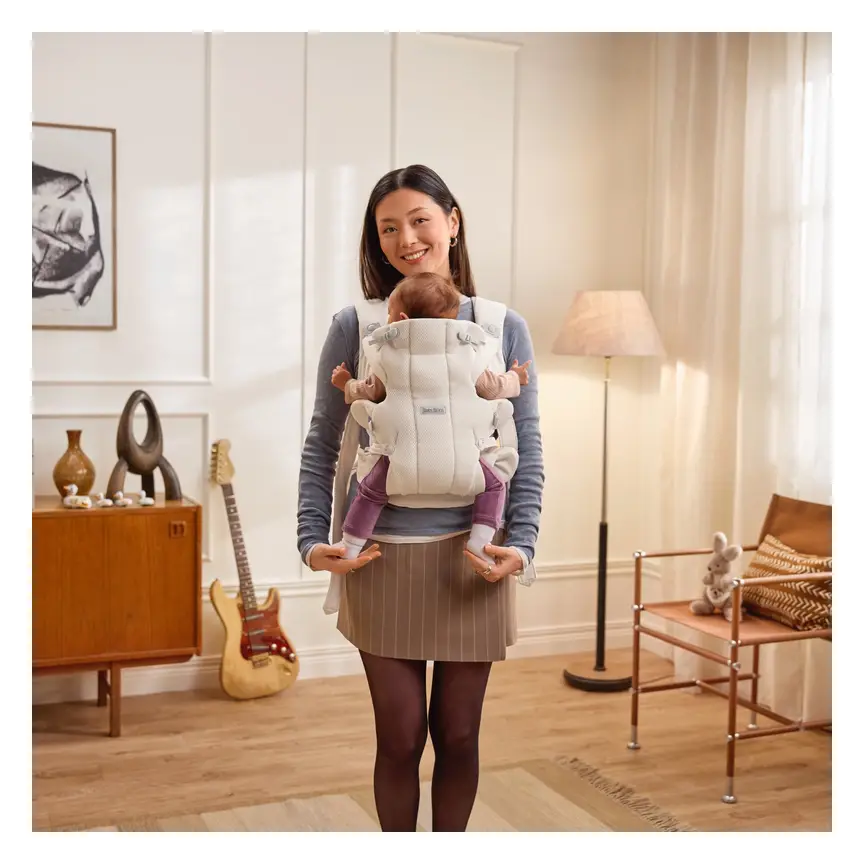

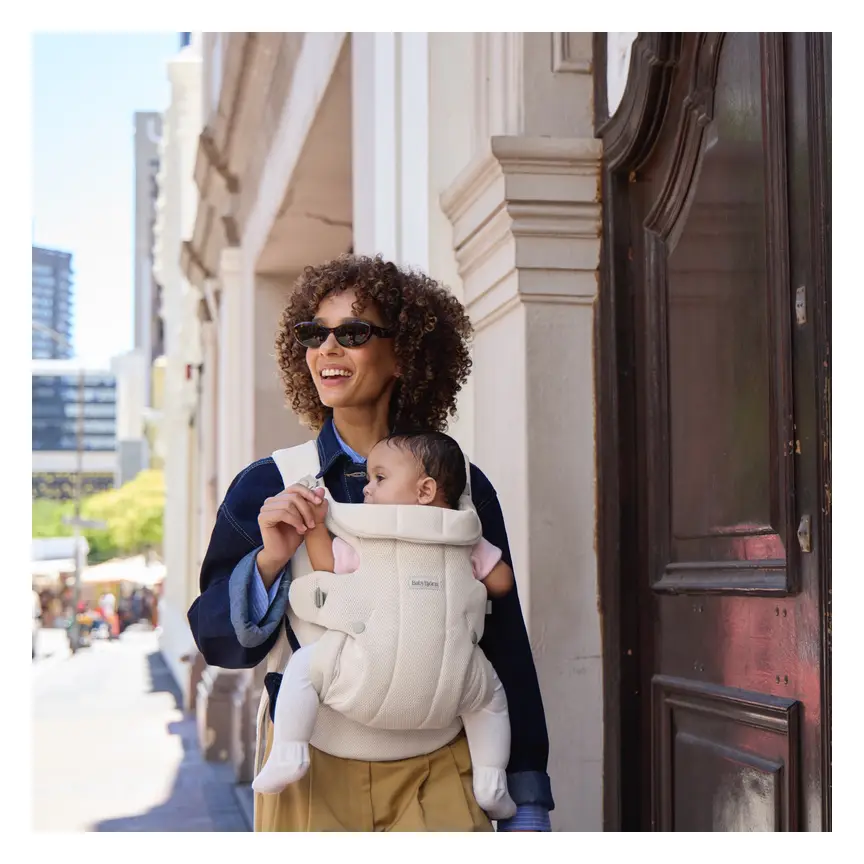
BabyBjörn Baby Carrier Hold
A soft front carrier from newborn to 18 months that fits XS to XXL parents.
Read our full review →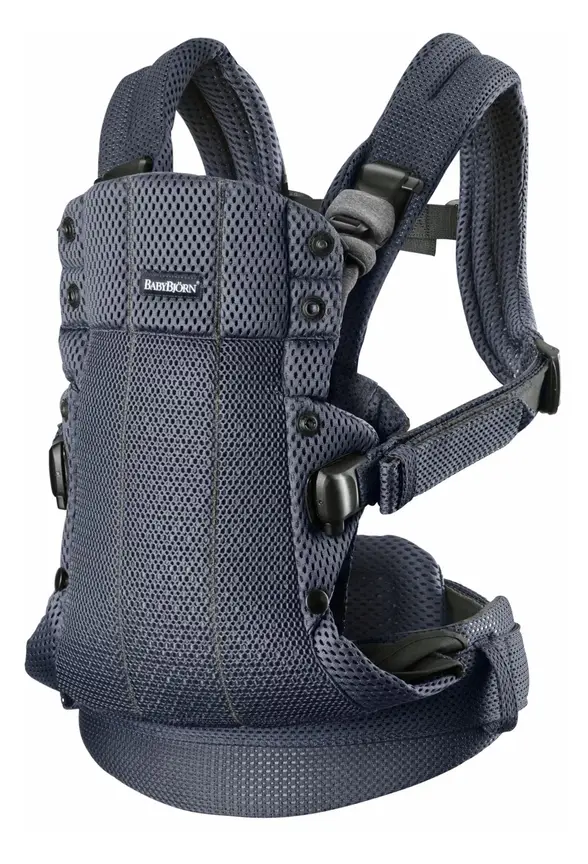 Reviewed
BabyBjörn Baby Carrier Harmony
A premium carrier with four positions, from 3.2 kg newborns to about 3 years.
Read our full review →Types of baby carriers compared
There are five main kinds of baby carriers. Each one suits a different stage, body type and day out. Understanding the differences makes it much easier to pick the right one.
Soft-structured buckle carriers
These are the most popular choice for dads. They look a bit like a backpack worn on your front or back. A wide waistband clips around your torso, and padded straps clip over your shoulders. They are fast to put on, easy to adjust, and great for long walks. Many work from newborn (sometimes with an insert or built-in seat adjuster) right through to toddlerhood.
Stretchy wraps
A stretchy wrap is one long piece of soft jersey fabric. You tie it around your body first, then tuck your newborn inside. It feels cosy and snug, almost like a T-shirt. However, stretchy fabric starts to sag once your baby gets heavier. Most families stop using stretchy wraps after the first few months.
Woven wraps
A woven wrap is also a long piece of fabric, but it does not stretch. You can tie it in many ways on your front, hip or back. It holds heavy toddlers well because the cloth is strong. The downside is the learning curve. You have to practise tying it safely before heading out.
Ring slings
A ring sling is a shorter cloth that goes over one shoulder and threads through two metal rings. It is light, folds up small, and is quick for short trips from the car to the shops. Because all the weight sits on one shoulder, it can feel tiring on long walks.
Meh dai (tie-on) carriers
A meh dai has a soft fabric panel with four long straps that tie around your waist and shoulders. It sits halfway between a wrap and a buckle carrier. There are no plastic clips to adjust when you swap between parents. You just tie it to fit your body each time.
Framed hiking backpack carriers
These are sturdy metal-framed packs built for bushwalks and trails. They sit high on your back and often include storage pockets and a sun shade. They are only for older babies who can sit up by themselves without help. They are too bulky for indoor errands.
| Carrier type | Best age | Why dads like it | Watch-outs |
|---|---|---|---|
| Soft-structured buckle carrier | Newborn to toddler (check label) | Fast clips, padded straps, neutral colours, shares weight well | Can feel warm in summer; needs strap adjustment between parents |
| Stretchy wrap | Newborn to around 4–6 months | Soft, cosy, great for skin-to-skin at home | Takes practice to tie; sags as baby gets heavier |
| Woven wrap | Newborn to toddler | Very supportive; works for front, hip and back carries | Long tails can drag on the ground while tying in car parks |
| Ring sling | Newborn to toddler (short trips) | Packs into a nappy bag; fast for quick errands | All weight sits on one shoulder; can ache on long walks |
| Meh dai (tie-on) | Newborn to toddler | Custom fit every time; no buckles to re-size | Long straps to tie; less padded than buckle carriers |
| Framed hiking backpack | From sitting unaided (around 6+ months) | Built for trails; holds water, snacks and nappies | Not for newborns; bulky on buses or in tight shops |
How to choose a comfortable carrier for a dad's body
A carrier that feels great on your partner might dig into your shoulders or pinch your lower back. Men often have broader shoulders, longer torsos and narrower hips. Keep these fit details in mind when you shop.
Check the shoulder straps and chest clip
Look for thick, padded shoulder straps that curve gently. Straight, thin straps can cut into the side of your neck if you have broad shoulders. Also check the chest strap (the small strap that clips across your shoulder blades when carrying on your front). Make sure it slides up and down easily. You should be able to reach behind your neck and clip it yourself without asking for help.
Look for a wide, firm waistband
A wide waistband moves most of your baby's weight onto your hips and core. That saves your neck and upper back from getting sore. Make sure the waistband extends long enough to fit comfortably over a jumper or jacket. Check the maximum waist size listed on the box before you buy.
Think about sharing one carrier
If both parents will use the same carrier, look for quick-adjust buckles. Dual-adjust straps let you pull forward or backward to tighten. Some dads buy their own carrier in a dark, plain colour so they never have to reset the straps after their partner uses it. If you do share one carrier, check every strap before you put your baby in.
Pick breathable, wipe-clean fabrics
Dads and babies share a lot of body heat. Heavy canvas or thick padding can make you both sweat fast. Look for cotton, linen blends or mesh panels that let air flow. Machine-washable fabric is also a must. Babies drool, spit up and have nappy leaks when you least expect it.
Style that feels like you
You are more likely to use a carrier if you feel good wearing it. Many brands now make sleek carriers in matte black, slate grey, sand, olive green and denim. Avoid loud patterns or fussy trim if you prefer a simple, sporty look.
Keeping your baby's airway open: the TICKS rule
Baby carriers are safe when used right, but poor positioning can be dangerous. A newborn's neck muscles are weak. Their head is heavy for their body size. If their chin drops forward onto their chest, their soft windpipe can bend like a kinked garden hose. This can block their breathing without making a sound. Experts call this positional asphyxiation.
Your baby's face can also get pressed into your chest or the carrier fabric. Health groups in the UK (including the NHS and The Lullaby Trust) and Australia (Red Nose and Product Safety Australia) recommend the TICKS rule every time you carry your baby.
- T – Tight: The carrier or sling should be tight enough to hug your baby close to you. Loose fabric lets your baby slump down, which can curve their back and block their airway.
- I – In view at all times: You should always be able to see your baby's face just by glancing down. No fabric, hood or blanket should cover their nose or mouth.
- C – Close enough to kiss: Your baby's head should sit high on your chest, near your collarbone. You should be able to tip your head down and kiss the top of their head or forehead easily.
- K – Keep chin off the chest: A baby must never be curled with their chin touching their chest. Leave at least one or two adult fingers of space between your baby's chin and their chest.
- S – Supported back: In an upright carry, your baby's back should be held firmly against you in its natural shape. If you place a hand on their back and press gently, they should not uncurl or slump closer to you.
Avoid bag-style or pouch slings: Product Safety Australia, the U.S. Consumer Product Safety Commission (CPSC) and The Lullaby Trust all warn against deep, hammock-style bag slings for young babies. These slings curl a baby into a tight C-shape with their chin pushed onto their chest. Always keep your baby upright and visible.
Healthy hips and spine: the M-position
A baby's hip joints are soft and still growing during the first year. The International Hip Dysplasia Institute explains that holding a baby's legs straight and pressed together can harm how the hip joint forms. Over time, this can cause or worsen hip dysplasia, a condition where the thigh bone does not sit snugly in the hip socket.
To protect your baby's hips, look for the "M" position (sometimes called the frog or jockey position):
- Your baby's bottom sits lower than their knees.
- Their knees are bent and spread naturally around your torso.
- The carrier seat supports the full thigh, reaching from the back of one knee to the back of the other knee.
- Their lower legs hang down freely without being pinned or forced straight.
Avoid narrow-base carriers where your baby hangs by their crotch with their legs dangling straight down. Those designs put extra pressure on the hip joints and feel less comfortable for your baby too.
Your baby's spine also changes as they grow. Newborns have a gentle C-shaped curve in their back. Never force a newborn's spine flat against your chest. Let their back rest in its natural, gentle curve while the carrier supports them firmly from behind.
Side by side: more baby carriers & wraps to compare
Real products from our catalogue. We don't show star ratings or review counts; check the current price, stock and reviews on Amazon before you buy.

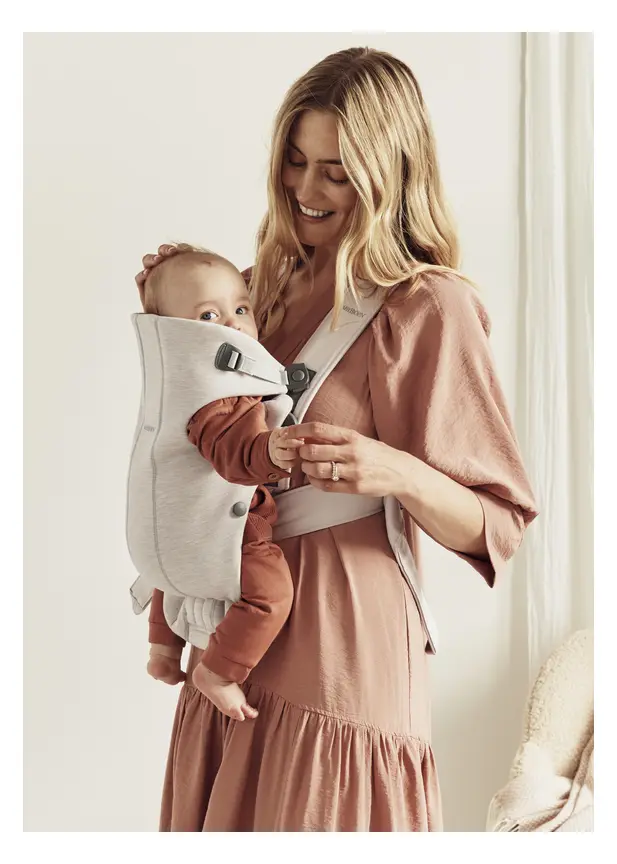
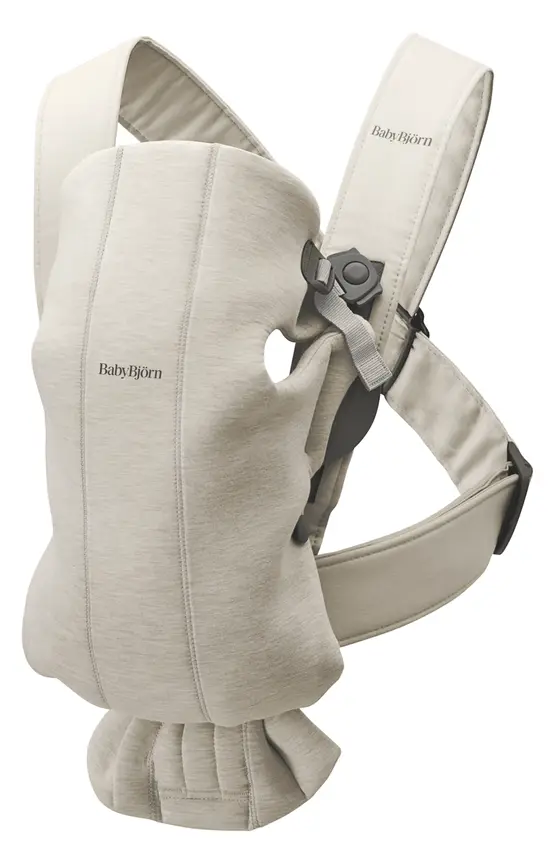
BabyBjörn Baby Carrier Mini
Simple, soft newborn carrier for roughly 0–12 months, with three carrying positions and an easy front opening.
Read our full review →

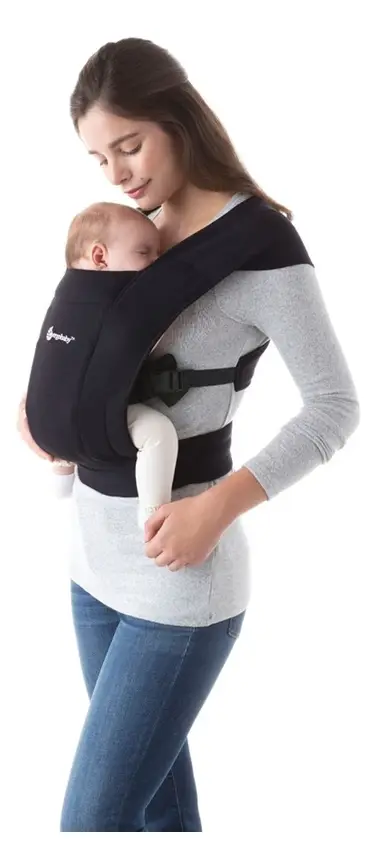


Ergobaby Embrace
A soft knit newborn carrier that buckles on, with no long wrapping.
Read our full review →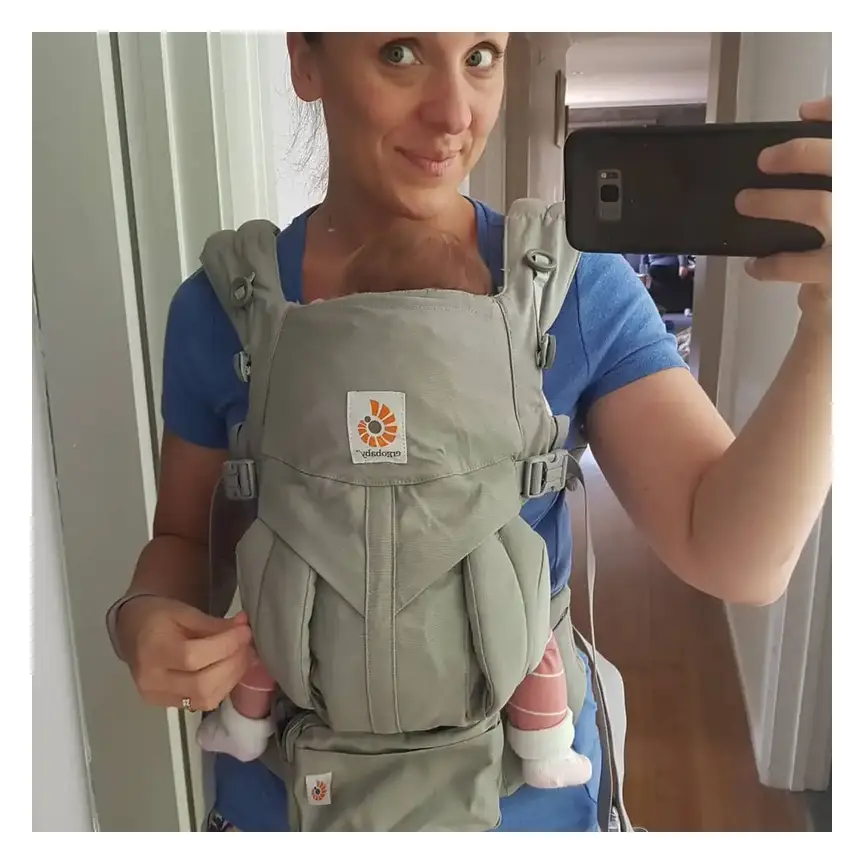
Ergobaby Omni 360 Cool Air Mesh Baby Carrier
All-position carrier
Carrying positions by age and stage
Your baby's needs change quickly in the first year. Follow your baby's strength and milestones, not just the age printed on a box.
| Stage | Safe carrying positions | What to watch for |
|---|---|---|
| Newborn to 3–4 months | Front carry, facing inward only | Check weight minimum on the label. Keep face clear, chin off chest, and hips in the M-position. |
| 4 to 6 months (good head control) | Front carry facing inward; short periods facing outward if baby enjoys it | Only face outward when baby holds their head steady without wobbling. Turn baby inward if they get sleepy or overwhelmed. |
| 6 to 12 months (sitting unaided) | Front inward, hip carry, or back carry | Back carries take weight off your front and feel great on longer walks. Use a mirror to check baby's face and posture. |
| 12 months and up (toddler) | Back carry, front inward, or framed hiking pack | Check the carrier's maximum weight limit. Keep straps tight so a wriggly toddler cannot lean back too far. |
A quick word on facing outward
Many dads love the idea of facing their baby forward so they can see the world together. You can do this once your baby has strong, steady head and neck control, usually around 4 to 6 months. Even then, keep outward-facing time short.
Why? Facing out makes it harder to keep the M-position for the hips. It can also overstimulate a young baby in busy places. Most importantly, never let your baby sleep facing outward. Their heavy head can slump forward with nothing to rest against, which blocks their airway. If your baby gets drowsy, turn them back to face your chest.
Official safety advice in Australia, the UK, the US and Canada
Safety rules for baby carriers are very similar across Australia, the UK, the US and Canada. Official bodies focus on preventing falls, stopping suffocation in loose slings, and protecting hip growth.
| Country | Main official bodies | Key safety focus |
|---|---|---|
| Australia | Product Safety Australia (ACCC), Red Nose Australia, Raising Children Network | Follow the TICKS rule, keep airways clear, avoid deep pouch slings, check Product Safety Australia for recalls, and check minimum weight limits. |
| UK | Office for Product Safety and Standards (OPSS), The Lullaby Trust, NHS | Use the TICKS checklist, keep baby upright and visible, avoid overheating, and make sure carriers meet recognised safety standards. |
| US | U.S. Consumer Product Safety Commission (CPSC), American Academy of Pediatrics (AAP) | Sling carriers must meet the US federal safety standard for infant sling carriers, with clear warning labels, strong seams, and an open airway design. |
| Canada | Health Canada, Canadian Paediatric Society (Caring for Kids) | Check Health Canada's recalls and safety alerts before buying, keep baby's face uncovered and above the fabric, and ensure tight, secure straps. |
If you buy a carrier from an overseas website, be careful. Cheap look-alike carriers sold online sometimes skip safety testing. They may have weak plastic buckles or poor stitching that can snap under weight. Always buy from a trusted seller and check your national recall list before using any new or second-hand carrier.
Common mistakes dads make (and how to fix them)
Even great carriers feel awful if you wear them wrong. Here are the mistakes that trip up most dads, along with simple fixes.
- Wearing the waistband too low: Many men clip the belt low on their hips, like a pair of jeans. That drops your baby too low on your tummy and pulls on your lower back. Fix: Put the waistband up higher, near your belly button or natural waist. This brings your baby up to kissable height.
- Leaving the straps too loose: Loose straps make your baby hang away from your chest. That strains your shoulders and lets your baby slump. Fix: Tighten the shoulder straps until your baby's body rests snugly against yours.
- Dressing baby too warmly: A carrier wraps around your baby, and your body acts like a heater. A thick jumper or snowsuit inside a carrier can make your baby overheat fast. Fix: Dress your baby in light layers. Skip hats indoors and check the back of their neck to make sure they are not sweaty.
- Using a carrier for risky chores: It is tempting to wear your baby while doing everything around the house. Fix: Never wear a baby while cooking over a hot stove, carrying hot drinks, mowing the lawn, or riding a bike or scooter.
- Skipping buckle and seam checks: Sunlight, washing and daily wear can weaken plastic clips and stitching over time. Fix: Give the buckles a firm tug and check the seams before you head out.
- Bending at the waist instead of the knees: If you drop your keys and bend forward at the waist, your baby can tip sideways or slip. Fix: Always squat down by bending your knees, keeping one hand on your baby's back.
Pre-outing safety checklist for dads
Run through this quick 10-second check in front of a mirror or car window before you start walking.
- All buckles clicked shut and straps tucked away neatly.
- Waistband level, snug and sitting high enough so you can kiss your baby's head.
- Baby's face clear of fabric, coats and straps.
- At least two fingers of space under your baby's chin.
- Knees higher than bottom, forming an "M" shape.
- No loose blankets or scarves tucked over your baby's head.
More options, from budget to premium
Real products from our catalogue. We don't show star ratings or review counts; check the current price, stock and reviews on Amazon before you buy.
 Reviewed
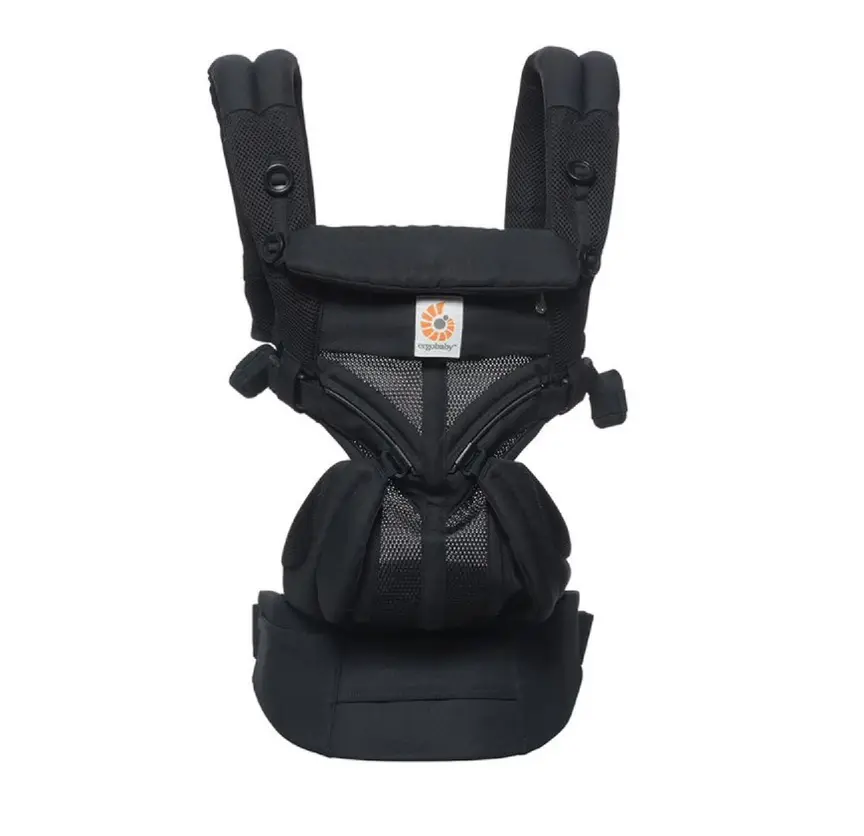
Ergobaby Omni Classic Mesh
An all-position mesh carrier from newborn to toddler with no insert needed.
Read our full review →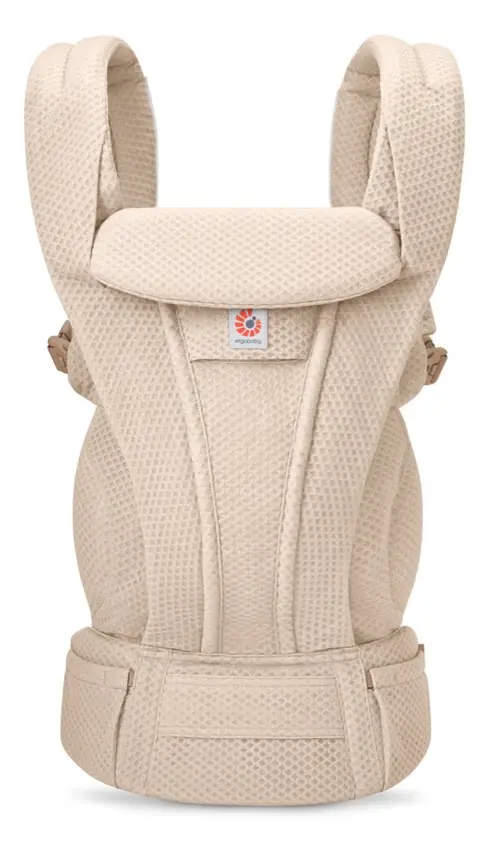 Reviewed
Ergobaby Omni Deluxe Mesh
The top Omni carrier, with 6 storage spots and strap markers that make it easy to swap between parents.
Read our full review →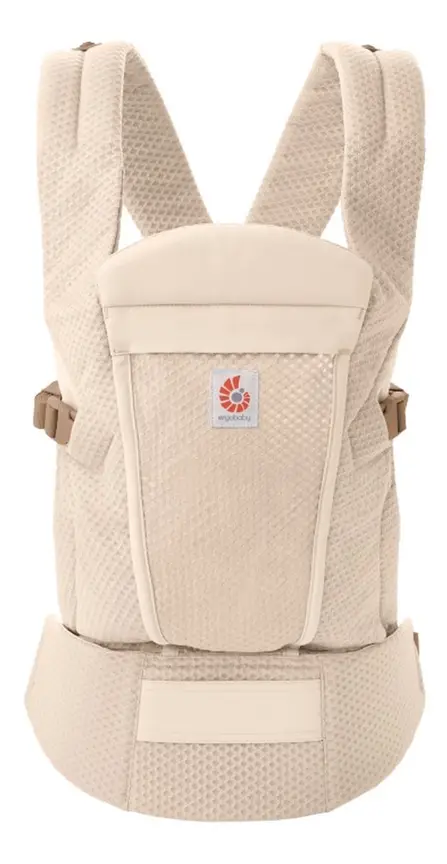
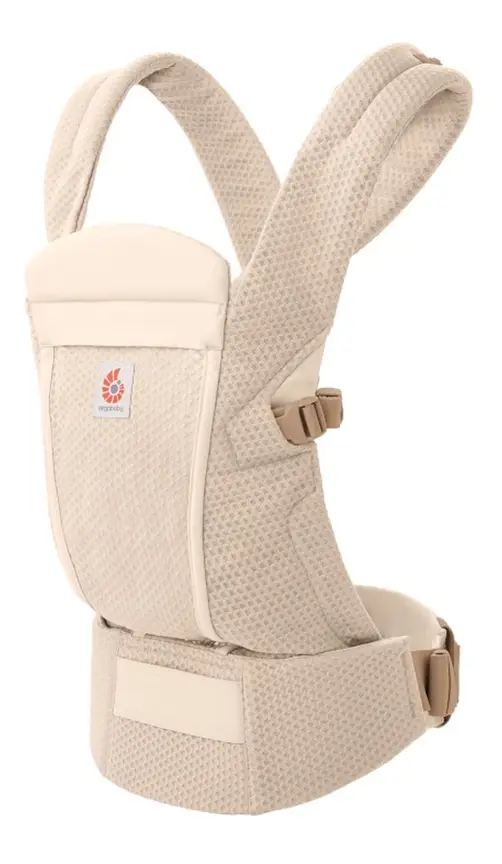

Ergobaby Omni Lite Mesh
A light mesh carrier from newborn to 24 months with cross-back straps.
Read our full review →Frequently asked questions
What is the easiest baby carrier for a first-time dad?
A soft-structured buckle carrier is usually the easiest place to start. It clicks on like a backpack, needs no complex wrapping, and holds its shape while you load your baby in. Look for one with colour-coded or simple buckles and a clear printed guide inside the waistband.
Can a newborn go straight into a buckle carrier?
Check the weight range on the carrier's label first. Many buckle carriers start at around 3.2 kg or 3.5 kg. Some need an infant insert, while others have an adjustable seat and head panel built in. If your baby was born early or has a low birth weight, ask your doctor or child health nurse before using any carrier.
Is facing outward safe for my baby?
Yes, for short periods once your baby has strong head and neck control, usually from 4 to 6 months. Make sure the carrier is built for outward-facing carries and still supports their thighs. Always turn your baby back to face inward if they get tired, fussy or fall asleep.
How should I dress my baby in a carrier on a hot day?
Think of the carrier as one extra layer of clothing. On a hot day, a light singlet and nappy, or a thin cotton romper, is often enough. Use a wide-brimmed sun hat that does not flop over your baby's face, and stay in the shade during peak sun hours. Keep checking the back of your baby's neck for sweat.
Can my partner and I share the same baby carrier?
Yes, most buckle carriers, wraps and ring slings adjust to fit different body sizes. If you and your partner are very different heights or builds, check the minimum and maximum strap lengths before buying. Dual-adjust straps make swapping between parents much faster.
Is it safe to buy a second-hand baby carrier?
It can be, as long as you inspect it closely first. Check the brand and model against official recall lists from Product Safety Australia, the CPSC (US), Health Canada, or OPSS (UK). Look for frayed fabric, loose stitching, cracked plastic buckles or worn Velcro. If any buckle feels weak or does not click firmly, do not use it.
Sources
- Product Safety Australia – Baby carriers, wraps and slings guide
- Red Nose Australia – Slings and baby carriers
- Raising Children Network – Baby carrier, sling and backpack safety
- The Lullaby Trust (UK) – Baby slings and carriers
- NHS Cheshire and Wirral Partnership – TICKS rule for safe babywearing (PDF)
- U.S. CPSC – New federal standard for infant sling carriers
- International Hip Dysplasia Institute – Baby wearing
- Health Canada – Recalls and safety alerts
Related guides
More Clothing & Accessories →
Babywearing for Dads: How to Choose a Safe, Comfy Carrier

Hiking with Toddlers: How to Choose and Use a Safe Hiking Carrier

How to Choose a Baby Carrier: Wraps, Slings, Soft Carriers and Hiking Packs
