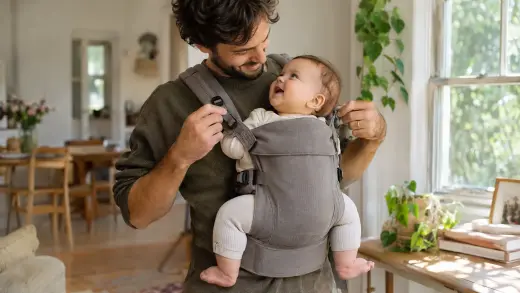
Babywearing in Hot and Cold Weather: Mesh Carriers, Babywearing Coats and Keeping Your Baby Safe
How to carry your baby safely in a sling or carrier in summer heat and winter cold: cool fabrics, coats that go over both of you, and the TICKS checks.

On this page
- Why weather matters when you carry your baby
- The TICKS checks: use them every time
- Babywearing in hot weather
- Babywearing in cold weather
- Hot weather vs cold weather: side by side
- Safety rules in Australia, the UK, the US and Canada
- Hips and posture in every season
- How to choose a carrier for where you live
- Rain, wind and changing weather
- Common mistakes to avoid
- Age stages
- FAQ
- Sources
Short answer: you can carry your baby in a sling or carrier all year, but the weather changes what you need to do. In hot weather, the big risk is overheating, because your body heat and the carrier both warm your baby up. Use a thin, breathable carrier, dress your baby in very little, keep out of the sun, and take breaks. In cold weather, don't put your baby in a puffy snowsuit inside the carrier. Dress them in thin warm layers, then put a babywearing coat or cover over both of you. In any weather, your baby's face must always be clear, close to your chin and easy to see.
Key points
- Safety checks first: follow TICKS every time. Tight, In view, Close enough to kiss, Keep chin off chest, Supported back.
- Hot days: thin mesh or linen carrier, light clothes, shade, water for you, and short trips. Skip the carrier on very hot days.
- Cold days: thin layers on your baby, warm coat or cover over the top of you both, warm socks and a hat outdoors.
- Never cover your baby's face with a coat, scarf, blanket or sun cover.
- Not for sleep: a carrier is not a safe place for a long sleep. If your baby falls asleep, keep checking them, and move them to a safe flat sleep space when you can.
Why weather matters when you carry your baby
When you carry your baby on your chest, you share body heat. That's lovely on a cold day. On a hot day it can be too much. Raising Children Network points out that your body heat and the carrier both add to your baby's temperature, so hot weather is a reason to take extra care or skip the carrier.
Babies can't cool down as well as adults. They sweat less, and they can't tell you they're too hot. Pregnancy, Birth and Baby says babies can get dehydrated and overheat quickly in hot weather.
Cold weather brings a different problem. Parents want to keep their baby warm, so they reach for thick clothes and blankets. But bulky clothes can push your baby lower in the carrier, make the straps loose, and cover their face. A loose carrier and a hidden face are both risks for breathing.
So the aim is the same in every season. Keep your baby at a comfortable temperature, keep the carrier snug, and keep their face in view.
The TICKS checks: use them every time
TICKS is a simple list used by the UK Lullaby Trust, NHS services and many babywearing groups. Product Safety Australia and Red Nose give the same kind of advice. Check it each time you put your baby in, and again every few minutes.
| Letter | What it means | Why it matters in hot and cold weather |
|---|---|---|
| Tight | The carrier holds your baby snugly against you. | Thick winter clothes can make it loose. A loose carrier lets your baby slump. |
| In view at all times | You can see your baby's face by looking down. | Sun covers, hoods, scarves and coat collars can hide the face. |
| Close enough to kiss | Your baby's head is close to your chin. | If you can kiss the top of their head, they're high enough. |
| Keep chin off chest | There's at least a finger's width under your baby's chin. | A chin pressed to the chest can block the airway. Bulky clothes at the neck can push the chin down. |
| Supported back | Your baby's back is held in its natural shape, with their tummy and chest against you. | If your baby slumps, the chin falls and breathing gets harder. |
The US Consumer Product Safety Commission (CPSC) has warned that babies can suffocate in slings in two ways. Fabric can press on their nose and mouth. Or they can curl into a C-shape with their chin on their chest. Babies under 4 months, babies born early, and babies with a cold or breathing problems are at higher risk. Product Safety Australia gives the same warning.
Babywearing in hot weather
Choose a cooler carrier
Some carriers are made for warm weather. They use mesh panels, thin cotton, linen or other light fabrics that let air move through. They don't make heat go away, but they trap less of it than a thick padded carrier or a wrap with lots of fabric layers.
- Mesh carriers have open mesh in the body panel. They are usually the coolest buckle carriers.
- Linen or thin cotton wraps and ring slings breathe well, but wraps with many passes of fabric still add layers.
- Thick padded carriers are comfy for you but hold heat. Save them for cooler days.
Dress your baby lightly
The carrier counts as a layer, and so does your body. On a hot day your baby may only need a nappy and a thin cotton singlet or short-sleeved bodysuit. Wear light clothes yourself, too, because your clothes trap heat between you.
Keep out of the sun
Babies under 12 months should be kept out of direct sun as much as possible, Australian health services advise. Walk in the shade, plan outings for the cooler parts of the day, and use a wide-brimmed hat on your baby. A sun cover or umbrella can help, but never drape anything over your baby's face. It traps heat and stops you seeing them.
Watch for signs of overheating
Check your baby often. Feel the back of their neck or their chest. Warm is fine. Hot, sweaty or damp is not. Other signs of overheating or heat stress include:
- red or flushed skin;
- fast breathing;
- being floppy, very sleepy or unusually grumpy;
- fewer wet nappies than normal;
- a dry mouth or no tears when crying.
If you see these signs, take your baby out of the carrier, move somewhere cool, take off a layer and offer a feed. If your baby is floppy, hard to wake, or not feeding, get medical help straight away. In Australia call 000, in the UK 999, in the US and Canada 911.
When to skip the carrier
On very hot days, a pram with good airflow in the shade, or staying home in a cool room, may be better than a carrier. Never cover a pram with a blanket or cloth either: it can trap heat. Pregnancy, Birth and Baby warns that covering a pram can make it much hotter inside.
Baby Carriers & Wraps worth a look
Real products from our catalogue. We don't show star ratings or review counts; check the current price, stock and reviews on Amazon before you buy.
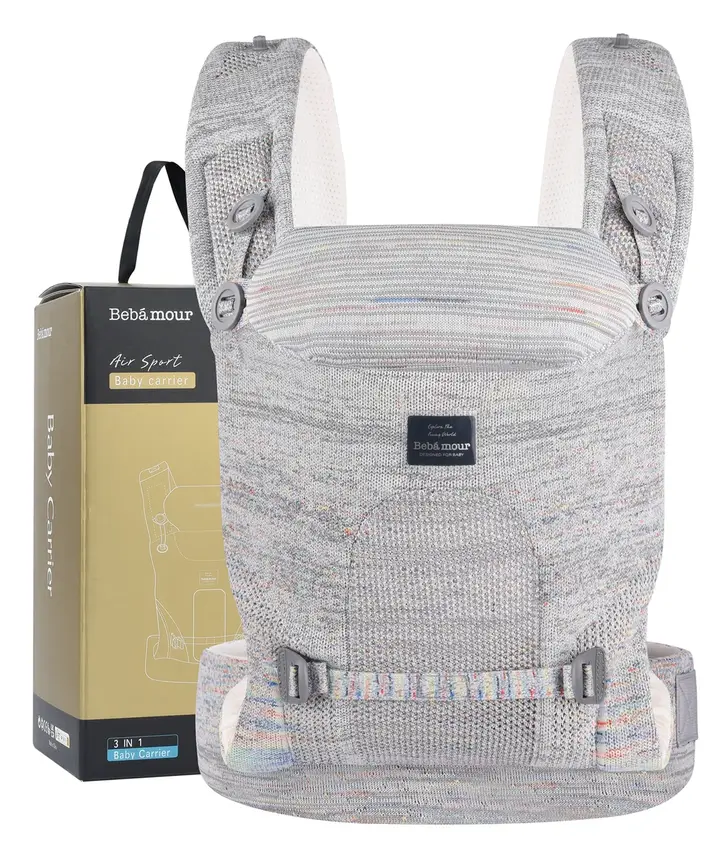
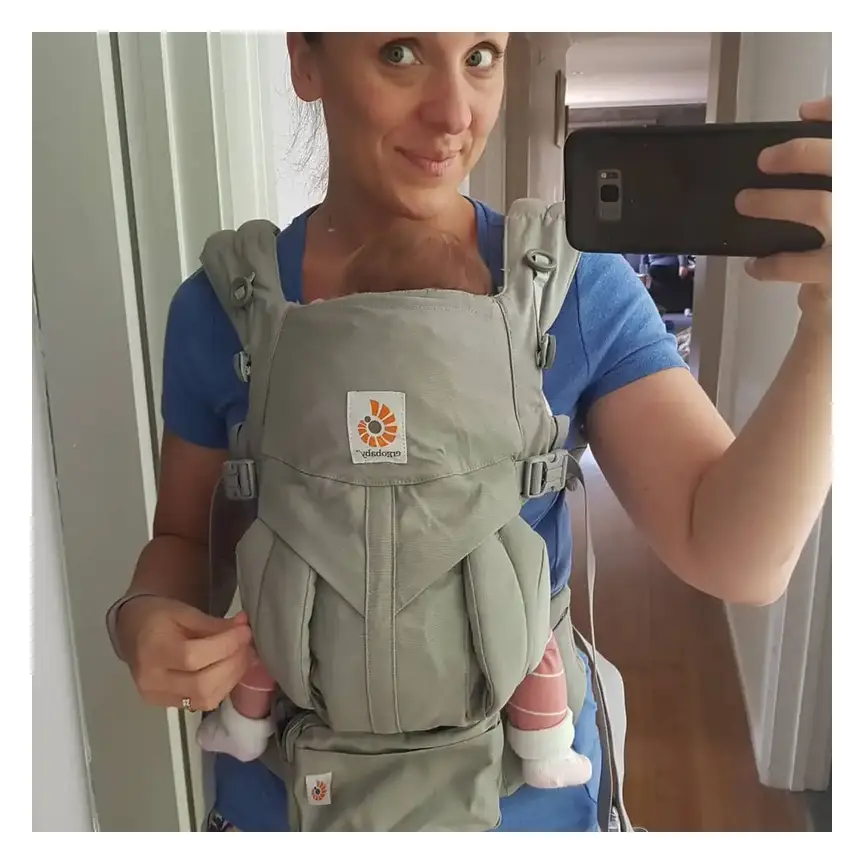
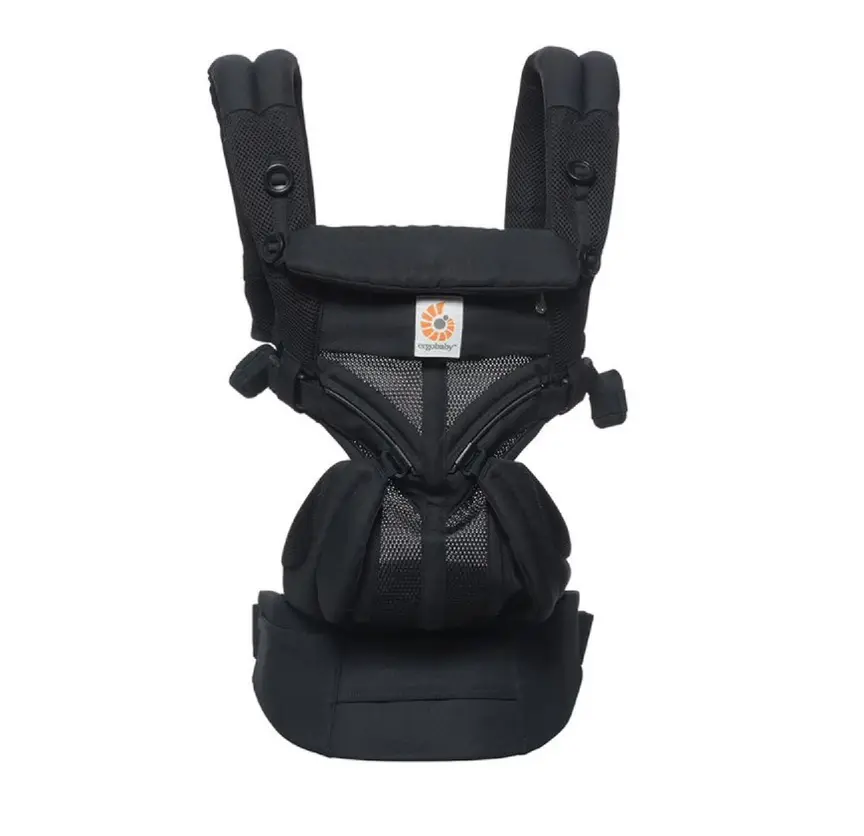
Ergobaby Omni 360 Cool Air Mesh Baby Carrier
All-position carrier
 Reviewed
Ergobaby Omni Classic Mesh
An all-position mesh carrier from newborn to toddler with no insert needed.
Read our full review →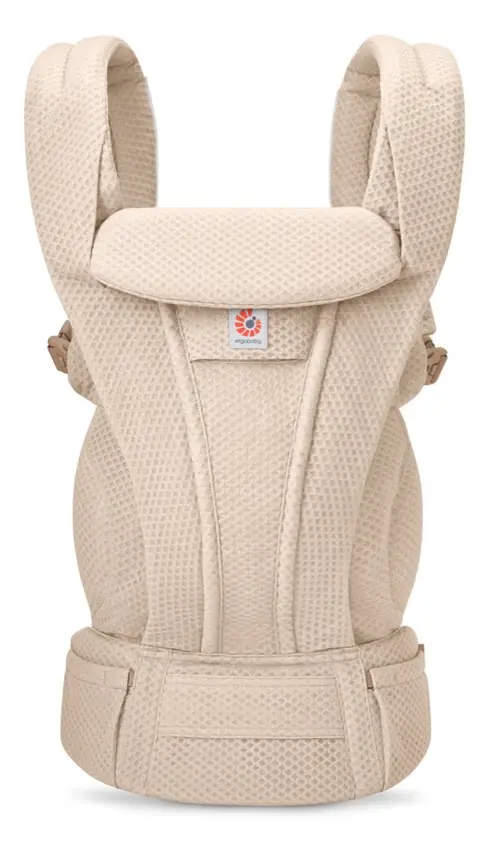 Reviewed
Ergobaby Omni Deluxe Mesh
The top Omni carrier, with 6 storage spots and strap markers that make it easy to swap between parents.
Read our full review →Babywearing in cold weather
Thin layers under, coat over
The simple rule is: thin layers on your baby, warm layers over both of you. Put your baby in a thin long-sleeved bodysuit and soft leggings or a one-piece suit. Then put them in the carrier and do the TICKS checks. Then put a coat or cover over the top of you both.
Why not just put your baby in a snowsuit? A puffy suit makes the carrier hard to tighten, so your baby can slump. It also adds a lot of warmth on top of your body heat, so your baby can overheat, even on a cold day.
Babywearing coats and covers
There are three common ways to keep warm:
- Babywearing coat or jacket: a coat with a stretchy front panel or a zip-in insert, so it closes over you and your baby. Your baby's head sits out through a hole or above the collar.
- Coat extender: a panel that zips into your own coat to make it wider.
- Carrier cover: a padded cover that clips onto the carrier straps and wraps around your baby only.
Whatever you use, your baby's face must stay out in the open. The collar, hood or zip must sit below your baby's chin and away from their mouth and nose. Don't zip your own big coat closed over your baby's head.
Hands, feet and head
Hands, feet and head lose heat fastest outdoors. Use warm socks or booties, and a soft hat outdoors. Babies' legs often stick out of carriers, so legwarmers or footed suits help. Take the hat off when you go inside, so your baby doesn't overheat.
Check them inside, too
Shops, buses and cars are warm. When you go inside, open the coat or take off the cover. Your baby can get too hot fast when you've both been wrapped up.
Hot weather vs cold weather: side by side
| Hot weather | Cold weather | |
|---|---|---|
| Main risk | Overheating and dehydration | Loose carrier, slumping and a covered face; overheating indoors |
| Carrier | Mesh, linen or thin cotton | Any well-fitting carrier; padded is fine |
| Baby wears | Nappy and thin singlet or short sleeves | Thin long sleeves and leggings; no puffy suit |
| Over the top | Nothing over the face; hat and shade | Babywearing coat, coat extender or carrier cover |
| Head | Wide-brimmed sun hat | Soft beanie outdoors only |
| Check every few minutes | Sweaty neck, flushed skin, fast breathing | Face clear, carrier still tight, not too hot inside |
| Skip the carrier when | It's very hot or you can't find shade | Icy paths where you might slip and fall |
Safety rules in Australia, the UK, the US and Canada
| Country | Who gives advice | What to know |
|---|---|---|
| Australia | Product Safety Australia (ACCC), Red Nose, Raising Children Network | There is no mandatory safety standard for baby carriers in Australia. Product Safety Australia gives a buying and use guide, and warns babies under 4 months are at greater risk. Avoid products sold as "womb-like" or "cocoon", or that hold a baby in a C-shape. |
| United Kingdom | The Lullaby Trust, NHS, Office for Product Safety and Standards (OPSS) | The Lullaby Trust and NHS services use the TICKS checks. Carriers sold in the UK often state they meet European standards for soft carriers. |
| United States | CPSC | There are federal safety standards for sling carriers (since 2018) and soft infant carriers. Sling standards require warning labels and instructions on safe positioning. The CPSC has recalled slings that don't meet the rules. |
| Canada | Health Canada | Check Health Canada's recalls and safety alerts before buying, especially second-hand. Follow the same face-visible, chin-up checks. |
A safety standard is a set of tests a product must pass before it can be sold. Where there is a standard, the label often names it. If a carrier has no instructions or warning labels, don't use it.
Hips and posture in every season
A good carrier holds your baby with their knees higher than their bottom and their legs spread around your body, in an "M" or frog shape. This is better for growing hips than legs hanging straight down. Bulky winter clothes can push the legs straight, so keep layers thin around the hips and legs.
For newborns, follow the carrier maker's weight limits. Some carriers need an insert for small babies. Product Safety Australia suggests asking for a demonstration before you buy, so you know how to fit it.
Side by side: more baby carriers & wraps to compare
Real products from our catalogue. We don't show star ratings or review counts; check the current price, stock and reviews on Amazon before you buy.
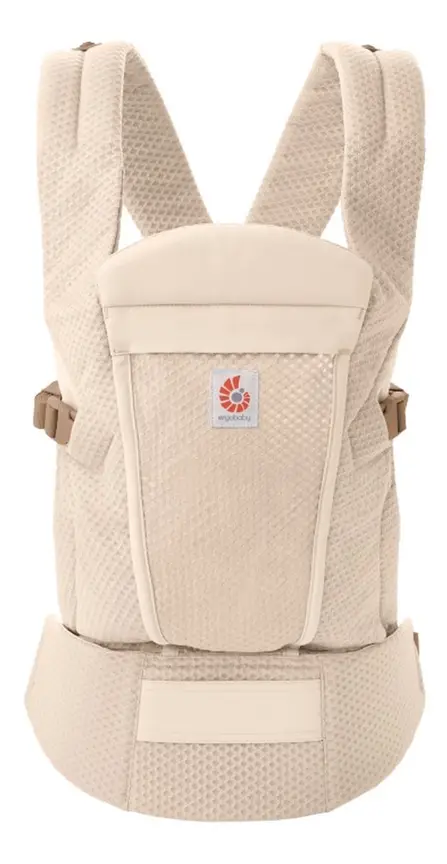
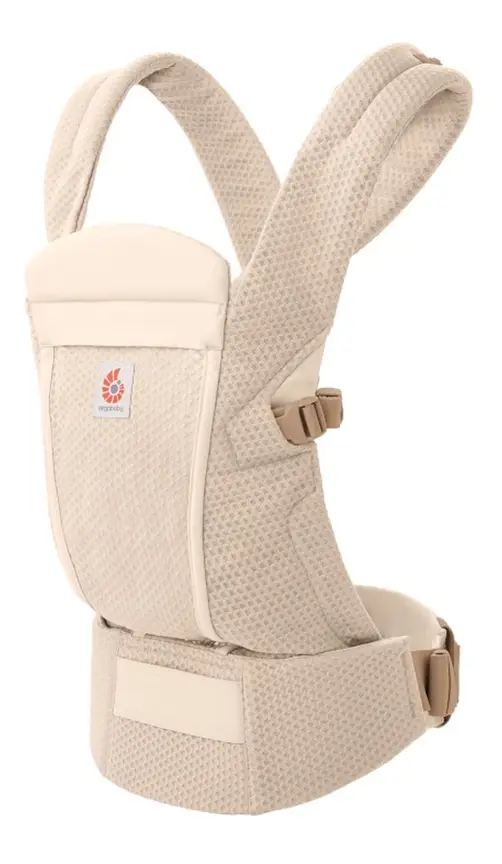

Ergobaby Omni Lite Mesh
A light mesh carrier from newborn to 24 months with cross-back straps.
Read our full review → Reviewed
4baby 3 Way Baby Carrier
A very low-cost carrier with 3 positions, for babies 3.6 to 9 kg.
Read our full review →
BabyBjörn Baby Carrier Mini 3D Jersey
Newborn baby carrier
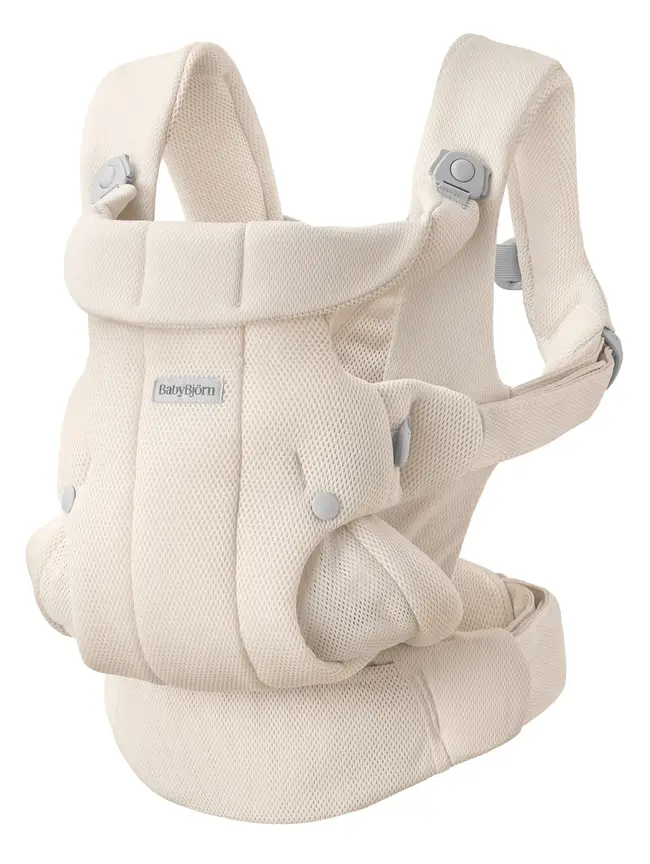
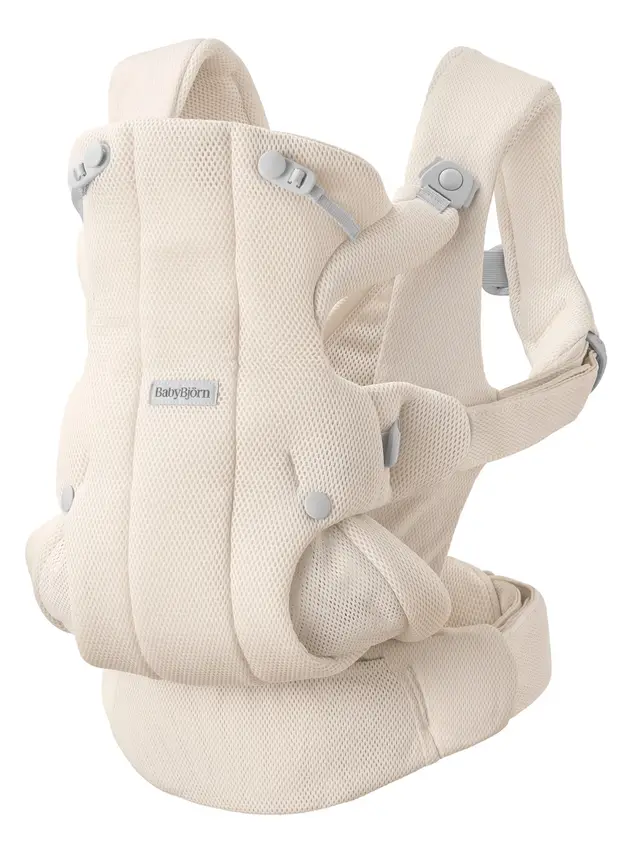
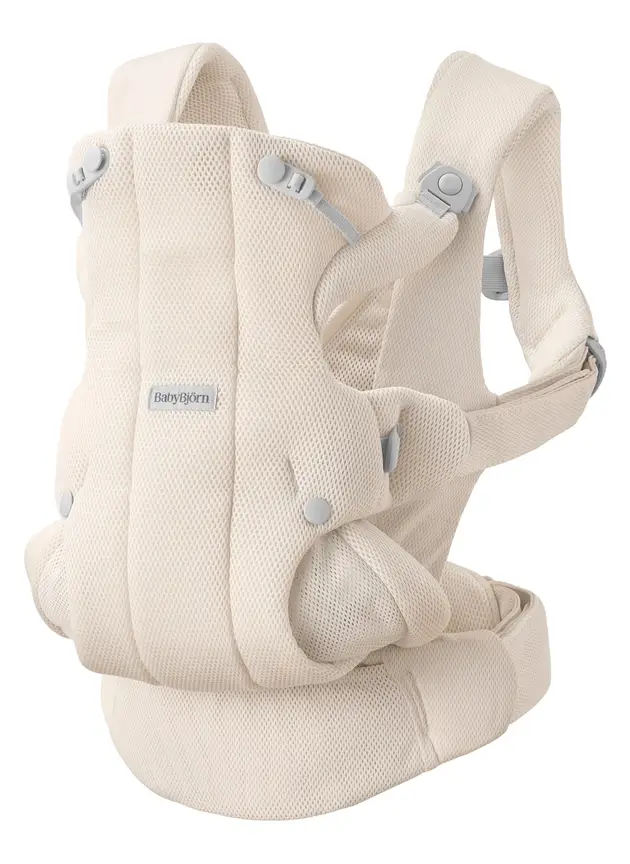
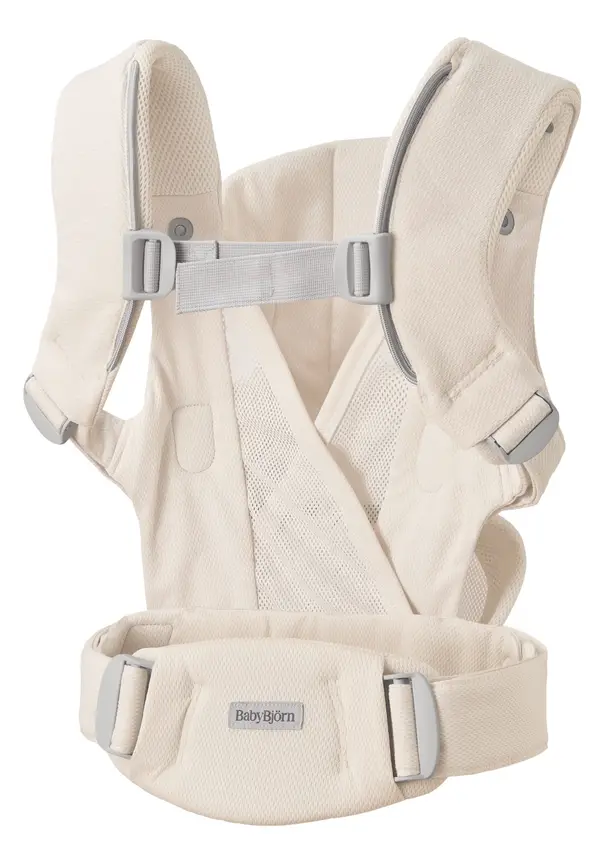
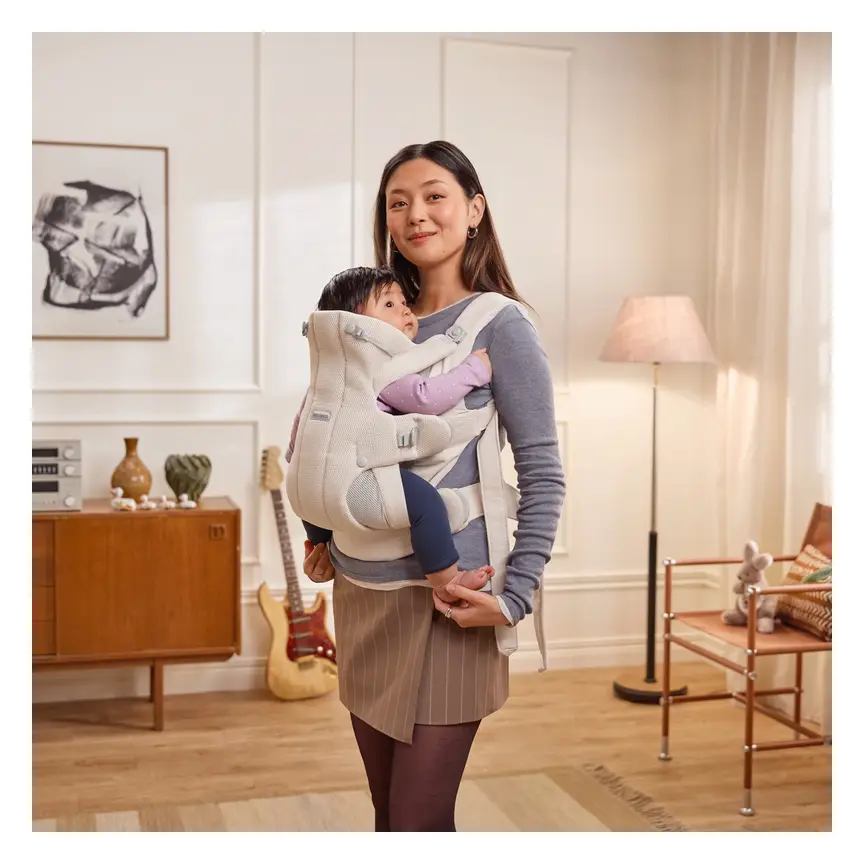
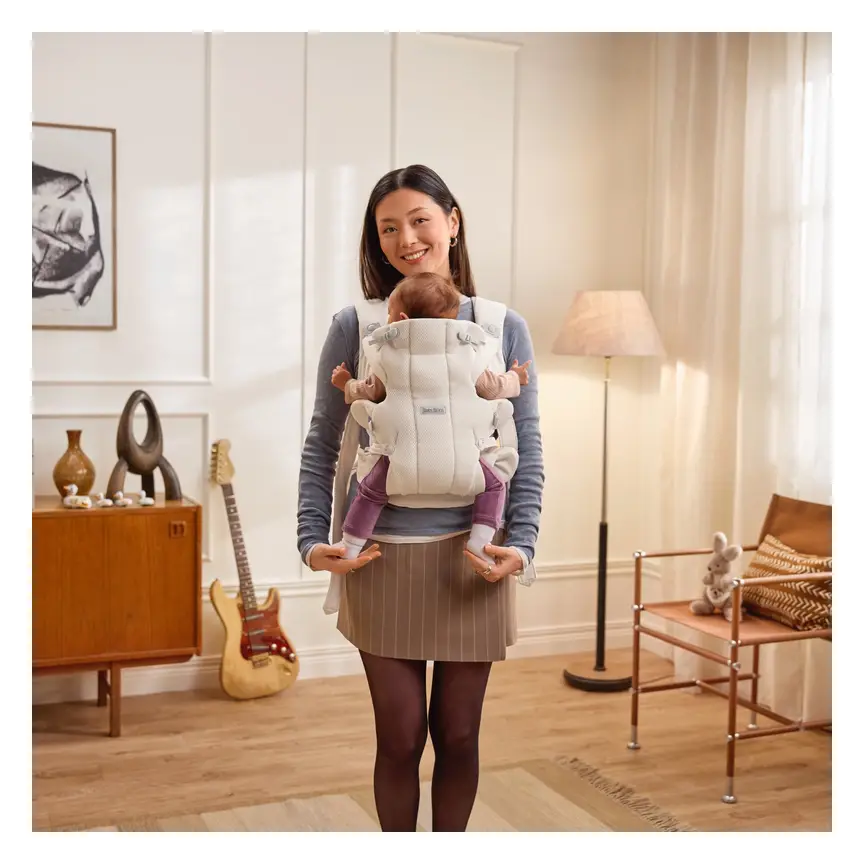
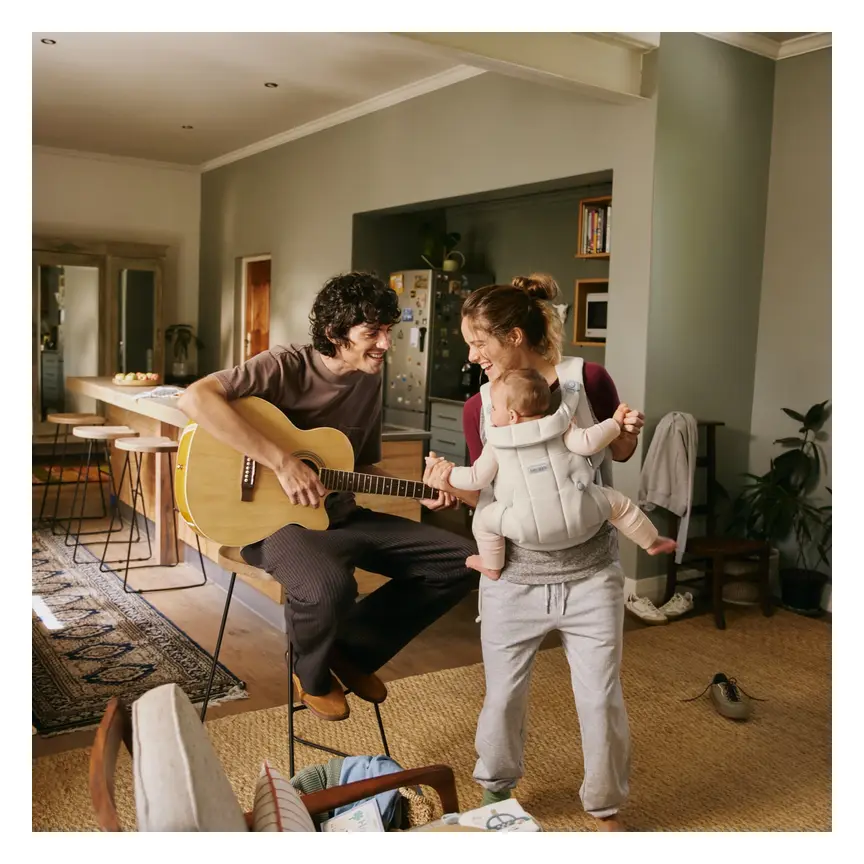
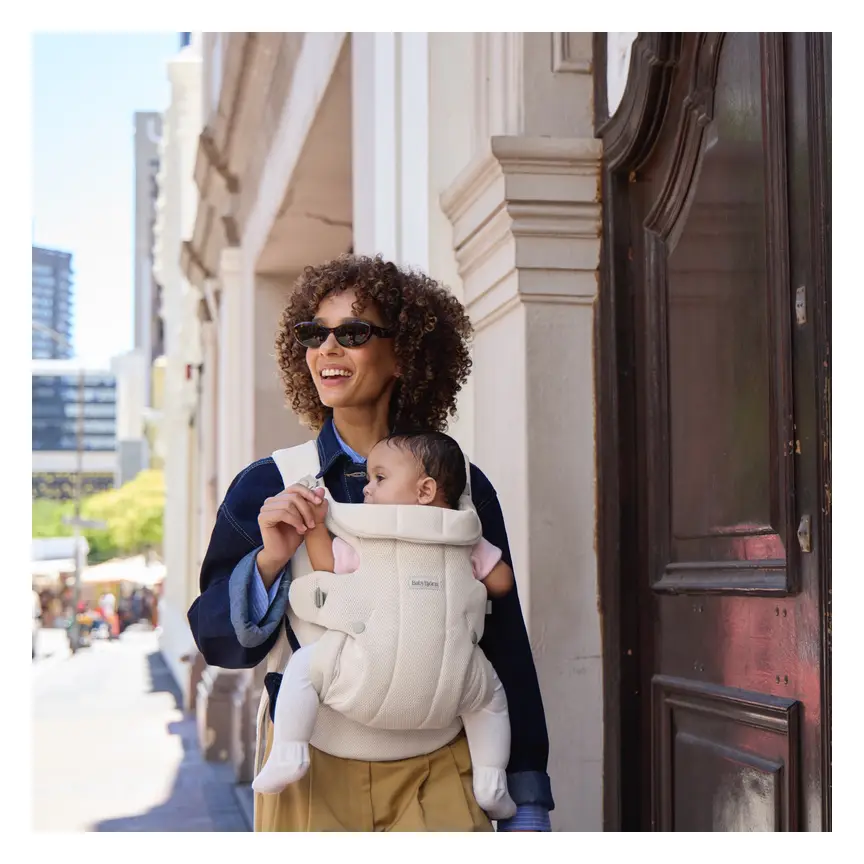
BabyBjörn Baby Carrier Hold
A soft front carrier from newborn to 18 months that fits XS to XXL parents.
Read our full review →How to choose a carrier for where you live
Think about your weather for most of the year, not just the next month. Many families end up with one main carrier and add a cover or coat for the cold months.
- Mostly hot or humid weather: pick a carrier with mesh panels or thin fabric, and wide straps so you stay comfy without thick padding. A light ring sling is handy for quick trips.
- Four clear seasons: a standard buckle carrier with a removable or zip-open panel works well. Add a carrier cover or coat extender for winter.
- Mostly cold weather: any well-fitting carrier is fine. Spend your money on a good babywearing coat or cover instead.
Before you buy, check these things in the shop or at a babywearing library (a group that lends carriers so you can try them):
- It fits your baby's weight and age right now, with a newborn insert if needed.
- It comes with clear instructions and warning labels.
- You can tighten it easily, so your baby sits high and snug.
- You can see your baby's face by just looking down.
- The fabric can be washed, because sweat and milk add up fast in summer.
Rain, wind and changing weather
Weather can change during a walk. A light rain cover or a waterproof coat over both of you keeps your baby dry. Wet clothes make babies cold quickly, even on a mild day, so change them into dry clothes when you get home. On windy days, a coat or cover blocks the wind from their face. Keep the face clear, and turn your body so your baby is out of the wind rather than covering them.
In spring and autumn, mornings can be cold and afternoons warm. Dress your baby in layers you can take off easily, like a thin cardigan over a bodysuit. Check them each time the weather changes.
Common mistakes to avoid
- Covering the face. Sun covers, muslins, scarves and coat collars over the face block airflow and stop you seeing your baby.
- Too many layers in summer. A thick carrier, a bodysuit and a muslin draped over them can be far too hot.
- A snowsuit in the carrier. It makes the carrier loose and traps too much heat.
- Feeding in the carrier and walking away. The Lullaby Trust and Product Safety Australia say to take your baby out of the carrier to feed. If you do feed in it, put your baby back upright with their face clear straight after.
- Letting your baby sleep in it for hours. A carrier isn't a safe sleep place. Product Safety Australia says it is unsafe for your baby to sleep in a carrier.
- Bending forward with your back. Bend at the knees and hold your baby with one hand so they can't fall out.
- Using a second-hand carrier without checking it. Look for worn straps, broken buckles and missing labels, and check recall lists.
Age stages
Newborn to 4 months
This is the highest-risk age. Babies can't hold their heads up yet, and their airways are small. Use a carrier that fits newborns, keep them high and upright on your chest, and check TICKS often. Keep trips short in hot weather.
4 to 12 months
Better head control means less risk, but overheating still matters. Babies move more now, so check they haven't slumped or turned their face into you.
Toddlers
Toddlers are heavy and often ride on your back. Use a carrier made for their weight. In hot weather they sweat on your back, out of sight, so check them at each stop.
More options, from budget to premium
Real products from our catalogue. We don't show star ratings or review counts; check the current price, stock and reviews on Amazon before you buy.
 Reviewed
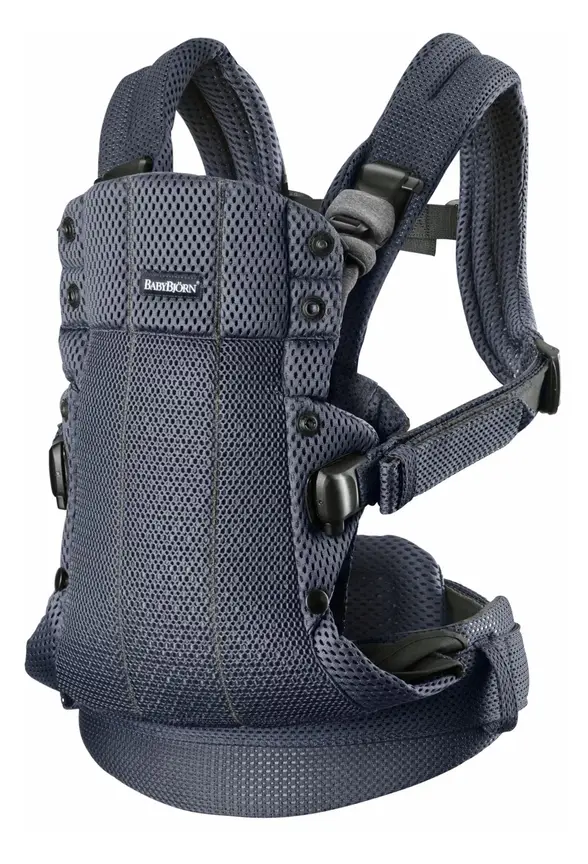
BabyBjörn Baby Carrier Harmony
A premium carrier with four positions, from 3.2 kg newborns to about 3 years.
Read our full review →
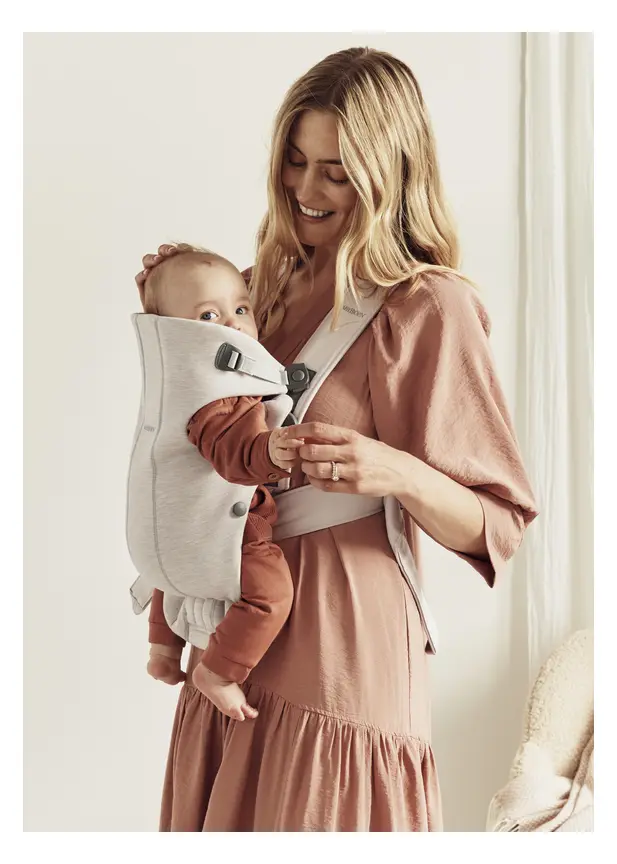
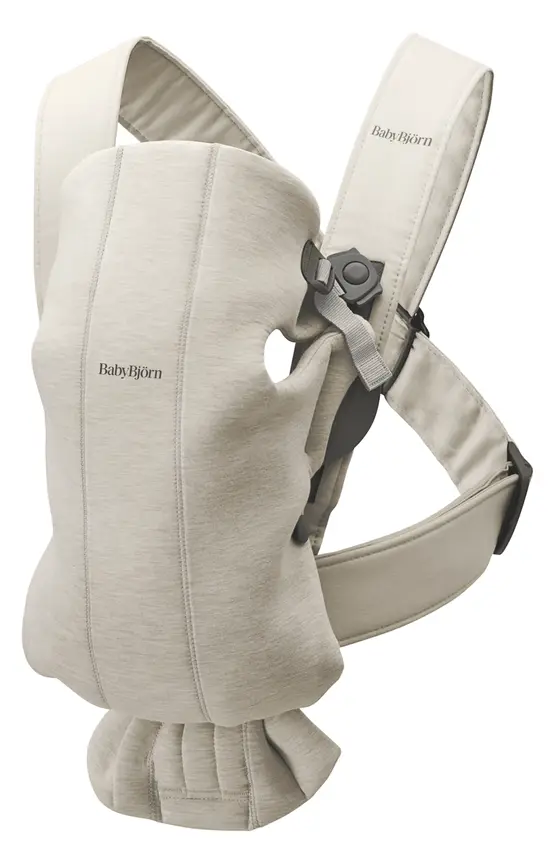
BabyBjörn Baby Carrier Mini
Simple, soft newborn carrier for roughly 0–12 months, with three carrying positions and an easy front opening.
Read our full review →
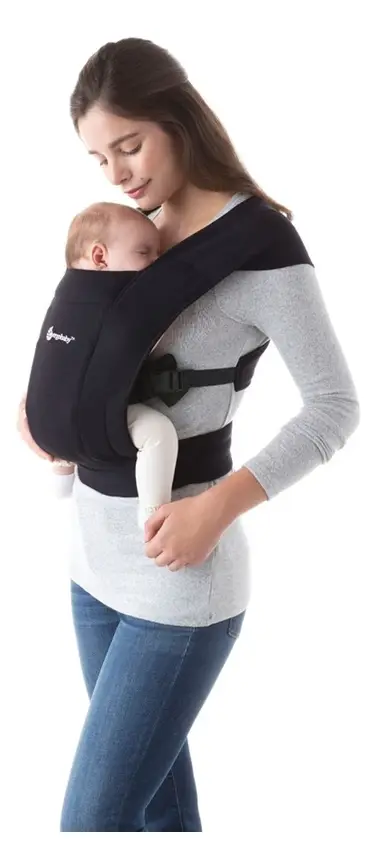


Ergobaby Embrace
A soft knit newborn carrier that buckles on, with no long wrapping.
Read our full review →FAQ
How hot is too hot to use a baby carrier?
There's no set number. It depends on shade, humidity, your carrier and your baby. If you feel hot and sticky just standing in the shade, your baby will feel hotter against you. On those days, use a pram in the shade or stay inside somewhere cool.
Can I use a sun cover over the carrier?
Only if it stays away from your baby's face and you can still see them. Shade from a hat, umbrella or trees is better. Never drape a cloth over your baby's head.
Do mesh carriers keep babies cool?
They help air move, so they trap less heat than thick carriers. They don't stop overheating on their own. You still need light clothes, shade and regular checks.
Can my baby wear a snowsuit in a carrier?
It's better not to. Use thin layers on your baby and a babywearing coat or cover over both of you.
Is a babywearing coat worth buying?
If you carry your baby often in cold weather, it can be easier than a cover. A coat extender that zips into your own coat is a cheaper choice. Both work, as long as your baby's face stays clear.
Can my baby nap in the carrier?
Babies often fall asleep while being carried. Keep checking their face and chin. For long sleeps, move them to their own flat, safe sleep space, on their back.
What should I do if my baby seems too hot?
Take them out of the carrier, move to a cool place, take off a layer and offer a feed. Get medical help straight away if they are floppy, very sleepy, hard to wake or not feeding.
Sources
- Product Safety Australia – Baby carriers, wraps and slings guide
- Red Nose Australia – Slings and baby carriers
- Raising Children Network – Baby carrier, sling and backpack safety
- Pregnancy, Birth and Baby – Babies in hot weather
- The Lullaby Trust (UK) – Baby slings and carriers
- NHS Cheshire and Wirral Partnership – TICKS rule for safe babywearing (PDF)
- U.S. CPSC – New federal standard for infant sling carriers
- U.S. CPSC – Safe babywearing and sling suffocation warning
- Pregnancy, Birth and Baby – Sun and heat protection for babies and kids
- Health Canada – Recalls and safety alerts
Related guides
More Clothing & Accessories →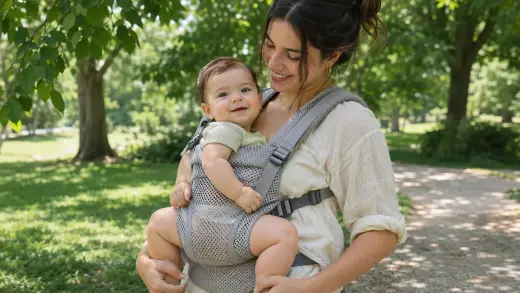
Baby Carriers in Hot Weather: Choosing Mesh and Keeping Your Baby Cool
Choosing Your Baby's First Shoes: Barefoot Time, Wide Toe Boxes, and Safe Fit

Safe Babywearing: The M-Position for Hips and the TICKS Airway Checklist