










Baby Carriers for Newborns and Toddlers: How to Choose and Use One Safely
How to choose and use a baby carrier safely for newborns and toddlers. Covers wraps, slings, buckle carriers, hip health, and the TICKS safety check.

On this page
- Key points
- Why babies need the right carrier
- Main types of baby carriers compared
- How to use any carrier safely: the TICKS rule
- Protecting your baby's hips
- Carriers by age and stage
- How to choose a carrier that fits you and your baby
- Safety rules in Australia, the UK, the US and Canada
- Common mistakes to avoid
- Looking after your own back and shoulders
- Frequently asked questions
- Sources
Short answer: A good baby carrier keeps your baby upright, tight against your chest, and easy to see. Follow the TICKS rule every time you put it on. Keep your baby's face clear, chin off their chest, and legs in a wide frog shape. Pick a carrier that fits your body and matches your baby's weight and stage.
This safety advice is shared across Australia (Product Safety Australia, Red Nose and Raising Children Network), the UK (The Lullaby Trust, NHS and the Office for Product Safety and Standards), the US (Consumer Product Safety Commission and American Academy of Pediatrics) and Canada (Health Canada and the Canadian Paediatric Society).
Key points
- Airway first: Your baby's chin must never press down onto their chest. Their nose and mouth must stay clear.
- High and tight: Hold your baby close enough to kiss the top of their head with ease.
- Healthy hips: Support the thighs from knee to knee so the legs form an M shape.
- Right fit for age: Newborns need full head and neck support. Toddlers need a wider seat and strong waist support.
- Avoid bag slings: Curved pouch or bag-style slings can curl a baby into a C shape and block their breathing.
- Watch the heat: Your body warms your baby. Dress them in light layers and check their skin often.
Why babies need the right carrier
Carrying your baby keeps your hands free while keeping your baby close. Many babies cry less and settle faster when held against a parent's chest. Yet a newborn's body is very different from an adult's body.
Weak neck muscles and heavy heads
Newborn babies have weak neck muscles and large, heavy heads. They cannot lift or turn their heads well on their own. If a carrier lets a baby slump forward, their chin drops onto their chest.
This bent neck position can pinch their soft windpipe. Babies can stop breathing quietly without making a sound or crying out. Health groups call this positional asphyxiation. Keeping your baby upright, tight, and supported stops their head from slumping.
Soft hip joints
A baby's hip joints are soft cartilage at birth, not hard bone yet. If a carrier lets the legs dangle straight down, it puts pressure on the hip sockets. Over time, this can harm how the joint forms.
A safe carrier holds the thighs up and out. The knees sit higher than the bottom, like a frog.
Heat builds up fast
Babies cannot cool down as well as adults. When your baby is strapped to your chest, you share body heat. Thick fabrics or extra clothes can make a baby overheat quickly.
Always count the carrier itself as at least one layer of clothing. Feel the back of your baby's neck or tummy to check if they feel sweaty or hot.
Baby Carriers & Wraps worth a look
Real products from our catalogue. We don't show star ratings or review counts; check the current price, stock and reviews on Amazon before you buy.
 Reviewed
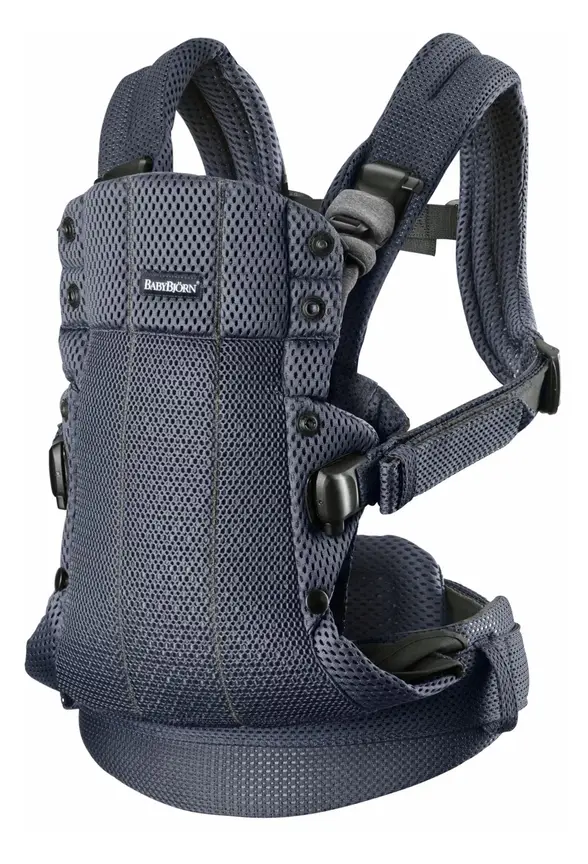
BabyBjörn Baby Carrier Harmony
A premium carrier with four positions, from 3.2 kg newborns to about 3 years.
Read our full review →


Ergobaby Upsie Sling Carrier
A quick hip sling for toddlers who want up and down a lot. It folds small.
Read our full review → Reviewed
4baby 3 Way Baby Carrier
A very low-cost carrier with 3 positions, for babies 3.6 to 9 kg.
Read our full review →
BabyBjörn Baby Carrier Mini 3D Jersey
Newborn baby carrier
Main types of baby carriers compared
No single carrier works best for every family or every age. Some are soft and cosy for tiny newborns. Others have padded straps that take the weight of a heavy toddler.
| Carrier type | Best age | Pros | Watch-outs |
|---|---|---|---|
| Stretchy wrap | Birth to around 6 months | Soft, snug, moulds to tiny babies. | Can sag as baby gets heavier. Can feel warm in summer. |
| Woven wrap | Birth to toddler | Very supportive, many ways to tie, lasts for years. | Takes practice to wrap well. Long fabric tails touch the ground. |
| Ring sling | Birth to toddler | Quick to put on, folds small, great for hip carries. | Weight sits on one shoulder. Needs careful threading. |
| Soft-structured buckle carrier | Newborn (with insert or narrow seat) to toddler | Easy buckles, even weight on hips and shoulders, easy to share. | Must fit baby's size. Some need an infant insert at first. |
| Meh dai (tie-on carrier) | Birth to toddler | Mixes wrap softness with a structured panel. Fits different carers well. | Long straps to tie. Takes a little practice. |
| Hip seat carrier | Babies who can sit alone to toddler | Quick up-and-down for toddlers. Takes weight off arms. | Not for newborns. Most still need one hand on the child. |
| Framed hiking backpack | Babies who sit well alone (usually 6 months+) to toddler | Great airflow, storage space, built for long walks. | Bulky indoors. Needs careful balance when lifting on and off. |
Stretchy wraps
A stretchy wrap is one long piece of soft, stretchy cotton or jersey fabric. You tie it around your body first, then slide your baby in. Many new parents love it because it feels like a warm hug.
Stretchy wraps work best for newborns and small babies. Once a baby gets heavier, stretchy fabric starts to bounce and sag. Check the weight limit on the label, and stop using it when your baby feels heavy or sags down.
Woven wraps
A woven wrap looks like a stretchy wrap, but the fabric does not stretch. It is strong enough to hold both a newborn and a heavy preschooler. You can tie it on your front, hip, or back.
Woven wraps have a learning curve. You must tighten the fabric strand by strand so your baby stays high and secure. Once you learn one basic tie, it becomes much faster.
Ring slings
A ring sling is a length of woven fabric with two strong rings sewn to one end. You loop the fabric through the rings to make a pouch across one shoulder. It is fast to slip on for short trips or quick school runs.
Because all the weight rests on one shoulder, ring slings can feel tiring on long walks with an older baby. Spread the fabric wide over your shoulder and back to share the load better.
Soft-structured buckle carriers
These are the most popular carriers for everyday use. They have a padded waistband, shoulder straps, and plastic buckles. Most click on in seconds without tying knots.
Some buckle carriers adjust at the seat width to fit newborns straight away. Others need a separate newborn insert or rolled-up blanket until your baby grows taller. Always read the manual for your baby's exact weight and height.
Meh dai carriers
A meh dai (sometimes spelled mei tai) has a square fabric body with four long straps. You tie the waist strap and shoulder straps around you. There are no buckles to adjust when two parents of different sizes share the carrier.
It gives the soft, close feel of a wrap without needing to learn complex folds. Like woven wraps, you can use it on your front, hip, or back as your baby grows.
Hip seats
A hip seat is a firm padded shelf that straps around your waist. Your child sits on the shelf while you hold them with one arm, or with an attached back panel. These are handy for toddlers who want to walk, then be carried, then walk again.
Never use a hip seat for a newborn or a baby who cannot sit up steadily on their own.
Framed hiking backpacks
Hiking carriers have a metal frame, padded hip belt, and a built-in seat for your child. They keep air flowing between your back and your child, which helps on hot trails.
Your baby must have strong head, neck, and back control and be able to sit unaided before riding in a framed pack. Always use the five-point harness inside the pack, and never set a loaded pack down on a high table or bench.
How to use any carrier safely: the TICKS rule
Safety experts in the UK, Australia, and around the world teach the TICKS rule. Check these five points every single time you put your baby in a sling or carrier.
| Letter | Stands for | What to check |
|---|---|---|
| T | Tight | Fabric is snug against your body. Your baby does not slump when you lean forward slightly. |
| I | In view at all times | You can see your baby's face with just a glance down. No fabric covers their head or nose. |
| C | Close enough to kiss | Your baby's head sits high on your chest. You can bend your head down and kiss their forehead. |
| K | Keep chin off the chest | You can fit at least two fingers under your baby's chin. Their head is not curled forward. |
| S | Supported back | Your baby's back rests in a natural curve against you. Their tummy and chest face your body. |
If your baby is in a ring sling or wrap, check that the fabric comes up to the nape of their neck. It should support their head without covering their face. Do not tuck their head deep inside a wrap tail where you cannot see their nose and mouth.
When you bend down to pick something up, bend at your knees, not at your waist. Keep one hand over your baby's back whenever you lean or move quickly.
Protecting your baby's hips
The International Hip Dysplasia Institute recommends carrying babies in a wide-leg position. This is often called the M-position or frog position.
Look at your baby from the front in a mirror:
- Their bottom sits lower than their knees.
- Their knees point slightly outward and are supported by the carrier seat.
- The fabric stretches from the back of one knee to the back of the other knee.
- Their thighs are supported, not hanging straight down.
If the seat is too narrow, your baby's legs dangle straight down. This pulls on the hip joint. If the seat is too wide for a tiny newborn, it forces their knees open too far. Look for a carrier with an adjustable seat width, or use a wrap you can spread cleanly to the knee crease.
Pay extra care if your baby had breech birth, a family history of hip problems, or wears a hip brace. Ask your doctor or child health nurse to check your carrier fit.
Carriers by age and stage
Your baby's needs change fast in the first two years. A setup that feels great at three weeks will feel very different at nine months.
| Age stage | What your baby can do | Best carry positions | Key safety checks |
|---|---|---|---|
| Newborn (0 to 4 months) | Little or no head control. Sleeps often. | Front carry, facing inward towards your chest. | Check weight minimum. Keep head high, face visible, and chin off chest. |
| Older baby (4 to 12 months) | Holds head steady. Looks around more. Sits with support, then alone. | Front inward, hip carry, or back carry (when sitting unaided). | Do not face outward until neck control is strong. Switch inward if baby gets sleepy. |
| Toddler (12 months+) | Walks, climbs, wants up and down often. | Back carry, hip carry, or front inward for cuddles. | Check upper weight limit. Use wide waist belt to protect your back. |
Newborns (0 to 4 months)
Newborns should only be carried upright on your front, facing your chest. Never carry a newborn facing outward, because they cannot hold their heavy head up. Never carry a newborn on your back in a standard buckle carrier, as you cannot watch their breathing.
Check the minimum weight on your carrier label. Most buckle carriers start at 3.2 kg or 3.5 kg. If your baby was born early or is very small, talk to your midwife, doctor, or local babywearing group before using a carrier.
Older babies (4 to 12 months)
Around four to six months, babies gain steady head control and want to see the world. A hip carry in a ring sling or buckle carrier lets them look around while still letting them turn back to you if they feel tired or shy.
Some buckle carriers allow short periods of front outward-facing carrying once a baby has strong head and neck control and meets the carrier's height rule. Even then, keep outward-facing time short, and turn your baby back towards your chest as soon as they look tired or fall asleep.
Toddlers (12 months and older)
A back carry feels much lighter when your child weighs 10 kg or more. It leaves your front clear so you can see your feet, climb stairs, and hold a hand if you have another child. Most buckle carriers, woven wraps, meh dais, and hiking packs work well for back carries.
Toddlers often lean back or wiggle. Tighten the top of the carrier panel well and check that the panel reaches up near their armpits or shoulder blades so they cannot arch out.
Side by side: more baby carriers & wraps to compare
Real products from our catalogue. We don't show star ratings or review counts; check the current price, stock and reviews on Amazon before you buy.
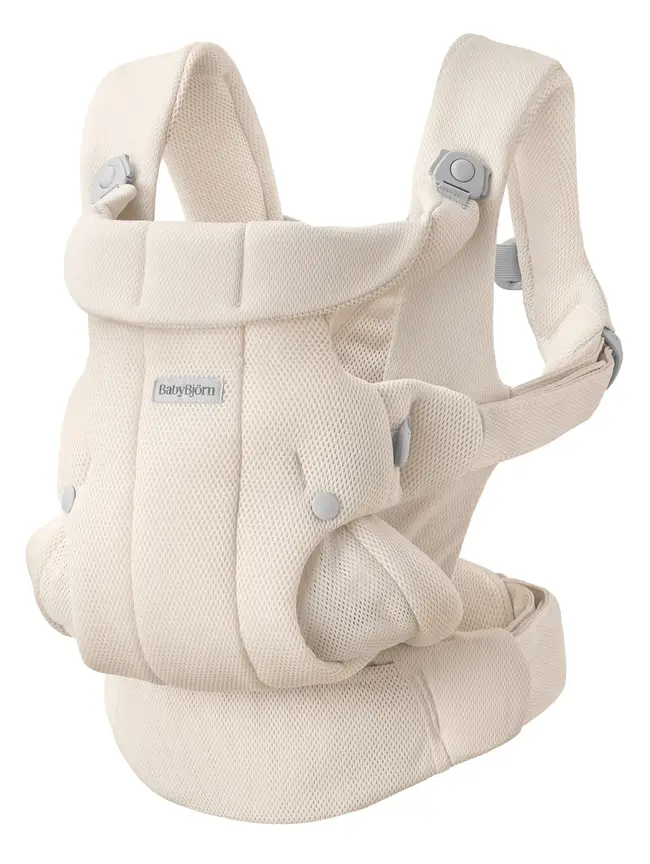
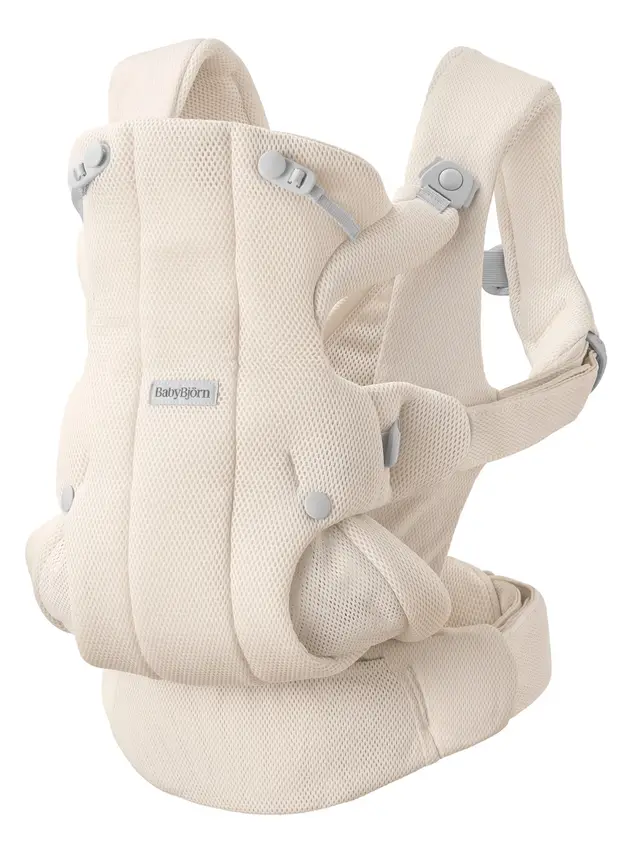
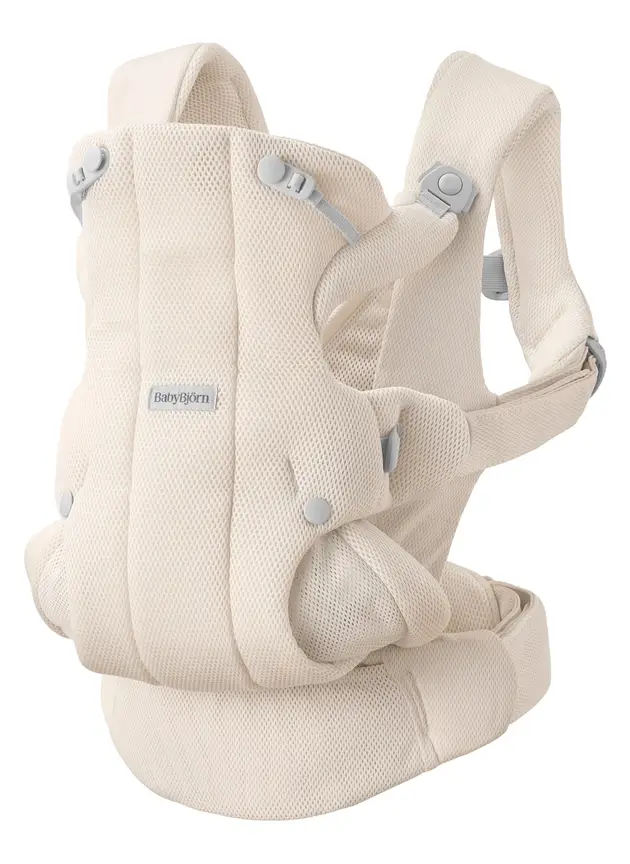
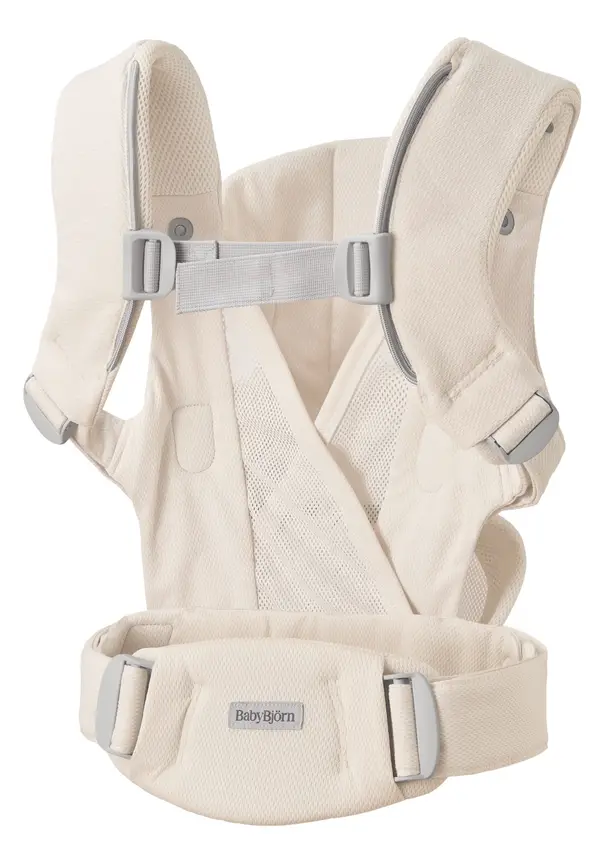
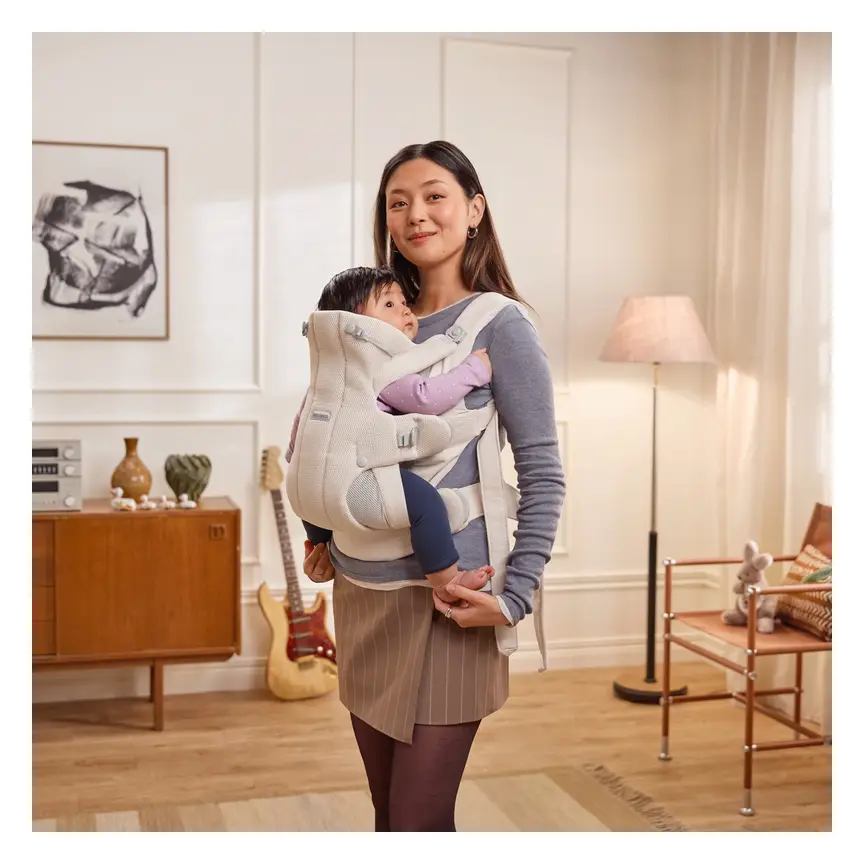
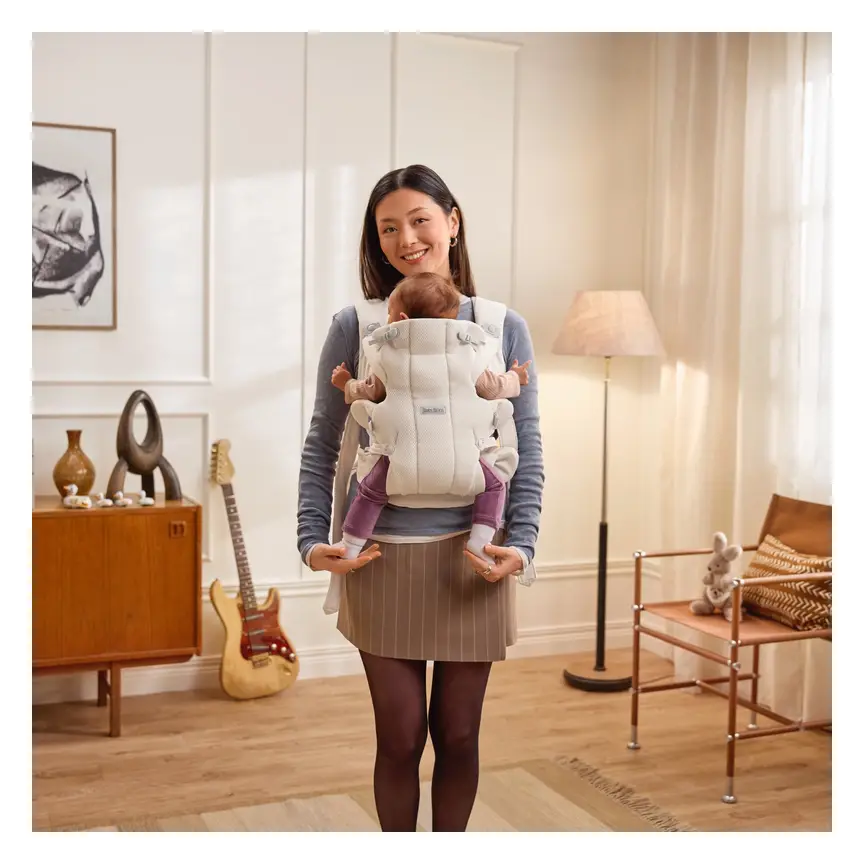

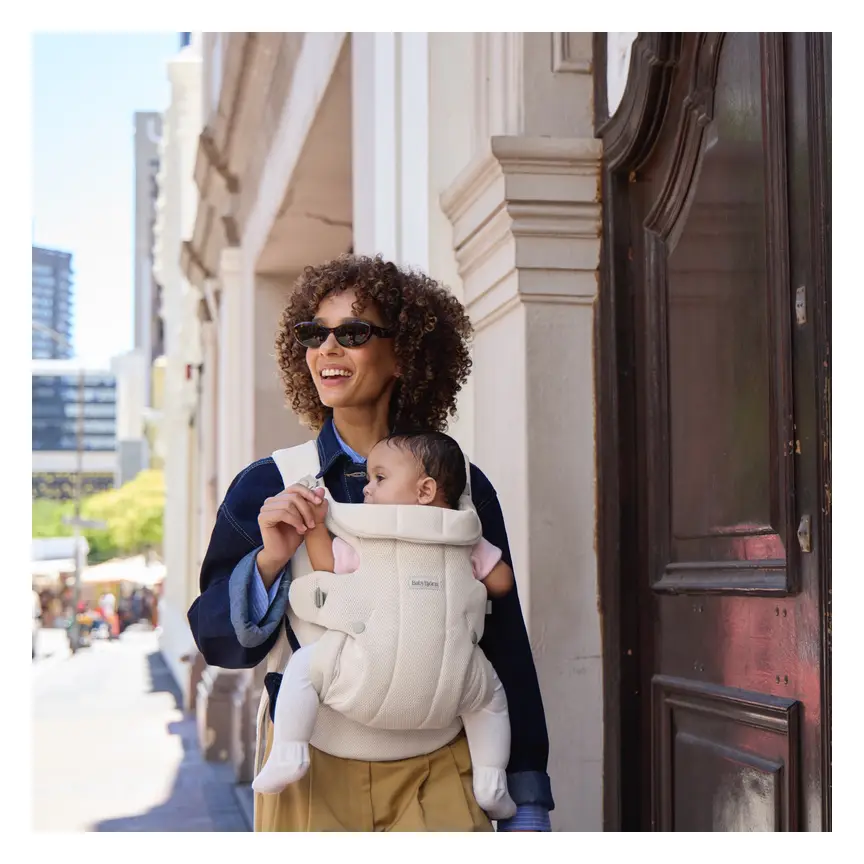
BabyBjörn Baby Carrier Hold
A soft front carrier from newborn to 18 months that fits XS to XXL parents.
Read our full review →
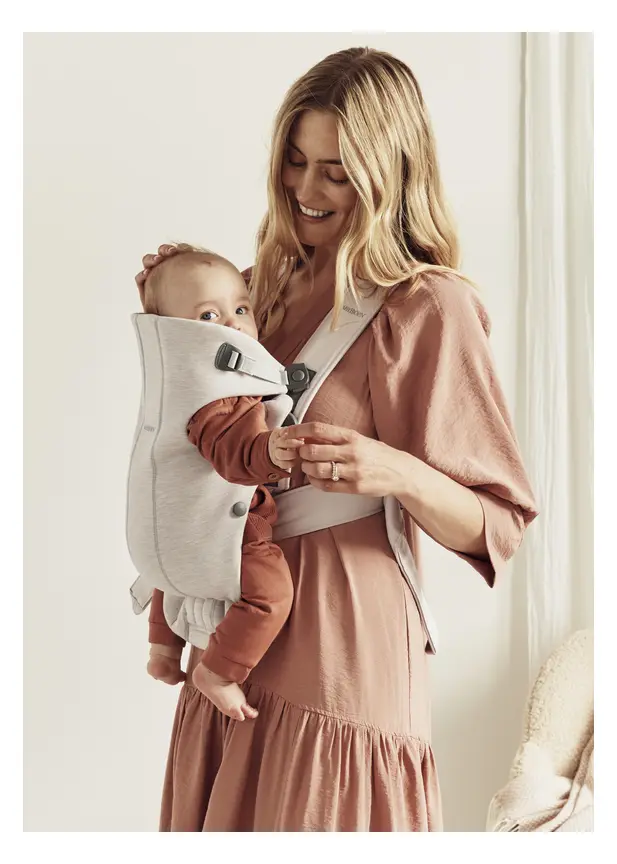
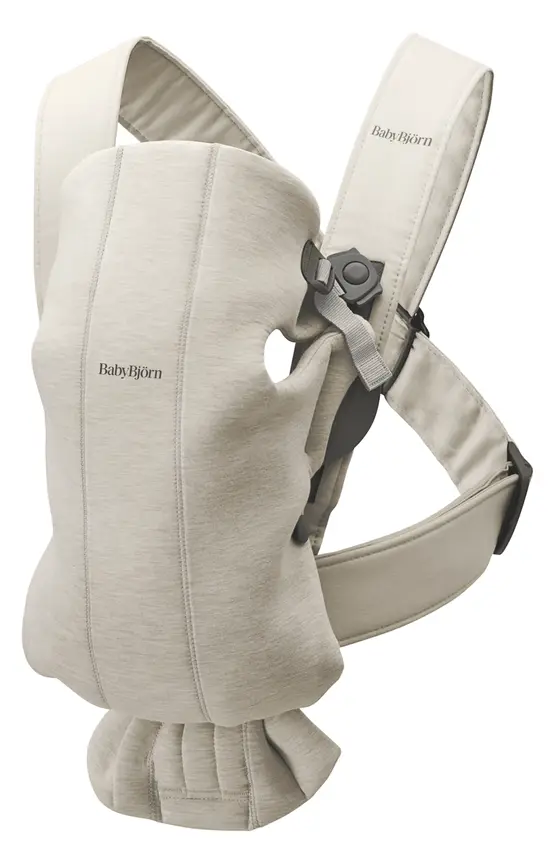
BabyBjörn Baby Carrier Mini
Simple, soft newborn carrier for roughly 0–12 months, with three carrying positions and an easy front opening.
Read our full review →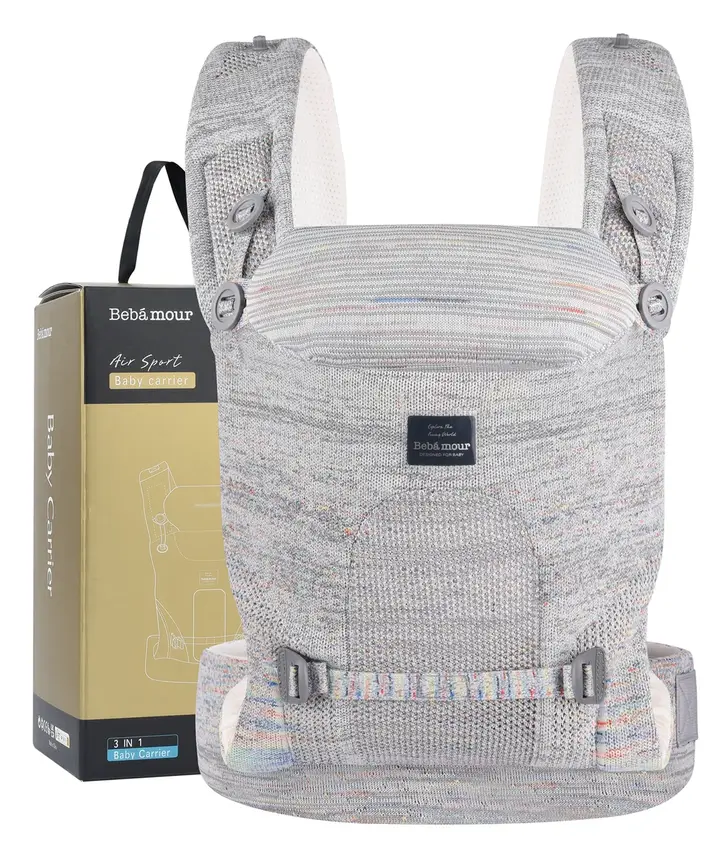

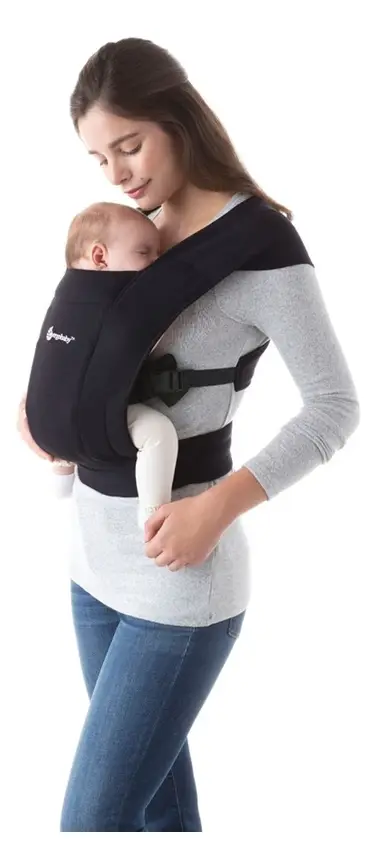


Ergobaby Embrace
A soft knit newborn carrier that buckles on, with no long wrapping.
Read our full review →How to choose a carrier that fits you and your baby
The safest carrier is the one you find easy to put on correctly every time. A pricey carrier with fiddly straps will sit in the cupboard if it frustrates you.
Try it on if you can
Every adult has a different torso length and shoulder width. A carrier that feels dreamy for one parent might dig into another parent's ribs or slip off narrow shoulders. Many towns have babywearing libraries where you can borrow and test different styles before you buy.
Think about who will wear it
If two carers of very different heights will share one carrier, look for easy-to-adjust straps or a tie-on meh dai. If you have two different body shapes, buying two simple carriers can sometimes beat fighting with straps every morning.
Check climate and fabric
Thick padded carriers hold heat. If you live somewhere hot or humid, look for lightweight cotton, linen, bamboo blends, or breathable mesh panels. In cold weather, put the carrier on over your normal indoor clothes, then zip a large coat or carrier cover over both of you. That way you can unzip indoors without waking a sleeping baby.
Check buckle and seam quality
Before each use, glance at the stitching, fabric, rings, and buckles. Look for cracked plastic, frayed webbing, or loose threads. If you buy a secondhand carrier, check that the model has not been recalled, and make sure the manual is included or easy to read online.
Safety rules in Australia, the UK, the US and Canada
Different countries oversee baby carriers in slightly different ways. None of them rely on a single magic label alone, so your daily checks still matter most.
| Country | Main official bodies | Safety rules and guidance |
|---|---|---|
| Australia | ACCC (Product Safety Australia), Red Nose, Raising Children Network | No single mandatory carrier standard, though sling safety falls under general consumer law. Product Safety Australia and Red Nose teach the TICKS rule and warn against curved bag slings. |
| UK | Office for Product Safety and Standards (OPSS), The Lullaby Trust, NHS | General product safety laws apply, alongside voluntary European safety rules for soft carriers and slings. The Lullaby Trust and NHS promote the TICKS checklist. |
| US | Consumer Product Safety Commission (CPSC), American Academy of Pediatrics (AAP) | Mandatory federal safety rules cover both infant sling carriers and soft infant and toddler carriers. CPSC warns parents to keep newborn faces visible and airways open at all times. |
| Canada | Health Canada, Canadian Paediatric Society (Caring for Kids) | Carriers must meet general product safety rules under Canadian law. Health Canada posts recalls online and advises parents to keep babies upright with clear airways. |
Before buying any carrier—especially a cheap one online or a secondhand one—search your national recall list:
- Australia: Product Safety Australia recalls page
- UK: GOV.UK product recalls and alerts
- US: CPSC recalls database
- Canada: Health Canada recalls and safety alerts
Avoid unbranded carriers from unknown overseas sellers. They may use weak plastic buckles, unsafe stitching, or wrong labels that skip weight testing.
Common mistakes to avoid
Most carrier accidents happen from how a carrier is worn, not from a broken strap. Watch out for these common traps:
- Using a curved bag-style sling: Deep pouch slings press a baby's chin onto their chest and hide their face from view. Health bodies in all four countries warn against them for young babies.
- Wearing the baby too low: If the waistband sits on your hips instead of your waist, the baby drops down near your belly. This hurts your back and makes it hard to see their face.
- Letting fabric cover the face: Never pull a wrap pass, hood, or breastfeeding cover over your baby's nose and mouth. Fresh air must reach them freely.
- Sleeping outward facing: If a baby falls asleep while facing outward, their head can flop forward with nothing to rest against. Always turn them to face your chest for naps.
- Doing risky chores while wearing a baby: Never cook at a hot stove, carry hot drinks, run, cycle, skate, or ride in a car with your baby in a carrier. A carrier is not a car seat and offers zero crash protection.
- Forgetting to adjust for growth: As your baby grows longer and heavier, widen the seat panel and raise or adjust the straps so they stay well supported.
Looking after your own back and shoulders
A carrier should feel comfortable for you as well as your baby. If your lower back aches within ten minutes, something needs adjusting.
Put the waistband high and snug around your true waist, not low on your hips. Make sure the straps sit flat on your shoulders without twisting. Spread wrap fabric wide across your back so the weight does not dig into one spot.
Start with short wears of 15 to 20 minutes while your body builds strength, especially in the first weeks after birth. If you had a caesarean birth or pelvic floor issues, ask your doctor or physiotherapist when it is safe to start carrying.
More options, from budget to premium
Real products from our catalogue. We don't show star ratings or review counts; check the current price, stock and reviews on Amazon before you buy.
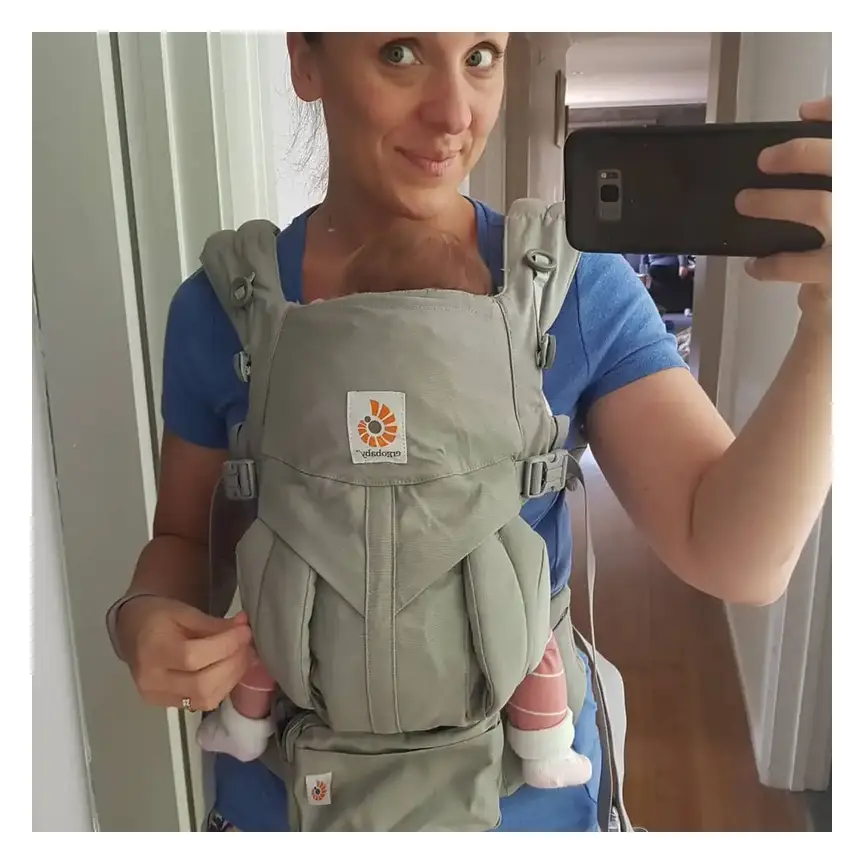
Ergobaby Omni 360 Cool Air Mesh Baby Carrier
All-position carrier
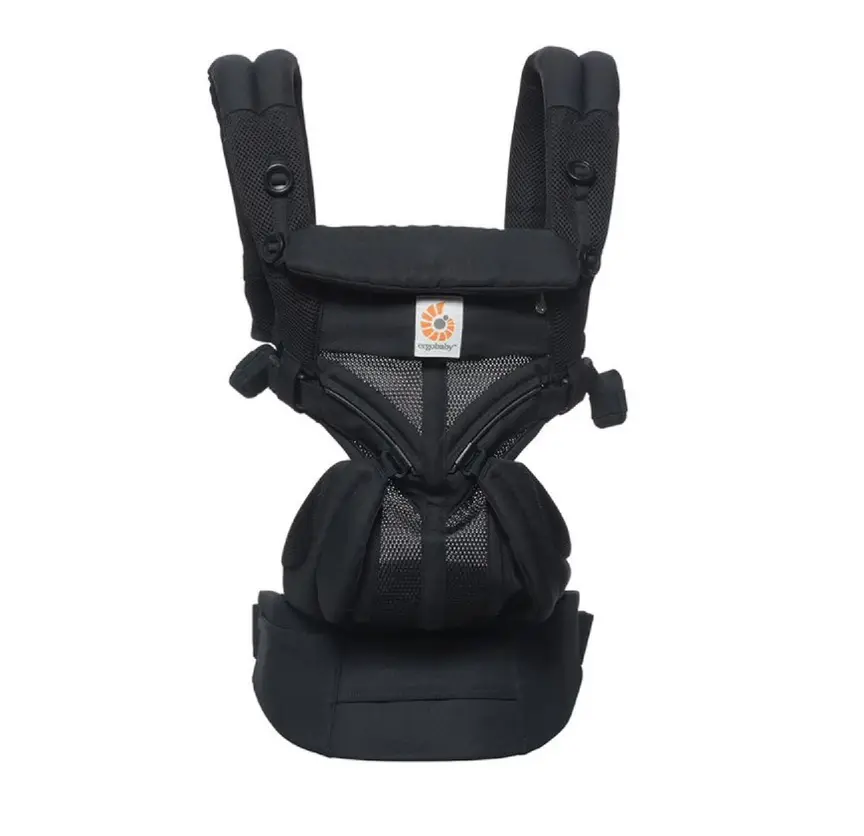 Reviewed
Ergobaby Omni Classic Mesh
An all-position mesh carrier from newborn to toddler with no insert needed.
Read our full review →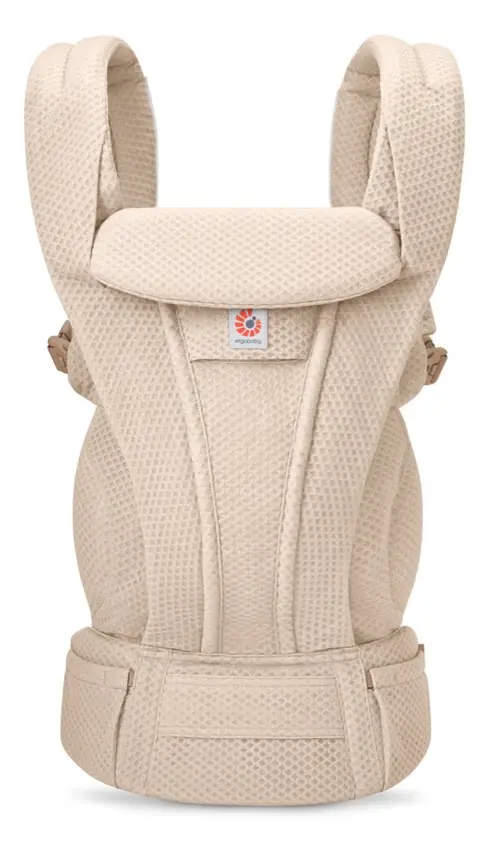 Reviewed
Ergobaby Omni Deluxe Mesh
The top Omni carrier, with 6 storage spots and strap markers that make it easy to swap between parents.
Read our full review →Frequently asked questions
Can a newborn go in a baby carrier straight away?
Yes, as long as your baby meets the carrier's minimum weight and you follow the TICKS rule. Most soft wraps, ring slings, and adjustable buckle carriers fit full-term newborns from around 3.2 kg or 3.5 kg. If your baby was born early or has breathing or muscle concerns, ask your doctor first.
Is it safe for my baby to sleep in a carrier?
Yes, babies often nap in carriers while you are awake and moving around. Keep your baby upright against your chest, with their head high, face visible, and chin off their chest. Check their breathing often, and never lie down to sleep yourself while wearing your baby in a carrier.
When can my baby face outwards?
Wait until your baby can hold their head steady on their own and meets the carrier's age and height guide, usually around 4 to 6 months. Only face outward for short times when your baby is awake and alert. Turn them back towards you if they get overstimulated or sleepy.
Are bag-style slings safe?
No, curved bag-style or duffle-style slings are not recommended for newborns and young babies. They curl the baby into a C shape that pushes the chin onto the chest and blocks airflow. Stick to upright wraps, ring slings, or structured carriers that hold your baby high and flat against you.
How do I dress my baby in a carrier in warm or cold weather?
In warm weather, dress your baby in just a singlet and nappy, plus a wide-brim sun hat and shade for bare legs and arms. The carrier counts as a layer of clothing. In cold weather, dress your baby in normal indoor clothes, put them in the carrier, and wear a warm coat over both of you, keeping your baby's face completely uncovered. Keep feet and hands warm with socks and mittens, as snowsuits can make a baby too hot or push their hips into a bad angle.
Can I breastfeed or bottle-feed in a carrier?
You can breastfeed in some wraps, ring slings, and buckle carriers by loosening the straps a little to lower your baby to breast height. Watch your baby the whole time and keep their nose clear of breast tissue and fabric. As soon as they finish feeding, tighten the carrier straight back up so they are high, upright, and close enough to kiss again. Do not bottle-feed hands-free in a carrier, as you need to watch and hold the bottle safely.
When should I stop using a baby carrier?
Stop using a carrier as soon as your child reaches the weight or height limit printed on the label, or when carrying feels unsafe or painful for your back. Many buckle carriers go up to 15 kg or 20 kg, and hiking packs often hold toddlers up to around 18 to 22 kg. If you see any torn seams, cracked buckles, or stretched-out fabric, stop using that carrier right away.
Sources
- Product Safety Australia – Baby carriers, wraps and slings guide
- Raising Children Network – Baby carrier, sling and backpack safety
- Red Nose Australia – Slings and baby carriers
- The Lullaby Trust (UK) – Baby slings and carriers
- NHS Cheshire and Wirral Partnership – TICKS rule for safe babywearing (PDF)
- U.S. CPSC – New federal standard for infant sling carriers
- International Hip Dysplasia Institute – Baby wearing
- Health Canada – Recalls and safety alerts
Related guides
More Clothing & Accessories →
Baby Wrap Carriers: How to Choose and Use One Safely

Adjustable Baby Carriers: How to Choose and Use One From Newborn to Toddler

Hip Seat Carriers for Toddlers: How to Choose a Safe, Comfortable Lumbar Belt
