






How to Choose Comfortable, Safe Clothes for Your Newborn
Choose newborn clothes for comfort, easy changes and safer sleep. Learn about fit, layers, fabrics, car seats and guidance from four countries.

On this page
- What newborn clothes need to do
- Choosing fabric and checking your baby's skin
- Fit, fasteners and practical details
- How many clothes to prepare
- Dressing for warmth and changing weather
- Clothes for sleep
- Clothes in a car seat
- Sun and outdoor clothing
- Country guidance and official bodies
- Quick comparison: common newborn clothing choices
- Washing and storing baby clothes
- Common mistakes to avoid
- Frequently asked questions
- Sources and further guidance
- Sources
Short answer: Choose soft clothes that fit your baby now. Look for easy openings, secure fasteners and room to move. Dress your baby for the room and weather. Check their chest or back to see if they feel warm. For sleep, keep the face and head uncovered. Remove loose items, hoods and accessories before placing your baby down.
Newborn clothes do not need to be fancy. A small set of useful pieces is easier to wash, store and use. Babies grow at different speeds, so buy only a few items in each size. Comfort, fit and safe use matter more than fabric labels or fashion.
What newborn clothes need to do
Newborn clothes should keep your baby comfortable while allowing easy movement. They should not pinch, rub or make breathing harder. A good outfit also makes nappy changes less of a struggle.
Babies can be changed many times in one day. Choose clothes that open at the front, legs or crotch. This can help when your baby is sleepy or wriggly. Wide neck openings can make dressing easier, too.
Clothes should fit close enough to stay in place. They should still leave room for your baby to bend their arms and legs. Check around the neck, wrists, ankles and waist. Take off anything that leaves marks or seems tight.
Clothes are only one part of keeping a baby safe. A warm outfit does not replace a safe sleep space. Follow local guidance for sleep, car seats and sun protection. If your baby was born early or has a health condition, ask their care team about clothing needs.
Choosing fabric and checking your baby's skin
Soft cotton is a common choice for everyday baby clothes. The feel matters more than a claim on the label. Touch the inside seams and check for rough patches. Skip any item that scratches your hand or seems stiff.
Some families choose other fabrics, such as wool or bamboo fabric. Each garment can feel and behave differently. Read its care label and see how it feels against your baby's skin. No fabric can be promised to prevent a rash or allergy.
Newborn skin can react to friction, moisture, heat, detergents or an individual product. If a garment causes redness or discomfort, remove it. Wash new clothes before use, following the care label. Use a detergent that suits your household and rinse clothes well.
Avoid making decisions from words such as “natural”, “organic” or “hypoallergenic” alone. Those labels do not tell you how every baby will react. They also do not guarantee that a garment is safer for sleep or travel.
Check your baby's skin during changes and baths. Look for red areas where fabric rubs or stays damp. Change wet or dirty clothes promptly. If a rash is severe, spreads, or does not improve, contact a health professional.
Fit, fasteners and practical details
Check the garment size guide, but use your baby's shape as the final guide. Clothing sizes vary between makers. Your baby may need a larger size in one brand and a smaller size in another.
- Neck: the opening should pass over the head without force. It should not sit tightly against the throat.
- Arms and legs: your baby should bend and stretch without tight cuffs or seams.
- Body: the fabric should not pull across the chest, tummy or nappy.
- Fasteners: check that snaps and zips stay attached and do not press into skin.
- Decorations: skip loose buttons, beads, bows and other parts that could come away.
- Strings: avoid ties and cords near the neck or face.
- Labels and seams: remove or cover anything that scratches, while keeping the garment safe and intact.
Many parents find front-opening tops and all-in-one suits useful. A zip can be quick, but check for a fabric guard at the top. Snaps can make nappy changes simple, but check each one is secure. Choose the style you can use calmly and safely.
Footed suits can help keep little feet covered indoors. Check that the feet are not tight when your baby stretches. If the garment has built-in mittens, make sure they do not cover the face or come loose. Do not use clothing accessories as a substitute for supervision.
How many clothes to prepare
There is no single number that suits every family. The amount depends on laundry access, climate, spills and how often you can wash. A small starter set is often enough. Add more after you learn what fits and what your baby uses.
For each size, consider a few everyday outfits, sleepwear, socks if needed, and weather layers. You may also want spare clothes in a change bag. Avoid buying a large stack of one newborn size before you know how long it will fit.
Second-hand clothes can be useful when they are clean and in good condition. Check seams, fasteners, elastic and fabric. Do not use items with missing parts, long loose cords or damaged closures. Follow current local recall advice for products where it applies.
Keep special outfits practical. A photo outfit should still allow breathing, movement and a quick change. Remove hats, headbands and decorative items before sleep. Never leave a baby unattended on a raised surface while changing clothes.
Dressing for warmth and changing weather
Babies need help staying comfortable in changing temperatures. There is no fixed number of layers for every room or season. Indoor heating, shade, wind and your baby's health all affect clothing needs.
Use light layers that are easy to add or remove. Check your baby's chest or back with your hand. Hands and feet can feel cooler than the body, so they are not the best guide on their own.
If your baby's chest or back feels hot or sweaty, remove a layer. If the body feels cool, add a light layer and check again. Watch for signs of distress or illness. Contact a health professional if you are worried.
Do not cover a baby's face to keep them warm. Avoid putting a hat on for indoor sleep unless a clinician has told you otherwise. Hats can shift and cover the face. Keep the sleeping space clear of loose clothing and bedding.
In hot weather, choose light clothes and keep your baby out of direct sun. Use shade and follow local sun advice. Do not rely on clothing alone to protect a baby outdoors. Never leave a baby in a hot car, even briefly.
Clothes for sleep
For sleep, dress your baby in comfortable clothing suited to the room. Keep the head and face uncovered. Do not add a hood, bib, necklace or loose accessory. Remove items that could cover the nose or mouth.
Place your baby in a safe cot or bassinet, following local safe sleep guidance. Keep loose items out of the sleep space. Clothes do not make an unsafe sleep surface safe. A baby should not sleep in an outfit that restricts breathing or movement.
Some families use a correctly sized baby sleeping bag. Check the maker's instructions and local safe sleep advice. It should fit around the neck and arms so the baby cannot slip inside. Do not add a sleeping bag over a swaddle or other restrictive garment.
If you swaddle, follow current advice from your local health body. Stop when your baby shows signs of trying to roll. A baby who can roll needs their arms free. Never use weighted clothing or weighted sleep products for infant sleep.
For more detail, the Lullaby Trust explains how to dress a baby for sleep. Red Nose Australia and the American Academy of Pediatrics also give safe sleep advice. In Canada, the Canadian Paediatric Society shares guidance for families.
Clothes in a car seat
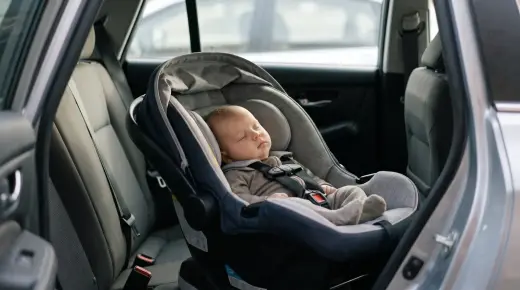
Bulky coats and padded suits can affect how a car seat harness fits. The harness needs to sit snugly against your baby's body. Follow the car seat maker's instructions and advice from your local road safety authority.
For a cold journey, dress your baby in thin layers. Secure the harness first. Then place a blanket over the fastened harness, keeping it away from the face. Remove the blanket if your baby becomes too warm.
Do not put a thick coat between your baby and the harness. Do not loosen the harness to fit bulky clothing. If you are unsure, ask a trained car seat fitter or your local child passenger safety service.
A car seat is for travel. When you reach your destination, take your baby out of the seat if they are no longer travelling. Follow safe sleep advice for where your baby rests next.
Sun and outdoor clothing
Newborns need protection from strong sunlight. Use shade and avoid direct sun when possible. Choose clothes that cover the skin without making your baby too hot. A broad-brimmed hat may help outdoors, but remove it for sleep.
Check the weather and local sun guidance before going out. Keep your baby in a shaded pram or carrier, while keeping air flow clear. Do not cover a pram with a blanket. It can trap heat and block airflow.
Clothing is only one part of sun protection. Follow advice from your local health service about shade, hats and sunscreen. Ask a health professional what is suitable for a young baby. Keep the baby out of direct sun where you can.
Country guidance and official bodies
Advice about clothing often sits within wider guidance on safe sleep, sun and car travel. The main sources differ by country. Check current local advice, especially when a product or rule is specific to your region.
| Country | Official or peak body | Useful clothing guidance |
|---|---|---|
| Australia | Red Nose; Pregnancy, Birth and Baby; Cancer Council Australia | Safe sleep, swaddling, hot weather and sun protection. |
| United Kingdom | The Lullaby Trust; NHS; Office for Product Safety and Standards | Sleep clothing, room temperature, newborn care and product safety. |
| United States | American Academy of Pediatrics; U.S. Consumer Product Safety Commission | Safe sleep, swaddling and consumer product safety. |
| Canada | Canadian Paediatric Society; Health Canada | Safe sleep, sun safety and product recalls. |
These bodies do not give one universal clothing list for every baby. They offer advice for specific risks and situations. Follow the guidance that applies where you live. Ask your baby's clinician when your baby's needs are different.
Quick comparison: common newborn clothing choices
| Clothing choice | Useful for | Check before use |
|---|---|---|
| Front-opening bodysuit | Easy dressing and everyday changes. | Snaps stay closed. Neck and leg openings are comfortable. |
| All-in-one suit | Keeping the body and legs covered indoors. | Fit allows movement. Zip or snaps do not press on skin. |
| Light layer | Adjusting clothes as the room or weather changes. | It can be removed easily and does not cover the face. |
| Hat for outdoors | Shade and warmth outside when suitable. | It fits securely and is removed for sleep. |
| Sleeping bag | Sleep when recommended and correctly sized. | Neck and arm openings fit. Follow the label and local advice. |
| Bulky coat in a car seat | Keeping warm before and after a journey. | Remove before harnessing. Put it over the harness only after fastening. |
Washing and storing baby clothes
Wash clothes before your baby wears them. Follow the care label. Make sure detergent is rinsed out well. If your baby seems irritated after wearing an item, stop using it and seek advice if the skin problem continues.
Keep clean clothes away from damp areas. Check stored clothes before use. Look for mould, damage, loose fasteners and stretched necks. Repair only when the result stays safe and secure.
Sort clothes by size and season. Keep a small set within easy reach for changes. Put spare clothes in your bag, but avoid filling it with items you rarely need. A simple routine can make busy changes easier.
Common mistakes to avoid
- Buying too many newborn outfits: your baby may grow out of them quickly. Start small and add what you need.
- Trusting size labels alone: sizes differ between makers. Check the fit on your baby.
- Choosing looks over ease: tight necks and many buttons can make changes harder.
- Assuming natural means safer: check the actual fabric, seams, fit and care label.
- Overdressing indoors: check your baby's chest or back and remove layers if hot.
- Leaving a hat on for sleep: remove it indoors before sleep unless a clinician advises otherwise.
- Using loose accessories: bows, cords and small decorations can come away or cover the face.
- Putting a bulky coat under a harness: it can stop the harness sitting snugly.
- Covering a pram with cloth: this can trap heat and reduce airflow.
- Keeping damaged clothes: loose parts, broken zips and stretched necks can create hazards.
Frequently asked questions
How many outfits does a newborn need?
There is no set number. Start with a small group of everyday outfits and sleepwear. Add more if laundry is hard to do often or clothes get soiled quickly. Buy only a few pieces in each size until you know what fits.
Which fabric is best for a newborn?
Choose fabric that feels soft against your baby's skin and suits the weather. Cotton is a common choice. Other fabrics can work too. No fabric suits every baby, so watch for rubbing or skin changes.
Should a baby wear a hat indoors?
Usually, remove hats indoors and during sleep. A hat can shift and cover the face. Follow your clinician's advice if your baby needs special care.
How can I tell if my baby is too hot?
Feel your baby's chest or back. If the skin feels hot or sweaty, remove a layer. Hands and feet can feel cooler than the body. Seek medical help if your baby seems unwell or you are worried.
Can my baby wear a coat in a car seat?
A bulky coat can stop the harness from fitting closely. Dress your baby in thin layers, fasten the harness snugly, then place a blanket over it if needed. Follow the seat maker's instructions.
Are second-hand baby clothes safe?
They can be useful if they are clean and in good condition. Check fasteners, seams, elastic and fabric. Do not use clothes with loose parts, long cords or damage.
What should my baby wear to sleep?
Use comfortable clothes suited to the room and follow local safe sleep guidance. Keep the face and head uncovered. Use a sleeping bag only if it fits correctly and follows the maker's instructions.
Should I buy clothes in a larger size?
A little room can help a garment last longer, but it should not be so large that it slips over the face or catches. Check sleeves, neck and leg openings. Remove anything that does not stay in place safely.
Do I need special clothes for sensitive skin?
Not always. Choose soft, comfortable items and wash them before use. If a rash keeps returning, ask a health professional. They can help you look for a cause.
Sources and further guidance
- Pregnancy, Birth and Baby – Preparing your home for when your baby arrives
- The Lullaby Trust – How to dress your baby for sleep
- American Academy of Pediatrics – Swaddling: is it safe?
- Canadian Paediatric Society – Safe sleep for babies
- Cancer Council Australia – Sun protection and babies
- Product Safety Australia – Recalls
This article gives general information. It does not replace advice from your doctor, midwife or child health nurse. Affiliate links may appear elsewhere on this page. BabyGearFinder may earn a commission if you buy through them, at no extra cost to you.