












5 Reasons a Convertible Baby Carrier Helps Busy Parents (and How to Use One Safely)
Why a convertible baby carrier helps busy parents, plus how to choose one, check hip support, and follow the TICKS safety rule.

On this page
- Key points
- What a convertible baby carrier is
- 5 reasons a convertible baby carrier helps busy parents
- How to choose a safe convertible baby carrier
- Convertible carriers compared with other baby carriers
- Safe carrying positions by age and stage
- The TICKS rule and breathing safety
- Healthy hip position (the M-shape)
- Safety guidance in Australia, the UK, the US and Canada
- Common mistakes to avoid
- Care, cleaning and checking for wear
- Frequently asked questions
- Sources
Short answer: A convertible baby carrier adjusts as your baby grows and lets you carry them in more than one position. It frees your hands for daily jobs, spreads weight across your hips and shoulders, and fits places a pram cannot go. To use one safely, check your baby's airway at all times using the TICKS rule, and keep their legs in a wide M-shape.
Health and safety groups in Australia, the UK, the US and Canada agree on the main rules for babywearing. Your baby must be upright, close to you, and able to breathe easily at all times.
Key points
- Hands-free help: You can hold your baby close while making a snack, walking the dog, or caring for an older child.
- Grows with your child: Seat width and panel height adjust from early infancy into the toddler stage.
- More than one carry style: Most models switch between front inward-facing, front outward-facing, hip carry, and back carry.
- Better weight spread: A wide waist belt and padded shoulder straps take load off your neck and lower back.
- Airway safety comes first: Follow the TICKS rule. Never let your baby's chin drop onto their chest.
- Healthy hips: Your baby's knees should sit higher than their bottom, with fabric supporting thigh to thigh.
What a convertible baby carrier is
A baby carrier is a soft fabric pack that holds your baby against your body with straps and buckles. A convertible carrier goes one step further. It changes shape and position as your baby grows.
Basic carriers often work for only one stage or one position. For example, a stretchy wrap works well for tiny newborns, but it can sag once a baby gets heavier. A framed hiking pack works great for toddlers, but it is unsafe for a newborn.
A convertible carrier bridges those stages. You can adjust the seat width at the bottom, the height of the back panel, and the length of the straps. Many models start in a narrow seat setting for a small baby and widen as the legs grow longer. Most also let you move your baby from your front to your hip or your back later on.
Some convertible carriers use only buckles and webbing. Others blend a buckled waist belt with tie-up fabric straps. Both styles aim to do the same job: keep your baby snug and safe while fitting your body comfortably.
5 reasons a convertible baby carrier helps busy parents
Busy days with a baby rarely stay still. You may need to soothe a fussy infant, pick up toys, or catch a bus. Here are five practical ways a convertible carrier helps.
1. It frees your hands for daily tasks
Newborns and young babies often want to be held for hours each day. Holding a baby in your arms leaves only one hand free, or none at all. A well-fitted carrier holds your baby safely against your chest while both of your hands stay free.
With both hands free, simple jobs get much easier. You can fold laundry, answer emails, hang washing on the line, or hold an older child's hand across a car park. Your baby still gets the warmth, movement, and closeness that helps them settle.
Just remember that hands-free does not mean risk-free. Avoid cooking over a hot stove, carrying hot drinks, or using sharp tools while wearing your baby.
2. It grows with your baby from infancy to toddlerhood
Babies outgrow gear fast. Clothes, bassinets, and play mats last only months. A convertible carrier lasts much longer because the seat and body panel change size.
When your baby is small, you narrow the seat so the fabric does not push into the backs of their knees. You can also fold down or cinch the top edge so it stays below their ears. As your child grows taller and heavier, you widen the seat and raise the back panel.
Instead of buying a newborn wrap, a six-month carrier, and a toddler carrier, one convertible model can cover the whole stretch. Always check the minimum and maximum weight limits printed on the carrier label.
3. It adapts to different carry positions
What your baby wants changes as they grow. A young baby usually settles best facing inward against your chest. They can hear your heartbeat and turn their head away from bright lights or noise.
Older babies with strong head and neck control often want to look around. Some convertible carriers allow a front outward-facing carry for short awake spells. Later, when your child gets heavier, a back carry or hip carry feels much lighter on your front and lets you move more freely.
Having multiple positions in one carrier means you can switch styles to suit the moment. You do not need to learn a whole new piece of gear every few months.
4. It spreads weight across your hips and shoulders
Carrying a growing baby in your arms puts heavy strain on your wrists, shoulders, and lower back. Poor posture can quickly lead to aches and sore muscles.
A structured convertible carrier uses a firm, wide waist belt. When you wear that belt snugly around your waist or upper hips, your hips carry much of the baby's weight. Padded shoulder straps share the rest across your upper back.
This weight spread makes a big difference on long walks or busy errands. It also helps parents recover safely from pregnancy and birth, when joints and pelvic floor muscles may still feel tender. If you have back pain or pelvic floor concerns, ask a doctor or physiotherapist before carrying heavy loads.
5. It saves space and works where prams cannot go
A pram is great for smooth footpaths and big shopping trips, but it cannot go everywhere. Stairs, narrow cafes, crowded trains, gravel tracks, and sandy beaches can stop a pram in its tracks.
A convertible carrier folds down small enough to fit in a nappy bag or under a pram basket. You can wear it through airport security, on bush trails, or in tight supermarket aisles. Many parents keep a carrier in the car boot even when they mostly use a pram.
On rough ground, a carrier keeps your baby close to your centre of gravity. Just wear flat, grippy shoes and watch your footing, because your baby blocks your view of the ground right in front of your feet.
Baby Carriers & Wraps worth a look
Real products from our catalogue. We don't show star ratings or review counts; check the current price, stock and reviews on Amazon before you buy.
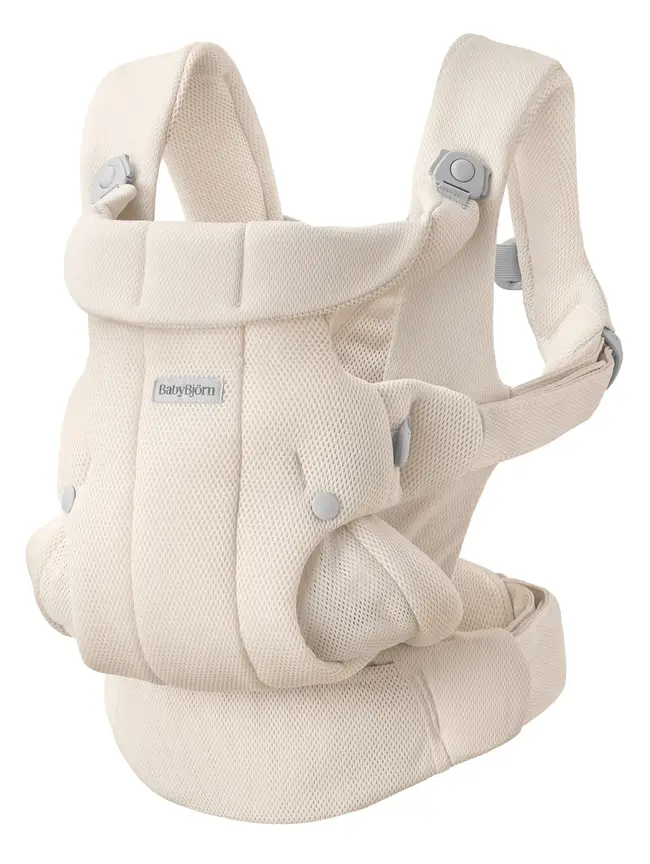
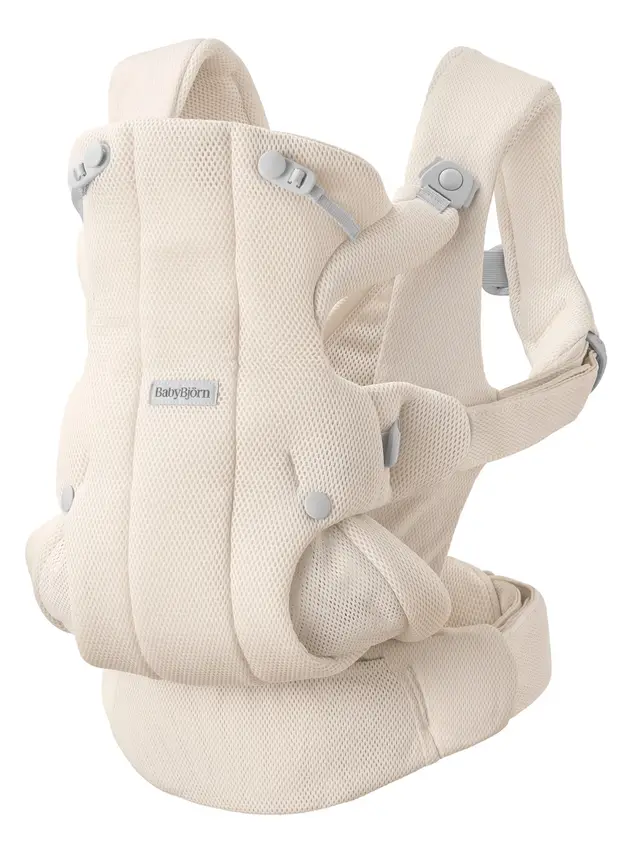
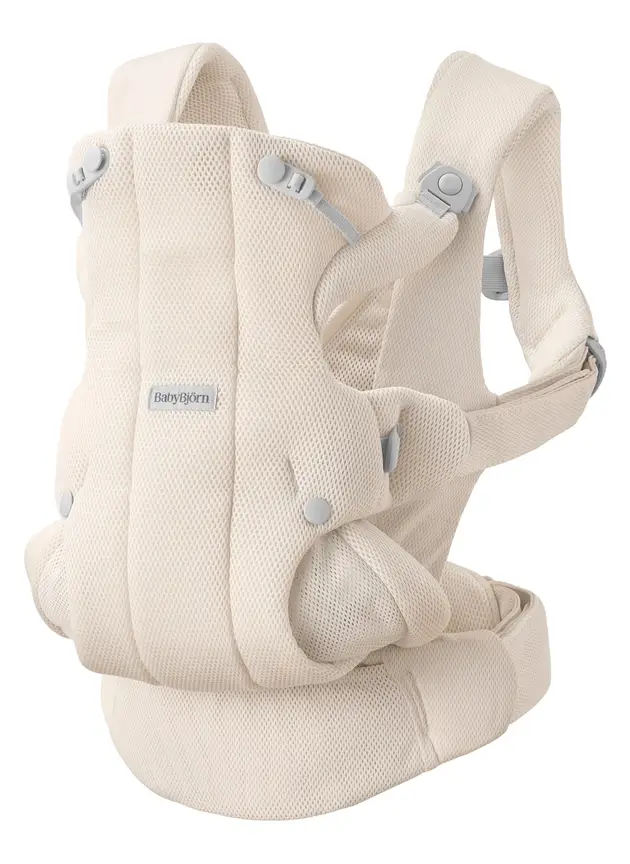
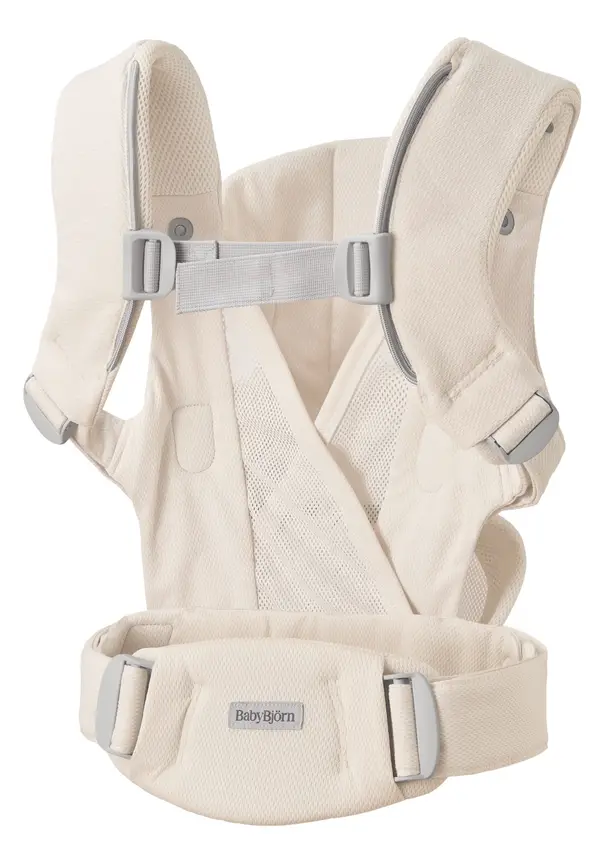
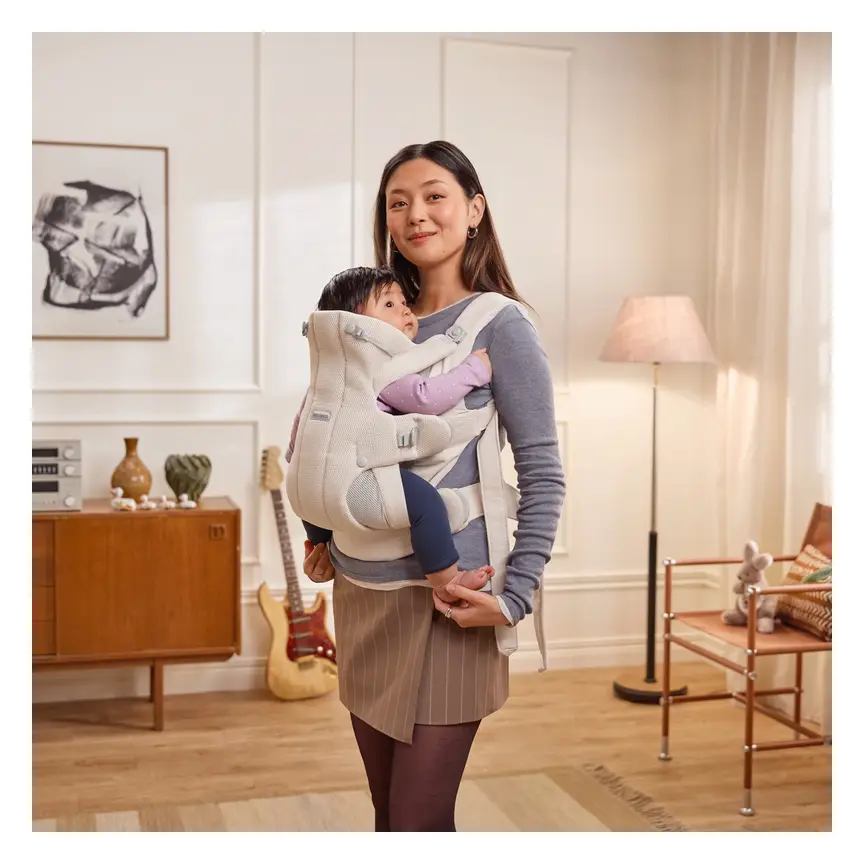


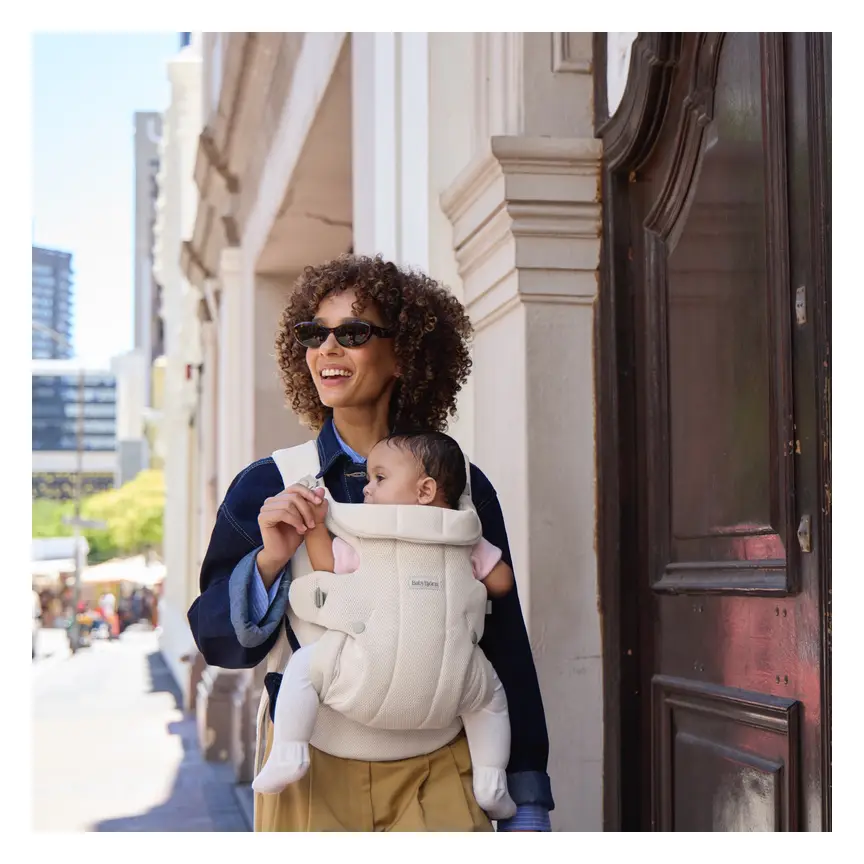
BabyBjörn Baby Carrier Hold
A soft front carrier from newborn to 18 months that fits XS to XXL parents.
Read our full review →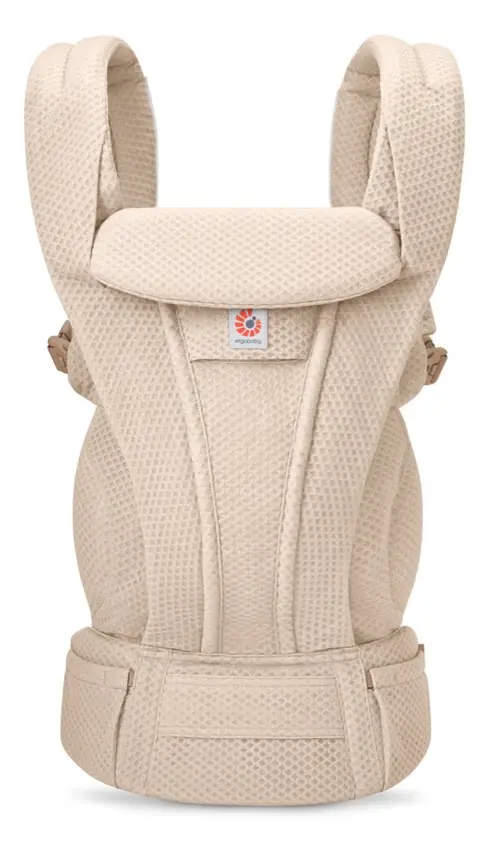 Reviewed
Ergobaby Omni Deluxe Mesh
The top Omni carrier, with 6 storage spots and strap markers that make it easy to swap between parents.
Read our full review → Reviewed
4baby 3 Way Baby Carrier
A very low-cost carrier with 3 positions, for babies 3.6 to 9 kg.
Read our full review →
BabyBjörn Baby Carrier Mini 3D Jersey
Newborn baby carrier
How to choose a safe convertible baby carrier
Not every convertible carrier fits every parent or every baby. Use this checklist when comparing models in a shop or checking one you already own.
- Weight and age limits: Read the label for both the lowest and highest weight. Some carriers need an infant insert below a set weight, while others adjust built-in straps instead.
- Adjustable seat width: Look for tabs, snaps, or velcro that widen or narrow the base. The fabric should reach from the back of one knee to the back of the other without digging into the calves.
- Firm waist belt and padded straps: Test how easily the straps tighten and loosen. If two adults will share the carrier, quick-slide buckles save a lot of time.
- Head and neck support: For young babies, the top edge should support the neck without covering the back of the head or pressing the face into your chest.
- Breathable fabric: Babies warm up fast against an adult body. Look for cotton, linen, or mesh panels, especially in warm weather.
- Easy-to-wash material: Babies dribble, spit up, and leak nappies. Machine-washable fabric makes daily life far easier.
- Safety compliance: Buy from trusted brands and local retailers that meet national safety rules for soft carriers and slings.
Convertible carriers compared with other baby carriers
Different carriers suit different stages and jobs. This table shows how a convertible structured carrier stacks up against other common options.
| Feature | Convertible structured carrier | Stretchy wrap | Ring sling | Framed hiking backpack |
|---|---|---|---|---|
| Best age | Newborn (if rated for weight) to toddler | Newborn to about 6 months | Newborn to toddler (short carries) | Once baby can sit well on their own (around 6+ months) |
| Carry positions | Front inward, front outward (some), hip, back | Front inward only | Front inward, hip | Back only |
| Learning curve | Low to medium; buckles click fast | Medium; takes practice to tie snugly | Medium; takes practice to thread rings | Low; straps adjust like a hiking pack |
| Weight spread | Both shoulders and hips | Both shoulders and back, but sags as baby grows | One shoulder only | Both shoulders and hips |
| Hip support | Good when seat width is adjusted properly | Good when spread knee to knee | Good when tucked deeply into a seat | Often narrower seat; check stirrups or leg support |
| Sharing between parents | Easy; adjust straps with buckles | Easy; one size fits most adults | Easy; pull tail through rings | Easy; adjust torso length and waist belt |
Many families start with a stretchy wrap for tiny newborn days at home, then move to a convertible carrier as the baby gets heavier. Others use a convertible carrier right from week one.
Safe carrying positions by age and stage
Your baby's neck, spine, and hips change rapidly in the first year. A position that is safe at eight months can be dangerous at eight weeks. Match the carry position to what your baby can do physically, not just their age on a calendar.
| Stage | What your baby can do | Safe carry positions | Key safety checks |
|---|---|---|---|
| Newborn (0 to 3 months) | Little or no head control. Curved spine. | Front inward-facing only, high on your chest. | Keep face visible, chin off chest, and fabric below the ears. |
| 3 to 6 months | Building head and neck control. Looks around more. | Front inward-facing. Hip carry only if head control is strong and maker allows it. | Do not face baby outward until they have steady head control and meet the maker's minimum height/weight. |
| 6 to 12 months | Strong head control. Usually sits with little or no help. | Front inward, hip carry, back carry, or short front outward spells. | Turn baby inward if they get sleepy. Never let a baby sleep facing outward. |
| 12 months and up | Stands, walks, and explores. Much heavier. | Back carry, hip carry, or front inward carry. | Check the carrier's maximum weight limit. Keep straps snug so the child does not lean back suddenly. |
Front inward-facing carry
This is the safest and most natural position from birth. Your baby's tummy rests against your chest. Their head sits high enough for you to kiss the top of their head easily. You can watch their breathing and expression with a quick glance down.
Front outward-facing carry
Some convertible carriers allow babies to face outward once they have strong neck control and can hold their head steady on their own. Even then, keep outward-facing spells short, around 15 to 20 minutes at a time.
Why keep it short? Facing out puts more curve on a baby's lower back and makes it harder for them to turn away from bright lights, noise, or crowds. Most importantly, if your baby falls asleep facing outward, their head can slump forward and block their airway. Always turn your baby inward before they nap.
Hip carry
A hip carry works well once your baby has steady head and upper-body control. It lets your baby look forward and sideways while still leaning against your side. Because the weight sits on one shoulder, switch sides often so your back does not get sore.
Back carry
Most makers advise waiting until your baby can sit up on their own, around 6 months or older, before using a back carry in a soft structured carrier. In a back carry, you cannot see your baby's face directly. Use a mirror or phone screen to check that their airway is clear, their nose and mouth are uncovered, and they are sitting upright.
The TICKS rule and breathing safety
The biggest risk in any baby carrier or sling is suffocation. Babies under 4 months old, premature babies, and babies with a low birth weight face the highest risk. Their neck muscles are weak, and their airways are narrow and soft, like a bendy drinking straw.
If a baby slumps into a C-shape with their chin pressed onto their chest, their windpipe bends and narrows. They may not be strong enough to lift their head or cry for help. Fabric pressed over their nose and mouth can also block airflow.
Health services in Australia, the UK, and beyond teach the TICKS rule to stop this happening. Check all five letters every time you put your baby in a carrier.
- T – Tight: The carrier should be snug against your body. If the fabric is loose, your baby can slump down and curl inward, which squeezes their airway.
- I – In view at all times: You must be able to see your baby's face simply by looking down. Never cover their head or face with a wrap, blanket, scarf, or nursing cover.
- C – Close enough to kiss: Your baby's head should sit high on your chest, as close to your chin as is comfortable. Tip your head down, and you should easily kiss their forehead or the top of their head.
- K – Keep chin off the chest: A baby must never curl so their chin touches their chest. Leave at least one or two adult fingers of space under their chin so their airway stays straight and open.
- S – Supported back: In an upright carry, your baby's back should rest comfortably against the carrier fabric in its natural curve. When you place a hand gently on their back, their tummy and chest should stay pressed against you without collapsing forward.
Do not use a bag-style sling or pouch where a newborn lies curled in a deep C-shape. Official safety agencies in Australia, the UK, the US, and Canada warn that curved hammock-style slings pose a serious suffocation hazard to young babies.
Side by side: more baby carriers & wraps to compare
Real products from our catalogue. We don't show star ratings or review counts; check the current price, stock and reviews on Amazon before you buy.
 Reviewed
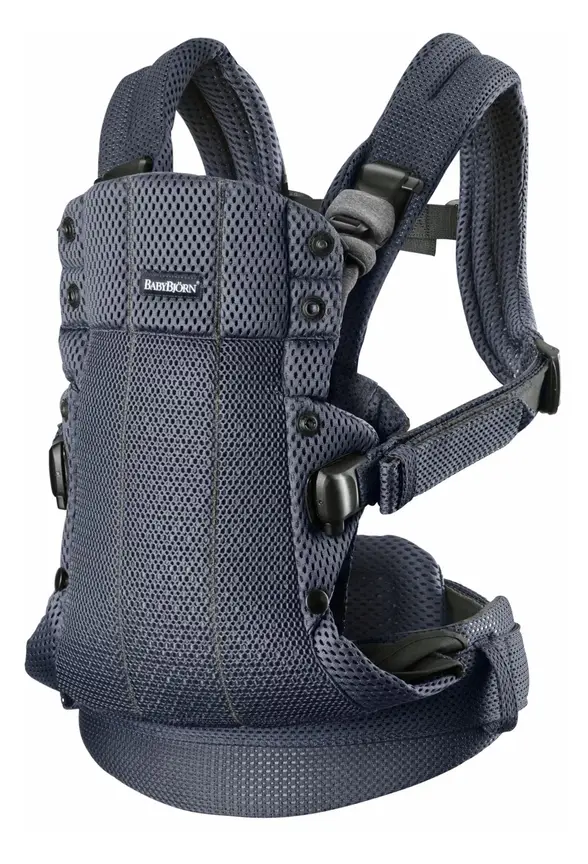
BabyBjörn Baby Carrier Harmony
A premium carrier with four positions, from 3.2 kg newborns to about 3 years.
Read our full review →
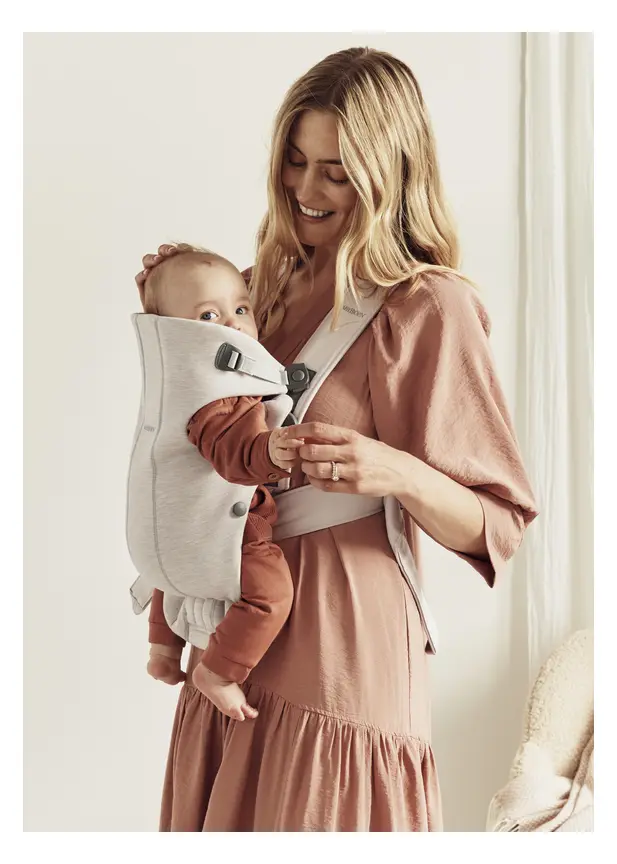
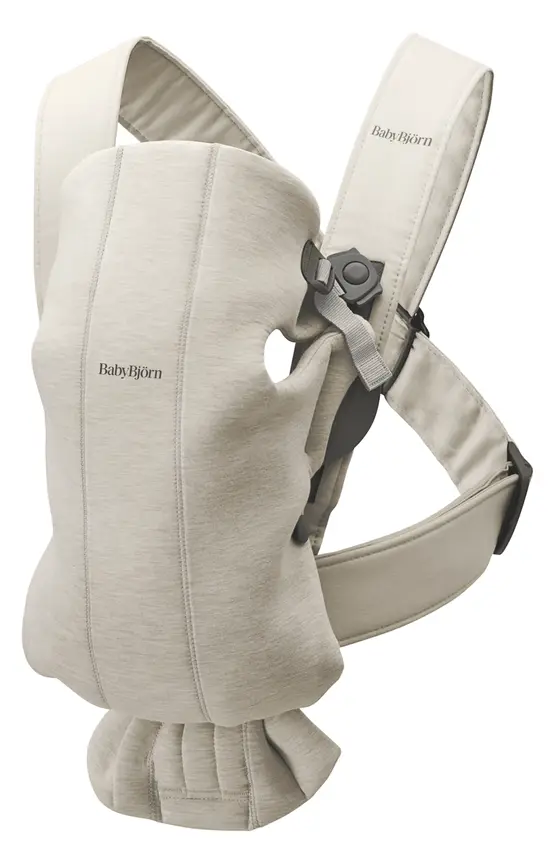
BabyBjörn Baby Carrier Mini
Simple, soft newborn carrier for roughly 0–12 months, with three carrying positions and an easy front opening.
Read our full review →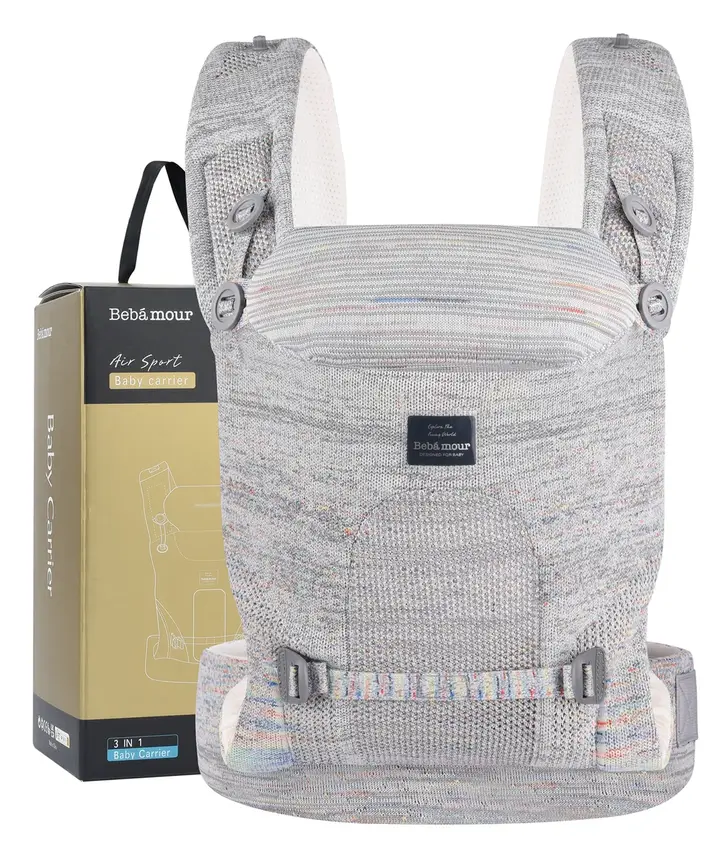
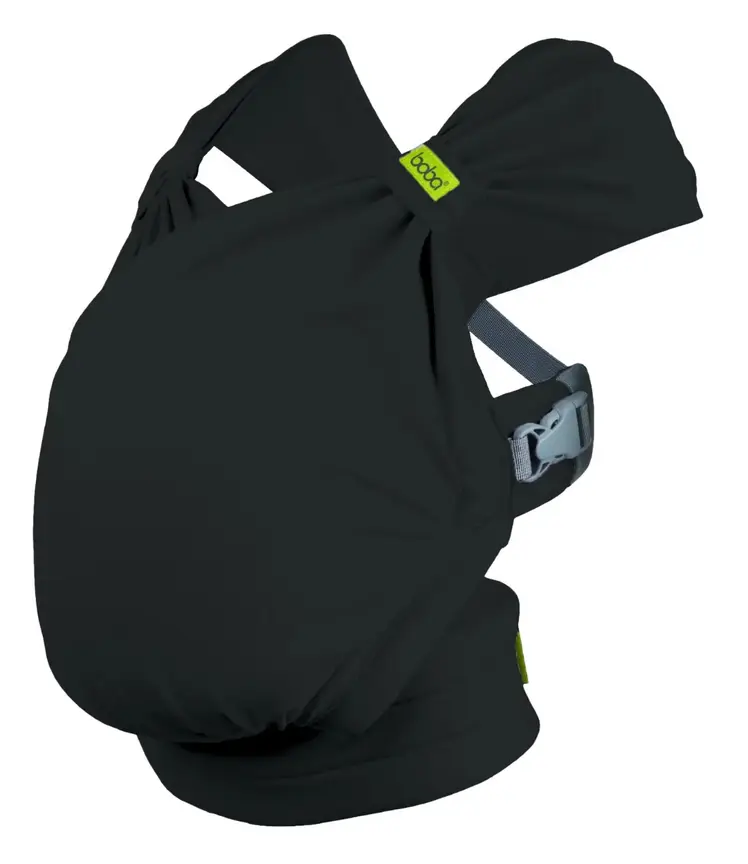


Boba Bliss
A stretchy carrier that clicks on like a buckle carrier. One size fits most parents.
Read our full review →Healthy hip position (the M-shape)
A baby's hip sockets are mostly soft cartilage during the first months of life. How a baby's legs rest in a carrier affects how those joints grow.
According to the International Hip Dysplasia Institute, the healthiest hip position is the M-shape (also called the frog-leg or jockey position). In this position:
- Your baby's thighs spread naturally around your torso.
- Their knees bend up so they sit higher than their bottom.
- The carrier seat supports their thighs all the way from hip to knee.
When a carrier has a narrow strip of fabric between the legs, the baby's legs hang straight down. That forces the thigh bones straight out of the hip socket angle. Over long hours, poor hip positioning can raise the risk of hip dysplasia, especially in the first 6 months.
A good convertible carrier solves this with a wide, adjustable seat. Check your baby in a mirror: if their bottom sits lower than their knees, making an "M" shape with their legs and bum, the seat is set well.
Safety guidance in Australia, the UK, the US and Canada
Safety rules for baby carriers follow the same core ideas in all four countries. Official bodies focus on clear airways, safe sling design, sturdy buckles, and checking for recalls.
| Country | Key safety and health bodies | What they highlight for baby carriers |
|---|---|---|
| Australia | ACCC (Product Safety Australia), Red Nose Australia, Raising Children Network | Follow the TICKS rule. Avoid curved hammock slings for young babies. Check that buckles and seams are strong and baby's face stays uncovered. |
| United Kingdom | Office for Product Safety and Standards (OPSS), The Lullaby Trust, NHS | Use the TICKS checklist every time. Keep baby upright, tight, and in view. Take extra care with premature or low-birth-weight babies. |
| United States | Consumer Product Safety Commission (CPSC), American Academy of Pediatrics (AAP) | Federal safety rules apply to infant sling carriers and soft carriers. Keep baby's face visible and free of fabric, and avoid chin-to-chest slumping. |
| Canada | Health Canada, Canadian Paediatric Society (Caring for Kids) | Check Health Canada's recall list before buying or using secondhand gear. Follow manufacturer weight limits and keep airways clear. |
No matter where you live, check your national product recall website before using a hand-me-down or secondhand carrier. Recalls happen when makers find weak buckles, tearing seams, or designs that trap a baby's face.
Common mistakes to avoid
Most carrier problems come from rushing or small fit mistakes. Watch out for these common traps:
- Wearing the waist belt too low: If the belt sits down on your hips like low-rise jeans, your baby drops down near your tummy. That makes it hard to kiss their head and puts strain on your back. Put the belt higher, near your natural waist, especially for a newborn.
- Leaving the straps too loose: Loose shoulder straps let your baby slump away from you or curl forward. Tighten the straps so your baby stays snugly against your chest when you lean forward slightly (always keep one hand on them when leaning).
- Covering the baby's face: Never drape a muslin cloth, winter coat, or carrier hood completely over your baby's head. Hoods are meant to support one side of the head against sunlight or gentle wind, never to seal in air.
- Letting a baby sleep facing outward: If your baby nods off while facing the world, their head often falls forward onto their chest. Flip them to face inward or lay them flat on their back in a cot or bassinet.
- Using a carrier in a moving car or on a bike: A baby carrier is never a substitute for an approved child car seat. Never wear a baby in a carrier while driving, riding as a passenger in a car, or cycling.
- Cooking or drinking hot tea while babywearing: Spills and splashes reach a baby on your chest before you can react. Take the carrier off or pass the baby to another adult before handling boiling water, hot pans, or sharp knives.
- Ignoring overheating: A carrier adds an extra layer of fabric plus your own body heat. Dress your baby in one light layer less than you might use in a pram. Check the back of their neck or tummy; if they feel sweaty or hot, move to a cooler spot and remove layers.
- Skipping safety checks on secondhand gear: Sun, washing, and age can weaken plastic buckles and stitching. Always tug hard on every strap and inspect seams before putting a baby inside a pre-loved carrier.
Care, cleaning and checking for wear
A clean, well-kept carrier lasts longer and stays safe for a second child or another family.
- Spot clean first: Wipe small spills with a damp cloth and mild soap. Frequent full machine washes can fade fabric and wear out padding faster.
- Wash gently when needed: Fasten all buckles, close velcro tabs, and put the carrier inside a pillowcase or laundry bag. Wash on a gentle, cold cycle with mild detergent.
- Skip fabric softener and bleach: Harsh chemicals can irritate your baby's skin and weaken fabric fibres.
- Air dry only: Hang the carrier out of harsh direct sun. Do not use a tumble dryer, because high heat can warp foam padding and weaken plastic buckles.
- Do a monthly check: Look closely at the stitching around the waist belt and shoulder straps. Check every buckle for cracks or chips. If a buckle does not click firmly or slips under gentle pull, stop using the carrier and contact the maker for a replacement part.
More options, from budget to premium
Real products from our catalogue. We don't show star ratings or review counts; check the current price, stock and reviews on Amazon before you buy.

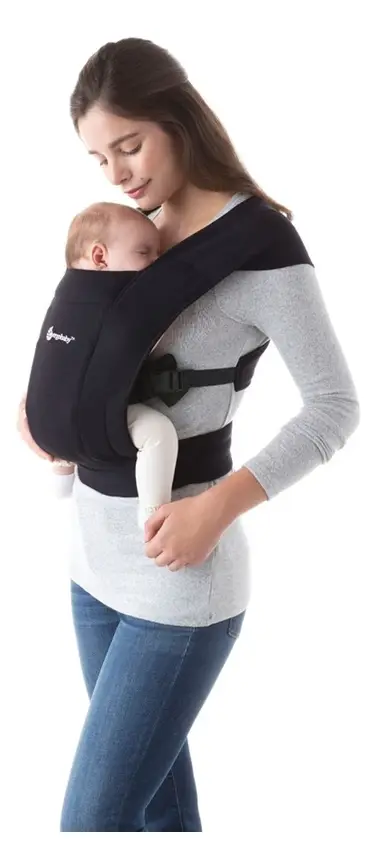


Ergobaby Embrace
A soft knit newborn carrier that buckles on, with no long wrapping.
Read our full review →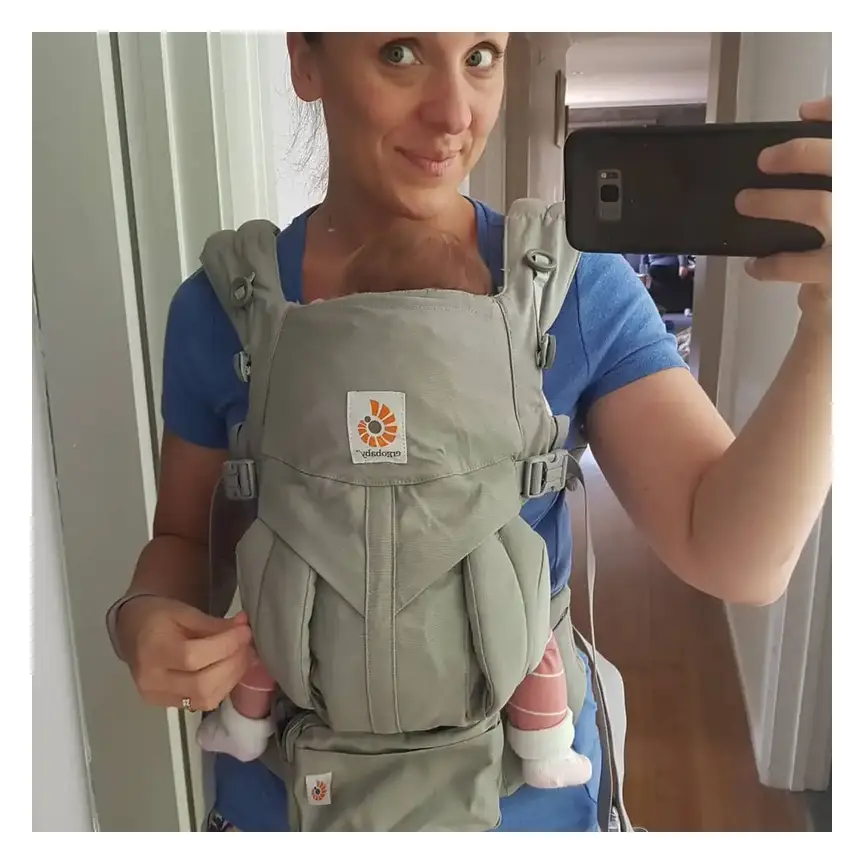
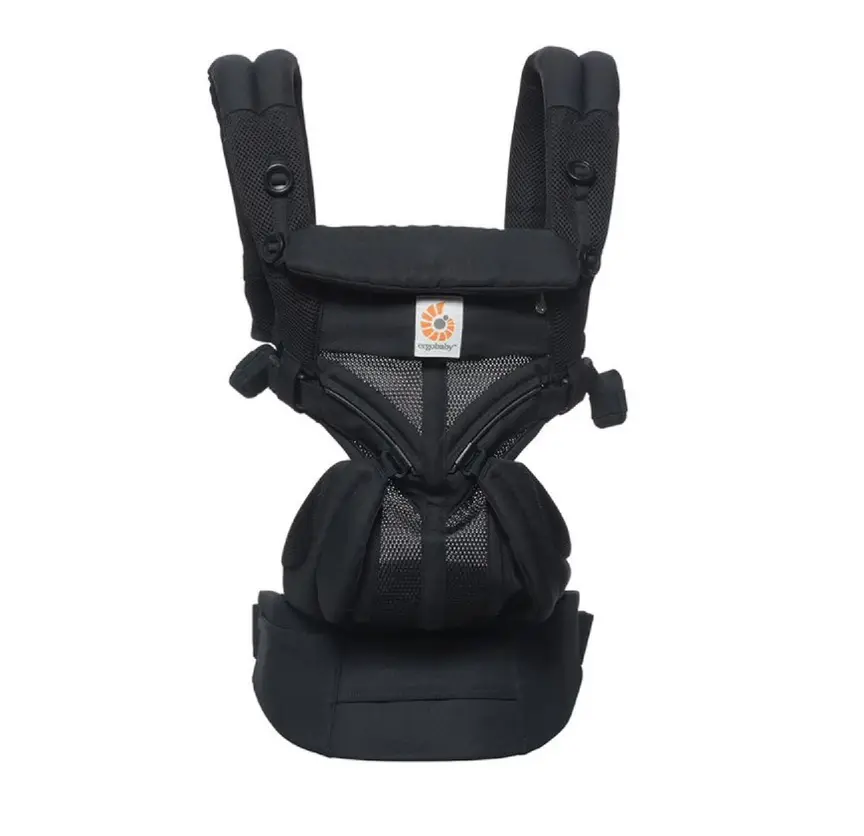
Ergobaby Omni 360 Cool Air Mesh Baby Carrier
All-position carrier
 Reviewed
Ergobaby Omni Classic Mesh
An all-position mesh carrier from newborn to toddler with no insert needed.
Read our full review →Frequently asked questions
From what age can I use a convertible baby carrier?
Many convertible carriers work from birth, usually starting at around 3.2 kg or 3.5 kg (about 7 to 8 pounds). Always read the weight label on your exact model. If your baby was born early, had a low birth weight, or has breathing or health needs, ask your doctor or child health nurse before using any carrier.
How long can a baby stay in a carrier at one time?
There is no strict timer for a healthy baby in a safe, inward-facing position, as long as their airway is clear and they are not too hot. However, taking breaks every one to two hours is good practice. It gives your baby time to stretch on a floor mat and lets you rest your back, feed, and change their nappy.
Can my baby sleep in a convertible carrier?
Short daytime naps in a well-fitted carrier are common, provided you stay awake and follow every part of the TICKS rule. Your baby must face inward, stay upright, and keep their chin off their chest. Never lie down to sleep while wearing your baby in a carrier, and never let them sleep facing outward.
Do I need an infant insert for a convertible carrier?
Some older or non-adjustable carriers need a padded infant insert for newborns. Most modern convertible carriers do not need one because the seat narrows and the panel shortens using built-in snaps or straps. Check your manual, because using an insert when it is not needed can make a baby too warm.
When can my baby face outward in a convertible carrier?
Wait until your baby has strong, steady head and neck control and meets the maker's minimum height and weight for outward facing, which is often around 5 to 6 months. Keep outward-facing sessions short, and turn your baby inward as soon as they look tired.
How do I know if the carrier is hurting my baby's hips?
Look at your baby in a mirror from the front. Their knees should sit higher than their bottom, and their thighs should be supported out toward the backs of the knees, forming an M-shape. If their legs dangle straight down from a narrow strip of fabric, widen the seat setting or check how deeply their bottom sits in the pocket.
Is a convertible carrier safe to use while breastfeeding?
Yes, many parents feed in a carrier once they feel confident with both breastfeeding and adjusting the straps. You will usually need to loosen the straps slightly so your baby drops down to breast height. Watch your baby closely the whole time so fabric or skin never blocks their nose. As soon as the feed ends, raise and tighten the carrier back to a kissable, upright height.
Sources
- Product Safety Australia – Baby carriers, wraps and slings guide
- Red Nose Australia – Slings and baby carriers
- Raising Children Network – Baby carrier, sling and backpack safety
- The Lullaby Trust (UK) – Baby slings and carriers
- NHS Cheshire and Wirral Partnership – TICKS rule for safe babywearing (PDF)
- U.S. CPSC – Safe babywearing and sling suffocation warning
- International Hip Dysplasia Institute – Baby wearing
- Health Canada – Recalls and safety alerts
Related guides
More Clothing & Accessories →
5 Reasons Why a Baby Wrap Carrier Helps Parents (Plus How to Use One Safely)

How to Use a Baby Wrap Carrier Safely

How to Choose a Baby Carrier That Grows with Your Baby
