











How to Check a Second-Hand Cot or High Chair Before You Buy
A step-by-step checklist for buying a used cot or high chair: bar gaps, mattress fit, labels, recalls, drop sides, harnesses, cracks and when to walk away.
On this page
- Why second-hand cots need extra care
- Before you go to look at it
- Cot rules by country
- The cot checklist
- Second-hand cot mattresses
- The high chair checklist
- Questions to ask the seller
- Buying from marketplaces and op shops
- Portable cots and bassinets
- Cleaning a second-hand cot or high chair
- When to walk away
- Setting it up at home
- Common mistakes
- FAQ
- Sources
Short answer: A second-hand cot or high chair can be a safe, money-saving choice, but only if you check it carefully first. For a cot, check that it meets the current cot rules in your country, that the gaps between bars are the right size, that nothing sticks out, that the base and sides are strong, and that the mattress fits with no big gaps. For a high chair, check that it is stable, the harness is complete and works, and nothing is cracked or missing. Always search the brand and model on your country's recall list. If you can't confirm a cot's age, standard or history, don't buy it.
Key points
- Search the recall list first: Product Safety Australia, the UK Product Safety Database, the US CPSC, or Health Canada's recalls site.
- Look for labels showing the maker, model and date, and ask for the instructions.
- Health Canada doesn't recommend using cribs older than 10 years, and says cribs made before September 1986 are likely not to meet current rules.
- Traditional drop-side cribs can't be sold in Canada since 29 December 2016. In Australia, drop-side cots must lock securely in place.
- Gaps that can trap a child's head or limbs are the main cot danger. Measure them.
- For high chairs, Product Safety Australia says the 5-point harness is the safest, and the chair should be strong and stable.
Why second-hand cots need extra care
A cot is the one place your baby spends hours alone, often asleep, without an adult watching. That's why cots have some of the strictest safety rules of any baby product. Over the years, these rules have changed as experts learned more about how babies get trapped or hurt. An old cot may have been made before some of these rules existed.
Wear and tear matters too. Every time a cot is taken apart and put back together, screws loosen, holes in the timber get bigger and parts can go missing. Drop-side catches wear out. Timber can crack in dry heat or swell in damp storage. These changes can open up gaps that weren't there when the cot was new. A careful check takes about 15 minutes, and it's worth every minute.
High chairs face different wear: buckles get sticky with food, plastic gets brittle in the sun, and folding joints loosen with use. A chair that seems fine at first glance can wobble once your toddler starts rocking in it.
Before you go to look at it
- Ask for the brand, model and year. A photo of the label is ideal.
- Search the recall list in your country with the brand and model.
- Ask if it comes with the instructions. If not, check the maker's website for a copy.
- Ask about its history. Has it been repaired, repainted, stored outside, or used by several children?
- For a cot, ask what mattress comes with it, and its size and thickness.
- Bring a tape measure and a torch, so you can measure gaps and look underneath.
Cot rules by country
| Country | Cot rules | Second-hand advice |
|---|---|---|
| Australia | Mandatory standard for household cots (based on AS/NZS 2172), now part of the infant sleep products standards | Product Safety Australia: check it meets the standard, has all parts and instructions, and isn't recalled |
| United Kingdom | BS EN 716 for cots under general product safety law | The Lullaby Trust: use a cot in good condition with a firm, flat mattress |
| United States | Mandatory CPSC full-size and non-full-size crib standards; traditional drop-side cribs no longer sold | AAP: use a crib that meets current safety standards |
| Canada | Cribs, Cradles and Bassinets Regulations; traditional drop-side cribs banned from sale since 29 December 2016 | Health Canada: avoid cribs older than 10 years or made before September 1986 |
If you're in Australia, a cot that met the standard when new should have a compliance label. In the US and Canada, look for a label with the date of manufacture. Without a label, it's hard to know if the cot meets current rules.
Highchairs & Booster Seats worth a look
Real products from our catalogue. We don't show star ratings or review counts; check the current price, stock and reviews on Amazon before you buy.
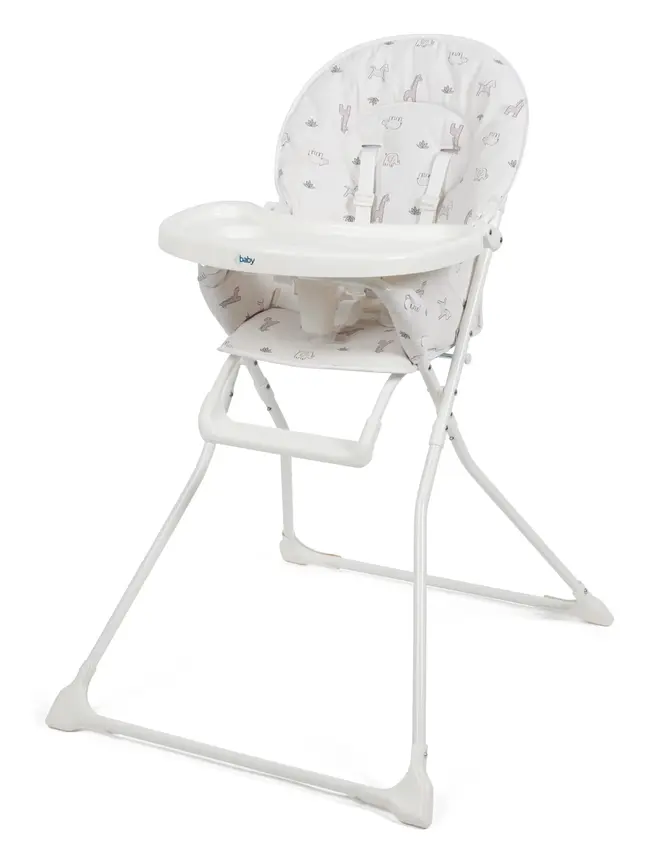
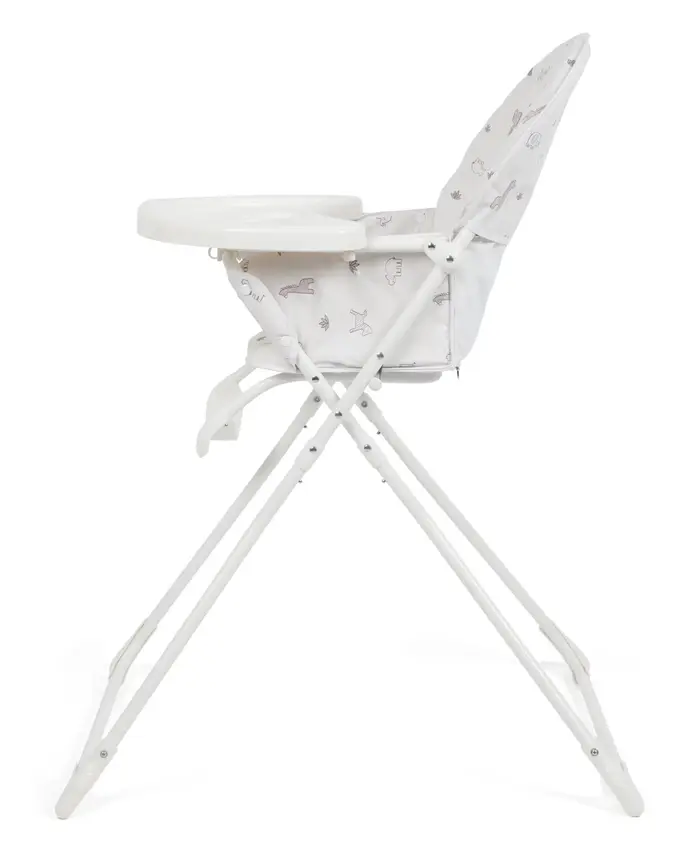
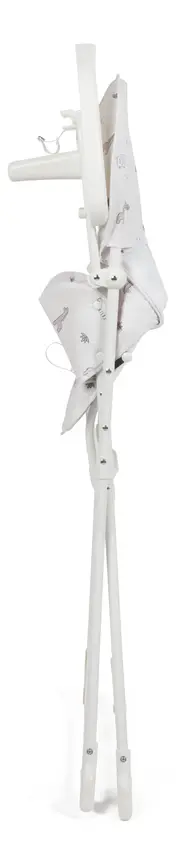
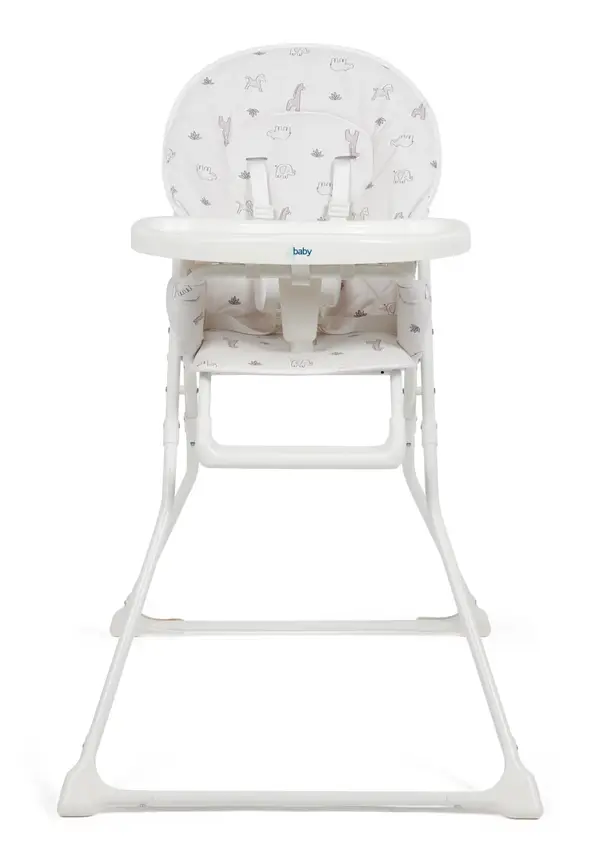
4baby Flat Fold Highchair
A very low-cost highchair that folds flat, with a wipe-clean seat.
Read our full review →
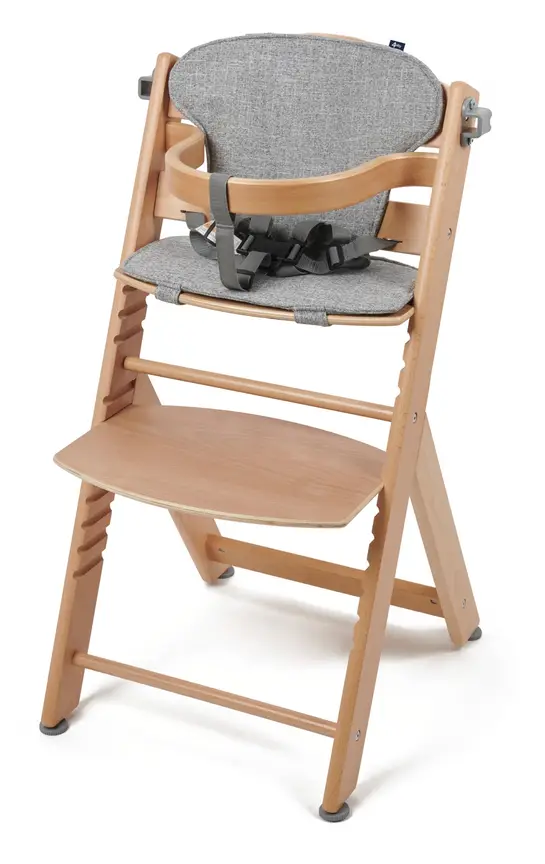

4baby Grow With Me Wooden Highchair
A low-cost wooden highchair that turns into a junior chair, with 4 seat heights and 8 footrest spots.
Read our full review →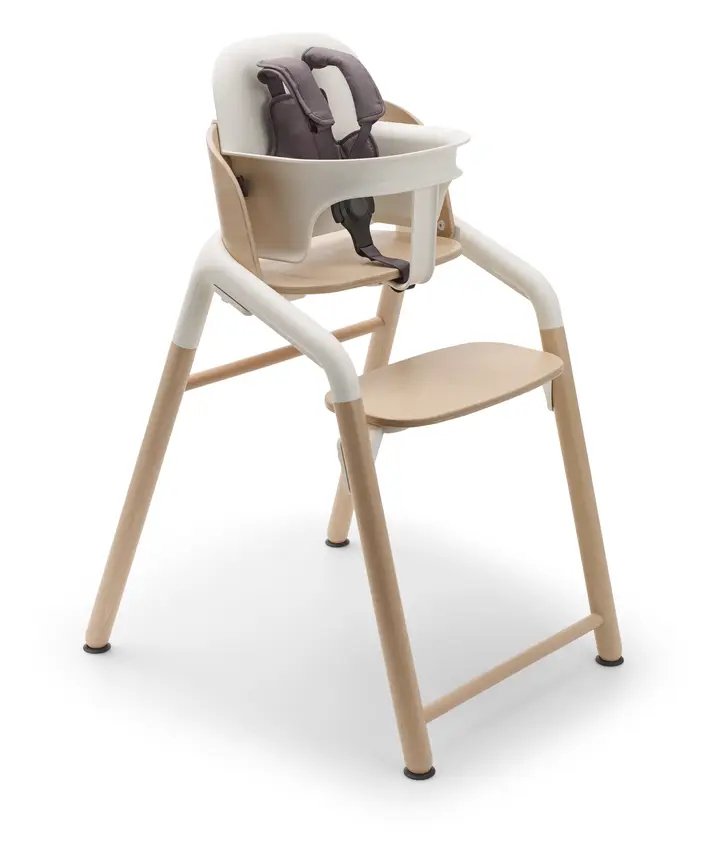
Bugaboo Giraffe
Bugaboo's answer to the Tripp Trapp, with notably quick, tool-free height adjustment.

IKEA Antilop Highchair
The cheap, wipe-down classic many daycares use. No footrest, no adjustment — but almost nothing to clean.
The cot checklist
1. Bar gaps
Gaps between cot bars must be small enough that a baby's body can't slip through feet-first while their head gets stuck, and big enough (in Australia) that a limb doesn't get trapped. Product Safety Australia's safety alert on cots sets out the gap rules for Australian cots: gaps between bars of between 50 mm and 95 mm. Health Canada says bar spacing should be no more than 6 cm. Measure several gaps along each side, and at the ends. Look for broken, loose or missing bars, which make a much bigger gap.
2. Mattress fit
Put the mattress in and push it hard into one corner. Red Nose says the gap between the mattress and the cot sides should be no more than 20 mm (about two finger widths). Health Canada gives a limit of 3 cm. Check the mattress is the size and thickness the cot maker says. A mattress that's too thick lowers the height of the sides above it.
3. Side height
With the mattress base in its lowest position, the sides need to be tall enough that a standing toddler can't easily fall out. Health Canada says crib sides should be at least 66 cm high with the mattress support in its lowest position. Product Safety Australia's cot safety alert says that with the mattress base in its lower position, the sides or ends need to be at least 500 mm higher than the mattress. The same alert says the mattress must fit to within 20 mm of the sides and ends. If the cot has several base heights, check the lowest one works.
4. Corner posts and things that stick out
Clothes, necklaces or dummy cords can catch on tall corner posts or decorative knobs, which can strangle a child. Health Canada says corner posts should be no more than 3 mm high. Product Safety Australia warns to check for sharp edges or parts that stick out, as they can snag on skin or clothing. Look for screws, bolts or knobs sticking out on the inside or top rails.
5. Cut-outs and decorative shapes
Shaped cut-outs in the head or foot boards can trap a baby's head or limbs. Avoid cots with gaps or holes in decorative panels.
6. Drop sides
Older cots often have a side that slides down. Faulty drop sides have caused deaths overseas when the side came away and trapped a baby. Canada banned traditional drop-side cribs from sale in 2016, and the US no longer allows them to be sold. Product Safety Australia says drop-side cots must have a clearly distinct, secure locked position and must be checked regularly. If a drop side is loose, wobbly, sticks, or the catches are worn, don't use the cot.
7. Base and supports
Look under the cot. The mattress base should sit firmly in its brackets, with no cracks or missing slats. Health Canada warns that cribs with "floating" mattress supports held with S- or Z-shaped hooks are not safe, because hooks can come loose. Press down hard on each corner of the base.
8. Joints and hardware
Grip each corner and shake. The cot should feel solid. Check every screw and bolt is present and tight. Missing hardware is common in second-hand cots. Only use replacement parts from the maker.
9. Paint and finish
Babies chew cot rails. Look for peeling or flaking paint, splinters and cracks. Very old cots may have been painted with paint containing lead. If a cot has been repainted, you don't know what paint was used. When in doubt, choose a different cot.
10. Teething rails
Plastic teething rail covers can crack and break into small pieces. Check they're whole and fixed tightly, or remove them if the cot is safe without them.
Second-hand cot mattresses
Red Nose has guidance on using a second-hand mattress. It should be firm, flat, clean, the right size for the cot and in good condition, with no sagging, dips or tears. If the original mattress is worn, buy a new one that matches the size the cot maker gives. Never add a second mattress or soft padding to make up for a gap.
The high chair checklist
1. Stability
Product Safety Australia says to use a high chair that is strong and stable. Health Canada says a wide base improves stability. Set the chair up on a flat floor and push it gently from the sides and back. It shouldn't rock or tip.
2. Harness
Product Safety Australia says the 5-point harness is the safest; it goes over the shoulders, around the waist and between the legs. Health Canada says the restraint should include a crotch strap and a waist belt, both in good condition. Check the buckles click shut, the straps tighten and loosen properly, and there's no fraying. If the harness is missing, Product Safety Australia says to buy one separately and attach it securely.
3. Locks and folding
Fold and unfold the chair. Locks should click firmly. Height and recline settings should hold their position under pressure. Product Safety Australia's guide notes that moving parts mustn't pinch, crush or trap fingers, toes or limbs, and wheels must lock.
4. Tray
The tray should click on and off firmly. Remember the tray is not a restraint; the harness is.
5. Cracks and small parts
Look over every part for cracks, sharp edges and loose pieces. Health Canada says exposed wood or plastic should be smooth and free of cracks. Check for small detachable parts, which are a choking hazard.
6. Footrest
If there's a footrest, check it locks firmly at each height and doesn't slip when you press on it.
7. Standards
Health Canada advises buying only high chairs that meet the latest US standard (ASTM F404). In Australia there's no mandatory high chair standard, but a safety guide. In the UK, look for BS EN 14988.
Questions to ask the seller
- What brand and model is it, and when was it bought?
- Was it bought new in this country? (Products made for other countries may not meet local rules.)
- Has it been repaired, modified or repainted?
- Are all the parts, screws and the instructions here?
- Has it ever been part of a recall, and was the fix done?
- How many children used it, and how was it stored? Damp sheds and garages can cause mould, rust and swollen timber.
- For a cot: what size mattress fits, and is the mattress included?
- For a high chair: does the full harness come with it?
A good seller won't mind these questions. If answers are vague, take that as a warning sign.
Buying from marketplaces and op shops
Online marketplaces, buy-swap-sell groups, garage sales and op shops are common places to find baby furniture. Product Safety Australia has guides on buying safe second-hand products online, and Health Canada has guidance for shoppers of second-hand products. Some tips:
- Always see the item in person before you pay, and do the checks in this guide.
- Ask for clear photos of labels before you travel.
- Be wary of listings with no brand, no model, or photos that hide parts of the product.
- Don't buy cots that have been taken apart and are missing pieces, even if the seller says they "just need a few screws".
- Check recalls on your phone before you hand over money.
Side by side: more highchairs & booster seats to compare
Real products from our catalogue. We don't show star ratings or review counts; check the current price, stock and reviews on Amazon before you buy.

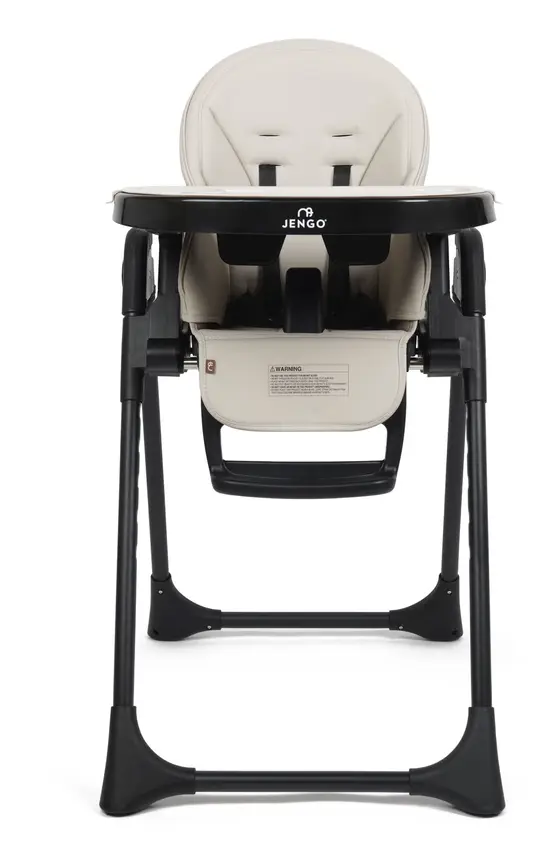


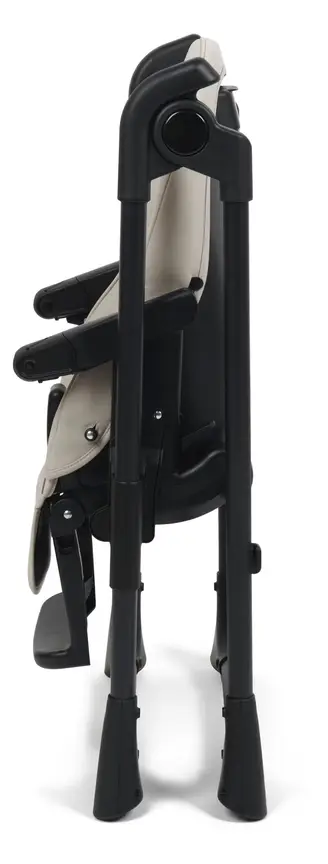
Jengo Nosh Highchair
A highchair from birth to toddler with 7 heights and 3 seat positions.
Read our full review →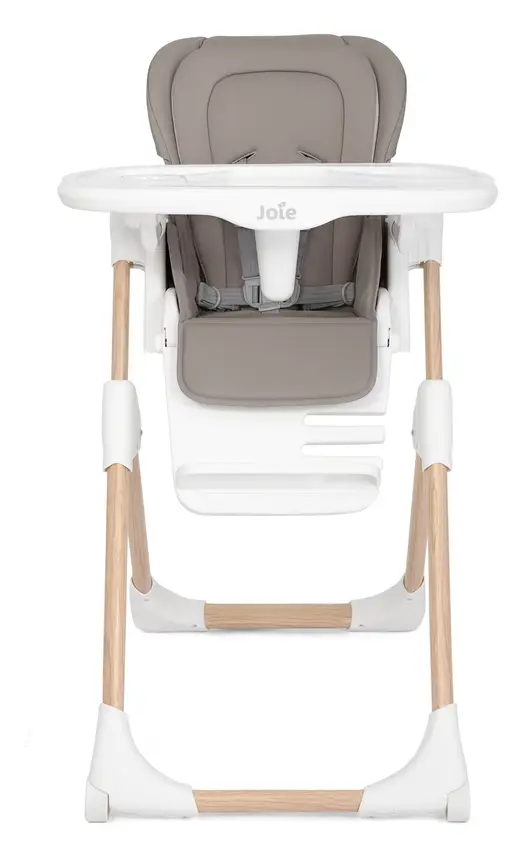
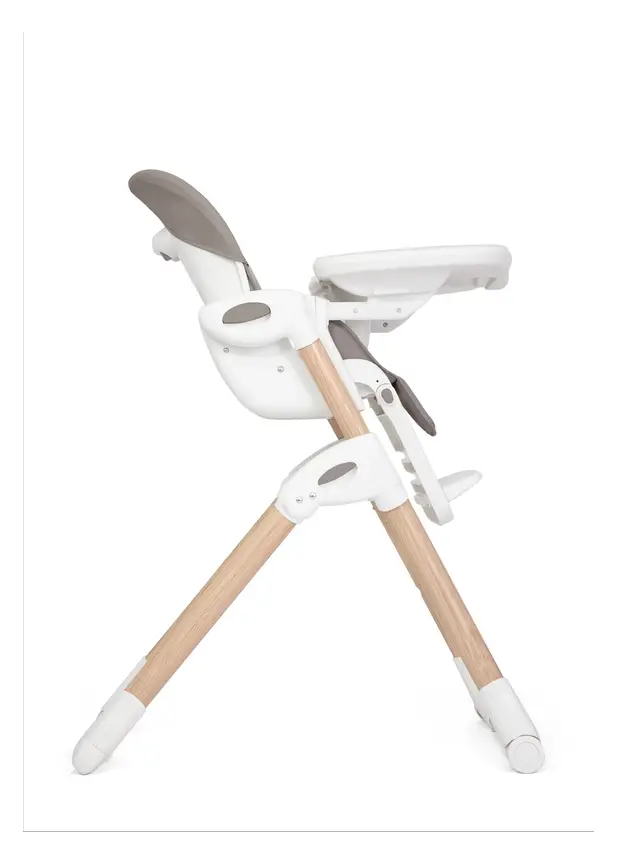
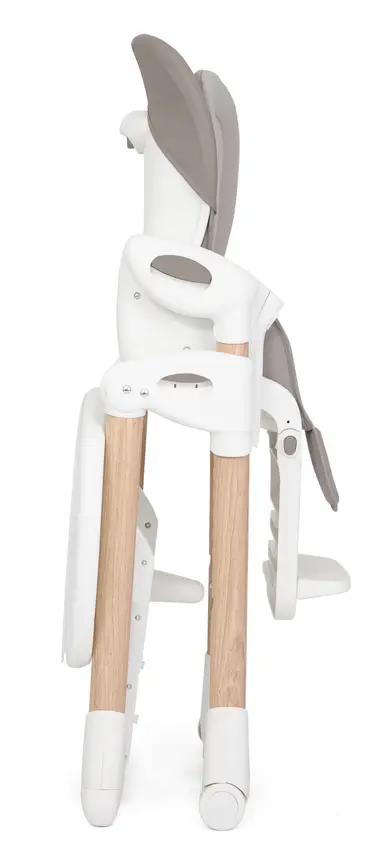


Joie Mimzy Recline 2.0
A highchair from newborn with 5 recline spots and 7 heights. It folds standing up.
Read our full review →
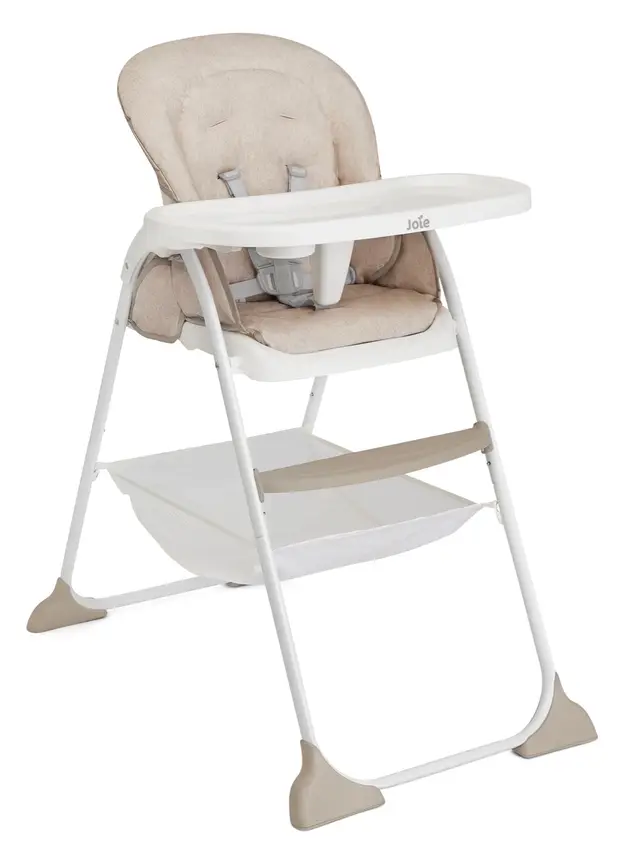


Joie Mimzy Snacker
A low-cost folding highchair from 6 months. It stands up when folded.
Read our full review →


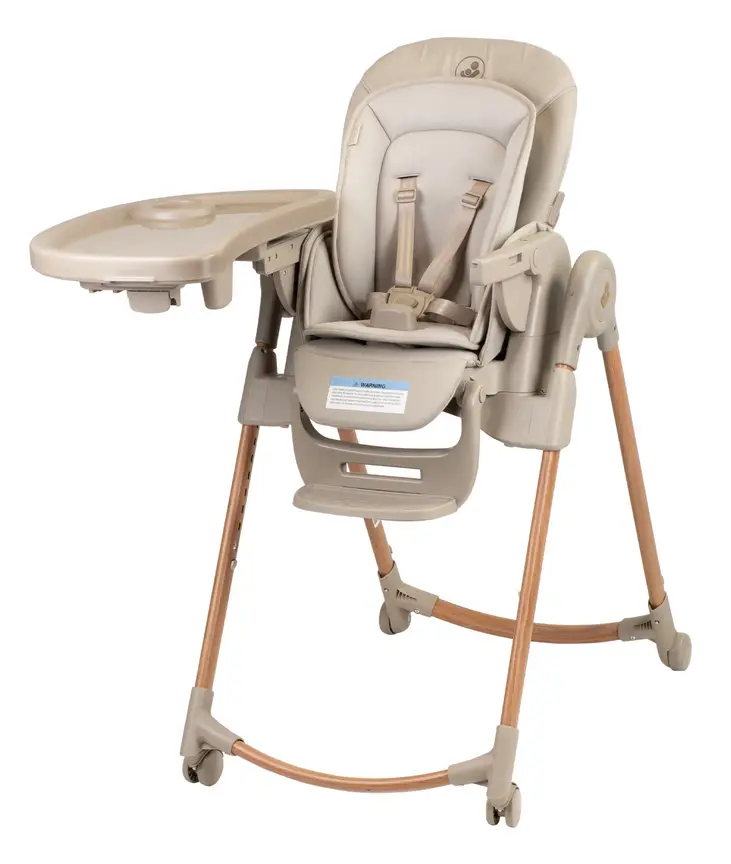

Maxi-Cosi Minla Plus
Lies flat from birth, then works as a highchair and booster, and later a kid chair.
Read our full review →Portable cots and bassinets
The same thinking applies to second-hand portable cots and bassinets, which also fall under Australia's infant sleep product standards. Check the folding locks click firmly on every side, the mesh has no tears or holes, the mattress is the original thin, firm one that came with it, and there's no gap around the mattress. Health Canada says playpens should have a label with the maker, model and date, fine mesh with no tears, and no straps or cords longer than 18 cm attached. Never add an extra mattress to a portable cot.
Cleaning a second-hand cot or high chair
Wash all surfaces with warm soapy water and a cloth, then rinse and dry. Avoid harsh chemicals on surfaces your baby will chew. Wash fabric covers and harness straps if the maker says you can; if straps are stained or stiff with old food, a replacement harness may be better. Check for mould in corners and under the base. Let everything dry fully, ideally in sunlight, before you put it together.
When to walk away
| Cot | High chair |
|---|---|
| Listed on a recall and not fixed | Listed on a recall and not fixed |
| No label, no idea of age or standard | Harness missing and you can't get the right one |
| Bar gaps outside the safe range, or broken bars | Wobbles or tips when pushed |
| Loose or faulty drop side | Locks don't click, or settings slip |
| Missing or home-made parts | Cracked frame or tray |
| Corner posts or knobs sticking up | Sharp edges or small loose parts |
| Mattress gap more than 20 mm | Fraying straps or stuck buckles |
Setting it up at home
- Clean everything with warm soapy water and let it dry.
- Assemble using the maker's instructions.
- Tighten every bolt, then check again after a week of use.
- For a cot, follow safe sleep advice: baby on their back, firm flat mattress, fitted sheet, nothing else in the cot. Put the cot away from windows, cords and heaters.
- For a high chair, place it on a flat floor away from walls and benches, and always use the harness.
- Register the product with the maker if you can, so you hear about future recalls.
Common mistakes
- Not checking the recall list.
- Buying an antique or very old cot for looks.
- Using a cot with missing screws or parts held with wire or tape.
- Using the wrong size mattress.
- Buying a high chair with no harness and skipping it.
- Repainting a cot with paint not meant for children's furniture.
- Using a drop-side cot with worn catches.
More options, from budget to premium
Real products from our catalogue. We don't show star ratings or review counts; check the current price, stock and reviews on Amazon before you buy.
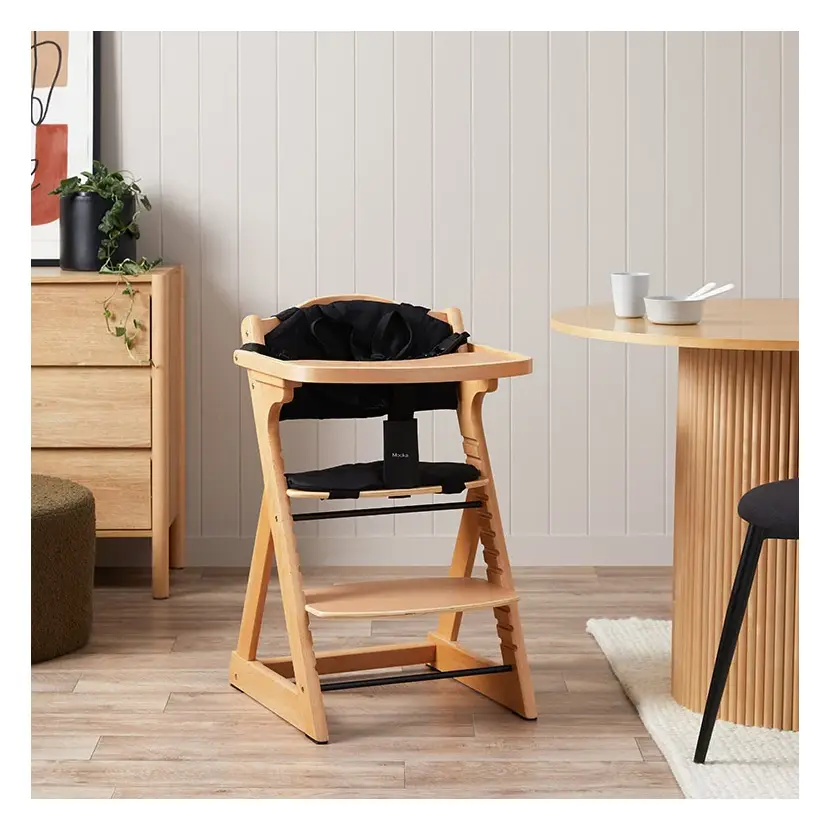
Mocka Original Highchair
Australian/NZ online brand's wooden adjustable chair — the Tripp Trapp idea at a fraction of the price, with simpler finishes.
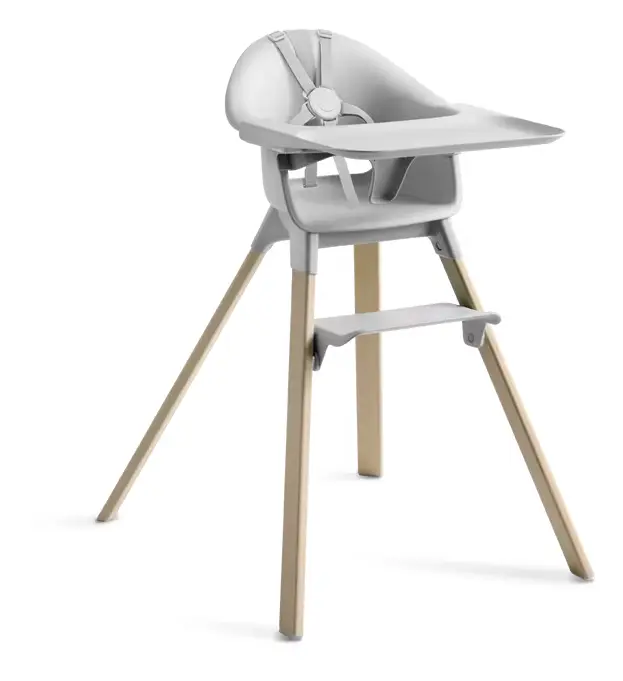
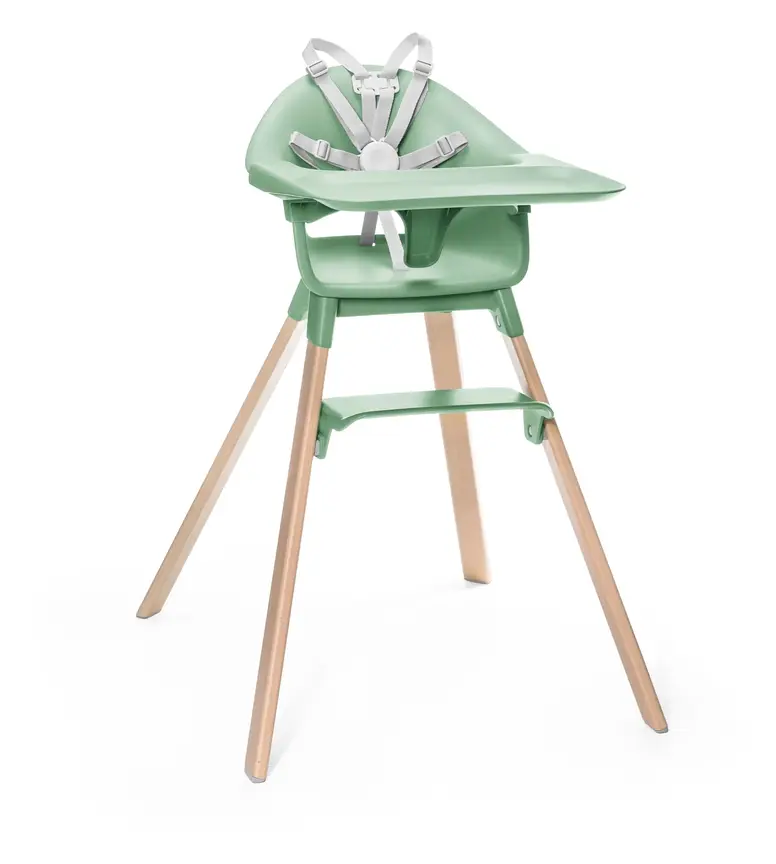
Stokke Clikk
Stokke's lighter, tool-free, fold-flat highchair with a built-in tray — the travel/rental-friendly sibling of the Tripp Trapp.
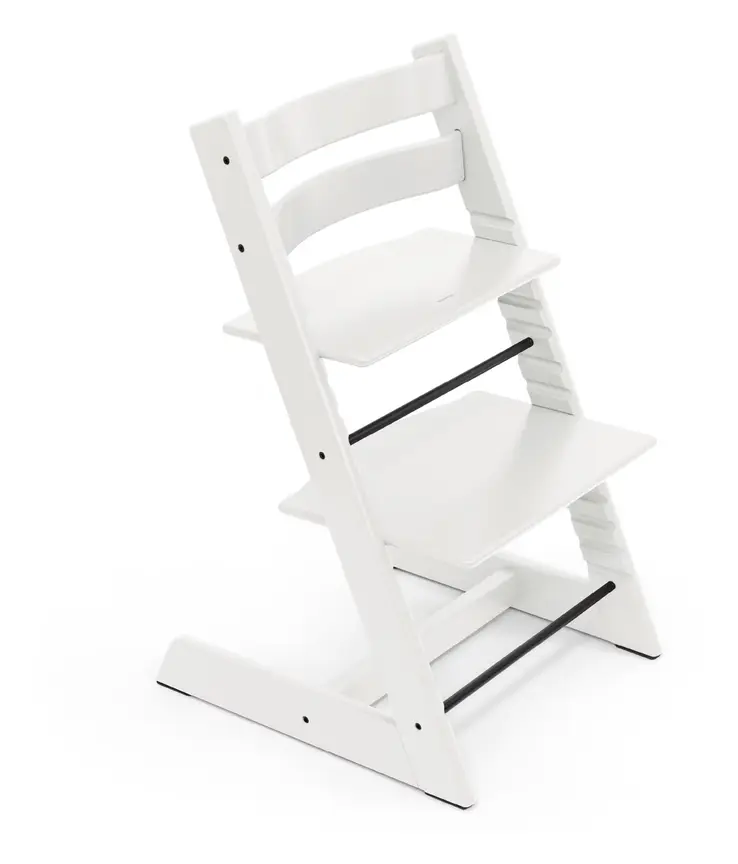


Stokke Tripp Trapp
The 1972 Peter Opsvik design: an adjustable beech chair that goes from newborn (with Newborn Set) to adult, pulled up to your own table.
Read our full review →FAQ
Is it safe to buy a second-hand cot?
It can be, if it meets your country's current cot rules, has all its parts, isn't recalled and passes the checks above. If you can't confirm these, buy new.
How old is too old for a cot?
Health Canada doesn't recommend cribs older than 10 years. Older cots may not meet current rules.
What should the gap between cot bars be?
In Australia, between 50 mm and 95 mm. Health Canada says no more than 6 cm. Follow the rule where you live.
Are drop-side cots safe?
Traditional drop-side cribs are no longer sold in Canada or the US. In Australia, drop sides must lock securely. If a drop side is worn or loose, don't use the cot.
Can I use a second-hand high chair without a harness?
No. Buy a harness that fits the chair and attach it securely, or choose another chair.
Where do I check for recalls?
Product Safety Australia (productsafety.gov.au), the UK Product Safety Database, the US CPSC (cpsc.gov) and Health Canada (recalls-rappels.canada.ca).
Can I fix a broken cot part myself?
Only with genuine replacement parts from the maker, fitted as the instructions say. Product Safety Australia says not to fix broken folding mechanisms or latches yourself on nursery products. Home-made fixes can fail.
Is an imported second-hand cot okay?
A cot sold in another country may not meet your country's rules, even if it's a good brand. Look for the compliance label for where you live.
Sources
- Product Safety Australia – Household cots guide
- Product Safety Australia – Safety alert: cots
- Product Safety Australia – High chairs guide
- Health Canada – Information for shoppers of second-hand products
- Product Safety Australia – Change tables guide
- Red Nose Australia – What is a safe mattress?
- The Lullaby Trust – Safer sleep overview
- HealthyChildren.org (American Academy of Pediatrics) – A parent's guide to safe sleep
Related guides
More Sleep & Nursery →
Bedside Sleepers and Co-Sleeper Bassinets: Safety Rules, Set-Up and What to Check

Bedside Bassinets After a C-Section: Safer Setup, Easier Reaches, and What to Check

Height-Adjustable Bedside Bassinets: Fitting High Platform Beds and Low Floor Frames
