














Height-Adjustable Bedside Bassinets: Fitting High Platform Beds and Low Floor Frames
How to match a height-adjustable bedside bassinet to a high platform bed or low floor frame, with safe gap, strap and firmness rules.

On this page
- Key points
- What a height-adjustable bedside bassinet is
- How to measure your bed and mattress before buying
- Low floor frames vs. high platform beds
- Side-by-side comparison: bassinet styles for different beds
- Safety rules in Australia, the UK, the US and Canada
- What makes a height-adjustable bassinet safe
- How to set up a bedside bassinet safely, step by step
- Age stages: how long it lasts and when to move on
- Common mistakes to avoid
- Frequently asked questions
- Sources
Short answer: A height-adjustable bedside bassinet only works safely when its mattress sits level with or just below your own mattress, with zero gap between them. High platform beds often need an extra-tall bassinet and tucked-in legs. Very low floor frames often sit too low for drop-side sleepers, so a standalone bassinet or a cot beside the bed is usually safer.
Health bodies in Australia (Red Nose), the UK (The Lullaby Trust), the US (American Academy of Pediatrics) and Canada (Canadian Paediatric Society) all give the same core advice. Keep your baby in your room for at least the first six months, sleeping on their own flat, firm surface.
Key points
- Measure first: measure from the floor to the top of your adult mattress before you shop.
- Check the frame: wide platform rims and under-bed drawers can block bassinet legs and anchor straps.
- No gaps: in bedside mode, the bassinet must sit flush against your mattress with no space for your baby to wedge into.
- Stay level: never set one end higher than the other to tilt the mattress.
- Keep it clear: adult pillows, doonas and loose sheets must never reach into the bassinet.
- Stop early: move your baby to a cot as soon as they show signs of rolling, pushing up, or hitting the weight limit.
What a height-adjustable bedside bassinet is
A bedside bassinet is a small baby bed that sits right next to your bed. Its legs can move up or down to match different bed heights. Many models have one side wall that zips or drops down. This lets you see and reach your baby easily during night feeds.
People also call these co-sleepers or side-sleeper bassinets. They are not the same as sharing your adult bed. Your baby still has their own separate sleep space, their own firm mattress, and their own clear walls.
Why parents want height adjustment
Adult beds come in very different heights today. A low floor bed or Japanese-style frame may sit 30 to 45 centimetres (12 to 18 inches) off the floor. A tall platform bed with a thick pillow-top mattress can sit 65 to 80 centimetres (25 to 31 inches) high.
If a bassinet is too low for a tall bed, you have to bend and reach down over the side. That hurts your back, especially after birth or a caesarean section. If a bassinet is too tall for a low floor bed, you cannot see your baby while lying down. Worse, a mismatched drop-down side can leave a dangerous gap or ledge next to your mattress.
Cots, Bassinets & Bedside Sleepers worth a look
Real products from our catalogue. We don't show star ratings or review counts; check the current price, stock and reviews on Amazon before you buy.

4baby Snuggle Cuddle Bedside Sleeper
A low-cost bassinet that turns into a bedside sleeper, with 4 heights and mesh sides.

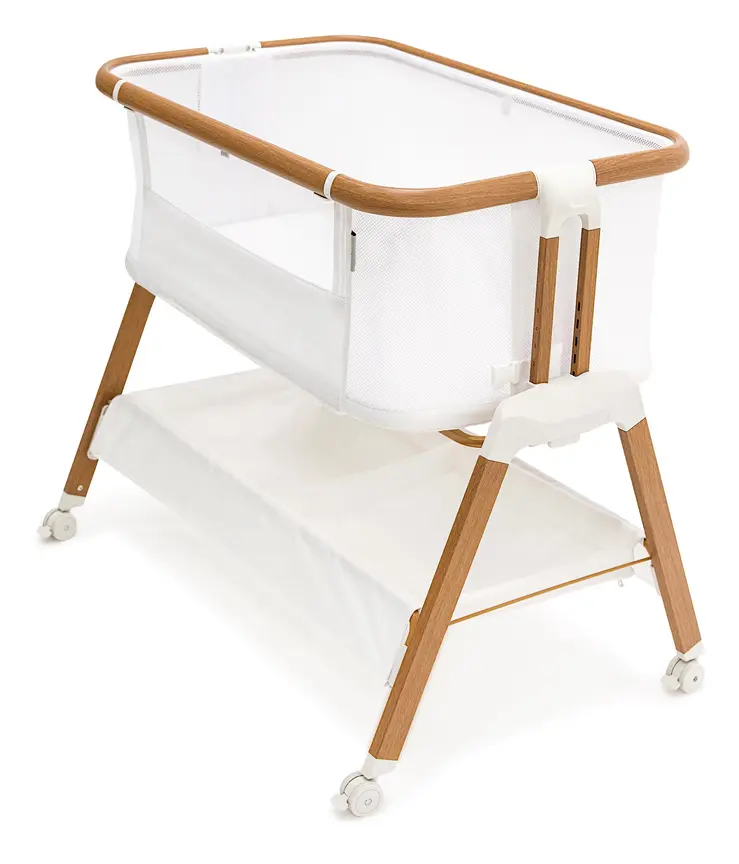
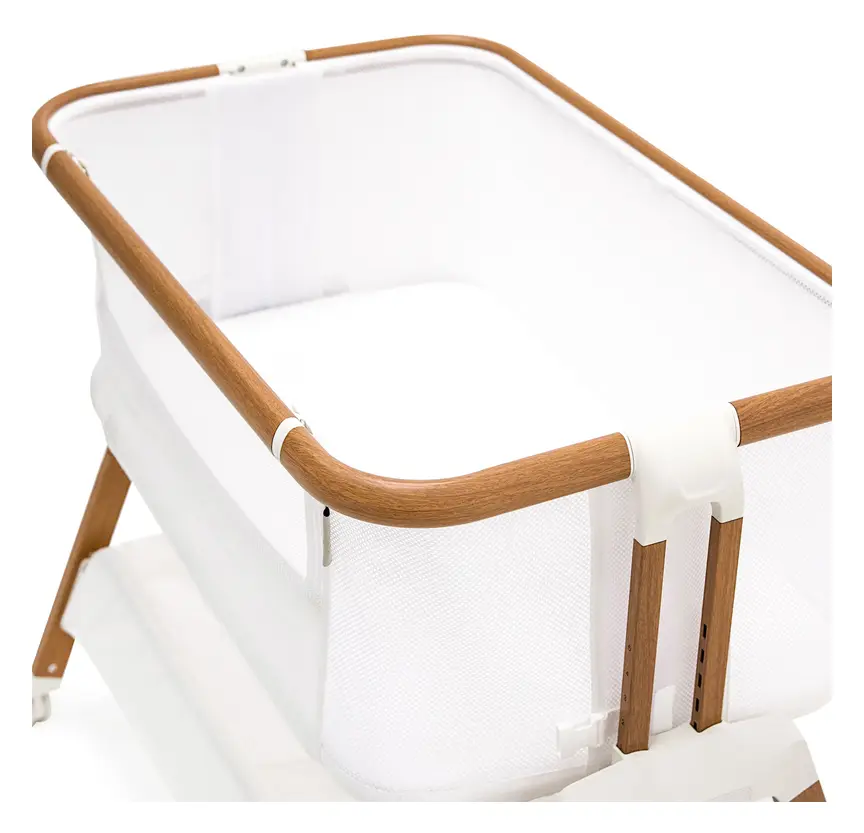
BabyRest Alfie2 Bedside Bassinet
A bedside bassinet with 5 heights, a drop-down side, wheels and an insect net.
Read our full review →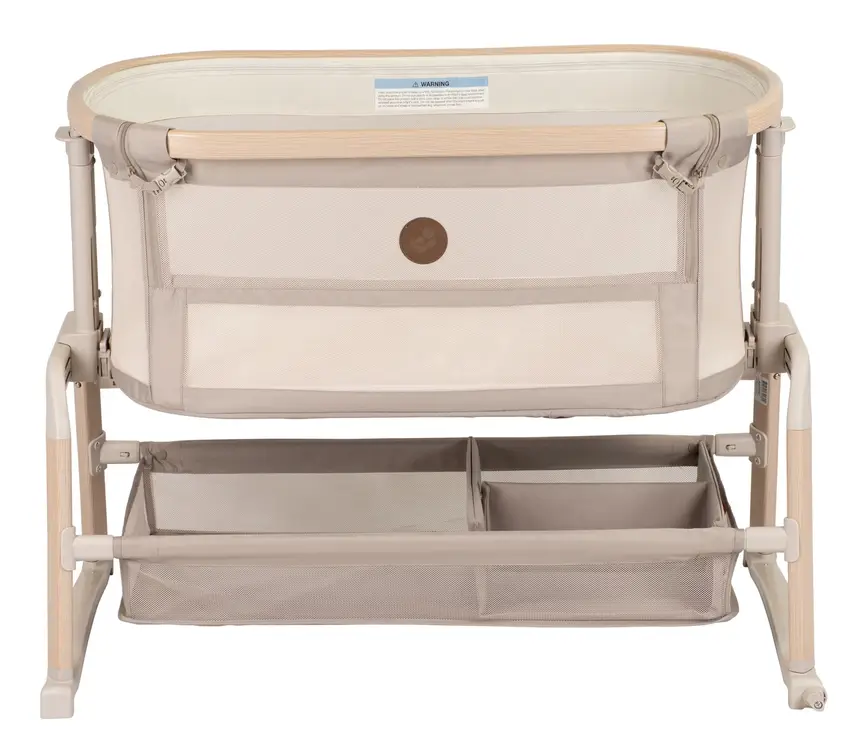 Reviewed
Maxi-Cosi Iora Lux
A bedside bassinet with 4 heights and 3 slide positions, with a 2-year warranty.
Read our full review →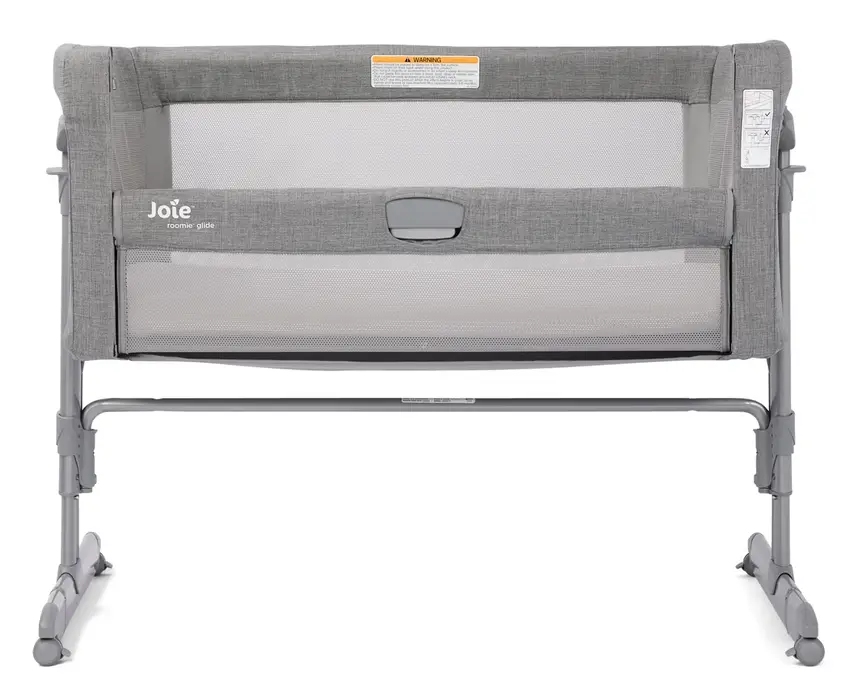
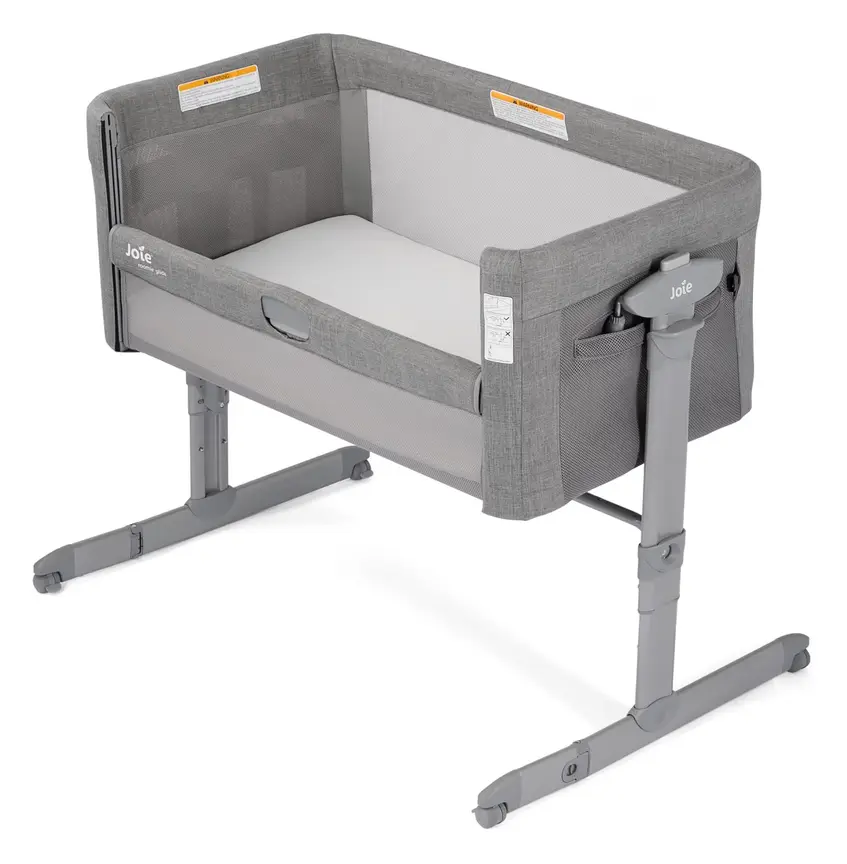
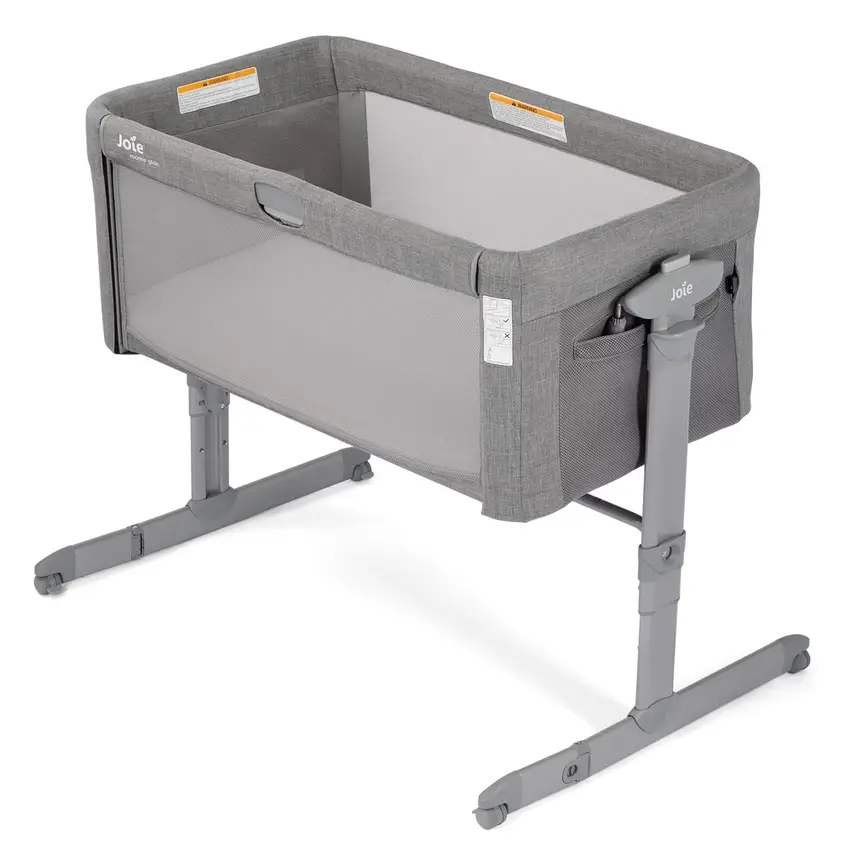
Joie Roomie Glide
A bedside sleeper that glides with one hand and has a gentle tilt.
Read our full review →Compare all cots, bassinets & bedside sleepers in our reviews →
How to measure your bed and mattress before buying
Do not guess your bed height. Grab a tape measure and check four numbers in your bedroom before you buy anything.
- Floor to top of mattress: measure straight up from the floor to the very top of your mattress. Include any mattress topper you use every night.
- Floor to bottom of bed frame: check how much space sits under the side of your bed. Some bassinet legs slide under the bed to get close.
- Platform rim width: if your mattress sits inside a wide wooden or fabric ledge, measure how far that ledge sticks out past the mattress edge.
- Floor space beside the bed: measure the width between your bed and the wall or bedside table.
Write these four numbers down in both centimetres and inches. Product labels often list inches in the US and Canada, and centimetres in Australia and the UK.
What 18 to 30 inches means in real life
Most standard bedside bassinets adjust between about 45 cm and 65 cm (around 18 to 25 inches). Only a smaller group of extra-tall models reach 70 to 76 cm (28 to 30 inches). Very few drop-side bassinets go lower than 45 cm (18 inches).
This means a standard bedside sleeper fits an average bed well. It often struggles at the two extremes: very low floor beds and extra-tall platform beds.
Low floor frames vs. high platform beds
Low beds and high platform beds each create their own setup problems. Knowing these limits early saves you from buying gear that does not fit your room.
Low floor frames (under 45 cm or 18 inches)
Floor beds and low timber frames sit very close to the ground. Most height-adjustable bassinets cannot drop low enough to line up with a floor mattress. Even at their lowest setting, the bassinet mattress may sit 10 to 20 cm higher than yours.
When a drop-side bassinet sits higher than your bed, the open side wall no longer lines up safely with your mattress. Your baby could roll towards the edge or get caught against the frame. On low frames without clearance underneath, the bassinet legs also hit the solid wooden base and push the sleeper away from your mattress.
If you sleep on a very low floor bed, skip drop-side bedside mode. Use a standalone bassinet or a full-size cot with all four walls locked up. Place it within arm's reach beside your bed instead.
High platform beds (65 to 76 cm or 25 to 30 inches)
High platform beds and deep pillow-top mattresses need a bassinet with a tall top setting. Check the maximum mattress height of the bassinet, not just the top of its frame. Some brands list the frame height, which is higher than where your baby actually lies.
Many platform beds also have a wide wooden or upholstered lip around the mattress. That lip creates a gap between your mattress and the bassinet. A gap between the two beds is a serious trapping hazard. A baby can slip into the space between the bassinet wall and the bed rim.
To solve a wide platform lip, look for a bassinet with sliding legs or a sliding cot body. Some models let the sleeping basket slide sideways over the lip so it meets your mattress edge. If the lip is still too wide, keep all four bassinet walls zipped up and locked. Do not use bedside mode over a gap.
Drawers, divans and solid bases
Many platform beds and divan bases have storage drawers or solid panels right down to the floor. Bassinet legs that stick straight out cannot slide under these beds. Look for folding legs, short inward-angled legs, or wheels that tuck in so the bassinet can still pull up tight.
Side-by-side comparison: bassinet styles for different beds
The table below compares the three main setups for low, medium and high adult beds. Use it to match your bed frame to the safest style.
| Feature | Standard bedside bassinet | Extra-tall bedside bassinet | Standalone bassinet or cot |
|---|---|---|---|
| Best adult bed height | 45 to 65 cm (18 to 25 in) | 60 to 76 cm (24 to 30 in) | Any height, including low floor beds |
| Side wall design | One zip-down or drop-down wall | One drop-down wall with tall legs | Four fixed walls up at all times |
| Wide platform lip fit | Needs sliding basket or wall up | Works if basket slides over the lip | Fits easily beside any rim |
| Under-bed clearance | Needs space under bed for legs | Needs space or tuck-in legs | No under-bed space needed |
| Anchor straps needed? | Yes, when the side wall is down | Yes, when the side wall is down | No, stands safely on its own |
| When to stop using | Rolling, pushing up, or weight limit | Rolling, pushing up, or weight limit | Bassinet: rolling signs. Cot: toddler stage |
Safety rules in Australia, the UK, the US and Canada
Safe sleep rules are very similar across Australia, the UK, the US and Canada. Official bodies in all four countries agree on what keeps a baby safe in a bassinet. The main differences are the local testing rules that shops must follow.
| Topic | Australia | UK | US | Canada |
|---|---|---|---|---|
| Main safety body | ACCC / Product Safety Australia | Office for Product Safety and Standards (OPSS) | Consumer Product Safety Commission (CPSC) | Health Canada |
| Safe sleep body | Red Nose | The Lullaby Trust / NHS | American Academy of Pediatrics (AAP) | Canadian Paediatric Society |
| Key product standards | Australian infant sleep rules; AS/NZS 8811.1 firmness test | BS EN 1130 (cribs); BS EN 16890 (mattresses) | US federal bassinet rule; ASTM F2194 | Canadian cribs, cradles and bassinets rules |
| Sleep surface | Flat, firm, bare, level | Flat, firm, clear, level | Flat, firm, bare, level | Flat, firm, clear, level |
| Inclined sleep | Unsafe — never tilt | Unsafe — never tilt | Unsafe — banned for sleep | Unsafe — never tilt |
| Room sharing | Same room for first 6 to 12 months | Same room for first 6 months | Same room for at least 6 months | Same room for first 6 months |
What these rules mean when you shop
In Australia, Product Safety Australia has mandatory rules for infant sleep products. Products must have a flat sleep surface, a firm mattress, and clear warnings. The firmness test AS/NZS 8811.1 checks that a mattress does not sink too much under a baby's head.
In the UK, The Lullaby Trust advises checking for BS EN 1130 on cribs and bassinets, and BS EN 16890 on mattresses. It also warns parents to keep the cot clear of toys, pillows and loose bedding.
In the US, the CPSC requires bassinets and bedside sleepers to meet federal safety rules based on ASTM F2194. Inclined sleepers are banned for infant sleep under US law. The AAP says the sleep surface must never tilt more than a tiny flat tolerance, and babies should never sleep on an incline.
In Canada, Health Canada enforces strict rules for bassinets and cradles, including side-wall height and leg locks. The Canadian Paediatric Society warns against products that attach to an adult bed without meeting full bassinet safety rules.
Side by side: more cots, bassinets & bedside sleepers to compare
Real products from our catalogue. We don't show star ratings or review counts; check the current price, stock and reviews on Amazon before you buy.
 Reviewed
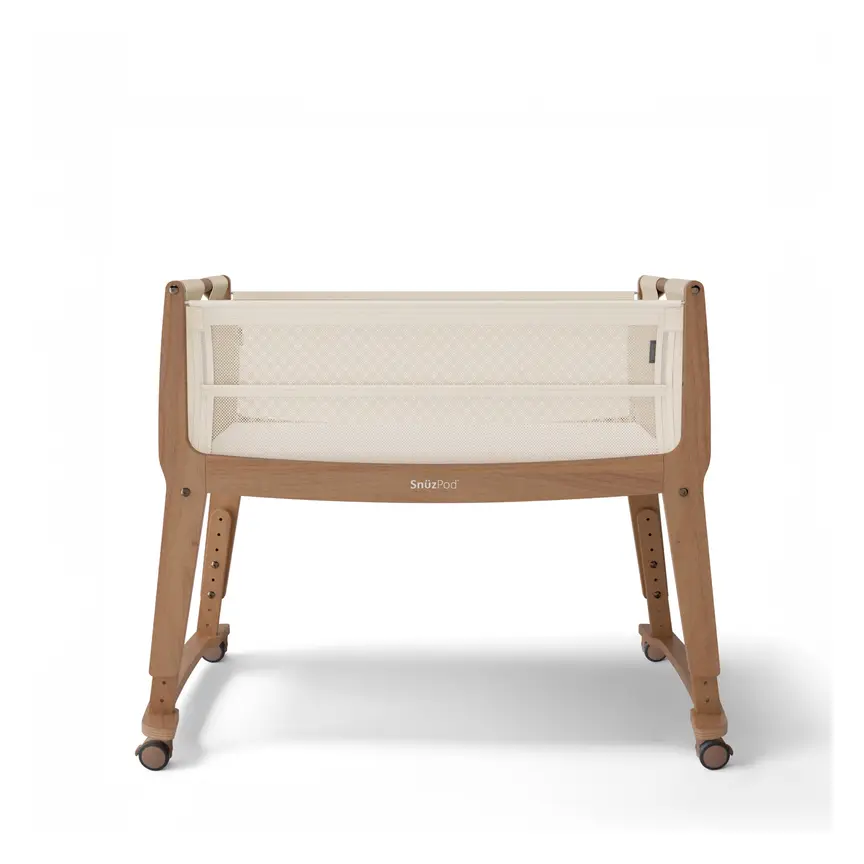
SnuzPod Studio
A bedside crib for night sleeps and naps, with panoramic mesh and a zip-down wall.
Read our full review →
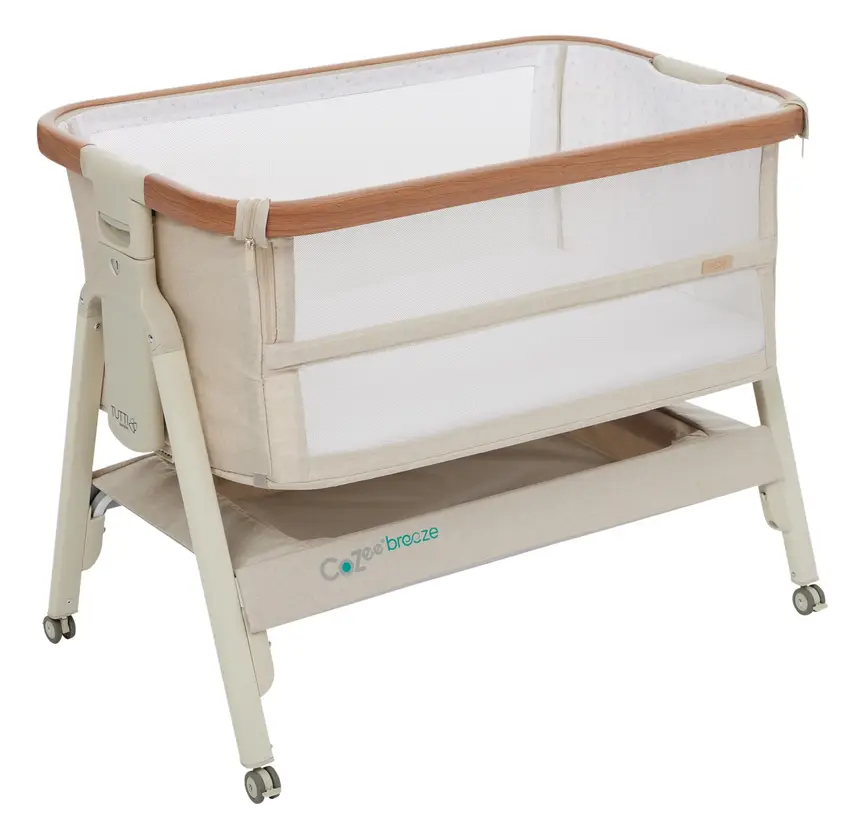
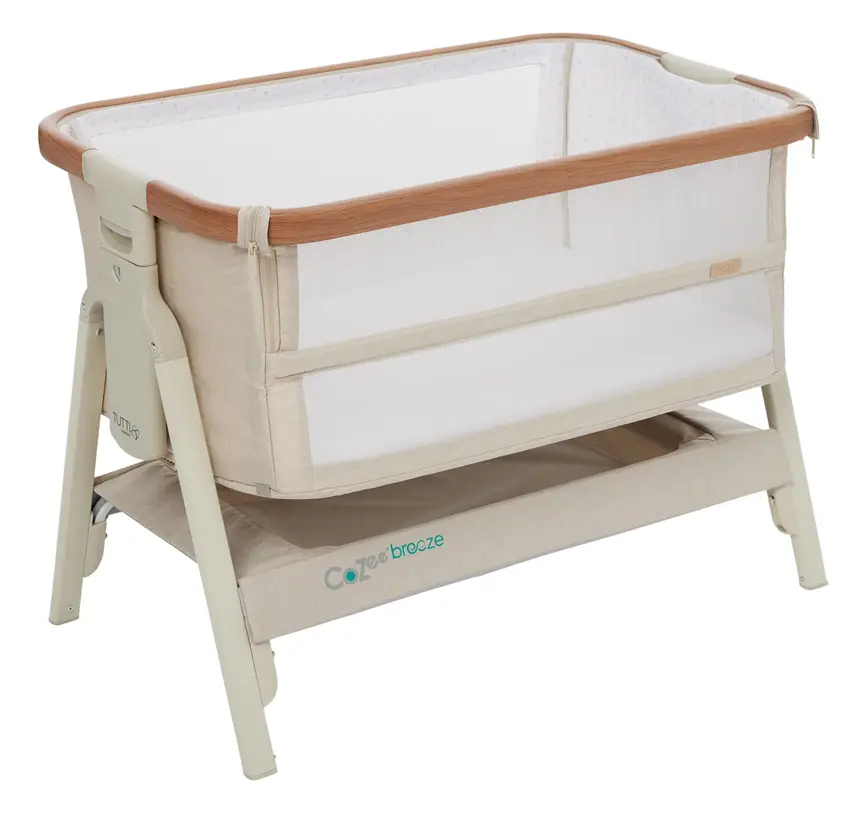
Tutti Bambini CoZee Breeze Lite
A bedside sleeper that opens or folds in about 30 seconds, with mesh sides and a travel bag.
Read our full review →


Tutti Bambini CoZee Sense
A bedside bassinet with a sensory bar for supervised awake time.
Read our full review →
Boori Oasis Oval Cot
A curved solid beech cot on lockable wheels, with two base heights.
Compare all cots, bassinets & bedside sleepers in our reviews →
What makes a height-adjustable bassinet safe
Height adjustment adds moving parts to a baby bed. Moving parts must stay locked and level at all times. Check these five details on any model you consider.
1. Positive height locks on every leg
Each leg must lock firmly into place with a click, pin or dual-action button. You should not be able to push the bassinet down by leaning on the rail. A worn or weak lock can drop one side while your baby sleeps.
2. Level settings at both ends
Many adjustable bassinets let you set the left and right legs separately. Parents sometimes set the head end higher than the foot end for spit-up or reflux. Do not do this. Health groups in Australia, the UK, the US and Canada warn that tilting a baby's bed increases the risk of sliding, chin-to-chest airway blocking, and rolling into the side.
3. Breathable sides all around
Look for sturdy mesh sides on at least the long panels, or all four sides. Mesh lets air move freely and lets you see your baby without sitting up. Check that the mesh is tight, with no tears, loose threads, or large holes where tiny fingers can catch.
4. A firm, well-fitting mattress
Only use the mattress that came with the bassinet. Never add a second mattress, a soft foam pad, or a folded blanket underneath. When you press the middle of the mattress with your hand, it should feel firm and spring back right away. There should be no big gaps between the mattress edge and the bassinet walls.
5. Proper bedside anchor straps
If you plan to lower the side wall next to your bed, the bassinet must come with anchor straps. These straps loop under your adult mattress or around the bed frame to pull the bassinet tight against your bed. Never use a bedside sleeper with the side wall down if it is not strapped tightly to the bed.
How to set up a bedside bassinet safely, step by step
Follow these steps every time you set up the bassinet or change its height.
- Pick a safe spot. Place the bassinet on a flat floor, away from windows, curtain cords, heaters, lamps and power cords.
- Lock both legs at the same height. Set the left and right sides to the exact same number or notch. Pull down gently on both ends to test that the locks hold.
- Check the mattress height match. In bedside mode, the top of the bassinet mattress should sit level with or slightly below the top of your adult mattress. The lowered side wall must never sit higher than your adult mattress in a way that creates a hard ledge against your baby, and the baby's mattress must stay safely recessed below the lowered rim as the maker's manual shows.
- Fit the anchor straps. Thread the straps under your mattress or around your bed frame according to the manual. Pull them tight so the bassinet cannot slide away when bumped.
- Check for zero gap. Push on the bassinet frame from the outside. If a gap opens between the bassinet and your mattress, tighten the straps or switch to four-wall standalone mode.
- Lock any wheels. If the bassinet has castors or wheels, click every brake on.
- Clear the adult bed edge. Pull your pillows, doona, heavy blankets and phone charging cables back from the side of your bed. Nothing from your bed should be able to fall into the bassinet.
- Make the bassinet bare. Fit one tight fitted sheet over the bassinet mattress. Add no pillows, toys, sleep positioners, bumpers or loose blankets.
Age stages: how long it lasts and when to move on
A bedside bassinet is a short-term bed. Babies grow fast, and safety limits arrive sooner than many parents expect.
| Stage | What your baby is doing | What you should do |
|---|---|---|
| Newborn to 2 months | Sleeps often, wakes for feeds, stays where placed. | Use bedside or standalone mode. Always place baby on their back. |
| 2 to 4 months | Starts kicking, wriggling, or tipping onto one side. | Watch closely for early rolling signs. Keep the bassinet bare and level. |
| 4 to 6 months | May roll over, push up on arms, or reach the weight limit. | Stop using the bassinet as soon as rolling or weight limits arrive. Move to a cot. |
| 6 months and older | Sits up, rolls freely, or pulls up on rails. | Use a full-size cot in your room. Keep sharing a room if you can. |
Always check the weight limit on your bassinet's label. Even if your baby is under the weight limit, stop using the bassinet as soon as they can roll over, push up on their hands and knees, or sit up. At that stage, a shallow bassinet wall is no longer safe. Move your baby into a standard household cot that meets AS/NZS 2172 in Australia, BS EN 716 in the UK, ASTM F1169 in the US, or Canadian cot rules.
Common mistakes to avoid
- Leaving the side down without straps: an unstrapped bedside sleeper can roll or slide away from your bed in the night, opening a dangerous gap.
- Using bedside mode with a wide frame lip: if a wooden rim keeps the bassinet away from your mattress, keep the fourth wall zipped up instead.
- Tilting the bassinet for reflux: raising one leg higher than the other is unsafe and can cause your baby to slide into a corner.
- Using a soft adult topper or extra pad: adding soft padding inside the bassinet raises the risk of suffocation.
- Letting bedding spill over: a heavy adult duvet or pillow can easily slide over the low side wall onto your baby.
- Keeping the bassinet too long: waiting until the baby sits up or climbs out is too late. Move to a cot at the first sign of rolling or pushing up.
- Buying a recalled second-hand unit: used bassinets may have missing anchor straps, broken locks, or an old soft mattress. Always check Product Safety Australia, OPSS, CPSC or Health Canada recall lists first.
More options, from budget to premium
Real products from our catalogue. We don't show star ratings or review counts; check the current price, stock and reviews on Amazon before you buy.

Jengo Mila Cot
A timber cot with two base heights and teething rails.

Jengo Zuri Cot
A lower-cost timber cot with two base heights.
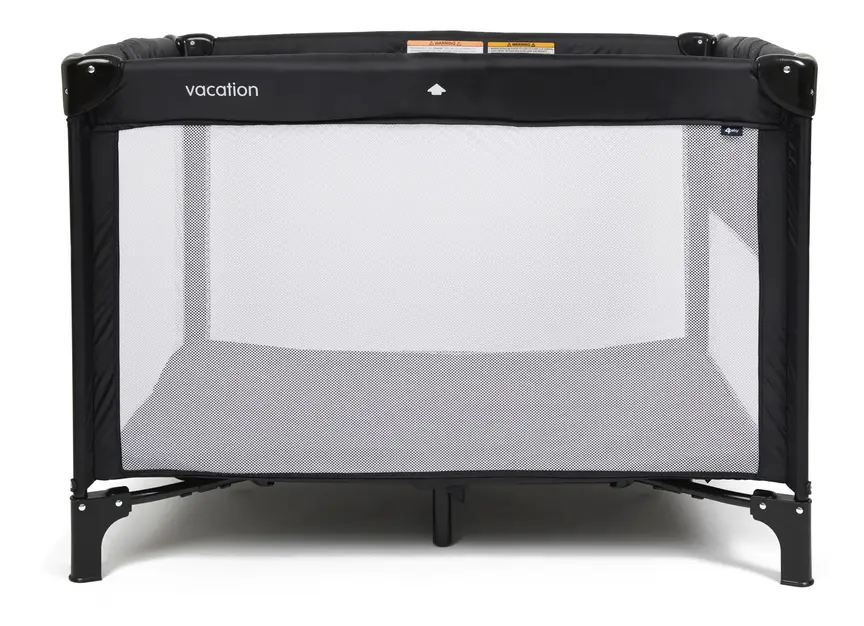
4baby Vacation Portacot
A low-cost portacot with a padded mattress and mesh sides.
Compare all cots, bassinets & bedside sleepers in our reviews →
Frequently asked questions
Can a bedside bassinet work with a very low floor bed?
Usually not in drop-side mode. Most adjustable bassinets only go down to about 45 cm (18 inches), which is higher than many floor frames. If the bassinet sits higher than your mattress, keep all four walls up and locked, or place a standard cot next to your floor bed instead.
What if my platform bed has a wide wooden lip around the mattress?
A wide lip often stops a normal bassinet from sitting flush against your mattress. Look for a bedside sleeper with a sliding basket that reaches over the lip, or use the bassinet in standalone mode with all four walls raised. Never leave an open gap between your mattress and the bassinet.
Is it safe to leave the drop-down side open all night?
It is only safe if the bassinet is designed for bedside sleeping, anchored tightly to your bed with the maker's straps, and set at the exact height shown in the manual. You must also keep your adult pillows and blankets well away from the open side. If you have any doubt, zip the side wall up before you go to sleep.
Can I raise one end of the bassinet if my baby has reflux?
No. Even if a bassinet lets you adjust each leg separately, never set one end higher than the other for sleep. Red Nose, The Lullaby Trust, the AAP and the Canadian Paediatric Society all say babies must sleep flat on their backs. Talk to your doctor or child health nurse if your baby has severe reflux.
When do I need to stop using a bedside bassinet?
Stop as soon as your baby shows signs of rolling, pushes up on hands and knees, sits up, or reaches the weight or length limit on the label. For many babies, this happens between 4 and 6 months of age. Move them to a safe cot in your bedroom.
Are second-hand height-adjustable bassinets safe to use?
Only if you can verify the exact model, check that it has not been recalled, and confirm every part is intact. Test all height locks, inspect the mesh for tears, and make sure the anchor straps and original firm mattress are present. If the mattress is sagging, stained, or missing, buy an exact-fit replacement from the maker or choose a new bassinet.
What is the difference between a bedside bassinet and a cot?
A bedside bassinet is smaller, sits right beside your bed, and is only for newborns and young babies up to about 4 to 6 months. A cot (crib) is larger, has deeper fixed sides, and lasts until your child is ready for a toddler bed. You can also place a full-size cot next to your bed for room-sharing.
Sources
- Product Safety Australia – Bassinets and cradles guide
- Product Safety Australia (ACCC) – Infant sleep products mandatory standards
- Red Nose Australia – What is a safe sleeping environment
- Red Nose Australia – What is a safe mattress?
- The Lullaby Trust (UK) – Room sharing
- The Lullaby Trust (UK) – Sleeping products
- American Academy of Pediatrics (US) – A parent's guide to safe sleep
- Caring for Kids (Canadian Paediatric Society) – Safe sleep for babies
Related guides
More Sleep & Nursery →
Bedside Bassinets After a C-Section: Safer Setup, Easier Reaches, and What to Check

Bedside Sleepers and Co-Sleeper Bassinets: Safety Rules, Set-Up and What to Check

Bassinets with Storage Baskets: Night-Time Nappy Changes Made Easier and Safer
