Bedside Bassinets After a C-Section: Safer Setup, Easier Reaches, and What to Check
Choosing a bedside bassinet after a C-section? Check fit, stability, safe sleep rules, and how to reach your baby without lifting the bassinet side.

On this page
- What a bedside bassinet can and cannot do
- Why recovery after a caesarean birth can affect your choice
- How to choose a bassinet that fits your room and bed
- Swivel tops and lowering sides: useful features with limits
- What to check before each sleep
- Safe sleep rules apply to every bassinet
- Compare the main bedside sleep choices
- How needs change as your baby grows
- Safety rules and official guidance across four countries
- Buying new or second-hand
- Common mistakes to avoid
- Frequently asked questions
- Sources and guidance
- Sources
Short answer: A bedside bassinet may make night feeds and checks easier after a caesarean birth. It does not replace a safe sleep space. Your baby still needs a firm, flat mattress, a clear sleep space, and a position on their back. A swivelling top or lowering side is safe only when used as the maker directs. Check that the bassinet fits your bed and stays stable. Ask your midwife, doctor, or physiotherapist for help if reaching or lifting hurts.
Advice in Australia, the UK, the US, and Canada shares the same core aim: give babies a clear, flat place to sleep near a caregiver. Product rules and labels differ by country. Check the rules where you live, and follow the instructions for your exact model.
What a bedside bassinet can and cannot do
A bedside bassinet is a small sleep space made for a baby. Some models sit beside an adult bed. Some have a side that opens or lowers. Some tops swivel towards a caregiver. These features can help with seeing and reaching a baby.
A bassinet does not make bed-sharing safe. It should have its own mattress and sleep surface. The baby should lie inside it, rather than on the adult mattress. Do not bridge the bassinet and bed with blankets, pillows, or a rolled towel.
Marketing phrases can be unclear. A product described as a “bedside sleeper” may have a side that opens only when attached to a bed. A “co-sleeper” label does not tell you whether the product meets local rules. Read the full instructions and safety label before buying or using it.
A bassinet is usually for the early months only. Its instructions set a weight limit and other limits. Many also say to stop when the baby can push up, sit, kneel, or roll. The exact rule depends on the model. Never keep using it because your baby seems comfortable.
Why recovery after a caesarean birth can affect your choice
After a caesarean birth, bending, twisting, standing, and lifting may feel hard. Recovery differs from person to person. A bedside sleep space may reduce the number of times you need to get out of bed. It may also let you see your baby without leaning far over a cot.
These benefits depend on your bed, room, body, and bassinet. A bassinet can still require reaching, lifting, or turning. A low adult bed may not line up with the bassinet. A high bed may make a safe fit impossible. Wheels, legs, and a swivel feature may take up more floor space than expected.
Plan how you will move before the baby arrives, if possible. Try the set-up while the bassinet is empty. Practise opening and closing the side. Check whether you can reach the mattress without stretching or twisting. Do not test with a baby in your arms.
Ask a health professional for advice if you have pain, dizziness, weakness, or movement limits. Your midwife or doctor can discuss safe ways to lift and feed your baby. A physiotherapist can help with movement after birth. Get urgent medical help for severe or sudden symptoms.
How to choose a bassinet that fits your room and bed
Start with the instructions, not the feature list. Look for the permitted bed height, mattress height, and attachment method. Measure your bed from the floor to the top of its mattress. Check the measurement with your bed made as usual. Some mattresses compress when someone lies on them.
Then measure the space beside the bed. Include the bassinet legs, wheels, and any straps or brackets. Check drawers, bedside tables, heaters, and doors. The bassinet should not block a safe path through the room.
Check how the bassinet attaches, if it attaches at all. Use only the supplied parts. Tighten and position them as the instructions show. Do not tie the bassinet to the bed with rope or add homemade brackets.
Check the mattress and sleep space. The mattress should fit the bassinet as its maker intended. There should not be a gap around its edges. Do not add a second mattress, pillow, topper, or padding. Use only a fitted sheet that suits the model.
Make sure the frame feels steady on the floor. Lock wheels when the instructions say to lock them. Check that the floor is level and clear. Do not place blocks under the legs to change the height. Do not use a product with bent parts, loose joints, missing fasteners, or damage.
Ask whether you can return the bassinet if it does not fit your bed. A product that looks suitable in a shop may not work in your room. Check the model name and instructions before paying. If buying second-hand, check the full model, age, condition, parts, and recall history.
Cots, Bassinets & Bedside Sleepers worth a look
Real products from our catalogue. We don't show star ratings or review counts; check the current price, stock and reviews on Amazon before you buy.

4baby Snuggle Cuddle Bedside Sleeper
A low-cost bassinet that turns into a bedside sleeper, with 4 heights and mesh sides.

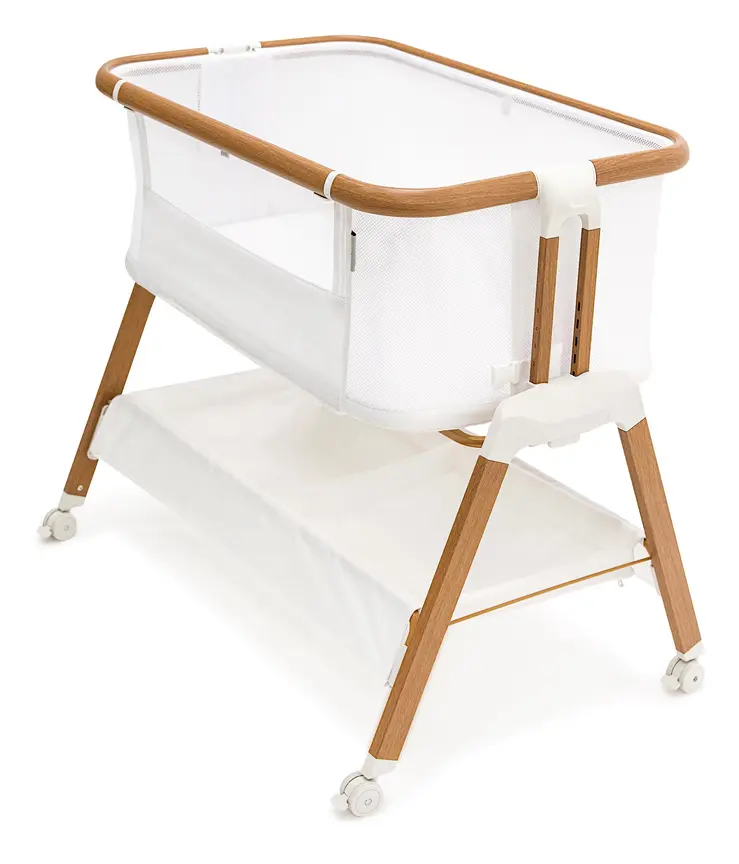
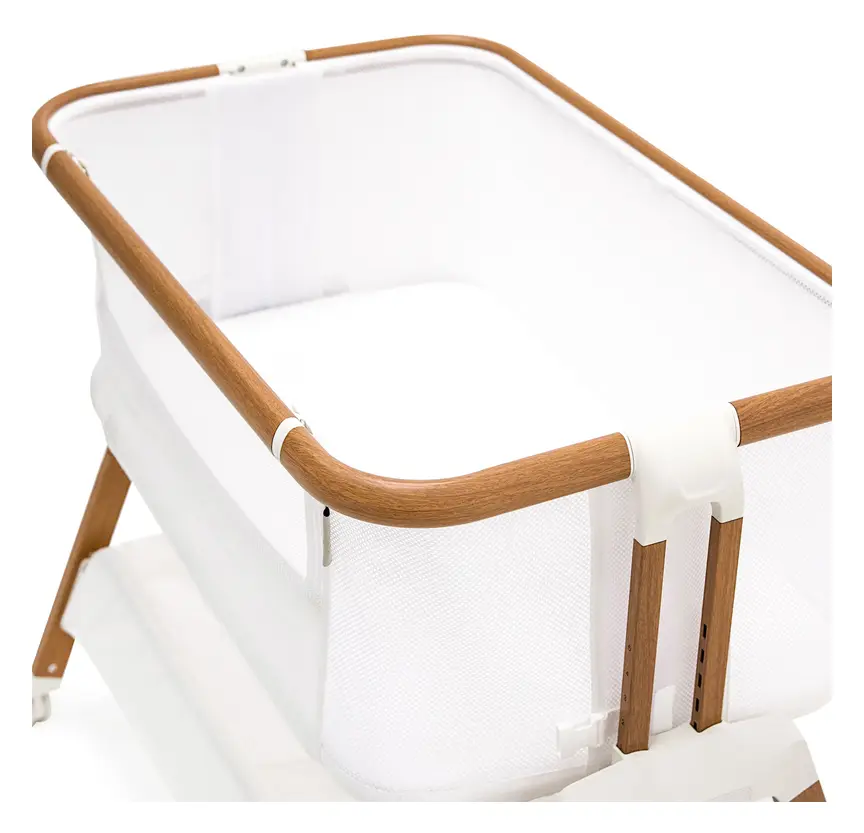
BabyRest Alfie2 Bedside Bassinet
A bedside bassinet with 5 heights, a drop-down side, wheels and an insect net.
Read our full review →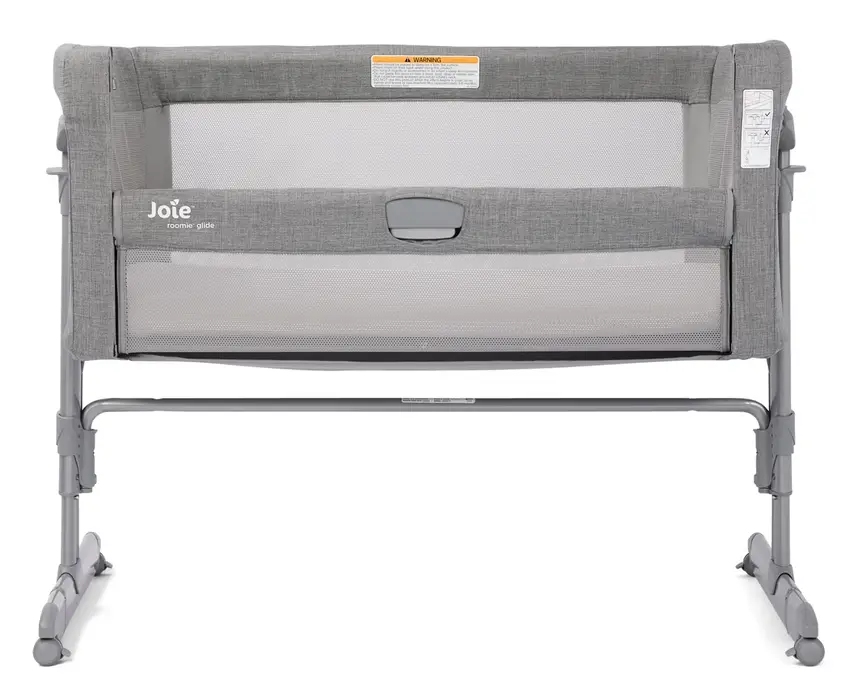
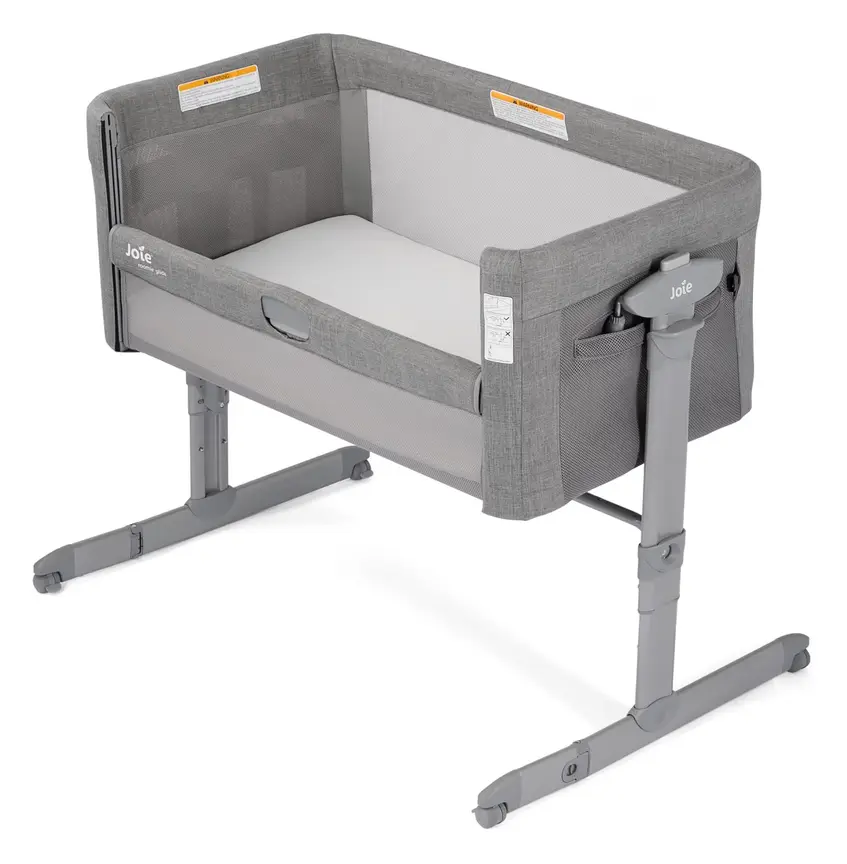
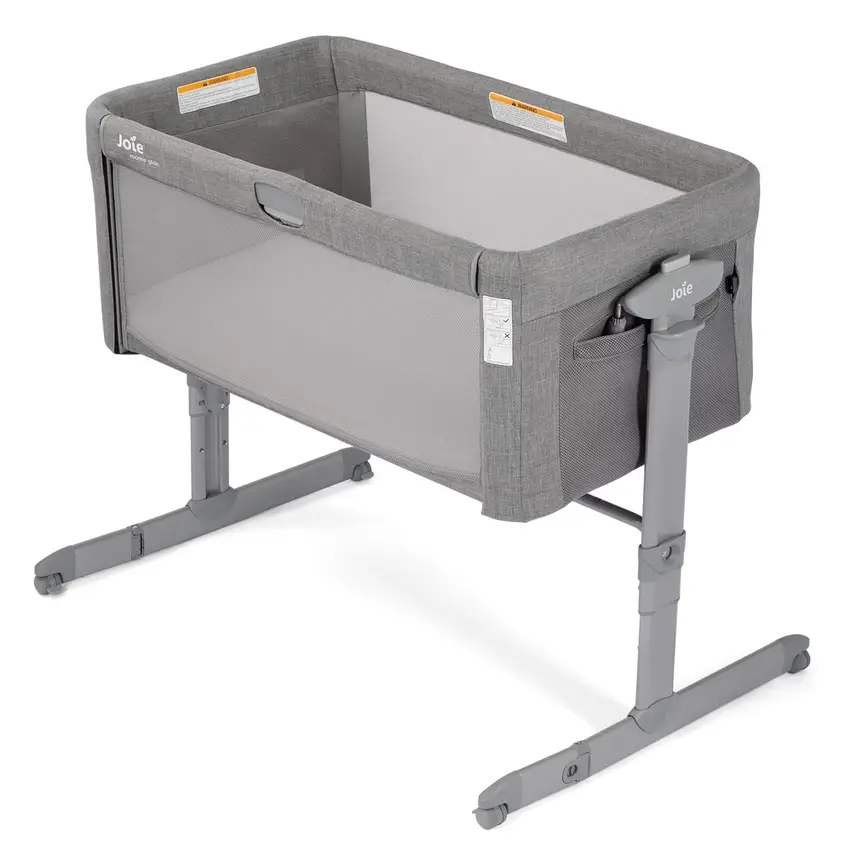
Joie Roomie Glide
A bedside sleeper that glides with one hand and has a gentle tilt.
Read our full review →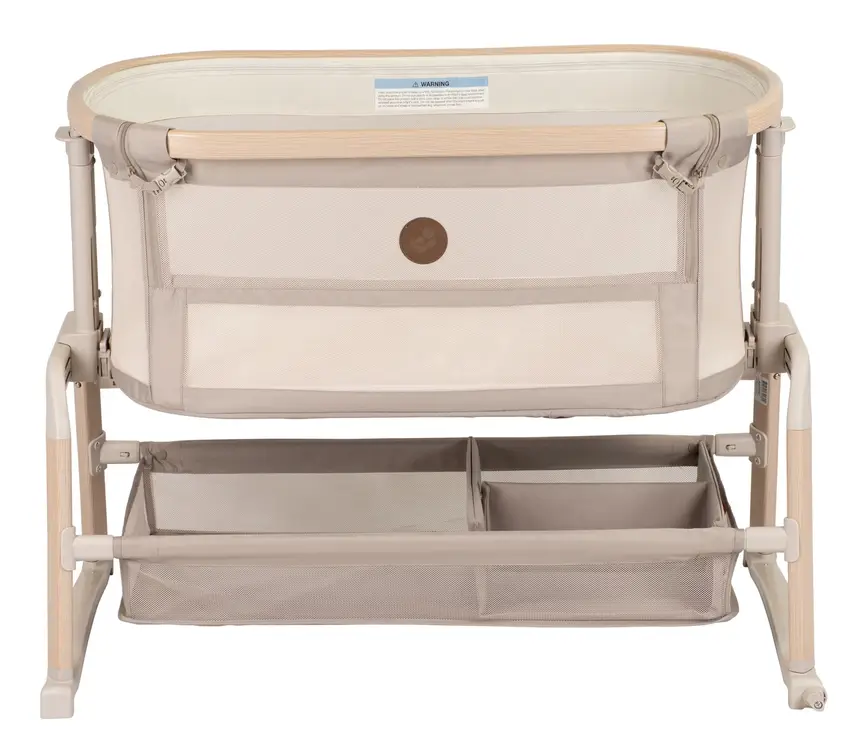 Reviewed
Maxi-Cosi Iora Lux
A bedside bassinet with 4 heights and 3 slide positions, with a 2-year warranty.
Read our full review →Compare all cots, bassinets & bedside sleepers in our reviews →
Swivel tops and lowering sides: useful features with limits
A swivel top may turn the sleep space towards you for a feed or a quick check. Use the lock or stop as directed. Before putting your baby down, return the top to its sleep position and make sure it is locked. Do not swivel or move the bassinet with your baby inside unless the instructions clearly allow it.
A lowering side may make reaching easier. It can also create a gap or change the bassinet’s support. Lower the side only in the way and at the time described by the maker. If the instructions require the side to be raised for sleep, raise it before your baby sleeps.
Some products are designed to attach to a bed with one side open. They need the correct height and attachment. Follow every step, including any checks for gaps. If you cannot make a secure fit, close the side or use another approved sleep space.
Do not assume that a low side makes the bassinet safer or easier. The baby could move towards the opening. An adult duvet or pillow could fall into the space. The adult mattress may sit higher or lower than the bassinet mattress. These differences can create hazards.
Never leave a lowered side open if the instructions say to close it for sleep. Never use the bassinet without required straps, supports, or locks. Do not improvise when a part is missing. Contact the maker or stop using the product until you have the right part.
What to check before each sleep
Take a moment to check the set-up before placing your baby down. A short check is easier when it becomes part of the routine.
- Position: the bassinet is in the approved place and sits level.
- Stability: the frame is steady, wheels are locked if needed, and fasteners are secure.
- Side: the side is set for sleep as the instructions require.
- Swivel: the top is back in its sleep position and locked.
- Mattress: it is the original or approved mattress and lies flat.
- Sleep space: it has only the fitted sheet and your baby. Remove pillows, toys, loose blankets, and positioners.
- Baby: place your baby on their back, with their face and head uncovered.
- Nearby items: keep cords, charging leads, and loose fabric away from the bassinet.
Do not hang toys, mobiles, or bags from the frame unless the maker allows them. Keep blind and curtain cords out of reach. Keep pets and other children from leaning on or climbing into the bassinet.
Safe sleep rules apply to every bassinet
For every sleep, place your baby on their back. Use a firm, flat, level surface made for infant sleep. Keep the sleep space clear. Do not use wedges, pillows, nests, or rolled towels to hold a baby in place.
Keep your baby’s face and head uncovered. Dress them for the room, and check for signs of overheating. Do not use a hat for indoor sleep unless a health professional has given specific advice. Keep the bassinet away from heaters and direct sun.
Room-sharing means your baby sleeps in the same room as you, but on a separate sleep surface. It can make feeding and settling easier. It does not mean placing the baby on your adult mattress, sofa, or chair.
If your baby falls asleep in a car seat, swing, or other sitting product, move them to a firm, flat sleep space as soon as you can. A bedside bassinet is useful when it is set up correctly and ready for that move.
Follow your local safe-sleep advice and your baby’s care plan. Babies born early or with health needs may need extra guidance. Ask your care team if you are unsure how general advice applies to your baby.
Compare the main bedside sleep choices
Each choice has trade-offs. The safest option is one that fits your room, follows its instructions, and lets you care for your baby without unsafe changes.
| Choice | What it may help with | What to check | When it may not suit |
|---|---|---|---|
| Fixed-side bassinet beside the bed | Baby sleeps close, on a separate surface. It may be simple to set up. | Mattress fit, frame stability, bed access, and the maker’s limits. | If it blocks your path or sits at a height that makes care hard. |
| Bedside model with a lowering side | May make seeing and reaching the baby easier. | Correct bed fit, attachment, side position for sleep, and gap checks. | If you cannot attach it as directed or must leave a side open against instructions. |
| Bedside model with a swivel top | May turn the sleep space towards a caregiver during care. | Locks, turning steps, stability, and whether movement with baby inside is allowed. | If the top does not lock securely or the movement causes a reach or trip risk. |
| Separate cot in the same room | Provides a separate sleep space with room for a growing baby. | Safe cot condition, fitted mattress, correct assembly, and clear space. | If the caregiver cannot safely reach or lift the baby during recovery. |
These are broad types, not safety ratings. Check the exact product instructions and local product rules. A feature name alone cannot show that a product is suitable.
Side by side: more cots, bassinets & bedside sleepers to compare
Real products from our catalogue. We don't show star ratings or review counts; check the current price, stock and reviews on Amazon before you buy.
 Reviewed
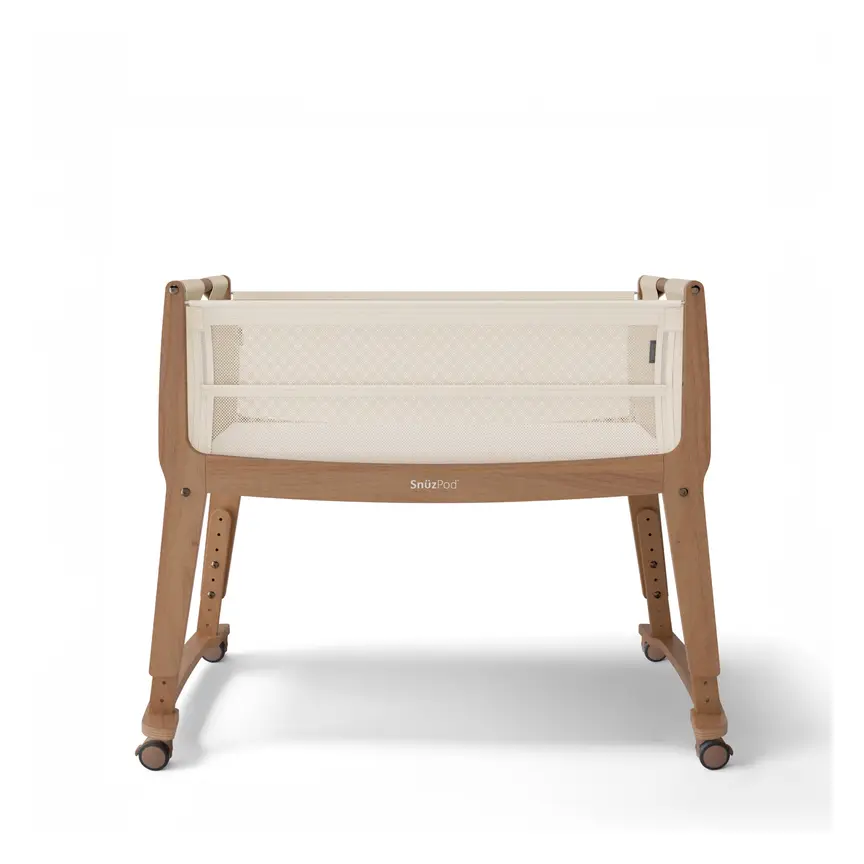
SnuzPod Studio
A bedside crib for night sleeps and naps, with panoramic mesh and a zip-down wall.
Read our full review →
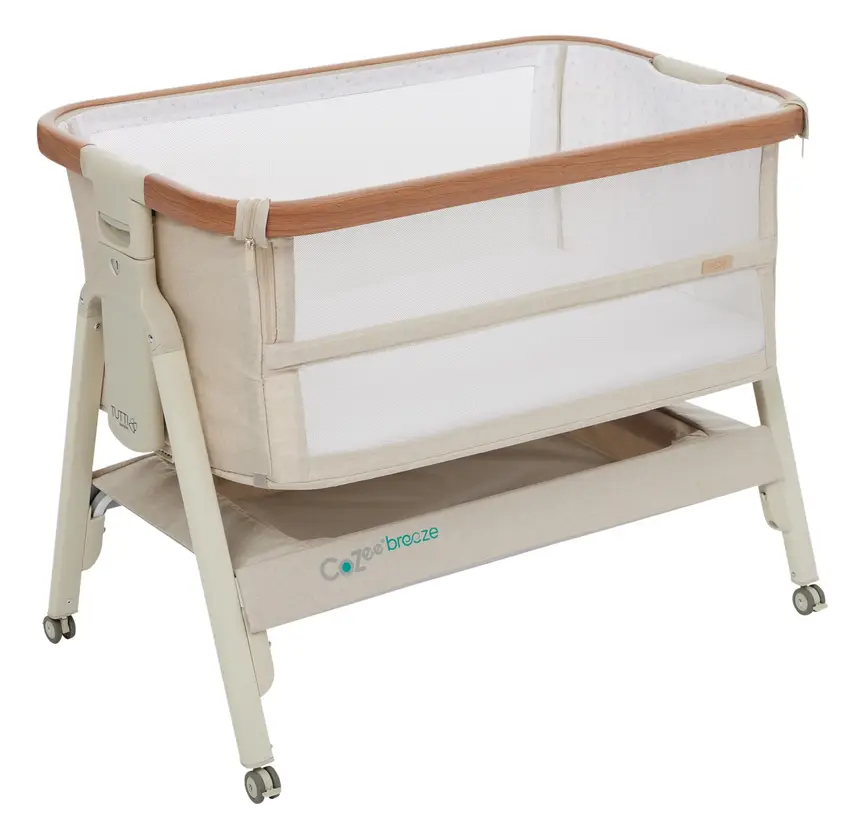
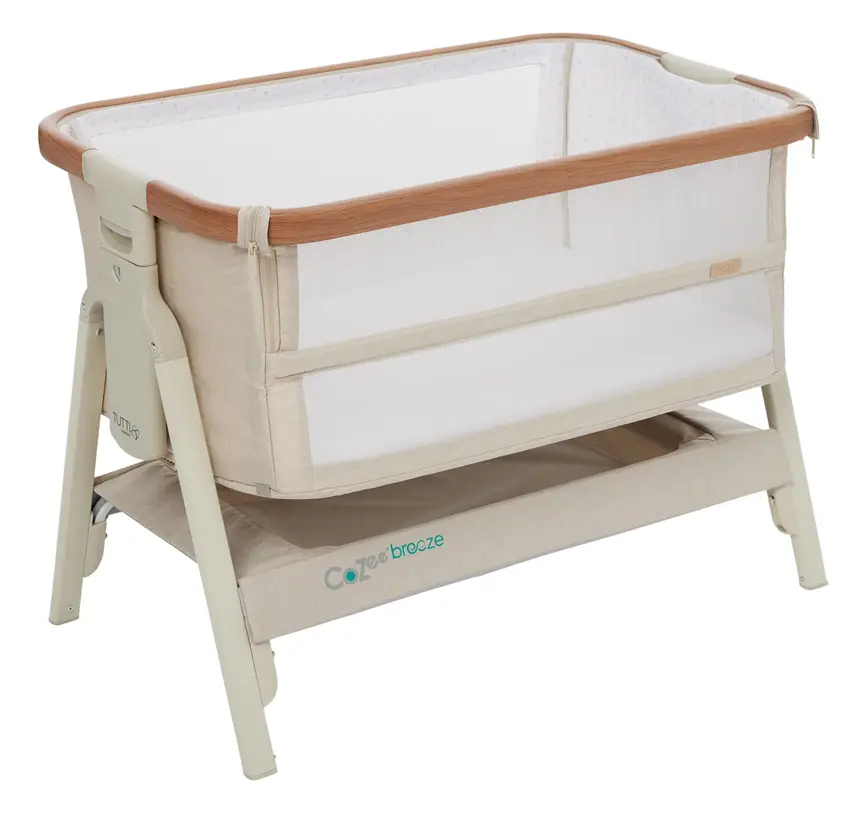
Tutti Bambini CoZee Breeze Lite
A bedside sleeper that opens or folds in about 30 seconds, with mesh sides and a travel bag.
Read our full review →


Tutti Bambini CoZee Sense
A bedside bassinet with a sensory bar for supervised awake time.
Read our full review →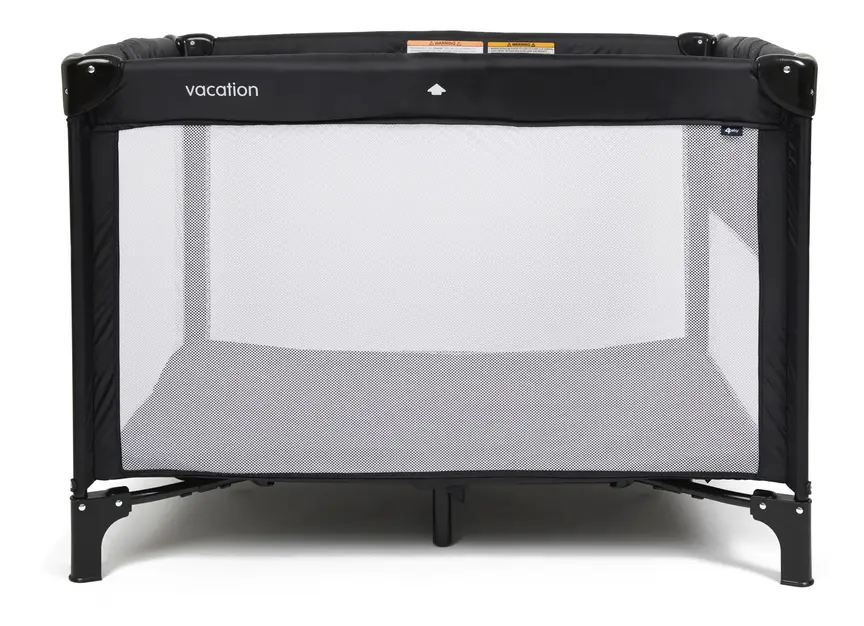
4baby Vacation Portacot
A low-cost portacot with a padded mattress and mesh sides.
Compare all cots, bassinets & bedside sleepers in our reviews →
How needs change as your baby grows
Newborn stage: You may need frequent feeds and checks. Keep the sleep space close, clear, and ready. Ask for help with lifting if you are sore or tired. Follow any extra care plan from your baby’s health team.
Early movement: Babies gain new skills at different times. Watch for pushing up, rolling, sitting, or other signs listed in the bassinet instructions. Stop using the bassinet as soon as your baby reaches its stated limit. Do not wait for a set age.
When the bassinet limit is reached: Move your baby to a suitable cot or another sleep product approved for their age and stage. Prepare the new sleep space before the move. Keep the same safe sleep basics: back, firm flat surface, and clear space.
A bassinet is not a playpen or a place to leave a baby unattended for long periods. Use it only as its instructions allow. Do not let an older child climb into it or push it around.
Safety rules and official guidance across four countries
Product rules differ by country and product type. In Australia, Product Safety Australia and the ACCC provide consumer guidance. Red Nose gives safe-sleep advice. Australia’s mandatory rules for infant sleep products may apply to some products sold as bassinets or bedside sleepers. Check the current rule and the product’s intended use.
In the UK, the Office for Product Safety and Standards oversees product safety work. The Lullaby Trust gives safer-sleep advice. Check that a product is suitable for the UK market and has clear instructions for its use.
In the US, the Consumer Product Safety Commission (CPSC) sets and enforces product safety rules. The American Academy of Pediatrics gives safe-sleep advice. The CPSC guidance for infant sleep products helps explain which product types are covered by federal rules.
In Canada, Health Canada provides product safety guidance and recall information. The Canadian Paediatric Society shares safe-sleep advice through Caring for Kids. Check product labels and recalls for your province and product type.
In all four countries, check the exact product and model. Follow its instructions, weight limit, and stop-use signs. Look up recalls through the official body in your country. Do not rely on a seller’s broad claim that a product is “certified” without checking what that means.
Buying new or second-hand
For a new bassinet, read the instructions before purchase if they are available. Confirm that the product is made for infant sleep. Check the model name, mattress, attachments, and included parts. Confirm that the seller can provide replacement parts and support.
For a second-hand bassinet, ask for the instructions and every required part. Check for cracks, bends, loose joints, broken locks, damaged mesh, and stains that cannot be cleaned. Check the model against official recall notices. Do not use it if you cannot confirm its history or safe assembly.
Do not make repairs with tape, glue, cord, or spare parts from another model. Do not replace the mattress with a homemade one. If the maker cannot confirm that a replacement part is suitable, choose another sleep space.
Common mistakes to avoid
- Choosing by feature alone: a swivel or drop side does not prove that the bassinet fits your bed.
- Leaving a gap: a gap between the adult bed and bassinet can trap a baby. Follow the maker’s fit steps.
- Using the wrong mattress: extra padding can change the fit and create a soft surface.
- Leaving the side down: close it for sleep when the instructions require this.
- Moving the bassinet with baby inside: do this only if the instructions clearly allow it.
- Adding soft items: pillows, quilts, toys, and positioners do not belong in the sleep space.
- Ignoring growth: stop at the first limit in the instructions, even if your baby seems small.
- Assuming a product prevents harm: no bedside feature replaces safe sleep practice or supervision.
- Keeping a damaged product: missing locks or loose parts can make it unsafe. Stop using it until fixed with approved parts.
Frequently asked questions
Can I use a bedside bassinet after a C-section?
Possibly, if it fits your bed and you can use it safely. Ask your care team if reaching or lifting hurts. A bassinet does not replace recovery advice.
Is a 360-degree swivel bassinet safer?
A swivel feature does not make sleep safer by itself. It may help with access. Use its lock and follow the instructions. Check that it returns to a stable sleep position.
Can my baby sleep with the side lowered?
Only if the product instructions allow sleep with the side lowered and the bassinet is attached as required. Otherwise, raise and secure the side before sleep.
Can I attach any bedside bassinet to my bed?
No. Bed height, mattress shape, and frame design vary. Attach only a model designed for that use. Follow its fit guide and use only its supplied parts.
Can I use a normal cot mattress in a bassinet?
Do not assume it will fit. Use only the mattress supplied or approved for that exact bassinet. A gap or extra padding can create a hazard.
When should I stop using a bassinet?
Follow the model’s weight and development limits. Stop when your baby reaches any stated limit or shows a stop-use sign. Do not wait for a particular age.
Can the bassinet replace room-sharing?
A bedside bassinet can support room-sharing when it sits beside your bed. It remains a separate sleep surface. Follow safe-sleep advice for your country.
What if I cannot reach my baby without pain?
Stop and ask your midwife, doctor, or physiotherapist for help. Change the set-up or sleep space if needed. Do not lean over an unstable bassinet or lift through sharp pain.
More options, from budget to premium
Real products from our catalogue. We don't show star ratings or review counts; check the current price, stock and reviews on Amazon before you buy.
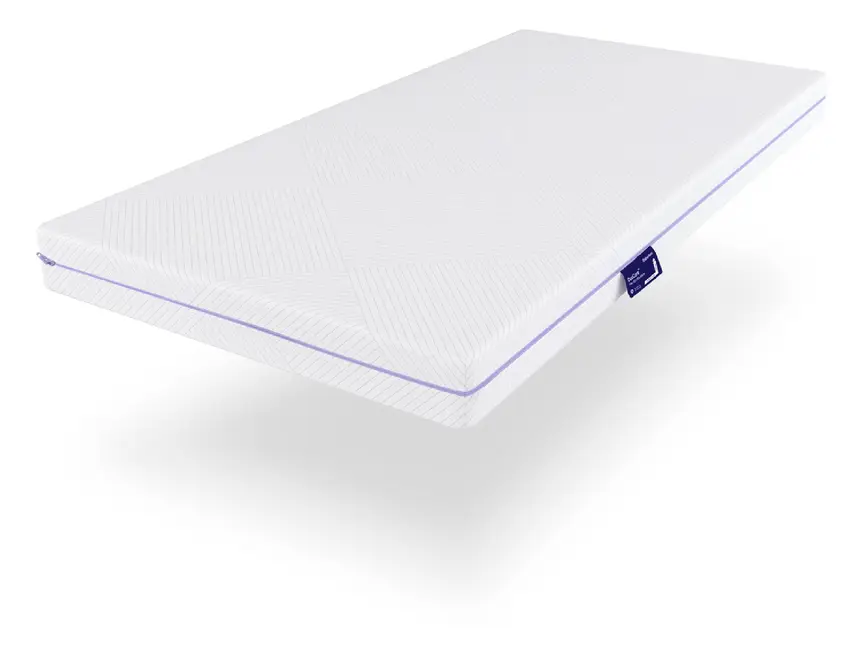
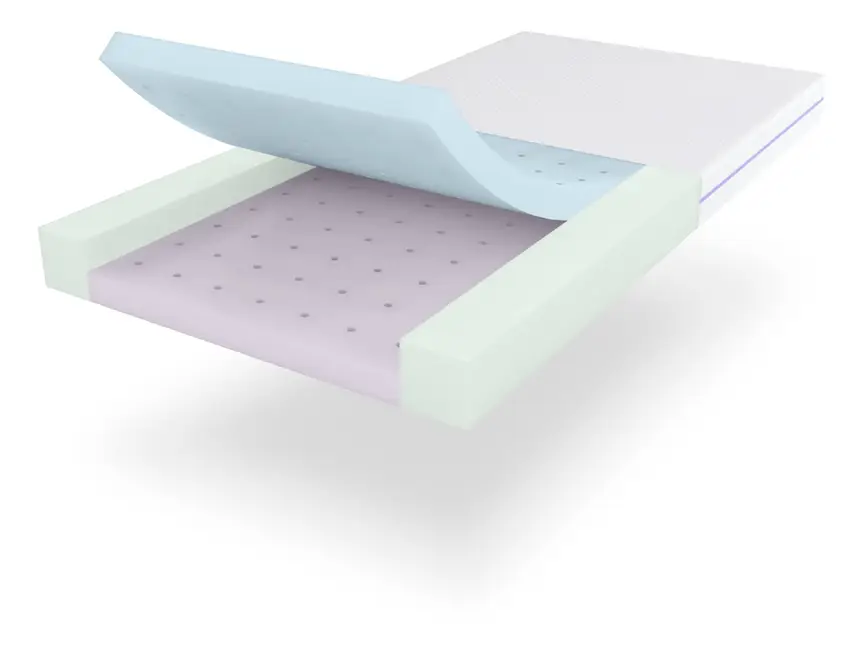

BabyRest Duocore Bamboo Cot Mattress
A two-sided mattress: a baby side to 12 kg and a toddler side from 12 kg to about 4 years.
Read our full review →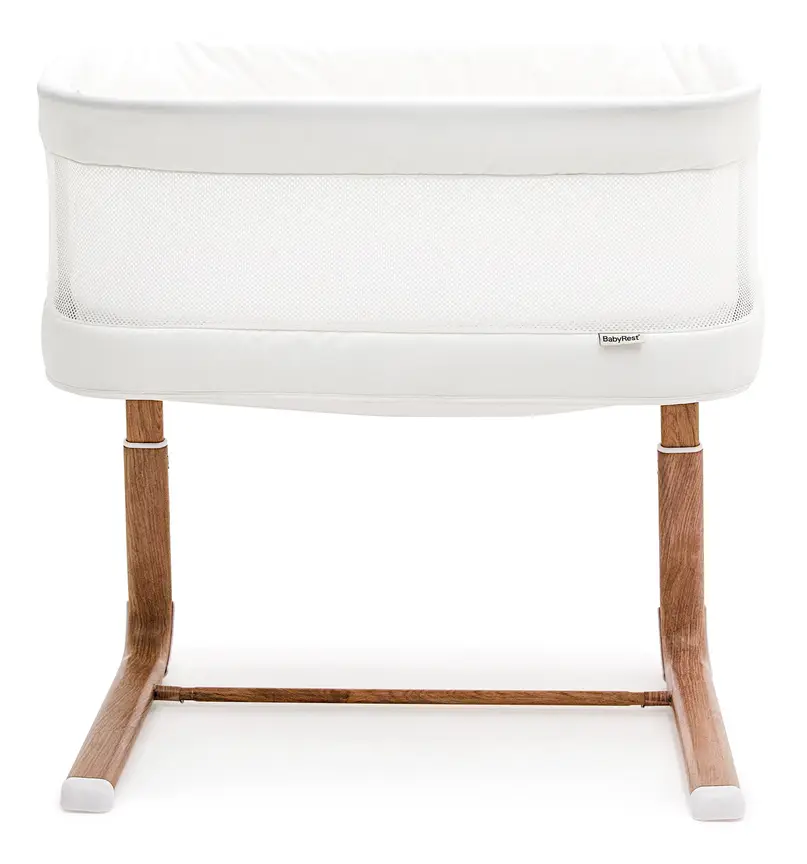


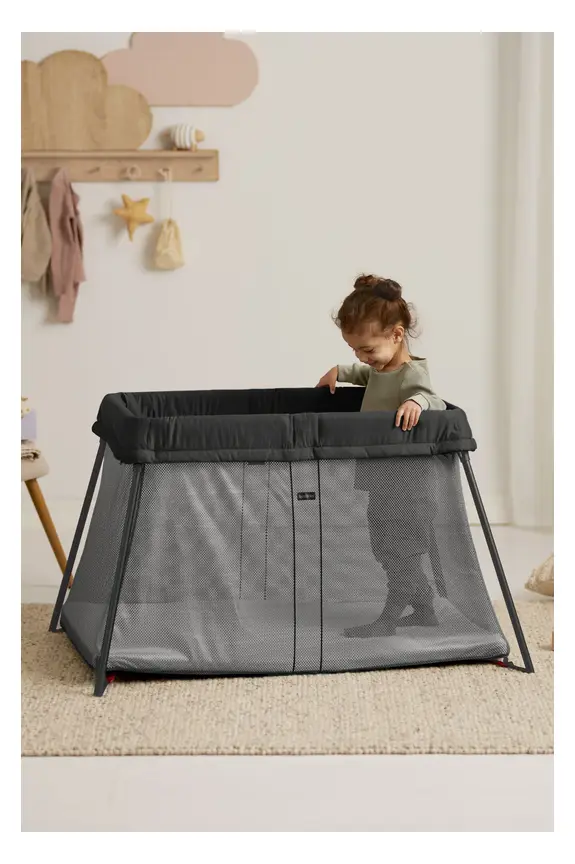
BabyRest Swan Smart Bassinet
A bassinet that rocks by itself when baby stirs, with 3 rocking levels, lullabies and a remote.
Read our full review →Compare all cots, bassinets & bedside sleepers in our reviews →
Sources and guidance
Use these official sources for current advice. Product rules can change, so check them again before buying or using a bassinet.
- Product Safety Australia – Bassinets and cradles guide
- Red Nose Australia – What is a safe sleeping environment
- UK Office for Product Safety and Standards
- The Lullaby Trust – Sleeping products
- U.S. CPSC – Infant sleep products business guidance
- American Academy of Pediatrics – A parent's guide to safe sleep
- Canadian Paediatric Society – Safe sleep for babies
- Health Canada – Recalls and safety alerts
Disclaimer: This article gives general information only. It is not medical advice and does not replace advice from your doctor, midwife, or other health professional. Follow the instructions supplied with your product and seek help if you have concerns about your baby’s sleep or your recovery. Some links may be affiliate links. BabyGearFinder may earn a commission if you buy through them, at no extra cost to you.
Sources
- Product Safety Australia – Bassinets and cradles guide
- UK Office for Product Safety and Standards
- The Lullaby Trust (UK) – Sleeping products
- CPSC (US) – Infant sleep products business guidance
- American Academy of Pediatrics (US) – A parent's guide to safe sleep
- Caring for Kids (Canadian Paediatric Society) – Safe sleep for babies
- Health Canada – Recalls and safety alerts
Related guides
More Sleep & Nursery →
Bedside Sleepers and Co-Sleeper Bassinets: Safety Rules, Set-Up and What to Check

Bassinets with Storage Baskets: Night-Time Nappy Changes Made Easier and Safer

Height-Adjustable Bedside Bassinets: Fitting High Platform Beds and Low Floor Frames