













Quick answer
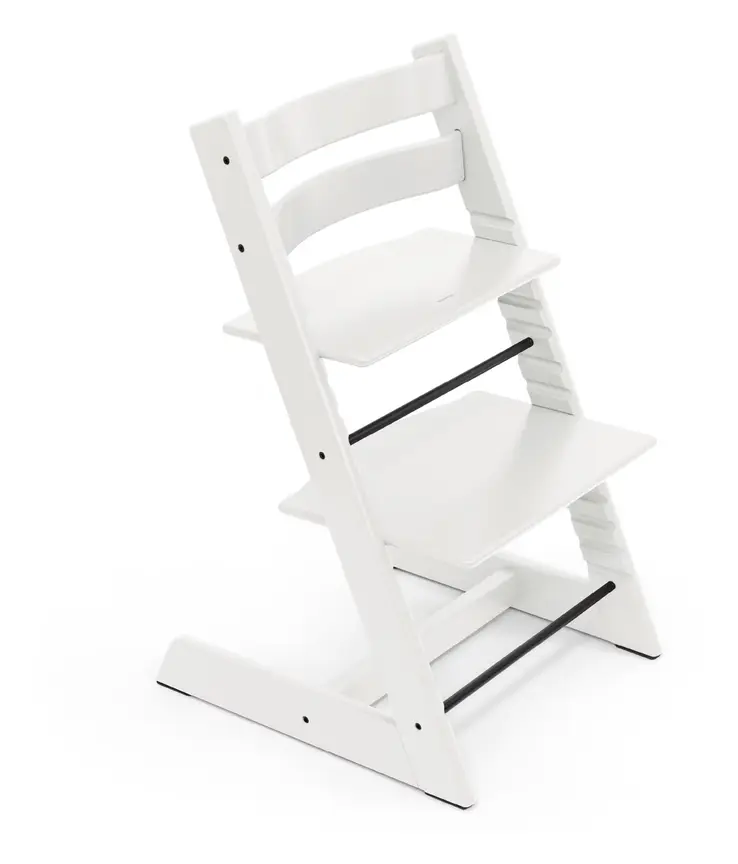
Yes — the Stokke Tripp Trapp is worth it if you want your child at the family table and you value a chair that lasts from baby to adult. Its adjustable seat and footplate give your child proper support (feet flat, knees bent, elbows at table height), which helps them sit still, eat and join conversation. With the Baby Set it suits most babies from around six months; with the Newborn Set it can hold a newborn at the table. The trade-offs: around A$449 for the chair alone before sets and cushions, an Allen-key adjustment rather than a quick slider, and wood that needs wiping rather than hosing. If you want a cheap, tray-based chair to feed a baby in the kitchen, the IKEA Antilop or Mocka Original do the job for much less.
Buy it if
- Families who eat together at a dining table
- Parents who want one chair for many years (and possibly siblings)
- Anyone who cares about posture and foot support
- Small homes where the chair should look like furniture
Skip it if
- You want a tray and to feed baby away from the table
- You need to fold it away or travel with it
- You will move it between tables of different heights often
- Your budget for the whole feeding set-up is under A$200
Fifty years at the table: why the Tripp Trapp still matters
In 1972 the Norwegian designer Peter Opsvik watched his toddler son struggle at the family dinner table. Too big for a highchair, too small for an adult chair, he was either stuck at a distance in a tray chair or perched precariously on a cushion. Opsvik's answer was a chair built around one simple idea: children should sit at the table with everyone else, in a position that fits their body at every age. That chair became the Tripp Trapp, now made by Stokke, and it has been in continuous production for more than fifty years.
The design is disarmingly simple. Two long side rails, set at an angle, are cut with a series of grooves. Into those grooves slide two plates: a seat plate and a foot plate. Move them up as your child grows and down as they need, and the chair keeps adapting — from baby, to toddler, to school-age child, teenager and finally adult. Stokke rates the chair for users up to 136 kg, which is why it is common to see Tripp Trapps that have served two or three children and are still at the desk of a teenager.
What has changed over the decades is the ecosystem around the chair. There is now a Newborn Set (a reclined cradle that clips on, for babies from birth to 9 kg), the Baby Set (a backrest and front guard for babies who can sit unaided), a harness, a tray, cushions and a range of colours and timbers. The chair itself has been refined, but the principle Opsvik began with remains the selling point.
Specifications from Stokke and Australian retailers. Accessory names and limits can differ slightly by country and version (e.g. Baby Set V2) — check the label on what you buy.
The real reason to buy it: posture, feet and family meals
Paediatric feeding therapists talk constantly about the 90-90-90 rule: hips, knees and ankles each at about a right angle, with feet flat and supported. It sounds pedantic until you see the difference. A child whose feet dangle has to use their core and arms to stay upright. They wriggle, slide, kneel and climb. A child whose feet are planted can relax their trunk and use their hands and mouth for the job at hand — eating.
This is the Tripp Trapp's superpower. Because the footplate moves independently of the seat, you can set it so your child's feet are flat at every stage. Most conventional highchairs either have no footrest, or a fixed one that is only right for a few months. The IKEA Antilop, much loved for its price, has no footrest at all — which is why many parents add an after-market footrest.
At the table, not beside it
The second benefit is social. A Tripp Trapp is designed to slide right up to your dining table without a tray. Your child eats the same food from the same surface, watches how you use cutlery, and joins conversation. Many feeding specialists encourage family meals for exactly this reason: children learn to eat by watching others eat. If baby-led weaning appeals to you, a table chair is a natural fit.
A good highchair is not about containing a baby. It is about seating a small person at a big table so they can take part.
From newborn to adult: which sets you need, and when
The Tripp Trapp system is modular, and choosing the right add-ons at the right time is where many families waste money. Here is the honest version.
Newborn Set (birth to 9 kg). A reclined, padded cradle that clips onto the chair so a young baby can lie at table height. It is lovely for including a newborn in family meals and for keeping them off the floor, but it is optional — plenty of families use a bouncer on the floor instead. It is for awake, supervised time; it is not a sleeping product.
Baby Set (from sitting unaided, about 6–36 months). This is the one most families need. It adds a backrest and a front bar so your baby cannot slip out. Your baby should be able to sit unaided before you use it — usually around six months, which is also when most babies start solids. Many parents add the harness as well; we recommend it for active babies and climbers.
Tray (optional). Useful if you sometimes want to feed your baby away from the table. Most Tripp Trapp owners eventually stop using it because the whole point is to sit at the table.
Cushions (optional). Comfortable and stylish, but they are another thing to wash. Choose a coated or wipe-clean cushion if you have one.
Without sets (about 3 years up). Once your child can climb in and out safely and sit without sliding, you remove the Baby Set and the Tripp Trapp becomes a children's chair — and later a desk chair or an adult kitchen chair.
- Birth – 9 kg
Newborn Set (optional): reclined, supervised awake time at table height.
- ~6 months (sitting unaided)
Baby Set + harness. First solids at the family table.
- 1–3 years
Lower the footplate and raise the seat as they grow. Remove tray once they eat at the table.
- 3+ years
Remove the Baby Set when they can sit and climb safely. Now a children's chair.
- School age to adult
Homework chair, kitchen chair, and up to 136 kg for adults.
Set-up, adjustment and daily life
The Tripp Trapp arrives flat-packed and goes together with an Allen key in about twenty minutes. The first real decision is the depth and height of the seat and footplate. Stokke's instructions are good: sit your child in the chair, set the seat so their elbows are at about table height, then set the footplate so their feet rest flat with knees at roughly a right angle. Adjust the seat depth so the back of their knees sits just beyond the edge.
The catch is that adjustments are not instant. You loosen the side bolts, slide the plates into new grooves, and tighten again. Most families re-adjust every few months as their child grows — not a big deal, but different to the one-press sliders on some rivals. The Bugaboo Giraffe is the obvious competitor here: it was designed to make height changes quick and tool-free.
Day to day, the chair is light enough (about 7 kg) to slide in and out, stable, and quiet on hard floors. Its long rails extend behind the seat; Stokke designed this for stability, but it means you should leave space behind it and watch for adults tripping in tight dining areas.
Cleaning: the honest bit
Highchairs are where food goes to die, and wood is less forgiving than plastic. The good news: the Tripp Trapp's lacquered finish wipes clean easily with a damp cloth and a drop of mild detergent, and there are no tray seams or straps woven into fabric to trap food. The less good news: the grooves in the side rails and the gap between the plates and rails catch crumbs and yoghurt, and you cannot hose the chair down outside or put it in the dishwasher like some plastic chairs.
Our routine advice: wipe after every meal while the mess is fresh, run a damp cloth along the grooves once a week, and dry everything — never leave water sitting on the timber. Avoid harsh chemicals and abrasive pads, which can damage the lacquer. If you choose cushions, pick wipe-clean or coated ones, and wash them according to the label.
What we love
- Ergonomic adjustable footplate — feet flat at every age
- Sits right at the family table, no tray needed
- Lasts from baby to adult (rated to 136 kg)
- Solid, stable, beautifully finished timber
- Excellent resale and hand-me-down value
- Huge range of colours and accessories
What to weigh up
- Chair alone is around A$449 — sets, harness and cushions add more
- Height changes need an Allen key
- Wood needs wiping, not hosing; grooves collect crumbs
- Long rails take floor space and can trip adults
- Does not fold or travel
Which Stokke chair is right for you?
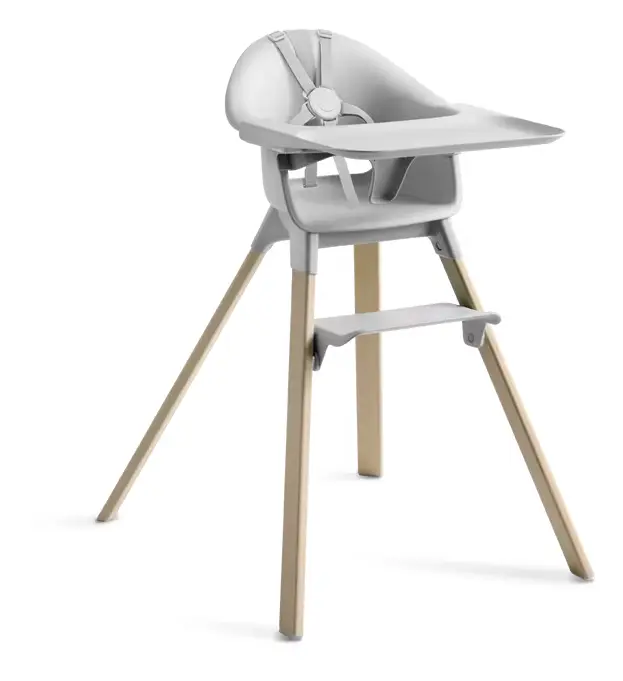
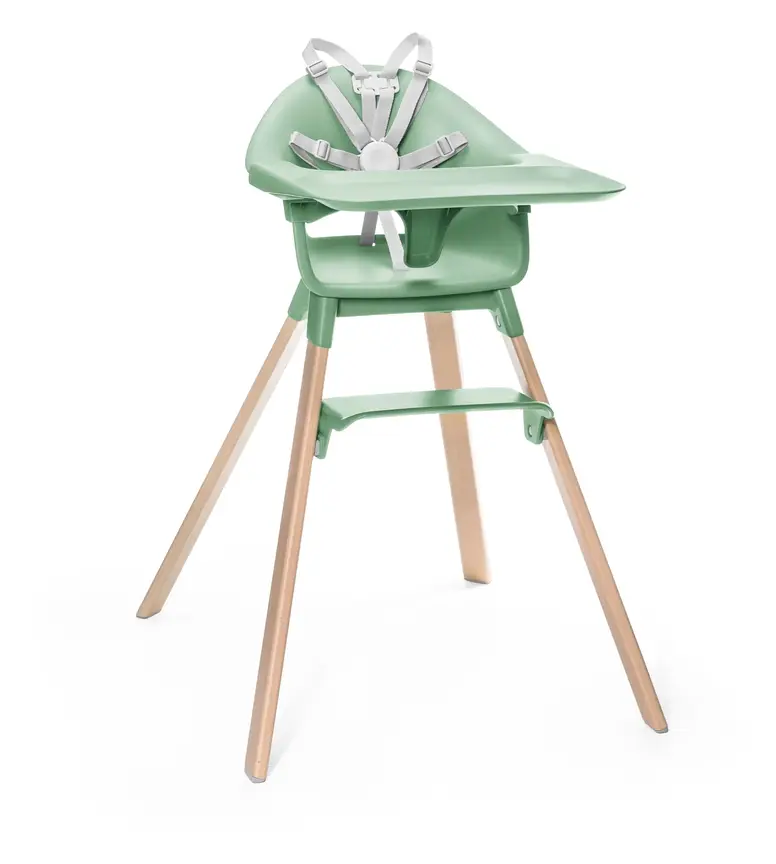
Stokke makes several chairs, and the Tripp Trapp is not automatically the best for everyone. The Nomi, also designed by Peter Opsvik, is a more modern take: a sleeker, contemporary look and its own newborn bouncer accessory, aimed at the same 'grows with your child' idea. The Clikk is Stokke's lighter, more affordable highchair with a built-in tray and tool-free assembly — great for smaller budgets, grandparents' houses and families who prefer a conventional tray chair.
Stokke Nomi
Best for: Modern interiors; same long-life idea
Peter Opsvik's newer design with a contemporary look. Compare in person — some parents find its adjustments and style suit them better.
Stokke Clikk
Best for: Grandparents' house, smaller budgets
Lighter, tray-based and quick to assemble. Not a lifetime chair, but excellent for the baby and toddler years.
Tripp Trapp vs Bugaboo Giraffe, Mocka Original and IKEA Antilop
The Tripp Trapp competes with two kinds of chair: other 'grow-with-me' wooden chairs, and cheap, practical plastic highchairs. Here is how the main options compare.
| What matters | Stokke Tripp Trapp | Bugaboo Giraffe | Mocka Original Highchair | IKEA Antilop Highchair |
|---|---|---|---|---|
| Concept | Adjustable table chair, baby to adult | Adjustable table chair, baby to adult | Budget adjustable wooden table chair | Basic plastic highchair with optional tray |
| Footrest | Adjustable footplate | Adjustable footplate | Adjustable footplate | None (after-market footrests exist) |
| Adjusting | Allen key, grooves | Quick, tool-free | Tool-based | Not adjustable |
| Cleaning | Wipe timber; grooves catch crumbs | Wipe timber | Wipe timber; simpler finish | Very easy — pull legs off and hose |
| Price tier | Premium | Premium | Value (Australia/NZ) | Very cheap |
| Best for | Long-term family-table seating | Frequent height changes | Tripp Trapp idea on a budget | Lowest cost, easiest clean, daycare-style |
Feature comparison based on each manufacturer's published design. Mocka is sold in Australia and New Zealand only.
Spend less, spend differently
Spend less, keep the idea. Australian and New Zealand families can get the core benefits of a table chair with the Mocka Original for a fraction of the Tripp Trapp's price. Finishes, materials and resale are a step down, but the posture principle is the same.
Spend least. The IKEA Antilop is famous for a reason. It is very cheap, stable and absurdly easy to clean — the legs pop off and the whole thing can be hosed down. Its weakness is posture: no footrest. Many parents add an after-market footrest and are very happy.
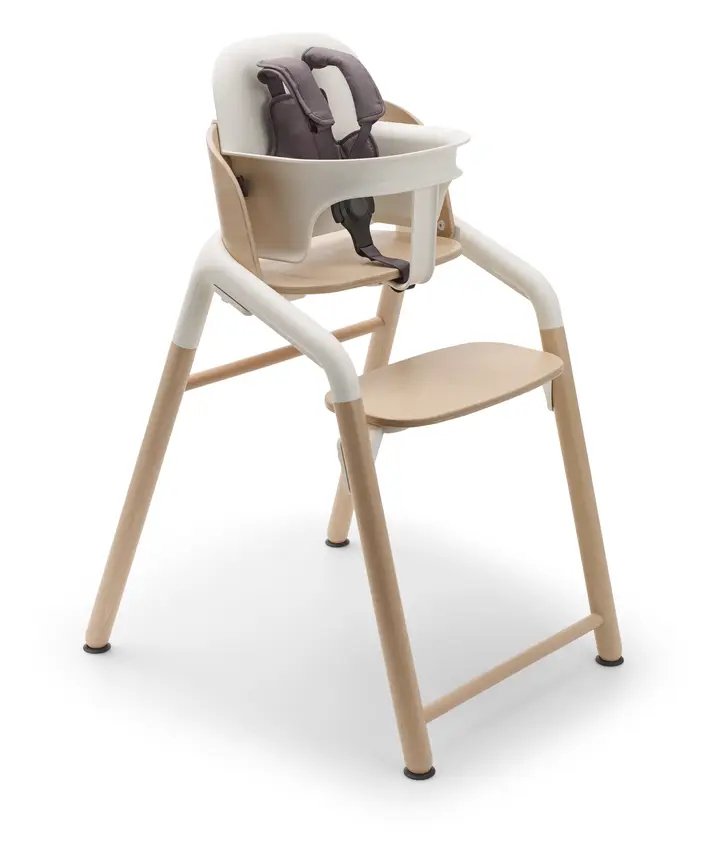
Spend about the same, adjust faster. The Bugaboo Giraffe was designed to fix the Tripp Trapp's most-cited annoyance — the Allen-key adjustment. If you share the chair between children of different sizes, or adjust often, it deserves a look.
Choose versatility. The Joie Multiply 6-in-1 converts between a highchair, booster and toddler chair. It is easier to wipe than timber and suits families who want a tray and a lower price.
Bugaboo Giraffe
Best for: Frequent adjustments
Same table-chair concept with quick, tool-free height changes. A genuine rival rather than a copy.
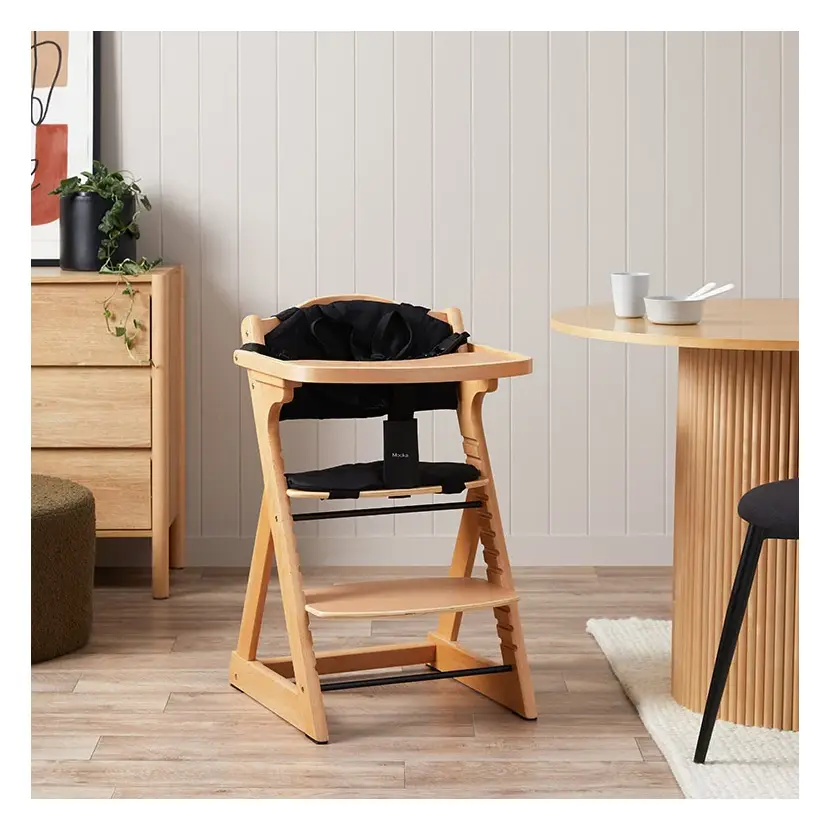
Mocka Original Highchair
Best for: The Tripp Trapp idea on a budget (AU/NZ)
Adjustable wooden table chair at a much lower price. Simpler finishes, same posture benefits.

IKEA Antilop Highchair
Best for: Lowest cost, easiest cleaning
Cheap, stable, hose-clean. Add a footrest for better posture.
Joie Multiply 6-in-1
Best for: Tray feeding and conversions
Multi-mode plastic chair, easier to wipe and cheaper than timber chairs.
Highchair safety standards in Australia, the UK, the US and Canada
Australia does not currently have a mandatory highchair standard; the voluntary standard is AS 4684, and the ACCC's guidance focuses on stability, harnesses and preventing falls. The UK and Europe use BS EN 14988, and the US mandates ASTM F404 through the CPSC. Canada relies on the general safety duty under the Canada Consumer Product Safety Act. Whatever your country, the safety essentials are the same: a stable base, a restraint used every time for babies, and an adult always present.
Your highchair checklist
- Measure your table heightTable chairs work best with standard dining-height tables (about 72–76 cm). Bench seating and very low or high tables change the maths.
- Decide: table or tray?If you will mostly feed at the table, choose a table chair. If you will feed in the kitchen while you cook, a tray chair suits better.
- Check the footrestAn adjustable footrest is the single biggest posture upgrade.
- Price the full set-upChair + Baby Set + harness + cushion can nearly double the price of a premium table chair.
- Look at the restraintFor babies, a 5-point harness or Baby Set guard used every meal prevents climbing and falls.
- Think about cleaningBe honest about your tolerance for wiping wood versus hosing plastic.
- Check floor spaceLong rails or splayed legs need room — make sure walkways stay clear.
- Buying second-hand?Check for cracks, missing bolts and that the plates sit firmly in their grooves. Buy genuine replacement parts.
Mistakes to avoid
Until your child can sit securely and climb in and out safely (usually around 3), keep the Baby Set and harness on.
Toddlers push against tables, walls and benches with their feet. Leave a gap so they cannot tip the chair backwards.
It is for awake, supervised time. If your baby falls asleep, move them to a safe cot or bassinet on their back.
Cheap knock-off Baby Sets and harnesses may not fit or hold correctly. Use genuine parts from the manufacturer.
A chair set for a 7-month-old is wrong for an 18-month-old. Check foot and elbow position every few months.
Long-term value: the maths of a lifetime chair
At around A$449 for the chair, plus the Baby Set and harness, a Tripp Trapp is one of the most expensive highchairs you can buy. But compare it over time. A typical family might otherwise buy a highchair, then a booster seat, then a children's chair or desk chair. The Tripp Trapp replaces all three — and it can be passed to a sibling, sold, or kept as an adult chair. Tripp Trapps hold their second-hand value well, especially in natural beech.
If you are buying second-hand, check the chair's serial number and production date (on the rail), make sure all bolts are present, and buy a current Baby Set — older Baby Sets may not fit newer chairs, and Stokke has updated the design over the years.
Questions parents ask
What age is the Stokke Tripp Trapp for?
Is the Tripp Trapp worth the money?
Tripp Trapp vs Bugaboo Giraffe — which is better?
Do I need the Newborn Set?
Can you use a Tripp Trapp without the tray?
How do you clean a Tripp Trapp?
Is the Tripp Trapp safe for toddlers who climb?
More in-depth reviews
 🪑 Highchairs & Booster Seats4baby Flat Fold Highchair Review7.5/10
 🪑 Highchairs & Booster Seats4baby Grow With Me Wooden Highchair Review7.8/10
 🚼 Prams & StrollersBaby Jogger City Tour 2 Review8.4/10
 🎠 Bouncers, Rockers & SwingsBabyBjörn Bouncer Balance Soft Review8.2/10
 🎠 Bouncers, Rockers & SwingsBabyBjörn Bouncer Bliss Review8.6/10
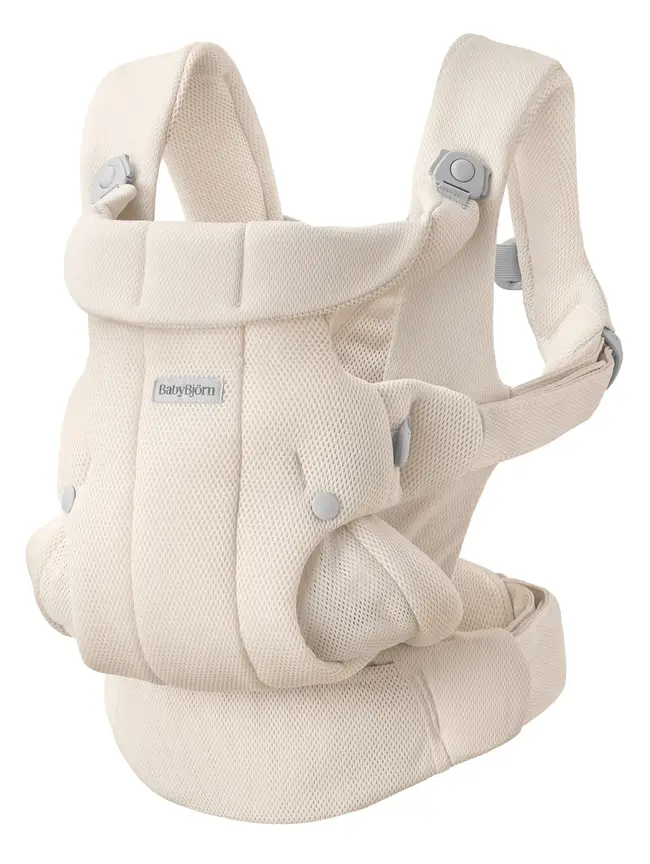 🤱 Baby Carriers & WrapsBabyBjörn Carrier Hold Review8.0/10
Sources & how we checked
Specifications are taken from the manufacturer and major retailers and cross-checked; prices are typical RRPs and change often — the buttons show today's price. We do not invent star ratings or review counts.
- Stokke Australia — Tripp Trapp
- Baby Bunting — Stokke Baby Set V2 (age & weight limits)
- Banana Baby — Stokke Tripp Trapp (AU pricing & specs)
- CHOICE — Stokke Tripp Trapp with Baby Set listing
- ACCC Product Safety Australia — Highchairs
BabyGearFinder earns a commission from qualifying purchases through retailer links, at no extra cost to you. It never changes our verdict.