








Choosing a Warm Baby Sleeping Bag: 2.5 or 3.5 TOG, Sleeves or Armholes?
Compare 2.5 and 3.5 TOG baby sleeping bags, with or without sleeves. Learn how to check room warmth, fit and safe sleep guidance.
On this page
- What TOG means
- What to check before choosing a bag
- Sleeves and armholes: what is the difference?
- Comparing 2.5 and 3.5 TOG bags
- How to dress your baby underneath
- Age and development stages
- Safe sleep matters more than the bag
- Guidance in Australia, the UK, the US and Canada
- Common mistakes to avoid
- Care, washing and storage
- Buying new or second-hand
- How to make a simple choice
- Frequently asked questions
- Sources and further guidance
- Sources
Short answer: TOG is a guide to how warm fabric is. A higher TOG bag provides more warmth. A 2.5 or 3.5 TOG label does not tell you what your baby should wear by itself. Check the maker's clothing chart, the room, and your baby's comfort. Sleeves may cover the arms, while armholes leave them bare. Neither design makes a bag safe by itself. A well-fitting neck and arm opening matter most. Keep the cot clear, lay your baby on their back, and avoid overheating.
Advice for safe sleep comes from Australia’s Red Nose and Product Safety Australia, the UK's NHS and Lullaby Trust, the US's American Academy of Pediatrics and Consumer Product Safety Commission, and Canada's Health Canada and Canadian Paediatric Society. Local advice can differ, so check your country's guidance.
What TOG means
TOG is a rating for how well fabric holds warmth. A larger number means more warmth. It does not measure a baby's temperature. It does not tell you the room temperature. It also cannot account for every layer worn underneath.
Sleeping bags sold as 2.5 TOG are often described as suitable for cooler rooms. Bags sold as 3.5 TOG are often described as extra warm. These are product descriptions, not a universal rule. There is no single room temperature or clothing combination that suits every baby and every bag.
Follow the instructions supplied with the specific bag. Makers may use different fabrics, shapes, and clothing charts. Do not assume one maker's chart applies to another bag. If the chart is missing, ask the maker before use.
A sleeping bag is a wearable cover. It does not replace a safe sleep space. Put your baby on their back in a cot or bassinet with a firm, flat mattress and a clear sleep area. Keep pillows, loose blankets, toys, and other soft items out.
TOG can help compare two items from the same range. It cannot tell you whether either one suits your room. Check the care and use label too. It may explain how the warmth rating was measured and how the bag should be worn.
What to check before choosing a bag
Start with fit and safe sleep advice. Then think about warmth and daily use. A bag that is easy to wash can help, but convenience should not outweigh safe fit.
- Size: use the maker's weight or length guide. Do not choose by age alone.
- Neck opening: it should fit closely enough that your baby cannot slip inside.
- Arm openings: check that your baby cannot pull their body through them.
- Length: your baby's feet need room to move. The bag should not trail loose around the cot.
- Fasteners: check that zips and snaps close fully and do not press on the face or neck.
- Fabric: choose a fabric that feels comfortable and follow its washing instructions.
- Warmth guide: read the maker's chart for room conditions and clothes underneath.
- Condition: look for torn seams, loose parts, damaged zips, and worn fabric.
Do not use a bag that is too large because your baby will grow into it. A large neck opening can let a baby slip down inside. A bag that is too short may restrict movement or strain its seams.
Try the bag on while your baby is awake and calm. Check where the neck edge sits. Check that the arm openings sit in the right place. Make sure the zip closes without catching skin or clothing. Then check the fit again after washing.
Read the label before removing tags or changing the bag. Keep the instructions in a safe place. They can help another caregiver use the bag correctly. If the instructions are unclear, contact the maker before use.
Sleeves and armholes: what is the difference?
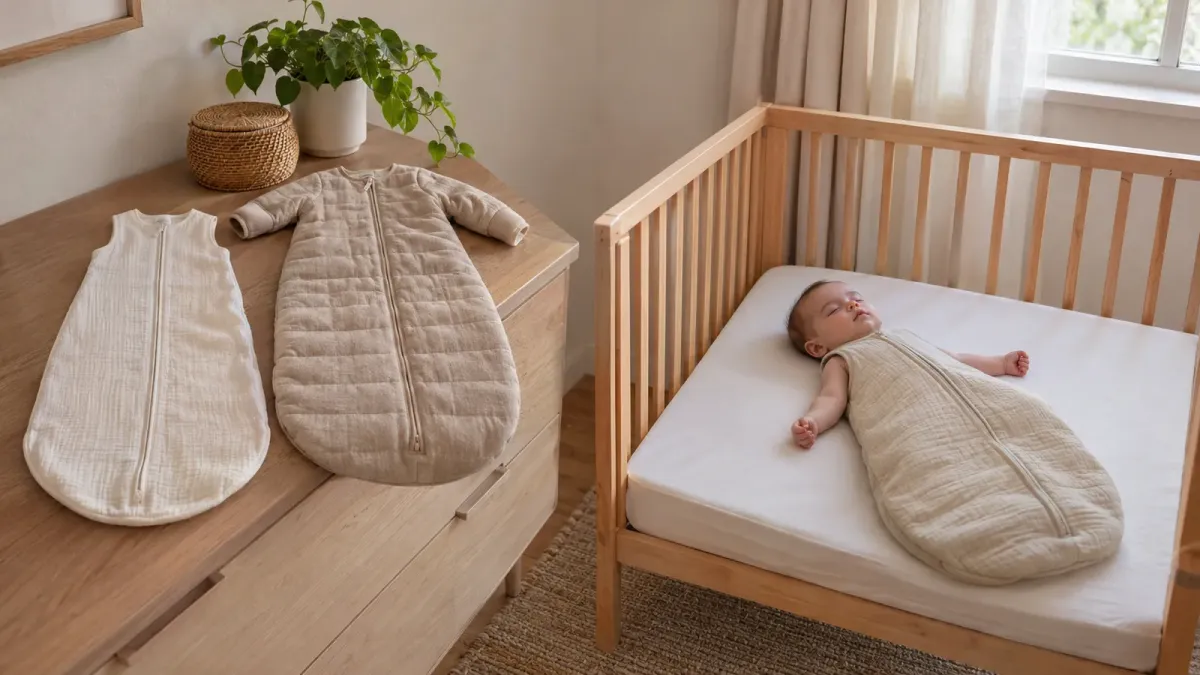
A sleeved bag covers the arms. Some sleeves are long and close at the wrist. Others are short or loose. An armhole bag leaves the arms uncovered. Some models have removable sleeves or fold-over cuffs.
There is no simple rule that sleeves are safer or warmer for every baby. A bag's warmth depends on its fabric, construction, fit, and the clothes worn underneath. Sleeves can cover more skin, but they may also make a baby feel warmer. Armholes leave the arms free, but they do not cool the whole body in a predictable way.
Choose a design that fits your baby and matches the maker's instructions. If a baby gets too warm, removing a layer or choosing a lighter bag may help. Do not rely on exposed arms as a temperature gauge. A baby's hands and feet can feel cool even when the body is warm.
For babies who can roll or are learning to roll, their arms need to be free. Avoid products that restrict their arms or movement. Always put a baby down on their back. If they roll themselves, follow your national safe sleep advice.
Sleeves can make a bag feel more like nightwear. They may also catch or twist during dressing. Check that cuffs do not cover your baby's hands unless the maker designed them that way. Armholes may be easier to check at a glance. They still need a close, safe fit.
Do not choose sleeves to keep a baby's hands warm. Hands are not a reliable guide to body warmth. Check the chest or back instead. If your baby feels hot or sweaty there, remove a layer and reassess.
Comparing 2.5 and 3.5 TOG bags
| Feature | 2.5 TOG bag | 3.5 TOG bag |
|---|---|---|
| Warmth rating | Lower warmth rating of these two | Higher warmth rating of these two |
| Room conditions | Use the maker's guide to check suitable conditions | Use the maker's guide; it may suit colder conditions |
| Clothing underneath | Follow the specific bag's chart | Follow the specific bag's chart; avoid adding layers by guesswork |
| Sleeves or armholes | Either design may be sold | Either design may be sold |
| Best choice | The bag that fits and matches the room and clothing guide | The bag that fits and matches the room and clothing guide |
| What the number cannot tell you | Whether your baby is too warm or cold | Whether your baby is too warm or cold |
This table compares the warmth labels only. It does not rank products or promise that a particular bag suits a certain room. Check the product's own instructions and your country's health advice.
If you already own a 2.5 TOG bag, do not assume you need a 3.5 TOG bag when cold weather arrives. Check the room and the clothing chart first. A warmer bag can be unsuitable when the room is mild or heated.
If you are buying a new bag, consider the rooms where your baby sleeps. The bedroom may be colder than the rest of the home. A room can also warm up during the night. Think about heating, drafts, and changes in the weather.
How to dress your baby underneath
Use the clothing chart for the exact bag. The chart should explain what to dress your baby in at different room temperatures. If you are unsure, contact the maker or ask a health professional.
Do not add a loose blanket over the bag. Do not dress your baby in a hat for indoor sleep unless a health professional has given you specific advice. A hat can make it harder for the body to lose heat.
Check your baby's chest or back to judge warmth. Hands and feet often feel cooler. If the chest or back feels hot or sweaty, remove a layer and reassess. Look for flushed skin or damp hair too. If your baby seems unwell, seek medical advice.
A room thermometer can help you understand the room, but it cannot decide what your baby needs. Sunlight, heaters, drafts, and room changes can affect comfort. Check again if the room becomes warmer or cooler overnight.
Use the chart as a starting point, then check your baby. The chart cannot account for every home or child. Do not add layers just because the night feels cold to you. Your baby may be warm inside the bag.
Keep the head uncovered during sleep. Do not cover the face with bedding. Check that the bag does not bunch around the chin. A baby should be able to move their head freely.
Age and development stages
Age can help you think about development, but babies do not all reach milestones on the same day. Fit the bag to your baby's size and follow the maker's age range and weight guidance. Never use age alone to decide whether a bag fits.
| Stage | What to consider | Practical step |
|---|---|---|
| Newborn | Small bodies can slip through openings that are too large. | Use the correct size and check neck and arm openings each time. |
| Growing baby | Length and weight change at different rates. | Check fit often and move up only when the maker's guide says to. |
| Starting to roll | Restricted arms can limit movement. | Choose an arms-free design and follow local safe sleep advice. |
| Rolling baby | Your baby may move around the cot during sleep. | Keep the sleep space clear and use a suitable, well-fitting bag. |
| Toddler | A toddler may stand, walk, or climb in the cot. | Check the bag cannot trip them. Follow the maker's age and size limits. |
At every stage, keep checking fit. A baby can grow quickly between routine checks. Look at the label when your baby's weight or length changes. Stop using the bag if it no longer fits as the maker intended.
For a newborn, ask a nurse, midwife, or doctor if you are unsure about warmth or fit. This is especially useful after an early birth or during a hospital stay. A care team can take your baby's health into account.
As babies become more active, they may turn, kick, and pull at clothing. Check that seams and fasteners stay secure. Avoid a bag that restricts movement or has parts that can come loose.
Safe sleep matters more than the bag
A sleeping bag cannot prevent sudden infant death. No clothing or product removes every risk. Follow your country's safe sleep guidance every time your baby sleeps.
- Place your baby on their back for every sleep.
- Use a safe cot or bassinet with a firm, flat mattress.
- Keep the sleep space clear of pillows, toys, bumpers, and loose bedding.
- Keep your baby's head and face uncovered.
- Do not use weighted bags, weighted blankets, or weighted swaddles.
- Do not use a damaged product or one with loose parts.
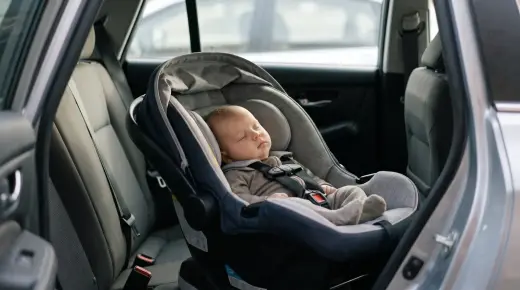
- Do not use the bag in a car seat, pram, or other place unless its maker says it is designed for that use.
For newborns, follow local advice on room sharing and sleep position. If your baby was born early or has a health condition, ask your care team for advice that fits their needs.
Use the bag only for its intended purpose. A sleep bag is not a car seat cover or a play mat. Do not attach cords, clips, toys, or extra items to it. Extra parts may create hazards or change how the bag fits.
Check your cot as well as the bag. The mattress should fit the cot as its maker says. Keep the space free from gaps and soft items. Place the cot away from cords and heaters.
Guidance in Australia, the UK, the US and Canada
Families can check advice from official and trusted bodies in their country. The basic safe sleep ideas are similar, but local guidance may use different wording.
| Country | Relevant bodies | Useful guidance |
|---|---|---|
| Australia | Red Nose Australia; Product Safety Australia | Safe sleeping bag choice, clear sleep space, and product safety information |
| United Kingdom | NHS; The Lullaby Trust; Office for Product Safety and Standards | Safe sleep advice and guidance on dressing a baby for sleep |
| United States | American Academy of Pediatrics; U.S. Consumer Product Safety Commission | Back sleeping, a clear sleep space, and product safety alerts |
| Canada | Health Canada; Canadian Paediatric Society | Safe sleep advice and product recall information |
Check current guidance from the body that serves your area. Search for recalls before buying or accepting a second-hand bag. A product may have been recalled after it was first sold.
In Australia, Red Nose gives safe sleep advice. Product Safety Australia shares product safety alerts and recall information. In the UK, the NHS and Lullaby Trust give safer sleep advice. The Office for Product Safety and Standards supports product safety work.
In the US, the American Academy of Pediatrics gives health advice for families. The Consumer Product Safety Commission shares product safety information and recalls. In Canada, Health Canada provides safety information. The Canadian Paediatric Society offers advice for families and health professionals.
Product rules vary by country. Do not assume a label from one country proves that an item meets another country's rules. Check the product details and local advice where you live.
Common mistakes to avoid
- Picking by TOG alone: warmth depends on the full set-up. Read the bag's chart.
- Using a larger size too soon: a loose neck or arm opening can let a baby slip inside.
- Adding extra layers automatically: the room may be warmer than expected. Follow the maker's clothing guide.
- Assuming sleeves always mean warmer: the whole design and clothing underneath affect warmth.
- Judging body warmth by hands: check the chest or back instead.
- Leaving a hat on indoors: keep the head uncovered during sleep unless a clinician advises otherwise.
- Using worn or altered bags: repairs can affect fit and fasteners. Replace a bag with damage.
- Using a bag as a blanket: a sleeping bag must fit as intended. Never place a loose bag over the baby.
- Ignoring rolling: use a design that leaves arms free once rolling begins.
- Trusting marketing claims: no sleeping bag can promise protection from sudden infant death.
Another mistake is relying on a product name. Words such as “winter”, “extra warm”, or “quilted” do not replace the care label. Check the warmth rating, size guide, and clothing chart.
Do not use an item if the label is missing and you cannot confirm its instructions. Do not guess how much warmth it provides. Choose a product with clear guidance and contact the maker when needed.
Care, washing and storage
Read the care label before washing. Use the stated wash and dry settings. Strong heat or harsh cleaning may damage fabric, seams, or fasteners. Check the bag after each wash.
Close zips and fasteners before washing if the maker advises it. Keep the bag away from sharp objects that could snag it. Dry it fully before storage. Damp fabric can smell and may be uncomfortable to use.
Before each sleep, check the seams, zip, snaps, arm openings, and neck opening. Stop using the bag if a seam opens, filling comes out, or a fastener breaks. Do not sew on buttons or decorations that could come loose.
If you pass a bag to another family, share its instructions and age or size limits. Do not pass on a recalled item. Check the recall service in your country first.
Wash the bag when needed, and follow its label. Avoid products that can leave strong smells if the maker warns against them. Make sure the bag is completely dry before your baby wears it.
Store the bag somewhere dry and clean. Keep its care label and instructions with it. If you put it away for another child, check it again before use. Look for old damage, loose stitching, and changes in fit.
Buying new or second-hand
A second-hand bag may be useful if it is clean, intact, and still fits. Ask for the brand, model, size, and instructions. Check the product against recall notices in your country.
Inspect it in good light. Look at every seam and fastener. Check that the neck and arm openings have not stretched. Do not use it if the filling has shifted or the fabric has thinned.
A new bag also needs a careful check. Read the instructions before the first sleep. Confirm its size and warmth chart. Keep the receipt and product details in case you need to contact the maker.
Do not rely on online comments to confirm safety. Product designs can change, and a review may describe another model. Use the instructions for the exact item in your hands.
How to make a simple choice
Start with your baby's size. Choose a bag that fits the maker's guide. Then look at the room and read the clothing chart. Decide whether sleeves or armholes suit the design and your baby's needs.
- Check the size range and minimum weight or length.
- Read the bag's TOG label and clothing chart.
- Check the room where your baby sleeps.
- Choose a style that leaves a rolling baby free to move their arms.
- Inspect the bag for damage before each use.
- Follow safe sleep guidance for your country every time.
If the room changes, check the chart and your baby again. If the fit changes, move to the correct size. If you have a health concern, ask a health professional for advice.
Frequently asked questions
Is 3.5 TOG always better in winter?
No. A higher TOG rating means more warmth from the fabric. The right choice depends on the room, clothes underneath, and the maker's chart. A 3.5 TOG bag may be too warm in some rooms.
Is 2.5 TOG safe for a newborn?
A TOG number alone cannot answer that. Check the baby's size, the bag's minimum weight or length, and its instructions. Make sure the neck and arm openings fit closely.
Are sleeved bags safer than sleeveless bags?
There is no general rule that one style is safer. Safe fit and suitable warmth matter. Choose a product that follows its instructions and leaves a rolling baby free to move their arms.
Should I choose sleeves if my baby's arms feel cold?
Cool hands do not always mean your baby is cold. Check the chest or back. Use the clothing chart to decide whether to add or remove a layer.
Can my baby wear a blanket over a sleeping bag?
Do not add a loose blanket over the bag. Follow the bag's clothing chart and local safe sleep guidance. Keep loose bedding out of the sleep space.
Can a baby sleep in a sleeping bag after rolling?
Many babies can use a correctly fitted bag that leaves their arms free. Check local guidance and the maker's instructions. Do not use a design that holds the arms in once rolling starts.
Can my baby wear a sleeping bag in a car seat?
Do not assume it is suitable. Bulky fabric can affect how a car seat harness fits. Follow the car seat and bag instructions, and use local child passenger safety advice.
What if the room gets warmer overnight?
Check your baby's chest or back and adjust clothing when needed. Use the maker's chart for the bag. Keep the head uncovered and avoid adding loose bedding.
How often should I check the fit?
Check before each use and whenever your baby grows. Look at the neck, arm openings, and length. Follow the maker's size limits rather than waiting for a fixed date.
Does a sleeping bag lower the risk of SIDS?
No product can promise that. A sleeping bag is one clothing choice. Follow the full safe sleep advice from your country's health bodies.
Can I use a 3.5 TOG bag in a heated room?
Check the maker's chart before use. A heated room may call for fewer clothes or a lighter bag. Do not guess based on the season alone.
Are sleeveless bags too cold for winter?
Not always. The warmth depends on the whole bag, the clothes underneath, and the room. Use the chart and check your baby's chest or back.
What should I do if my baby feels sweaty?
Remove a layer and check your baby again. Keep the head uncovered. If your baby seems unwell or you are worried, contact a health professional.
Can I use a sleeping bag with a swaddle?
Do not combine products unless their makers say they can be used together. A wrapped baby needs room to move their hips. Stop wrapping when rolling begins, and follow local advice.
Sources and further guidance
- Red Nose Australia – Choosing the right sleep bag for your baby
- Red Nose Australia – How to choose a safe sleeping bag
- The Lullaby Trust – How to dress your baby for sleep
- NHS – Reduce the risk of sudden infant death syndrome
- American Academy of Pediatrics – A parent's guide to safe sleep
- Canadian Paediatric Society – Safe sleep for babies
- Product Safety Australia – Settle baby to sleep safely
This article is general information. It is not medical advice. Ask your doctor, midwife, child health nurse, or other qualified health professional about your baby's needs. Product details can change, so check current instructions and recall notices. BabyGearFinder may earn a commission from qualifying purchases. This does not change the price you pay.
Sources
- Red Nose Australia – Choosing the right sleep bag for your baby
- Red Nose Australia – How to choose a safe sleeping bag
- The Lullaby Trust – How to dress your baby for sleep
- NHS (UK) – Reduce the risk of sudden infant death syndrome
- American Academy of Pediatrics (US) – A parent's guide to safe sleep
- Caring for Kids (Canadian Paediatric Society) – Safe sleep for babies
- Product Safety Australia – Settle baby to sleep safely
Related guides
More Health & Safety Gear →
Baby Bath Towels and Washcloths: Choosing Soft, Practical Options
Eczema Scratch Sleeves and Mittens for Babies: Comfort, Fit and Safety

Toddler Sun Shirts and Rashguard Swimwear: Choosing Sun Protection and Pool-Visible Colours
