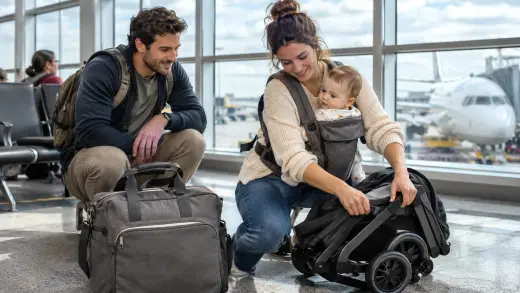
Convertible Tote-to-Backpack Nappy Bags: Insulated Pockets, Trolley Sleeves, and Pram Clips
How to pick a convertible tote-to-backpack nappy bag: insulated bottle pockets, luggage sleeves, pram clip safety, and packing tips for every stage.
On this page
- Key points
- What a convertible tote-to-backpack nappy bag is
- How to choose the right convertible bag
- Insulated bottle pockets: what they do and their limits
- Luggage trolley sleeves for travel and airports
- Stroller and pram clips: convenient, but watch the tip risk
- Comparison: convertible tote-backpack vs standard backpack vs classic…
- What to pack by age stage
- Guidance across Australia, the UK, the US and Canada
- Common mistakes to avoid
- Frequently asked questions
- Sources
Short answer: A convertible tote-to-backpack nappy bag (diaper bag) lets you carry baby gear on your back or over one shoulder. Look for a lightweight, wipe-clean fabric and strong metal strap hardware. Use insulated bottle pockets with an ice pack to keep milk cold. Avoid hanging a heavy bag on a pram handlebar, as this can make the pram tip backwards.
This guide uses safety advice from official bodies in Australia (Product Safety Australia and Raising Children Network), the UK (NHS and RoSPA), the US (CPSC and CDC), and Canada (Health Canada and CATSA).
Key points
- Two carry styles: Wear it as a backpack for long walks, or as a tote for quick trips.
- Insulated pockets need ice: Foil or foam linings slow down warming, but they do not chill milk on their own.
- Watch the pram tip risk: Hanging a heavy bag on the handlebar can tip a stroller over backwards. Put heavy bags in the under-seat basket instead.
- Trolley sleeves help at airports: A back sleeve slides over a suitcase handle so your hands stay free.
- Keep bags light when empty: Heavy leather or thick canvas adds weight before you even pack a nappy.
- Safe materials matter: Choose food-safe, BPA-free, and phthalate-free linings for bottle pockets.
What a convertible tote-to-backpack nappy bag is
A convertible nappy bag gives you two ways to carry your baby's things. In tote mode, you hold it by top handles or a long shoulder strap. In backpack mode, you wear it with two padded straps on your back.
This design helps when your day changes. You might carry it as a smart tote into a café or office. Then you can switch to backpack mode when you need both hands free for a wriggling toddler.
How the straps convert
Bags convert in three main ways. Each style feels a bit different on your body.
- Tuck-away backpack straps: The shoulder straps unclip at the bottom and slide into a flat back pocket. This looks neat, but it takes a minute to swap.
- Sliding single-strap systems: One long strap loops through metal rings. You pull it to turn it into two backpack straps, or pull it the other way for a shoulder tote. This is fast, though the straps are often thinner.
- Clip-on tote handles plus fixed backpack straps: The backpack straps stay out all the time, while extra top handles let you grab it like a tote. This is the easiest to use, though straps can dangle if you do not tuck them in.
Prams & Strollers worth a look
Real products from our catalogue. We don't show star ratings or review counts; check the current price, stock and reviews on Amazon before you buy.
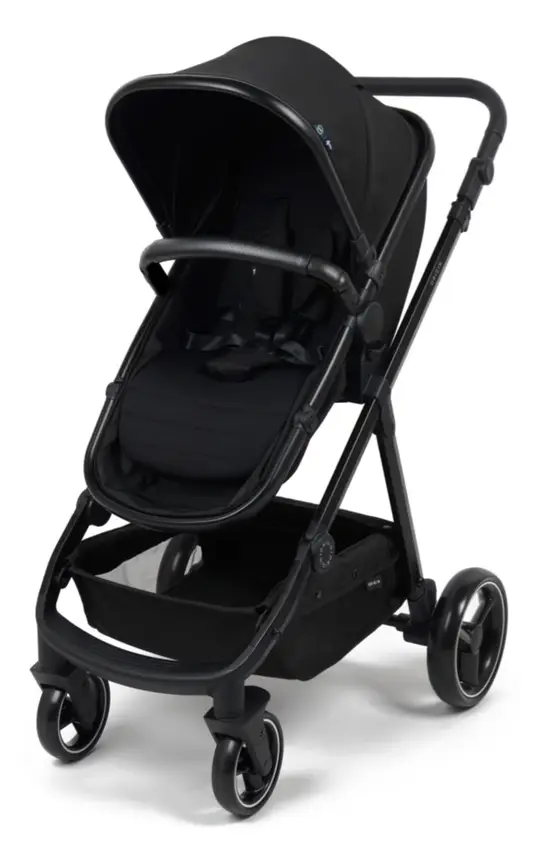
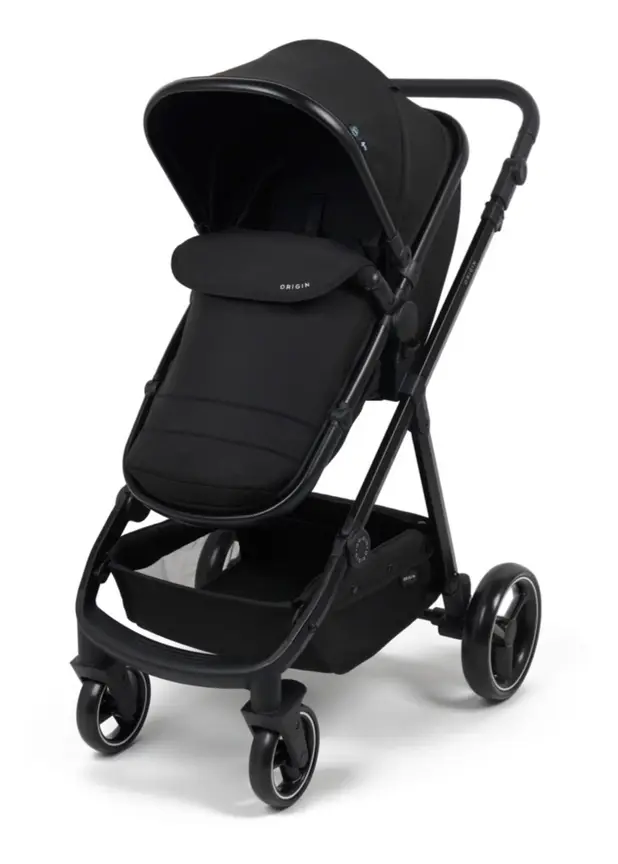
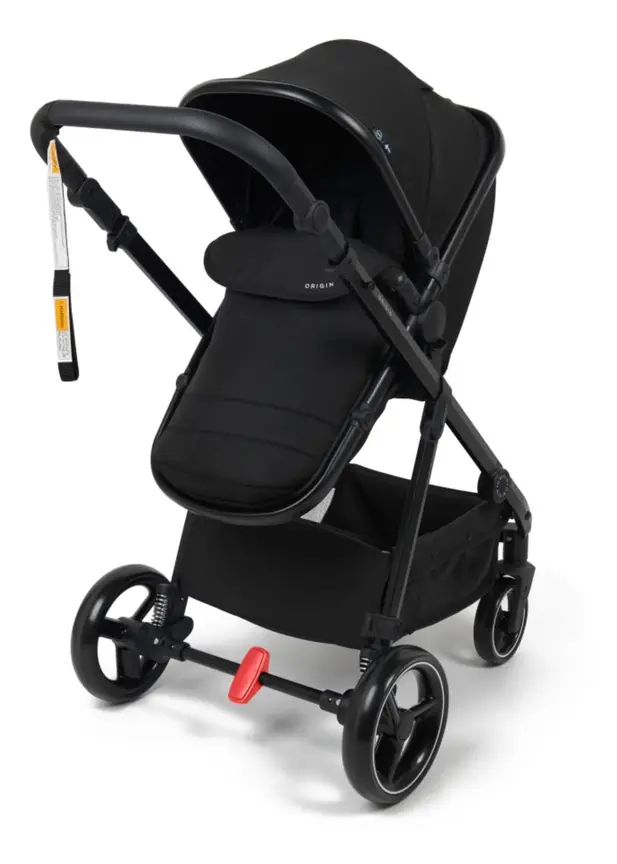
4baby Origin Stroller
A budget pram whose seat turns into a bassinet. The seat can face you or face the world.
Read our full review →


Britax One2
A pram that starts as a single and can take a second child. The seat turns into a lie-flat bassinet.
Read our full review →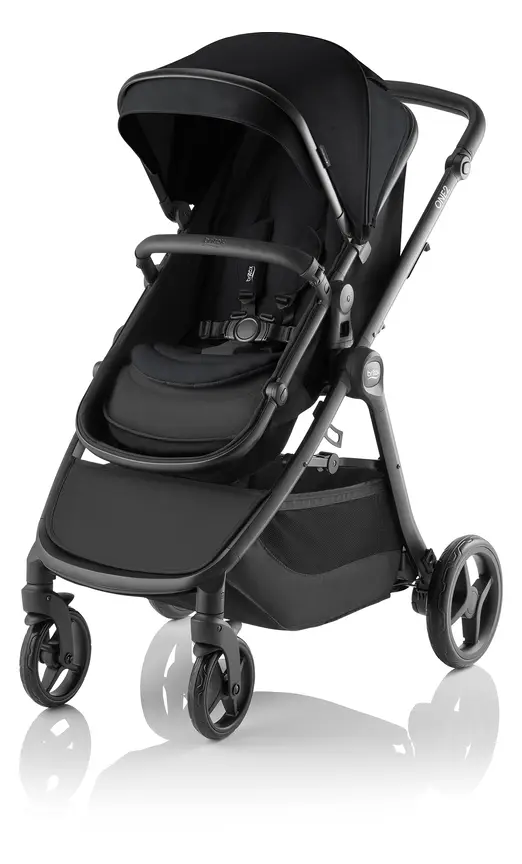
How to choose the right convertible bag
A good nappy bag should make your day easier, not hurt your back. Focus on weight, layout, and easy cleaning before you look at colour or style.
1. Check the empty weight
Once you pack nappies, wipes, spare clothes, and two full bottles, any bag gets heavy fast. A bag made from thick leather or heavy hardware can feel like a brick before you put anything inside. Lightweight nylon or polyester fabrics keep the starting weight low.
2. Look for a wide opening and light lining
A dark lining inside a deep bag hides small items at the bottom. You end up digging around with one hand while holding a crying baby. Pick a bag with a wide top zip that stays open on its own. A light-coloured lining, such as pale grey or cream, makes it easy to spot a dummy or spare socks.
3. Choose wipe-clean, water-resistant fabrics
Spills happen every week. Milk leaks, puree pouches burst, and rain catches you in the car park. Look for water-resistant outer fabric and a smooth inner lining you can wipe with a damp cloth. Check the care label before you buy. Some bags can go in the washing machine, while others are spot-clean only.
4. Check the strap hardware and stitching
Convertible bags put extra stress on clips and rings because you swap modes often. Cheap plastic clips can snap when a bag is full. Look for metal D-rings, metal clasps, and thick box-stitching where the straps meet the bag. Padded backpack straps also stop the bag from digging into your shoulders.
5. Avoid harmful chemicals in linings
Babies often grab and chew on bag straps or bottle pouches. Vinyl and soft plastic linings can sometimes contain chemicals called phthalates or BPA (bisphenol A). Phthalates are chemicals used to make plastic soft and bendy. BPA is a chemical used in some hard plastics. Look for labels that state the bottle pocket and change mat are BPA-free and phthalate-free. The U.S. Consumer Product Safety Commission (CPSC) restricts certain phthalates in children's products and child-care items.
Insulated bottle pockets: what they do and their limits
Most convertible nappy bags have two or three insulated bottle pockets. These pockets are lined with silver foil, thermal film, or thin foam. They work just like a small insulated lunch bag.
Insulation slows down how fast heat moves in or out. It does not make cold milk colder. It also does not keep warm milk safely hot for hours.
Safe storage for breast milk and formula
Bacteria can grow fast in warm milk. Health bodies across Australia, the UK, the US, and Canada share clear rules for carrying milk out of the house.
- Use an ice pack: Raising Children Network (Australia) and the NHS (UK) both advise keeping chilled formula or expressed breast milk in an insulated cool bag with a frozen ice pack. An unchilled bottle pocket is not enough on a warm day.
- Carry formula safely: The CDC (US) and Raising Children Network advise making fresh formula when you need it, if you can. On a trip, carry measured formula powder in a clean container and boiled, cooled water in a clean bottle. Mix them only when your baby is ready to feed.
- Check safe time limits: If you must carry ready-made or pre-mixed formula, keep it cold with an ice pack. Follow your national health guide on how many hours chilled milk stays safe to use. Throw away any milk left at room temperature too long, or any milk left in a bottle after a feed.
- Never keep milk warm in a pocket: Do not put a warmed bottle into an insulated pocket to keep it warm for later. Warmth helps germs multiply quickly.
What to check on the bottle pockets
- Bottle fit: Wide-neck baby bottles and toddler drink cups need wider pockets. Check if the pocket stretches or has an elastic top.
- Leak-proof seams: Sealed or heat-welded seams hold spills inside the pocket instead of leaking into the main bag.
- Easy wipe-out: You should be able to pull the lining out slightly to wipe away dried milk. If milk sits in corners, mould and bad smells soon follow.
Luggage trolley sleeves for travel and airports
A luggage trolley sleeve is a wide band of fabric sewn across the back of the nappy bag. It slides straight down over the pull-up handle of a rolling suitcase. This keeps your nappy bag sitting safely on top of your luggage.
Why a trolley sleeve helps
Walking through an airport or train station with a baby is hard work. You might be pushing a pram, holding a toddler's hand, and pulling a suitcase. Sliding the nappy bag onto the suitcase handle takes the weight off your back and stops the bag from swinging into your legs.
Features to look for in a sleeve
- Width and height: The sleeve should be wide enough to fit over double-pole suitcase handles. If it is too tight, you will struggle to get it off at the gate.
- A bottom zip: Some sleeves have a zip along the bottom edge. When you zip it shut, it turns into an extra flat pocket for boarding passes or wipes. When you unzip it, it opens into a trolley sleeve.
- Balance on small bags: A very heavy nappy bag can tip a light carry-on suitcase forwards. Pack heavy items like water bottles low and close to the suitcase handle.
Airport security rules for baby bags
You can carry baby milk, formula, sterilised water, and ice packs in your nappy bag through airport security. This is true in Australia (Department of Home Affairs), the UK (GOV.UK), the US (TSA), and Canada (CATSA). These items are exempt from normal small-liquid limits when you travel with a baby or young child. Tell the security officer before your bag goes through the scanner, as they may need to check the bottles separately.
Stroller and pram clips: convenient, but watch the tip risk
Many convertible nappy bags come with two short straps that clip onto a pram or stroller handlebar. These are called pram clips or stroller straps. They usually attach with strong hook-and-loop tape (Velcro) and a metal carabiner hook.
Clips feel very handy when you want quick access to wipes or a drink. However, they also create one of the most common safety hazards with prams.
Why hanging a bag on the handle is risky
A pram is designed to stay balanced with a child's weight over the wheels. When you hang a heavy nappy bag from the handlebar, the centre of gravity shifts backwards. If you lift your child out of the seat, the weight of the bag can pull the whole pram backwards onto the ground.
Even with a child still inside, a heavy bag can tip a lightweight travel stroller on a kerb, ramp, or sloped footpath. Product Safety Australia warns parents never to hang heavy bags from pram handles unless the pram maker says it is safe.
Pram safety standards to know
Official pram standards test stability, brakes, and frame strength. In Australia, prams must meet mandatory rules based on AS/NZS 2088. In the UK and Europe, prams are tested to BS EN 1888. In the US, strollers follow ASTM F833. Even when a pram passes these tests, hanging extra weight on the handle can make it unstable.
Safer ways to use your bag with a pram
- Read your pram manual first: Some sturdy prams have a small weight limit for handle hooks, while many forbid them completely.
- Use the under-seat basket: Put your convertible bag in the basket under the pram seat. That keeps the weight low and centred between the wheels.
- Wear it as a backpack: If your pram basket is full of shopping, clip the bag into backpack mode and wear it yourself.
- Keep clips short: If your pram allows light handle bags, keep the clips short so the bag does not swing and hit your knees or the rear wheels.
Side by side: more prams & strollers to compare
Real products from our catalogue. We don't show star ratings or review counts; check the current price, stock and reviews on Amazon before you buy.
Bugaboo Donkey 5
Converts from single to side-by-side double (siblings or twins) by widening the frame.
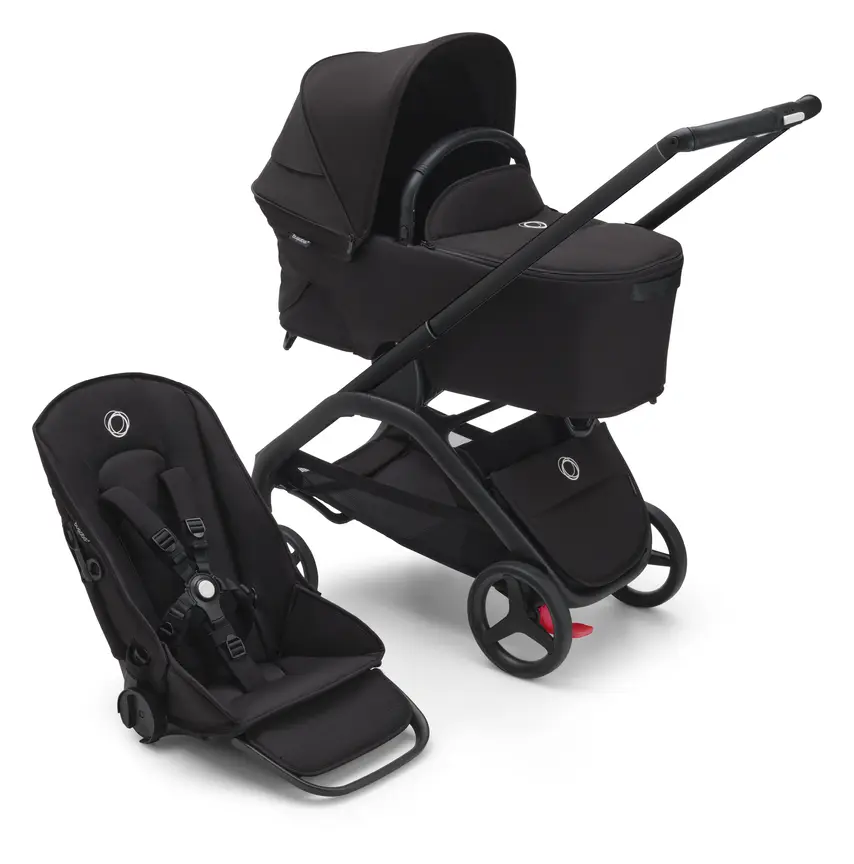
Bugaboo Dragonfly
Bugaboo's city pram: smaller footprint and lighter than the Fox, built for footpaths, lifts and car boots rather than bush tracks.
 Reviewed
Bugaboo Fox 5
Bugaboo's flagship all-terrain pram: big-wheel suspension ride, one-piece fold, bassinet from birth and a seat rated to 22 kg.
Read our full review →
Cybex Priam
Fashion-forward luxury pram with interchangeable seat/bassinet units and an all-terrain option.
Comparison: convertible tote-backpack vs standard backpack vs classic tote
Before you buy, compare how a convertible bag stacks up against a standard nappy backpack and a classic shoulder tote.
| Feature | Convertible tote-backpack | Standard nappy backpack | Classic shoulder tote |
|---|---|---|---|
| Comfort on long walks | Good in backpack mode, though straps can be thinner than a pure backpack. | Best comfort. Wide padded straps spread weight evenly across both shoulders. | Poorest for long walks. All weight pulls on one shoulder and neck. |
| Hands-free use | Yes, when worn as a backpack. | Yes, always hands-free. | Harder. Slips off your shoulder when you bend down to pick up a child. |
| Quick access while wearing | Easy in tote mode. You can unzip and reach inside with one hand. | Must take one or both straps off to reach inside safely. | Very easy. Stays open right at your hip. |
| Fitting in a pram basket | Usually fits well because soft tote shapes squish into baskets. | Structured backpacks can be tall or boxy and hard to squeeze under a seat. | Fits easily into most under-seat baskets. |
| Strap wear and tear | Higher wear on clips and rings from swapping carry modes. | Lower wear. Straps stay sewn in one place. | Moderate wear at handle stitch points. |
| Best for | Parents who want one bag for work, travel, and family outings. | Long outings, hiking, public transport, and everyday hands-free care. | Short car trips, quick café stops, and parents who hate backpacks. |
What to pack by age stage
Your nappy bag needs change as your baby grows. Knowing what you really carry stops you from buying a bag that is too big or too small.
Newborn (0 to 3 months)
Newborns need frequent nappy changes and spare clothes for milk spills or nappy leaks. You will probably pack the bag almost full every time you go out.
- 4 to 6 newborn nappies and a travel pack of wipes
- Foldable change mat and barrier cream
- 2 spare bodysuits (onesies) and a spare wrap or light blanket
- Bottles, formula or expressed milk with an ice pack (if bottle-feeding), plus 2 burp cloths
- A wet bag for soiled clothes
Baby (3 to 12 months)
Feeds stretch out a bit, so you carry fewer spare outfits. Around 6 months, you start adding solid food snacks, bibs, and a sippy cup.
- 4 nappies, wipes, and change mat
- 1 spare outfit and a bib
- Milk bottles (with ice pack) or water cup
- Small container of soft finger food or a baby food pouch and spoon
- Sun hat and a small soft toy
Toddler (1 to 3 years)
A toddler bag is much lighter. You can often switch the convertible bag into sleek tote mode for quick park runs, or keep it in backpack mode when chasing a fast runner.
- 2 to 3 pull-up nappies (or spare undies during toilet training) and wipes
- 1 spare pair of pants and a top
- Water bottle and healthy snacks in a leak-proof box
- Sunscreen, sun hat, and small first-aid plaster kit
Important safety note on nappy sacks
Many parents pack small plastic nappy sacks (scented bags for dirty nappies) inside their bag. The Royal Society for the Prevention of Accidents (RoSPA) in the UK warns that plastic nappy sacks are a suffocation risk for babies and young toddlers. They are very light and flimsy, and babies can pull them over their face or put them in their mouth. Always keep nappy sacks zipped inside a high pocket out of your child's reach. Never leave a roll of nappy sacks loose in the pram or cot.
Guidance across Australia, the UK, the US and Canada
The core safety rules for nappy bags, pram clips, and bottle storage are very similar across all four countries. Here is what official bodies say side by side.
| Topic | Australia | UK | US | Canada |
|---|---|---|---|---|
| Pram clips and tipping | Product Safety Australia warns against hanging heavy bags on handles (AS/NZS 2088). | OPSS and RoSPA advise following maker weight limits and keeping prams stable (BS EN 1888). | CPSC stroller rules (ASTM F833) and makers warn not to overload handles. | Health Canada warns parents to check stroller stability and avoid tipping hazards. |
| Milk in insulated pockets | Raising Children Network says use an insulated bag with an ice pack for chilled milk or formula. | NHS Start for Life says transport expressed breast milk in a cool bag with ice packs. | CDC advises keeping prepared formula cold with ice packs, or mixing fresh at feed time. | Canadian Paediatric Society advises safe cold storage and fresh mixing when possible. |
| Chemical safety in bags | ACCC oversees product safety and recalls for unsafe lead or chemical levels in children's goods. | UK product safety laws restrict harmful phthalates in childcare articles. | CPSC restricts listed phthalates in childcare and feeding-related articles. | Health Canada regulates phthalates and lead in soft vinyl products for children. |
| Flying with baby bags | Home Affairs allows baby milk, formula, and ice packs in carry-on bags for screening. | GOV.UK allows essential baby milk, food, and cooling packs past liquid limits. | TSA allows formula, breast milk, and freezer packs in reasonable amounts. | CATSA exempts baby food, milk, formula, and gel packs from normal liquid limits. |
Common mistakes to avoid
Even a great bag can cause headaches if you use it the wrong way. Watch out for these five common mistakes.
- Overloading pram handles: Hanging a full bag on a light stroller is the top cause of backwards pram tip-overs. Always put the heavy bag underneath if the basket fits it.
- Relying on an empty insulated pocket: Putting a cold bottle into an insulated pocket with no ice pack will not keep it cold for long on a sunny day.
- Buying based on looks alone: A stiff faux-leather bag with tiny zips looks nice in photos, but it can crack, peel, and hurt your shoulders after two months of daily use.
- Leaving loose small items inside: Coins, lip balm lids, hair clips, and nappy sacks can fall out when you open the bag. Keep adult items in a zipped pocket so a curious baby cannot grab them.
- Forgetting to clean the bottle pocket: Milk drips collect in the bottom corner of insulated pockets. Wipe them out each week with warm soapy water and let them air dry open.
More options, from budget to premium
Real products from our catalogue. We don't show star ratings or review counts; check the current price, stock and reviews on Amazon before you buy.

Maxi-Cosi Zelia 3
A mid-price pram with a carrycot that changes into a seat, so one frame covers birth to toddler.

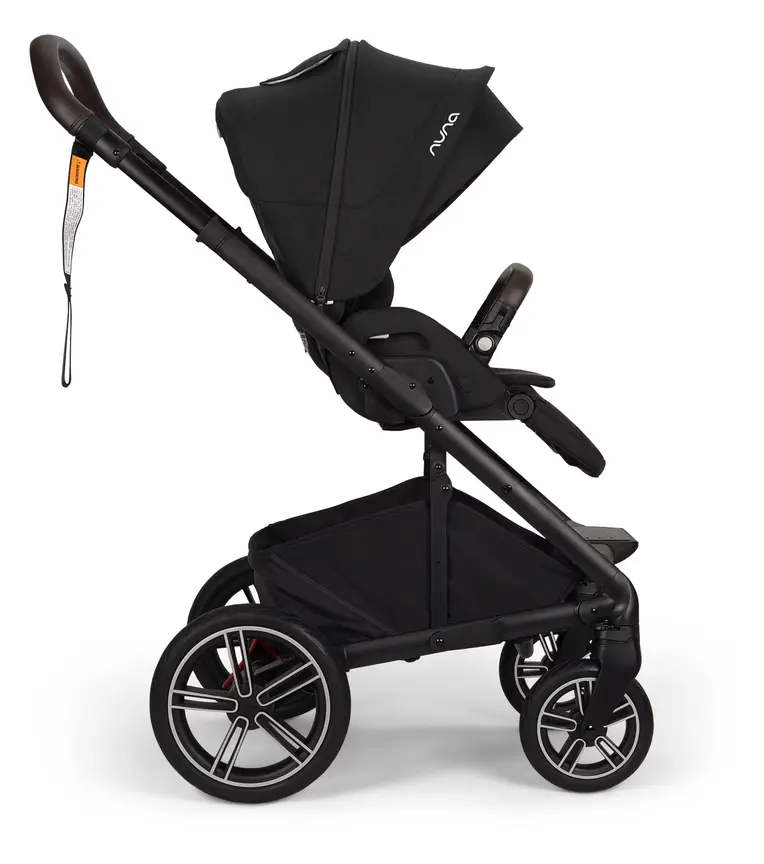


Nuna MIXX Next
A full-size pram with four ways to ride: capsule, bassinet, parent-facing seat or world-facing seat.
Read our full review →
Baby Jogger City Mini GT2
Long-running, lighter all-terrain stroller with a famously simple one-hand strap fold.
Frequently asked questions
Are pram clips safe to use on every stroller?
No. Many prams and lightweight travel strollers can tip backwards if you hang a heavy bag on the handlebar. Check your pram's instruction manual first. Even if clips are allowed, it is safer to place heavy bags in the under-seat basket.
How long does an insulated bottle pocket keep milk cold?
On its own, an insulated pocket only slows warming for a short time, depending on the weather. To keep chilled breast milk or pre-made formula safely cold, put a frozen ice pack or gel pack right next to the bottle inside the pocket. Follow your local health guide (such as the NHS, CDC, or Raising Children Network) for exact hour limits.
What is a luggage trolley sleeve and do I need one?
A luggage trolley sleeve is a fabric strap or zip-open pass-through on the back of the bag. It slips over a rolling suitcase handle. If you fly or take trains with your baby even a few times a year, it saves your shoulders and frees up a hand.
Is a convertible tote-backpack comfortable for long walks?
Yes, as long as the backpack straps are padded and wide enough not to dig in. Convertible bags with very thin straps can feel uncomfortable once the bag is full. Test the straps with some weight inside before you take off the tags.
What lining material is safest for bottle pockets?
Look for food-safe, wipe-clean linings that are labelled BPA-free and phthalate-free. Smooth PEVA (a chlorine-free vinyl alternative) or food-grade foil linings wipe clean easily and do not use harmful softeners.
How do I clean a convertible nappy bag without ruining the insulation?
Most insulated bags should not go into a hot washing machine or tumble dryer. Heat can melt or crack the thermal foil lining. Wipe the inside and outside with a damp cloth and mild soap, then let the bag air dry completely with all zips open.
Sources
- Product Safety Australia – Prams and strollers guide
- Raising Children Network – Baby formula: how to make and store it
- NHS Start for Life (UK) – Storing breast milk
- RoSPA (UK) – Nappy sacks safety
- CDC – Infant formula preparation and storage
- U.S. CPSC – Phthalates business guidance
- CATSA (Canada) – Families
Related guides
More Car Seats & Travel →
Pram Travel Bags: How to Protect Your Stroller and Check Airline Rules
Winter Fleece Bunting Suits vs Down Pram Suits: Car Seat Rules and Fold-Over Cuffs

Dummy and Pacifier Clips and Toy Straps: Safe Length Rules to Stop Strangulation