How to Choose a Baby Bib: Fit, Materials, Cleaning and Safety
Choose a baby bib for feeding by checking its fit, coverage, material and care needs. Learn what works at each stage and how to use it safely.

On this page
- What a baby bib can and cannot do
- How to choose a bib that works for your baby
- Comparing common bib types
- Bibs at different feeding stages
- Use and cleaning: a simple routine
- Safe feeding matters more than the bib
- Safety guidance in Australia, the UK, the US and Canada
- Common mistakes to avoid
- Frequently asked questions
- Sources and further guidance
- Sources
Short answer: A useful bib catches some food and drink before they reach your baby’s clothes. It should fit comfortably, leave the neck free, and be easy to clean. There is no single bib that works best for every baby or meal. A soft cloth bib may suit milk dribbles. A wider bib with a pocket may catch more food during solids. Keep bibs on only while your baby is awake and watched. Take the bib off before sleep.
Bibs can help with mess. They do not stop choking, prevent all skin irritation, or replace close supervision. Your baby’s comfort and safe feeding position matter more than a special shape or material.
What a baby bib can and cannot do
A bib covers some clothing during feeding. It may catch drips, crumbs and small spills. That can mean fewer clothing changes. A bib may also help keep wet food off the skin around the chest.
A bib cannot keep all food away from your baby. Food can fall beside it, run under the edge, or land on the sleeves and lap. A bib does not make feeding mess-free. It also does not make a baby safer from choking. Babies still need an adult close by during meals.
Some babies dislike bibs. They may pull at the neck, chew the edge, or become upset when one is fastened. Try a different shape or fabric. You can also use a clean top that is easy to wash. The goal is practical cover, not a perfect outfit.
Food on the skin does not always cause a rash. But wet fabric and food left on skin can bother some babies. Remove a dirty bib after the meal. Wipe the skin gently and change wet clothes when needed. If a rash is sore, spreading, or not improving, ask a health professional for advice.
How to choose a bib that works for your baby
Start with what your baby is doing and what usually gets messy. A newborn who dribbles milk needs a different bib from a toddler learning to use a spoon. Think about the meal, your baby’s movements, and how you will wash the bib.
Check the fit at the neck
The bib should sit comfortably without pressing on the throat. You should be able to fit a finger between the fastening and your baby’s neck. It should not gape so widely that every drip runs underneath.
Look for a fastening that stays closed during use but opens easily for an adult. Check the label for the right age or size. A bib that is too small may pull at the neck. One that is too large may bunch up or get in the way.
Never use a bib that has a long tie, loose cord, or strap that could catch on something. Check the fastening and fabric before each use. Do not use it if a snap is loose, the material is torn, or a part could come away.
Choose enough coverage for the meal
A small bib may be enough for milk dribbles or a quick drink. A wider bib may cover more of the chest during solids. Sleeved bibs cover the arms too. They can help with messy play, but some babies find them warm or restrictive.
A deep pocket can catch food that falls from the mouth or spoon. It works only when the pocket stays open. If the bib folds flat, food may fall onto the lap instead. A pocket is not a bowl. It should not hold food where a baby can reach and put large pieces into their mouth.
Coverage should not block your baby’s hands or make it hard to sit and move. Your baby should be able to reach for food and bring their hands toward their mouth. If the bib makes this hard, try another shape.
Think about fabric and care
Cloth bibs feel soft and can absorb drips. They need washing after they become wet or dirty. Some dry slowly, so having more than one can help.
Water-resistant bibs can stop some liquid reaching clothes. Some have a soft fabric side and a coated side. Others use a smooth material that wipes clean. Follow the care label. Heat, strong cleaners or rough scrubbing can damage some coatings.
Silicone bibs are often easy to wipe. Some have a pocket. They can feel stiff or heavy to some babies. Check that the bib bends without digging into the skin. Do not leave a baby alone with a bib, even if it seems hard to tear.
No material is right for every family. Consider how it feels, how it cleans, and whether it suits your routine. Do not rely on broad claims such as “chemical-free” unless the maker clearly explains what that means. If a product has a strong smell, damaged coating, or unclear care directions, choose another one.
Comparing common bib types
This table compares common designs. The best choice depends on your baby and the meal. Check the product label and inspect the bib before use.
| Bib type | May suit | Useful points | Things to check |
|---|---|---|---|
| Small cloth bib | Milk dribbles and light spills | Soft and absorbent. Often easy to fold and pack. | Change it when wet. Check the neck fit and fastening. |
| Large cloth bib | Meals with more drips | Covers more of the chest. Can be washed and reused. | It may become wet through. Let it dry fully between uses. |
| Water-resistant bib | Runny food and drinks | May help stop liquid reaching clothes. Some wipe clean. | Follow the care label. Check the coating for cracks or peeling. |
| Silicone bib with pocket | Some spoon-fed or self-feeding meals | Easy to wipe. A pocket may catch fallen food. | Check the neck and edges. Make sure it does not block movement. |
| Sleeved bib | Messy meals or food play | Covers arms and more of the front. | Check sleeves do not restrict reaching. Remove it after the meal. |
| Disposable bib | Travel or a short outing | Can be convenient when washing is not possible. | Follow the label. Do not leave it on for sleep or unsupervised play. |
A bib that is quick to wash may be more useful than one with many features. If a design is hard to put on, uncomfortable, or difficult to clean, you may stop using it. Simple and familiar can work well.
Bibs at different feeding stages
Babies change quickly. The bib that works in one stage may not work later. Use your baby’s skills and comfort as your guide. A bib is an optional aid, not a milestone requirement.
Newborn feeding
Newborns do not need a bib all day. If milk dribbles during a feed, a small soft bib may help protect clothing. Remove it when the feed is over. Keep the fabric away from the nose and mouth.
Never put a bib on a sleeping baby. Remove it before placing your baby in a cot, bassinet or other sleep space. Loose or fastened fabric near the face can create a hazard.
Early solids
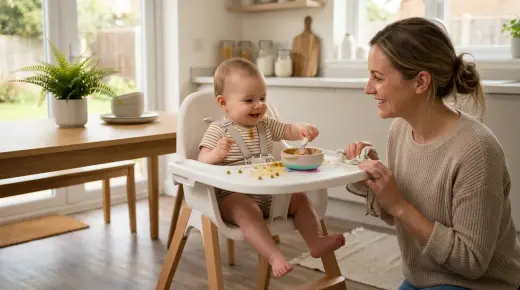
When your baby is ready for solids, meals can be messy. A wider bib may cover more clothing. A pocket can catch some food, but it will not catch everything.
Follow trusted feeding advice for when and how to start solids. Sit your baby upright and stay close while they eat. A bib does not change the foods that are safe for your baby’s age or skills.
Some babies want to touch and explore food. A soft or sleeved bib may be easier for them to tolerate. If the bib gets in the way of reaching, remove it or try a different one.
Learning to feed themselves
As your baby practises using their hands and a spoon, expect spills. A bib can reduce laundry, but it cannot keep the floor clean. Put a washable cloth under the chair if that suits your home.
Let your child use their hands and practise at their own pace. Make sure the bib does not cover their hands or catch on the highchair. Take it off after the meal and clean your child’s skin and hands.
Toddlers and older children
Older children may prefer a smaller bib or no bib. Offer a choice if that makes meals calmer. Keep the bib clean and check the fastening as your child grows.
Do not use a bib as a way to keep a child still in a chair. Follow the chair instructions and supervise meals. If the bib becomes a toy or gets pulled over the face, remove it.
Use and cleaning: a simple routine
A clean bib is more useful and pleasant to wear. Follow the maker’s washing directions. Different fabrics and coatings need different care.
- Check it before use. Look for tears, loose threads, peeling layers, damaged fasteners, or sharp edges.
- Fit it gently. Close the fastening so it stays in place without pressing on the neck.
- Keep your baby in sight. Stay close during feeding. Do not leave a baby alone with a bib on.
- Remove it after the meal. Take it off once feeding is finished. Do not leave it on for sleep or unattended play.
- Clean it soon. Remove food and wash or wipe the bib as its care label says.
- Let it dry. Store it only when clean and dry. Damp fabric can smell and feel unpleasant.
Do not assume that every bib can go in a dishwasher, washing machine, dryer or microwave. Check the label first. Do not use bleach or strong cleaners unless the maker allows them.
Keep bibs away from pets and small children when they are not in use. Small fasteners or torn pieces could become a choking risk. Throw away a bib that cannot be repaired safely.
Safe feeding matters more than the bib
Stay with your baby while they eat. Sit them upright in a suitable seat or on an adult’s lap, with steady support. Keep the face clear and watch how your baby is coping with food.
Choose food shapes and textures that match your baby’s age and feeding skills. Learn how to prepare food safely. If you are unsure about choking first aid, learn from a recognised first aid provider before an emergency.
Do not put food into the bib pocket for your baby to eat later. Do not leave food where your baby can grab a large piece without you noticing. Clear away the bib and leftover food when the meal ends.
If your baby coughs, gags often, has trouble swallowing, or struggles to feed, ask a health professional. A bib cannot solve a feeding problem.
Safety guidance in Australia, the UK, the US and Canada
There is no bib safety standard listed here that applies across these four countries. Do not treat a bib as certified just because a seller uses words such as “safe” or displays a general safety mark. Check the item, its label, its care directions, and the seller’s contact details.
| Country | Official bodies to know | Practical step for parents |
|---|---|---|
| Australia | Australian Competition and Consumer Commission (ACCC) and Product Safety Australia | Check Product Safety Australia for recalls and safety alerts. Stop using a damaged bib. |
| United Kingdom | Office for Product Safety and Standards (OPSS) | Use OPSS product safety information and report concerns through the proper local route. |
| United States | U.S. Consumer Product Safety Commission (CPSC) | Check CPSC recalls and alerts. Follow the maker’s instructions and inspect fasteners. |
| Canada | Health Canada | Check Canadian recalls and safety alerts. Contact the seller or maker about unclear labels. |
These bodies provide general product safety information and recall notices. Their presence does not mean every bib has been tested or approved by them. Follow local guidance if an item is recalled or a safety notice names it.
When you buy online, look for a clear product description, a named seller, and instructions you can understand. Be wary of listings with no maker details or unclear materials. Avoid products with detachable decorations that could come loose.
Common mistakes to avoid
- Leaving a bib on for sleep: Remove it before sleep, even for a short nap.
- Choosing only by appearance: Check fit, comfort, cleaning and wear.
- Fastening it too tightly: It should not press on the throat or leave marks.
- Assuming a pocket prevents mess: It catches some food, not all of it.
- Leaving a baby unattended: Stay close during every meal.
- Ignoring damage: Loose parts, torn fabric and peeling coatings mean the bib needs attention.
- Using one bib for too long: Change it when it is wet or dirty.
- Believing broad safety claims: Look for clear maker details and care instructions.
- Expecting a bib to stop choking: Safe food preparation and supervision still matter.
Frequently asked questions
When should my baby start wearing a bib?
Use one when it helps with dribbles or feeding mess. A bib is not required at a set age. Choose a comfortable size and remove it after use.
Can my baby sleep in a bib?
No. Remove the bib before any sleep. Keep the sleep space clear and follow local safe sleep guidance.
Are silicone bibs better than cloth bibs?
Neither is best for every family. Silicone can wipe clean. Cloth can feel softer and absorb drips. Try what your baby tolerates and what you can care for.
Does a pocket bib stop food from falling?
No. It may catch some food if the pocket stays open. Food can still land on clothing, the chair or the floor.
How often should I wash a bib?
Wash or wipe it after it becomes dirty. Follow the care label. Let it dry fully before storing or using it again.
Can a bib prevent a rash?
A bib may keep some wet food off clothing, but it cannot prevent every rash. Remove wet or dirty fabric and gently clean the skin. Ask a health professional about a sore or lasting rash.
What should I do if my baby pulls at the bib?
Check the fit and try a softer or smaller design. If your baby remains upset, remove it and use another way to protect clothing. Never leave a baby alone with a bib.
Can I use a bib during breastfeeding or bottle-feeding?
A small bib or cloth can catch dribbles if it stays clear of the face. Keep your baby’s nose and mouth uncovered. Remove the bib when the feed ends.
When should I replace a bib?
Replace it when it is torn, frayed, peeling, or has a loose fastening. Also replace it if it no longer fits comfortably or cannot be cleaned as directed.
Sources and further guidance
- Product Safety Australia – Recalls
- UK Office for Product Safety and Standards
- U.S. Consumer Product Safety Commission – Safe sleep for babies
- Health Canada – Recalls and safety alerts
- Pregnancy, Birth and Baby – Introducing solid food
- NHS – Your baby's first solid foods
- American Academy of Pediatrics – Starting solid foods
- Canadian Paediatric Society – Feeding your baby in the first year
Disclaimer: This article offers general information, not medical advice. Ask your child’s health professional about feeding, skin concerns, or product safety. BabyGearFinder may earn a commission from qualifying affiliate links. This does not change the price you pay.
Sources
- Product Safety Australia – Recalls
- UK Office for Product Safety and Standards
- CPSC (US) – Safe sleep: cribs and infant products
- Health Canada – Recalls and safety alerts
- Pregnancy, Birth and Baby – Introducing solid food
- NHS – Your baby's first solid foods
- American Academy of Pediatrics (US) – Starting solid foods
- Caring for Kids (Canadian Paediatric Society) – Feeding your baby in the first year
Related guides
More Feeding & Baby Food →
How to Choose a Baby Bottle Brush: Bristles, Silicone, and Safe Cleaning

How to Choose a Baby Food Maker: Key Features, Safety, and Mealtime Tips
How to Choose a Baby Food Maker: Types, Safety, and What You Actually Need