









High Chair Footrest Retrofits: How to Add Safe Foot Support
How to add a safe, adjustable footrest to a plastic high chair. Simple posture tips, clamp and strap checks, and safety rules for AU, UK, US and Canada.

On this page
- Key points
- What a high chair footrest retrofit is
- Why dangling feet make mealtimes harder
- Types of add-on high chair footrests
- How to choose a safe footrest retrofit
- How to fit and adjust a footrest step by step
- Footrest height by age and stage
- Safety standards and official advice in AU, UK, US and Canada
- Common mistakes parents make with add-on footrests
- Cleaning and care
- Frequently asked questions
- Sources
Short answer: Many basic plastic high chairs do not come with a footrest. You can add an adjustable footrest retrofit to support your baby's feet flat on a firm surface. Good foot support helps your baby sit upright, steady their core, and focus on eating. Always use the five-point harness, check that clamps stay tight, and make sure the chair cannot tip if your child pushes down.
Safety and feeding advice in this guide lines up with official groups in Australia (Product Safety Australia and Raising Children Network), the UK (OPSS, NHS and RoSPA), the US (CPSC and the American Academy of Pediatrics) and Canada (Health Canada, HealthLink BC and the Canadian Paediatric Society).
Key points
- Why feet matter: Flat feet give your baby a steady base for chewing and swallowing.
- The right angles: Aim for hips, knees and ankles bent at about a right angle.
- Fit matters: Check your chair's leg shape before you buy any add-on board or strap.
- Harness always: A footrest can act like a step, so buckle the harness every single time.
- No loose parts: Keep small screws, wingnuts and spare rubber rings away from little hands.
- Check stability: Never let a child push off the table or stand on the footrest.
What a high chair footrest retrofit is
A high chair footrest retrofit is an add-on part you fit to an existing chair. It gives your child a flat place to rest their feet during meals.
Many popular moulded plastic high chairs have smooth, splayed legs. They are cheap and very easy to wipe clean. However, most budget plastic models leave out a footrest to keep the design simple.
When a baby sits in one of these chairs, their legs hang down in mid-air. A retrofit kit solves that gap. You attach a wooden board, plastic shelf or fabric sling across the front legs. Then you slide it up or down as your child grows.
What it does not replace
An add-on footrest does not turn an unsafe chair into a safe one. The chair itself still needs a wide, stable base. It also needs a working crotch post and a five-point harness.
A footrest also does not fix poor sitting readiness. Health groups say babies should only sit in a high chair for solids when they have steady head control. They should also be able to sit upright with minimal support.
Highchairs & Booster Seats worth a look
Real products from our catalogue. We don't show star ratings or review counts; check the current price, stock and reviews on Amazon before you buy.

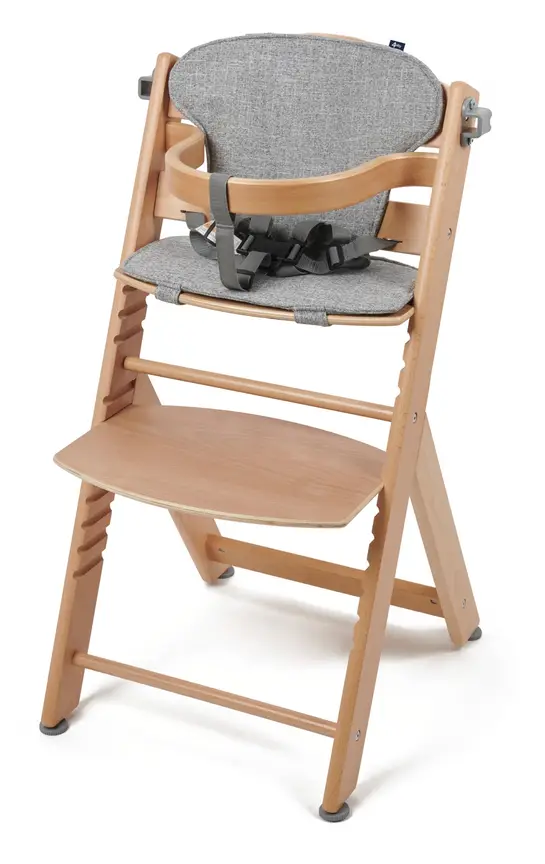

4baby Grow With Me Wooden Highchair
A low-cost wooden highchair that turns into a junior chair, with 4 seat heights and 8 footrest spots.
Read our full review →
IKEA Antilop Highchair
The cheap, wipe-down classic many daycares use. No footrest, no adjustment — but almost nothing to clean.
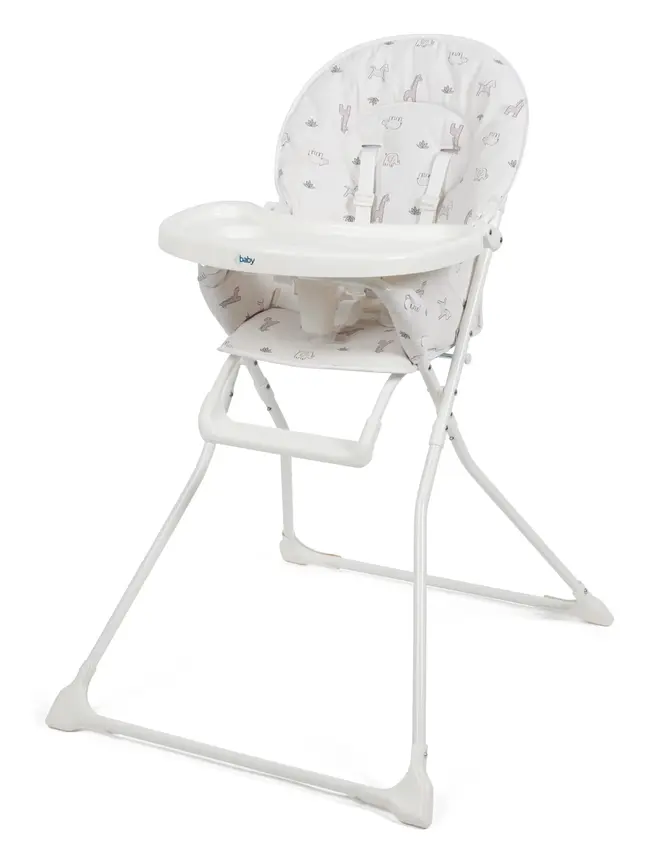
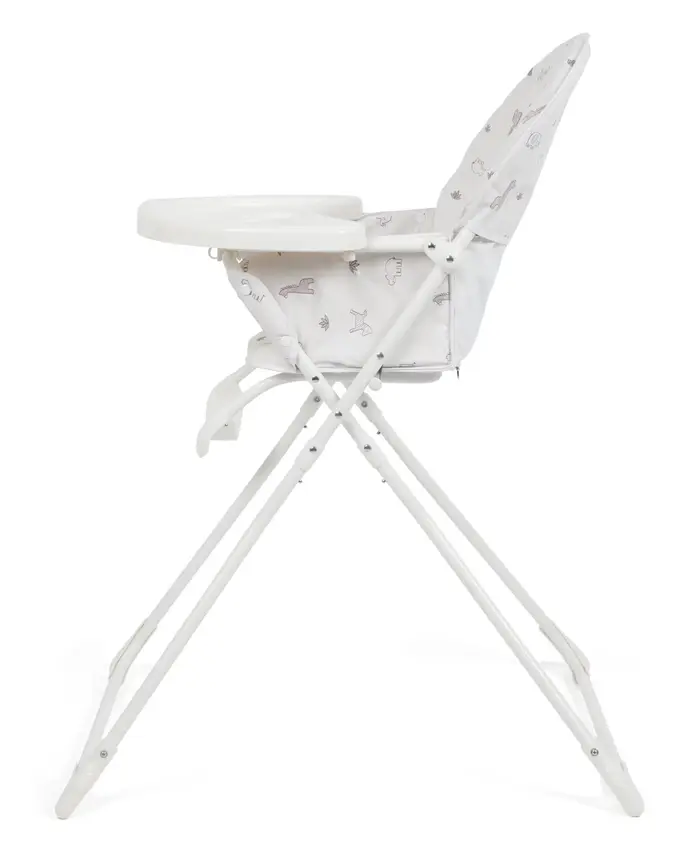
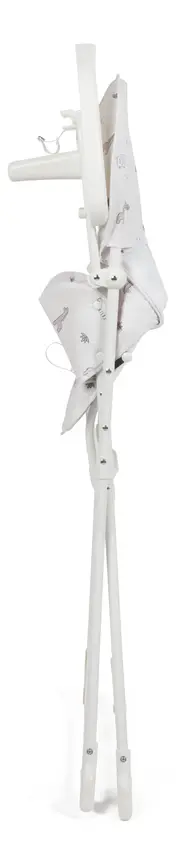
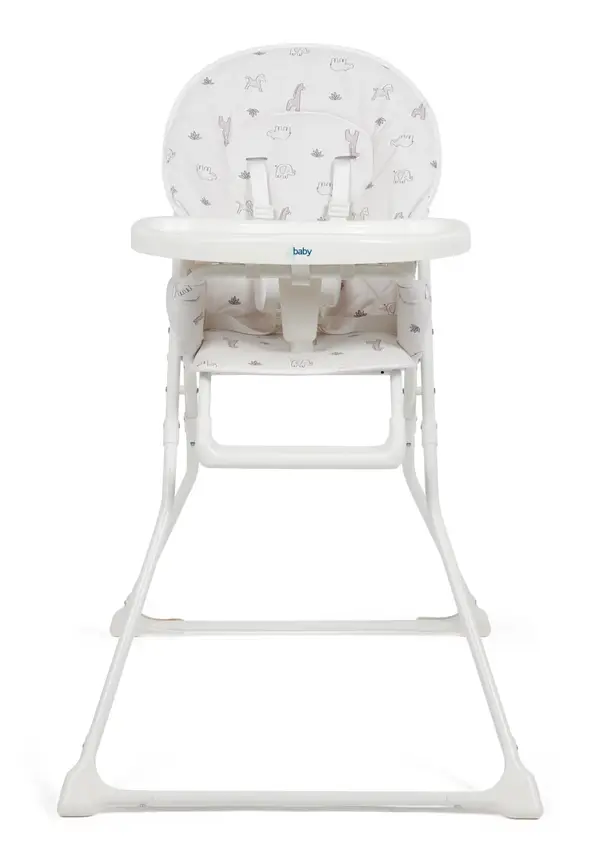
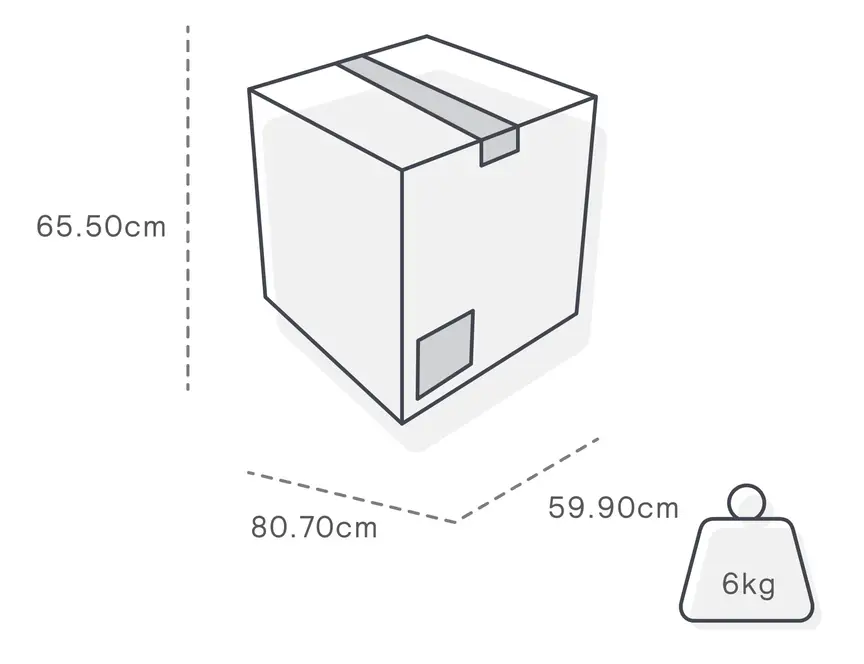
4baby Flat Fold Highchair
A very low-cost highchair that folds flat, with a wipe-clean seat.
Read our full review →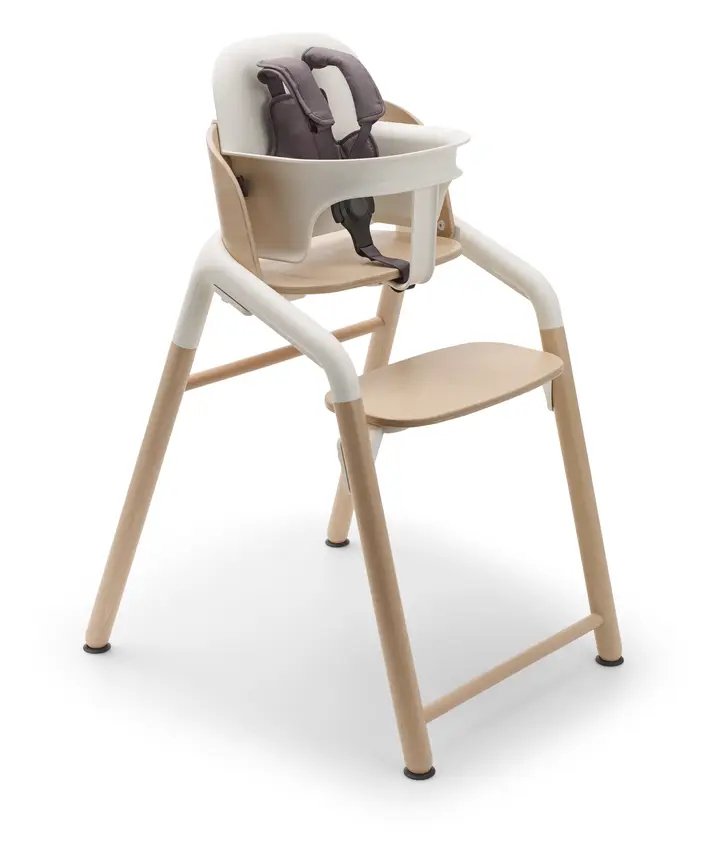
Bugaboo Giraffe
Bugaboo's answer to the Tripp Trapp, with notably quick, tool-free height adjustment.
Why dangling feet make mealtimes harder
Try sitting on a tall bar stool with no foot bar for twenty minutes. Your legs start to swing. Your lower back curves. Your shoulders hunch forward to keep your balance.
Babies feel that same strain in a high chair without foot support. Because their core muscles are still growing, dangling feet make sitting upright much harder work.
Core stability and hand control
To pick up small pieces of food, a baby needs a steady trunk. Paediatric feeding therapists often talk about the 90-90-90 sitting posture. That means hips at a right angle, knees at a right angle, and ankles at a right angle with feet flat.
When feet press lightly onto a firm board, the pelvis stays level. The back straightens. Both hands are free to scoop, poke and bring food to the mouth.
Chewing, swallowing and focus
A slumped posture makes it harder to take a deep breath and swallow safely. Sitting tall keeps the chest open and the head centred over the shoulders. Babies who feel steady in their seat also tend to fidget less and stay at the table longer.
What foot support does not do
A footrest helps posture, but it cannot prevent choking on its own. You still need to serve safe food shapes, stay within arm's reach, and watch your baby eat. Never leave a baby alone in a high chair, even for a few seconds.
Types of add-on high chair footrests
Most retrofit footrests fall into four main groups. Each style works in a different way and suits different chair legs.
1. Clamp-on boards with rubber rings
These are the most common retrofits for round-legged plastic chairs. You slide thick rubber O-rings onto the two front legs. The wooden or plastic board rests on top of the rings. Some kits add a second set of rings above the board to stop it lifting.
They are quick to move up and down without tools. On the downside, rubber rings can stretch, slip or perish over time if food or water sits against them.
2. Screw-clamp or bracket boards
These kits use plastic or metal brackets that tighten onto the chair legs with bolts or wingnuts. They hold heavier toddlers well and rarely slide down under foot pressure. You do need to check that the clamp shape matches your chair legs. Round clamps will not grip square or oval legs properly.
3. Strap-on fabric or webbing slings
A strap-on footrest wraps around the front legs with hook-and-loop tape or buckle straps. It forms a soft sling under the feet. This style folds flat for travel and fits almost any leg shape. However, a soft sling gives less firm feedback than a solid board. Babies cannot push off a flat surface as cleanly when it sags.
4. Brand-made extension kits
Some chair makers sell their own clip-on footrests designed for one exact model. Because they are built for that frame, they usually lock in tightly with no gaps. Always check if your chair maker offers an official part before buying a third-party kit.
| Footrest type | How it attaches | Height adjustment | Cleaning | Main risk to watch |
|---|---|---|---|---|
| Board with rubber O-rings | Rests on thick rubber bands around front legs | Tool-free; slide rings up or down | Wipe board; rinse around rings | Rings can slip or perish; spare rings are small |
| Screw-clamp board | Bolts or brackets grip the chair legs | Loosen screws, move board, re-tighten | Wipe board and bracket | Over-tightening can crack thin plastic legs |
| Strap-on fabric sling | Webbing straps or hook-and-loop wrap around legs | Quick strap adjustment | Machine wash or hand wash; takes time to dry | Fabric sags; straps can slide down smooth legs |
| Brand-made add-on kit | Clips or bolts into built-in frame slots | Fixed steps or sliding track | Wipe clean | Only fits one specific chair model |
How to choose a safe footrest retrofit
Not every footrest fits every chair. Taking five minutes to check your chair first saves money and avoids unsafe fits.
Check your chair leg shape and angle
Look closely at the front legs of your plastic high chair. Are they round tubes, flat panels, or tapered ovals? Do they angle outward as they go down?
Many plastic chairs have splayed legs that get wider near the floor. A rigid board made for straight legs will not sit flat on splayed legs unless the holes are angled to match. Measure the leg width and the gap between the front legs before ordering.
Check for sharp edges and pinch points
Run your hand under the board and around the clamps. Wooden boards should be sanded smooth with rounded corners. Look for splinters, rough varnish or exposed staples.
If the footrest uses metal brackets, check that no sharp bolt ends stick out where legs or knees can scrape them. Keep the gap between the board and the chair legs small enough that tiny fingers or toes cannot get trapped.
Watch out for small parts
Loose rubber O-rings, washers, wingnuts and end caps can all be choking hazards. If a part can fit inside a small cardboard toilet-roll tube, it is small enough for a baby to choke on. Store spare rings in a high cupboard, never in the high chair tray or basket.
Think about climbing and tipping
A sturdy footrest gives a toddler a solid step to push up on. That is why Product Safety Australia, the US CPSC and Health Canada all stress using the harness every time. Check that your chair's base is wider than the footrest. If a board sticks far out in front of the legs, a child standing on the front edge could tip the chair forward.
Choose safe, wipe-clean finishes
Food will land on the footrest at every meal. Bare wood soaks up yoghurt, puree and water, which can cause mould or warping. Look for sealed wood, smooth bamboo or solid plastic. Avoid finishes that peel or flake, since babies often touch the footrest and then put their hands in their mouth.
How to fit and adjust a footrest step by step
Follow these steps when you fit an add-on footrest to a plastic high chair.
- Read both manuals. Check your high chair manual first. Some makers warn against attaching third-party parts. Read the footrest instructions all the way through.
- Clean and dry the chair legs. Wipe off any grease, dust or dried food. Clamps and rubber rings grip much better on clean, dry legs.
- Check the leg order. If you must pop the front legs off to slide O-rings on, make sure each leg clicks all the way back into its socket. Tug each leg firmly to confirm it locked.
- Mark the rough height. Sit your child in the chair with the harness buckled. Measure from the seat surface down to the back of their knee, and from the knee to the sole of their foot.
- Fit the clamps or rings. Place the lower rings or brackets at the height where the soles of your child's feet will rest flat. Make sure both sides sit at the exact same height.
- Set the board level. Rest the board on the supports and fit any top rings or locking screws. Use a small spirit level or eyeball it against the floor so it does not tilt.
- Do a push and pull test. Before putting your child in, press down firmly on the board with your hand. Try twisting it side to side. It should not slide down, wobble or pop off.
- Check the 90-90-90 posture. Place your child in the chair and buckle the five-point harness. Look from the side. Their knees should bend comfortably over the seat edge, with heels and toes flat on the board.
- Leave a small gap behind the knees. Make sure the front edge of the seat does not dig into the back of your child's calves.
- Do a weekly check. Give the clamps and rings a quick tug once a week while wiping the chair down.
Side by side: more highchairs & booster seats to compare
Real products from our catalogue. We don't show star ratings or review counts; check the current price, stock and reviews on Amazon before you buy.

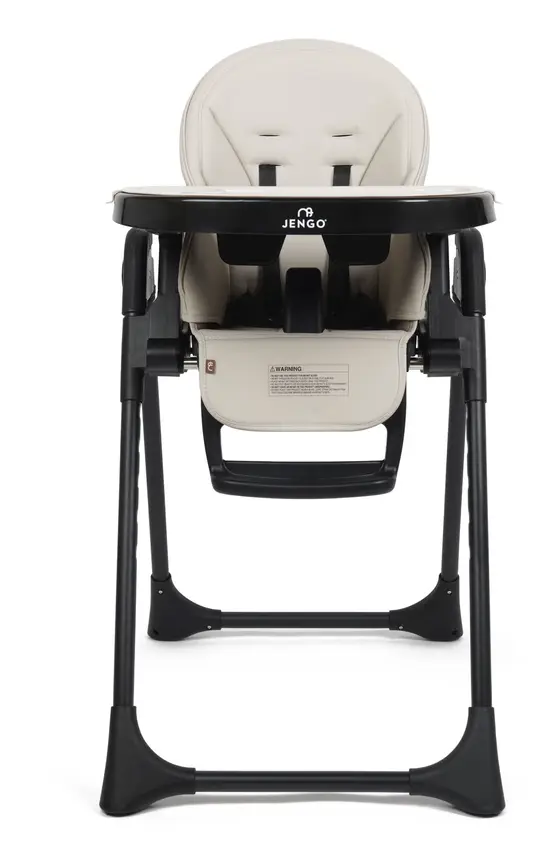


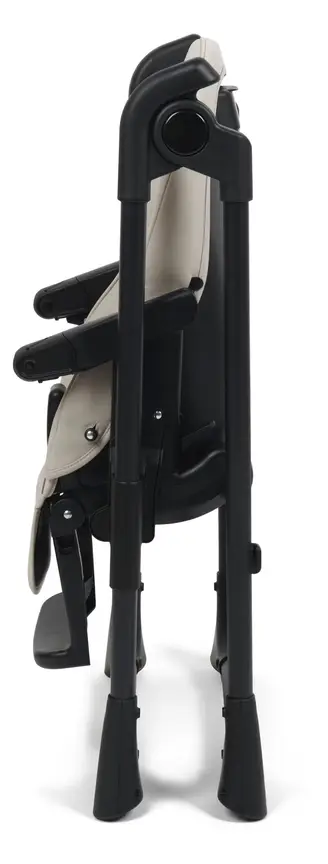
Jengo Nosh Highchair
A highchair from birth to toddler with 7 heights and 3 seat positions.
Read our full review →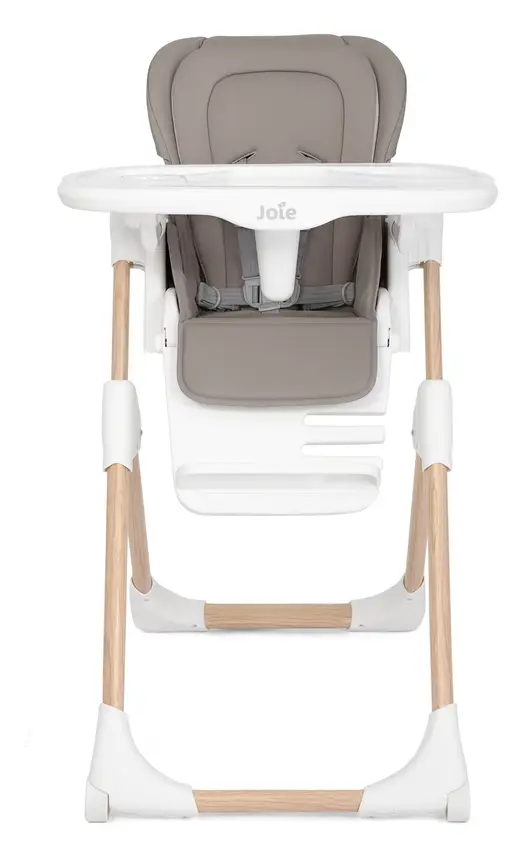
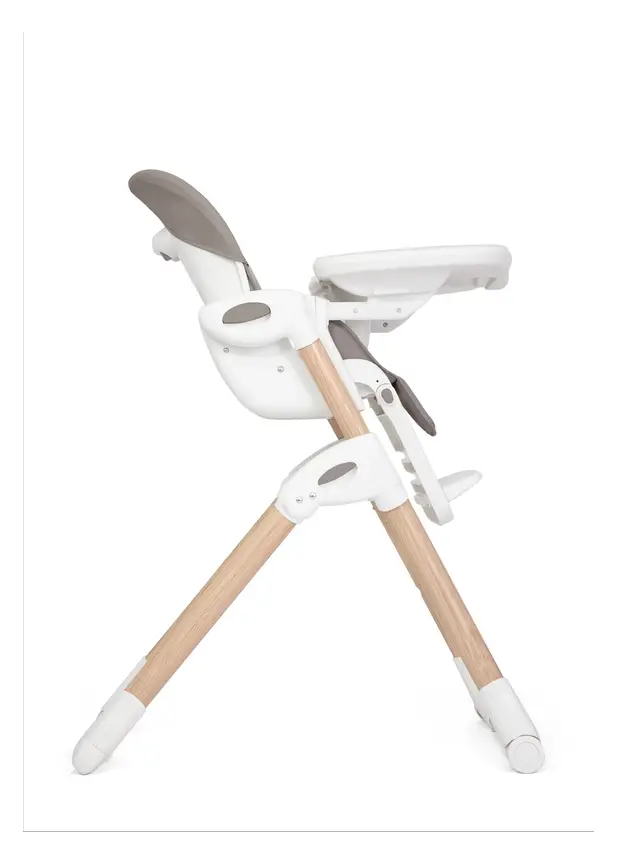
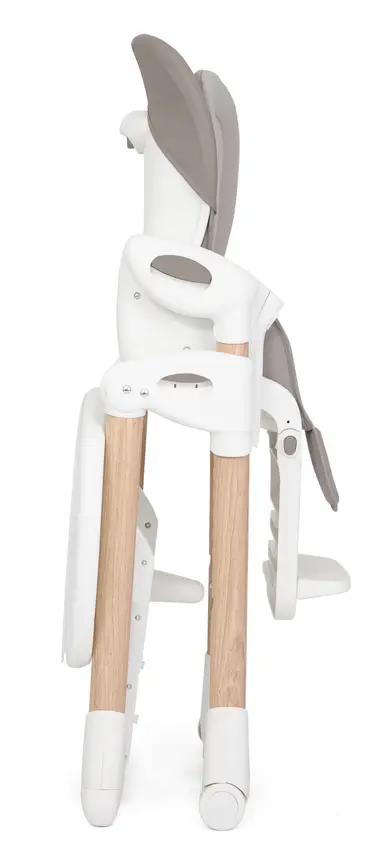


Joie Mimzy Recline 2.0
A highchair from newborn with 5 recline spots and 7 heights. It folds standing up.
Read our full review →
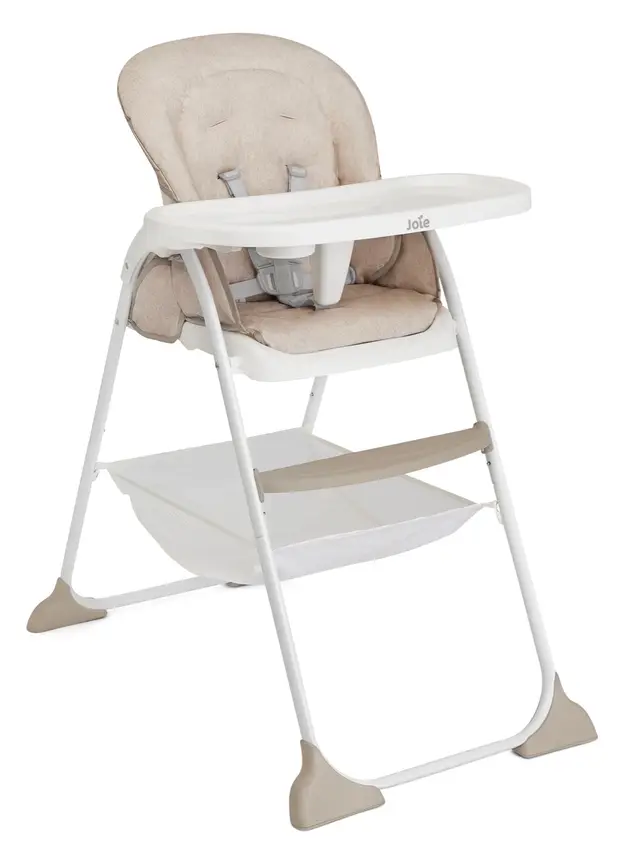


Joie Mimzy Snacker
A low-cost folding highchair from 6 months. It stands up when folded.
Read our full review →


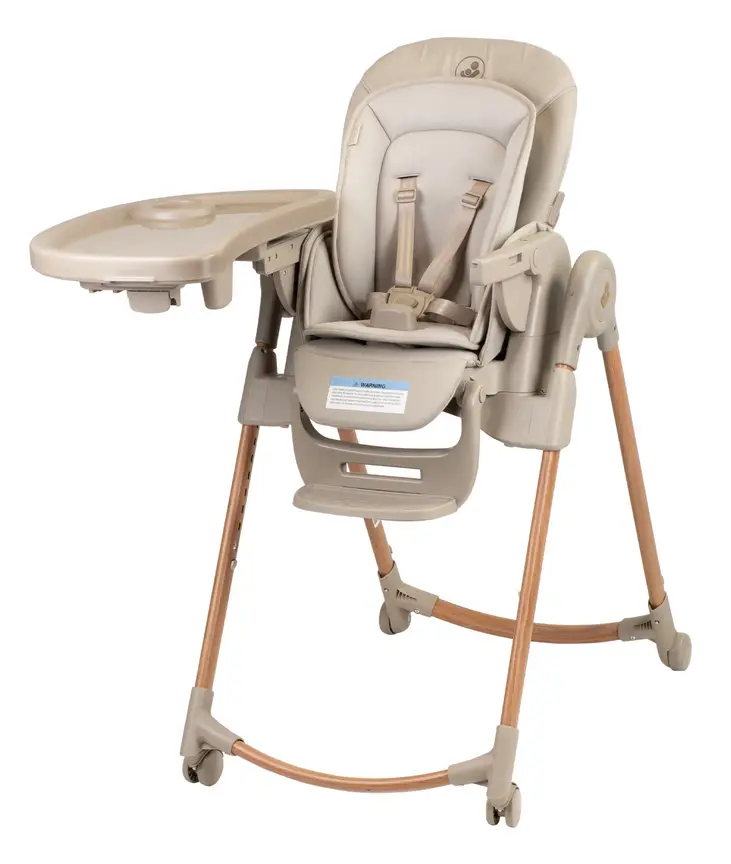

Maxi-Cosi Minla Plus
Lies flat from birth, then works as a highchair and booster, and later a kid chair.
Read our full review →Footrest height by age and stage
Babies grow fast in the first two years. A footrest set for a six-month-old will soon push an older baby's knees up toward their chest. Adjust the board every few weeks, or whenever you notice their knees rising above their hips.
| Age stage | What is happening | Footrest setup | Safety focus |
|---|---|---|---|
| 6 to 9 months | Starting solids; short legs; still building trunk control | Footrest sits high, close to the seat bottom | Ensure steady head control; keep harness snug; check knees are not pushed up |
| 9 to 12 months | Stronger sitting; more reaching and self-feeding | Lower the board a little as shin length grows | Keep heels flat; watch for babies learning to push up with their feet |
| 12 to 24 months | Toddler energy; wriggling and trying to climb | Lower board down the splayed legs; check width fit | Always use the five-point harness; pull chair back from table edges |
| 2 to 3 years | Long legs; feet may reach lower rungs or floor | Move to lowest setting or remove retrofit if knees bend too sharply | Check chair weight limit; consider moving to a sturdy dining chair or booster |
Signs the footrest is in the wrong spot
- Too high: Your baby's knees sit higher than their hips. Their weight rolls back onto their tailbone, and they slump.
- Too low: Their toes barely brush the board, or their heels hang in the air.
- Too far forward: Your child stretches their legs straight out to reach it, sliding down under the harness.
When to remove an add-on footrest
Take the footrest off if your toddler's feet reach the lowest setting and their knees still point up. Remove it right away if a clamp cracks, a board splinters, or the chair starts to feel tippy when your child shifts weight. Also check your high chair's maximum weight and age limits in its manual.
Safety standards and official advice in AU, UK, US and Canada
High chairs themselves are tested against strict safety rules in major markets. However, an add-on footrest is an aftermarket accessory. It is rarely tested together with your exact chair by the original maker.
That means you need to understand the core safety rules for high chairs in your country. Whenever you add a part, make sure you do not undo any of those safety features.
Australia
Product Safety Australia (part of the ACCC) advises parents to check that any high chair meets the Australian high chair safety standard. It warns that falls from high chairs are a common cause of head injuries in young children. Raising Children Network says to always use the full harness, including the crotch strap, and to keep the chair away from tables or walls a child can push against.
United Kingdom
In the UK, the Office for Product Safety and Standards (OPSS) oversees product safety, and high chairs are assessed against BS EN 14988. Both the NHS and RoSPA remind parents to use the five-point harness every time, keep the chair on a flat floor, and never leave a child unattended. RoSPA also warns against letting older siblings climb on the chair.
United States
The US Consumer Product Safety Commission (CPSC) enforces a mandatory federal high chair rule based on ASTM F404. This rule sets strict tests for stability, restraint strength, locking mechanisms and warning labels. The American Academy of Pediatrics (AAP) advises parents to choose a chair with a wide base, always buckle the safety straps, and make sure a tray alone is never used to hold a child in.
Canada
Health Canada sets mandatory safety rules for high chairs sold in Canada, covering restraints, stability and small parts. HealthLink BC and the Canadian Paediatric Society (Caring for Kids) tell parents to sit babies upright for feeding, secure the straps every time, and place the chair away from counters, stoves and cords.
| Country | Product safety body | Child health body | Standard or rule | Key high chair advice |
|---|---|---|---|---|
| Australia | ACCC / Product Safety Australia | Raising Children Network | Australian high chair safety standard | Use 5-point harness; wide base; keep away from push-off surfaces |
| UK | Office for Product Safety and Standards (OPSS) | NHS and RoSPA | BS EN 14988 | Flat floor; use full harness; never leave child alone |
| US | Consumer Product Safety Commission (CPSC) | American Academy of Pediatrics (AAP) | ASTM F404 | Wide, stable base; tray is not a restraint; lock folding frames |
| Canada | Health Canada | Canadian Paediatric Society and HealthLink BC | Canadian high chair safety rules | Buckle straps every time; keep away from tables and hazards |
Checking recalls before you buy
If you buy a used high chair or a second-hand footrest kit, check official recall lists first. You can search recalls on Product Safety Australia, GOV.UK, CPSC.gov, or Health Canada's recalls and safety alerts site. Never use a chair with missing straps, cracked plastic or loose leg locks.
Common mistakes parents make with add-on footrests
Even careful parents can slip into habits that make a footrest less safe or less comfortable. Watch out for these common mistakes.
1. Skipping the harness because the tray feels tight
Once a baby has a solid board under their feet, they can push upward with surprising force. A tray alone will not keep a determined toddler seated. Always buckle both the waist and shoulder straps, and thread the crotch strap properly.
2. Pushing the chair right up to the dining table
If your baby can press their toes against the table edge or a wall, they can push backward and tip the chair over. Leave enough space between the high chair and solid furniture so they cannot kick off.
3. Using a footrest that sticks out too far
A wide board that juts out past the front legs changes the chair's balance. If your child leans forward and presses down on the outer edge, the back legs can lift off the floor.
4. Leaving loose rubber bands or small nuts on the legs
Some parents slide extra O-rings down to the bottom of the legs for later. Babies crawling on the floor love to pull at rubber rings and chew on them. Keep spare parts stored high and out of reach.
5. Ignoring leg splay on budget plastic chairs
Because splayed legs angle outward, the gap between the front legs gets wider near the floor. A board with fixed-width holes may fit near the top of the legs, but become loose or fail to reach once you lower it for a toddler. Check the full range of adjustment before buying.
6. Tightening metal clamps too hard on hollow plastic
Hollow plastic or thin coated steel legs can dent or crack if you over-tighten a bolt clamp. Tighten until snug, then test with a firm downward press. Do not force screws past the point where the plastic starts to bend.
7. Using DIY blocks or pool noodles that slip
Some parents tape foam blocks or tie rope across the legs as a quick fix. Tape peels when wet, rope stretches, and loose blocks can drop onto toes or create entanglement loops. Stick to a solid, properly fitted board or an official brand kit.
Cleaning and care
Mealtimes are messy, so your footrest needs a quick care routine to stay hygienic and safe.
Daily wipe-down
- Wipe the top and underside of the board after each meal with warm, soapy water.
- Clean around the clamps, brackets or rubber rings where mashed food tends to collect.
- Dry wooden boards straight away with a clean tea towel so water does not soak into the grain.
Weekly safety check
- Press down firmly on the footrest to check for any slipping.
- Look closely at rubber O-rings for tiny cracks, dry rot or stretching.
- Check screws and wingnuts to make sure vibrations from kicking feet have not loosened them.
- Inspect wooden edges for dents, splinters or peeling sealant.
If you use a fabric strap-on sling, follow the washing tag and let it air-dry completely before putting it back on. Damp webbing can grow mould and lose grip on smooth chair legs.
More options, from budget to premium
Real products from our catalogue. We don't show star ratings or review counts; check the current price, stock and reviews on Amazon before you buy.
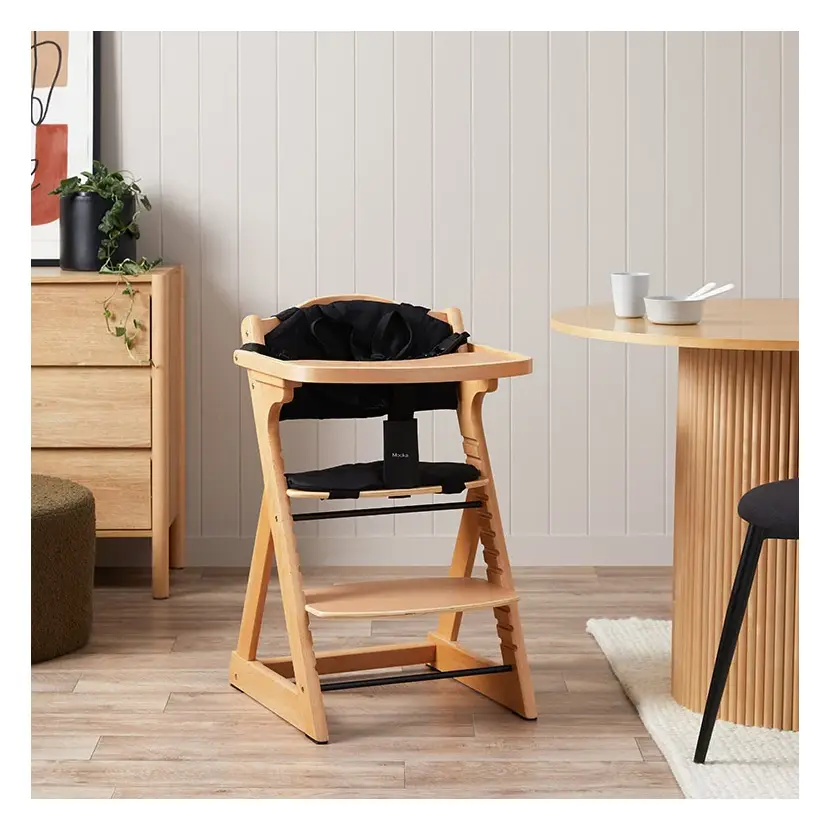
Mocka Original Highchair
Australian/NZ online brand's wooden adjustable chair — the Tripp Trapp idea at a fraction of the price, with simpler finishes.
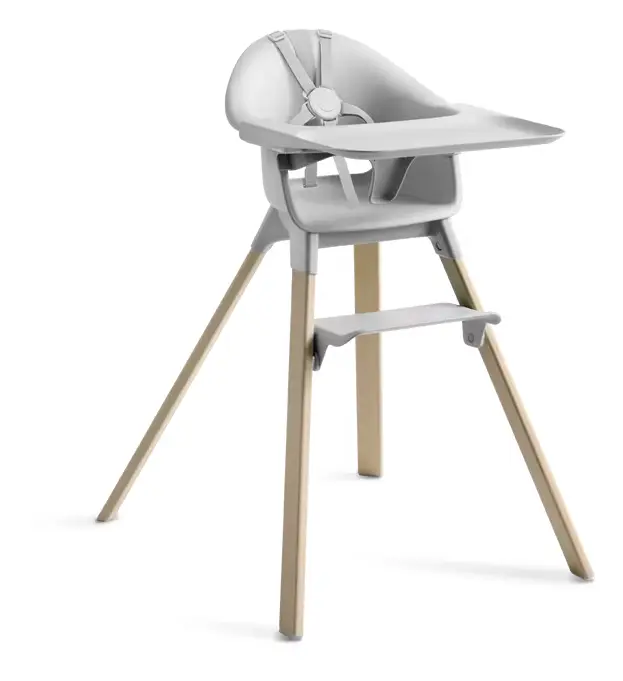
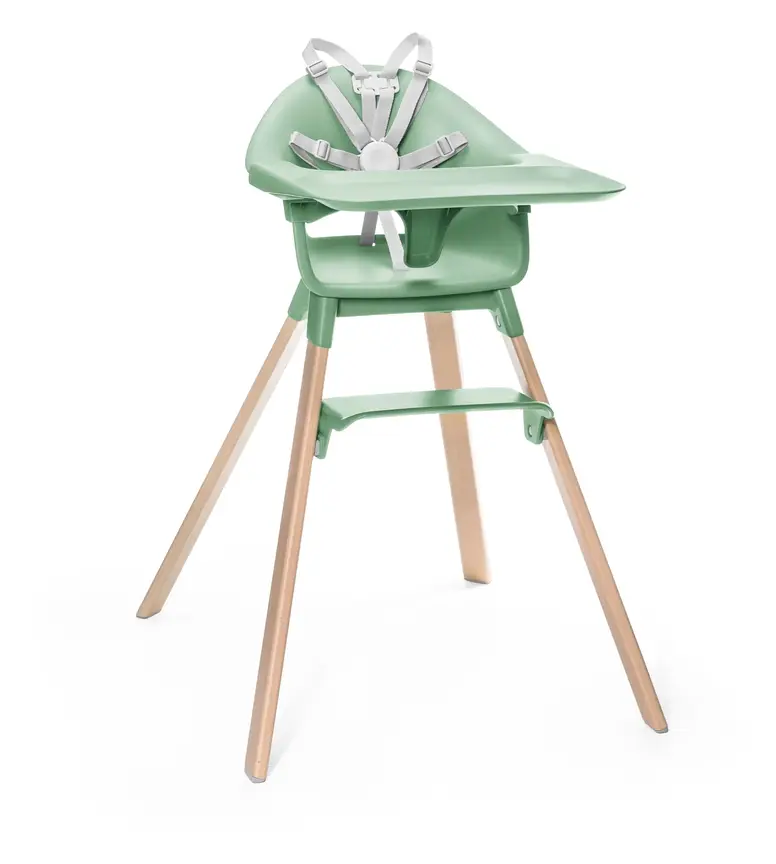
Stokke Clikk
Stokke's lighter, tool-free, fold-flat highchair with a built-in tray — the travel/rental-friendly sibling of the Tripp Trapp.
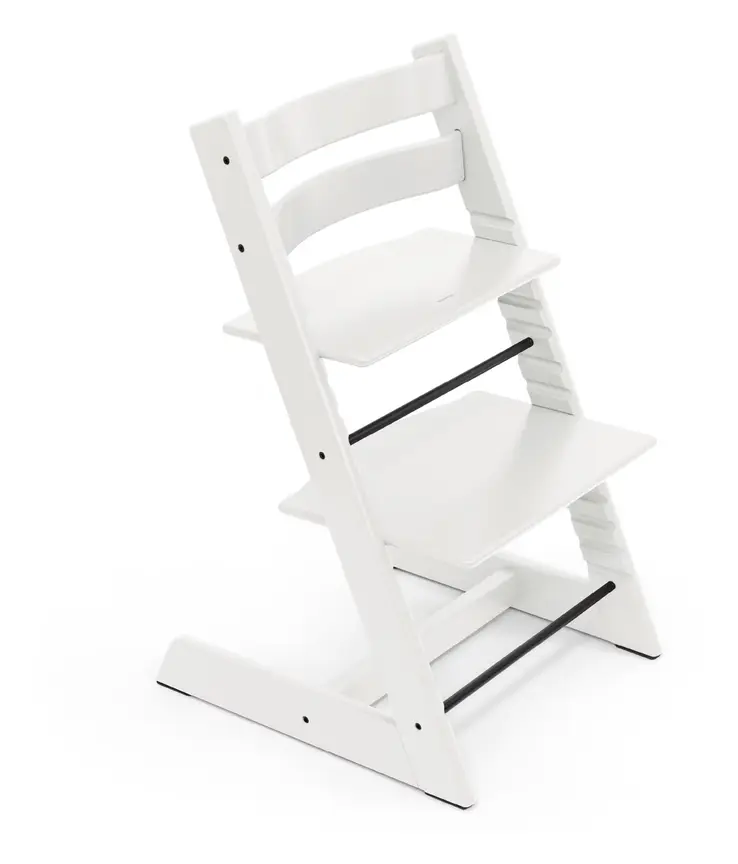


Stokke Tripp Trapp
The 1972 Peter Opsvik design: an adjustable beech chair that goes from newborn (with Newborn Set) to adult, pulled up to your own table.
Read our full review →Frequently asked questions
Does my baby really need a high chair footrest?
Your baby can eat without one, but a footrest makes sitting upright much easier. When feet rest flat on a firm surface, babies use less energy balancing and more energy learning to eat. Most feeding specialists recommend foot support as soon as solids start.
Can an add-on footrest void my high chair warranty?
Yes, it can. Many high chair makers state that using third-party accessories or modifying the frame voids the warranty. Always read your chair's manual first. If you have any doubt, contact the maker before drilling, clamping or swapping parts.
Are rubber O-rings safe on a plastic high chair?
Rubber O-rings can hold a light wooden or plastic board well if they fit tightly and stay dry. However, they can slide down when wet or worn, and spare rings are a choking hazard if left within reach. Check them weekly and replace them as soon as they look stretched or cracked.
When should I lower or remove the footrest?
Lower the footrest whenever your child's knees sit higher than their hips. Remove it once their feet reach the lowest safe spot on the legs and their knees still bend up too sharply. Also remove it right away if your child keeps trying to stand up on it despite a snug harness.
Can a footrest stop my baby from gagging or choking?
No product can stop choking on its own. Good foot support helps your baby sit tall and steady, which supports safer swallowing. You still need to prepare safe food textures, stay close by, and watch every bite.
Is a strap-on fabric footrest as good as a wooden board?
A strap-on sling is handy for travel and fits almost any chair shape. For everyday meals at home, a firm wooden or plastic board is usually better. Solid support lets your baby feel the floor under their feet and keeps their ankles at a steady right angle.
Sources
- Product Safety Australia – High chairs guide
- Raising Children Network – Choosing safe baby furniture: highchairs and more
- NHS – Your baby's first solid foods
- U.S. Consumer Product Safety Commission – New federal standard to improve safety of high chairs
- American Academy of Pediatrics (US) – Starting solid foods
- HealthLink BC (Canada) – Safe chairs for babies in the first year
- Health Canada – Recalls and safety alerts
Related guides
More Feeding & Baby Food →
How to Choose a Safe, Easy-to-Clean High Chair for Your Baby

Shopping Cart and High Chair Covers: Safety, Comfort, and What to Check

How to Choose a Non-Toxic High Chair: Solid Beechwood vs. BPA-Free Polypropylene
