









Ergonomic Wooden Highchairs with Adjustable Footrests: Posture and Safe Swallowing
Why an adjustable footrest on a wooden highchair helps your baby sit upright, breathe clearly, and swallow food safely at every stage.

On this page
- Key points
- What an ergonomic wooden highchair is
- Why a footrest matters for spine alignment and swallowing
- How to check for a safe, upright sitting posture
- Wooden highchairs with footrests vs other highchair types
- How to choose an ergonomic wooden highchair
- Adjusting the chair as your baby grows
- Safety rules and standards in Australia, the UK, the US and Canada
- Common mistakes to avoid
- Frequently asked questions
- Sources
Short answer: An ergonomic wooden highchair with an adjustable footrest helps your baby sit upright with their feet flat. A solid place for the feet keeps the hips, spine, and head steady. Steady posture helps your baby swallow food safely and cough clearly if a piece goes down the wrong way. Look for a chair with a five-point harness, a crotch post, and a wide, stable base.
Health and safety groups in Australia (Product Safety Australia and Raising Children Network), the UK (NHS and RoSPA), the US (American Academy of Pediatrics and CPSC) and Canada (Health Canada and HealthLink BC) all say babies need an upright, well-supported seat for meals.
Key points
- Footrest: Your baby's feet should rest flat on a firm board, not dangle in the air.
- Posture: Aim for right angles at the hips, knees, and ankles. We often call this the 90-90-90 position.
- Airway: An upright back and level chin keep the windpipe open and make swallowing safer.
- Readiness: Wait until your baby can hold their head steady and sit with little help, usually around 6 months.
- Harness: Always buckle the waist and shoulder straps, and never leave your baby alone in the chair.
- Stability: Choose a wooden chair with a wide base that will not tip if your child pushes off the table.
What an ergonomic wooden highchair is
A wooden highchair is a tall seat made from solid wood or strong layered timber. "Ergonomic" just means the chair is shaped to fit the human body well. In a good wooden highchair, you can move both the seat plate and the footrest up and down.
Most plastic highchairs have a fixed seat and a small, fixed footrest, or no footrest at all. As your child grows, their legs dangle or their knees push up too high. An adjustable wooden chair changes with your child. You move the boards down as their legs get longer.
Many wooden highchairs also slide right up to the family dining table. You can use them with a clip-on tray at first, then take the tray off later. This lets toddlers and older children eat at the same table as everyone else.
Highchairs & Booster Seats worth a look
Real products from our catalogue. We don't show star ratings or review counts; check the current price, stock and reviews on Amazon before you buy.
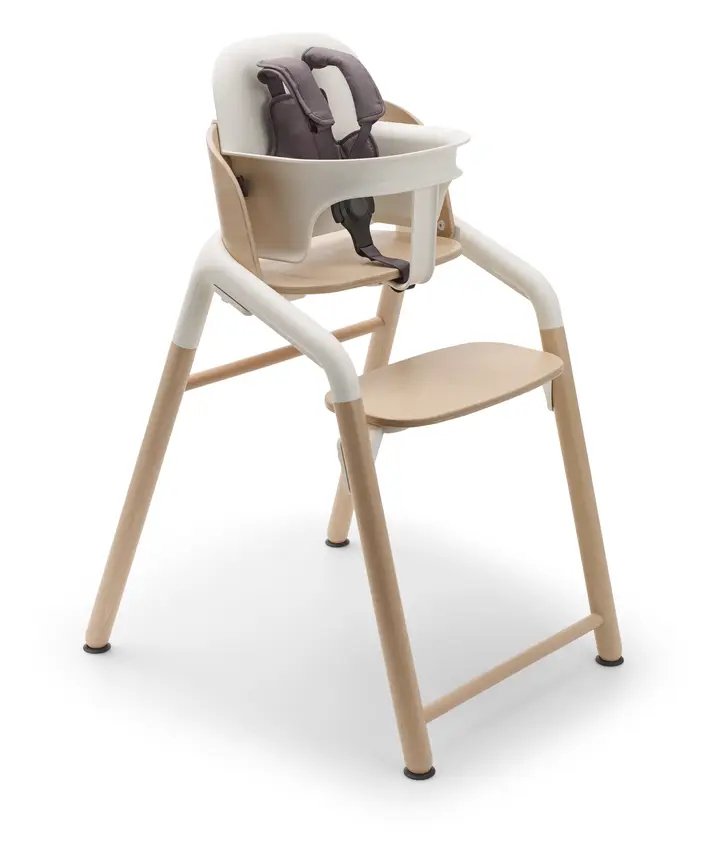
Bugaboo Giraffe
Bugaboo's answer to the Tripp Trapp, with notably quick, tool-free height adjustment.
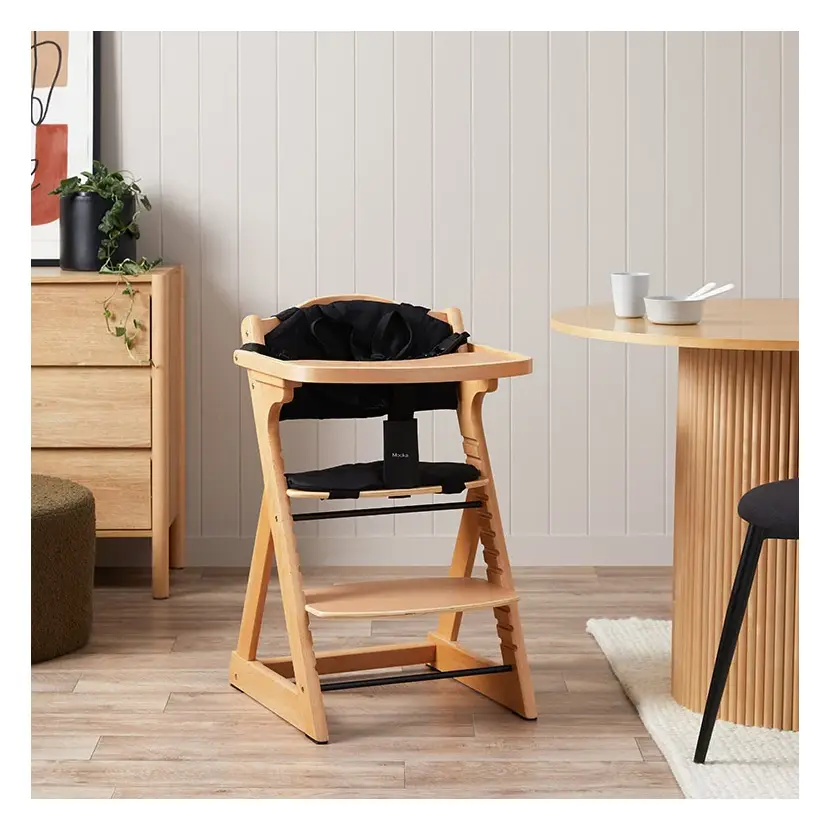
Mocka Original Highchair
Australian/NZ online brand's wooden adjustable chair — the Tripp Trapp idea at a fraction of the price, with simpler finishes.
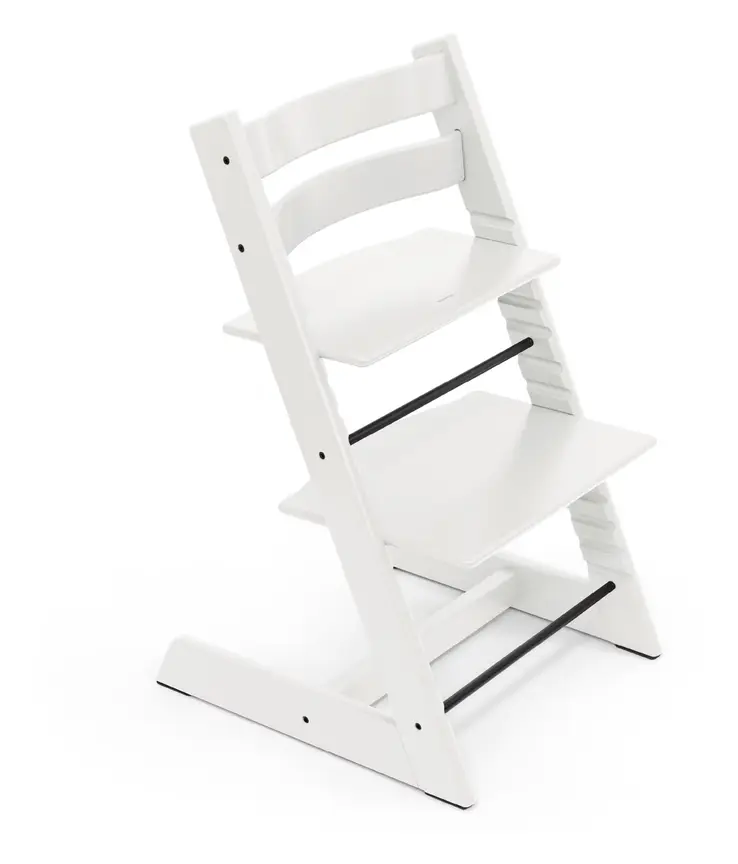


Stokke Tripp Trapp
The 1972 Peter Opsvik design: an adjustable beech chair that goes from newborn (with Newborn Set) to adult, pulled up to your own table.
Read our full review →
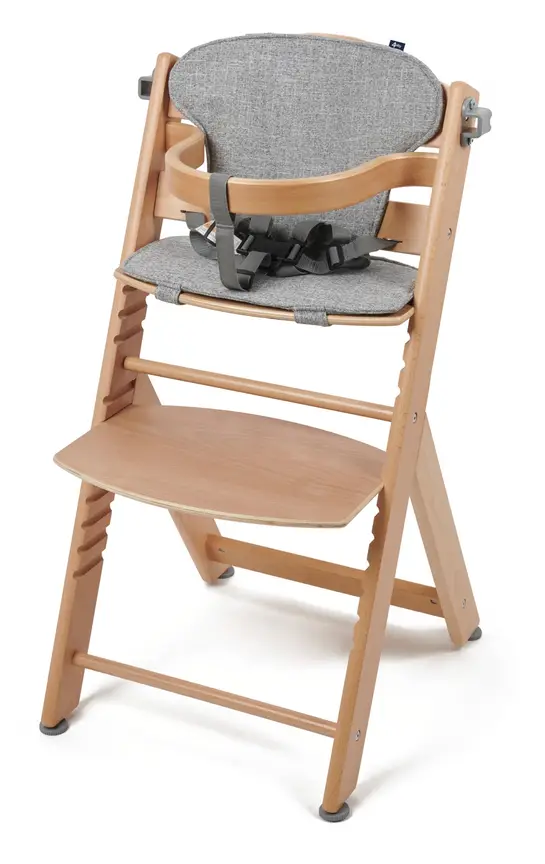

4baby Grow With Me Wooden Highchair
A low-cost wooden highchair that turns into a junior chair, with 4 seat heights and 8 footrest spots.
Read our full review →Why a footrest matters for spine alignment and swallowing
Think about sitting on a tall bar stool with no footrest. Your legs swing in the air. Soon your lower back slumps and your shoulders round forward. You shift around to get comfy because your core muscles get tired.
A baby has the exact same problem in a highchair without a footrest. Their core and back muscles are still new and weak. When their feet hang in mid-air, gravity pulls their legs down. That pulls their pelvis forward and makes their spine curve into a C-shape.
How posture affects breathing and swallowing
Your baby's throat has two tubes right next to each other. One tube carries air to the lungs (the windpipe). The other carries food to the stomach (the food pipe). When your baby sits upright with a straight spine, both tubes line up neatly. A small flap at the top of the windpipe can close quickly when food passes by.
When a baby slumps or leans back, the head tilts or drops forward. This makes it harder to control food in the mouth. Food can slip toward the back of the throat before the baby is ready to swallow. It is also much harder to cough hard when your torso is slumped and your feet have nothing to push against.
Why firm feet give better hand and mouth control
Eating takes a lot of coordination. Your baby has to look at food, pick it up, bring it to their mouth, chew, and swallow. Physiotherapists and speech therapists call this "proximal stability for distal mobility". In plain words, when your trunk and hips are steady, your hands, jaw, and tongue work much better.
Pressing the feet flat against a solid board wakes up the muscles in the legs and tummy. Your baby can brace gently against the footrest to stay upright. They do not have to waste energy trying not to slide down the seat. Their hands are free to reach for food, and their jaw can chew steadily.
What happens during gagging
When babies start solid food, gagging is normal. Gagging is a reflex that pushes food forward when it goes too far back in the mouth. It protects the airway. A baby sitting upright can lean slightly forward and push the food out with their tongue. A baby who is reclined or slumped cannot clear their mouth as easily. Gravity works against them instead of for them.
How to check for a safe, upright sitting posture
You do not need special tools to check your baby's seat. Look from the side while your baby sits in the chair. Check these four points.
1. The 90-90-90 rule
Look at the bends in your baby's body from the side. You want to see three gentle right angles:
- Hips at 90 degrees: Your baby's back is upright against the backrest, and their thighs rest flat on the seat.
- Knees at 90 degrees: The front edge of the seat ends just behind the knees. The lower legs drop straight down without hitting the board.
- Ankles at 90 degrees: Both feet sit flat on the footrest, with toes pointing forward.
If your baby's knees point up higher than their hips, the footrest is too high. If their toes barely touch or their legs dangle, the footrest is too low.
2. Seat depth and thigh support
A seat that is too deep forces your baby to slouch so their knees can bend. A seat that is too shallow leaves the thighs hanging off the edge. Leave about two finger-widths of space between the back of your baby's knees and the front edge of the seat. On many wooden highchairs, you can slide the seat plate forward or back to get this fit right.
3. Backrest and pelvic support
Your baby's bottom should sit all the way back against the backrest. If your young baby leans to one side, the seat may be too wide for them right now. Some chairs come with a wooden baby rail or a firm cushion insert for the first few months. Avoid thick, squishy pillows that push your baby forward off the seat.
4. Tray and table height
The tray or dining table should sit around your baby's lower chest or elbow height. If the tray is up near their chin, they have to lift their shoulders to reach food. If it is too low, they have to hunch down. When you slide a wooden chair up to a normal table, check that the armrests or baby rail fit cleanly under the tabletop.
Wooden highchairs with footrests vs other highchair types
Families have many choices when shopping for a baby seat. Here is how an ergonomic wooden highchair compares with other common styles.
| Feature | Adjustable wooden highchair | Standard folding plastic highchair | Clip-on table seat or booster |
|---|---|---|---|
| Footrest adjustment | Moves to many heights as your child grows | Often fixed in one spot or missing | Usually no footrest at all |
| Posture support | Upright 90-90-90 sitting when set up well | Seat can be deep or slightly reclined | Depends on the adult chair or table |
| Years of use | Often lasts from 6 months to school age or adult | Usually outgrown around 2 to 3 years | Short use, mostly for travel or toddlers |
| Cleaning | Smooth wood wipes clean; few fabric crevices | Padded covers and strap slots trap crumbs | Fabric seats need frequent machine washing |
| Moving and storage | Heavier and stays near the dining table | Folds flat for storage in a corner | Light and packs into a bag for trips |
| Floor footprint | Neat footprint that tucks under a table | Wide splayed legs can be a trip hazard | Uses no extra floor space |
Each style suits a different home. A folding chair can help in a tiny flat where the chair must go in a cupboard after meals. A booster seat works well for travel or eating out, once your baby can sit very strongly. For daily meals at home, an adjustable wooden chair gives the best long-term leg and back support.
How to choose an ergonomic wooden highchair
Not every wooden highchair is well built. Some look nice in photos but fail basic safety and comfort checks. Use this checklist when you compare models.
Wide, stable base
Toddlers love to push their feet against the table. If a chair has a narrow base, a strong kick can tip the whole chair backward. Look for a heavy frame with long floor runners or wide-set legs that stop tipping backward and sideways. Give the chair a gentle push in the shop to see if it feels solid.
Tool-free or simple adjustments
Children grow in spurts. You will move the footrest every few months. Some chairs use screws and an Allen key, while others use clips or levers. Screws are very secure once tightened, though they take a few minutes to move. Quick-release clips are fast, so check that they lock firmly and cannot slip under your child's weight.
A real five-point harness and crotch post
A harness keeps your baby from standing up or sliding out under the tray. Product Safety Australia and the US CPSC both warn that babies can slip down between the seat and the tray if straps are missing or left unbuckled. Look for a harness with waist straps, shoulder straps, and a strap between the legs. A rigid crotch post (a solid wooden or plastic bar between the legs) adds a second layer of protection so your child cannot slide under the tray.
Smooth finish and safe wood treatment
Run your hand over every edge, slot, and corner. The wood should feel smooth with no splinters, sharp corners, or rough holes. Babies chew on trays and rails, so check that the paint or varnish is marked non-toxic and water-based. Avoid chairs with peeling lacquer or strong chemical smells.
Easy-to-clean surfaces
Mess is part of learning to eat. Choose a chair with smooth wooden or wipe-clean plastic trays. Look for straps you can unclip and wash in warm soapy water. Chairs with deep grooves, fuzzy fabric pads, or hidden crevices hold onto wet food and grow mould.
Weight limit and grow-with-me design
Check the maker's maximum weight limit for both the baby mode and the older child mode. Many solid beech or birch chairs hold an older child or even an adult once the baby rail comes off. Check that the footrest can move low enough for a 4-year-old, or can swap places with the seat board later on.
Side by side: more highchairs & booster seats to compare
Real products from our catalogue. We don't show star ratings or review counts; check the current price, stock and reviews on Amazon before you buy.
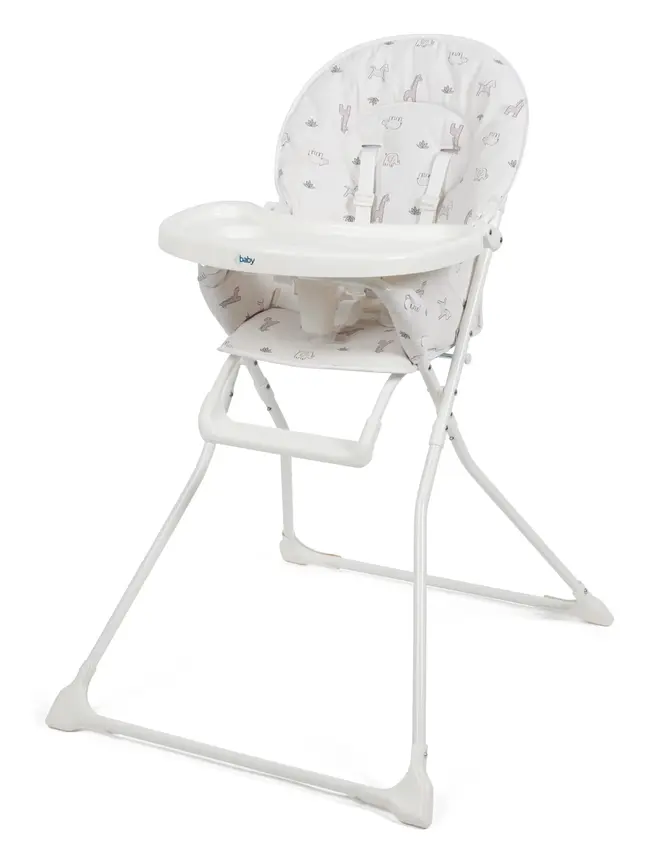
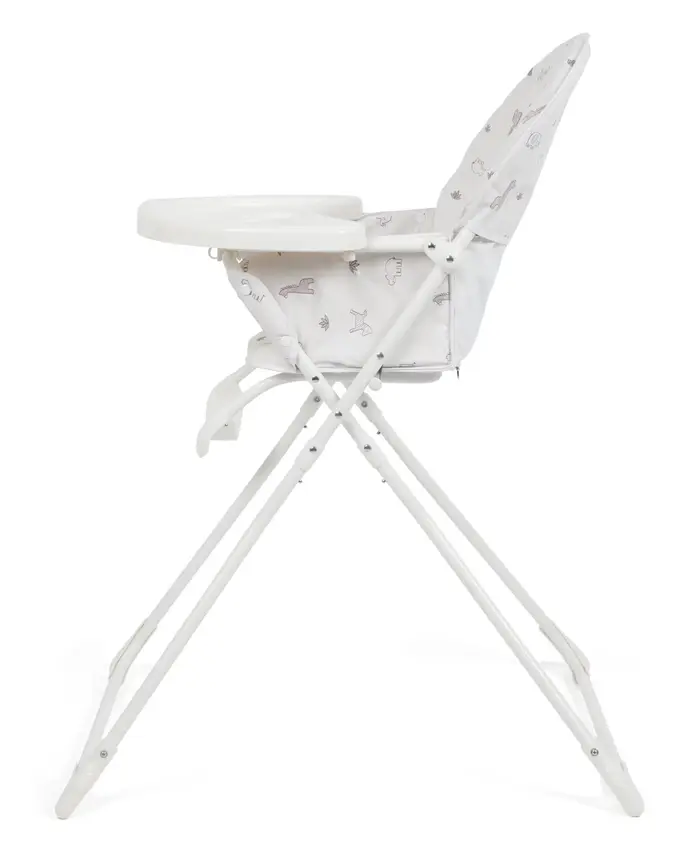
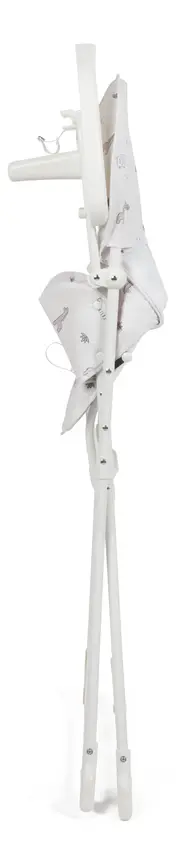
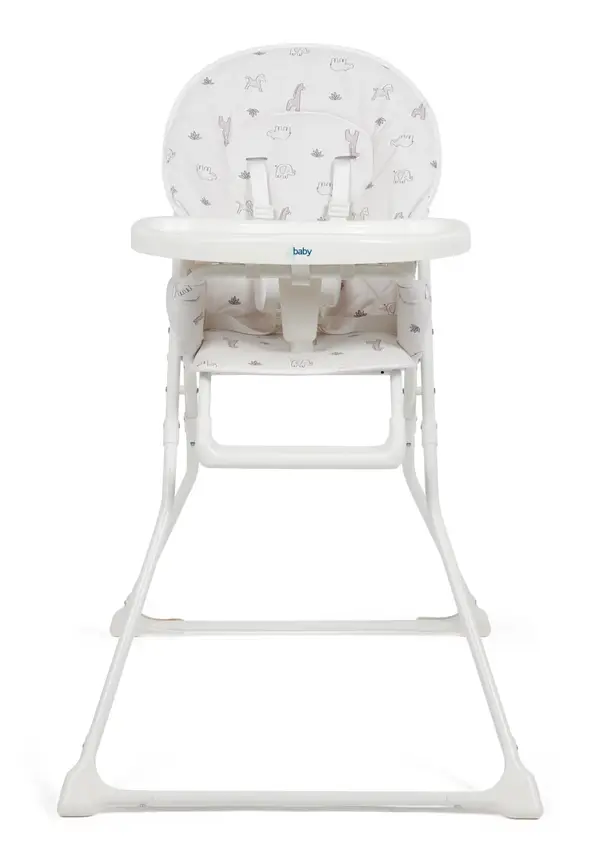
4baby Flat Fold Highchair
A very low-cost highchair that folds flat, with a wipe-clean seat.
Read our full review →
Bumbo Booster Seat
A soft booster that straps onto an adult chair, with a 3-point harness.

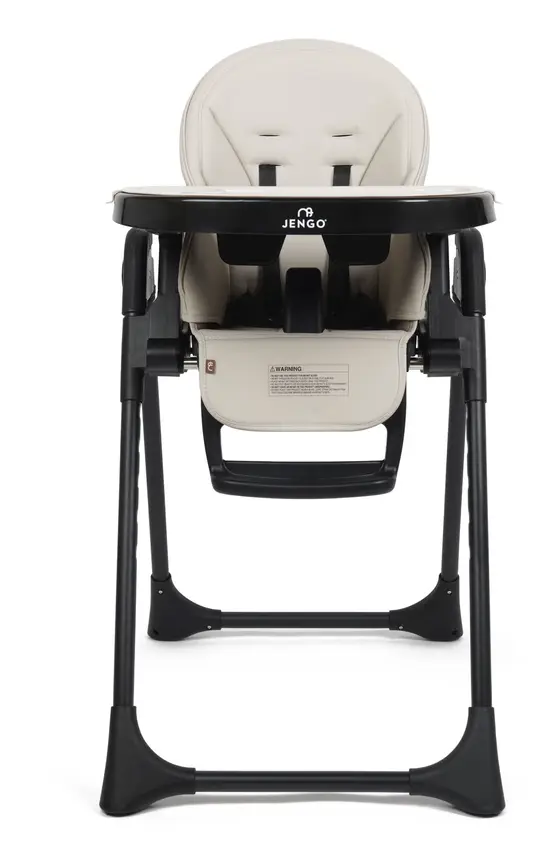


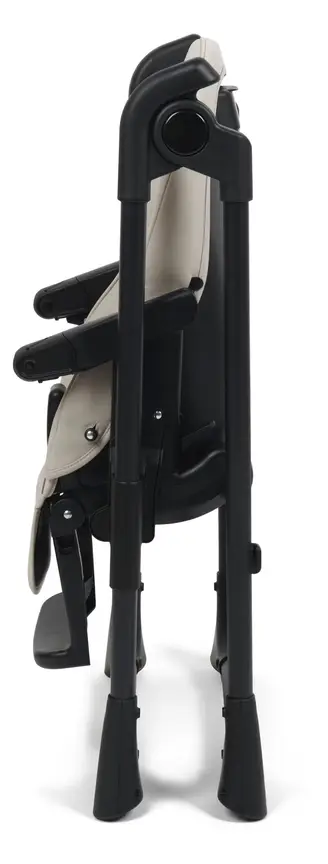
Jengo Nosh Highchair
A highchair from birth to toddler with 7 heights and 3 seat positions.
Read our full review →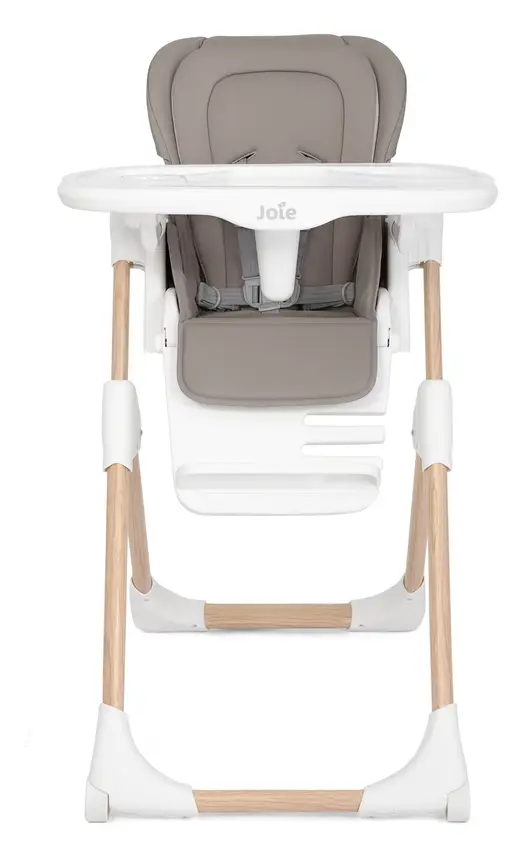
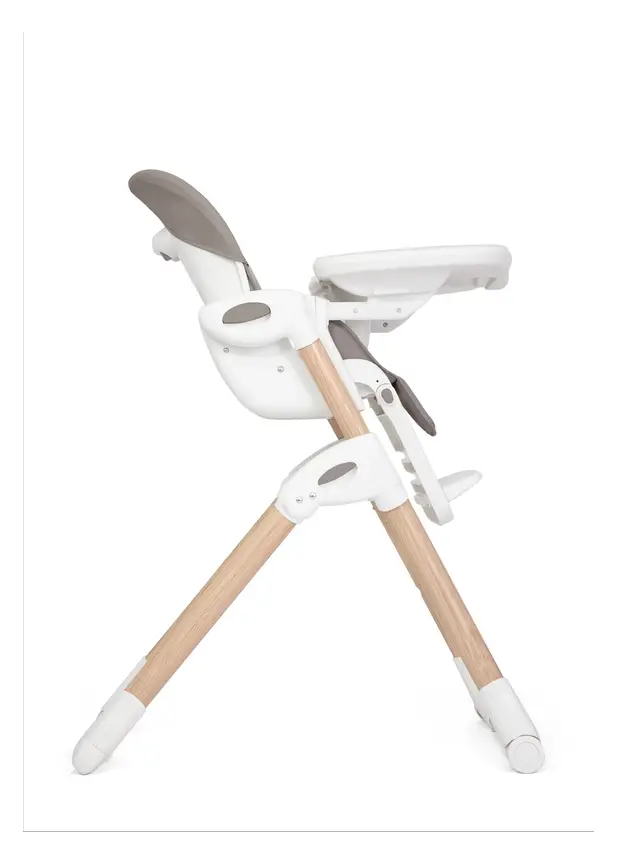
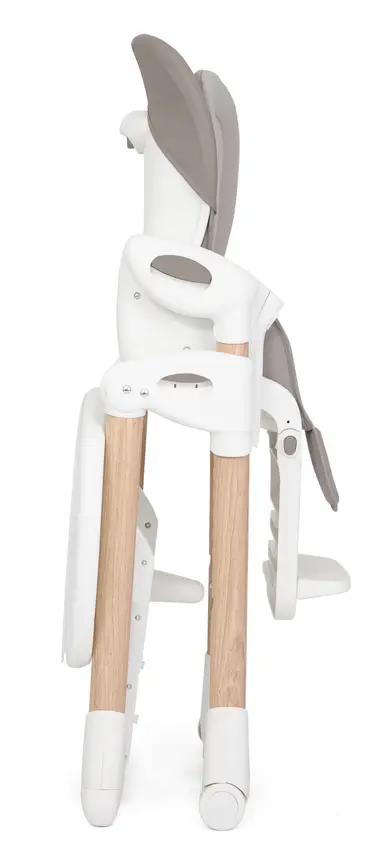


Joie Mimzy Recline 2.0
A highchair from newborn with 5 recline spots and 7 heights. It folds standing up.
Read our full review →Adjusting the chair as your baby grows
A wooden highchair only works well if you keep adjusting it. A setup that fit at 6 months will be too cramped at 12 months. Use this stage-by-stage guide as a rough map, and always check your own child's knees and feet.
| Stage | What your child is doing | How to set up the chair |
|---|---|---|
| Before 6 months | Cannot sit upright on their own yet | Wait to start solids. Do not prop a young baby in a highchair to eat. |
| Around 6 to 9 months | Sits with little support; learning finger foods and purees | Seat high enough to reach the tray. Footrest high so feet sit flat. Five-point harness and baby rail on. |
| Around 9 to 18 months | Sits steadily; reaches for cups and spoons; tries to stand | Lower the footrest a notch or two as legs grow. Keep the five-point harness snug. |
| 18 months to 3 years | Climbs well; eats family meals | Often ready to drop the tray and pull up to the dining table. Keep straps on until your child stays seated safely. |
| 3 years and up | Sits like an older child | Remove the baby rail and harness if the maker allows. Lower the seat and footrest so knees stay at 90 degrees at the table. |
Signs your baby is ready for a highchair
The NHS, the American Academy of Pediatrics, Health Canada, and Australia's NHMRC all advise starting solid foods at around 6 months. Wait for clear signs of readiness before putting your baby in a highchair for meals:
- Your baby can hold their head steady and upright all the time.
- Your baby can sit upright with just a little support.
- Your baby brings objects to their mouth and shows interest in food.
Some wooden highchairs sell a clip-on newborn lounger attachment for younger babies. That attachment is for brief awake rest at table height, not for sleeping and not for solid food. Never leave a baby to sleep in any highchair or reclined seat.
Checking the fit every month
Put a reminder on your phone once a month to check the footrest. Look at your child while they eat. Are their feet still flat on the board? Have their knees started rising above their hips? If yes, drop the footrest down one slot.
Also check every bolt and screw once a month. Wood expands and shrinks slightly with warm and damp weather, and wriggling toddlers loosen hardware over time. Tighten loose bolts right away.
Safety rules and standards in Australia, the UK, the US and Canada
Safety rules for highchairs differ a little between countries, yet the core hazards they test for are the same. Testers check that the chair does not tip over, that the frame does not collapse, and that gaps cannot trap a baby's head, limbs, or fingers. They also test that the harness holds a wriggling child securely.
| Country | Official body | Rule or standard | What to look for when buying |
|---|---|---|---|
| Australia | ACCC / Product Safety Australia | Voluntary Australian safety standard for high chairs | Five-point harness, crotch post, wide base, and clear age/weight labels |
| United Kingdom | Office for Product Safety and Standards (OPSS) | BS EN 14988 | BS EN 14988 mark, locking latches, and a working restraint system |
| United States | Consumer Product Safety Commission (CPSC) | Mandatory federal high chair rule based on ASTM F404 | ASTM F404 label, crotch restraint, and stability against tipping |
| Canada | Health Canada | National safety rules for high chairs and baby furniture | No recalls on Health Canada's list, working straps, and sturdy frame |
Always buy from a trusted seller in your own country, or check that the chair meets your local standard. Avoid cheap unbranded chairs sold online from overseas sellers that skip safety testing. If you buy a second-hand wooden highchair, check the recall lists from Product Safety Australia, OPSS, CPSC, or Health Canada before you use it.
Important safety habits at every meal
Even the safest chair cannot protect a baby if it is used the wrong way. Follow these habits at every meal and snack:
- Stay within arm's reach: Never walk away and leave your baby alone in a highchair, even for ten seconds. Choking is silent and fast.
- Use the harness every time: Buckle both the waist and shoulder straps, and snug them so only one or two fingers fit under the strap.
- Keep the chair away from walls and counters: A child can push their feet against a wall, bench, or table edge and tip the chair over.
- Clear away cords and hot drinks: Keep blind cords, kettle leads, tablecloths, and hot mugs well out of reach.
- Watch out for climbing: Do not let older siblings climb up the footrest or hang on the back of the chair.
Common mistakes to avoid
Many parents buy a great wooden chair and still run into trouble because of small setup mistakes. Here are the most common ones to watch for.
| Mistake | Why it is a problem | What to do instead |
|---|---|---|
| Leaving the footrest off or too low | Dangling feet cause slouching and make coughing and swallowing harder. | Move the footrest up so both feet sit flat with knees at a right angle. |
| Using the tray instead of the harness | A baby can stand up or slide down under the tray and get trapped. | Always buckle the five-point harness, even for a quick snack. |
| Starting solids in a reclined seat | Leaning back lets food slide down the throat too fast before chewing. | Sit your baby upright at 90 degrees once they have strong head control. |
| Adding thick soft cushions | Squishy pillows push the baby forward and shrink the safe harness fit. | Use only a thin, firm pad made for that chair, or bare wood. |
| Pushing the chair right against a wall | Toddlers kick off solid surfaces and can topple the chair forward or sideways. | Keep space around the chair and lock any wheels before seating your baby. |
| Buying a chair with no crotch post | Without a bar between the legs, a wriggling baby can slip through the leg gap. | Pick a chair with a built-in crotch post as well as a five-point harness. |
What about second-hand wooden highchairs?
Solid wood chairs last for years, so many families buy them second-hand. That can be a smart way to save money, as long as you check the chair carefully first.
- Check the model name against current recall lists in your country.
- Make sure the original five-point harness and crotch post are still attached and in good shape.
- Look for cracks in the wood, especially around bolt holes and the seat joints.
- Check that all bolts, nuts, and wooden dowels are present and tight.
- Wobble the chair on a flat floor to be sure the legs are even and sturdy.
If a strap is frayed or a part is missing, contact the maker to buy an official replacement part before using the chair. Do not swap in random hardware from a shed or use a chair with missing straps.
More options, from budget to premium
Real products from our catalogue. We don't show star ratings or review counts; check the current price, stock and reviews on Amazon before you buy.
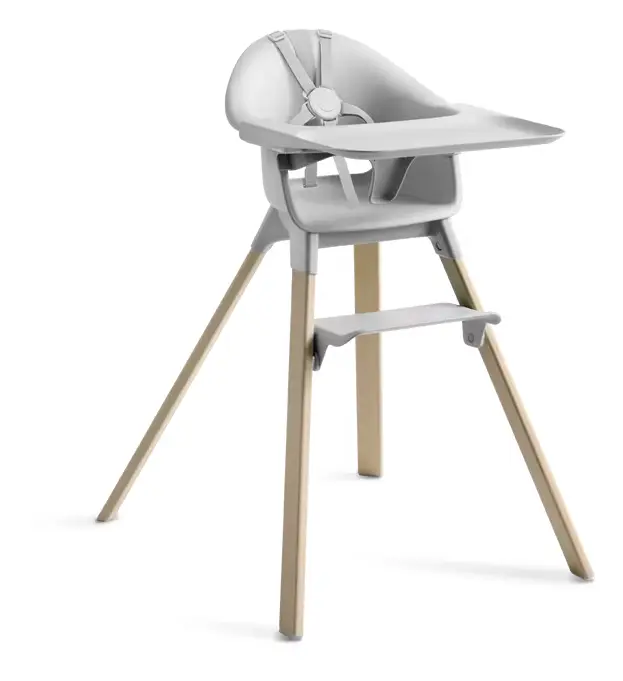
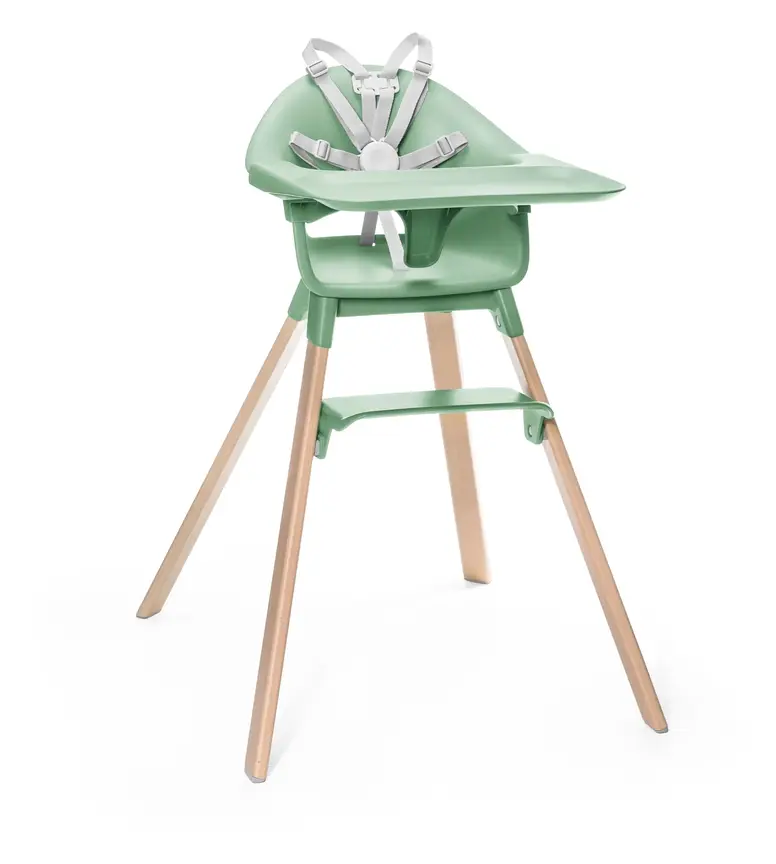
Stokke Clikk
Stokke's lighter, tool-free, fold-flat highchair with a built-in tray — the travel/rental-friendly sibling of the Tripp Trapp.

Bright Starts Pop 'N Sit Portable Booster
Booster seat for table

Dreambaby Grab 'N Go Kids Booster Seat
Booster seat for table
Frequently asked questions
At what age can my baby start using a wooden highchair?
Most babies are ready at around 6 months, when they start solid food. Your baby should be able to hold their head up steadily and sit with just a little help. If your baby slumps sideways or their head flops forward, they are not ready for an upright highchair yet. Keep feeding milk in your arms and wait a few weeks.
Does a baby really need a footrest at 6 months?
Yes. Even at 6 months, a baby uses their feet to feel steady. When their feet press lightly on a flat board, their hips and tummy muscles engage. This keeps their back straight and their head balanced. If the footrest on your chair does not go high enough for tiny legs, some families place a firm block or rolled towel on the footrest board until the baby grows, as long as it cannot slip or let the baby stand up.
Should I use a cushion in a wooden highchair?
You do not have to use a cushion. Bare wood is the easiest surface to wipe clean after messy meals. If your baby seems tiny inside the seat at 6 months, a thin, firm liner made for your exact chair model can help fill side gaps. Never use loose pillows, folded blankets, or thick pads, because they make the harness looser and can push your baby into a slump.
Is a five-point harness better than a three-point harness?
Yes. A five-point harness has straps over both shoulders, around the waist, and between the legs. It stops a baby from leaning far over the side or climbing out over the tray. A three-point harness only goes around the waist and between the legs, so an active baby can twist or stand up much more easily. Health and safety agencies recommend a five-point harness for highchairs.
How long can a child use an adjustable wooden highchair?
Many adjustable wooden highchairs last well past toddlerhood. Once your child is steady and follows table rules, you can remove the baby rail and harness and pull the chair up to the dining table. With the seat and footrest lowered, the chair works as a proper child-sized dining seat through primary school, and some models even hold adults.
What should I do if my baby leans to one side in the chair?
First, check the footrest height and the harness tightness. If the seat is still slightly wide for a small 6-month-old, you can tuck a tightly rolled small muslin cloth beside each hip for a few weeks, outside the harness, to help keep their bottom centred. Make sure the cloth does not push them forward or block the straps. If your baby always flops forward or cannot hold their head up, pause highchair meals and check with your doctor or child health nurse.
Sources
- Product Safety Australia – High chairs guide
- Raising Children Network – Choosing safe baby furniture: highchairs and more
- U.S. Consumer Product Safety Commission – New federal standard to improve safety of high chairs
- American Academy of Pediatrics (US) – Starting solid foods
- HealthLink BC (Canada) – Safe chairs for babies in the first year
- NHS – Your baby's first solid foods
- RoSPA – Child safety at home
- KidsHealth NZ (Starship and Paediatric Society of NZ) – How to sit when eating and drinking
Related guides
More Feeding & Baby Food →
High Chair Posture: Footrests, the 90-90-90 Position and Safer Eating

Homemade Baby Food Recipes with a Baby Food Maker: Safe, Simple Meals by Age

Cordless Electric Breast Pumps: Flange Sizing, Suction Patterns, and Safe Use
