














Fitting Three Car Seats Across a Narrow Backseat Safely
How to fit three car seats across a narrow backseat safely: measuring width, seat types, installation tips, and safety rules in AU, UK, US and Canada.
On this page
- Key points
- Can three car seats fit in your backseat?
- How to measure your backseat before you shop
- What makes a car seat narrow and 3-across friendly
- Comparing car seat types for a 3-across setup
- Planning the seating order by age and stage
- Safety standards and rules in Australia, the UK, the US and Canada
- Step-by-step installation check for three seats
- Common mistakes to avoid with three car seats
- Frequently asked questions
- Sources
Short answer: You can often fit three car seats in a small backseat if you plan well. Check your car manual first to see which seats allow child restraints. Measure your backseat width at the cushion and shoulder level. Pick slim seats with flat sides and no wide cup holders. Always test-fit all three seats in your car before you buy, and never force a seat into a tight gap.
This guide follows official child car seat rules in Australia (Product Safety Australia, Raising Children Network, Kidsafe), the UK (GOV.UK, RoSPA), the US (NHTSA, American Academy of Pediatrics) and Canada (Transport Canada, Canadian Paediatric Society).
Key points
- Car manual first: your vehicle manual tells you which backseat spots have anchor points and can hold a car seat.
- Width is only half the story: door trim, angled seat bolsters and buckle stalks can steal space.
- Slim and flat wins: look for narrow outer shells without wide armrests or sticky-out cup holders.
- Seatbelts often help: seatbelt installs can let you shift outer seats slightly towards the doors, while lower anchor bars lock seats in one spot.
- No squeezing: each seat must sit flat, lock tight and leave every buckle easy to reach.
- Local standards only: only use car seats certified for the country where you live and drive.
Can three car seats fit in your backseat?
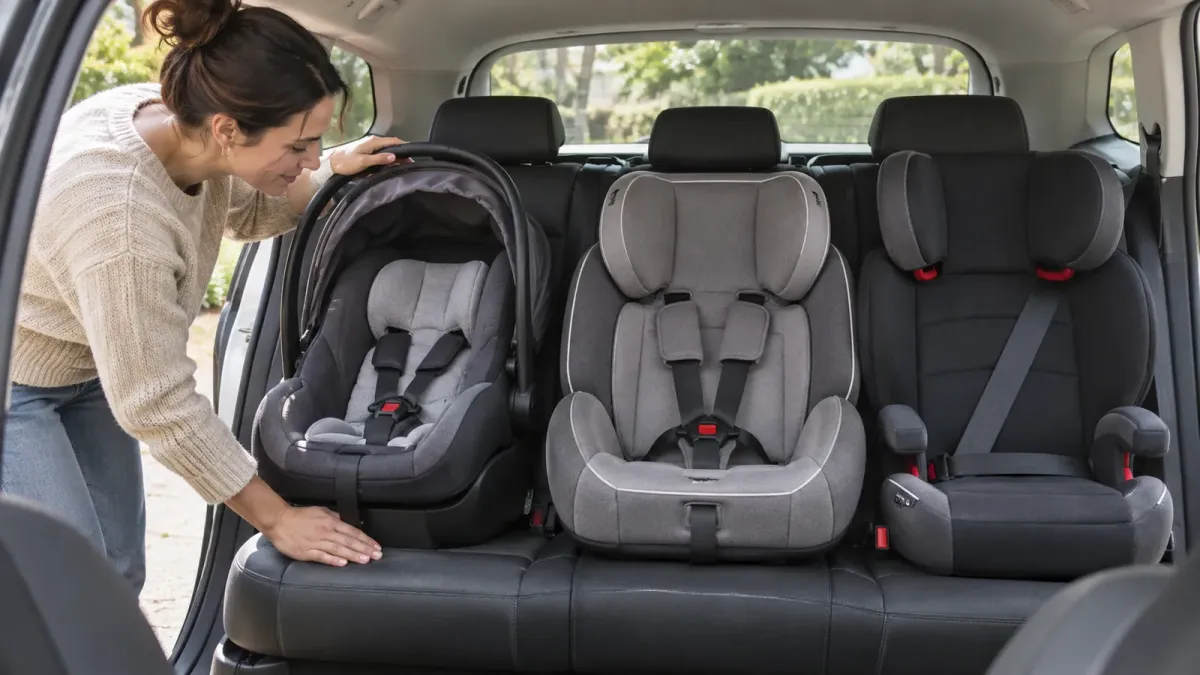
Many parents think they need a huge seven-seat car when baby number three arrives. That is not always true. A lot of hatchbacks, sedans and small SUVs can fit three narrow seats across one bench.
Before you shop for seats, check if your car is built for three. Every car backseat is shaped a little differently. Some cars have three full, flat spots. Others have a narrow, raised middle seat.
What to check in your car owner's manual
Open your car manual and turn to the child restraint section. Look for four key facts:
- Approved seating positions: some cars do not allow a car seat in the middle spot.
- Top tether anchor points: check how many top tether points your car has, and where they sit. Forward-facing seats and many rear-facing seats in Australia need a top tether.
- Seatbelt types: make sure the middle seat has a lap-and-sash (three-point) seatbelt. Older cars sometimes have a lap-only belt in the centre. A lap-only belt cannot be used with a booster seat, and many modern car seats do not allow it either.
- ISOFIX or lower anchor rules: most cars only have lower anchor points on the two outer seats, not in the middle. Never share one anchor bar between two car seats unless both manuals say it is allowed.
If your car manual bans a child seat in the centre, a 3-across setup in that row is not safe. You would need a third row or a different vehicle.
Why a car's total width can fool you
Car brochures often list interior shoulder room. That number does not tell you if three seats will fit. Thick door armrests can push an outer seat inwards. Raised side bolsters on the car cushion can tilt a car seat sideways.
Seatbelt buckle stalks matter too. Stiff stalks that stick up into the seat gap can clash with a wide base. Flexible stalks or recessed buckles are much easier to work around.
Car Seats & Capsules worth a look
Real products from our catalogue. We don't show star ratings or review counts; check the current price, stock and reviews on Amazon before you buy.

Babylove ezymove Booster
A very light, low-cost booster for about 4 to 8 years. It folds flat for storage.

Babylove ezyone2
A very low-cost convertible seat. Rear-facing to about 12 months, then forward-facing to about 4 years.
 Reviewed
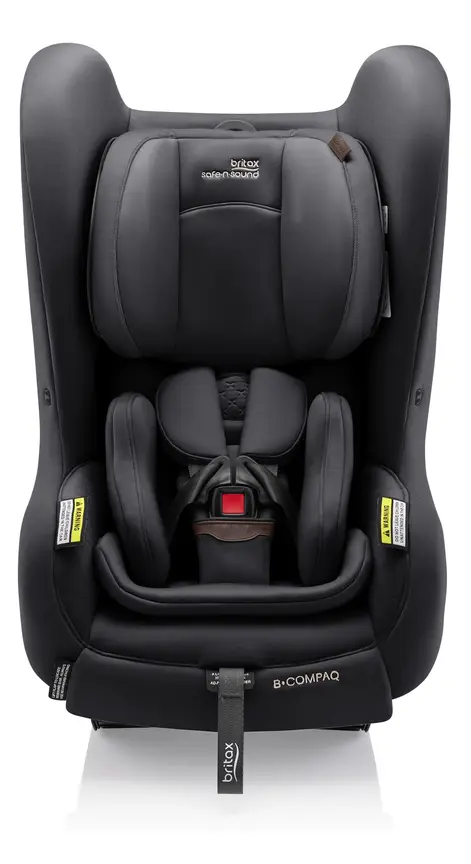
Britax Safe-n-Sound B-Compaq Lux
A convertible seat made for small cars with little room in the back.
Read our full review →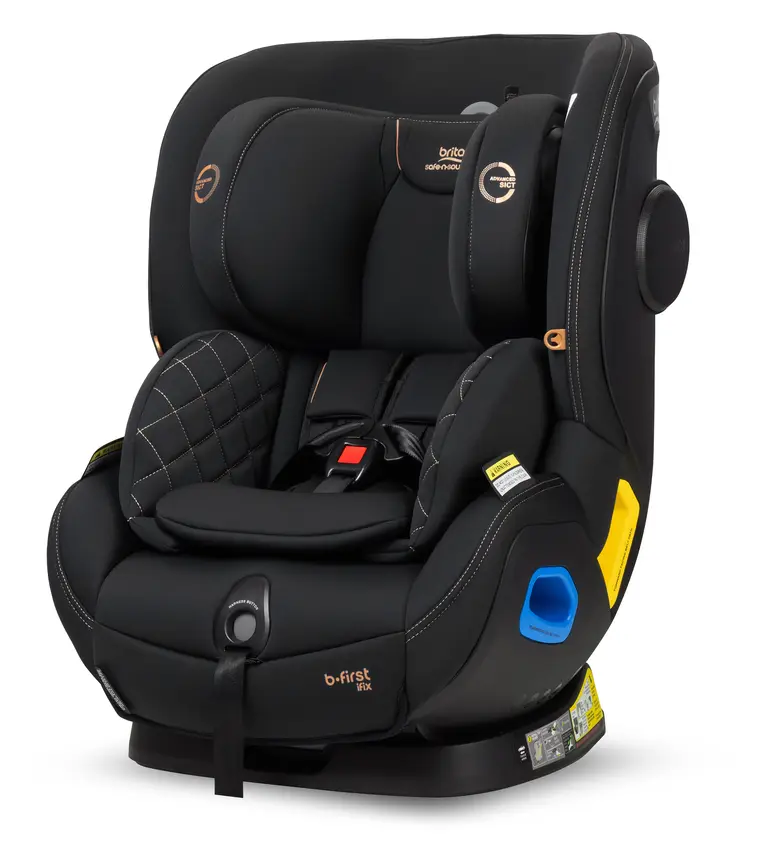
Britax Safe-n-Sound b-first+
Convertible seat from Britax's Australian Safe-n-Sound range with SICT deployable side-impact protection.
How to measure your backseat before you shop
Grab a tape measure and a notepad before you visit a baby shop. A few minutes of measuring will save you hours of guesswork.
- Measure at the seat cushion: measure straight across the flat part of the backseat, from one door trim to the other. Note where the side bolsters curve up.
- Measure at shoulder height: measure from door panel to door panel about 35 to 45 centimetres above the cushion. Door armrests and window sills often make this spot narrower than the cushion.
- Measure the middle seat gap: measure the distance between the two inner seatbelt buckles. This tells you how wide the middle seat base can be without sitting on top of a buckle.
- Check front-to-back depth: sit in the driver and front passenger seats in your normal driving position. Measure from the back of the front seat to the backseat backrest. Rear-facing seats need good depth so your knees do not hit the dashboard.
- Look at the headrests: check if your car's back headrests come off or fold down. Tall, angled car headrests can push a forward-facing seat or booster forward. Check your car manual before removing any headrest.
Write these numbers on your phone. Take them with you to the store along with your car manual.
What makes a car seat narrow and 3-across friendly
Not all slim seats are slim in the same place. One seat might have a narrow base and wide shoulders. Another might have narrow shoulders and a bulky recline foot.
1. Flat sides with no sticky-out parts
Wide armrests, big side-impact pods and fixed cup holders add extra centimetres. Look for seats with smooth, straight sides. If a seat has clip-on cup holders, check the manual to see if you can leave them off.
2. A compact base footprint
A narrow base helps keep the seat off the car's seatbelt buckles. This is vital when a child uses a booster seat next to a harnessed seat. If a wide base covers the buckle, the booster child cannot clip in safely.
3. Puzzle-piecing different seat heights
Three identical seats side by side can clash at the exact same spot. Their widest parts line up shoulder to shoulder. Mixing seat styles often solves this.
For example, a rear-facing seat is widest near the baby's head, closer to the front seat. A forward-facing seat is widest near the backrest of the car. Because their wide parts sit at different depths, they can nest neatly next to each other.
4. Thin padding and simple shells
Thick side wings look cosy, but they take up space. Many 3-across seats use firm, energy-absorbing foam inside a slim shell. They protect your child well without taking over the backseat.
5. Seatbelt installation options
Lower anchors (called ISOFIX in the UK and Australia, or LATCH in the US and UAS in Canada) are great for quick installs. However, they lock the seat in the exact centre of that spot. Seatbelts often give you a few extra centimetres of wiggle room towards the door. A properly tightened seatbelt install is just as safe as a lower anchor install.
Comparing car seat types for a 3-across setup
Different ages need different seats. Here is how each main seat type behaves when you try to fit three in one row.
| Seat type | Who it fits | Width and bulk | 3-across pros | 3-across watch-outs |
|---|---|---|---|---|
| Infant capsule (rear-facing carrier) | Newborns and young babies up to the seat height or weight limit | Often narrow at the head, can be wide at the base or handle | Easy to lift baby in and out when doors cannot open wide | Takes up front-to-back depth; carry handle may hit the seat next to it |
| Slim convertible car seat | Birth to toddler or preschooler (rear-facing, then forward-facing) | Built with narrow shells and slim bases | Stays in the car; often puzzle-pieces well with other seats | Can be heavy; rear-facing recline needs space behind the front seats |
| Forward-facing harnessed seat | Toddlers and young children past rear-facing limits | Usually slimmer front-to-back than rear-facing seats | Leaves more legroom for front passengers; upright back saves depth | Needs a top tether strap in most setups; wide wings can clash at shoulders |
| High-back booster seat | Older children who have outgrown a five-point harness | Base can be narrow, but children need hand space to buckle up | Light and easy to move; high backrest gives good side head support | Child must reach the seatbelt buckle every trip without help or squashed fingers |
| Backless booster cushion | Older children tall enough for the car headrest (where legal) | Very slim at the top, flat base | Leaves shoulder room free for bulky infant seats next to it | No side head support; not allowed for young children under some rules |
Always check the weight and height limits on your exact seat. Keep each child in their current stage until they reach the maximum limit, not just the minimum age.
Planning the seating order by age and stage
Where you put each child matters just as much as which seats you buy. A smart seating order makes buckling faster and keeps everyone safer.
Keep babies rear-facing as long as allowed
Rear-facing is the safest way for babies and young toddlers to travel. In a crash, the seat shell cradles the child's head, neck and spine. Never turn a child forward-facing early just to make more room in the car.
If you have a tall driver, put a rear-facing seat behind the front passenger seat or in the middle. That way the driver still has safe legroom and good pedal control.
Where to place a booster child
A child in a booster uses the car's adult seatbelt. They need room for their hand to push the metal tongue into the buckle. Put a booster on an outer seat if possible, or pair it with a very slim middle seat. Never let a child lean across or unbuckle another child's car seat by mistake.
Some parents put the booster child in the middle if the outer seats are wider harnessed seats. This can work if the booster child can climb over easily and reach their buckle clearly. Watch them clip in a few times to be sure they do not clip into the wrong buckle.
Common 3-across family layouts
- One newborn, one toddler, one older child: try the rear-facing baby behind the passenger, the forward-facing toddler in the middle, and the booster child behind the driver. Or put the booster in the middle if the buckle stays open and clear.
- Twins plus an older sibling: put the two rear-facing capsules or convertible seats on the outside, or one in the middle and one on the passenger side. Check that the driver's seat still locks safely.
- Three toddlers or preschoolers: three slim convertible or forward-facing seats often fit well because they use harnesses, not the car buckles, every day. You only thread the seatbelt through once during setup.
Think about school drop-off lines too. Having your older child climb out on the kerb (sidewalk) side keeps them away from passing traffic.
Side by side: more car seats & capsules to compare
Real products from our catalogue. We don't show star ratings or review counts; check the current price, stock and reviews on Amazon before you buy.
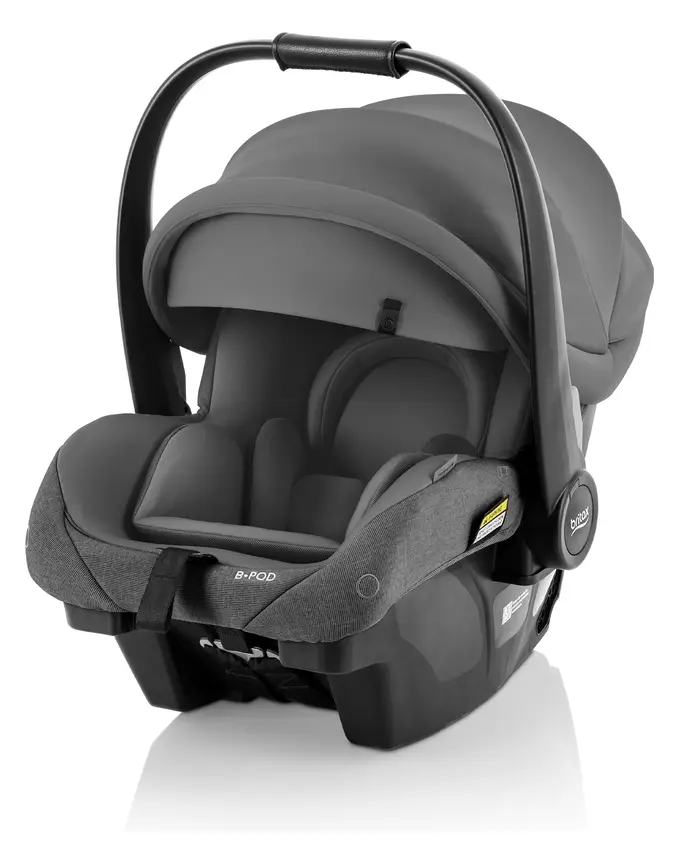
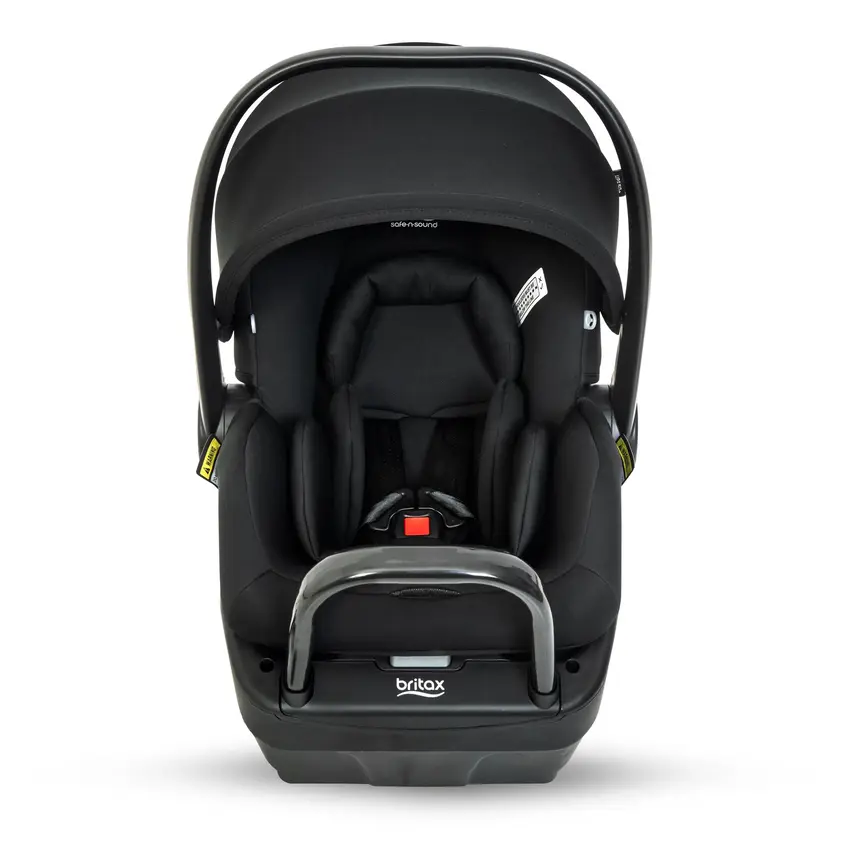


Britax B-Pod Lite
A newborn capsule with a ClickTight base, which makes a firm install simpler.
Read our full review →
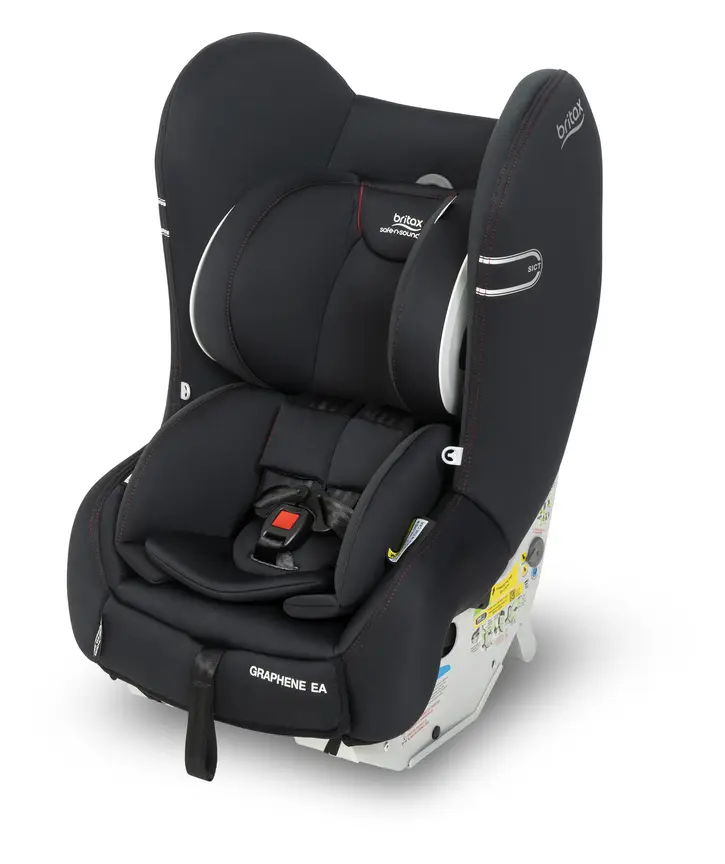
Britax Safe-n-Sound Graphene EA
Britax's Australian convertible seat with SICT side-impact technology, designed to reduce crash energy reaching your child's chest.
Safety standards and rules in Australia, the UK, the US and Canada
Car seat laws and safety standards differ in each country. You must always buy and use a seat that meets the official standard where you live. Never import a narrow seat from overseas, even if it looks smaller. Overseas seats do not match local anchor systems or crash rules, and using them can be illegal.
| Country | Official bodies | Safety standard | Rear-facing guidance | Key installation and booster notes |
|---|---|---|---|---|
| Australia | Product Safety Australia (ACCC), Kidsafe, Raising Children Network, state road bodies | AS/NZS 1754 | Mandatory by law until at least 6 months; experts advise staying rear-facing as long as the child fits | Top tether is mandatory on forward-facing and rear-facing convertible seats; child must use an approved restraint until at least age 7 |
| UK | GOV.UK, RoSPA (Child Car Seats), The Lullaby Trust | R129 (i-Size) or R44 | Under R129, rear-facing is required until over 15 months; experts advise keeping children rear-facing longer | Must use a child car seat until 12 years old or 135 cm tall, whichever comes first; backless boosters are limited for younger or lighter children |
| US | NHTSA, American Academy of Pediatrics (AAP) | FMVSS 213 | AAP advises rear-facing as long as possible up to the seat's top height or weight limit | Forward-facing seats use a top tether; booster needed until the adult seatbelt fits properly (usually around 145 cm / 4 ft 9 in tall) |
| Canada | Transport Canada, Caring for Kids (CPS) | CMVSS 213 | Keep rear-facing as long as the child fits the seat's height and weight limits | Forward-facing seats require a top tether; provincial laws set exact ages and heights for boosters (often up to 145 cm or age 9) |
In Australia, independent crash testing by the Child Restraint Evaluation Program (CREP) also rates seats for protection and ease of use. Checking local rules helps you avoid buying a seat that your child will outgrow too fast.
Step-by-step installation check for three seats
Fitting three seats takes patience. Do not rush it in a dark carpark. Pick a flat driveway on a calm day and follow these steps.
- Read every manual first: read your vehicle manual and all three car seat manuals. Check if any maker bans seats from touching each other.
- Clear the backseat: take out seat covers, towels or thick mats under the car seats unless the car seat maker approves them. Extra padding can hide slack in the belt.
- Install the middle seat first: the middle spot is usually the hardest to reach. Thread the seatbelt or attach anchors, lock the belt if your car manual says to, and tighten it down firmly.
- Attach the top tether early: if you install a forward-facing seat or an Australian rear-facing seat, clip the top tether before you finish tightening. Check that the strap is not twisted.
- Install the outer seats next: place one outer seat on each side. If you use seatbelts, nudge each outer seat slightly towards the door while tightening. This gives the middle seat extra breathing room.
- Do the wiggle test: grab each installed seat near the belt path (where the seatbelt or anchor strap passes through). Give it a firm tug side to side and front to back. It should not move more than 2.5 centimetres (about 1 inch).
- Check the buckles: click and unclick every seatbelt buckle, especially for any booster seat. Make sure no car seat base sits on top of a buckle stalk or presses a release button.
- Check the front seats: sit in the front seats and make sure they lock cleanly on their tracks. Check each car seat manual to see if the front seatback is allowed to lightly touch a rear-facing shell.
- Do the harness pinch test: put each child in their seat and buckle the harness. Try to pinch the strap webbing at the child's collarbone. If your fingers can pinch a fold, the harness is too loose.
If you feel unsure, book a check with a certified child car seat fitter. Many local councils, Kidsafe centres, RoSPA clinics, NHTSA inspection stations and Transport Canada clinics offer checks.
Common mistakes to avoid with three car seats
When space is tight, it is easy to take shortcuts. Avoid these common traps.
- Buying online without test-fitting: numbers on a screen do not show how seats sit against curved doors or headrests. Always try seats in your own car if you can, or buy from a shop with a clear return policy.
- Using aftermarket seatbelt extenders: never add a stiff or fabric extender to make a booster easier to buckle. Extenders change how the seatbelt sits on your child's hips and can fail in a crash.
- Forcing seats together: if you have to shove hard with your knee to make a seat fit, it is too wide. Forced seats can twist, lift off the cushion or press on buckle release buttons.
- Turning a child forward too early: parents sometimes flip a one-year-old forward-facing to give the front passenger more room. Keep your child rear-facing until they hit the seat's rear-facing limit.
- Skipping top tethers: a forward-facing seat without a top tether allows the child's head to fly much further forward in a crash. Never clip a tether to a luggage hook or tie-down ring. Use only official tether anchors marked in your car manual.
- Using second-hand seats with no history: avoid used seats unless you know the owner, know it was never in a crash, have the manual and check the expiry date. Plastics weaken over time in hot cars.
- Adding thick winter coats or inserts: bulky coats compress in a crash and leave dangerous slack under the harness. Strap your child in wearing light layers, then tuck a blanket over the buckled harness.
More options, from budget to premium
Real products from our catalogue. We don't show star ratings or review counts; check the current price, stock and reviews on Amazon before you buy.

Britax Safe-n-Sound Hi Liner SG
A high-back booster for about 4 to 8 years. A clip keeps the seatbelt in the right place.
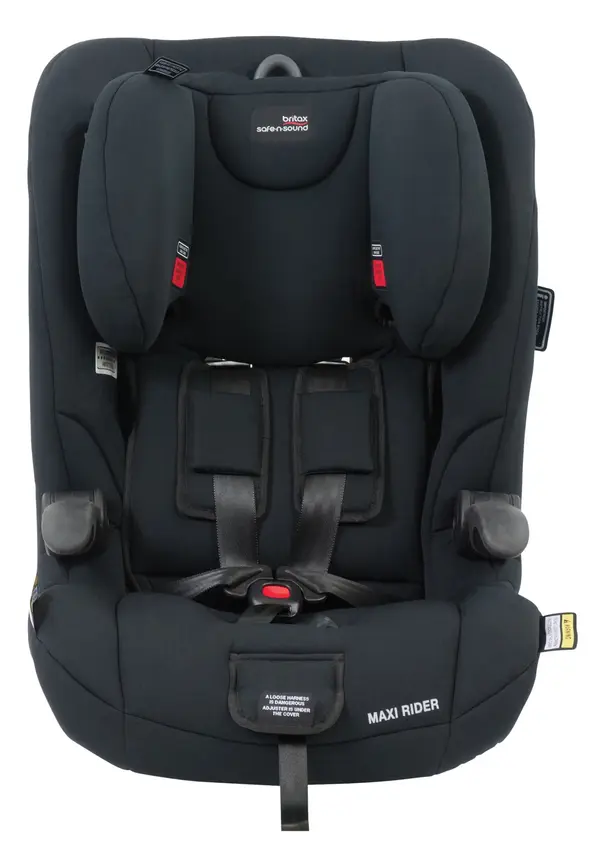


Britax Safe-n-Sound Maxi Rider
A seat with a harness from 12 months to about 4 years. Then it becomes a booster up to 6–8 years.
Read our full review →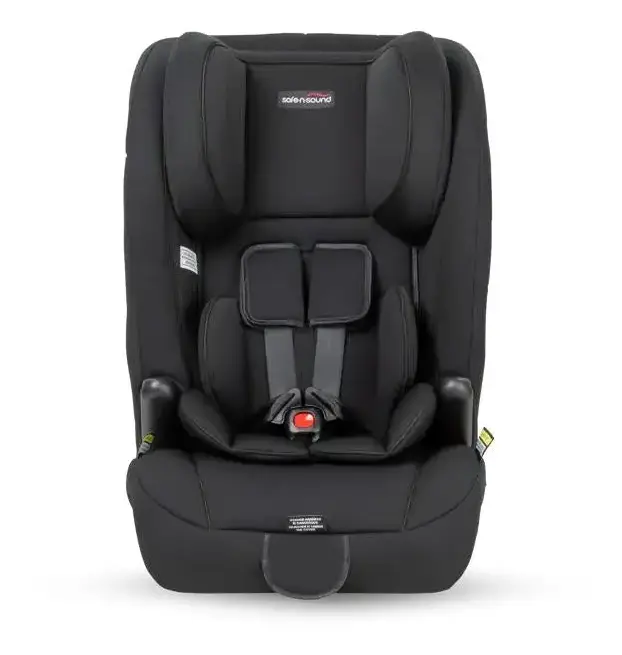
Britax Safe-n-Sound Atlas-GRO II Harnessed Car Seat
Harnessed booster seat
Frequently asked questions
Can car seats touch each other in a 3-across setup?
Sometimes light contact is fine, and sometimes it is not. You must check both your car manual and each car seat manual. Many makers allow seats to lightly brush side by side as long as they do not push each other out of place. If one seat lifts off the vehicle cushion, tilts sideways or blocks a buckle, the fit is not safe.
Is it safe to put a car seat in the middle seat?
Yes, if your car manual allows it and the spot has the right seatbelt and anchor. In many cars, the middle rear seat is actually a very safe spot because it sits furthest from side impacts. Just make sure the seat sits flat on the cushion and does not wobble over a raised hump.
Should I use ISOFIX (lower anchors) or the seatbelt for 3-across?
A locked seatbelt install is often better for 3-across. Lower anchors sit in fixed spots that force outer seats towards the centre of the car. Seatbelts let you shift outer seats a couple of centimetres towards the doors. Both methods are safe when installed tightly by the manual. Never use both the lower anchors and the seatbelt on the same seat unless the manual specifically tells you to.
Can I use a seatbelt extender to make buckling a booster easier?
No. Safety bodies in Australia, the UK, the US and Canada warn against using aftermarket seatbelt extenders with child car seats or boosters. An extender changes the geometry of the lap belt and can push the belt up onto the child's soft tummy. If your child cannot reach the buckle, try a narrower seat next to the booster or switch the seating order.
What if three seats simply do not fit in my car?
If three seats cannot fit without tilting, twisting or blocking buckles, do not force them. You can try a different mix of slimmer seats at a local specialist fitter. If your car's back bench is simply too narrow or bans a middle car seat, upgrading to a wider car or a vehicle with three rows is the safest choice.
Can I buy a narrow car seat from another country?
No. Never import a car seat from overseas to save space. Australia (AS/NZS 1754), the UK (R129 and R44), the US (FMVSS 213) and Canada (CMVSS 213) each have their own testing rules, anchor systems and buckle laws. Using an uncertified foreign seat puts your child at risk and can void your car insurance or break local road laws.
Sources
- Product Safety Australia (ACCC) – Car seats guide
- Raising Children Network – Child car seats and restraints
- Kidsafe – National best practice guidelines: safety of children in motor vehicles
- GOV.UK – Child car seats: the rules
- Child Car Seats (UK, RoSPA) – Choosing and using
- NHTSA (US) – Car seats and booster seats
- HealthyChildren.org (AAP) – Car seats: information for families
- Transport Canada – Choosing a child car seat or booster seat
Related guides
More Car Seats & Travel →
All-in-One Car Seats: Can One Seat Really Fit a Newborn and a Big Kid Safely?

Dining Table Booster Seats: Chair Straps, Child Harnesses and Non-Slip Bases Explained

Rotating 360-Degree Car Seats: Swivel Safety, Side-Impact Protection, and Back Relief
