














All-in-One Car Seats: Can One Seat Really Fit a Newborn and a Big Kid Safely?
All-in-one car seats promise birth-to-booster use. How well they fit newborns and older kids, what the rules say in AU, UK, US and Canada, and when to buy…
On this page
- What an all-in-one car seat actually is
- The newborn end: does a small baby really fit?
- The big-kid end: will an eight- or ten-year-old still fit?
- Rules and approval marks side by side
- All-in-one seat or separate seats? A side-by-side comparison
- Stage by stage: how an all-in-one seat is used
- What "10-year seat" really means
- How to choose an all-in-one seat: a checklist
- Common mistakes with all-in-one seats
- FAQ
- Sources
Short answer: An all-in-one car seat can work from birth to the booster years, but it rarely fits every stage equally well. The weak spots are at the two ends: a small newborn may not sit low enough in the harness or reclined enough, and an older child may outgrow the shell or belt guides before the seat's advertised limit. If the seat fits your baby correctly on day one, is installed properly every time and is replaced when its lifespan ends or after a crash, it is a safe choice. If it doesn't fit at either end, a dedicated infant seat or a separate booster is the better buy.
Key points
- "All-in-one" (also sold as 3-in-1, birth-to-booster or "10-year" seats) means one shell that works rear-facing, forward-facing with a harness and then as a booster.
- Fit beats the label. A seat is only right for your child if the harness or belt sits correctly on their body today, whatever the box says.
- Every market has its own approval mark: AS/NZS 1754 in Australia, UN R129 (or older R44) in the UK, FMVSS 213 in the US and the National Safety Mark in Canada. A seat is only legal where it is approved.
- Keep children rear-facing for as long as the seat allows, harnessed for as long as they fit, and in a booster until the adult belt fits properly.
- "Ten years" is a product lifespan, not a promise of a perfect fit for ten years. Check the date of manufacture and the maker's stated lifespan.
What an all-in-one car seat actually is
Most families move through three kinds of restraint: a rear-facing infant seat or capsule, a convertible seat that can face backwards then forwards with an inbuilt harness, and a booster that raises a bigger child so the adult lap-sash belt fits. An all-in-one seat tries to do all three jobs in one shell. It starts rear-facing with a harness, turns to face forwards with the same harness, and finally removes or stows the harness so the vehicle seatbelt holds the child, with the seat acting as a high-back booster.
The appeal is easy to see: one purchase, one installation to learn, and no need to research a new seat every couple of years. The catch is that a newborn and an eight-year-old have very different bodies. A seat built to hold a tall school-aged child has a big, deep shell, and that same shell has to be adjustable enough to hold a baby whose shoulders sit only a short distance above the seat cushion.
The names vary by country. In the US and Canada you will see "all-in-one", "3-in-1" or "4-in-1" on the box, and the rated limits are printed in pounds and inches. In Australia you will see seats described as birth to 4, birth to 8 or "0 to 8 years", with shoulder-height markers on the shell rather than weight limits. In the UK, seats approved to the newer R129 standard are described by the child's height in centimetres, while older R44 seats use weight groups.
The newborn end: does a small baby really fit?
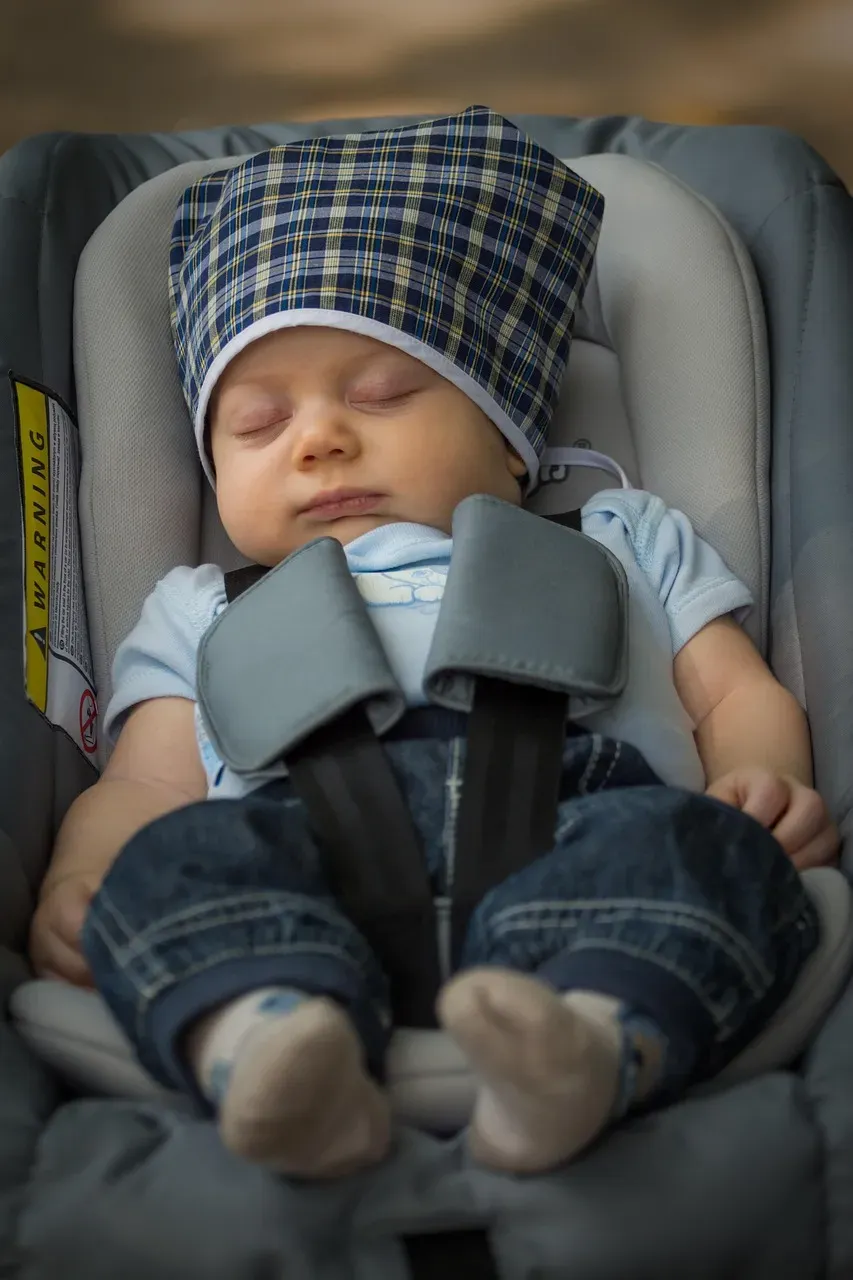
The big promise of many all-in-one seats sold in North America is that they suit babies from about four or five pounds. In practice, whether your baby fits depends on three things you can check yourself, not on the number printed on the box.
Harness height
For rear-facing use, the shoulder straps should come out of the seat shell at or just below the baby's shoulders, so that in a crash the baby's body can't slide up the seat. On a large shell, the lowest harness slot may still be above a small newborn's shoulders. If it is, the seat does not fit your baby yet, whatever the minimum weight says. Some seats come with a removable newborn insert that lifts the baby up to meet the harness. Only use the insert that came with that seat, as the manufacturer describes.
Recline angle
A newborn can't hold their head up. Rear-facing seats have a recline indicator (a bubble, a line or a coloured gauge) so the baby is reclined enough to keep the airway open. Bigger seats sometimes struggle to reach the newborn recline in smaller cars without pushing the front seat forward. Check this in your own car before you buy, ideally with the seat installed.
Harness snugness
The harness must be tight enough that you can't pinch any spare webbing near the shoulder. Product Safety Australia gives the same "pinch test" advice. On a very small baby, check that the harness tightens enough and the crotch buckle position isn't too far forward. Never pad behind or under the baby with blankets, rolled towels or aftermarket inserts. Those change how the harness holds the baby in a crash, and Australian guidance specifically warns against adding accessories such as head supports.
If any of those three checks fails, the honest answer is that the all-in-one seat isn't right for your baby yet. A dedicated infant seat or capsule (or, in Australia, a convertible seat whose lowest shoulder marker suits a newborn) is the safer choice for the first months. You can still move into the all-in-one seat later.
Car Seats & Capsules worth a look
Real products from our catalogue. We don't show star ratings or review counts; check the current price, stock and reviews on Amazon before you buy.

Babylove ezymove Booster
A very light, low-cost booster for about 4 to 8 years. It folds flat for storage.

Babylove ezyone2
A very low-cost convertible seat. Rear-facing to about 12 months, then forward-facing to about 4 years.
 Reviewed
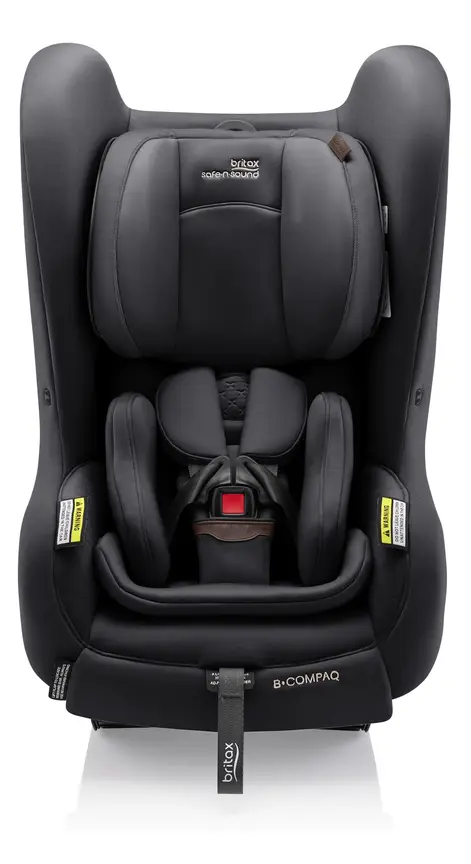
Britax Safe-n-Sound B-Compaq Lux
A convertible seat made for small cars with little room in the back.
Read our full review →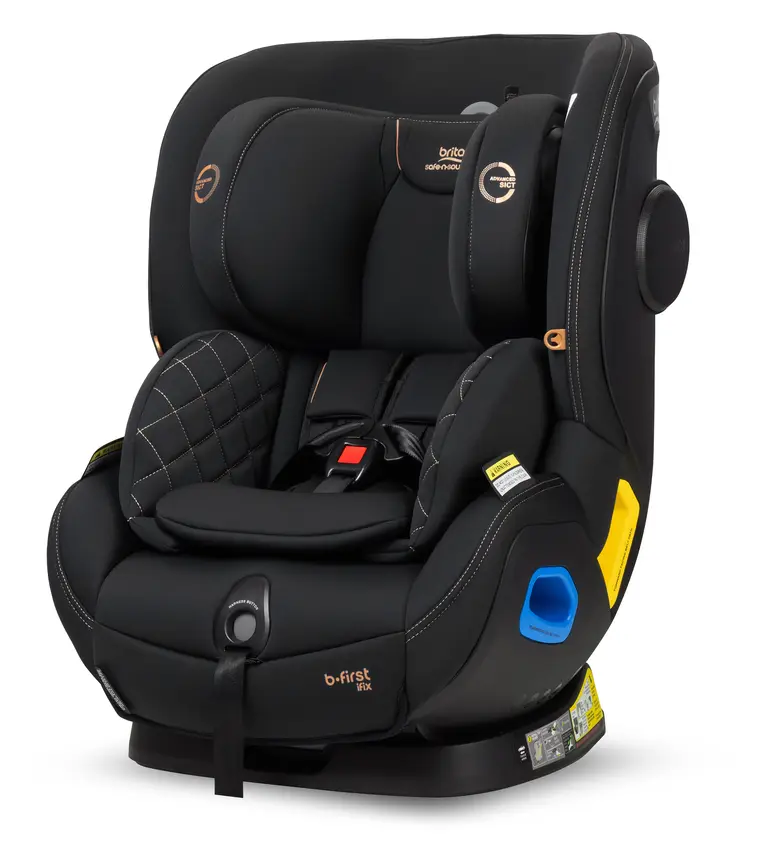
Britax Safe-n-Sound b-first+
Convertible seat from Britax's Australian Safe-n-Sound range with SICT deployable side-impact protection.
The big-kid end: will an eight- or ten-year-old still fit?
At the other end, the question is whether the seat still positions the adult belt correctly when your child is tall. A booster's only job is to lift the child and guide the belt: the lap part should sit low across the upper thighs and hips, not the soft belly, and the sash should cross the middle of the shoulder and chest, not the neck or upper arm.
Children often outgrow all-in-one seats by height before weight. When the top of the head or the tips of the ears reach the top of the headrest at its highest setting, or the belt guide can't rise high enough to keep the sash on the shoulder, the seat is outgrown even if the child is under the stated weight. Some children finish in the all-in-one seat and then need a separate taller booster for a year or two.
The American Academy of Pediatrics says children should use a booster until the adult belt fits correctly, usually around 4 feet 9 inches (about 145 cm) and between 8 and 12 years old. Product Safety Australia says children should stay in car seats until around 10 years old or for as long as they still fit. In the UK, children normally need a car seat until they are 12 or 135 cm tall, whichever comes first. In Canada, Transport Canada sets the stages and leaves the exact age, weight and height to each province and territory.
Rules and approval marks side by side
A seat is only legal to use where it is approved. You can't import a seat bought overseas and use it in another country's cars, even if it's a well-known brand, because each market tests to its own standard.
| Country | Standard or mark to look for | Rear-facing | When a seat is no longer needed |
|---|---|---|---|
| Australia | AS/NZS 1754 (mandatory standard for child restraints) | By law at least 6 months; best practice is as long as the seat allows | Around 10 years old or until the adult belt fits; state road rules set legal minimums by age |
| United Kingdom | "E" in a circle with R129 (height-based) or ECE R44 (weight-based) | R129 seats: rear-facing until over 15 months | 12 years old or 135 cm tall, whichever comes first |
| United States | FMVSS 213 compliance label | AAP: from the first ride home, for as long as possible up to the seat's limits | When the adult belt fits, typically about 4'9" (145 cm), 8 to 12 years |
| Canada | National Safety Mark (CMVSS 213) | Until the seat's rear-facing weight or height limit | When the belt fits; provincial and territorial rules vary |
Notice that the official advice in all four countries is the same in spirit: don't hurry. Each stage protects a younger child better than the next one, so keep your child in it for as long as they fit.
All-in-one seat or separate seats? A side-by-side comparison
| Question | All-in-one seat | Infant seat, then convertible, then booster |
|---|---|---|
| Newborn fit | Varies; check harness height, recline and insert | Infant seats are built for small babies |
| Carrying a sleeping baby | No; the seat stays installed in the car | Many infant seats lift out or click onto a pram |
| Rear-facing room for toddlers | Often generous | Depends on the convertible seat chosen |
| Booster fit for tall children | May be outgrown before the stated limit | A dedicated booster can be chosen for your child's size |
| Size in the car | Usually large and heavy | Each seat suits its stage; boosters are light |
| Moving between cars | Awkward because of weight | Boosters are easy to move |
| Lifespan | Must cover the whole time it's used; check the date of manufacture | Each seat only has to last its own stage |
| Learning to install | One seat, but it's installed in two or three different ways | Several seats, each with its own method |
Neither route is automatically safer. What matters is that the seat fits the child, fits the car and is used correctly on every trip. Families with one car and plans to use the seat continuously often like all-in-one seats. Families who want a portable capsule for the newborn months, or who swap seats between cars a lot, often prefer separate seats.
Stage by stage: how an all-in-one seat is used
Birth to toddler: rear-facing
Install the seat rear-facing at the recline angle the manual gives for newborns. Use the harness slots at or below the shoulders, keep the chest clip (where your seat has one) at armpit level, and tighten until you can't pinch the webbing. Raise the headrest and harness as your baby grows. Australian law requires rear-facing until at least 6 months; Kidsafe's national guidelines, the AAP and Transport Canada all recommend staying rear-facing until your child reaches the seat's rear-facing limit, which in many convertible and all-in-one seats is well past two years.
Bent legs or feet touching the vehicle seat are normal for rear-facing toddlers and are not a reason to turn the seat around.
Toddler to school age: forward-facing with the harness
Turn the seat only when your child reaches the rear-facing limit: the shoulder-height marker in Australian seats, the rear-facing height or weight limit in North American seats, or the R129 limits in the UK. Reinstall it with the forward-facing belt path, use the top tether every time (it's required in Australia and recommended everywhere it's fitted), and move the harness to the slots at or just above the shoulders. The AAP recommends staying in a harness for as long as possible, at least to 4 years of age.
School age: booster mode
Move to booster mode only when your child has outgrown the harness by height or weight, not because of a birthday. In booster mode the vehicle's lap-sash belt does the restraining, so the belt guides must place it correctly. Never use a lap-only belt with a booster.
Out of the seat
A child is ready for the adult belt alone when they can sit with their back against the seat, knees bent at the edge of the cushion, feet on the floor, the sash across the shoulder and the lap belt on the hips, and stay that way for the whole trip. Kidsafe and Raising Children Network describe a similar five-step check. Many children don't pass it until 10 or later.
Side by side: more car seats & capsules to compare
Real products from our catalogue. We don't show star ratings or review counts; check the current price, stock and reviews on Amazon before you buy.
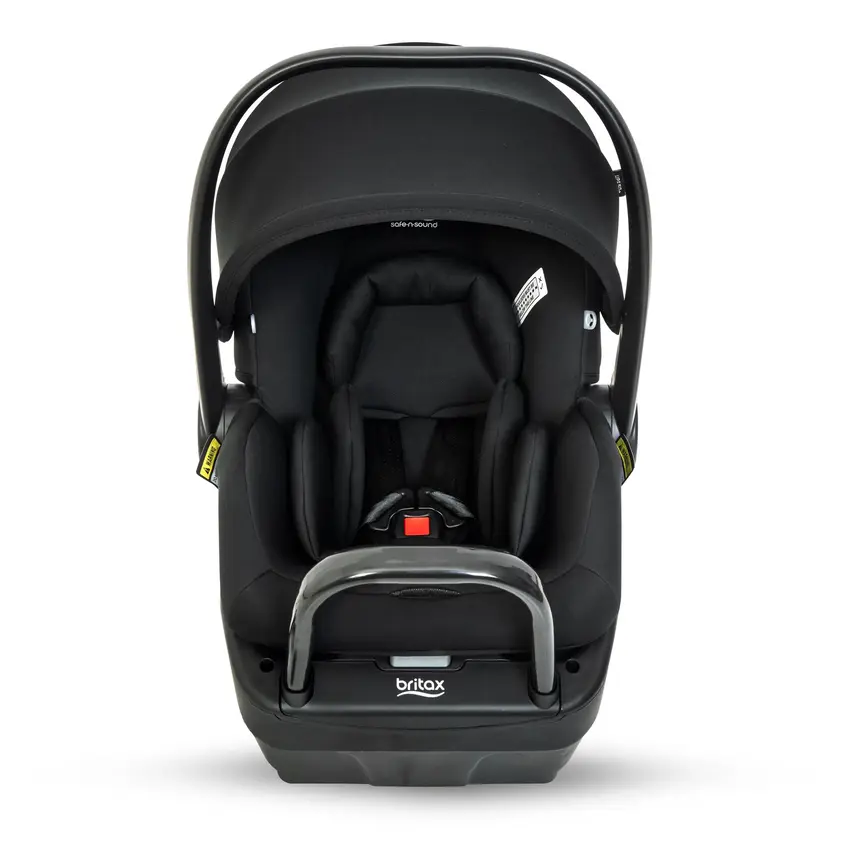


Britax B-Pod Lite
A newborn capsule with a ClickTight base, which makes a firm install simpler.
Read our full review →
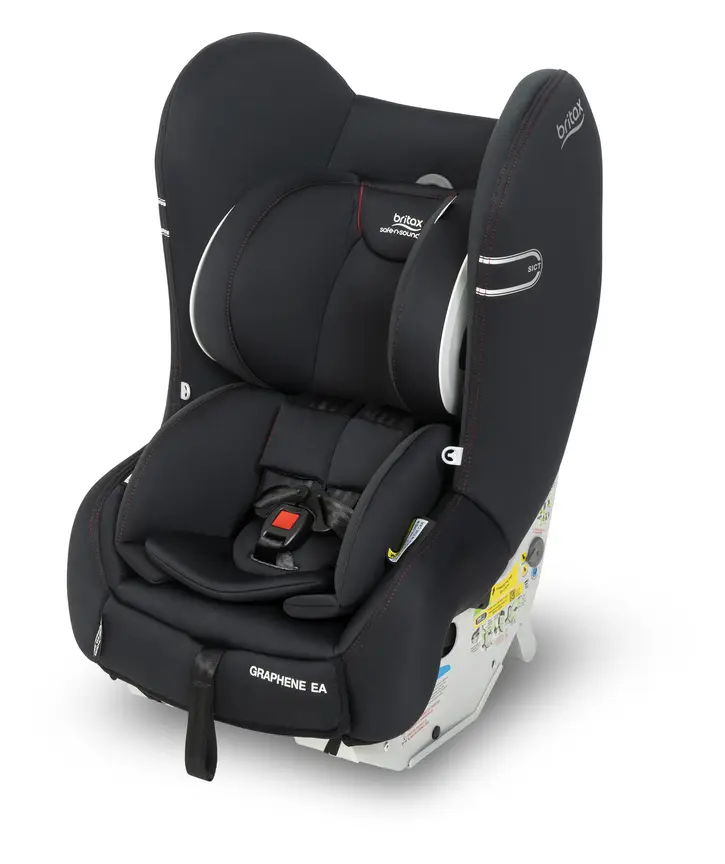
Britax Safe-n-Sound Graphene EA
Britax's Australian convertible seat with SICT side-impact technology, designed to reduce crash energy reaching your child's chest.

Britax Safe-n-Sound Hi Liner SG
A high-back booster for about 4 to 8 years. A clip keeps the seatbelt in the right place.
What "10-year seat" really means
Car seats age. Plastics degrade with heat and sunlight, webbing frays, and standards improve. That is why manufacturers give a lifespan. Britax Australia, for example, states a 10-year lifespan for its restraints from the date of manufacture. Product Safety Australia warns against buying or using a second-hand seat that is over 10 years old.
In the US the AAP tells parents to check the label for the date of manufacture and follow the maker's recommended lifespan. Transport Canada says most manufacturers set an expiry date, though the law does not require one, and suggests contacting the manufacturer about a specific seat. UK guidance focuses on approval labels and fit; follow the manufacturer's instructions on replacement.
Three practical points follow from this:
- A "10-year" seat bought when your baby is born covers roughly the years a child needs a restraint, with little spare. A seat that sat on a shelf for a year before you bought it has a year less.
- Passing an all-in-one seat down to a younger sibling may not work if it will reach its lifespan while the younger child still needs it.
- Any seat that has been in a crash should be replaced. Transport Canada says to dispose of a seat that was in a crash even if it was empty. Some manufacturers ask you to replace after any crash.
How to choose an all-in-one seat: a checklist
- Approval for your country. AS/NZS 1754 in Australia, R129 in the UK, FMVSS 213 in the US, the National Safety Mark in Canada.
- Newborn fit. Lowest harness position at or below a newborn's shoulders, a newborn insert if needed, and a recline the seat can reach in your car.
- Rear-facing limit. A high rear-facing limit lets your child stay rear-facing for longer.
- Harness and headrest adjustment. A no-rethread harness that moves with the headrest makes it easier to keep the straps at the right height as your child grows.
- Booster belt fit. Check the belt guides and the height of the headrest at its top setting.
- Your car. Measure the space rear-facing. Check whether your vehicle has ISOFIX or LATCH lower anchors and a top tether point, and whether the seat can use them.
- Date of manufacture and lifespan. Find them on the label before you buy.
- Washable cover and clear manual. You will use this seat for years. A manual you can follow matters.
- Recall registration. Register the seat with the manufacturer so you hear about recalls.
If you can, buy from a retailer that will let you test-fit the seat in your car, or book an authorised fitting service. Product Safety Australia recommends using an authorised installation service or following the manuals for the seat and the car.
Common mistakes with all-in-one seats
- Turning forward-facing too early. The most common one. Use the seat's limits, not a birthday.
- Using the wrong belt path. Rear-facing, forward-facing and booster modes each use a different path. Read the labels on the seat each time you change modes.
- Forgetting the top tether in forward-facing mode, or using it rear-facing when the manual says not to (or not using it when the manual says to).
- Loose harness and puffy jackets. Bulky clothing and blankets under the straps leave slack. Put a blanket over the buckled harness instead.
- Harness slots at the wrong height. Below or at the shoulders rear-facing, at or above the shoulders forward-facing.
- Moving to booster mode too soon. A harness protects a young child better than a belt.
- Using a seat past its lifespan or after a crash.
- Letting a baby sleep in the seat out of the car. Car seats are for travel. Red Nose and Product Safety Australia advise against long sleeps in car seats; take your baby out when you arrive and put them on their back in a cot or bassinet.
- Adding extra add-on products. Head huggers, strap covers and seat protectors that weren't made for that seat can affect how it performs.
More options, from budget to premium
Real products from our catalogue. We don't show star ratings or review counts; check the current price, stock and reviews on Amazon before you buy.
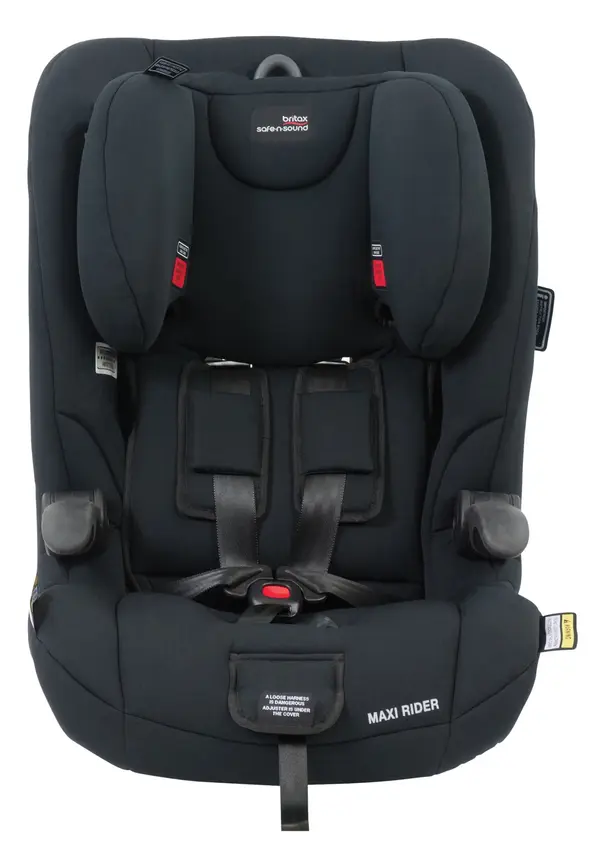


Britax Safe-n-Sound Maxi Rider
A seat with a harness from 12 months to about 4 years. Then it becomes a booster up to 6–8 years.
Read our full review →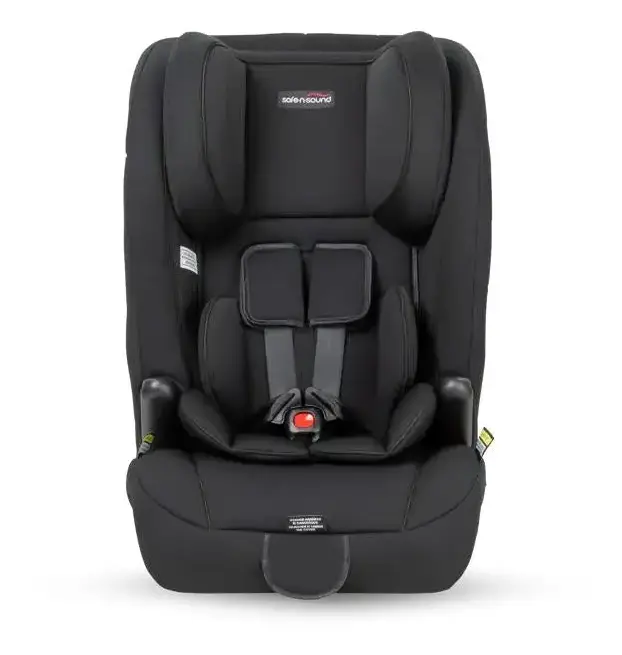
Britax Safe-n-Sound Atlas-GRO II Harnessed Car Seat
Harnessed booster seat
FAQ
Is an all-in-one car seat as safe as an infant capsule for a newborn?
It can be, if it fits your baby properly and is installed correctly. Every approved seat has passed the same mandatory standard for its market. The difference is fit: infant seats are designed around small babies, while all-in-one seats have to adjust down to them. Check harness height, recline and snugness on your own baby.
Can I use an American all-in-one seat in Australia, the UK or Canada?
No. Seats are approved market by market. In Australia seats must meet AS/NZS 1754; in Canada they need the National Safety Mark; in the UK they need an R129 or R44 approval label. A seat approved in one market is not legal to use in another's vehicles.
When should I turn my child's seat to face forwards?
When they reach the seat's rear-facing limit: the shoulder-height marker on Australian seats, or the rear-facing height or weight limit on others. In the UK, R129 seats must stay rear-facing until the child is over 15 months. Best practice everywhere is to stay rear-facing as long as the seat allows.
My toddler's legs are bent against the back seat. Should I turn them around?
No. Bent legs are comfortable for most toddlers and are not a safety reason to turn forward-facing early.
How long does an all-in-one seat last?
Follow the manufacturer's lifespan, counted from the date of manufacture. Many state about 10 years; some state less. Replace any seat that has been in a crash.
Is a second-hand all-in-one seat a good idea?
Only if you know its full history. Product Safety Australia advises against a used seat if you don't know its history, condition or age, or if it's over 10 years old. Check for recalls, cracks, frayed straps, missing parts and the manual.
Do all-in-one seats fit three across?
Some do, many don't, because the shells are wide. Measure your back seat and check the seat's width and the vehicle's anchor points before buying.
Where can I get my seat checked?
In Australia, use an authorised restraint fitting service (your state road authority or Kidsafe can point you to one). In the UK, Good Egg Safety and many retailers offer checks. In the US, certified child passenger safety technicians run inspection stations. In Canada, many public health units and police services run seat clinics.
Sources
- Product Safety Australia (ACCC) – Car seats guide
- Kidsafe – National best practice guidelines: safety of children in motor vehicles
- Raising Children Network – Child car seats and restraints
- GOV.UK – Child car seats: the law
- HealthyChildren.org (American Academy of Pediatrics) – Car seats: information for families
- Transport Canada – Choosing a child car seat or booster seat
- Britax Australia – Car seat FAQs (restraint lifespan)
Related guides
More Car Seats & Travel →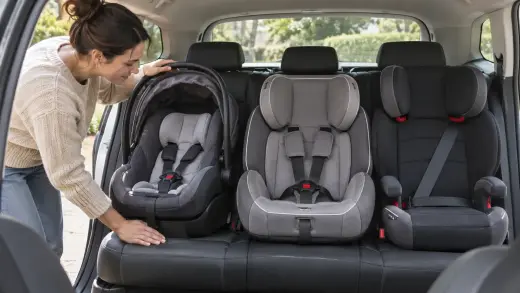
Fitting Three Car Seats Across a Narrow Backseat Safely

Car Seat Frame Strollers: Light, Compact Caddies for Infant Car Seats (and Their Limits)
Budget Convertible Car Seats: How to Choose a Safe Seat for Less
