









Inflatable Toddler Travel Beds vs Ultralight Travel Cribs: Safety, Setup, and Which to Choose
Compare inflatable toddler travel beds and ultralight travel cribs. Learn age rules, puncture tips, Airbnb safety checks, and standards.
On this page
- Key points
- What each travel bed is and how it works
- Why age and firmness matter so much
- Safety rules and official advice in Australia, the UK, the US and Can…
- Side-by-side comparison: inflatable toddler bed vs ultralight travel …
- Age stages: when to use each option
- Puncture resistance, materials, and leaks
- Guardrails, raised bumpers, and falling out
- Setting up safely in an Airbnb, hotel, or holiday home
- Packing, cleaning, and travel practicalities
- Common mistakes to avoid
- Frequently asked questions
- Sources
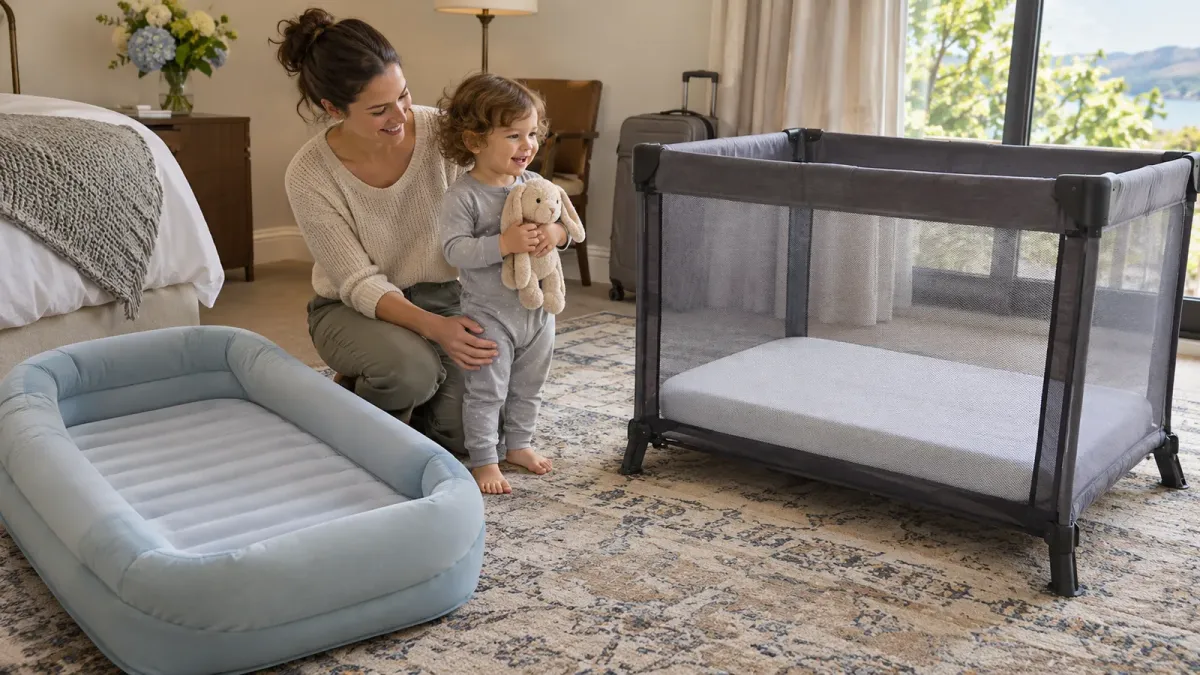
Short answer: Choose an ultralight travel crib for babies and young toddlers. Choose an inflatable toddler travel bed only for older children who already sleep in a bed at home. Babies and children under 2 should never sleep on an air mattress or inflatable bed. Soft air surfaces can sag and block a young child's airway.
This core rule is backed by safe sleep groups in Australia (Red Nose and Product Safety Australia), the UK (The Lullaby Trust), the US (American Academy of Pediatrics and CPSC) and Canada (Health Canada and the Canadian Paediatric Society).
Key points
- Age limit comes first: inflatable travel beds are for older toddlers, usually 2 years and up. Ultralight travel cribs suit babies and younger toddlers.
- Firmness matters: babies need a firm, flat mattress. Air beds are soft and can lose air overnight.
- Containment: travel cribs have tall mesh walls to keep little ones in. Inflatable beds only have low air bumps on the sides.
- Puncture risk: air beds can leak from grit, pet claws, or bad seams. Travel cribs have no air chambers to pop.
- Room setup: keep any travel bed away from walls, adult beds, heaters, and blind cords.
- Check standards: look for travel cribs that meet AS/NZS 2195 (Australia), BS EN 716 (UK), or ASTM F406 (US).
What each travel bed is and how it works
Parents often mix up these two types of travel beds. They look different and serve different ages. Knowing how each one works makes the choice much simpler.
What is an ultralight travel crib?
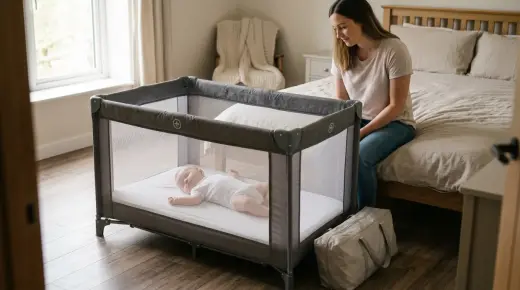
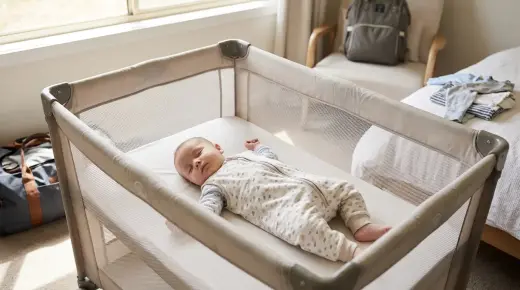
An ultralight travel crib is a lightweight folding cot. In Australia and the UK, people also call it a portacot or travel cot. In the US and Canada, it is often called a travel crib or play yard.
It has a thin metal frame, usually aluminium, and tall fabric or mesh sides. A thin, firm foam pad sits on the base. Most models fold down into a flat carry bag. Many weigh less than a standard folding cot, which helps when flying or carrying luggage up stairs.
What is an inflatable toddler travel bed?
An inflatable toddler travel bed is a small air mattress made for children. It sits directly on the floor. Most models have a flat middle section and raised air edges around the sides. These raised edges are often called bumpers or guardrails.
You fill the bed with air using a hand pump, foot pump, or electric pump. When empty, it folds into a small pouch. It is built for older toddlers who have already moved out of a cot at home.
Why age and firmness matter so much
A baby's airway is very small and soft. During the first year, babies cannot always lift their heads or move away if their face presses into something soft. Even a young toddler can get stuck in a soft dip.
An inflatable bed bends under a child's weight. If it loses even a little air during the night, the middle sinks. A child's face can press into the soft vinyl or the raised air bumper. That creates a real risk of suffocation.
That is why safe sleep experts in all four countries say no to air beds for babies. A firm, flat mattress in a proper cot or travel crib keeps the airway clear.
Cots, Bassinets & Bedside Sleepers worth a look
Real products from our catalogue. We don't show star ratings or review counts; check the current price, stock and reviews on Amazon before you buy.
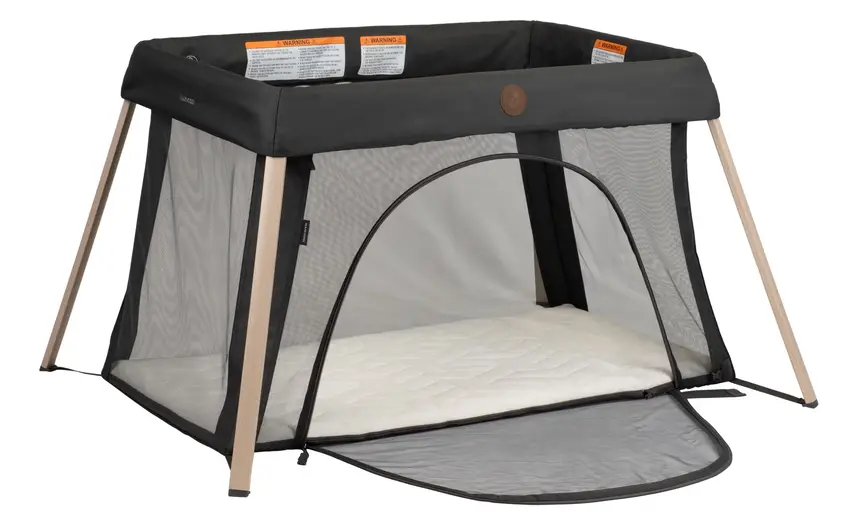


Maxi-Cosi Calao Light Travel Cot
A light travel cot with a newborn level and a toddler level, a side zip and a travel bag.
Read our full review →
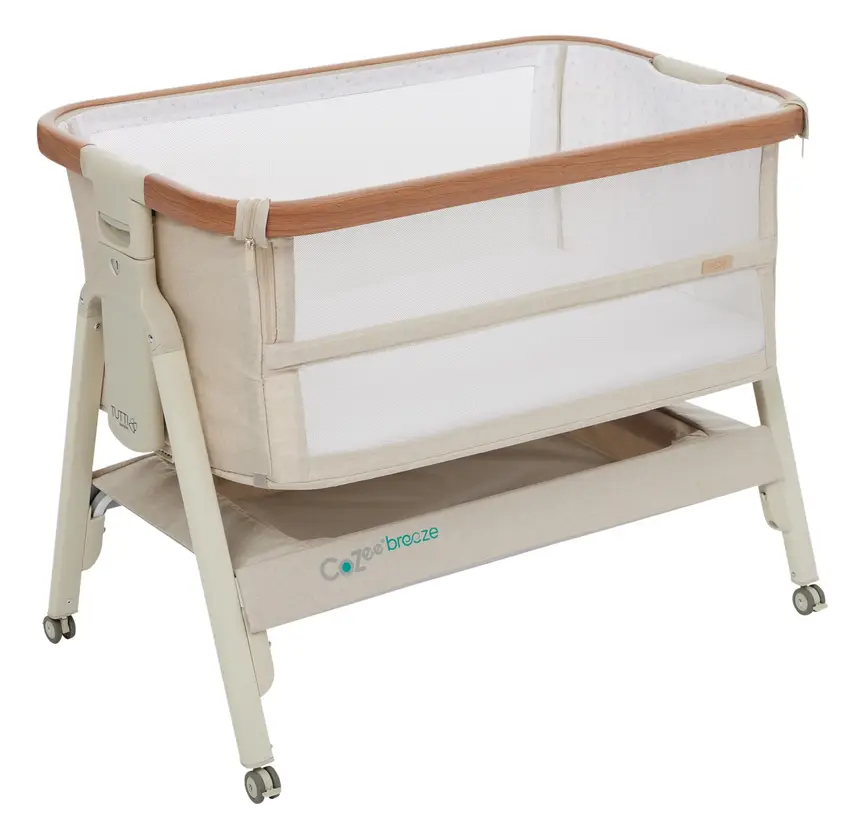
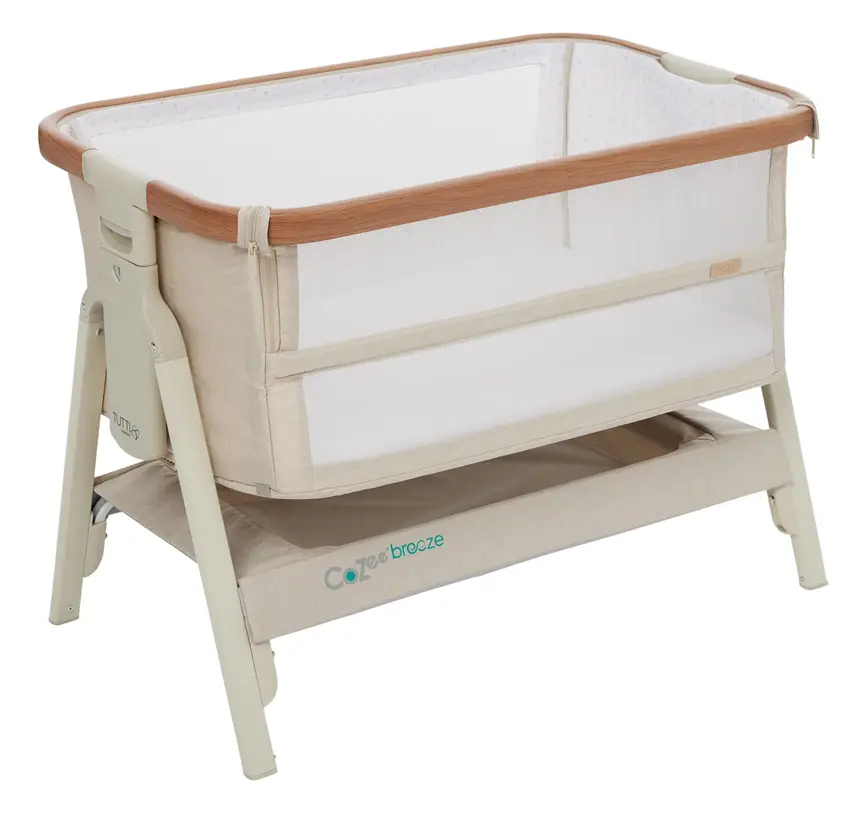
Tutti Bambini CoZee Breeze Lite
A bedside sleeper that opens or folds in about 30 seconds, with mesh sides and a travel bag.
Read our full review →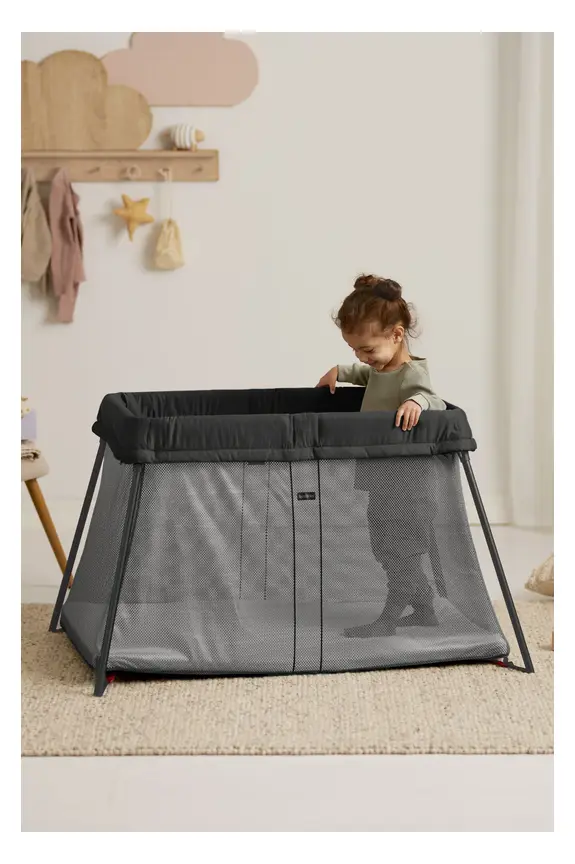

Compare all cots, bassinets & bedside sleepers in our reviews →
Safety rules and official advice in Australia, the UK, the US and Canada
Travel gear is sold across borders online. A bed sold overseas may not meet the rules where you live. Checking the rules in your own country helps you avoid unsafe imports.
| Topic | Australia | UK | US | Canada |
|---|---|---|---|---|
| Official bodies | Red Nose, ACCC (Product Safety Australia), Raising Children Network | The Lullaby Trust, NHS, OPSS | AAP (HealthyChildren.org), CPSC | Health Canada, Canadian Paediatric Society (Caring for Kids) |
| Travel crib standard | Mandatory folding cot standard based on AS/NZS 2195 | BS EN 716 for folding cots; BS EN 16890 for mattresses | Federal play yard rule based on ASTM F406 | Canadian playpen and crib safety rules |
| Air beds for babies | Not safe for babies; firm flat mattress only (AS/NZS 8811.1) | Not safe; babies need a firm, flat, waterproof mattress | Not safe; CPSC and AAP warn against air mattresses for infants | Not safe; firm, flat surface only |
| Extra mattresses | Never add extra padding or soft mattresses | Never add extra bedding or soft pads | Use only the pad made for that product | Do not add extra foam or mattresses |
In Australia, every folding cot sold must meet the mandatory safety standard based on AS/NZS 2195. Product Safety Australia checks for safe side heights, strong locks, and zero entrapment gaps. Firmness is tested under AS/NZS 8811.1, and full-size household cots follow AS/NZS 2172.
In the UK, The Lullaby Trust advises a firm, flat mattress on holiday, just like at home. Look for folding cots tested to BS EN 716 and cot mattresses tested to BS EN 16890. The Office for Product Safety and Standards (OPSS) oversees product recalls and safety rules.
In the US, the Consumer Product Safety Commission (CPSC) enforces strict rules for play yards and non-full-size cribs under ASTM F406. The American Academy of Pediatrics (AAP) warns parents never to let babies sleep on air mattresses, waterbeds, or adult beds.
In Canada, Health Canada and the Canadian Paediatric Society give the same message. Babies need a firm, flat sleep surface with no soft sides or extra padding. Always check Health Canada's recall list before buying second-hand gear.
Side-by-side comparison: inflatable toddler bed vs ultralight travel crib
This table compares both options across the features parents care about most on a trip.
| Feature | Ultralight travel crib | Inflatable toddler travel bed |
|---|---|---|
| Best age stage | Birth until child reaches height/weight limit or tries to climb out | Older toddlers, usually 2 years and up, already in a bed at home |
| Sleep surface | Thin, firm foam pad on a flat base | Air-filled plastic or TPU chamber; softer than a cot mattress |
| Side containment | Tall mesh walls that keep child inside | Low raised air edges; child can climb or roll over them |
| Puncture risk | None; no air chambers | Can puncture on grit, claws, or sharp objects |
| Weight and pack size | Lighter than classic portacots, though still has frame poles | Very light and small when deflated; pump adds extra bulk |
| Setup time | Usually 1 to 3 minutes; quiet to unfold | 2 to 5 minutes; electric pumps can be loud at night |
| Cleaning | Wipe-clean frame; removable washable sheet and cover | Smooth vinyl or flocked top wipes clean fast |
| Floor space needed | Compact footprint; fits in tight hotel rooms | Similar footprint to a toddler mattress; needs flat clear floor |
Age stages: when to use each option
Your child's age and daily sleep habits should guide your choice. Never rush a child into an open travel bed just to save luggage space.
Birth to 12 months
An ultralight travel crib is the only safe travel option in this stage. Place your baby on their back on the firm pad that came with the crib. Keep the space completely bare.
Do not put pillows, loose blankets, bumpers, or soft toys inside. Use a fitted sheet made for that travel crib and a baby sleeping bag if the room is cool. Never use an inflatable bed for a baby under 12 months.
12 to 24 months
Most children in this age group are still safest in a travel crib. Toddlers move around a lot in their sleep. They also wake up early and explore the room before you wake up.
Mesh walls keep them safely in one place while you sleep. Most health groups still advise against air beds for children under 2 years. Soft air surfaces and raised air bumpers can still trap a young toddler's face.
2 to 5 years
Once your child moves into a toddler bed or floor bed at home, you can switch for travel too. An inflatable toddler bed works well at this stage.
Watch for signs your child has outgrown the travel crib. Red Nose advises moving a child out of a cot as soon as they try to climb over the side. Also stop using a travel crib if your child hits the height or weight limit on its label.
Puncture resistance, materials, and leaks
A flat air bed at 2 am ruins everyone's sleep. Understanding why leaks happen helps you pick a stronger bed and protect it on trips.
Why inflatable beds leak
- Sharp grit on floors: tiny stones, sand, or glass shards under the bed can poke a pinhole when a child jumps on it.
- Pet claws: staying at a friend's house or pet-friendly Airbnb? A dog or cat walking across the bed can scratch through thin plastic.
- Over-inflation: pumping a bed rock-hard leaves no give when a child jumps. Warm afternoon sun or a room heater can also make the air inside expand and stress the seams.
- Temperature drops: cool night air shrinks the air inside the mattress. The bed may feel soft by morning even without a hole.
- Cheap seams or loose valves: thin seams near corners often split first. A poorly sealed valve lets air hiss out slowly all night.
What makes an inflatable bed tougher
Look for thick PVC or TPU fabric rather than thin pool-toy vinyl. Welded seams last longer than glued seams. Check that the box includes a repair patch kit so you can fix small pinholes on the road.
Some beds have a separate inner mattress that tucks into an outer air frame. This design lets you tuck a fitted crib sheet tightly around the inner pad without wrapping the whole outer bumper.
How to protect an inflatable bed in rentals
Always sweep or vacuum the floor spot before you unroll the bed. Run your hand over the carpet or floorboards to feel for staples, pins, or hard crumbs. Lay a folded towel, picnic blanket, or foam mat underneath as a barrier.
Keep shoes, hard toys, and metal zippers off the bed. Tell older siblings not to jump on it like a trampoline.
Why ultralight travel cribs avoid this problem
An ultralight travel crib does not hold air. It cannot deflate overnight. Even so, check the mesh walls before every trip for small holes or loose threads. Make sure every frame lock clicks firmly into place before putting your child inside.
Side by side: more cots, bassinets & bedside sleepers to compare
Real products from our catalogue. We don't show star ratings or review counts; check the current price, stock and reviews on Amazon before you buy.

4baby Snuggle Cuddle Bedside Sleeper
A low-cost bassinet that turns into a bedside sleeper, with 4 heights and mesh sides.

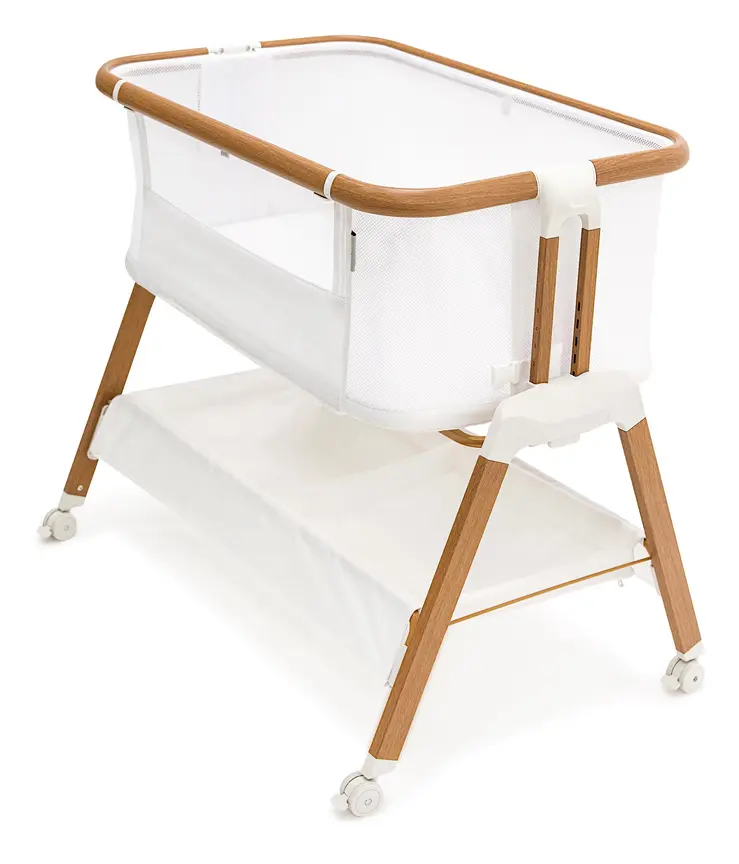
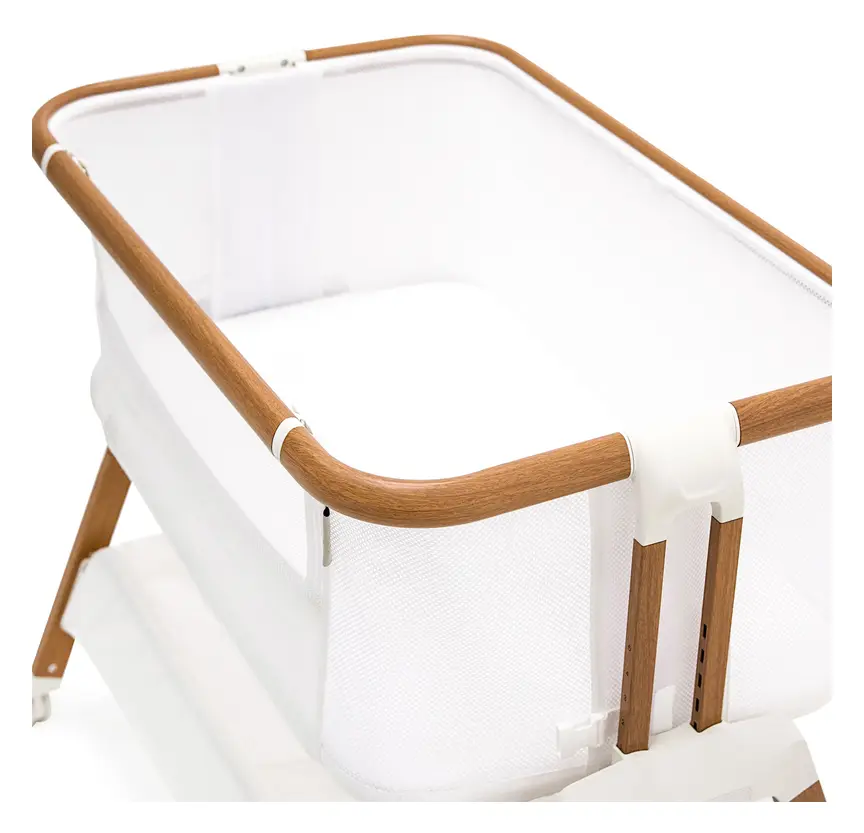
BabyRest Alfie2 Bedside Bassinet
A bedside bassinet with 5 heights, a drop-down side, wheels and an insect net.
Read our full review →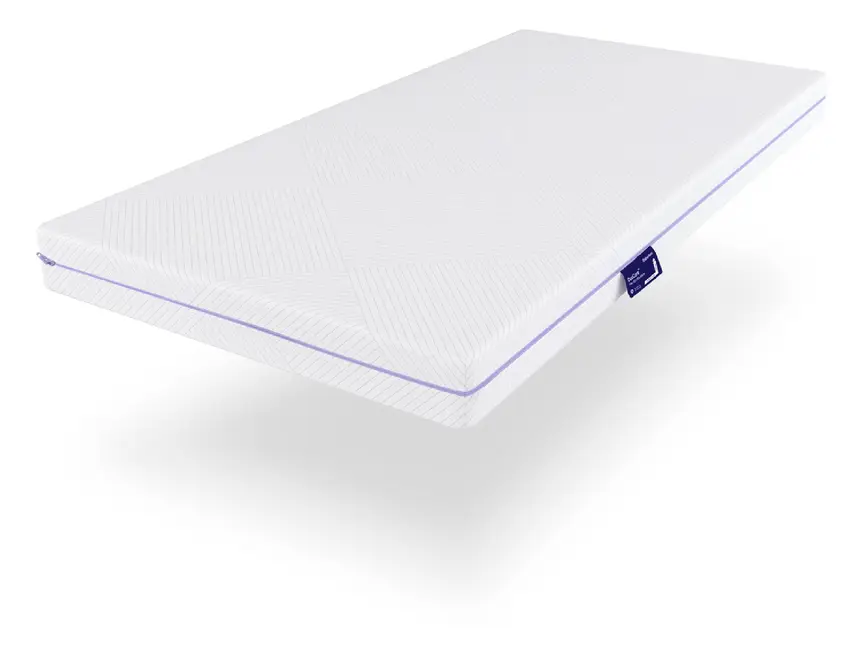
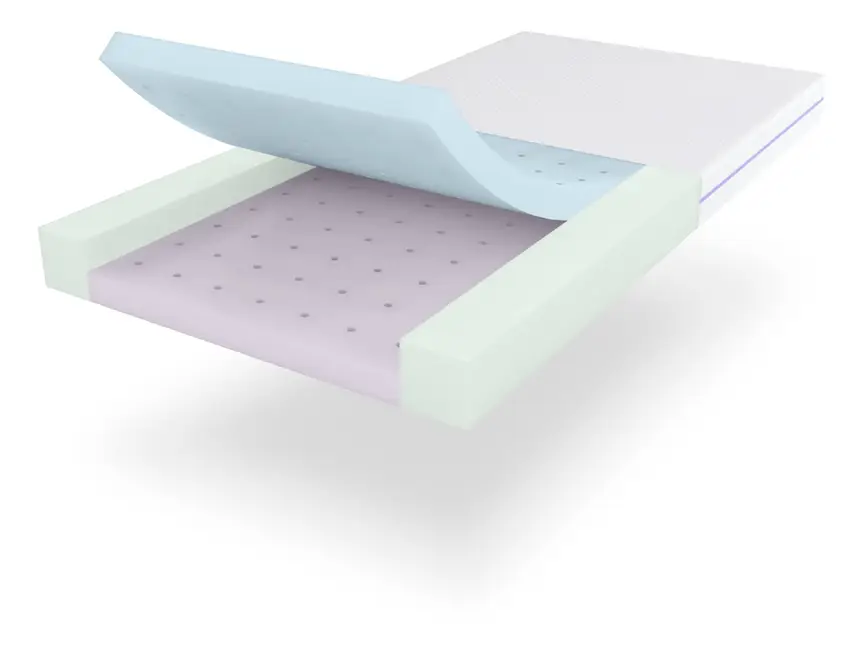

BabyRest Duocore Bamboo Cot Mattress
A two-sided mattress: a baby side to 12 kg and a toddler side from 12 kg to about 4 years.
Read our full review →


Boori Matilda Cot Bed
A cot that turns into a toddler bed using its own end panels. No extra kit needed.
Read our full review →Compare all cots, bassinets & bedside sleepers in our reviews →
Guardrails, raised bumpers, and falling out
Parents often buy inflatable toddler beds because of the raised air walls. It helps to know what those walls actually do—and what they cannot do.
Air bumpers vs mesh walls
On an inflatable bed, the raised air bumpers sit a few inches above the mattress. They act as a gentle speed bump when a sleeping toddler rolls over. They help keep a child from rolling straight onto a cold floor.
However, air bumpers are not strong guardrails. A restless toddler can easily roll right over them. An awake toddler will simply step over them and wander the room.
By contrast, an ultralight travel crib has tall, taut mesh sides. A baby or young toddler cannot roll over them. Some ultralight cribs sit directly on the floor, so there is no risk of the base tipping if a child leans on the mesh.
The hidden danger of gaps
Never push an inflatable bed or a travel crib tight against a wall, wardrobe, or adult bed. If a child rolls off the edge and wedges into a narrow gap between the bed and a wall, they can get trapped and struggle to breathe.
Leave a clear walkway around all four sides of any travel bed. If your child rolls off an inflatable bed onto an open carpeted floor, they will usually just wake up surprised. A fall into a tight gap is far more dangerous.
What about clip-on bed rails for adult beds?
Many Airbnbs only have adult queen or king beds. Portable clip-on bed rails can seem handy, but they carry risks for young children. A child can slip into the gap between the rail and a soft hotel mattress.
For children under 2, a travel crib is much safer than an adult bed with rails. For children aged 2 to 4, a floor-level inflatable toddler bed avoids high falls altogether.
Setting up safely in an Airbnb, hotel, or holiday home
Holiday rentals are not childproofed like your own home. A quick five-minute room check before bedtime prevents most travel accidents.
Step 1: Check window blinds and curtains
Loose blind and curtain cords are a major strangulation risk. Both Product Safety Australia (ACCC) and the US CPSC warn parents to keep all beds well away from windows with cords.
Never place a travel crib or inflatable bed under a window where a child can reach a cord or lean against a flyscreen. Wrap any loose cords high up out of reach.
Step 2: Check furniture and wall anchors
Rental homes often have tall dressers, TV stands, or bookshelves that are not bolted to the wall. A toddler who wakes up early in an open inflatable bed can climb a drawer and pull a heavy unit over.
Place the travel bed away from tall furniture. Move lamps, glass decor, and heavy vases into a high cupboard or closet for your stay.
Step 3: Check power points, heaters, and fans
Look at every wall socket near the bed. Unplug loose phone chargers and lamp cords so a toddler cannot pull them. Keep the bed well away from portable heaters, floor vents, and hot radiators.
Step 4: Check the room temperature
Holiday homes can be warmer or colder than your house. The Lullaby Trust suggests a comfortable room temperature of about 16 to 20°C for sleeping babies. Dress your child in light layers and check their chest or back of the neck so they do not overheat.
Do not put the travel bed in direct morning sun. Even a cool room can heat up fast near a sunny window.
Step 5: Be careful with rental travel cots
Many Airbnbs and hotels offer a free travel cot. Always inspect it before you use it:
- Check the label for a safety standard mark and weight limit.
- Lock all four top rails and push down on the centre to make sure it does not collapse.
- Check the mesh for tears and the frame for bent metal.
- Make sure the mattress fits snugly with no gaps around the edges.
- Never use a rental cot if the host added a thick extra foam pad or soft quilt underneath.
If a rental cot looks old, broken, or missing parts, do not use it. Bringing your own ultralight travel crib removes that guesswork.
Packing, cleaning, and travel practicalities
How you travel—by car or by plane—often decides which bed feels easier to manage.
Flying with a travel bed
Traditional portacots can be heavy and awkward at airports. Ultralight travel cribs are much lighter and often pack into a slim bag that fits inside a large checked suitcase. Some very compact models even fit in overhead cabin bins, though you should always check your airline's size rules first.
An inflatable toddler bed packs down even smaller when empty. Remember to pack the pump too. If your pump has a built-in lithium battery, check aviation rules with your airline, CASA (Australia), TSA (US), or CATSA (Canada) to see if it must go in carry-on luggage.
Late-night setup and noise
If you arrive at an Airbnb at 10 pm with a tired child, noise matters. Electric air pumps sound like a hairdryer and can wake a sleepy toddler or neighbours in a thin-walled apartment.
A quiet foot pump or manual hand pump takes a little more effort, though it is silent. Ultralight travel cribs vary in setup style. Some pop open in seconds, while others need you to slide poles through fabric sleeves. Practise setting yours up at home before the trip.
Sheets, spills, and toilet training
An inflatable toddler bed is great during toilet training. The smooth PVC or TPU surface wipes clean in seconds if an accident happens. Just pack two waterproof mattress protectors or fitted crib sheets so you have a spare at 3 am.
With a travel crib, always use a fitted sheet designed to fit that exact mattress pad tightly. Loose adult sheets can bunch up and cover a baby's face. Wipe the mesh and frame down with mild soap and water after the trip, then let it dry fully before packing it away to prevent mould.
Common mistakes to avoid
Even careful parents make simple mistakes when travelling because everyone is tired. Watch out for these six traps:
- Putting a baby on an inflatable bed: never do this, even for a short daytime nap. Babies need a firm, flat cot mattress.
- Adding extra padding to a travel crib: the thin pad inside a travel crib feels hard to adults, so parents often lay a folded blanket or extra foam pad on top. Red Nose and the AAP warn that extra padding creates dangerous soft spots and edge gaps where a baby can suffocate.
- Pushing the bed against a wall: always leave clear space around every side of the bed to stop entrapment.
- Using loose adult bedding: hotel duvets and large blankets are too heavy and loose for babies and young toddlers. Pack a safe sleeping bag or fitted sheet from home.
- Over-inflating the air bed: pump an inflatable toddler bed until it is firm and supportive, not rock-hard. Leaving a tiny bit of give protects the seams.
- Skipping a home test night: never open a brand-new travel crib or air bed for the first time at midnight in a hotel. Let your child try a daytime nap in it at home first so it feels familiar.
More options, from budget to premium
Real products from our catalogue. We don't show star ratings or review counts; check the current price, stock and reviews on Amazon before you buy.
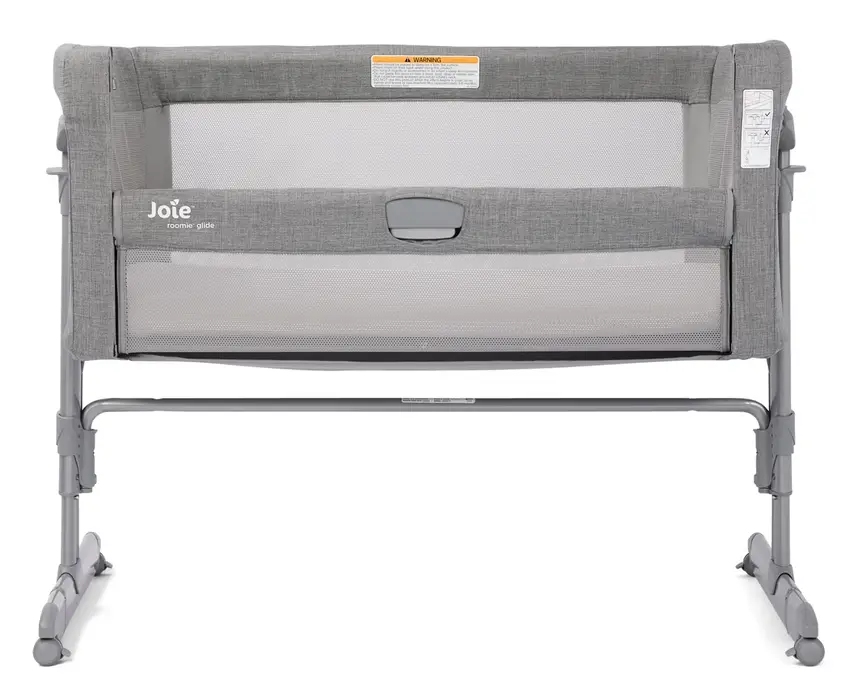
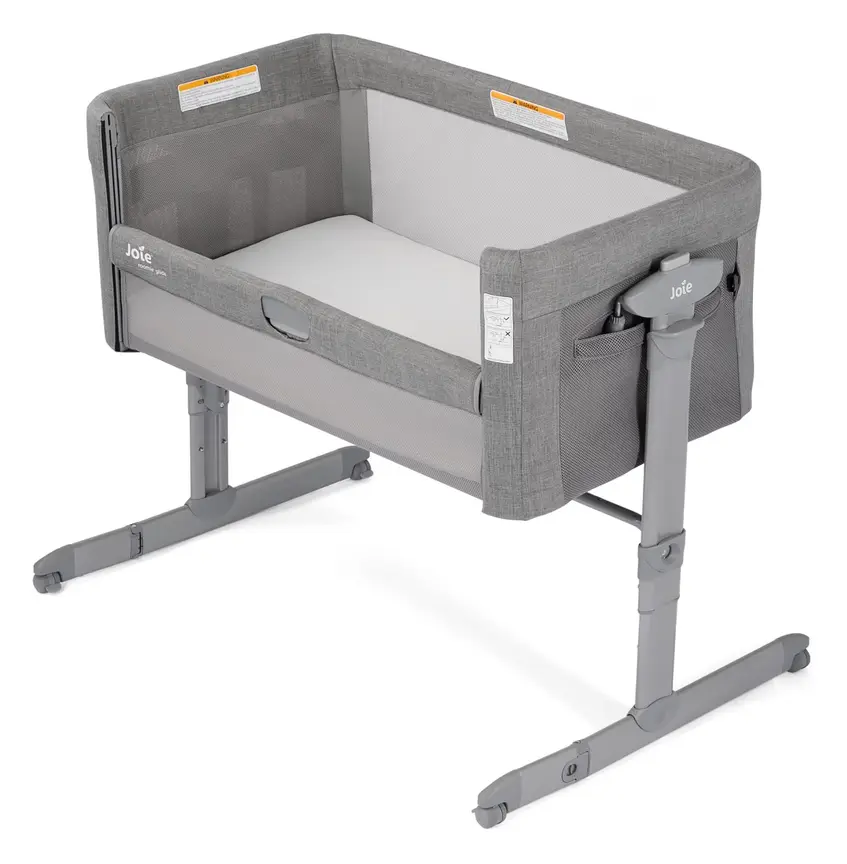
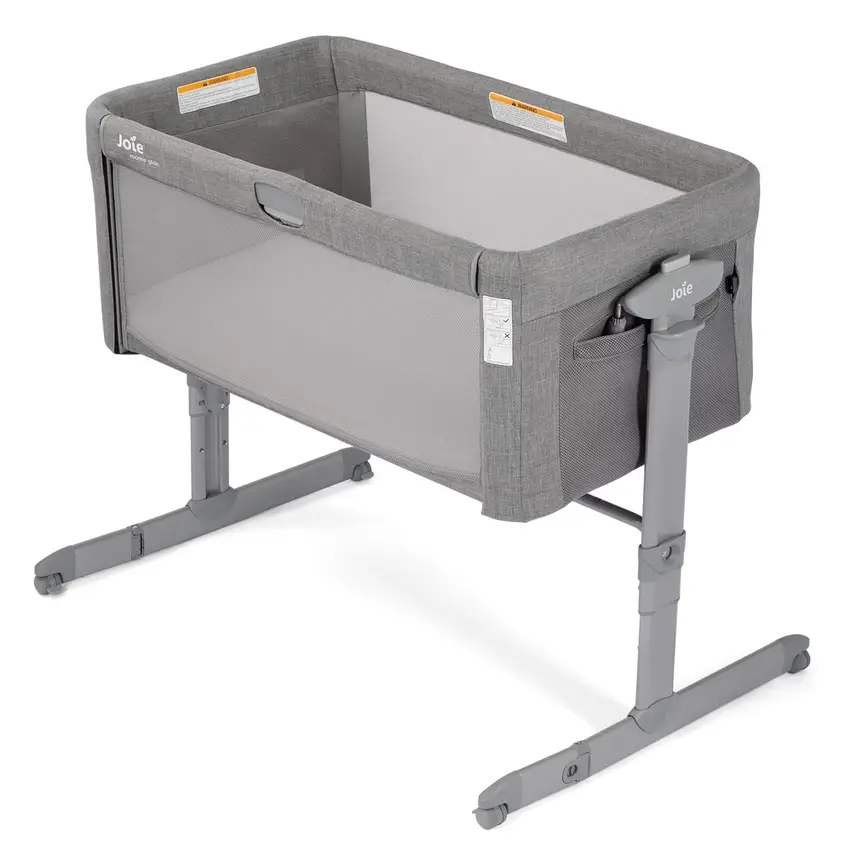
Joie Roomie Glide
A bedside sleeper that glides with one hand and has a gentle tilt.
Read our full review →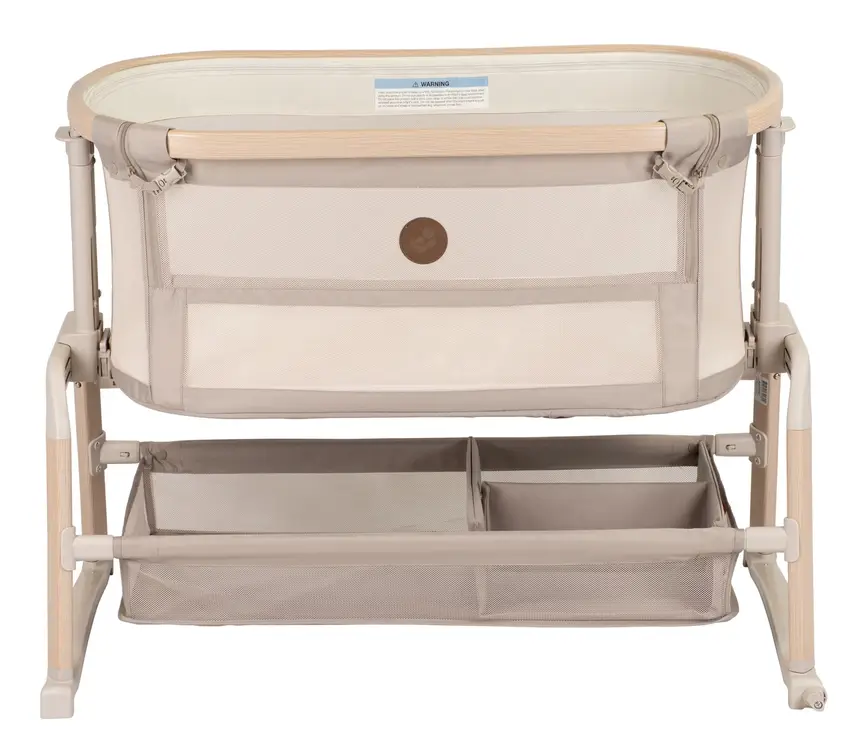 Reviewed
Maxi-Cosi Iora Lux
A bedside bassinet with 4 heights and 3 slide positions, with a 2-year warranty.
Read our full review →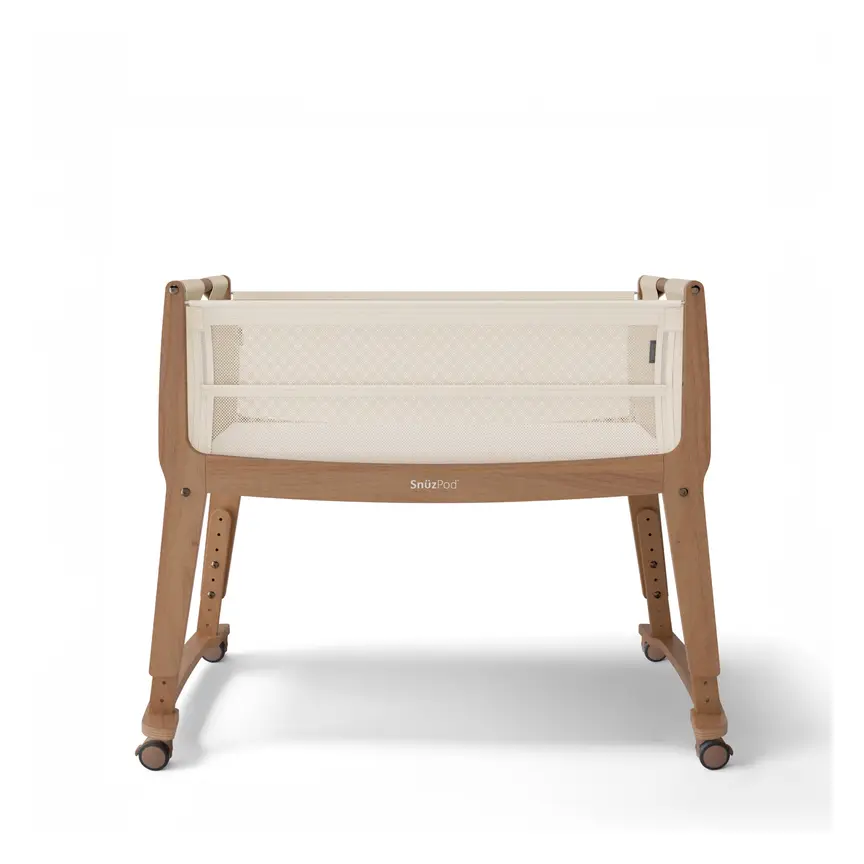 Reviewed
SnuzPod Studio
A bedside crib for night sleeps and naps, with panoramic mesh and a zip-down wall.
Read our full review →Compare all cots, bassinets & bedside sleepers in our reviews →
Frequently asked questions
Can a 1-year-old sleep on an inflatable toddler travel bed?
No, it is not recommended. Most safe sleep experts advise keeping children under 2 years on a firm, flat mattress in a cot or travel crib. A 1-year-old can still get stuck against a soft air bumper or roll into a dip if the bed loses air. Stick with an ultralight travel crib until your child is older and ready for a regular bed.
Are raised inflatable bumpers safe for babies?
No. Babies should never sleep on or next to soft, raised bumpers. If a baby rolls into the soft vinyl side, it can block their nose and mouth. Safe sleep bodies in Australia, the UK, the US and Canada all recommend a clear, flat cot with firm sides or breathable mesh walls.
Why does an inflatable toddler bed feel softer by morning?
A softer bed by morning does not always mean a puncture. When the room cools down overnight, the air inside the mattress contracts and takes up less space. New PVC material also stretches slightly during the first few uses. Top it up with a few pumps of air before the next night, or check the valve and seams with soapy water if it keeps going flat.
Can I put a regular crib mattress inside a travel crib for extra comfort?
No. Never put a regular mattress or extra foam pad inside a travel crib. A different mattress can leave gaps along the flexible mesh walls where a baby can get wedged. Travel crib pads feel firm because firmness is what keeps babies safe. Use only the pad made by the manufacturer for that model.
Should I trust a travel crib provided by an Airbnb or hotel?
Only after a careful safety check. Ask the host for the brand and model before you travel so you can check for recalls. When you arrive, test all frame locks, inspect the mesh for holes, and check that the mattress fits tightly with no extra blankets added. If anything looks worn, broken, or missing, do not use it.
Which is better for flying: an inflatable toddler bed or an ultralight travel crib?
It depends on your child's age. For a baby or child under 2, an ultralight travel crib is the only safe choice, and many pack neatly into a checked suitcase. For a child aged 2 or older who sleeps well in a bed at home, an inflatable toddler bed is much lighter and smaller in your luggage.
Sources
- Red Nose Australia – Portable and folding cots
- Product Safety Australia (ACCC) – Folding cots mandatory standard
- Red Nose Australia – When to move from cot to bed
- Raising Children Network – Safe cots, portacots and mattresses
- The Lullaby Trust (UK) – Safer sleep on holiday
- CPSC (US) – Safe sleep: cribs and infant products
- American Academy of Pediatrics (US) – A parent's guide to safe sleep
- Caring for Kids (Canadian Paediatric Society) – Safe sleep for babies
Related guides
More Car Seats & Travel →
Portable Travel Cribs: Benefits, Safety Checks, and How to Choose One
Travel Prams and Compact Strollers: How to Choose, Fold Size, Safety and Flying
Infant Travel Cribs and Portacots: How to Choose and Use One Safely