











Infant Seat, Convertible Seat or Booster? Choosing the Right Car Seat for Each Stage
Infant seats, convertible seats and boosters each suit a different stage. How they differ, when to move up, the rules in AU, UK, US and Canada, and how to…
On this page
- The three main types, in plain words
- Side-by-side comparison
- What the rules say in each country
- Stage 1: Rear-facing (birth to toddler)
- Stage 2: Forward-facing with a harness
- Stage 3: Booster seat
- Stage 4: The adult seatbelt
- How to choose the right seat
- Getting the fitting right
- Planning ahead: how many seats will you buy?
- Special situations
- Grandparents, carers and travel
- Second-hand seats
- Every-trip checks for any seat
- Common mistakes
- FAQ
- Sources
Short answer: Children usually move through three kinds of car seat. An infant seat (called a capsule in Australia) is rear-facing only and made for babies. A convertible seat faces backwards and then forwards, with a built-in harness, and suits babies through to preschoolers. A booster seat lifts an older child so the car's adult seatbelt fits them properly. The best choice for your family is the seat that fits your child now, fits your car and is approved for your country. The golden rule everywhere: keep your child in each stage for as long as they fit it, and don't rush to the next one.
Key points
- Rear-facing protects babies and young toddlers best. Stay rear-facing as long as the seat allows.
- A harness protects young children better than an adult seatbelt. Stay harnessed as long as your child fits.
- A booster is for children who have outgrown a harness, until the adult belt fits on its own, often at 10 or older.
- Move up by the seat's limits (shoulder markers, height or weight), not by birthdays.
- Every seat must be approved for your country: AS/NZS 1754 in Australia, R129 or R44 in the UK, FMVSS 213 in the US, the National Safety Mark in Canada.
- Get it fitted correctly. A great seat used wrongly gives poor protection.
The three main types, in plain words
Infant seat or capsule
A small, rear-facing seat with a carry handle. Many click into a base that stays in the car, so you can lift your sleeping baby in and out without unbuckling. Some click onto a pram frame. Babies outgrow them in the first year or so, by height or weight. In Australia they're usually called capsules; in the US and Canada, infant seats; in the UK, infant carriers or Group 0+ seats.
Convertible seat
A bigger seat that stays in the car. It's installed rear-facing for babies and toddlers, then turned around to face forwards with the same 5-point harness. Many can be used from birth. Some go a long time rear-facing. In Australia these are often called "birth to 4" seats.
Booster seat
A seat that lifts a child up so the car's lap-sash seatbelt crosses the right parts of their body: the hips (not the tummy) and the middle of the shoulder (not the neck). High-back boosters also guide the shoulder belt and give side and head support. Booster cushions with no back are only for older, bigger children in some countries.
Other seats you'll see
- Forward-facing harnessed seats to about 8 years: common in Australia, used after a convertible seat.
- Combination seats: forward-facing with a harness, then convert to a booster.
- All-in-one seats: rear-facing, forward-facing and booster in one shell.
Side-by-side comparison
| Feature | Infant seat / capsule | Convertible seat | Booster seat |
|---|---|---|---|
| Direction | Rear-facing only | Rear-facing, then forward-facing | Forward-facing |
| How the child is held | Built-in harness | Built-in harness | Car's adult seatbelt |
| Typical stage | Newborn to around 6–12+ months | Birth or infancy to around 4 years (longer for some) | From outgrowing a harness until the belt fits alone |
| Portable? | Yes; lifts out, may click onto a pram | No | Yes; light and easy to move |
| Newborn fit | Usually the best | Varies; check harness height and recline | Not suitable |
| Rear-facing room for toddlers | Outgrown early | Often well past 2 years | None |
| Cost | Moderate | Moderate to high | Usually lowest |
What the rules say in each country
| Country | Key legal rules |
|---|---|
| Australia | Under 6 months: rear-facing. 6 months to 4 years: rear- or forward-facing seat with inbuilt harness. 4 to 7 years: forward-facing harnessed seat or booster. Seats must meet AS/NZS 1754. Product Safety Australia says children should stay in car seats until around 10 years old or while they fit. |
| United Kingdom | Children need a car seat until they are 12 or 135 cm tall, whichever comes first. Height-based (R129) seats must be rear-facing until over 15 months. Seats must carry an "E" approval label. |
| United States | Laws are set by each state. National advice from the AAP: rear-facing as long as possible, harnessed to at least 4 years, booster until the belt fits (usually about 4'9", 8 to 12 years). Seats must meet FMVSS 213. |
| Canada | Provinces and territories set ages and sizes. Transport Canada's stages: rear-facing to the seat's limit; forward-facing harnessed once at least 10 kg and over the rear limit; booster once at least 18 kg and over the harness limit; seat belt once the belt fits. Seats must carry the National Safety Mark. |
The NSW Government's child car seats page is a good plain summary of the Australian rules, which are the same in every state and territory for these ages.
Stage 1: Rear-facing (birth to toddler)
Babies and young toddlers have large, heavy heads and soft, still-growing neck bones. In a frontal crash, a rear-facing seat spreads the force across their whole back and head. That's why the AAP says all infants should ride rear-facing from their first ride home, and why Kidsafe, Transport Canada and UK law all push for longer rear-facing.
Infant seat or convertible from birth? Both are safe if they fit your baby. An infant seat is easier to carry and often fits tiny babies better. A convertible seat saves buying a second seat and lets your child stay rear-facing longer. Many families do both: a capsule for the first months, then a convertible seat rear-facing.
When to move from an infant seat: when your baby reaches its height limit (in Australia, the upper shoulder marker; elsewhere, the stated height or the rule that the head is within about 2.5 cm of the top of the shell) or weight limit. Move into a convertible seat, still rear-facing.
Car Seats & Capsules worth a look
Real products from our catalogue. We don't show star ratings or review counts; check the current price, stock and reviews on Amazon before you buy.
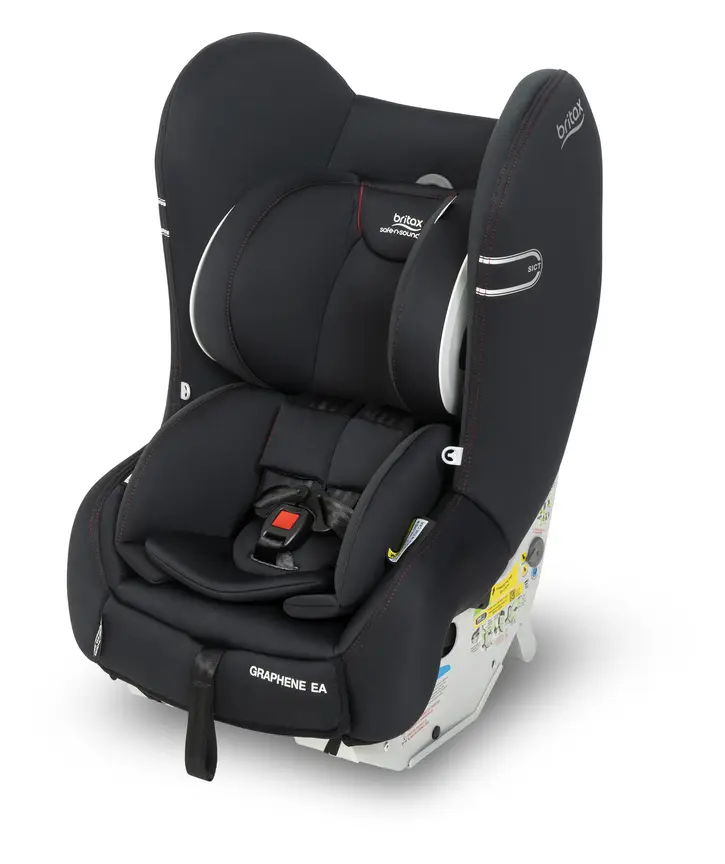
Britax Safe-n-Sound Graphene EA
Britax's Australian convertible seat with SICT side-impact technology, designed to reduce crash energy reaching your child's chest.

Britax Safe-n-Sound Hi Liner SG
A high-back booster for about 4 to 8 years. A clip keeps the seatbelt in the right place.
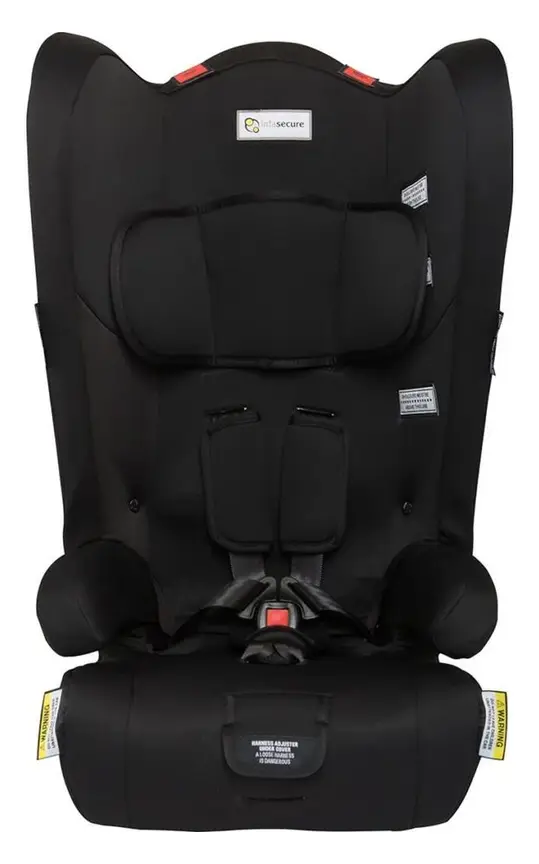
InfaSecure Roamer II Convertible Booster Seat
Harnessed booster seat
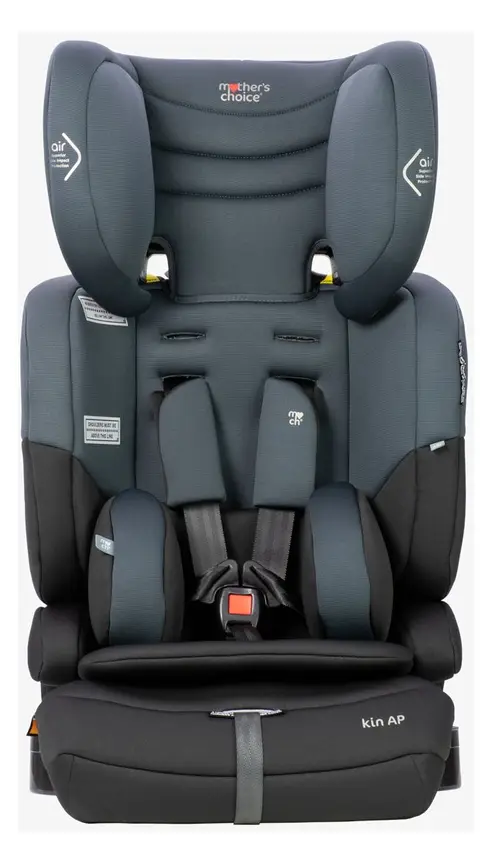
Mother's Choice Kin AP Convertible Booster Seat
Harnessed booster seat
Stage 2: Forward-facing with a harness
Turn forward only when your child has outgrown the rear-facing limits of their convertible seat. Then:
- Reinstall the seat forward-facing using the right belt path or anchors.
- Use the top tether strap every time.
- Move the harness to the slots at or just above the shoulders.
- Keep the harness snug, with no slack at the shoulders.
The AAP says it's best for children to ride in a harnessed seat as long as possible, at least to 4 years. In Australia, many forward-facing seats keep a harness to around 8 years. Transport Canada says to keep children in each stage as long as possible.
Stage 3: Booster seat
A booster is for a child who has outgrown a harnessed seat by height or weight, not just by age. In a booster:
- The lap part of the belt sits low across the hips and upper thighs, not the tummy.
- The shoulder part crosses the middle of the shoulder and chest, not the neck or the arm.
- Your child sits back against the booster, without slouching, for the whole trip.
Boosters must be used with a lap-sash (three-point) belt, never a lap-only belt. In Australia, many boosters also use a top tether or ISOFIX connectors to hold the booster steady when it's empty.
If your child slouches, leans out of the belt or plays with it, they may not be mature enough for a booster yet. A harnessed seat is safer for them.
Stage 4: The adult seatbelt
A child is ready for the adult belt alone when they pass all five of these checks, which Kidsafe and Raising Children Network describe:
- Back flat against the vehicle seat back.
- Knees bend comfortably at the front edge of the seat.
- Shoulder belt sits across the middle of the shoulder.
- Lap belt sits low across the tops of the thighs.
- They can stay sitting like this for the whole trip.
Many children don't pass until about 145 cm tall, often between 10 and 12 years old. Children under 13 are safest in the back seat.
How to choose the right seat
- Approved for your country. Never use a seat bought overseas.
- Fits your child now. Check the shoulder markers or height and weight limits.
- Fits your car. Test-fit it in your car if you can, especially rear-facing.
- Your lifestyle. Lots of short trips with a sleeping baby? A capsule's portability helps. One car and long-term use? A convertible seat suits. Carpooling with older kids? Light boosters are easy to move.
- Easy to use correctly. Clear labels, an easy harness adjuster and simple installation make mistakes less likely.
- Independent ratings. In Australia, the Child Car Seats program publishes crash protection and ease-of-use ratings. Check their results directly.
- Date of manufacture. Check the label and the maker's lifespan.
Getting the fitting right
Product Safety Australia recommends using an authorised restraint fitting service, or carefully following the seat and car manuals. In the US and Canada, certified child passenger safety technicians check seats; in the UK, many retailers and road safety groups do. Common things fitters fix:
- Seat too loose (it should move no more than about 2.5 cm at the belt path).
- Top tether not used, or twisted.
- Wrong belt path for the seat's mode.
- Wrong recline for a newborn.
- Harness too loose or straps at the wrong height.
Side by side: more car seats & capsules to compare
Real products from our catalogue. We don't show star ratings or review counts; check the current price, stock and reviews on Amazon before you buy.

Babylove ezymove Booster
A very light, low-cost booster for about 4 to 8 years. It folds flat for storage.

Babylove ezyone2
A very low-cost convertible seat. Rear-facing to about 12 months, then forward-facing to about 4 years.
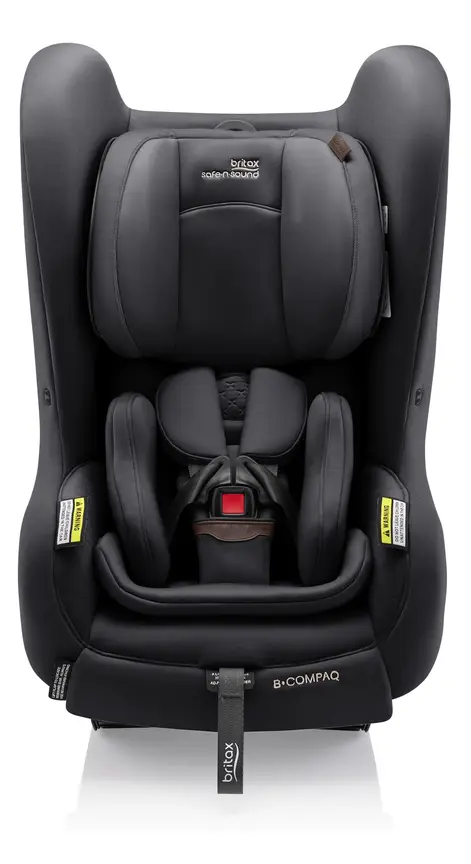 Reviewed
Britax Safe-n-Sound B-Compaq Lux
A convertible seat made for small cars with little room in the back.
Read our full review →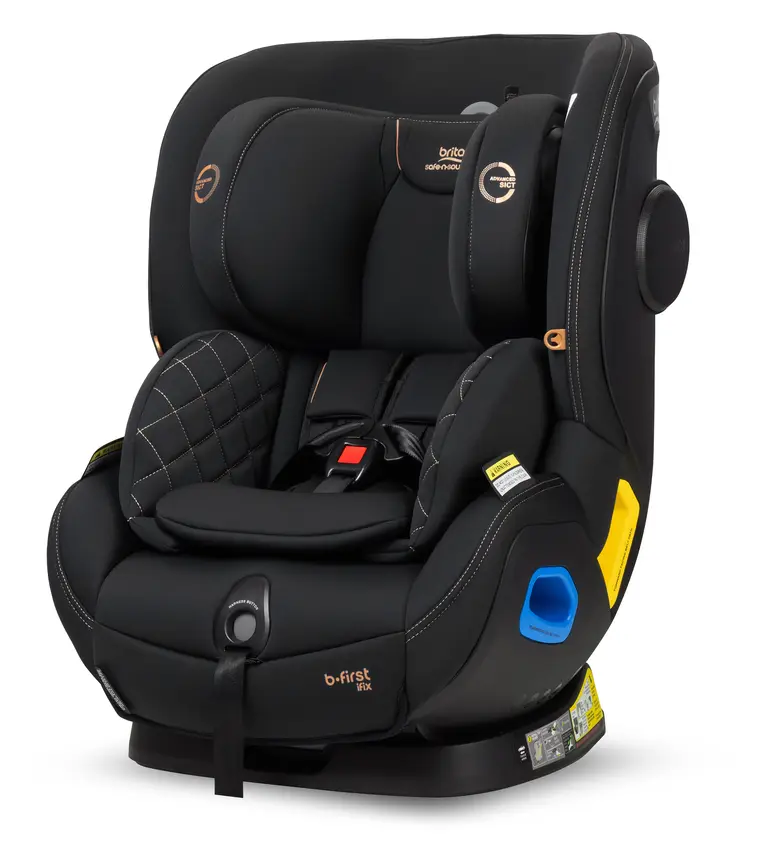
Britax Safe-n-Sound b-first+
Convertible seat from Britax's Australian Safe-n-Sound range with SICT deployable side-impact protection.
Planning ahead: how many seats will you buy?
Most children use two or three seats between birth and about 10 to 12 years. Here are three common paths:
| Path | Seats | Good for |
|---|---|---|
| Capsule first | Infant capsule → convertible seat → booster | Families who want a portable seat in the newborn months |
| Convertible from birth | Convertible seat → forward-facing harnessed seat or booster | Families who mostly drive and don't need to carry the seat |
| All-in-one | One seat, possibly plus a booster later | Families who want fewer purchases, if the seat fits at both ends |
Whatever path you take, check each seat's lifespan from its date of manufacture, and think about whether a younger sibling will need it later. A seat handed down must still be within its lifespan, have all its parts and have never been in a crash.
Special situations
Premature or small babies
Some infant seats fit small babies better than others. Hospitals in some places check that premature babies can breathe well in their car seat before going home. Ask your hospital team for advice, keep trips short, and choose a seat whose lowest harness position suits your baby.
Twins and three across
Fitting two or three seats in one row can be tricky. Measure your back seat and check the width of each seat. Some narrow seats are designed for three across. Follow your car manual on which positions can take a child seat and top tether.
Children with additional needs
Some children need special restraints. In the UK, a doctor can issue an exemption certificate in some cases, and there are specialist restraints in all four countries. Ask your child's health team or an occupational therapist.
Grandparents, carers and travel
Every car your child rides in needs the right seat, correctly fitted. If grandparents or carers drive your child often, a second seat for their car saves moving one back and forth. Boosters are easy to swap between cars. When flying, check whether your seat is approved for aircraft use and whether your airline allows it, and remember a seat bought for one country can't be used in another country's cars.
Second-hand seats
Product Safety Australia says not to use or buy a second-hand seat if it doesn't meet the standard, or if you don't know its history, condition or age, and not to use one over 10 years old. Transport Canada says not to use a seat that has been in a crash, and to check for recalls, missing parts and a working harness. The AAP says to avoid used seats if you don't know their history. If you're unsure, buy new.
Every-trip checks for any seat
Once your seat is fitted, a quick check before each drive keeps it working as it should:
- Harness snug: you can't pinch any spare strap at the shoulder. Product Safety Australia gives this pinch test.
- Straps flat and not twisted.
- Buckle clicked and the chest clip (on seats that have one) at armpit level.
- No bulky clothes under the straps. Take off puffy jackets and put a blanket over the buckled harness.
- Seat still tight: give it a firm shake at the belt path now and then.
- Top tether still tight and not twisted.
- Booster belt position: lap belt on the hips, shoulder belt across the middle of the shoulder.
- Nothing loose in the car that could fly around in a crash. Put bags and shopping in the boot.
These checks take less than a minute, and they matter just as much as which seat you bought.
More options, from budget to premium
Real products from our catalogue. We don't show star ratings or review counts; check the current price, stock and reviews on Amazon before you buy.

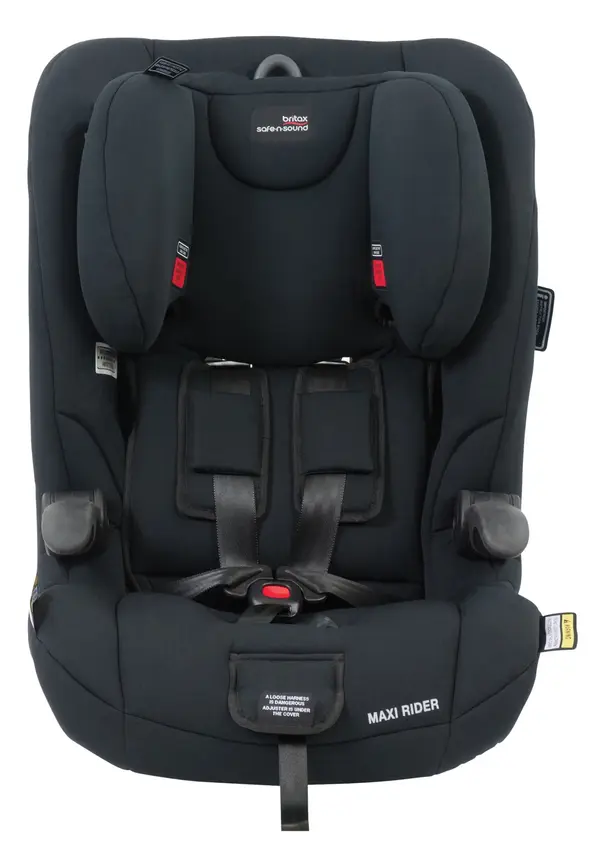


Britax Safe-n-Sound Maxi Rider
A seat with a harness from 12 months to about 4 years. Then it becomes a booster up to 6–8 years.
Read our full review →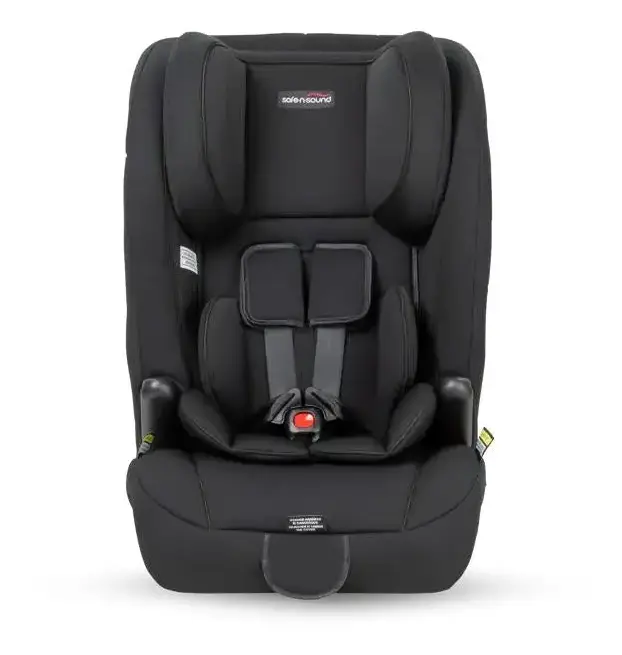
Britax Safe-n-Sound Atlas-GRO II Harnessed Car Seat
Harnessed booster seat
Common mistakes
- Turning forward-facing too early, often because of bent legs. Bent legs are normal and not a reason to turn.
- Moving to a booster too early.
- Moving out of a booster too early.
- Puffy jackets or blankets under the harness.
- Adding head supports, strap covers or toys that didn't come with the seat.
- Using a second-hand seat with an unknown history or one that's been in a crash.
- Letting babies sleep in car seats outside the car. Red Nose advises taking your baby out of the car seat when you get home.
FAQ
Do I need an infant seat if I buy a convertible seat?
Not always. Many convertible seats suit newborns. An infant seat is handy if you want to carry your baby in the seat or click it onto a pram.
When should my child move to a booster?
When they've outgrown their harnessed seat by height or weight, and can sit properly for the whole trip. In Australia, the law allows boosters from 4 years, but best practice is to stay harnessed for as long as they fit.
When can my child stop using a booster?
When the adult belt fits properly, using the five-step check. Often around 145 cm tall and 10 to 12 years old. In the UK, children need a seat until 12 or 135 cm.
Is a backless booster safe?
High-back boosters give better belt guidance and side support for younger children. Backless cushions are only for older, bigger children where your country allows them.
Can I use one seat for all stages?
Some all-in-one seats claim to. Check the fit at each end, especially for newborns and tall children.
Are more expensive seats safer?
Not necessarily. All approved seats pass the same mandatory standard for their country. Fit, correct use and independent ratings matter more than price.
What if my child is between stages?
Stay in the earlier stage. If your child has outgrown one seat but is too small for the next, look for a seat with higher limits in the earlier mode, such as a convertible seat that rear-faces longer or a harnessed seat that goes to 8 years.
Where's the safest seat in the car?
The back seat. Follow your car manual for which positions have anchor points and suit a child seat. Never put a rear-facing seat in front of an active airbag.
My child hates their car seat. What can I do?
Check the fit first: a harness that's too tight in the crotch, straps at the wrong height or a hot, padded seat can all make children grumpy. Give them a special car toy that's soft and light, play music, and praise them for sitting well. Never give in by loosening the harness or moving them to the next stage early.
Is ISOFIX safer than a seatbelt installation?
The AAP says the seatbelt and lower anchor systems are equally safe when used correctly. ISOFIX can make it easier to get a tight fit. Use whichever gives you a correct, tight installation in your car.
Sources
- Product Safety Australia (ACCC) – Car seats guide
- Kidsafe – National best practice guidelines: safety of children in motor vehicles
- NSW Government – Child car seats (road rules)
- GOV.UK – Child car seats: the law
- HealthyChildren.org (American Academy of Pediatrics) – Car seats: information for families
- Transport Canada – Choosing a child car seat or booster seat
- Raising Children Network – Child car seats and restraints
- Red Nose Australia – Take your sleeping baby out of the car seat when you get home
- Child Car Seats (Australian independent crash-test ratings)
Related guides
More Car Seats & Travel →
Convertible Car Seat vs Infant Capsule: Safety, Cost Per Year and Your Baby's Back
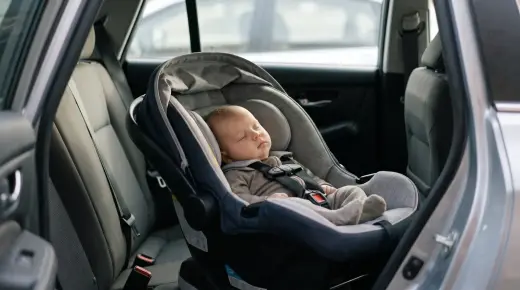
5 Common Mistakes With Infant Car Seat Head Supports (and What to Do Instead)
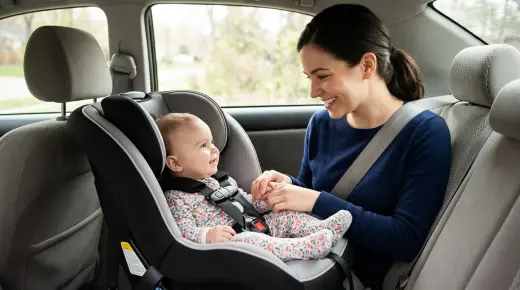
Budget Convertible Car Seats: How to Choose a Safe Seat for Less
