








Travel Prams and Compact Strollers: How to Choose, Fold Size, Safety and Flying
How to choose a travel pram: fold size, cabin rules, newborn recline, and safety standards in Australia, the UK, the US and Canada.
On this page
- Key points
- What a travel pram is, and how it differs from a full-size pram
- How to choose a travel pram
- Travel pram styles compared
- Age stages: from newborn to toddler
- Flying and travelling with a pram
- Weather, sun and comfort on trips
- Safety rules and standards in Australia, the UK, the US and Canada
- Care, cleaning and second-hand checks
- Common mistakes to avoid
- Frequently asked questions
- Sources
Short answer: A good travel pram is light, folds small, and keeps your baby safe and comfy. Pick one with a strong five-point harness, reliable brakes, and a flat or near-flat seat if you have a newborn. Always check the folded size against your car boot or airline cabin rules before you buy.
Safety rules for prams and strollers are very similar in Australia (Product Safety Australia and Red Nose), the UK (OPSS and The Lullaby Trust), the US (CPSC and AAP) and Canada (Health Canada and the Canadian Paediatric Society).
Key points
- Folded size matters most: Measure your car boot and check airline cabin limits before buying.
- Newborns need flat support: Young babies cannot hold their heads up. They need a flat recline, a bassinet, or a compatible capsule.
- Lighter prams have trade-offs: Smaller wheels and lighter frames bump more on rough paths. They also hold less in the basket.
- Style comes second: Neat colours and sleek frames are nice. Brakes, locks, and airflow keep your baby safe.
- Keep air flowing: Never drape heavy blankets or wraps over the pram hood in warm weather.
- A pram is not a cot: Never leave your baby to sleep in a pram unsupervised.
What a travel pram is, and how it differs from a full-size pram
A travel pram is a lightweight stroller built to fold into a small shape. Most parents call them compact strollers or cabin strollers. You can lift one with one hand. You can slide it into a tight car boot or carry it through an airport.
Full-size everyday prams are built for long walks and heavy loads. They have large wheels, soft suspension, and deep storage baskets. They also take up a lot of space when folded. Many feel heavy to lift in and out of a car.
Travel prams cut out extra bulk to save weight and space. To do this, they use smaller wheels, narrower seats, and simpler frames. They work well on smooth pavements, shopping centre floors, trains, and airport terminals. They are harder to push on grass, gravel, sand, or steep kerbs.
Why parents want both style and function
Modern travel prams look much neater than old umbrella strollers. Many have clean lines, soft fabrics, and smart folds. Still, looks should never beat safety or daily comfort.
A sleek frame means nothing if the brakes stick or the seat feels cramped. Focus on how the pram folds, how it pushes, and how well it supports your child. Then pick a colour and fabric you like.
When a travel pram makes the biggest difference
You notice the value of a compact stroller in tight spaces. Think about narrow cafe aisles, busy buses, and small lift doors. A slim frame fits through places where a wide pram gets stuck.
It also helps if you live in an upstairs flat with no lift. Carrying a heavy pram up two flights of stairs with a baby and groceries is exhausting. A light travel pram with a shoulder strap makes that trip much easier.
Prams & Strollers worth a look
Real products from our catalogue. We don't show star ratings or review counts; check the current price, stock and reviews on Amazon before you buy.


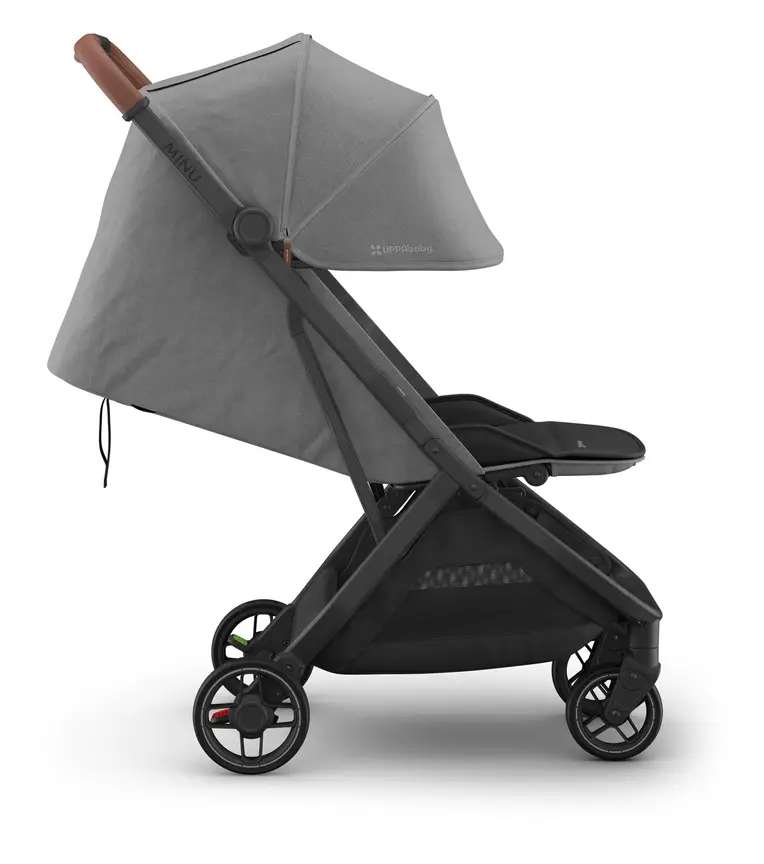


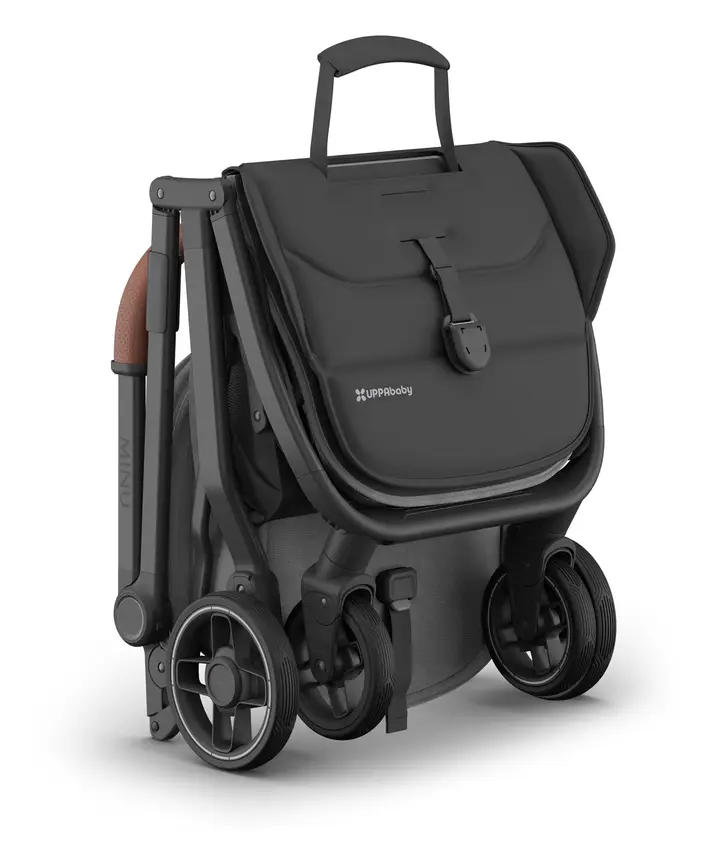
UPPAbaby Minu V3
A slim travel stroller that folds with one hand, stands on its own and is sized for plane overhead lockers.
Read our full review →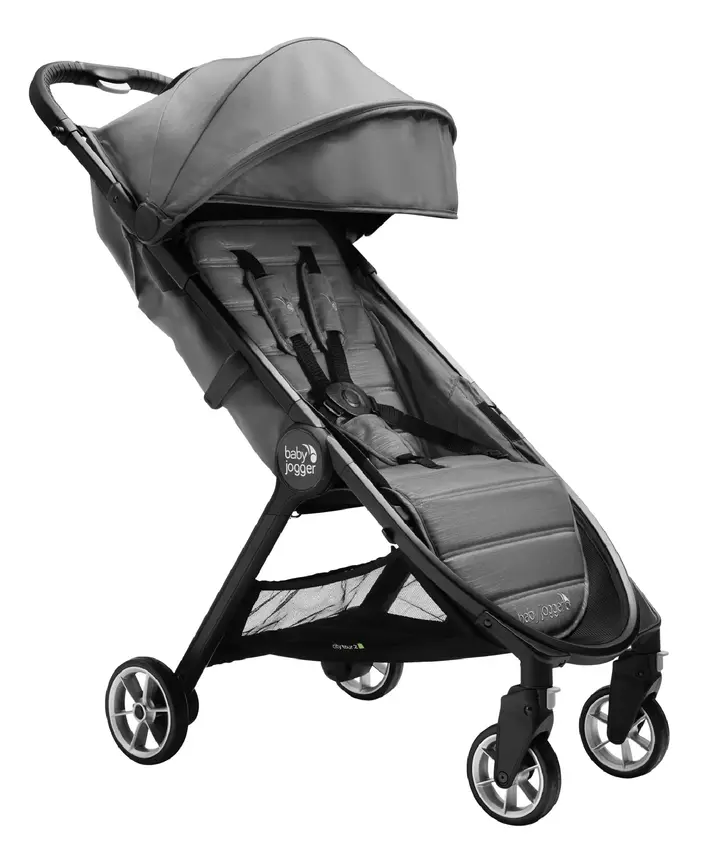 Reviewed
Baby Jogger City Tour 2
A 6.5 kg stroller with a near-flat recline. It folds small and comes with a carry bag.
Read our full review →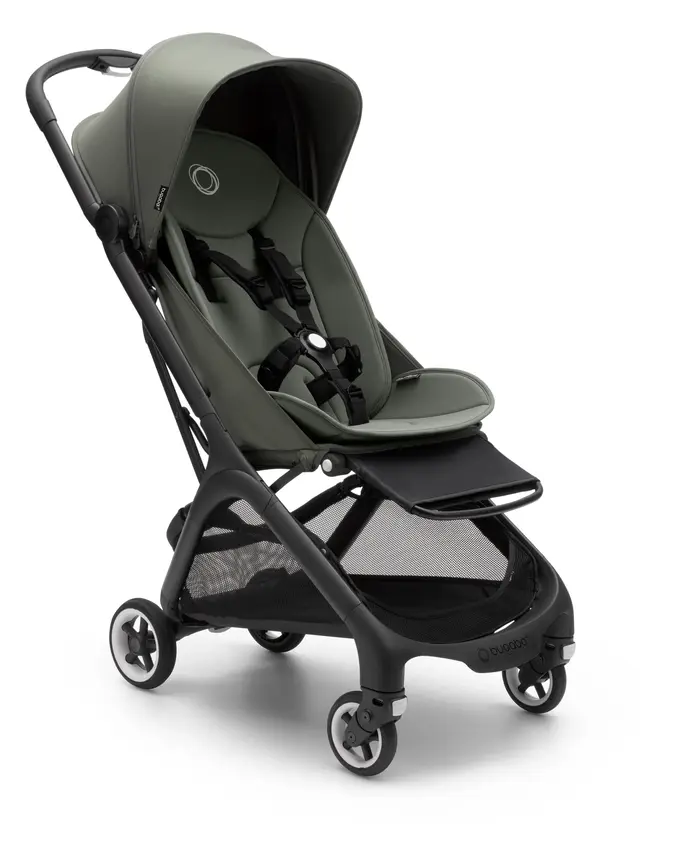


Bugaboo Butterfly
Bugaboo's cabin-friendly compact stroller with a one-second fold — the travel partner to a Fox, not a replacement for it.
Bugaboo Butterfly 2
The newer Butterfly. It folds in about one second, has a lay-flat seat and a bigger basket with a back pocket.
Read our full review →How to choose a travel pram
Every family travels differently. Think about where you will use the pram most. Use these checks to narrow down your choices.
Weight and carry style
A travel pram should feel easy to lift with one arm. You often need your other arm to hold your baby. Check how the pram carries when folded. Some have a padded shoulder strap. Others have a pull-along handle like a small suitcase, or come with a carry bag.
Do not just read the weight on the box. Pick the pram up in a shop if you can. A pram with awkward balance can feel heavier than a slightly heavier pram with a good handle. Check if the folded frame digs into your hip when you carry it.
Folded size and one-hand fold
A true one-hand fold is a huge help when you are alone with a baby. You hold your child on one hip, press the latch, and fold the frame with your free hand. Test the fold and unfold a few times before you buy.
Also check if the folded pram stands up on its own. A self-standing fold keeps the seat fabric off dirty floors in cafes, public toilets, and airports. Check the folded shape too. Some compact prams fold flat like a book, while others fold into a small square.
Seat recline and newborn support
Newborn babies have weak neck muscles and heavy heads. If they sit too upright, their chin can drop onto their chest. This can block their airway and make it hard to breathe.
If you plan to use a travel pram from birth, look for one of three things:
- a seat that reclines flat or nearly flat;
- a matching newborn bassinet attachment;
- secure clips for a certified infant car capsule.
Check how the seat reclines. Some travel prams use a strap and toggle at the back of the seat. Straps can be fiddly to raise with one hand when your child is sitting up. A lever or clip system is often smoother, though both work safely when locked.
For older babies and toddlers, look for a seat that sits upright enough for them to look around. Babies get grumpy if they are always leaning back. A good footrest also stops their legs from dangling during naps.
Wheels, suspension and brakes
Small plastic wheels rattle on bumpy footpaths. Look for rubber or foam-filled tyres with simple spring suspension on at least the front wheels. Swivel front wheels help you turn in tight shop aisles. Being able to lock the front wheels straight helps on slightly rougher ground.
Test the foot brake with everyday shoes, including thongs or sandals. A brake pedal that needs you to flick it up with your bare toes can hurt. Look for a push-down, push-release brake pedal instead. The brake should lock firmly with one press and not let the pram roll.
Check that the rear axle is high enough that your toes do not kick it as you walk. Tall parents with long strides often hit low rear bars on compact frames.
Sun canopy, airflow and storage basket
A short canopy leaves your baby's legs and face in direct sun. Look for an extendable hood with a peek-a-boo window. This lets you check on your child without stopping. Mesh panels on the back or sides let warm air escape on hot days.
Under-seat baskets on travel prams are usually small. Make sure you can still reach the basket when the seat is reclined flat. Check that your nappy bag actually fits inside. A basket with a low front lip is easier to load than one blocked by metal bars.
Handlebar height and push feel
Most travel prams have a fixed handlebar height to keep the fold small and light. If you or your partner are very tall or very short, push the pram for a few minutes in a shop. Make sure your wrists feel relaxed and your back stays straight.
Also test steering with one hand. You will often hold an umbrella, a coffee, or an older child's hand while pushing. A single push bar steers much better with one hand than two separate handles.
Seat fabric and ease of cleaning
Travel brings spills, snacks, sunscreen, and airport grime. Look for seat covers that unzip or unclip easily for washing. Check the care label before you buy. Machine-washable fabrics save a lot of time.
Dark fabrics hide marks well, while light fabrics stay cooler in strong sun. Either way, a removable seat liner is a smart extra. You can pull it off and wash it in minutes without stripping the whole pram.
Travel pram styles compared
Not all compact strollers work the same way. This table compares the four main styles so you can match one to your trips.
| Feature | Cabin-sized compact fold | Everyday compact stroller | Umbrella-fold stroller | Compact travel system |
|---|---|---|---|---|
| Folded shape | Small square or slim pack | Flat fold, medium size | Long and narrow tube | Small frame plus separate capsule |
| Carry weight | Very light | Light to medium | Light | Light frame, heavier with capsule |
| Newborn use | Only if flat recline or bassinet | Often from birth with flat seat | Usually from 6 months | From birth using car capsule |
| Bump handling | Best on smooth paths | Handles everyday footpaths well | Basic, rattles on rough paths | Smooth on pavements and shops |
| Basket space | Small | Medium | Very small | Small to medium |
| Steer with one hand | Usually yes | Usually yes | Hard with twin handles | Usually yes |
| Best for | Flights, trains, tiny boots | Daily errands and short trips | Quick holiday use for toddlers | Car-to-shop trips with a newborn |
Age stages: from newborn to toddler
Your baby's needs change fast in the first three years. A travel pram that works for a toddler may not be safe for a tiny baby.
| Age stage | What your baby is doing | What to look for in a travel pram |
|---|---|---|
| Birth to 6 months | Weak neck control, sleeps often | Flat recline, bassinet, or capsule; rear-facing view if possible; clear airflow |
| 6 to 12 months | Sitting up, curious, grabbing straps | Five-point harness, upright seat option, extendable sun shade |
| 1 to 2 years | Walking, climbing in and out | Strong foot brake, easy-clean fabric, sturdy footrest |
| 2 to 4 years | Heavy toddler, still gets tired | Higher seat weight limit, tall seat back, easy push with extra weight |
Newborn to 6 months
In the first months, your baby needs full back and head support. Most travel prams face forward so the frame can fold smaller. That means you cannot always see your baby's face while you push.
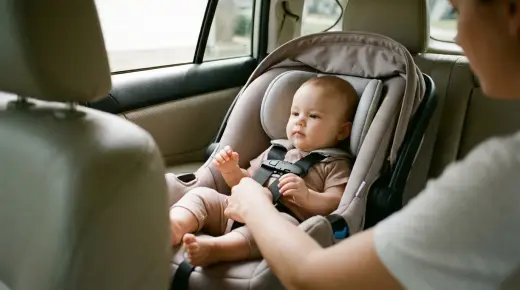
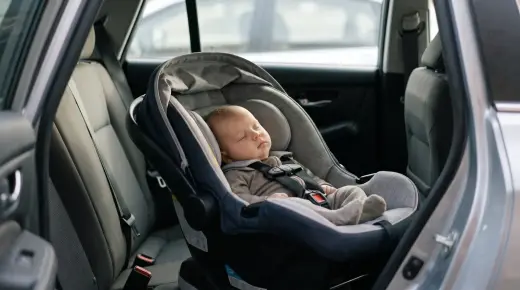
Use the mesh peek-a-boo window often to check their breathing and temperature. If you clip a car capsule onto the frame for short errands, move your baby onto a flat, firm sleep surface once you arrive. Health groups in Australia, the UK, the US and Canada warn against letting babies sleep for long stretches in a curved car seat.
If you use a bassinet attachment, make sure the mattress inside is firm, flat, and fits snugly with no gaps. Do not add soft pillows, cot bumpers, or thick blankets inside the bassinet.
6 to 12 months
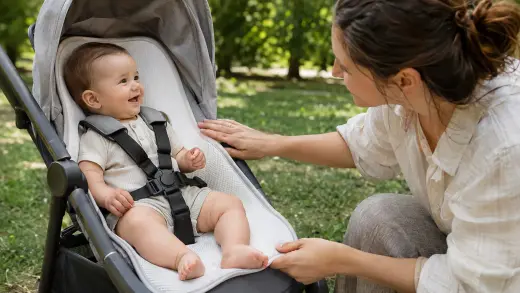
Once your baby sits on their own, they will want to watch the world. Most forward-facing travel prams suit this stage well. Always use the five-point harness over both shoulders, around the waist, and between the legs.
Make sure the shoulder straps sit at or just below shoulder height. Check the harness tightness each month as your baby grows and wears different clothes. A padded bumper bar can give curious babies something safe to hold onto, though it never replaces the harness.
1 to 4 years
Toddlers walk a lot, then suddenly ask to be carried. A light travel pram is handy for theme parks, zoos, and long days out. Check the maximum child weight on the pram frame label before you travel.
Check the seat height too. Some compact strollers have short seat backs, so a tall two-year-old's head may hit the canopy. Teach your toddler to wait until the brake is locked before climbing in or out. Never let a child stand on the seat or hang on the handlebar.
Flying and travelling with a pram
Flying with a baby or toddler takes planning. Rules change from one airline to the next, so check your booking details early.
Cabin overhead locker vs gate-checking
Some ultra-compact prams are built to fit inside an aeroplane overhead locker. Even so, airlines do not guarantee cabin space. Full flights run out of locker room fast, and cabin crew decide what fits on the day.
Always check your airline's cabin bag size and weight limits before you leave home. Measure your folded pram in its carry bag, including any wheels that stick out. Some airlines count a cabin pram as your carry-on bag. Others let you bring it as an extra baby item.
If your pram does not go in the cabin, most airlines let you push it to the boarding gate. Staff tag it there and put it in the hold. You then collect it at the gate or at baggage claim when you land. Ask at check-in where you will pick it up, especially if you have a connecting flight.
Protecting your pram in the hold
Baggage holds are rough on light aluminium frames. A folded pram can get bent or scratched if it is tossed under heavy suitcases. Use a padded travel bag made for prams. Some brands offer travel bags that cover damage during flights, so check the warranty rules.
Take off loose parts like cup holders, snack trays, or clip-on toys before handing the pram over. Lock the frame latch so it cannot spring open during loading. Put your name and phone number on a luggage tag tied to the frame and on the outside of the bag.
Airport security checks
Security rules are similar across Australia, the UK, the US (TSA) and Canada (CATSA). You will usually fold your pram and send it through the X-ray scanner on the belt. If it is too large for the belt, staff will check it by hand.
Empty the storage basket before you reach the front of the queue. Keep baby milk, water, and wipes in an easy-to-grab bag so you move through faster. Having a baby carrier ready helps if you need to hold your baby while folding the pram at the scanner.
Car boots, trains, buses and taxis
Measure the narrowest part of your car boot opening before you buy. A pram might fit inside the boot floor, yet fail to slide past the boot lip. Think about holiday packing too. Check if the folded pram fits alongside your suitcases.
On trains and buses, lock the pram brakes and keep hold of the frame while moving. Park sideways or in the marked pram space so you do not block the aisle. On buses, some drivers ask you to fold the pram and hold your child if the bus is full.
For taxis and rideshares, a one-hand fold lets you collapse the pram quickly on the kerb. Keep your child safely back from traffic while you load the boot.
Side by side: more prams & strollers to compare
Real products from our catalogue. We don't show star ratings or review counts; check the current price, stock and reviews on Amazon before you buy.


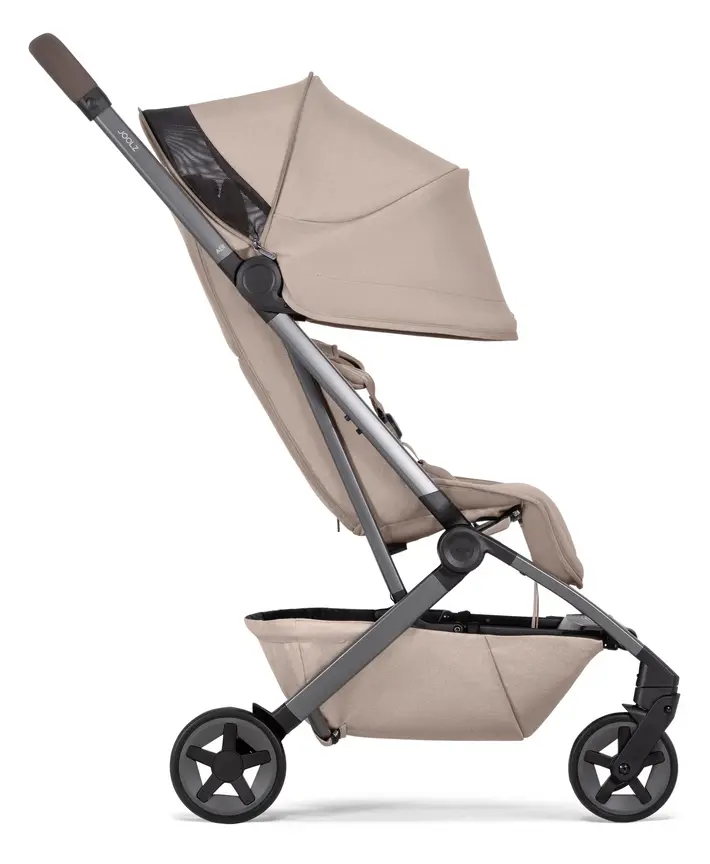


Joolz Aer2
A 6.5 kg stroller with a fast one-hand fold, deep recline from newborn and a UPF50+ sun hood.
Read our full review →
 Reviewed
Bugaboo Fox 5
Bugaboo's flagship all-terrain pram: big-wheel suspension ride, one-piece fold, bassinet from birth and a seat rated to 22 kg.
Read our full review →


Jengo Eden Compact Stroller
A budget compact stroller from birth to 22 kg. It folds with one hand and has a big basket.
Read our full review →Weather, sun and comfort on trips
Travel often puts your baby in new weather. A pram that feels fine at home may need extra care in strong sun, heat, or rain.
Staying cool and sun-safe
Babies heat up much faster than adults. Dark pram hoods can trap warm air inside the seat. Never drape a blanket, towel, or muslin wrap over the front of the pram. Even thin cloth blocks airflow and raises the heat inside fast.
Walk in the shade during the middle of the day. Open all mesh airflow panels on the back and sides of the pram. Dress your baby in light, loose cotton layers. Check the back of their neck or tummy often. If their skin feels sweaty or hot, move to a cool indoor spot and remove a layer.
Rain, wind and cold days
A fitted rain cover keeps wind and rain off your child. Only use a clear rain cover made for your exact pram model. Make sure it has air holes on the sides so fresh air can get in. Take the rain cover off as soon as the rain stops or when you step inside a warm shop or train.
In cold weather, dress your baby in warm clothes or use a fitted pram footmuff. Keep loose blankets tucked below chest level, or skip loose blankets and use a wearable zip-up suit. Always keep your baby's face and nose clear.
Safety rules and standards in Australia, the UK, the US and Canada
Prams and strollers are checked by national safety bodies in all four countries. Always buy from trusted shops and check for a safety label on the frame or in the manual. Never buy unlabelled imports online.
| Country | Main safety body and health advice | Main pram safety standard or rule |
|---|---|---|
| Australia | ACCC (Product Safety Australia), Red Nose Australia, Kidsafe Australia | AS/NZS 2088 (mandatory safety rules for prams and strollers) |
| United Kingdom | Office for Product Safety and Standards (OPSS), The Lullaby Trust, NHS, RoSPA | BS EN 1888 (wheeled child conveyances standard) |
| United States | Consumer Product Safety Commission (CPSC), American Academy of Pediatrics (AAP), TSA | ASTM F833 (federal stroller and carriage safety standard) |
| Canada | Health Canada, Canadian Paediatric Society (Caring for Kids), CATSA | Canadian federal carriages and strollers safety regulations |
Key safety features to check on every pram
- Five-point harness: Must clip securely at the waist, shoulders, and crotch. Babies can slip out of a waist-only belt.
- Dual-action fold locks: The frame must need two separate steps to fold. This stops it collapsing with your baby inside.
- Parking brakes: Must lock cleanly and hold the pram on a slope.
- Tether strap: In Australia, prams must have a wrist tether strap so the pram cannot roll away if you let go. Use it on hills and near roads.
- No sharp edges or finger traps: Check hinges, latches, and folding joints for small gaps that could pinch tiny fingers.
- No loose cords or small parts: Keep toys and dummy clips short so they cannot wrap around your baby's neck.
Safe sleep and heat rules on the move
Red Nose Australia, The Lullaby Trust in the UK, the AAP in the US, and Health Canada all share the same safe sleep rules for prams. A pram is for moving your baby, not for long unsupervised sleep.
Always stay close and keep your baby's face clear. Dress your baby for the weather so they do not overheat. When you get back to your home or hotel room, move your sleeping baby onto a firm, flat cot or bassinet.
Checking for recalls
Before you buy a new or second-hand travel pram, check national recall lists. Product Safety Australia, the UK OPSS, the US CPSC, and Health Canada all post free recall alerts online. If a pram has been recalled for brake failure or frame collapse, do not use it.
Care, cleaning and second-hand checks
Travel prams take a beating from sand, grit, and luggage holds. A few minutes of care after each trip keeps the frame folding smoothly and stops parts from jamming.
Keeping wheels and hinges working
- Brush sand and dirt out of wheel hubs and folding joints with a dry paintbrush.
- Never spray wet oil or grease on plastic bearings, as it attracts more grit.
- Use a silicone spray only if the pram maker's manual recommends it.
- Wipe wet metal frames dry after rain to stop rust.
- Let fabric air-dry fully in the shade before folding the pram for storage, so mould does not grow.
Buying a second-hand travel pram safely
A second-hand compact stroller can save money, especially for a single trip. Still, inspect it closely before paying. Fold and unfold the frame five times to check for stiff or cracked latches.
Test the brake on a gentle slope with a heavy bag in the seat. Pull hard on every harness strap and buckle to check for frayed stitching or cracked plastic clips. Check the wheels for wobble and look for bent aluminium tubes. If the safety label is missing or the model is on a recall list, walk away.
Common mistakes to avoid
Even careful parents can make simple errors with compact strollers. Because travel prams are so light, they behave differently from heavy prams.
- Hanging heavy bags on the handlebar: A light travel pram tips backwards very easily. Even a small handbag on the handle can flip the pram once you lift your child out, or while your baby is inside. Put heavy items in the under-seat basket instead.
- Covering the pram with a muslin wrap or blanket: Draping a cloth over the hood stops fresh air from moving inside. Even thin cotton can trap heat quickly on a warm day. It also hides your baby from view. Use the pram's built-in UV hood or seek shade.
- Putting a newborn in an upright seat: If the seat does not lie flat, wait until your baby has good head control, usually around 6 months. Using an upright seat too early puts their airway at risk.
- Assuming travel means cabin-sized: Airlines have different locker sizes. Always check your specific airline's rules rather than trusting a shop sign.
- Skipping the harness on short walks: Babies and toddlers can wriggle out or stand up in seconds. Clip the five-point harness every time, even for a two-minute walk.
- Leaving a sleeping baby unattended: Never leave your baby asleep in a pram in a hallway, porch, or car. Move them to a safe, flat cot when you get home.
- Using unsafe social media hacks: Red Nose Australia warns against adding extra pillows, loose blankets, or unapproved clips to prams and capsules. Stick to parts made by the pram maker.
- Forgetting the wrist tether on slopes: On hills, train platforms, or near water, a light pram can roll away in a gust of wind. Always slip your hand through the tether strap.
More options, from budget to premium
Real products from our catalogue. We don't show star ratings or review counts; check the current price, stock and reviews on Amazon before you buy.
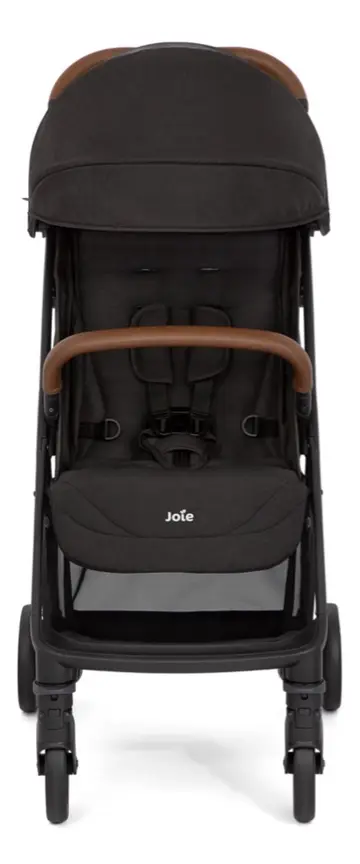
Joie Pact Pro
A 6.3 kg travel stroller from birth to 22 kg. You can clip a Joie Gemm or i-Gemm capsule on top.


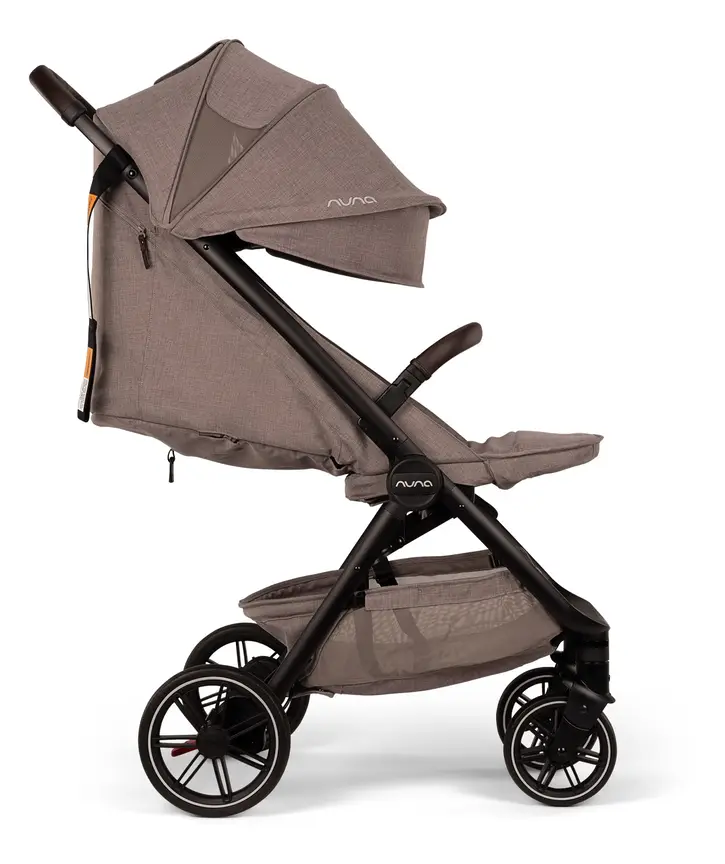
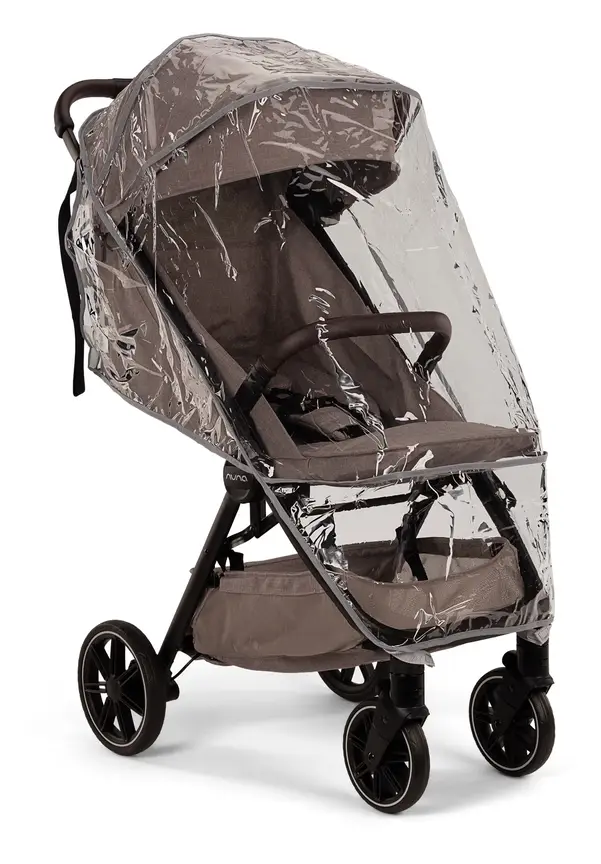


Nuna TRVL LX
A premium compact stroller with a lie-flat seat. It takes the Nuna KLIK Plus capsule on the armbar.
Read our full review →
Baby Jogger City Mini GT2
Long-running, lighter all-terrain stroller with a famously simple one-hand strap fold.
Frequently asked questions
Can a newborn use a travel pram?
Yes, if the pram is made for newborns. You need a seat that reclines fully flat, a compatible newborn bassinet, or a certified car capsule that clips safely onto the frame. If the seat only reclines partway, wait until your baby is around 6 months old and can sit with support.
Will a travel pram fit in an aeroplane overhead locker?
Some ultra-compact prams fit standard overhead lockers, while others do not. Airline rules vary by carrier, ticket type, and plane size. Measure your folded pram in its travel bag and check your airline's baggage page before you fly. Even if it fits, full flights may require gate-checking.
Is a travel pram good enough as an only pram?
It depends on where you live and walk. If you live in a city apartment, drive a small car, and walk mostly on smooth pavements, a sturdy compact stroller can be your main pram. If you walk daily on rough paths, grass, or gravel, or need a huge basket for groceries, a full-size pram will feel much easier to push.
Why should I not drape a muslin wrap over a pram in summer?
A blanket or muslin cloth draped over the front blocks airflow and traps hot air inside the pram. This can make your baby overheat fast and stops you from seeing their face. Use the pram's own sun hood, open the mesh vents, and walk in the shade instead.
What is the difference between a travel pram and an umbrella stroller?
An umbrella stroller folds long and narrow, usually with two separate curved handles and basic fabric slings. A modern travel pram usually folds into a flat square or small pack, has a single push bar you can steer with one hand, and often offers better padding and recline.
How do I check if a second-hand travel pram is safe?
Check the frame label to confirm it meets your local safety standard, such as AS/NZS 2088 in Australia, BS EN 1888 in the UK, or ASTM F833 in the US. Search the brand and model on your national recall website. Test the brakes, fold locks, harness buckles, and wheels before you buy, and avoid prams with bent frames or frayed straps.
Can I push a travel pram on sand or gravel?
Small travel wheels sink into soft sand and jam on loose gravel. They work best on sealed paths, tarmac, and indoor floors. If you only cross a short patch of gravel, lock the front wheels straight or pull the pram backwards over the rough spot.
Sources
- Product Safety Australia – Prams and strollers guide
- Product Safety Australia – Prams and strollers mandatory standard
- Red Nose Australia – Warning on social media hacks for baby capsules
- The Lullaby Trust (UK) – Safer sleep on holiday
- AAP HealthyChildren.org – Flying with baby
- TSA (US) – Traveling with children
- CATSA (Canada) – Families
- Health Canada – Recalls and safety alerts
Related guides
More Car Seats & Travel →
Compact Overhead Cabin Strollers for Flights: Size, Weight and Safety
Inflatable Toddler Travel Beds vs Ultralight Travel Cribs: Safety, Setup, and Which to Choose
Portable Travel Cribs: Benefits, Safety Checks, and How to Choose One