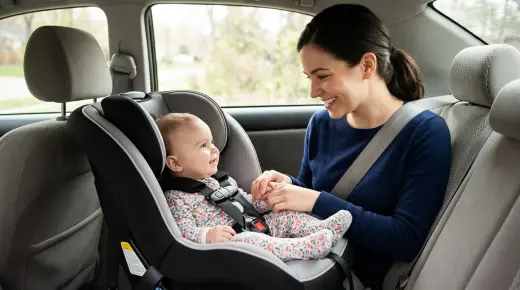
How to Choose and Fit the Safest Baby Car Seat
How to pick and fit a safe baby car seat. Learn about rear-facing stages, harness checks, second-hand risks, and rules in AU, UK, US and Canada.

On this page
- Key points
- Why rear-facing comes first
- Types of baby car seats compared
- Safety standards in Australia, the UK, the US and Canada
- How to choose a seat that fits your car and baby
- How to install the car seat safely
- How to buckle your baby in every trip
- Car seat sleep safety and travel time
- Buying second-hand or checking an older seat
- Common mistakes to avoid
- Frequently asked questions
- Sources
Short answer: The safest car seat is one that meets the safety standard in your country, fits your baby's size, fits your car, and is fitted and used right on every single trip. Put your newborn in a rear-facing seat in the back seat. Keep them rear-facing for as long as the seat allows.
This advice is shared by safety bodies in Australia (ACCC, Kidsafe and Red Nose), the UK (GOV.UK, RoSPA and The Lullaby Trust), the US (NHTSA and the American Academy of Pediatrics) and Canada (Transport Canada and the Canadian Paediatric Society).
Key points
- Rear-facing first: Babies must ride facing the back of the car. This protects their head, neck and spine in a crash.
- Local standard only: Buy a seat approved for the country where you drive. Overseas seats can be illegal and unsafe for your car.
- Check the fit: A costly seat is no safer than a basic one if it does not fit your car well.
- Snug harness: Straps should lie flat with no twists. You should not be able to pinch extra webbing at the shoulder.
- No thick coats: Bulky jackets and snowsuits create slack under the straps. Dress your baby in thin layers instead.
- For travel, not regular sleep: Take your baby out of the car seat once you arrive home.
Why rear-facing comes first
A baby is not a small adult. Their head is large and heavy for their body. Their neck muscles and spine are still soft and growing.
In a frontal crash, everything in the car keeps moving forward. If a baby faces the front, their heavy head is thrown forward fast. Their soft neck takes the full force of that snap.
A rear-facing seat works like a shield. The hard shell of the seat cradles the baby's head, neck and back all at once. It spreads the force of a crash across the whole shell instead of pulling on the neck.
Safety groups in Australia, the UK, the US and Canada all agree on this. Keep your child rear-facing for as long as they fit within the seat's height and weight limits. Do not rush to turn them forward-facing.
Car Seats & Capsules worth a look
Real products from our catalogue. We don't show star ratings or review counts; check the current price, stock and reviews on Amazon before you buy.

Babylove ezymove Booster
A very light, low-cost booster for about 4 to 8 years. It folds flat for storage.

Babylove ezyone2
A very low-cost convertible seat. Rear-facing to about 12 months, then forward-facing to about 4 years.
 Reviewed
Nuna Rylo 360
A premium seat that spins 360° to help you lift baby in and out. Rear-facing up to about 30 months.
Read our full review →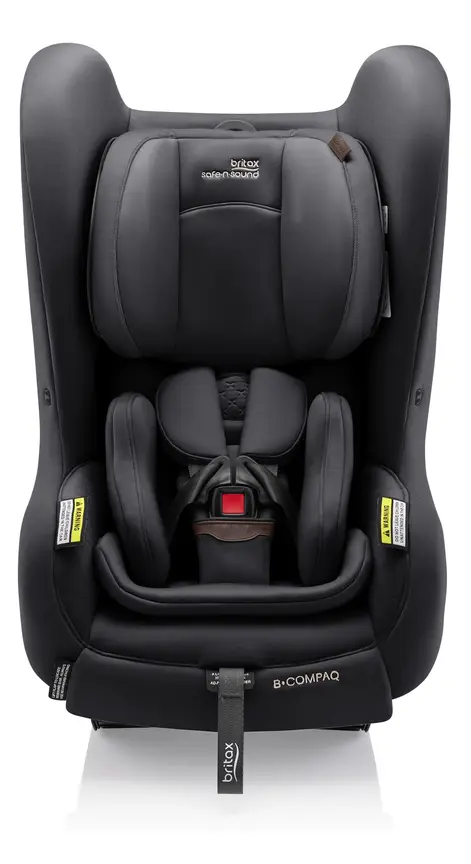 Reviewed
Britax Safe-n-Sound B-Compaq Lux
A convertible seat made for small cars with little room in the back.
Read our full review →Types of baby car seats compared
There are two main ways to start from birth: a baby capsule or a convertible car seat. Later on, your child will move to a forward-facing seat with a harness, and then a booster seat.
Baby capsule (infant carrier)
A baby capsule is a rear-facing seat made just for babies. It clicks into a base that stays buckled in your car. You can lift the whole capsule out and carry your sleeping baby inside.
Many capsules also clip onto a matching pram frame. This is handy for quick errands. However, babies still should not stay in a capsule for long stretches of sleep outside the car.
Most babies outgrow a capsule within their first year, often around six to twelve months. Once your baby's head nears the top edge, or their shoulders pass the height marker, you must move to the next seat.
Convertible car seat
A convertible car seat stays in the car. You do not carry it around. It starts rear-facing for a newborn. Later, when your child is ready and meets the rules, you turn the same seat around to face forward.
Convertible seats cost less over time because you skip buying a separate capsule. Many models allow extended rear-facing well past the first year. The trade-off is that you have to lift your baby in and out of the car each time.
All-in-one (multi-stage) car seat
An all-in-one seat aims to cover several stages in one unit. It starts rear-facing, turns forward-facing with a built-in harness, and may later convert into a booster seat.
These seats can be large and heavy. Always check that an all-in-one seat fits your car's back seat, especially when set to the rear-facing angle.
| Seat type | Direction | Best for | Portability | How long it lasts |
|---|---|---|---|---|
| Baby capsule | Rear-facing only | Newborns and small babies | Lifts out of a base; often clips to a pram | Usually until around 6 to 12 months, based on height or weight |
| Convertible seat | Rear-facing, then forward-facing | Birth through toddler and preschool years | Stays fitted in the car | Often from birth up to about 4 years, depending on the model |
| All-in-one seat | Rear-facing, forward-facing, and sometimes booster | Families wanting one seat for many years | Stays fitted in the car; often bulky | From birth until booster age, depending on the model |
| Booster seat | Forward-facing with adult seatbelt | Older children who outgrew a harness seat | Lighter and easy to move between cars | Until the adult seatbelt fits properly on its own |
Safety standards in Australia, the UK, the US and Canada
Car seat laws and testing rules are not the same around the world. Cars in different countries have different anchor points, seatbelts and crash rules. A seat tested for one country may not fit or work safely in a car built for another country.
Always check the label on the seat before you buy. Make sure it carries the official approval mark for the country where you live and drive.
| Country | Official bodies | Approved standard | Key rule on direction |
|---|---|---|---|
| Australia | ACCC, Standards Australia, Kidsafe, State road authorities | AS/NZS 1754 | Rear-facing by law until at least 6 months; experts advise staying rear-facing much longer |
| UK | GOV.UK, Office for Product Safety and Standards, RoSPA | R129 (i-Size) or ECE R44 | Under R129, rear-facing until at least 15 months; older R44 seats use weight limits |
| US | NHTSA, American Academy of Pediatrics (AAP) | FMVSS 213 | Rear-facing as long as possible, up to the seat's top height or weight limit |
| Canada | Transport Canada, Canadian Paediatric Society (CPS) | CMVSS 213 | Rear-facing as long as the child fits the seat's height and weight limits |
Australia
In Australia, every car seat sold or used must meet the mandatory standard AS/NZS 1754. Look for the Australian Standards tick mark on the seat. Australian seats use shoulder height markers to show when your child fits or outgrows each stage, rather than just age or weight.
Australian seats also require a top tether strap when used rear-facing and forward-facing with a harness. Most overseas seats do not have a top tether for rear-facing mode, which is one reason they do not meet Australian rules.
United Kingdom
In the UK, seats are approved to either UN R129 (often called i-Size) or the older ECE R44 standard. R129 seats are based on your child's height in centimetres and include side-impact testing. Under R129, a child must stay rear-facing until they are over 15 months old.
Check GOV.UK rules before buying a second-hand seat in the UK. Make sure the orange approval label is still attached and easy to read.
United States
In the US, every child car seat must meet Federal Motor Vehicle Safety Standard FMVSS 213. Look for a label stating that the seat meets all federal motor vehicle safety standards.
The American Academy of Pediatrics (AAP) and NHTSA advise keeping children rear-facing as long as possible, until they reach the top weight or height limit set by the car seat maker.
Canada
In Canada, seats must carry the National Safety Mark showing they meet CMVSS 213. Transport Canada warns that seats bought in the US or online from other countries do not carry this Canadian mark and are illegal to use in Canada.
Canada also checks expiry dates closely. Transport Canada advises parents not to use a car seat past the expiry date printed on the shell or in the manual.
How to choose a seat that fits your car and baby
Every car seat sold legally in your country has passed strict crash tests. A higher price tag often pays for softer fabric, easier strap adjusters or a slimmer frame. It does not mean a basic certified seat is unsafe.
The best seat for your family is the one that fits three things: your baby, your car, and your budget. Test the seat in your car before you buy if the shop allows it.
Check your car's back seat space
Rear-facing seats take up front-to-back room. If you drive a small hatchback or a ute, a long rear-facing seat might push the front passenger seat too far forward. Check that whoever sits in the front still has safe legroom and sits at a safe distance from the dashboard airbag.
Check the width if you need multiple seats
If you need to fit two or three car seats across one back seat, measure the width carefully. Look for seats described as narrow or compact. Do not let car seats press hard against each other or against the car door unless the manuals say that is allowed.
Check your car's anchor points
Look at your car owner's manual to find out where the child seat anchor points are. Check for lower anchor bars (called ISOFIX in Australia and the UK, LATCH in the US, and UAS in Canada) and top tether anchor points.
Not every seating position has lower anchor bars. Some cars have them only on the outer rear seats, not the middle seat. Your car manual will tell you which spots can take a car seat.
Look at independent crash test ratings where available
In Australia, the Child Restraint Evaluation Program (CREP) gives independent star ratings for protection and ease of use. Checking CREP ratings can help you compare models that already meet AS/NZS 1754. Other countries also have consumer groups and road safety bodies that share ease-of-use ratings.
How to install the car seat safely
Even the safest car seat cannot protect your child if it is fitted the wrong way. Read both the car seat manual and your vehicle owner's manual before you start.
Step-by-step fitting guide
- Pick a rear seat: The back seat is always the safest place for a baby. Never place a rear-facing car seat in front of an active passenger airbag. An airbag inflating in a crash can badly injure or kill a baby in a rear-facing seat.
- Check the recline angle: Newborns need to be reclined enough so their heavy head does not flop forward onto their chest. Most seats have a bubble level, line or colour marker on the side. Park on flat ground when you check it.
- Thread the seatbelt or attach the lower anchors: Use either the car's seatbelt OR the lower anchor system (ISOFIX, LATCH or UAS). Almost never use both at the same time, unless both manuals clearly say you can.
- Attach the top tether if required: In Australia and for forward-facing seats in all four countries, clip the top tether strap to the car's tether anchor point. Tighten it until the slack is gone, without lifting the seat off the car cushion.
- Remove slack and press down: Push your weight gently into the car seat while you pull the seatbelt or anchor strap tight.
- Do the movement test: Grab the seat right where the seatbelt or lower strap passes through (the belt path). Give it a firm tug side to side and front to back. It should move less than about two centimetres (one inch). Do not test at the top edge, as some tilt at the top is normal.
Consider a professional check
If you are not sure your fit is right, get it checked. In Australia, authorised fitting stations and Kidsafe centres check and fit seats. In the UK, many councils and road safety teams run check events. In the US and Canada, certified Child Passenger Safety Technicians (CPSTs) offer free or low-cost checks.
Side by side: more car seats & capsules to compare
Real products from our catalogue. We don't show star ratings or review counts; check the current price, stock and reviews on Amazon before you buy.
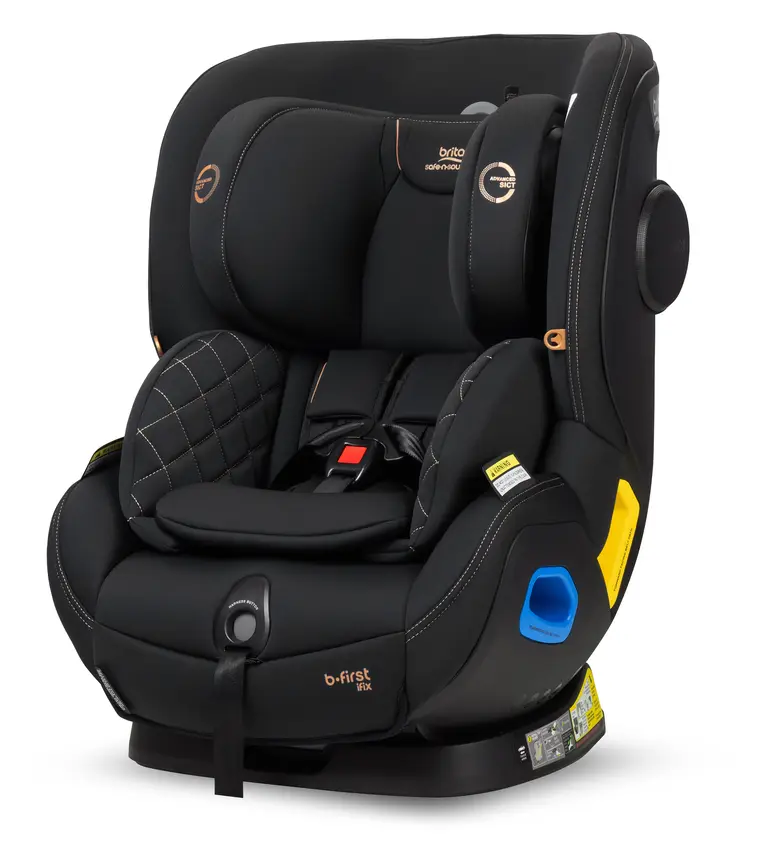
Britax Safe-n-Sound b-first+
Convertible seat from Britax's Australian Safe-n-Sound range with SICT deployable side-impact protection.
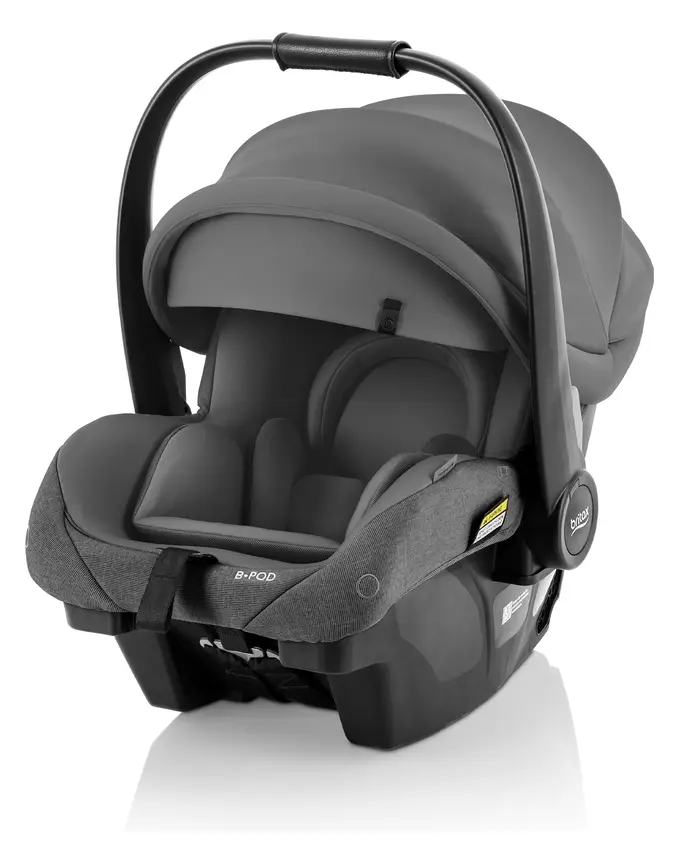

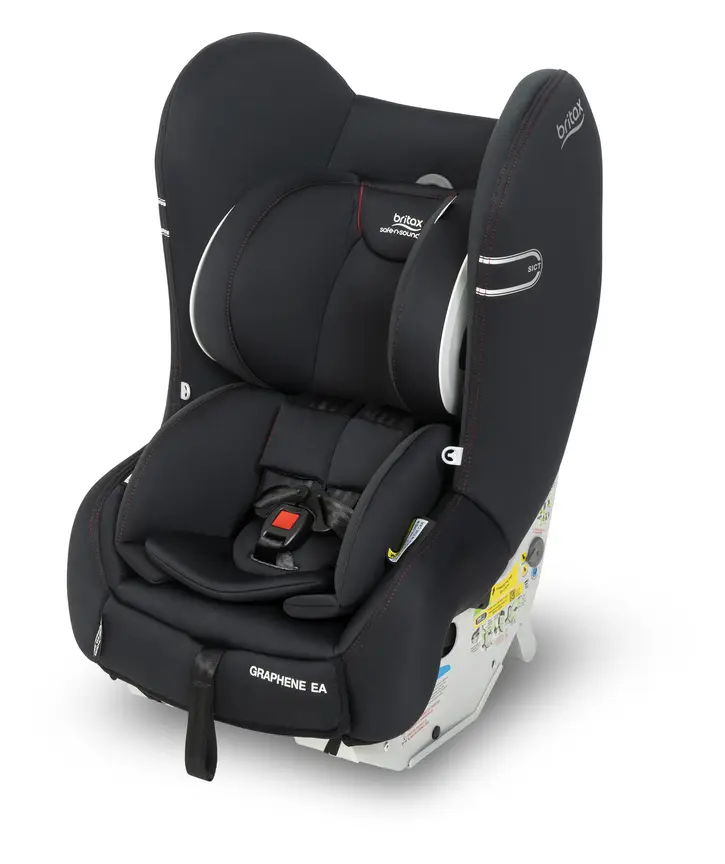
Britax Safe-n-Sound Graphene EA
Britax's Australian convertible seat with SICT side-impact technology, designed to reduce crash energy reaching your child's chest.
How to buckle your baby in every trip
Fitting the seat into the car is half the job. Buckling your baby into the seat the right way is the other half.
Check the harness height
For a rear-facing seat, the shoulder straps should start at or just below your baby's shoulders. Check your seat manual for the exact rule. As your baby grows, move the straps up to the next slot when needed.
Keep straps flat and untwisted
Twisted straps cannot spread crash forces evenly across your baby's body. They can also dig into soft skin. Smooth the straps out before you click the buckle.
Do the pinch test
Pull the harness tight until it sits snugly against your baby's body. Now try to pinch the strap fabric at your baby's collarbone between your thumb and finger. If you can pinch a fold of webbing, the harness is too loose. Pull the adjuster strap tighter and test again.
Know the chest clip rule for your country
US and Canadian car seats usually have a chest clip. Place it at armpit level to keep the shoulder straps in place over the chest. Australian and UK seats generally do not use chest clips. Never add an aftermarket chest clip or strap cover that did not come with your seat.
Skip bulky coats and extra pads
Puffy winter jackets, snowsuits and thick blankets squash down in a crash. That leaves big gaps under the harness, and a baby can slip out of loose straps.
Dress your baby in thin, warm layers instead. Buckle them in snugly first. Then tuck a light blanket over the top of the buckled harness, keeping it well below their face.
Never place extra head cushions, strap pads or seat liners under or behind your baby unless they came in the box with that exact seat. Extra padding changes how the harness fits and has not been crash tested with the seat.
Car seat sleep safety and travel time
Babies often fall asleep in the car. That is normal, and the motion helps them drift off. Still, health bodies warn parents about two big sleep risks linked to car seats.
Car seats are for travel, not regular sleep
Red Nose (Australia), The Lullaby Trust (UK), the American Academy of Pediatrics (US) and the Canadian Paediatric Society all give the same advice. Do not use a car seat as a place for your baby to sleep at home.
In a car seat, a baby sits at an angle. If a young baby's head tips forward, it can narrow their airway and make breathing hard. When you get home, lift your sleeping baby out of the car seat or capsule and lay them flat on their back in a safe cot or bassinet.
Take breaks on long drives
On long trips, stop regularly so you can take your baby out of the seat for a stretch, a feed and a nappy change. Many health groups, including The Lullaby Trust and Red Nose, suggest keeping car trips short for newborns and stopping for breaks on longer journeys. If two adults are travelling, one can sit in the back to keep an eye on the baby.
Never leave a baby alone in a car
Cars heat up fast, even on mild days or with a window cracked open. Never leave a baby or child alone in a parked car, not even for a minute. Build a simple habit to check the back seat every time you lock the car. You can leave your bag or phone in the back seat next to your baby so you always look back.
Buying second-hand or checking an older seat
Buying a brand-new car seat is the safest choice. You know its full history, and all parts and instructions are in the box. If you are thinking about using a second-hand seat from a friend or family member, check every detail first.
- Crash history: Never use a seat that has been in a crash, even a minor one. Hidden cracks in the plastic or foam can make it fail next time.
- Expiry date: Plastic weakens over time from heat and sun in the car. Most seats have a lifespan of about six to ten years from the date made. Check the date stamped on the shell.
- Manual and parts: Make sure every strap, clip, pad and the instruction manual are present.
- Recalls: Search your country's official recall list (Product Safety Australia, GOV.UK, NHTSA or Health Canada) to be sure the model was never recalled.
- Cleanliness and mould: Check the webbing for fraying, cuts or stains. Never wash car seat straps with harsh chemicals or machine wash them, as this can weaken the fabric. Follow the manual for cleaning.
If you cannot be certain about the seat's past, do not use it. Buy a new certified seat that fits your budget.
Common mistakes to avoid
Most car seat errors happen by accident. Quick checks before you drive can fix almost all of them.
| Mistake | Why it is unsafe | What to do instead |
|---|---|---|
| Turning forward-facing too soon | A young child's neck cannot handle sudden forward crash forces | Keep your child rear-facing until they reach the seat's limit |
| Loose harness straps | Your baby can slide out or hit the seat shell in a crash | Tighten until you cannot pinch extra strap at the shoulder |
| Loose seat installation | The seat tips or shifts too far during a sudden stop | Check at the belt path so it moves less than about 2 cm |
| Putting a rear-facing seat in front of an airbag | An airbag opens with huge force right into the back of the seat | Always fit baby seats in the back seat |
| Using thick coats or extra inserts | Puffy layers compress and leave unsafe gaps under the straps | Dress in thin layers and place a blanket over the buckled harness |
| Letting baby sleep in the car seat at home | Upright angles can make a baby's chin drop and block airflow | Move your sleeping baby to a flat, firm cot or bassinet |
More options, from budget to premium
Real products from our catalogue. We don't show star ratings or review counts; check the current price, stock and reviews on Amazon before you buy.

Britax Safe-n-Sound Hi Liner SG
A high-back booster for about 4 to 8 years. A clip keeps the seatbelt in the right place.
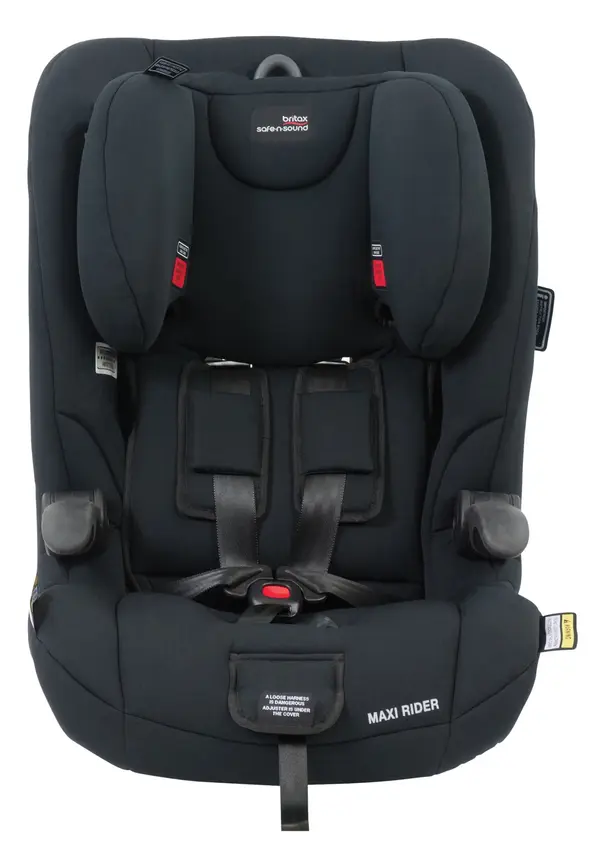


Britax Safe-n-Sound Maxi Rider
A seat with a harness from 12 months to about 4 years. Then it becomes a booster up to 6–8 years.
Read our full review →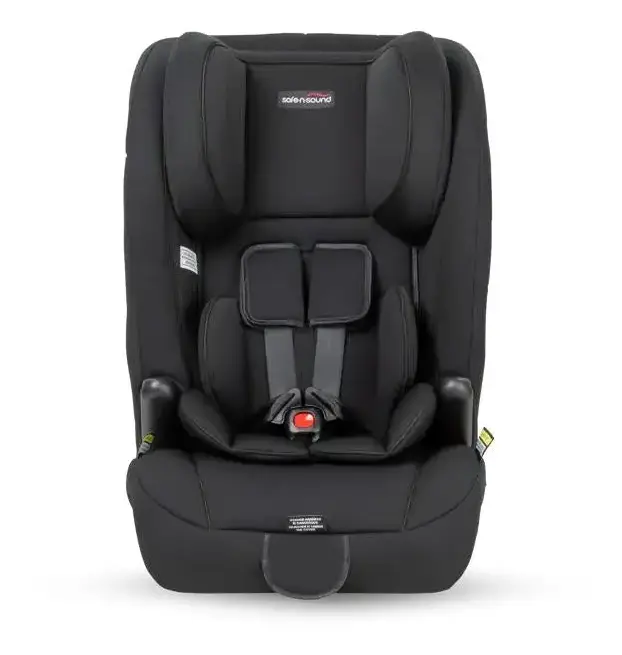
Britax Safe-n-Sound Atlas-GRO II Harnessed Car Seat
Harnessed booster seat
Frequently asked questions
Can I use a car seat bought from overseas?
No. Car seats must meet the safety standard of the country where you are driving. For example, a US or UK seat does not meet AS/NZS 1754 in Australia, and a US seat does not meet CMVSS 213 in Canada. Using an unapproved seat can be illegal and may not fit your car's anchor points safely.
When should I turn my baby forward-facing?
Keep your baby rear-facing for as long as their car seat allows. Look at the shoulder height markers or the weight and height limits on your seat, not just your child's age. Law sets the earliest legal age (for example, 6 months in Australia or 15 months under R129 in the UK), while safety experts urge parents to wait much longer.
Is ISOFIX or LATCH safer than a seatbelt?
No, both are safe when fitted properly. ISOFIX (called LATCH in the US and UAS in Canada) uses built-in clips to make fitting easier and cut down on fitting errors. A properly routed and locked car seatbelt gives the same crash protection. Pick whichever method fits tighter in your car, and never use both together unless both manuals say so.
Can my newborn sleep in their car seat at home?
No. Car seats are made for safe travel in a vehicle, not for regular sleep at home. When you get back from a drive, gently take your baby out of the car seat or capsule and lay them flat on their back in a safe cot or bassinet.
Should I put a blanket or thick coat under the harness?
No. Never put thick coats, sleeping bags or bulky blankets between your baby and the car seat straps. In a crash, puffy fabric flattens out and leaves the straps loose. Dress your baby in light layers, buckle the harness snugly, and put a light blanket over the top of the straps if it is cold.
Are baby car seat mirrors safe to use?
Be careful with add-on mirrors and toys. In a crash, anything clipped loosely inside the car can fly off and hit your baby. If you want to check on your baby, pull over in a safe spot instead of turning your eyes away from the road.
When does a car seat expire?
Most car seats expire about six to ten years after the date they were made. Over years of hot summers and cold winters, plastic can become brittle and straps can wear down. Check the date stamp moulded into the plastic shell or read the manual to find the exact limit for your seat.
Sources
- Product Safety Australia (ACCC) – Car seats guide
- Child Car Seats Australia – Legal requirements
- Red Nose Australia – Keeping baby safe in the car
- GOV.UK – Child car seats: the rules
- The Lullaby Trust (UK) – Car seats
- NHTSA (US) – Car seats and booster seats
- HealthyChildren.org (AAP) – Car seats: information for families
- Transport Canada – Choosing a child car seat or booster seat
Related guides
More Car Seats & Travel →
Baby Car Seat Mirrors: How to Choose and Use One Safely
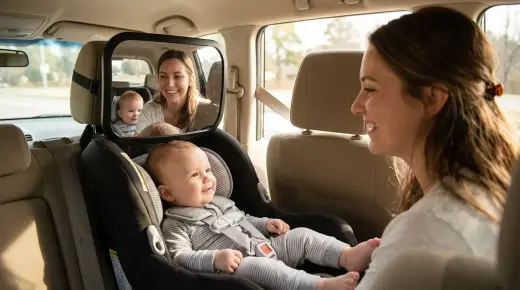
Baby Car Mirrors: How to Choose and Use One Safely

Convertible Car Seat vs Infant Capsule: Safety, Cost Per Year and Your Baby's Back