









Single-to-Double Modular Prams: How to Choose, Safety Rules and Setup Guide for Growing Families
How to choose and use a single-to-double modular pram safely. Compare inline and side-by-side frames, seat weight limits, bassinet rules and safety checks.
On this page
- Key points for parents
- What is a single-to-double modular pram?
- Why newborn posture and breathing matter in a pram
- How single-to-double modular setups compare
- Age stages and seat configurations from birth to preschool
- Safety standards and official rules in Australia, the UK, the US and …
- What to look for when choosing a single-to-double pram
- Step-by-step safety checks before every walk
- Common mistakes parents make with modular double prams
- Cleaning and caring for your modular pram
- Frequently asked questions
- Sources
Short answer: A single-to-double modular pram starts as a single pram for one baby. Later, it converts to carry two children when your family grows. You can add a second seat, a bassinet, or a standing toddler board. Before you buy one, check the weight limit for each seat position. Test how heavy the front feels when two children sit inside. Always use a five-point harness, a strong parking brake, and a flat sleep surface for newborns.
Safety rules and official guidance come from national bodies in each country. In Australia, check Product Safety Australia (ACCC) and Red Nose. In the UK, check the Office for Product Safety and Standards (OPSS), the NHS, and The Lullaby Trust. In the US, check the Consumer Product Safety Commission (CPSC) and the American Academy of Pediatrics (AAP). In Canada, check Health Canada and the Canadian Paediatric Society.
Key points for parents
- Know what modular means. The frame has mounting points. These let you click in one or two seats, bassinets, or car capsules in different ways.
- Check both seat limits. On many inline prams, the lower or front rumble seat holds less weight than the main top seat.
- Newborns must lie flat. Babies under six months need a flat bassinet or a fully flat seat. This stops their chin from dropping onto their chest.
- Car capsules are for travel, not long sleep. Never leave a baby sleeping in a clipped-in car seat for long periods.
- Watch the balance. Adding a second child changes the centre of gravity. Never hang heavy nappy bags on the handlebar, or the pram can tip backwards.
- Check the safety label. Look for AS/NZS 2088 in Australia, BS EN 1888 in the UK, or ASTM F833 in the US. In Canada, check that it meets the Carriages and Strollers Regulations.
What is a single-to-double modular pram?
A single-to-double modular pram is a convertible pushchair built for growing families. You buy it for your first baby. At first, you use it with one bassinet or one seat. When a second baby arrives, you do not need to buy a whole new double pram. Instead, you attach adapters and a second seat or bassinet to the same frame.
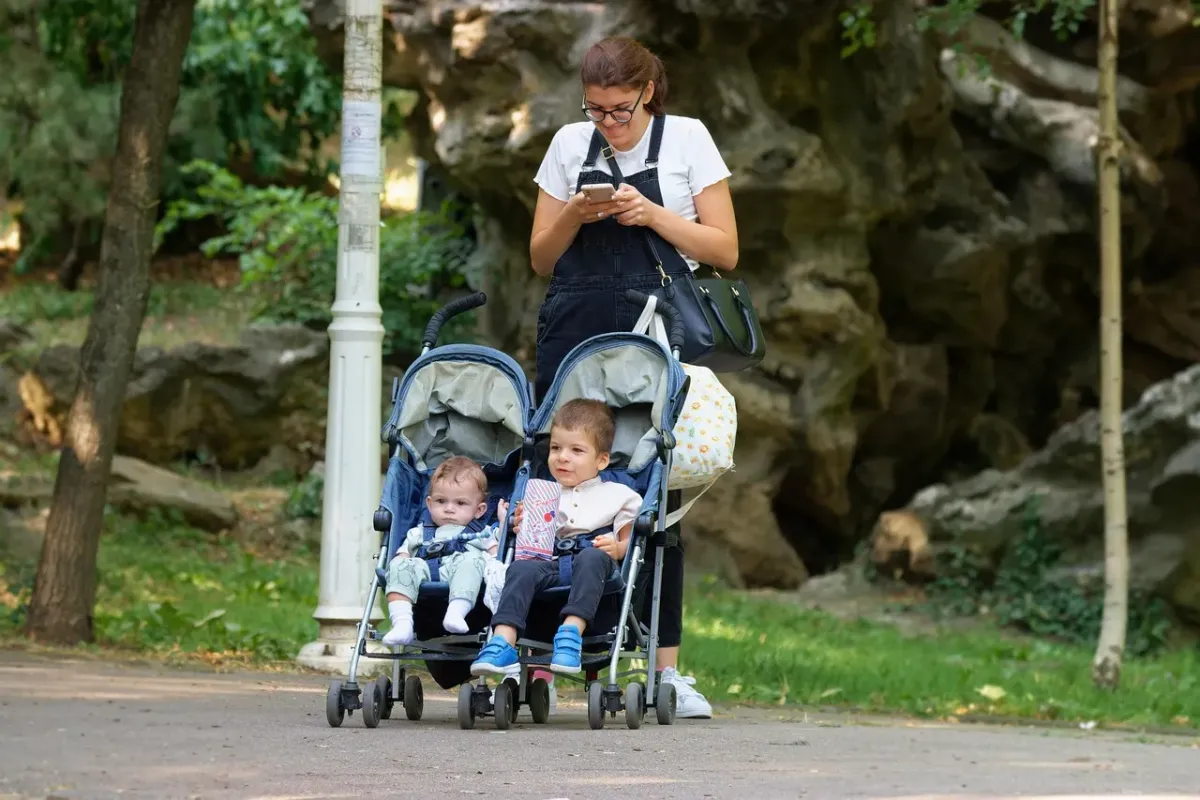
These prams also work well for twins from day one. You can clip two bassinets or two newborn-ready seats onto the frame at the same time. Later, your older child will walk more on their own. You can then take the second seat off. The pram goes back to being a single stroller in seconds.
The two main frame styles
Convertible prams expand in one of two ways. Each style changes how you push, steer, and fit through doorways.
1. Inline (tandem) modular prams: One child sits in front of or below the other. The pram stays as narrow as a standard single pram. This makes it easy to fit through shop aisles, narrow front doors, and train gates. However, the total length grows longer. Pushing down on the handlebar to lift the front wheels up a kerb takes more effort. It feels heaviest when a big toddler sits at the front.
2. Side-by-side convertible prams: The frame slides open sideways. This makes room for a second seat or bassinet next to the first. When used for one child, the extra space holds a side luggage basket. In double mode, both children get the same view. Both seats also have similar weight limits. Steering stays light and easy because the weight sits close to the back axle. The trade-off is width. You must check that the open frame fits through your front door and local footpaths.
What a travel system is, and how it fits in
Many modular prams are sold as travel systems. This means you can buy matching adapters for an infant car capsule. You can click the car capsule straight onto the pram frame. That is handy for quick errands, like picking up an older child from school or buying milk.
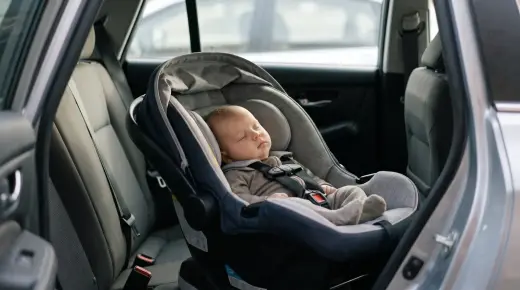
However, health bodies warn that a car seat does not replace a pram bassinet. Red Nose in Australia, The Lullaby Trust in the UK, the AAP in the US, and the Canadian Paediatric Society all agree. Car seats hold babies in a curved, semi-upright position. Outside the car, take your sleeping baby out of the capsule as soon as you get home. Use a flat bassinet or a flat pram seat for long walks.
Prams & Strollers worth a look
Real products from our catalogue. We don't show star ratings or review counts; check the current price, stock and reviews on Amazon before you buy.


Britax One2
A pram that starts as a single and can take a second child. The seat turns into a lie-flat bassinet.
Read our full review →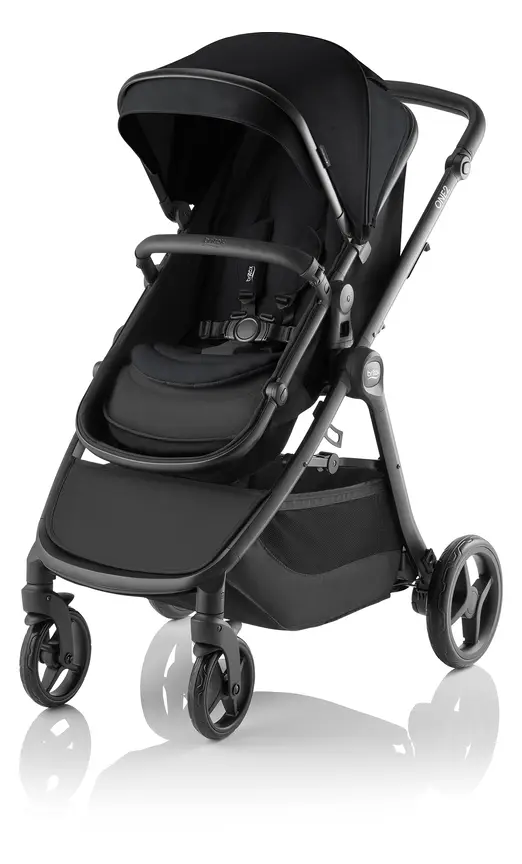
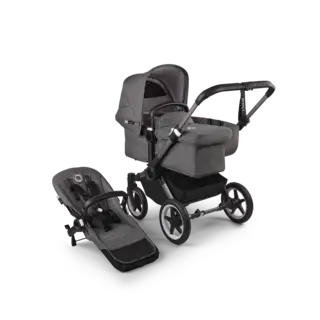
Bugaboo Donkey 5
Converts from single to side-by-side double (siblings or twins) by widening the frame.

Baby Jogger City Mini GT2
Long-running, lighter all-terrain stroller with a famously simple one-hand strap fold.
Why newborn posture and breathing matter in a pram
Newborn babies do not have strong neck muscles yet. Their heads are large and heavy compared with the rest of their bodies. For the first few months of life, a baby cannot hold their head up well. They need flat support.
Do not put a young baby in a sloped or curved seat. Their heavy head can flop forward. When the chin presses down against the chest, it squashes the soft windpipe. This makes it hard or impossible for the baby to breathe. Doctors call this positional asphyxiation. It happens silently. A baby will not struggle or cry to warn you.
Why lie-flat bassinets are safest for the first months
A firm, flat surface keeps your baby's back straight. It also keeps their airway open. In a flat bassinet, the head and neck stay in a straight line. Your baby can breathe deeply. They can also turn their head freely from side to side.
Bucket-style seats and upright stroller seats have a fixed bend at the hips and knees. Most makers state that bucket seats are only safe from around six months of age. By then, a baby can sit up unsupported and has strong head and neck control. What if you use a pram seat from birth instead of a separate bassinet? Make sure the backrest reclines all the way flat. Or use the maker's approved newborn flat insert.
Airflow and temperature control inside two-seat setups
Young babies cannot control their body temperature well. They warm up much faster than adults. In an inline double pram, one seat or bassinet often sits low down. It may sit behind the top seat or near the storage basket. Air does not move as freely in that lower spot.
Check that both the bassinet and the seat hood have mesh air panels. Unzip these panels on warm days. Never drape a muslin cloth, blanket, or towel over the pram hood to block the sun. Covering the pram traps hot air inside like an oven. It also blocks your view of your baby. Instead, use a clip-on sunshade or built-in UPF 50+ canopy that leaves the sides open for fresh air.
How single-to-double modular setups compare
Every family has a different daily routine. Some parents walk to the shops every day on bumpy footpaths. Others lift the pram in and out of a small car boot five times a day. The table below compares the main modular setups. Use it to see what fits your life.
| Feature | Inline (Tandem) Stacked | Side-by-Side Convertible | Single Pram + Toddler Board |
|---|---|---|---|
| How it carries two children | One seat or bassinet sits higher. The second sits lower and further forward or back. | The frame widens. Two seats or bassinets sit right next to each other. | The baby rides in the bassinet or seat. The older child stands on a rear wheeled board. |
| Doorways and narrow aisles | Fits through standard single doorways easily. | Wider in double mode. It fits standard public doors, but check narrow home hallways. | Same width as a single pram. It fits anywhere a single pram fits. |
| Steering and kerb pop | Longer footprint. Harder to tip the front wheels up a kerb when a heavy child sits in front. | Shorter footprint. Very easy to steer and lift over kerbs because weight stays near the back wheels. | Easy to steer. However, the board sticks out at the back where you walk. |
| Seat weight limits | Often unequal. The lower or second seat usually has a lower weight limit than the main seat. | Usually equal for both seats. Either child can sit on either side. | Full weight limit in the main seat. The board holds a standing toddler up to its stated limit. |
| Passenger space and view | One child gets a clear view. The lower child may look at the back of the top seat. | Both children get the same view and equal legroom. | The baby gets the full pram. The older child stands between your arms and can hop on and off. |
| Best age gap | Newborn plus toddler under 3 years, or twins from birth. | Twins, or siblings close in age who both still nap on walks. | Age gap of 2.5 to 4+ years. Best when the older child walks most of the way. |
| Folding for the car boot | Usually you must remove the second seat and adapters before folding the frame. | Folds in one piece on some models. On others, you remove the seats and narrow the frame first. | The board clicks off or flips up. Then the single pram folds normally. |
Age stages and seat configurations from birth to preschool
Your modular pram setup will change several times over the first four years. Knowing how the pieces fit together at each stage helps you plan ahead. It also stops you buying adapters or seats you do not actually need.
Stage 1: One newborn (birth to 6 months)
In the first six months, your pram stays in single mode. Use a flat bassinet or a lie-flat newborn seat facing you. Parent-facing mode lets you watch your baby's face. You can check their breathing and talk to them as you walk. Because you only have one child on the frame, the full under-seat basket stays free. You have plenty of room for groceries and nappy supplies.
Stage 2: One older baby or toddler (6 months to 2+ years)
Watch for your baby pushing up on their hands and knees or sitting up alone. Once they do this, you must stop using the pram bassinet. Most babies reach this stage between four and six months. Move them into the main stroller seat. Do up the five-point harness snugly every time. You can face the seat towards you for chats. Or turn it forward so they can look at trees, dogs, and buses.
Stage 3: Newborn plus toddler (the expanding family stage)
When your second baby arrives, you switch the frame to double mode. How you place the bassinet and the toddler seat matters. It affects both safety and your back comfort.
- Check which position holds more weight. On many inline prams, the upper mounts hold a heavier toddler. The lower mounts hold the lighter bassinet. On other inline prams, the bassinet must go on top so you can reach the newborn easily. That setup pushes the toddler into the front lower seat.
- Test the front-heavy feel. Does your toddler have to sit over the front wheels? Put a heavy bag or your toddler in that front seat at the shop. Push down on the handlebar to lift the front wheels. If it feels too heavy to tip back safely, pick another model. Look for one that keeps the heavier child closer to the handlebar.
- Watch toddler fingers and feet. A bassinet and a seat often sit close together on an inline frame. Check that your toddler cannot kick the newborn. Also check that they cannot poke fingers into wheel spokes or folding hinges.
Stage 4: Two toddlers in two seats (6 months to 4 years)
Soon your younger child will outgrow the bassinet. Then both children ride in stroller seats. With two seats attached, check how much room is left for knees and feet. You can often face the seats towards each other so the siblings can play. You can also face both seats forward. Or you can face the younger child towards you and the older child forward.
Stage 5: Toddler in the seat, preschooler on a wheeled board
Around age three or four, your older child may refuse to sit strapped in for a whole walk. Still, their legs often get tired halfway home. At this point, you can take off the second seat. Clip a wheeled buggy board onto the back axle instead. Your younger child gets the pram in single mode. Your older child stands on the board when they need a rest.
Safety standards and official rules in Australia, the UK, the US and Canada
Prams and strollers must pass strict physical safety tests before shops can sell them. These tests check that the brakes hold on hills and the frame does not tip over easily. They also check that the locks do not fold on a child and the straps hold firm.
| Country | Regulator and Health Bodies | Pram and Bassinet Standards | Key Legal and Safety Rules |
|---|---|---|---|
| Australia | ACCC (Product Safety Australia), Standards Australia, Red Nose | AS/NZS 2088 (prams and strollers); AS/NZS 1754 (car capsules) | Mandatory features include a five-point harness, a red parking brake lever, and a wrist tether strap. Reclined flat seats need a head barrier and permanent warning labels. |
| United Kingdom | Office for Product Safety and Standards (OPSS), NHS, The Lullaby Trust, RoSPA | BS EN 1888 (wheeled child conveyances); BS EN 1130 (cribs and cradles); UN R129 or UN ECE R44 (car seats) | Tests cover stability with one or two seats and toughness on rough paths. They also require a strong five-point harness, a solid parking brake, and safe hinges. |
| United States | Consumer Product Safety Commission (CPSC), American Academy of Pediatrics (AAP) | ASTM F833 (carriages and strollers); ASTM F2194 (bassinets and cradles); FMVSS 213 (car seats) | Federal rules require automatic or dual-action folding locks and anti-tip stability tests. They also require safe leg openings and strong harness straps. |
| Canada | Health Canada, Transport Canada, Canadian Paediatric Society (Caring for Kids) | Carriages and Strollers Regulations; Cribs, Cradles and Bassinets Regulations; CMVSS 213 (car seats) | Strict rules cover frame stability, braking force, pinch protection, and five-point harnesses. Rules also limit lead, phthalates, and toxic surface coatings. |
What Australia's mandatory pram rules mean in daily life
In Australia, Product Safety Australia enforces a mandatory standard based on AS/NZS 2088. Many prams are sold all over the world. Still, the version sold in Australia must include specific features:
- Tether strap: This is a loop strap attached to the handlebar. Put your wrist through it whenever you walk. It stops the pram rolling away down a slope or into traffic if your hands slip.
- Red brake control: The main parking brake pedal or lever must be red. This helps any carer spot it and lock the wheels straight away.
- Head barrier: Some seats recline flat for a baby. These must have a built-in fabric or mesh barrier at the top. It stops an unstrapped baby from sliding out headfirst.
You may live in the UK, the US, or Canada. A wrist tether strap is not required by law on every model there. Even so, adding a simple wrist strap is a smart habit on hilly streets.
Checking if a pram bassinet is safe for overnight sleep
Many parents travel or visit grandparents. They often ask if their baby can sleep in the pram bassinet overnight. Not all pram bassinets are built for unsupervised overnight sleep. Some have padded fabric sides. These do not let enough air through if a baby presses their face against the side.
In the US, a pram bassinet approved for overnight sleep must pass the federal bassinet standard ASTM F2194. In Canada, it must meet the federal Cribs, Cradles and Bassinets Regulations. Those Canadian rules are very strict. In the UK and Europe, check for BS EN 1130 compliance. Or check that the maker tested it for overnight sleep with a ventilated base and breathable liner. In Australia, Product Safety Australia regulates infant sleep products and household bassinets. Always check the manual and follow Red Nose advice. Use a firm, flat mattress, breathable sides, and no loose bedding.
Side by side: more prams & strollers to compare
Real products from our catalogue. We don't show star ratings or review counts; check the current price, stock and reviews on Amazon before you buy.


Joie Aire Twin
A lower-cost side-by-side double. Each seat lies flat and reclines on its own.
Read our full review →
Mother's Choice Adventurer Side-by-Side Double Stroller
Side-by-side double stroller
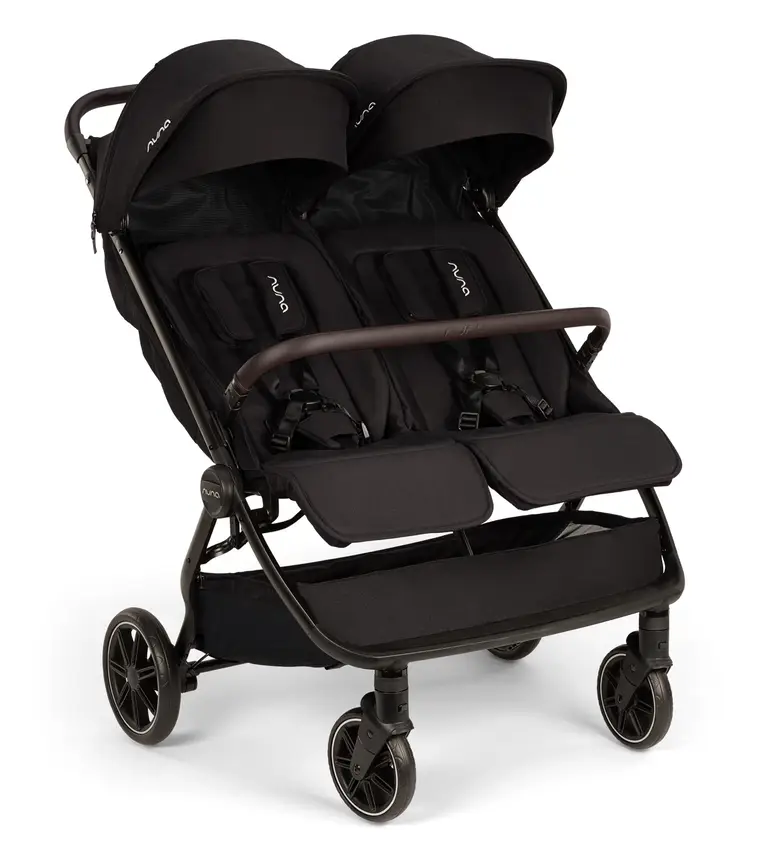


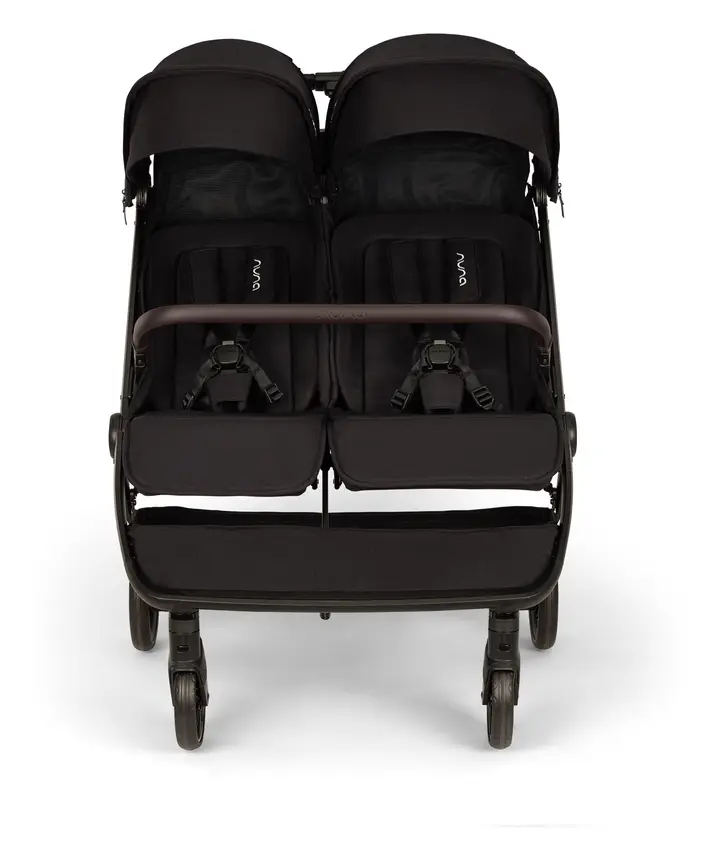


Nuna TRVL Dubl
A side-by-side double that folds with one hand and stands up. Each seat holds up to 22.7 kg.
Read our full review →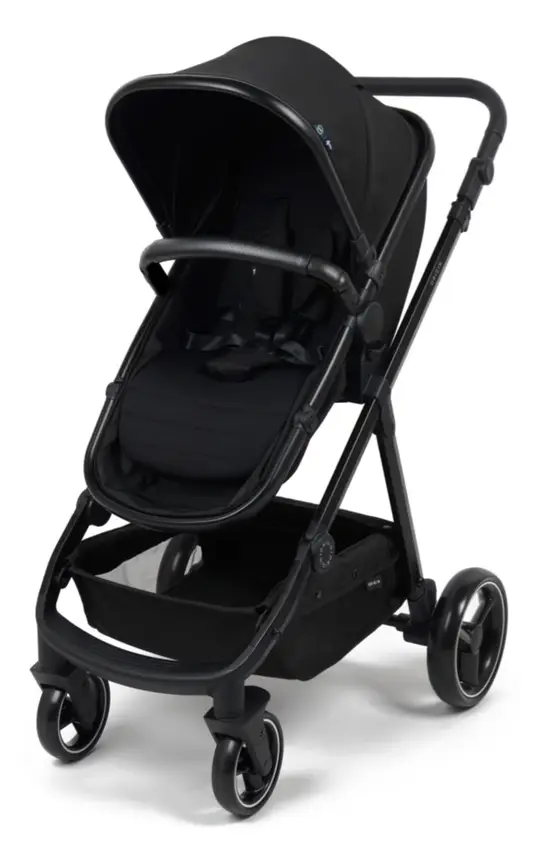
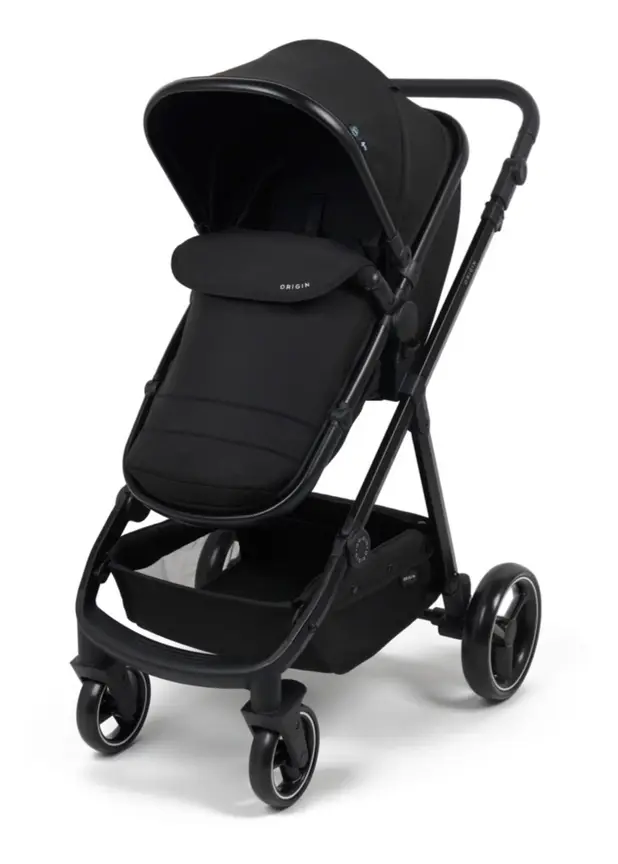
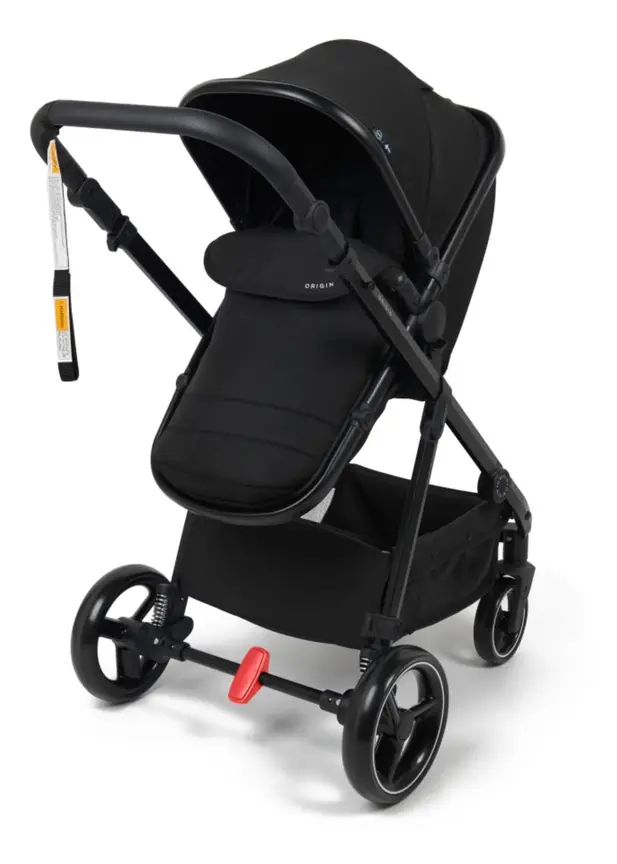
4baby Origin Stroller
A budget pram whose seat turns into a bassinet. The seat can face you or face the world.
Read our full review →What to look for when choosing a single-to-double pram
Shopping for a convertible pram is much easier when you test the practical details. Do not just look at colours and fabrics. Bring a tape measure to the shop and check these seven things.
1. Upper and lower seat weight and height limits
Never assume both seats on an inline modular pram are equal. On many popular inline models, the main seat holds up to 20 kg or 22 kg. The second rumble seat often holds only 15 kg. Worse still, the second seat often has a shorter backrest and a lower hood.
Is your first child tall? They may outgrow a small second seat by age two. Look for a pram where the toddler can stay in the larger main seat while the newborn bassinet clips into the other spot. Or choose a model where both seats have the same high weight and height limits.
2. How many adapters you need
Some modular prams have sliding brackets built right into the frame. You simply slide the upper mount up. Then you click the second seat onto the lower mount. Other prams need two or three pairs of separate plastic adapters. You might need upper adapters to lift the bassinet, lower adapters to hold the second seat, and car capsule adapters.
Ask the shop staff to show you every step. Watch how to switch the pram from single mode to double mode. Then watch how to fold it for the car. Do you have to take off four separate adapters every time you pack the car boot? That can get very frustrating in the rain.
3. Total frame weight and lifting into your car
A single-to-double pram must be strong enough to carry two children and a full basket of shopping. Because of this, the frame uses thicker aluminium tubing than a light travel stroller. The bare frame often weighs between 9 kg and 13 kg. Each seat adds another 3 kg to 4 kg.
Think about how you will lift it safely. The American Physical Therapy Association (ChoosePT) and NHS postnatal physiotherapy guides share simple safe lifting rules. Lift with your legs, not your back. Keep the pram close to your body. Avoid twisting your spine, especially after childbirth or a caesarean birth. Take both seats off before lifting the bare frame into the boot. That cuts the lifting weight in half.
4. Boot space and doorway measurements
Before you buy, measure two spots at home:
- Your narrowest doorway or hallway turn: Standard outside doors are usually around 80 cm wide. That fits almost all side-by-side double prams, which are usually 72 cm to 75 cm wide. Older houses and inside bathroom or bedroom doors can be narrower.
- Your car boot floor: Measure the depth, width, and height under the boot cover. Remember that double mode takes more room. You must fit the folded frame plus two seats or a large bassinet inside the boot.
5. Wheels, suspension and terrain
Carrying two children puts a lot of weight over the wheels. Small plastic wheels get stuck in footpath cracks, grass, and gravel when loaded with two kids. Look for larger puncture-proof foam-filled tyres and all-wheel suspension. Front wheels should swivel 360 degrees for tight turns in shops. They should also lock straight for rough park paths.
6. Under-seat basket access in double mode
A big storage basket is vital when you go out with two children. However, check how the second seat fits on an inline pram. Clipping a seat or bassinet into the lower spot can block the back of the basket. Make sure you can still slide a nappy bag and groceries in and out when both seats are on.
7. Washable fabrics and safe materials
Babies drool, spit up milk, and drop squashed fruit everywhere. Check that the seat liners, bassinet mattress cover, and strap pads zip or unclip easily for washing. Look for fabrics free from harmful flame retardants, phthalates, and BPA. You can also look for water-repellent coatings made without PFAS chemicals.
Step-by-step safety checks before every walk
Going out the door with a baby and a toddler can feel rushed. A quick five-step safety routine keeps everyone safe.
- Lock the frame and listen for the click. Open the frame all the way until both side latches lock in place. Push down firmly on the handlebar before putting a child inside. This checks that the frame cannot fold by mistake.
- Put the red parking brake on first. Always lock the brake before you lift your first child in or out. Keep the brake locked until both children are strapped in and your hands are on the handlebar.
- Load the heavier child in the stable spot. Read your pram manual to see which child to load first and which seat to unload last. On many prams, taking the lower child out first leaves a heavy toddler high up at the back. That can make the pram tip if you are not holding the frame.
- Buckle the five-point harness every time. Fasten both shoulder straps, both waist straps, and the crotch strap. A toddler buckled only at the waist can stand up and fall headfirst onto the ground.
- Put the wrist tether strap on and keep the handlebar clear. Slip your wrist through the tether loop. Put all bags in the under-seat basket. Never hang bags from the handlebar.
Common mistakes parents make with modular double prams
Even the safest pram can become unsafe if it is overloaded or set up the wrong way. Here are the most common mistakes and how to avoid them.
1. Hanging a heavy nappy bag on the handlebar
Product Safety Australia, the UK OPSS, the US CPSC, and Health Canada all warn against hanging bags on pram handles. A heavy bag pulls the weight backwards behind the rear wheels. As soon as you lift one child out or walk up a slope, the whole pram can flip backwards. This can hit your baby's head on the ground. Store every bag in the bottom basket instead.
2. Leaving a newborn asleep in a clipped-in car capsule for hours
Clicking the car capsule from the car onto the pram is fine for a quick trip into the chemist or school gate. Do not leave your baby sleeping in the capsule at a cafe, at the shops, or in the hallway at home. Red Nose and The Lullaby Trust explain why. The chin-to-chest angle in a car seat can block a young baby's airway. For long walks or naps out and about, move your baby into the flat pram bassinet.
3. Using unapproved universal adapters or third-party seats
Only use seat units, bassinets, capsules, and toddler boards that the pram maker has tested for your exact model. Third-party parts that clamp onto the frame tubes can crack the metal. They can also slip loose on kerbs or unbalance the pram.
4. Taking a modular pram up or down escalators
Never take a pram onto an escalator or moving walkway. This is even more dangerous with a heavy double pram. If a wheel catches on the metal steps or the pram tips forward, two strapped-in children can fall down the metal stairs. Always take the lift instead.
5. Buying a second-hand pram without checking recalls and hidden wear
Modular prams cost a lot of money, so many families buy them second-hand. Before you pay, check the pram carefully:
- Search the recall lists: Check the model name and batch number online. Look at Product Safety Australia, the UK OPSS recall list, CPSC.gov in the US, or Health Canada's recalls site.
- Test both folding locks and the brake: Lock the brake and push the pram hard forward and back. Neither back wheel should slip.
- Check the adapter sockets: Click both seats in and rock them gently. Worn plastic latches that wobble or unclip under pressure are not safe.
- Replace the bassinet mattress if needed: Health groups like The Lullaby Trust and Red Nose recommend a clean, firm, flat mattress. Make sure it fits snugly with no gaps around the edges.
Cleaning and caring for your modular pram
A little care every month keeps a heavy double pram rolling smoothly for years.
- Brush sand and grit out of the wheel axles: Pop the wheels off after beach or park walks. Rinse away mud and sand with water, and dry them before clicking them back in.
- Use silicone spray, not oily grease: Swivel wheels or folding joints can get stiff. Use a dry silicone spray to free them up. Heavy oil attracts dirt and grit, which grinds down the plastic parts.
- Wash fabric covers gently: Wipe harness straps with warm water and mild soap. Never put safety harness straps in the washing machine with bleach or fabric softener. Strong chemicals can weaken the strap fibres.
- Dry the hood and bassinet well before storing: Did you get caught in the rain? Leave the hood open in a warm, dry room until the fabric is completely dry. This stops mould from growing.
More options, from budget to premium
Real products from our catalogue. We don't show star ratings or review counts; check the current price, stock and reviews on Amazon before you buy.
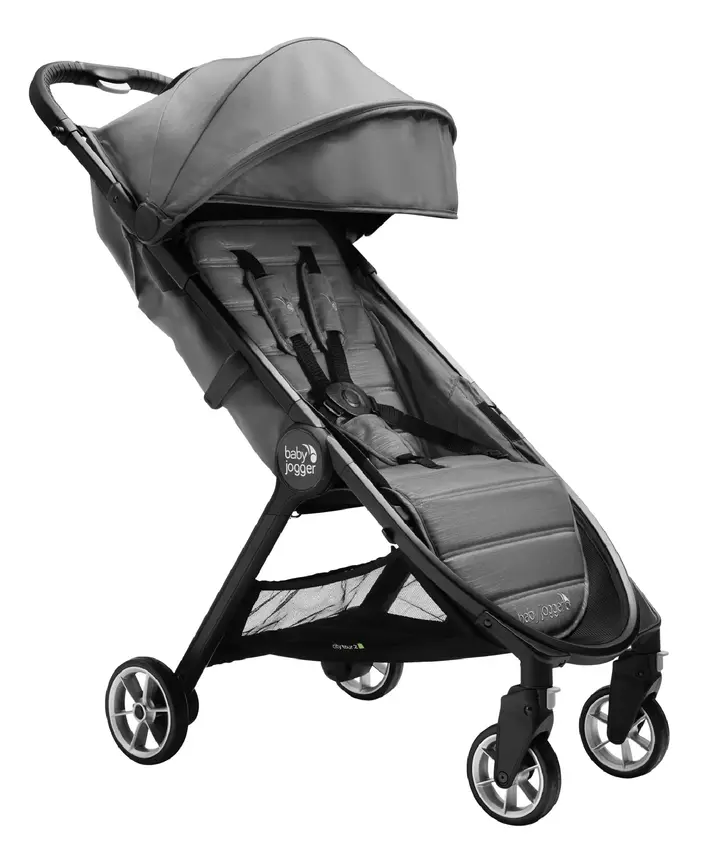 Reviewed
Baby Jogger City Tour 2
A 6.5 kg stroller with a near-flat recline. It folds small and comes with a carry bag.
Read our full review →
Frequently asked questions
Should I buy a single-to-double modular pram for my first baby if we want a second child soon?
It depends on your planned age gap. If you plan a gap of under three years, a single-to-double pram can save you money later. You will not have to sell your first pram to buy a double. However, remember that a convertible frame is a bit heavier and bulkier than a normal single pram from day one. If you plan a gap of three years or more, a lighter single pram is often easier. You can simply clip on a wheeled toddler board later.
Which is easier to push with two children: an inline pram or a side-by-side pram?
A side-by-side convertible pram is almost always easier to steer and lift up kerbs with two children. That is because both children sit right in front of the handlebar, close to the back axle. On an inline pram, one child sits much further forward over the front wheels. That weight at the front acts like a long lever. It makes lifting the front wheels over a kerb feel much heavier.
Can a newborn sleep in the regular stroller seat if I do not buy the bassinet?
Yes, but only if the stroller seat reclines completely flat. Some prams also use a maker-approved flat newborn insert and a built-in head barrier. Check if the stroller seat is a curved bucket seat that holds the hips and knees bent at a fixed angle. Never use a curved bucket seat for a newborn. Bucket seats are only safe once your baby can sit up well and hold their head steady. That is usually around six months old.
How long can my baby stay in a car capsule clipped onto the pram frame?
Safety experts in Australia, the UK, the US, and Canada say to keep time in a car capsule very short. Use it only for the car trip and quick transfers. Many hospitals and child safety groups advise a limit of 30 minutes for newborns. They also advise no more than two hours total in a 24-hour period, including the drive itself. Never use a car capsule on a pram frame for long shopping trips or regular daytime naps.
Can I attach a buggy board to a double pram to carry three children?
Some modular prams allow two seats plus an approved wheeled board for a third older child. Other brands forbid it because the extra weight can overload the frame or tip the pram backwards. Always check the maximum total load in your user manual first. Only use combinations that the pram maker has tested and approved.
Are pram sun covers and clipped muslin wraps safe in summer?
No. Never drape a dry or wet muslin wrap, blanket, or cloth over the pram hood. Even a thin muslin blocks airflow. It makes the air inside the pram heat up fast. This puts your baby at risk of overheating and heatstroke. Instead, use the built-in UPF 50+ hood or attach a mesh shade that leaves the sides open. Keep your baby in the shade during peak sun hours. Check their chest or back of the neck often to make sure they are not sweaty or hot.
Sources
- Product Safety Australia – Prams and strollers guide
- Product Safety Australia – Prams and strollers mandatory standard
- Red Nose Australia – Warning on social media hacks for baby capsules
- UK Office for Product Safety and Standards
- The Lullaby Trust (UK) – Car seats
- CPSC (US) – Safe sleep: cribs and infant products
- Health Canada – Recalls and safety alerts
- Caring for Kids (Canadian Paediatric Society) – Safe sleep for babies
Related guides
More Prams & Strollers →
Jogging Strollers and Running Prams: Handbrakes, Swivel Locks and Safety Rules

Side-by-Side vs Inline Tandem Double Prams: Doorways, Kerbs, and How to Choose
Tandem vs Side-by-Side Double Prams: Choosing for Doorways and Shops