










Bassinet Strollers for Newborns: Benefits, Safety Rules, and When to Switch
Why a flat bassinet stroller suits newborns: safer breathing, spinal support, and easy outings. Plus AU, UK, US and Canada safety rules.

On this page
- Key points
- What a bassinet stroller is
- Main benefits for your baby's first months
- Bassinet stroller vs other newborn options
- How to choose a safe bassinet stroller
- Age stages: birth to sitting up
- Safety rules in Australia, the UK, the US and Canada
- Safe sleep and sun rules for outings
- Common mistakes parents make
- Frequently asked questions
- Sources
Short answer: A bassinet stroller gives a newborn a flat, firm place to lie on their back. This helps keep their airway open. It also supports their soft neck and spine. A flat bassinet is safer for longer outings than a curved car capsule. Most babies use a bassinet from birth until around 4 to 6 months, or until they can roll or push up.
This advice lines up with guidance in Australia (Product Safety Australia and Red Nose), the UK (OPSS, The Lullaby Trust and the NHS), the US (CPSC and the American Academy of Pediatrics) and Canada (Health Canada and the Canadian Paediatric Society).
Key points
- Flat and firm: Newborns need a flat, firm base on their back for breathing and spine support.
- Safer than a capsule for walks: A flat bassinet avoids the curled-up posture of a car seat.
- Short naps only: A pram bassinet is great for daytime walks, not unsupervised overnight sleep unless the maker states it is safe for that.
- Clear space: Keep pillows, loose blankets, sheepskins and toys out of the bassinet.
- Airflow matters: Never drape a wrap or blanket over the hood, as heat builds up fast inside.
- When to stop: Move to the upright seat as soon as your baby can roll, sit up, push up on hands and knees, or hits the weight limit.
- Check standards: Look for AS/NZS 2088 (Australia), BS EN 1888 (UK), ASTM F833 (US) or Canadian stroller safety rules.
What a bassinet stroller is
A bassinet stroller is a pram with a flat, walled carrycot on top of the wheels. In Australia and the UK, many people simply call this a pram or a carrycot. In the US and Canada, it is often called a bassinet stroller.
Unlike a normal stroller seat, a bassinet has no bends or dips. Your baby lies completely flat on a thin, firm mattress. High fabric or mesh sides keep your baby sheltered from wind and bumps.
Some strollers come with a separate bassinet that clips onto the frame. Later, you unclip the bassinet and click on a toddler seat. Other models have a two-in-one seat that converts from a flat bassinet into a sitting seat. Both styles give your newborn a flat surface when they are tiny.
Prams & Strollers worth a look
Real products from our catalogue. We don't show star ratings or review counts; check the current price, stock and reviews on Amazon before you buy.
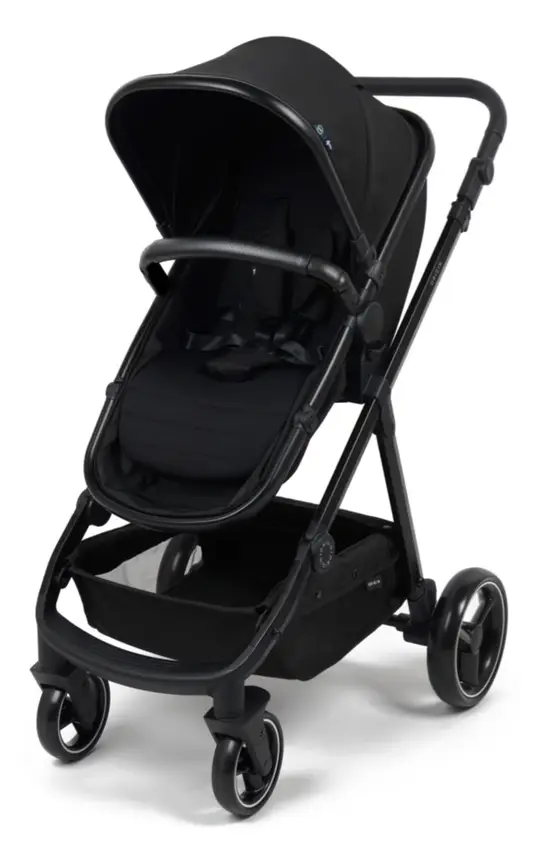
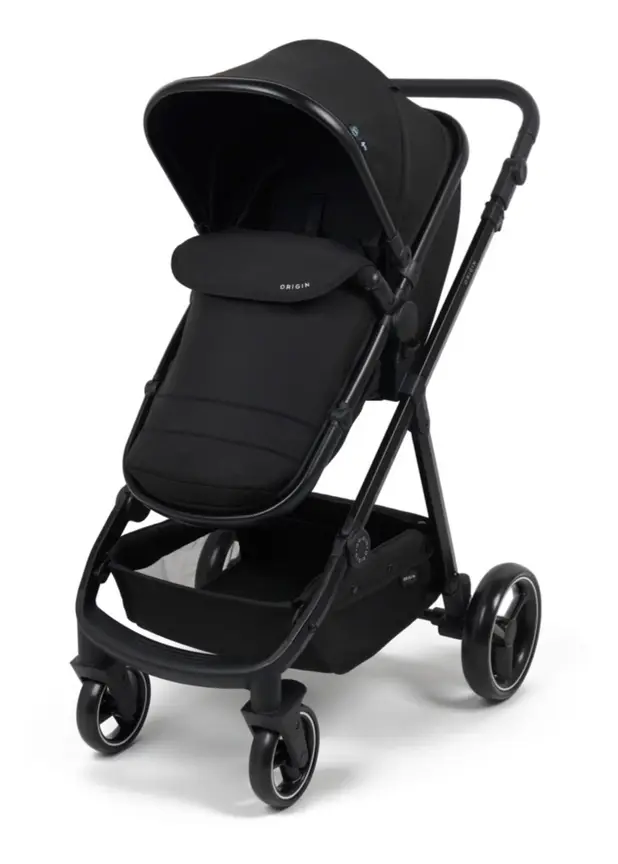
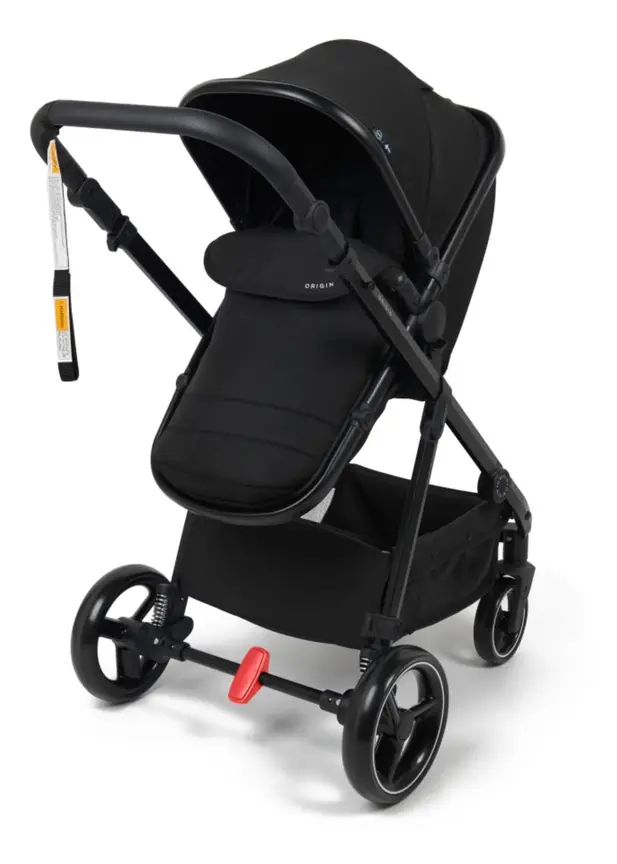
4baby Origin Stroller
A budget pram whose seat turns into a bassinet. The seat can face you or face the world.
Read our full review →


Britax One2
A pram that starts as a single and can take a second child. The seat turns into a lie-flat bassinet.
Read our full review → Reviewed
Bugaboo Fox 5
Bugaboo's flagship all-terrain pram: big-wheel suspension ride, one-piece fold, bassinet from birth and a seat rated to 22 kg.
Read our full review →
Cybex Priam
Fashion-forward luxury pram with interchangeable seat/bassinet units and an all-terrain option.
Main benefits for your baby's first months
Newborns spend a lot of time sleeping and lying down. Their muscles are still weak, and their head is heavy for their body. A bassinet stroller is built for this exact stage.
Flat, firm support for breathing and spine
A newborn cannot hold up their own head. If they sit upright or slump forward, their chin can drop onto their chest. That bent neck position can press on their windpipe and make breathing harder.
Lying flat on their back keeps your baby's head, neck and body in a straight line. Their airway stays open. Their soft spine and hips also rest in a natural position without being squished.
Better than long naps in a car capsule
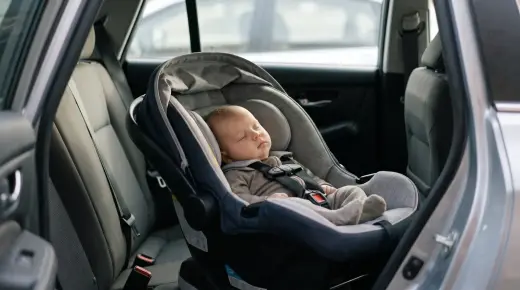
Many parents click an infant car seat (also called a baby capsule) onto stroller wheels. This is handy for a quick dash into a shop. It is not meant for long walks or long naps.
Red Nose Australia, The Lullaby Trust in the UK, and the American Academy of Pediatrics (AAP) all warn against leaving babies to sleep in car seats for long stretches. In a curved car seat, a young baby's head can tip forward. If you plan to walk for more than a short trip, a flat bassinet is a much safer choice.
Eye contact and bonding while you walk
Most pram bassinets face you. As you push the stroller, your baby can see your face. You can smile, talk and sing to them.
This also makes safety checks easy. You can see your baby's chest rising and falling with one quick glance. You can spot right away if they look too hot, too cold or unsettled.
Shade and shelter from wind and glare
Newborn skin burns easily, and young eyes are sensitive to bright light. A bassinet usually has a large fold-down hood and high side walls. Together, they block sun, wind and dust while keeping fresh air flowing around your baby.
Many bassinets also include a zip-on storm cover or boot cover for cold days. Just make sure your baby's face stays uncovered and air can still move freely.
Easier transitions when your baby is asleep
If your baby falls asleep during a walk, you do not always have to wake them when you get home. Many bassinets unclip smoothly from the stroller frame with two hands.
You can carry the bassinet inside and set it on a flat floor. Keep watching your baby while they finish their nap. Remember that most pram bassinets are not certified as overnight beds, so move your baby to their cot for night sleep.
Room to stretch and kick
A car seat holds a baby snugly with tight harness straps. That is great for a car crash, but it stops your baby from moving freely. In a flat bassinet, your baby can stretch their arms, kick their legs and turn their head side to side.
Free movement is good for muscle growth. It also stops your baby from getting sweaty against padded car seat foam.
Bassinet stroller vs other newborn options
You do not have to buy a separate bassinet to take a newborn outside. Several options work well. Each one has pros and limits.
| Option | Baby's position | Best used for | Sleep safety on walks | When baby outgrows it |
|---|---|---|---|---|
| Bassinet attachment | Flat on the back, firm mattress | Daily walks, long outings, newborn naps while watched | High, if bare and flat | Around 4 to 6 months, or at first rolling or push-up signs |
| Lie-flat stroller seat | Flat or near-flat recline, strapped in | Parents wanting one seat from birth to toddler age | Good if it reclines completely flat | Used up to toddler weight limit (often 15 to 22 kg) |
| Car capsule on frame | Curved, semi-upright, strapped in | Short trips from car to shops | Not safe for long naps | Usually 6 to 12 months, based on height and weight markers |
| Baby carrier or sling | Upright against your chest | Hands-free errands, crowded paths, stairs | Safe if tight, upright, and face is clear | When baby gets too heavy for your back |
A lie-flat stroller seat can be a smart choice if you have a small car or tight storage at home. Look closely at the recline angle in person. Some seats say "newborn ready" but still leave a slight curve at the hips. A true flat surface is best for a newborn.
How to choose a safe bassinet stroller
A bassinet stroller does not need to be expensive to be safe. Focus on how it is built, how it locks and how it fits your daily routine.
A firm, flat mattress
Press your hand down in the middle of the bassinet mattress. It should feel firm and spring right back. It should not sag or leave a dent.
Check the gap around the edge of the mattress too. It must fit snugly against the bassinet walls. If you can push two fingers between the mattress and the side, the gap is too wide. A baby's face could get trapped there.
Never add an extra foam pad, pillow or thick liner on top of the mattress. Soft padding raises the risk of suffocation.
Breathable sides and good airflow
Look for a bassinet with mesh panels in the hood or around the base. Mesh lets warm air escape on hot days. It also lets you peek at your baby without opening the hood.
Check that the inner fabric feels smooth and fits tightly. Loose fabric or dangling cords inside the bassinet are a hazard.
Strong brakes and a stable frame
Test the brake pedal with your foot. It should click firmly into place and lock both back wheels. Push the stroller forward and backward gently with the brake on. The wheels must not slip or roll.
Also test how steady the frame feels. Push down lightly on the handlebar, then gently press sideways. A good frame stays planted and does not tip easily.
A tether strap and lock checks
In Australia, mandatory safety rules require prams and strollers to have a wrist tether strap. This is a strong loop attached to the handlebar. You slip your wrist through it when you walk.
If you trip or let go on a hill, the strap stops the stroller from rolling away into traffic. Even in countries where a tether strap is not required by law, it is a smart feature to look for.
Check how the bassinet locks onto the stroller frame too. You should hear or feel a clear click on both sides. Try lifting the bassinet gently by its handle after clicking it in. It must not wobble or lift off without pressing the release buttons.
Wheels, suspension, and your local paths
Think about where you walk most often. Small plastic wheels work fine inside shopping centres and on smooth footpaths. They can rattle and get stuck on tree roots, gravel or bumpy kerbs.
Larger air-filled or foam-filled tyres with spring suspension give a much softer ride. Your baby will jiggle less over cracks in the path. Just remember that bigger wheels make the folded stroller heavier and bulkier.
Weight, fold size, and car boot space
A separate bassinet takes up a lot of room. Most bassinets do not fold flat on the frame. That means you must unclip the bassinet, fold the wheels, and put both pieces in your car boot.
Before you buy, measure your car boot and your front hallway. Practice folding and lifting the frame in the shop. If you live in an upstairs flat with no lift, a heavy bassinet pram can quickly feel like a chore.
Age stages: birth to sitting up
A bassinet is only used for a short chapter of your baby's life. Knowing what happens at each stage helps you plan the switch to the upright seat.
| Age (roughly) | What your baby is doing | What to do with the stroller |
|---|---|---|
| Birth to 2 months | Very little head control. Sleeps a lot. Needs flat back support. | Use the flat bassinet for walks. Always lay baby on their back. |
| 2 to 4 months | Starting to lift head during tummy time. Kicking more strongly. | Keep using the bassinet, but watch closely for early rolling signs. |
| 4 to 6 months | Rolling over, pushing up on hands, or trying to sit. | Stop using the bassinet as soon as rolling or pushing up starts. Switch to a reclined stroller seat with a five-point harness. |
| 6 months and up | Sitting with little or no help. Curious about the world. | Use the upright stroller seat, always buckled in. You can face them toward you or forward. |
Watch your baby, not just the calendar. Some strong babies push up or roll at 3 or 4 months. Others are content lying flat until 6 months. The moment your baby can roll onto their tummy or push up on their hands and knees inside the bassinet, it is time to switch. A baby who pushes up in a shallow bassinet can tip over the side and fall.
Side by side: more prams & strollers to compare
Real products from our catalogue. We don't show star ratings or review counts; check the current price, stock and reviews on Amazon before you buy.

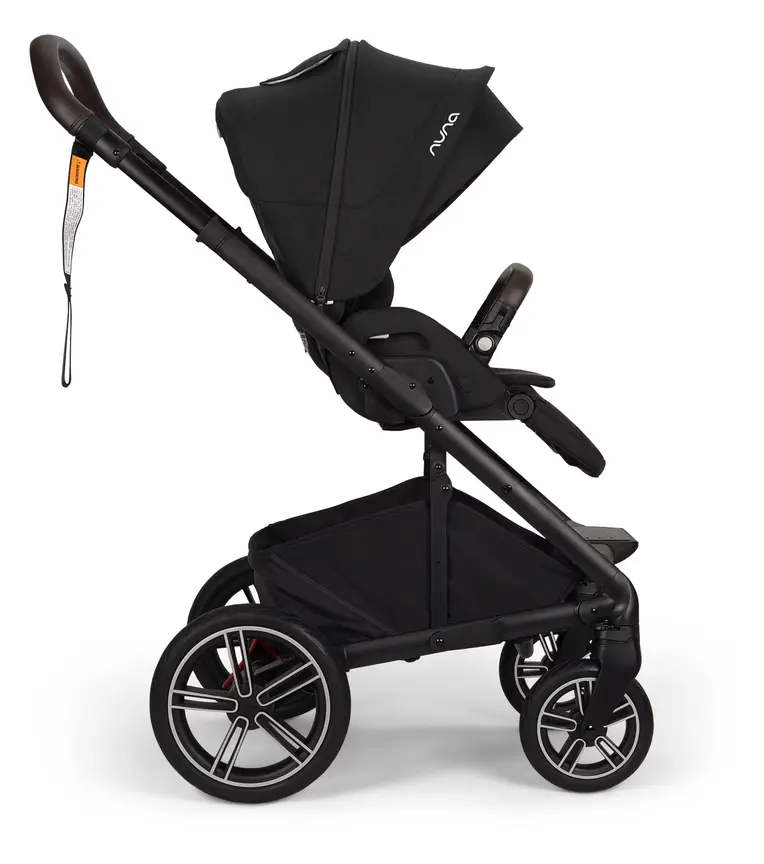


Nuna MIXX Next
A full-size pram with four ways to ride: capsule, bassinet, parent-facing seat or world-facing seat.
Read our full review →
Baby Jogger City Mini GT2
Long-running, lighter all-terrain stroller with a famously simple one-hand strap fold.
 Reviewed
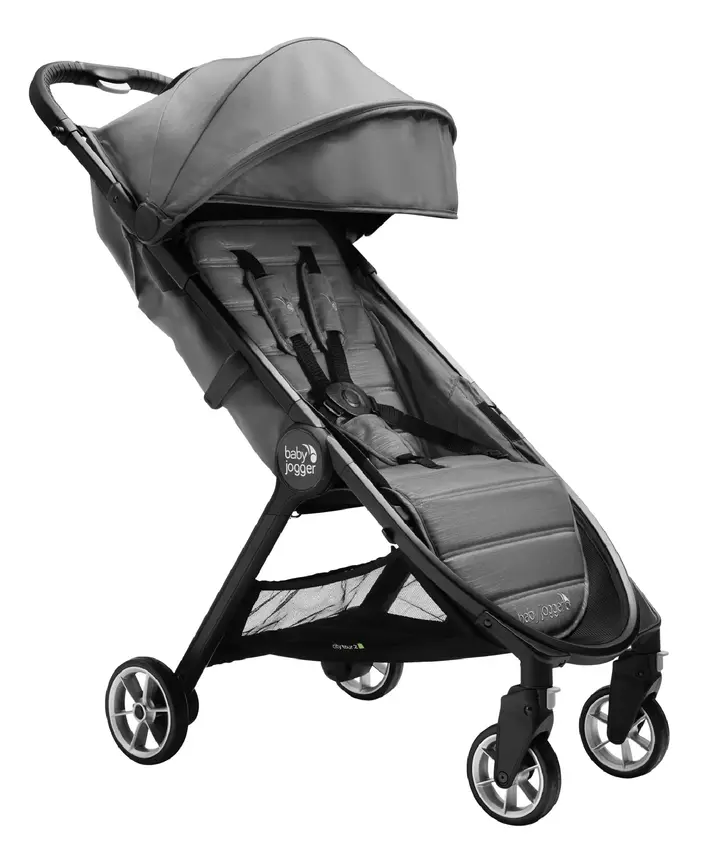
Baby Jogger City Tour 2
A 6.5 kg stroller with a near-flat recline. It folds small and comes with a carry bag.
Read our full review →
Safety rules in Australia, the UK, the US and Canada
Every major country sets safety rules for prams and strollers. These rules test brakes, frame locks, stability, small parts and gaps where tiny fingers could get trapped.
| Country | Main safety body | Safe sleep and health body | Key pram or bassinet standards |
|---|---|---|---|
| Australia | Product Safety Australia (ACCC) | Red Nose Australia and Raising Children Network | AS/NZS 2088 (mandatory pram standard) and AS/NZS 8811.1 (mattress firmness test) |
| United Kingdom | Office for Product Safety and Standards (OPSS) | The Lullaby Trust and NHS | BS EN 1888 (wheeled child conveyances standard) |
| United States | Consumer Product Safety Commission (CPSC) | American Academy of Pediatrics (AAP) | ASTM F833 (strollers and carriages) and ASTM F2194 (bassinets and cradles) |
| Canada | Health Canada | Canadian Paediatric Society (Caring for Kids) | Canadian carriages and strollers safety regulations |
In Australia, any pram or stroller sold legally must meet the mandatory standard AS/NZS 2088. It must also have a red warning label about keeping children away when folding, never leaving a child alone, and using the tether strap. Some pram bassinets also have a warning saying they are not meant for unsupervised sleep.
In the UK, look for BS EN 1888 on the label. In the US, look for ASTM F833 on the stroller and ASTM F2194 if the bassinet is sold as a standalone sleep space. In Canada, Health Canada requires strollers to meet national carriages and strollers rules, and you can check their recall database before buying used gear.
Be careful when buying from unknown overseas websites. Cheap grey-market imports may skip local testing. Always check the frame for a permanent safety label before you put your baby inside.
Safe sleep and sun rules for outings
Most pram accidents happen from heat, falls or blocked breathing, not from broken wheels. A few simple habits keep every walk safe.
Keep the hood uncovered
Never drape a muslin wrap, towel or blanket over the bassinet hood to block the sun or help your baby sleep. Even thin cotton blocks airflow. Inside a covered pram, the temperature can climb very fast in warm weather.
Instead, use the stroller's built-in sun canopy, turn the pram so the sun is behind the hood, or walk in the shade. If you use a clip-on sunshade, make sure it is mesh and leaves wide gaps for air to move through.
Follow the bare-bassinet rule
The same safe sleep rules from your nursery apply to your stroller bassinet:
- Always lay your baby on their back, never on their tummy or side.
- Keep the bassinet clear of soft toys, pillows, cot bumpers and loose blankets.
- Dress your baby for the weather. If you add a light blanket, tuck it firmly below chest level, or use a safe baby sleeping bag instead.
- Never cover your baby's head with a hat or hood while they sleep inside a warm pram.
Check your baby's temperature
Feel your baby's tummy or the back of their neck. It should feel warm, not sweaty or hot. Do not judge by their hands or feet, which often feel cool even when a baby is warm enough.
Never leave your baby alone in the pram
Stay within arm's reach whenever your baby is in the bassinet. Always put the brake on when you stop, even on flat ground. A slight slope or a strong gust of wind can roll an unbraked pram away in seconds.
Common mistakes parents make
Even careful parents run into small traps with bassinet strollers. Here are the most common ones and how to avoid them.
- Covering the pram with a muslin cloth: Parents often do this for shade or darkness. It traps hot air and stops you from seeing your baby. Stick to the built-in canopy and walk in the shade.
- Adding a soft sheepskin or extra pad: Extra padding feels cosy to us, but it is unsafe for babies. A baby's face can sink into soft surfaces and block their nose and mouth. Use only the firm mattress made for that bassinet.
- Waiting too long to move to the seat: Some parents keep using the bassinet because their baby still fits length-wise. Once your baby starts rolling or pushing up on their hands, the low walls are no longer safe.
- Hanging heavy bags on the handlebar: A heavy nappy bag or shopping bag on the handle can tip the whole stroller backward. Put heavy items in the under-seat basket instead.
- Forgetting the wrist tether strap: It takes two seconds to slip the loop on your wrist. Always wear it near roads, hills, train platforms and steps.
- Using the bassinet as an overnight bed without checking: Most pram bassinets do not meet cot or home bassinet standards for overnight sleep. Check the maker's manual first, and use a proper cot or home bassinet at night.
- Leaving baby in a car capsule instead: Clicking a car seat onto the stroller frame is fine for a quick trip. For long walks, move your baby into the flat bassinet so their neck stays straight.
- Buying second-hand without checking locks and recalls: Old prams can have worn brakes, missing tether straps or recalled latches. Always test every lock and check official recall lists in your country before buying used gear.
More options, from budget to premium
Real products from our catalogue. We don't show star ratings or review counts; check the current price, stock and reviews on Amazon before you buy.
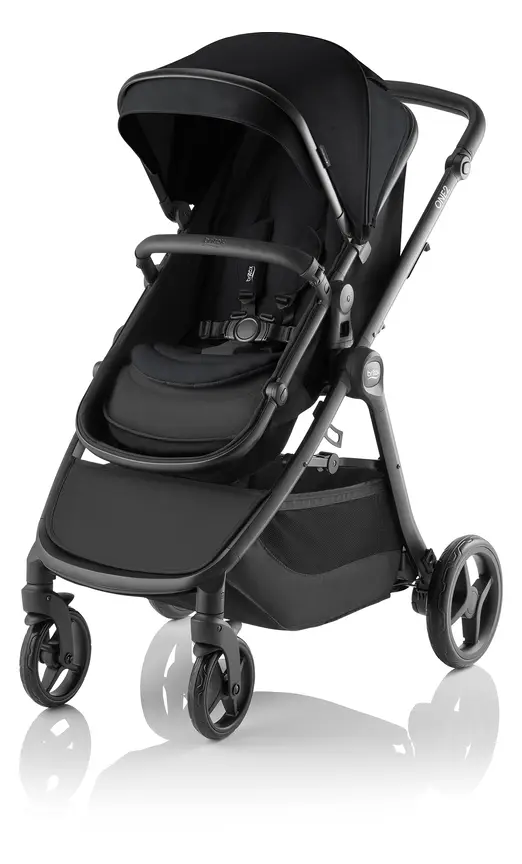
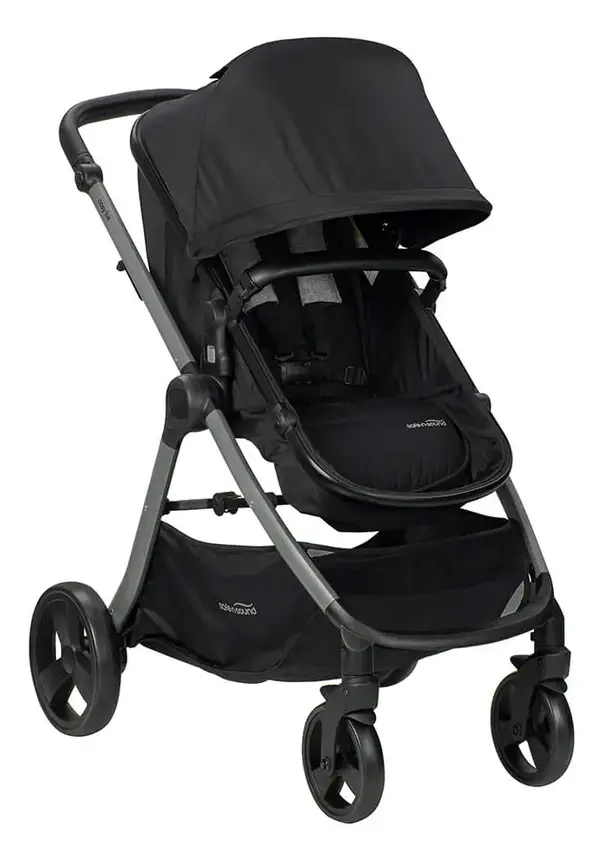
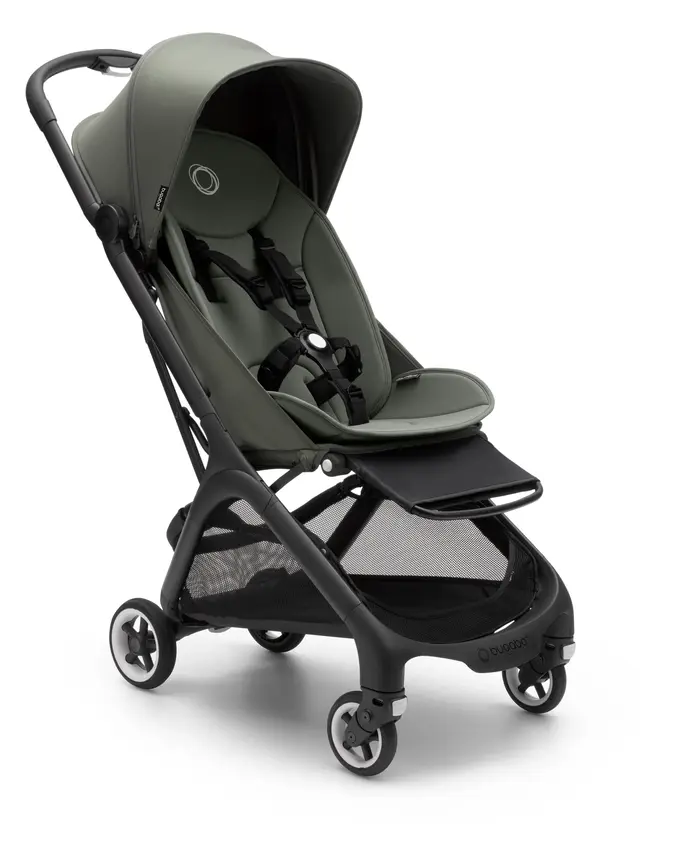


Bugaboo Butterfly
Bugaboo's cabin-friendly compact stroller with a one-second fold — the travel partner to a Fox, not a replacement for it.
Frequently asked questions
Can my baby sleep in a bassinet stroller overnight?
Usually no. Most pram bassinets are made for watched daytime walks, not overnight sleep. Some brands test and approve their bassinet for overnight sleep, often on a matching stand. Check the manual and safety labels carefully. If it does not clearly state it is safe for overnight sleep, move your baby to a safe cot or home bassinet at night.
When should I move my baby out of the bassinet into the stroller seat?
Move your baby when any of these happen first: they start trying to roll over, they can push up on their hands and knees, they can sit up, or they reach the bassinet's weight limit (often around 9 kg). For most babies, this happens between 4 and 6 months of age. When you switch to the stroller seat, always use the five-point harness and recline the seat until your baby has strong head and trunk control.
Is a lie-flat stroller seat as good as a bassinet?
A true lie-flat stroller seat can work well from birth, especially if you want to save space and money. Make sure the seat reclines completely flat with no dip at the hips, and always fasten the harness straps safely. A separate bassinet still has one big plus: your baby is not strapped down, so they can stretch freely on a firm, flat mattress.
Can I use a blanket or muslin cloth over the hood for shade?
No. Never drape any cloth, blanket or cover over the opening of a pram or bassinet. Even a light muslin wrap blocks air movement and makes the inside much hotter. Use the built-in sun hood, seek shade, and dress your baby in light, breathable clothes instead.
Does a newborn need a harness inside a pram bassinet?
Most pram bassinets do not have a harness because the baby lies flat inside high walls and cannot sit up or climb out. Once your baby can roll or push up, a walled bassinet without a harness is no longer safe. That is why you must switch to a harnessed stroller seat as soon as those skills appear.
Are second-hand bassinet strollers safe to buy?
They can be, if you inspect them carefully first. Check that the brake locks both wheels tightly, the bassinet clicks onto the frame with no wobble, and the mattress is firm, flat and clean. Look up the brand and model on Product Safety Australia, the UK OPSS, the US CPSC or Health Canada recall lists. Avoid any pram with missing safety labels, cracked plastic or worn latches.
Is a bassinet better than clicking a car capsule onto the stroller?
Yes, for any walk longer than a quick errand. A car capsule holds your baby in a semi-upright, curved position. Health bodies in Australia, the UK, the US and Canada warn that babies should not spend long periods sleeping in car seats outside the car. A flat bassinet keeps your baby's airway open and gives their back a proper rest.
Sources
- Product Safety Australia – Prams and strollers guide
- Product Safety Australia – Prams and strollers mandatory standard
- Red Nose Australia – Six safe sleep recommendations
- Red Nose Australia – Research on risks of infants sleeping in car seats
- The Lullaby Trust (UK) – Sleeping products
- NHS (UK) – Reduce the risk of sudden infant death syndrome
- American Academy of Pediatrics (US) – A parent's guide to safe sleep
- Caring for Kids, Canadian Paediatric Society – Safe sleep for babies
Related guides
More Prams & Strollers →
Jogging Strollers and Running Prams: Handbrakes, Swivel Locks and Safety Rules

Bassinet Strollers: What They Are, How They Help New Parents, and How to Use One Safely

Bassinet Attachments for Strollers: How to Choose and Use One Safely
