














PFAS "Forever Chemicals" in Baby Gear: What They Are and How to Check Cot Mattresses, Prams and More
What PFAS forever chemicals are, where they can turn up in baby gear like cot mattresses, pram covers and bibs, what the rules say, and simple ways to cut…

On this page
- What are PFAS?
- What do health agencies say about PFAS and health?
- Where PFAS can turn up in baby gear
- How to "audit" a cot mattress
- What the rules say in each country
- Simple ways to reduce your baby's exposure
- What to do with gear you already own
- Comparing common "free from" labels
- Where to focus at each age
- Common mistakes to avoid
- FAQ
- Sources
Short answer: PFAS are a large group of man-made chemicals that resist water, grease and stains. They break down extremely slowly, which is why people call them "forever chemicals". In baby gear they can turn up in stain-resistant or water-repellent fabric treatments, for example on some mattress covers, pram and car seat fabrics, bibs and rain covers. Health agencies say some PFAS are linked to health concerns, while research on others is still going on. You don't need to throw out safe gear. Instead, ask makers about PFAS, choose untreated fabrics where you can, wash new textiles, keep dust down, and never trade away safety (like a firm cot mattress) for a "chemical-free" label.
Key points
- PFAS stands for per- and polyfluoroalkyl substances. There are thousands of them.
- They are used to make products resist water, stains and grease. They last a very long time in the environment and in our bodies.
- Most people already have small amounts of some PFAS in their blood, from food, water, dust and products.
- The US EPA says exposure to some PFAS is linked to health effects. Australia's PFAS information site says the evidence in humans is still limited, but advises reducing exposure where you can.
- Canada has banned some PFAS and proposed wider limits. The UK, US and Australia are also tightening rules.
- Ask makers directly: "Are any PFAS used in this product, including fabric treatments?"
What are PFAS?
PFAS are a family of thousands of chemicals made in factories since the mid-1900s. They contain very strong bonds between carbon and fluorine atoms. These bonds make PFAS:
- repel water, oil and grease
- resist stains and heat
- very slow to break down
Those same features are why PFAS are useful in products, and why they cause concern. Once they get into soil, water, animals or people, many PFAS stay there for a very long time. That's where the nickname "forever chemicals" comes from.
The US Environmental Protection Agency (EPA) explains that PFAS are found in many places: some drinking water, soil, food, fish, household dust, and many products such as non-stick cookware, stain-resistant carpets and fabrics, water-repellent clothing, food packaging and firefighting foams. Health Canada says people can be exposed through drinking water, food, indoor and outdoor air and house dust.
You may see names like PFOA and PFOS. These are two of the best-known and most studied PFAS. They have been phased out or restricted in many countries.
What do health agencies say about PFAS and health?
This is an area where agencies use slightly different words, so it helps to see them side by side.
| Country | Agency | What they say (in short) |
|---|---|---|
| US | EPA and the National Institute of Environmental Health Sciences (NIEHS) | Research suggests exposure to some PFAS may be linked to health effects, including effects on growth and development in babies and children, the immune system, cholesterol levels and some cancers. Research is ongoing. |
| Canada | Health Canada | PFAS are potentially harmful to human health and the environment. Canada has banned PFOA, PFOS and some related chemicals and has proposed restricting the wider PFAS group. |
| Australia | Australian Government PFAS information (pfas.gov.au) | Evidence of health effects in humans is limited and still being studied, but as a precaution people should reduce their exposure where they can. |
| UK | UK Government | Has published a national PFAS plan to better understand, monitor and reduce PFAS in the environment and products. |
The honest picture is this: some PFAS are clearly a concern, many have not been studied well, and scientists don't yet know exactly how much risk comes from everyday products. Reducing exposure where it's easy is a sensible, low-cost step. Worrying about every item in your home is not necessary.
Cots, Bassinets & Bedside Sleepers worth a look
Real products from our catalogue. We don't show star ratings or review counts; check the current price, stock and reviews on Amazon before you buy.

4baby Snuggle Cuddle Bedside Sleeper
A low-cost bassinet that turns into a bedside sleeper, with 4 heights and mesh sides.
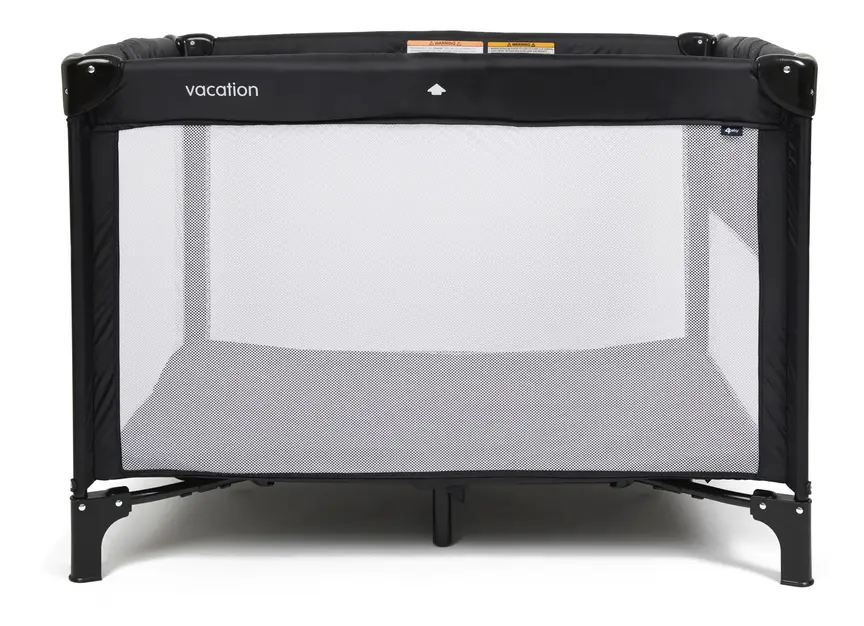
4baby Vacation Portacot
A low-cost portacot with a padded mattress and mesh sides.
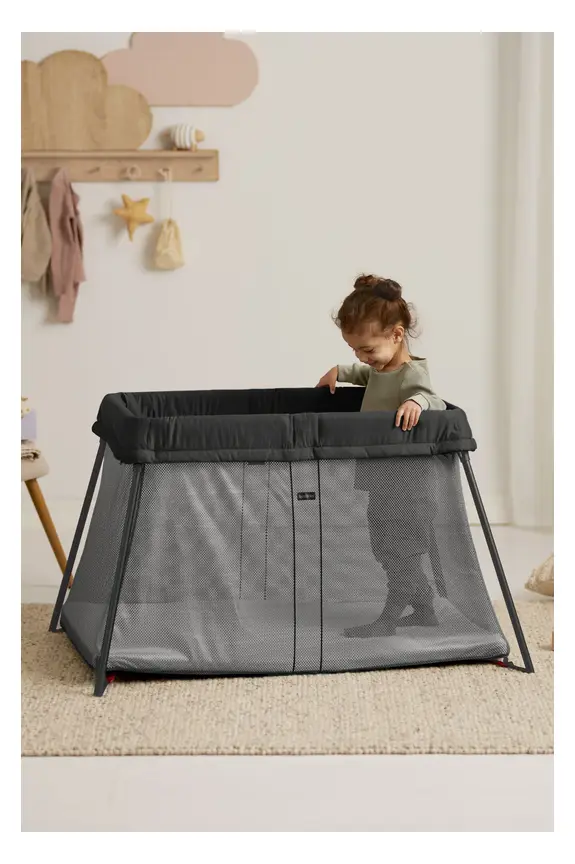

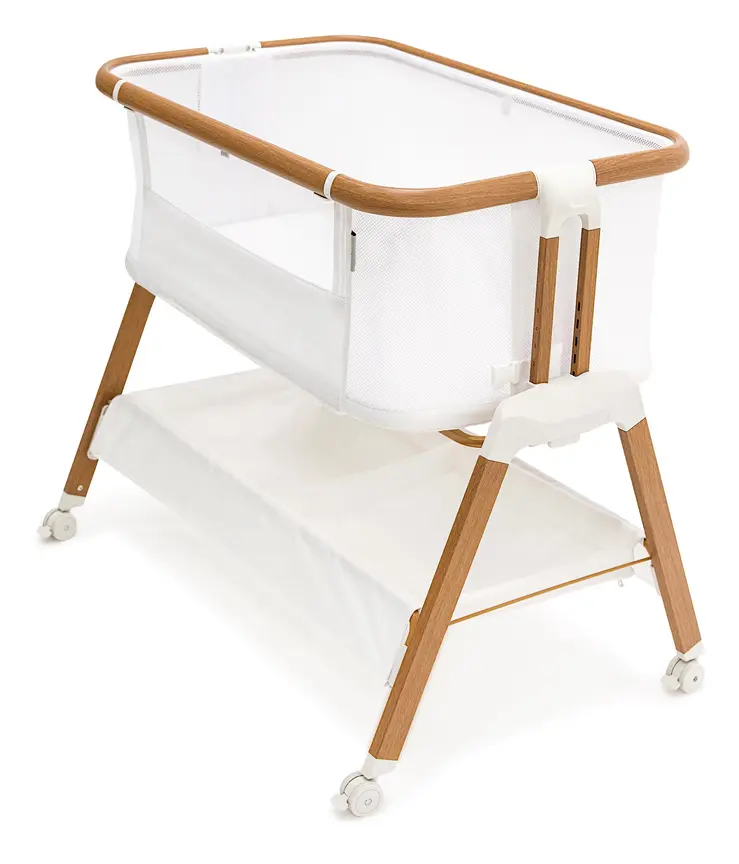
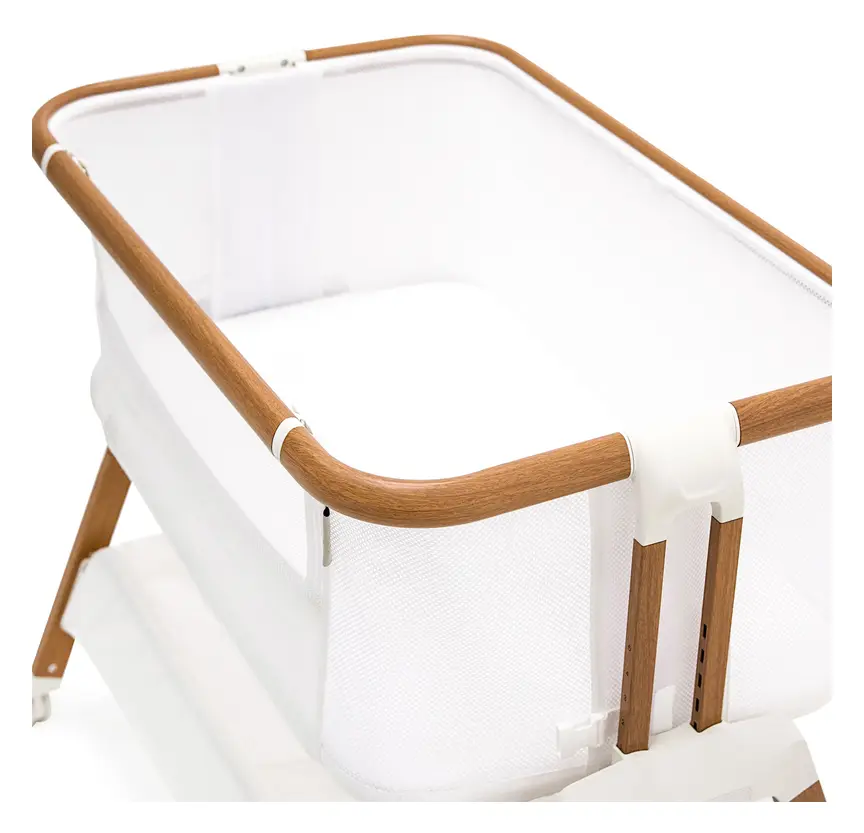
BabyRest Alfie2 Bedside Bassinet
A bedside bassinet with 5 heights, a drop-down side, wheels and an insect net.
Read our full review →Compare all cots, bassinets & bedside sleepers in our reviews →
Where PFAS can turn up in baby gear
PFAS are not usually part of the main material of baby products. When they are present, it's most often in a surface treatment that makes fabric resist water or stains. Products to ask about include:
| Product | Why PFAS might be used | What to ask or look for |
|---|---|---|
| Cot mattress covers and protectors | Water and stain resistance | Is the cover or waterproof layer treated with PFAS? |
| Change pads and mats | Wipe-clean, stain-resistant surface | What is the surface made of? Any fluorinated coatings? |
| Pram, stroller and car seat fabrics | Water and stain resistance | Is there a "stain-resistant" or "water-repellent" finish? What chemistry? |
| Rain covers, sunshades, nappy bags | Waterproofing | Is the waterproof finish PFAS-free? |
| Bibs, splash mats, high chair covers | Stain resistance | Plain cotton or silicone may be simpler choices |
| Rain jackets and outdoor clothing | Water repellency | Many brands now sell PFAS-free outdoor gear |
| Non-stick cookware used for baby food | Non-stick coating | Don't overheat; replace badly scratched pans; consider stainless steel or cast iron |
Not every product in this list contains PFAS. Many makers have already switched to PFAS-free treatments. The point is that these are the items worth asking about.
How to "audit" a cot mattress
The cot mattress gets special attention because your baby spends many hours each day with their face close to it. Here's how to check one, in plain steps.
Step 1: Make sure it's safe for sleep first
Before thinking about chemicals, check the basics. Red Nose (Australia) says a safe mattress is:
- firm, so your baby's face doesn't sink in
- flat, not tilted or raised at one end
- the right size for the cot, with no gaps around the edges that could trap your baby
- clean and in good condition
The UK Lullaby Trust, the American Academy of Pediatrics (AAP) and the Canadian Paediatric Society give the same core advice. A soft "natural" mattress is not safer, even if it has no added chemicals.
Step 2: Read the label and website
Look for words such as "stain-resistant", "water-repellent", "fluorinated", "PFC" or "PFAS". Some products clearly say "PFAS-free" or "no PFAS added". Health Canada notes that most consumer products don't have to list chemical ingredients, so a missing word doesn't prove a product is PFAS-free.
Step 3: Ask the maker directly
Send a short email or message. You could write:
"Before buying your cot mattress, I'd like to know whether any PFAS chemicals are used in the cover, the waterproof layer, the foam or any fabric treatment. Has the product been tested for PFAS, and can you share the result?"
A good company will answer clearly. If they won't, or the answer is vague, that tells you something too.
Step 4: Look at the waterproof layer
Many cot mattresses and protectors use a thin waterproof barrier. Some barriers are a plastic film, and some fabrics get a water-repellent finish. Ask which one your product uses, and whether any part of it is treated with PFAS.
Step 5: Look for independent certifications
Some independent schemes test textiles and foams for a list of harmful substances, and some now include PFAS. A certification shows the product was tested against that scheme's list; it doesn't mean "zero chemicals of any kind". Ask the maker which certification they hold and whether it covers PFAS.
What the rules say in each country
Rules on PFAS are changing quickly. This is a general picture, not legal advice.
- Canada: Canada has banned PFOA, PFOS and long-chain PFCAs, with some exceptions. It has proposed a step-by-step ban on the wider PFAS group (not including a sub-group called fluoropolymers), starting with uses that aren't needed for health or safety, such as many consumer products.
- US: the EPA has set national drinking water limits for several PFAS. Several US states have also passed their own laws limiting PFAS in children's products, textiles or other consumer goods. The rules differ from state to state.
- Australia: the Australian Government has been working with states and territories on PFAS through a national plan, and has moved to restrict the import and use of some of the best-known PFAS, such as PFOS, PFOA and PFHxS. The pfas.gov.au site has current information.
- UK: the UK Government has published a PFAS plan setting out how it will monitor and reduce PFAS. The UK and European Union are also looking at wider restrictions.
Because rules differ between countries, a product sold in one place might have different treatments from one sold somewhere else. If you buy online from overseas, ask the seller which version you're getting.
Simple ways to reduce your baby's exposure
You can't avoid PFAS completely, because they are in the wider environment. But these steps lower exposure without much cost or fuss.
Around the home
- Keep dust down. PFAS and other chemicals collect in household dust. Damp-dust surfaces, vacuum often (a vacuum with a HEPA filter is a good choice), and wash your baby's hands before eating, especially once they're crawling.
- Skip stain-proofing sprays on sofas, carpets and baby gear.
- Choose untreated fabrics for things your baby mouths, like bibs, burp cloths and soft toys. Plain cotton is easy to wash.
- Wash new textiles before use. This removes loose finishes and dust from manufacturing.
- Use non-stick pans carefully. Cook on low to medium heat, don't heat an empty pan, use wooden or silicone utensils, and replace pans with flaking or badly scratched coatings. Stainless steel, cast iron or enamel pans are PFAS-free alternatives.
Food and water
- Check your local water report. Most town water supplies are tested. If you live near a site known for PFAS contamination (such as some airports, military bases or firefighting training areas), follow your local health authority's advice. Some areas have specific guidance on drinking water, home-grown food and fish.
- Use a suitable water filter if needed. Some filters (such as certain reverse osmosis or activated carbon systems) can reduce PFAS. Check the filter's certification for PFAS reduction before buying.
- Limit grease-proof packaging such as some takeaway containers and microwave popcorn bags, which have used PFAS in the past.
Breastfeeding
Small amounts of PFAS can pass into breast milk, just as they're found in most people's blood. Health agencies advise that the benefits of breastfeeding are greater than the possible risks from PFAS in breast milk, so keep breastfeeding. If you live in an area with known PFAS contamination and are worried, talk to your doctor or local health service.
Side by side: more cots, bassinets & bedside sleepers to compare
Real products from our catalogue. We don't show star ratings or review counts; check the current price, stock and reviews on Amazon before you buy.
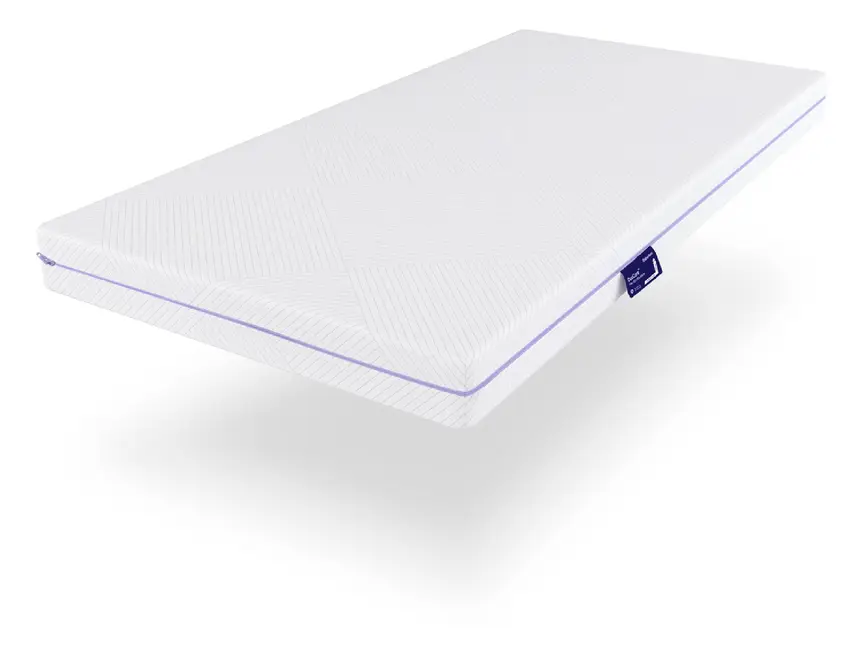
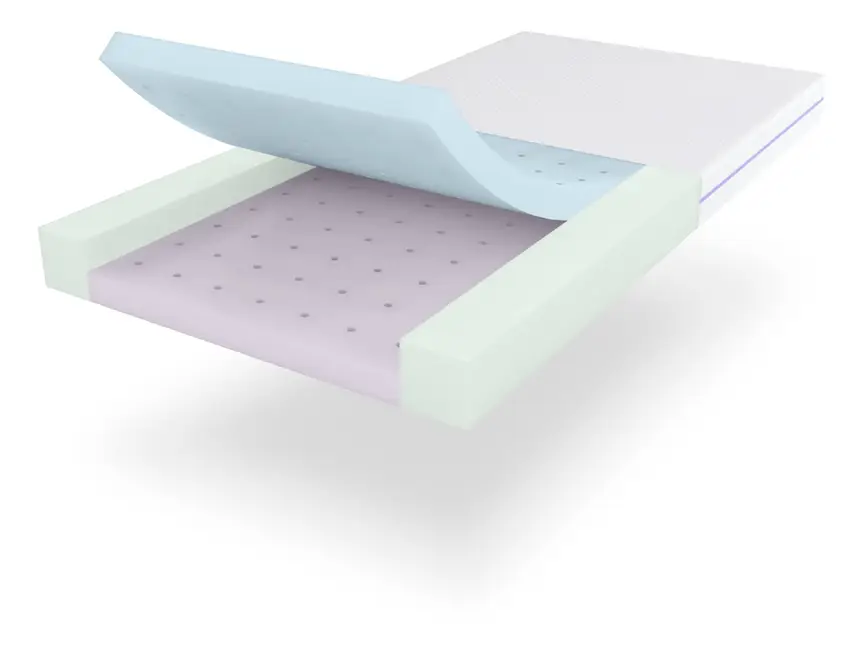

BabyRest Duocore Bamboo Cot Mattress
A two-sided mattress: a baby side to 12 kg and a toddler side from 12 kg to about 4 years.
Read our full review →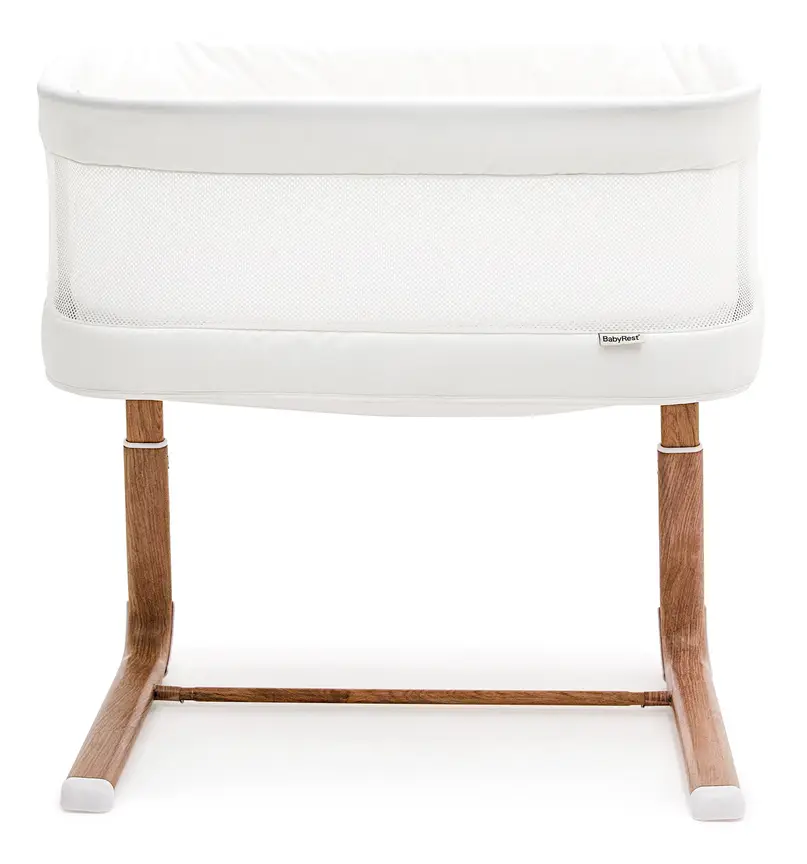


BabyRest Swan Smart Bassinet
A bassinet that rocks by itself when baby stirs, with 3 rocking levels, lullabies and a remote.
Read our full review →


Boori Matilda Cot Bed
A cot that turns into a toddler bed using its own end panels. No extra kit needed.
Read our full review →Compare all cots, bassinets & bedside sleepers in our reviews →
What to do with gear you already own
Finding out that something might contain PFAS doesn't mean you have to throw it out. Ask yourself:
- Is it safe and doing its job? A safe, firm cot mattress that meets your country's standard is worth keeping. Replacing it with a soft or second-hand mattress of unknown history could be riskier.
- How close is it to your baby's mouth and face? Bibs, teethers and soft toys matter more than a pram rain cover.
- Is there an easy swap? Swapping treated bibs for plain cotton ones is cheap. Replacing a car seat is not, and you should never use an aftermarket car seat cover to "fix" it.
- When it wears out, choose a PFAS-free option for the replacement.
Comparing common "free from" labels
| Label | What it usually means | Watch out for |
|---|---|---|
| "PFAS-free" or "No PFAS added" | The maker says no PFAS were deliberately added | Ask whether this covers every part, and whether it's been tested |
| "PFOA-free" | Free of one specific PFAS | Other PFAS may still be used |
| "PFC-free" | Often means free of perfluorinated chemicals (an older name) | Ask if it includes all PFAS |
| "Non-toxic" or "natural" | Marketing words with no single legal meaning | Ask for specifics and certifications |
| Independent textile certification | Tested for a set list of harmful substances | Check whether PFAS are on that list |
Where to focus at each age
Your baby's habits change as they grow, and so do the products worth checking first.
| Age | What your baby does | Products to think about first |
|---|---|---|
| Newborn to 4 months | Sleeps a lot, lies on mattresses and mats | Cot or bassinet mattress cover, mattress protector, change pad, sleeping bags |
| 4 to 12 months | Mouths everything, starts solids, crawls | Bibs, splash mats, teethers, soft toys, floor mats, high chair covers; keep floors and hands clean |
| 1 to 3 years | Walks, plays outside, eats family food | Rain jackets and outdoor gear, lunch boxes and food packaging, cookware used for family meals |
A quick shopping checklist
- Does it meet my country's safety standard? (This always comes first.)
- Is it labelled "PFAS-free" or "no PFAS added"? Does the claim cover every part?
- Does it have a stain-resistant or water-repellent finish? What chemistry does the maker use?
- Has it been tested by an independent lab or certified under a scheme that includes PFAS?
- Is there a simpler option, like plain cotton, silicone or stainless steel, that does the same job?
- Can I wash it before first use?
You don't need a perfect score on every item. Small, steady choices over time, plus good everyday habits like dusting and handwashing, add up.
Common mistakes to avoid
- Choosing a soft or "natural" mattress over a firm one because it claims to be chemical-free. Firmness and fit save lives.
- Adding a mattress topper or extra padding to cover a mattress you're worried about. This makes the cot unsafe.
- Throwing away safe gear in a panic, then buying unknown second-hand items.
- Trusting "PFOA-free" to mean "PFAS-free".
- Spraying stain protector on baby gear or furniture.
- Using an overseas car seat or cot because it's marketed as PFAS-free, without checking it meets your local safety standard.
- Forgetting dust. Cleaning and handwashing are among the easiest ways to cut exposure.
More options, from budget to premium
Real products from our catalogue. We don't show star ratings or review counts; check the current price, stock and reviews on Amazon before you buy.

Boori Oasis Oval Cot
A curved solid beech cot on lockable wheels, with two base heights.

Boori Pocket Spring Mattress (standard cot)
A pocket spring cot mattress that comes rolled. Let it expand for up to 24 hours.
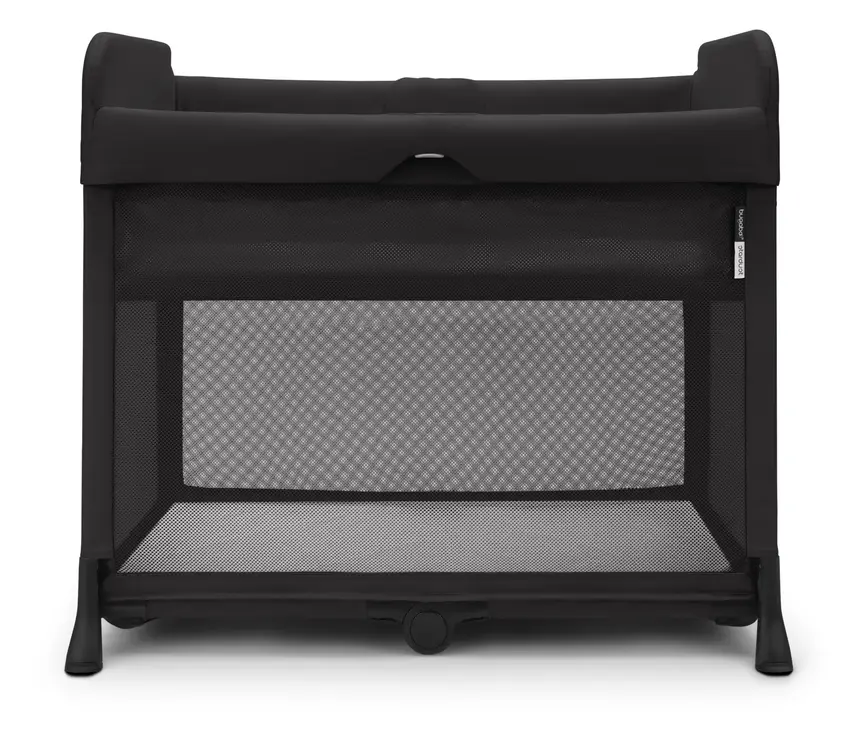

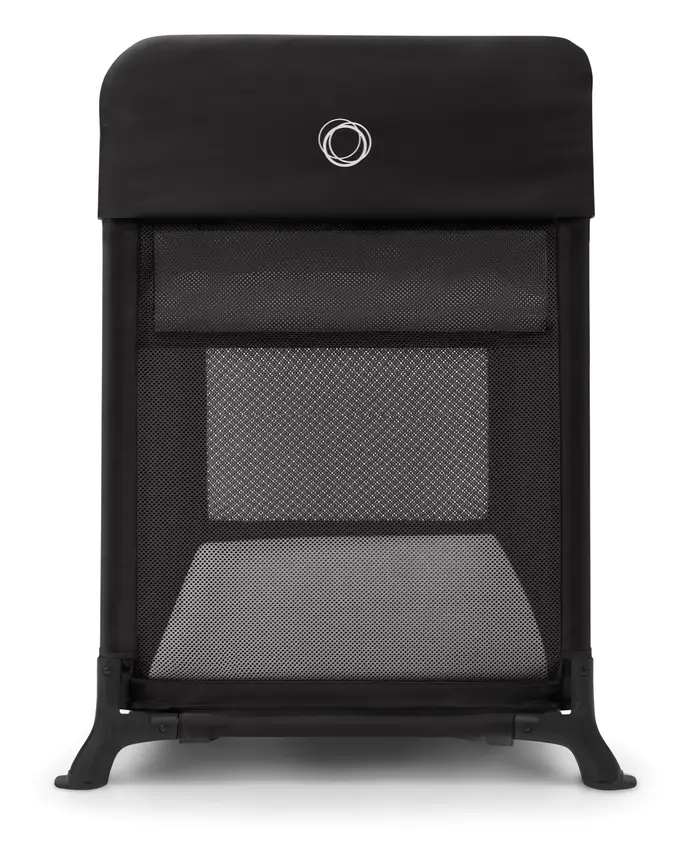
Bugaboo Stardust Plus
A pop-up portacot with a bassinet, for naps at home or away.
Read our full review →Compare all cots, bassinets & bedside sleepers in our reviews →
FAQ
Are PFAS in all cot mattresses?
No. Many mattresses don't use PFAS at all, and many makers have moved away from them. The only way to know for a specific product is to check the label and ask the maker.
Can I test my baby's products for PFAS at home?
Not reliably. Testing needs a lab. Some home kits claim to detect fluorine, but they don't give the same detail as lab testing. Asking the maker for their test results is more useful.
Should I get my baby's blood tested?
Blood tests for PFAS aren't routinely recommended for babies. They can show exposure but can't tell you if a health problem will happen. If you live in an area with known contamination, follow your local health authority's advice.
Is waterproof gear always treated with PFAS?
No. Waterproofing can come from plastic films or PFAS-free water-repellent finishes. Many outdoor and baby brands now sell PFAS-free waterproof products. Ask the maker.
Is non-stick cookware safe for making baby food?
Most health agencies say non-stick pans used normally are a small source of exposure compared with other sources. To lower any risk, don't overheat them, and replace pans that are flaking or badly scratched. Stainless steel and cast iron are good PFAS-free options.
Are second-hand baby clothes and gear lower in PFAS?
Treatments can wear off with washing and use, so older textiles may carry less of their original finish. But second-hand cots, mattresses and car seats bring other risks, such as missing parts, recalls, wear and unknown history. For sleep and travel gear, safety standards and condition matter far more than PFAS.
Do PFAS wash out of fabric?
Some surface treatments wear down over many washes, but PFAS don't simply disappear. They go down the drain and into the environment. That's one reason many families and governments now prefer products made without PFAS in the first place. Washing new items before use is still a good habit to remove dust and loose finishes.
Where can I find the latest rules?
Check pfas.gov.au in Australia, GOV.UK in the UK, the EPA in the US and Health Canada in Canada. Rules are changing, so look for the most recent updates.
Sources
- US EPA – PFAS explained
- National Institute of Environmental Health Sciences (US) – Perfluoroalkyl and polyfluoroalkyl substances (PFAS)
- Australian Government – PFAS information (pfas.gov.au)
- Australian Government – About PFAS
- GOV.UK – PFAS plan
- Health Canada – Per- and polyfluoroalkyl substances (PFAS) and your health
- Red Nose Australia – What is a safe mattress?
Related guides
More Parental Tips →
Buying Used Baby Gear Safely: What to Buy, What to Skip, and What to Check

Second-Hand Baby Gear: What Is Safe to Buy, What to Skip, and How to Check It

Checking Baby Gear for Recalls: How to Register Serial Numbers and Check Hand-Me-Downs
