





Sun Safety for Babies: Shade, Clothing, Hats and When Sunscreen Is Okay
Keep babies out of direct sun, especially under 6 months. How to use shade, clothing and hats, when sunscreen is okay, and what AU, UK, US and Canadian…

On this page
- Key points
- Why babies need extra protection
- What UV is, in plain words
- Shade first
- Clothing and hats
- Sunscreen: when and how
- Sun protection by age
- Sun protection and heat are different risks
- Beach and pool days
- Choosing sun-safe gear
- Travelling somewhere sunnier
- Teaching toddlers good sun habits
- Day-out packing list
- Childcare, grandparents and other carers
- What about vitamin D?
- Sun safety at home and in the garden
- Babies with special skin needs
- Common mistakes to avoid
- FAQ
- Sources
Short answer: Keep babies out of direct sun as much as you can, especially in the first 6 months. Use shade, cool clothing that covers the skin, and a wide hat. Sunscreen is not usually advised for babies under 6 months, because their skin is very sensitive. From 6 months, you can use sunscreen on small patches of skin that clothes cannot cover, as an extra layer of protection.
Health groups in Australia (Cancer Council), the UK (NHS), the US (American Academy of Pediatrics) and Canada (Health Canada) all give this same core advice.
Key points
- Check the UV Index, not the temperature. UV can be high on cool or cloudy days.
- Under 12 months: Cancer Council says keep babies out of direct sun when the UV Index is 3 or above.
- Shade first, then clothing, then a hat. Sunscreen comes last.
- Clothing: loose, cool, tightly woven fabric. Look for UPF 50 if you can.
- Hats: broad-brimmed or bucket style, to shade the face, neck and ears.
- Sunscreen: generally not for babies under 6 months. After that, use it on small exposed areas only.
- Heat is a separate danger. Keep babies cool, offer feeds often, and never leave them in a parked car.
Why babies need extra protection
A baby's skin is thinner and more delicate than an adult's. It burns quickly. Babies cannot move out of the sun by themselves, and they cannot tell you they are too hot. So their protection depends on the adults around them.
Sun damage in childhood also adds to the risk of skin cancer later in life. That is why every health group puts physical protection (shade, clothes and hats) first for babies.
What UV is, in plain words
UV (ultraviolet) radiation is an invisible part of sunlight. It is what causes sunburn and skin damage. You cannot see it or feel it. The heat you feel is not UV.
- A cool, cloudy spring day can still have high UV.
- A hot evening can have low UV.
- UV bounces off sand, water, snow and concrete, so it can reach your baby even in the shade.
The UV Index is a number that tells you how strong the UV is. Cancer Council says to use sun protection whenever the UV Index is 3 or above. You can check it each day:
- Australia: the free SunSmart Global UV app, or the Bureau of Meteorology website.
- UK: the Met Office forecast shows UV levels.
- US: the EPA's UV Index forecast, or most weather apps.
- Canada: Environment Canada's UV Index forecast, or most weather apps.
| UV Index | What it means | What to do for a baby |
|---|---|---|
| 0 to 2 | Low | Little risk for most people. A hat is still a good habit. |
| 3 to 5 | Moderate | Use shade, clothing and a hat. |
| 6 to 7 | High | Keep young babies out of direct sun. Full protection. |
| 8 to 10 | Very high | Plan outings for early or late in the day. |
| 11+ | Extreme | Stay indoors or in deep shade in the middle of the day. |
UV is often much stronger in Australia than in the UK and Canada. But all four countries have days with high UV, especially in summer.
Shade first
- Time it right. Plan outings for early morning or late afternoon, when UV is lower.
- Find good shade. Trees, buildings, shade sails, verandas and umbrellas all help.
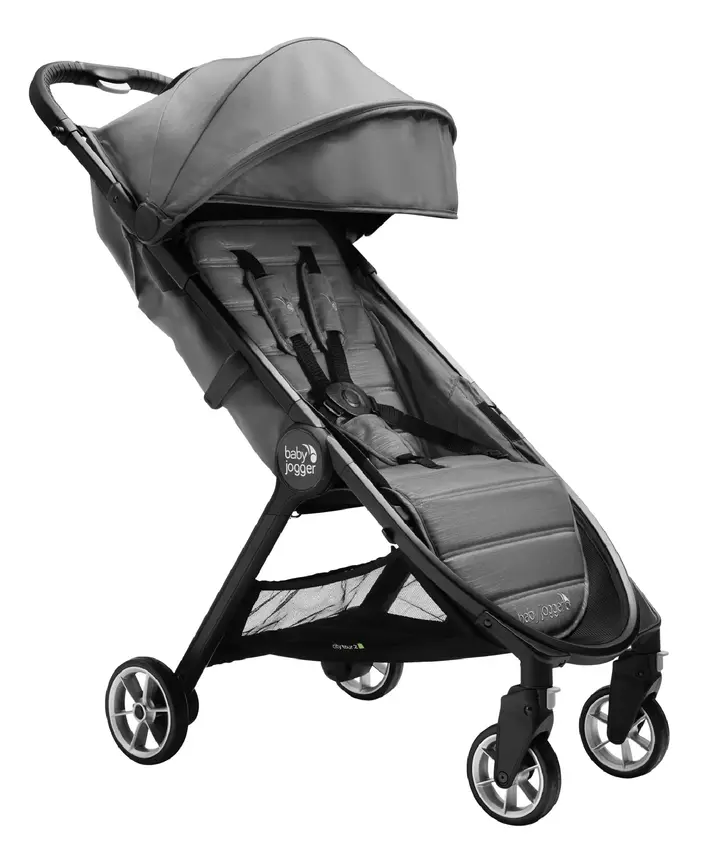
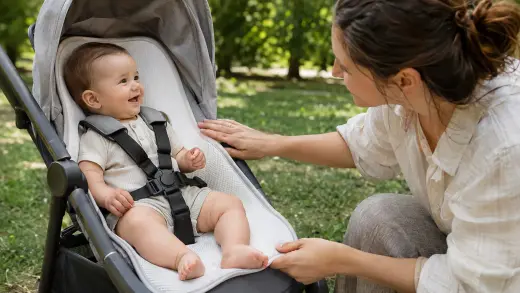
- Use the pram canopy, or a sunshade made for your pram.
- Shade is not enough on its own. UV bounces off surfaces. Keep clothing and a hat on in the shade too.
- Never cover the pram with a blanket or wrap. It traps heat and blocks airflow. Use a breathable sunshade made for prams, which lets air move, and check on your baby often.
Clothing and hats
- Cover up. Choose cool, loose clothes that cover as much skin as possible: long sleeves and long legs.
- Tight weave. Hold the fabric up to the light. The less light comes through, the better it protects.
- Check the UPF. UPF stands for ultraviolet protection factor. It tells you how much UV the fabric blocks. Cancer Council says at least UPF 15, and preferably UPF 50.
- Choose a good hat. A broad-brimmed or bucket hat shades the face, neck and ears. Caps do not protect the ears or neck.
- Safe straps. For young babies, a soft hat with a chin strap that comes apart easily stays on better and is safer.
- Swimwear. A long-sleeved rash vest and swim hat help in the water. Keep swim time short and shaded for young babies.
- Sunglasses. Some groups suggest close-fitting baby sunglasses that meet sunglass standards. Only use them if your baby will wear them comfortably.
Sunscreen: when and how
Cancer Council says widespread use of sunscreen on babies under 6 months is not generally recommended. Their skin is very sensitive and may react. Very young babies also absorb more of anything put on their skin than adults do. Rely on shade, clothes and hats instead.
What each country says
| Country | Under 6 months | 6 months and older |
|---|---|---|
| Australia (Cancer Council) | Widespread use not generally recommended. Keep out of direct sun. | Use on small exposed areas as the last line of defence. SPF 30 or higher. |
| UK (NHS) | Keep out of direct strong sunlight. | Use a high-factor, broad-spectrum sunscreen on exposed skin. |
| US (AAP) | Keep out of direct sun. If shade and clothing are not possible, a small amount of sunscreen on small areas may be used. | Use broad-spectrum sunscreen, SPF 15 or higher, on exposed skin. |
| Canada (Health Canada) | Keep out of direct sun. Do not use sunscreen. | Use a broad-spectrum sunscreen made for babies or children. |
The advice for babies under 6 months is a little different from country to country. All four agree that shade, clothing and hats come first.
How to use sunscreen (6 months and older)
- Choose well. Broad-spectrum and water-resistant. Cancer Council suggests SPF 30 or higher. Formulas for babies or sensitive skin are often milder.
- Do a patch test. Put a little on a small patch of skin, like the inside of the arm, a day before. Check for redness or a rash.
- Apply early. Put it on 20 minutes before going outside.
- Cover the gaps. Use it on the face, the backs of the hands and feet, and any skin clothes cannot cover. Keep it away from the eyes.
- Reapply. Every two hours, and after swimming or towelling.
- Keep the other steps. Shade, clothes and a hat still come first.
- Check the date. Do not use sunscreen past its use-by date. Store it below 30°C.
Sun protection by age
| Age | Main protection |
|---|---|
| Newborn to 6 months | Keep out of direct sun. Shade, light covering clothes, a soft hat. Sunscreen generally not advised. |
| 6 to 12 months | Still keep out of direct sun when UV is 3 or above. Clothes and hat. Sunscreen on small exposed areas. |
| Toddlers | Shade for play, sun-safe clothes, a hat they will keep on, and sunscreen on exposed skin. Teach the habit early. |
Sun protection and heat are different risks
Protecting your baby from UV does not protect them from heat. Babies can overheat quickly.
- Dress your baby in one light layer in hot weather.
- Offer breastfeeds or formula feeds more often. Ask your doctor before giving water to a baby under 6 months.
- Keep them in cool, airy shade.
- Never leave a baby in a parked car, even for a moment. Cars heat up very fast.
Signs of overheating: flushed skin, sweating, being more sleepy or cranky than usual, fewer wet nappies, or a hot body. Move your baby somewhere cool, remove extra clothing and offer a feed. Get medical help straight away if your baby is floppy, very drowsy, not feeding, or you are worried.
Beach and pool days
Beaches and pools are some of the hardest places to protect a baby. UV comes from above and also bounces off the water and sand.
- Go early or late. Avoid the middle of the day when UV is highest.
- Set up deep shade first. A beach tent or large umbrella, placed so the shade covers your baby as the sun moves.
- Keep young babies out of the water for long periods. Babies get cold quickly in water and also burn quickly on the surface.
- Dress for the water. A long-sleeved rash vest, swim leggings and a swim hat with a brim.
- Stay within arm's reach of your baby near any water, every second. Water safety comes first.
- Reapply sunscreen (for babies over 6 months) after swimming or towelling.
- Rinse and dry after swimming, then cover up again.
Choosing sun-safe gear
| Item | What to look for |
|---|---|
| Hat | Wide brim or bucket style, soft, with a breakaway chin strap |
| Clothes | Long sleeves, long legs, loose fit, tight weave, UPF 50 if possible |
| Pram sunshade | Made for prams, breathable mesh, lets air flow, does not fully seal the pram |
| Beach shade | A UPF-rated tent or umbrella, big enough to keep your baby fully shaded |
| Swimwear | Long-sleeved rash vest and swim hat |
| Sunscreen (6+ months) | Broad-spectrum, water-resistant, made for babies or sensitive skin |
Travelling somewhere sunnier
If you travel from a cooler place, like the UK or Canada, to somewhere with stronger sun, like Australia or a tropical holiday spot, the UV can be much higher than you are used to. Check the UV forecast every day of your trip. Plan outdoor time for early mornings and late afternoons. Pack extra hats and sun-safe clothes, because they get lost or wet.
Teaching toddlers good sun habits
- Make it routine. Hat on before going outside, every time, like shoes.
- Lead by example. Wear your own hat and sun-safe clothes.
- Use simple words. "Hat on, then we play outside."
- Play in the shade. Put the sandpit and play area where there is shade.
- Make sunscreen a game, once your child is old enough, like counting the dots on their face.
Day-out packing list
- A broad-brimmed or bucket hat, plus a spare.
- A light long-sleeved top and long pants, in a tightly woven or UPF-rated fabric.
- A breathable pram sunshade that clips on, not a blanket.
- A portable shade tent or umbrella for the beach or park.
- Extra feeds, and water for you.
- For babies over 6 months: a broad-spectrum sunscreen you have patch-tested.
Childcare, grandparents and other carers
Many early learning services follow a written sun protection policy. In Australia, many are based on Cancer Council's SunSmart program. Ask to see your centre's policy.
Share the same basics with grandparents and babysitters: check the UV Index, keep young babies in the shade, cover their skin and use a hat. Agree ahead of time whether sunscreen will be used for babies over 6 months, and pack the one you have already tested.
What about vitamin D?
Some parents worry that sun protection will leave their baby short of vitamin D. Babies get some vitamin D from normal daily life. Some health groups, including in the UK, US and Canada, recommend a vitamin D supplement for breastfed babies. If you are worried, talk to your doctor or child health nurse. Do not put your baby in the sun to get vitamin D.
Sun safety at home and in the garden
- Shade the play area. A shade sail, tree or veranda over the place where your baby plays outside makes protection easy every day.
- Watch sunny windows. Strong sun through a window can still heat a baby up. Move cots, bassinets and play mats out of direct sunlight that falls through glass.
- Short trips count too. Walking to the car, the shops or the letterbox all add up. Keep a hat by the door.
- Check the outdoor surfaces. Metal slides, rubber mats and paving can get very hot. Feel them with your hand before your baby touches them.
Babies with special skin needs
Some babies need extra care in the sun. This includes babies with very fair skin, babies with eczema, and babies taking some medicines. Babies with darker skin still need protection, because all skin can be damaged by UV. If your baby has a skin condition, ask your doctor which sunscreen to use once they are over 6 months, and how to protect their skin.
Common mistakes to avoid
- Going by the temperature. Check the UV Index instead.
- Draping a blanket over the pram. It traps heat. Use a breathable sunshade.
- Relying on sunscreen alone. Shade, clothes and a hat come first.
- Thinking shade is enough at the beach. UV reflects off sand and water.
- Using adult sunscreen without a patch test. Test any new sunscreen first.
- Forgetting the car. Side windows may let some UV through. Use car window shades that do not block the driver's view, and cover your baby's skin.
- Leaving a baby in the car "just for a minute". Never do this.
FAQ
Can I put sunscreen on my 3-month-old?
Cancer Council in Australia and Health Canada advise against general sunscreen use under 6 months. The AAP in the US says a small amount on small areas is okay if you cannot find shade or cover the skin. Everyone agrees: shade, clothing and a hat first.
What UV level needs sun protection?
UV Index 3 or above. Check the daily forecast for your area.
Is a pram canopy enough?
It helps, but UV reflects off surfaces. Add covering clothes and a hat. Never drape a blanket or wrap over the pram.
What UPF rating should baby clothes have?
At least UPF 15, and preferably UPF 50.
Do car windows protect my baby from UV?
Car glass blocks some UV, but side windows may let more through than the windscreen. Use car window shades that do not block the driver's view, and dress your baby in covering clothes on long trips.
Should I use sun protection on cloudy days?
Go by the UV Index, not the clouds. If UV is 3 or above, protect your baby: shade, clothes and a hat first.
My baby keeps pulling their hat off. What can I do?
Try a soft hat with a chin strap that comes apart easily. Put it on before you go outside, so it becomes part of the routine. Keep your own hat on too. Babies copy what they see.
Can my baby wear sunglasses?
Yes, if they are close-fitting baby sunglasses that meet sunglass standards and your baby is happy to wear them. A wide hat and shade protect the eyes too. Never force sunglasses on a baby who pulls at them.
Do babies need sun protection in winter?
Sometimes. In many parts of Australia and the southern US, UV can reach 3 or above even in winter. In the UK and Canada, winter UV is usually low, but snow can reflect UV. Check the UV Index wherever you are.
Is morning sun safe for babies?
Early morning UV is usually lower, which makes it a better time for outings. But it depends on the season and where you live. Check the UV Index. If it is 3 or above, use shade, clothes and a hat, even in the morning.
What should I do if my baby gets sunburnt?
Move them out of the sun. Cool the skin gently with a cool, damp cloth, and offer extra feeds. Get medical advice for any sunburn in a baby, and straight away if there are blisters, a fever, or your baby seems unwell.
Sources
- Cancer Council Australia – Fact sheet: Sun protection and babies
- Cancer Council Australia – Sun safety
- Cancer Council Australia – Sunscreen basics
- SunSmart – Sun protection for babies and toddlers (info sheet)
- Pregnancy, Birth and Baby (Australia) – Sun and heat protection for babies and kids
- Pregnancy, Birth and Baby (Australia) – Babies in hot weather
- NHS (UK) – Sunscreen and sun safety
- American Academy of Pediatrics (US) – Sun safety: information for parents
- Health Canada – Sun safety tips for parents
- Caring for Kids, Canadian Paediatric Society – Sun safety
Related guides
More Parental Tips →
Mineral Zinc Oxide vs. Chemical Sunscreen for Babies: Nanoparticles, Skin Safety, and Reef Rules
Choking First Aid for Babies and Toddlers: Back Blows, Chest Thrusts and When to Start CPR

Eating Out with Babies and Toddlers: High Chair Safety, Sanitising Covers, Suction Mats, and Low-Mess Toys
