








Baby-Proofing Your Home: Essential Gear and Room-by-Room Safety Tips
How to baby-proof your home room by room: safety gates, furniture anchors, blind cords, button batteries, and official tips for AU, UK, US and Canada.
On this page
- Key points
- What baby-proofing is, and when to start
- Essential baby-proofing gear and how to choose
- Room-by-room baby-proofing guide
- Hidden dangers many parents miss
- Baby-proofing by age: a simple timeline
- Safety standards and official guidance in Australia, the UK, the US a…
- Common baby-proofing mistakes to avoid
- Frequently asked questions
- Sources
Short answer: Start baby-proofing before your baby can roll or crawl. Get down on your hands and knees to spot hazards at their eye level. Fix heavy furniture and TVs to the wall. Put hardware-mounted safety gates at the top of stairs. Lock away button batteries, medicines, cleaners, and blind cords. Baby-proofing lowers the risk of serious injury, but it never replaces watching your child.
Safety groups across Australia (Product Safety Australia, Kidsafe, Red Nose), the UK (OPSS, RoSPA, NHS), the US (CPSC, AAP), and Canada (Health Canada, Canadian Paediatric Society) all share this same core advice.
Key points
- Start early: Set up your safety gear before your baby starts moving on their own.
- Anchor furniture: Strap bookcases, chests of drawers, and TVs to wall studs so they cannot tip over.
- Use the right gates: Always screw safety gates into the wall at the top of stairs. Never use pressure-fit gates there.
- Check hidden dangers: Keep button batteries, small magnets, nappy sacks, and loose blind cords out of reach.
- Watch around water: Stay within arm's reach of your baby in the bath, near pools, and near buckets.
- Supervise always: Safety gear is a backup. Active watching by an adult is the best protection.
What baby-proofing is, and when to start
Baby-proofing means making your home safe for a baby or toddler to explore. Babies learn by touching, climbing, and putting things in their mouths. They do not know what is hot, sharp, or poisonous.
Many parents wait until their baby starts crawling. That is often too late. Babies surprise parents by rolling, grabbing, or pulling up earlier than expected. A good time to start is during pregnancy or in the first three months.
Try the hands-and-knees test in every room. Crawl around on the floor and look up and down. Look for loose cords, small objects on the rug, sharp table corners, and low drawers. What looks safe from adult height can be risky at floor level.
Remember one big rule. No lock, gate, or cover makes a room completely safe on its own. Children learn fast and find ways around latches. Keep watching your child closely, even in a baby-proofed room.
Essential baby-proofing gear and how to choose
You do not need to buy every gadget in the shop. Focus on gear that stops the biggest risks: falls, tip-overs, burns, drowning, choking, and poisoning.
Safety gates
Safety gates block off stairs, kitchens, and doorways. There are two main types.
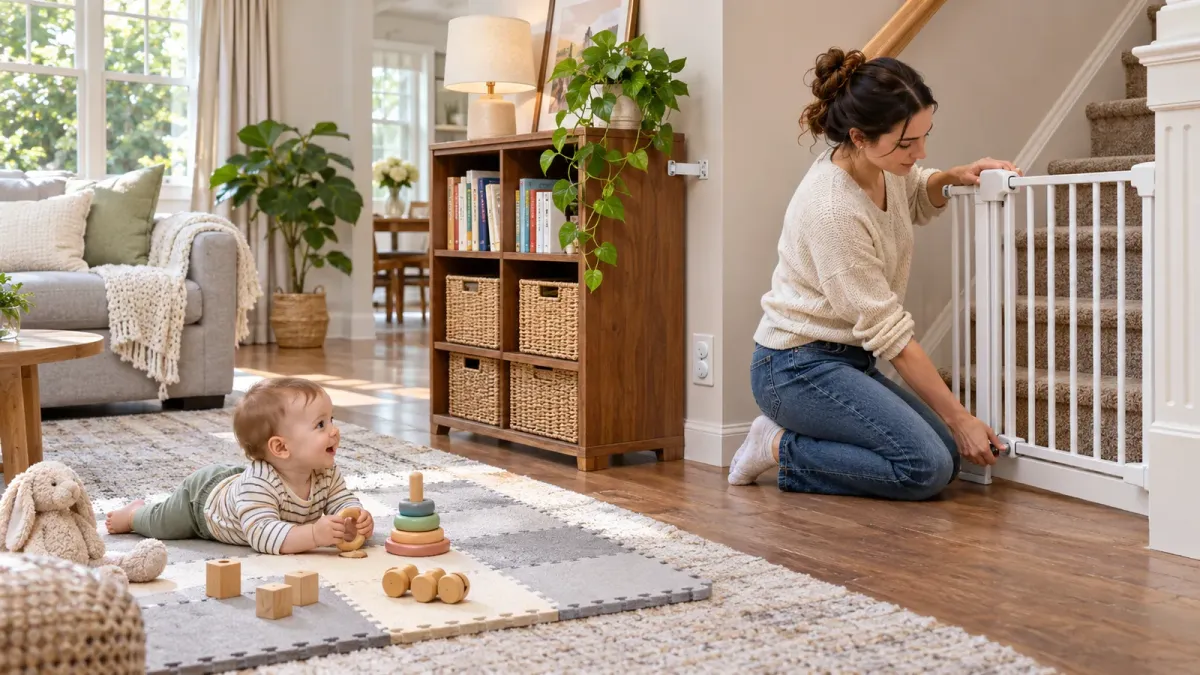
- Hardware-mounted gates: These screw into the wall or doorframe. They are the strongest choice. Always use this type at the top of stairs.
- Pressure-mounted gates: These push tightly against the walls without screws. A toddler can push them over if they lean hard. Use them only between flat rooms or at the bottom of stairs.
Look for a gate that opens one-handed for adults, swings shut cleanly, and has no bottom bar at the top of stairs that could trip you. In the UK and Europe, check for standard BS EN 1930. Make sure the bar gaps are narrow so a child's head cannot get stuck.
Furniture and TV anchors
A child can pull out a drawer and use it like a ladder. Even a heavy chest of drawers or bookcase can tip over in seconds. Flat-screen TVs are also top-heavy and fall easily.
Use metal brackets or strong nylon straps to fix tall furniture and TVs to the wall. Always screw into a wooden or metal wall stud, not just plasterboard. Plasterboard alone will pull out under weight. Put heavy items in the bottom drawers and keep tempting toys off the top of furniture.
Blind and curtain cord safety
Loose window cords can wrap around a child's neck in seconds. This can happen silently. The safest choice is cordless blinds or curtains.
If your home already has corded blinds, fit cord cleats or tension devices. Screw the cleat high on the wall, well out of a child's reach. Wrap the cord tightly around it every time you open or close the blind. Never cut a looped cord without securing it properly, as two loose ends can still tangle. In the UK and Europe, window blinds are covered by standard BS EN 13120.
Cupboard, drawer, and appliance locks
Locks keep curious hands out of cleaners, knives, and glass jars. You can choose from plastic hook latches, adhesive strap locks, or hidden magnetic locks.
Magnetic locks sit inside the cupboard door and open with a magnet key kept high up. They work well because toddlers cannot see how they open. Use strap locks on fridges, dishwashers, and toilet lids. Check that adhesive pads stick firmly to your cupboard surface.
Power point covers and cord guards
In some countries, modern wall sockets already have built-in safety shutters. In others, exposed sockets are a risk. If you use socket covers, pick box-style covers that enclose the whole plug, or sliding outlet plates.
Be careful with small plastic plug-in caps. Some toddlers pull them out with their teeth and choke on them. Also use cord shorteners or cable covers so babies cannot chew or pull on lamp and charger cords.
Corner guards and door stoppers
When babies learn to stand and walk, they fall often. Soft foam or silicone corner guards cushion sharp coffee table and hearth edges. Choose thick guards that stick well so a child cannot peel them off and chew them.
Foam door stoppers slip onto the top or side of a door. They stop a door from slamming shut on tiny fingers.
Smoke and carbon monoxide alarms
Working smoke alarms save lives. Put one on every level of your home and outside bedrooms. Test them every month and change batteries when needed. Plan how you will carry your baby outside if an alarm sounds at night.
If you have gas heating, a gas stove, or an attached garage, fit carbon monoxide alarms too. Carbon monoxide is a gas you cannot see or smell, and it is deadly.
| Gear type | What hazard it stops | Where to use it | Key buying and fitting tip |
|---|---|---|---|
| Hardware-mounted gate | Falls down stairs | Top of stairs, high-risk doorways | Screw into wall studs or solid wood |
| Pressure-mounted gate | Wandering into unsafe rooms | Between flat rooms, bottom of stairs | Never use at the top of stairs |
| Furniture and TV anchors | Crushing from tip-overs | Bookcases, dressers, TVs, wardrobes | Fix into wall studs, not hollow plaster |
| Blind cord cleats | Strangulation on cords | All corded blinds and curtains | Fit high up, or switch to cordless blinds |
| Cupboard and drawer locks | Poisoning and cuts | Kitchen, bathroom, laundry | Keep cleaners and knives locked away |
| Stove knob covers | Burns and gas leaks | Front-facing stove dials | Check covers spin freely for little hands |
| Corner guards | Head and face bumps | Low tables, benches, fireplace hearths | Pick strong tape so babies cannot pull them off |
| Foam door stoppers | Crushed fingers | Bedroom and living room doors | Place high on the door out of reach |
Room-by-room baby-proofing guide
Every room has different risks. Go through your home one room at a time so you do not miss anything.
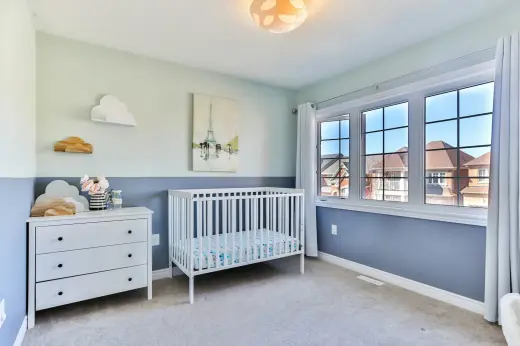
The nursery and bedroom
Your baby spends many hours sleeping here. Keep the sleep space simple and clear.
- Safe cot (crib): Use a cot that meets your country's safety standard, such as AS/NZS 2172 in Australia, BS EN 716 in the UK, or ASTM F1169 in the US. Use a firm, flat mattress that fits snugly with no gaps. Keep toys, pillows, bumpers, and loose blankets out of the cot.
- Window distance: Place the cot away from windows, heaters, lamps, and blind cords. Babies can reach further than you think once they stand up.
- Baby monitor cords: Keep monitor cameras and power cords well away from the cot. Cords near a cot are a strangulation risk.
- Change table safety: Never leave your baby alone on a change table, even for one second. Keep nappies and wipes within your reach before you start. Use the safety strap, and keep one hand on your baby at all times.
- Anchor dressers: Fix the chest of drawers to the wall before your baby starts pulling up.
The living room
The living room is often where your baby plays on the floor. It is also full of adult items.
- TV and shelves: Anchor the TV and entertainment unit to the wall. Move heavy ornaments and glass photo frames to high shelves.
- Coffee tables: Add corner guards to sharp edges, or move glass tables out of the play area for a couple of years.
- Houseplants: Some common indoor plants are toxic if eaten. Put plants up high or move unsafe ones outside.
- Fireplaces and heaters: Use a sturdy fireguard around open fires, wood stoves, and hot heaters.
- Remote controls: Check battery covers on TV remotes and game controllers. Many hold button batteries.
The kitchen
The kitchen has heat, sharp tools, and strong cleaners. Keep your baby out when you are cooking if you can. Use a safety gate or a safe playpen.
- Cook safely: Use the back burners on your stove first. Turn pot handles towards the back wall so a child cannot grab them.
- Stove and oven locks: Fit stove knob covers if your dials are on the front. Put an oven door lock on so a toddler cannot open a hot oven or climb on the door.
- Lock low cupboards: Move dishwashing tablets, bleach, and spray bottles to a high locked cupboard. If they stay under the sink, fit a strong lock.
- Sharp items: Keep knives, scissors, and graters in a high drawer or a locked drawer. Point knives down in the dishwasher basket and keep the dishwasher closed.
- Hot drinks and cords: Never carry a hot drink while holding a baby. Keep kettle and toaster cords pushed back from the bench edge. Skip tablecloths that a baby can tug down.
- Bins: Use a bin with a lockable lid so toddlers cannot pull out food scraps or rubbish.
The bathroom
A baby can drown in just a few centimetres of water, in silence, in less than a minute. Scalds from hot tap water are another major risk.
- Stay right there: Never leave a baby or toddler alone in the bath, not even to grab a towel or answer the phone. Do not rely on older siblings to watch them.
- Empty water fast: Pull the plug as soon as bath time ends. Never leave water sitting in a bath or bucket.
- Check water temperature: Run cold water first, then add hot, then test with your wrist or a bath thermometer. Ask a plumber about a tempering valve to limit hot tap water temperature.
- Slip and bump protection: Put a non-slip mat in the bath and a soft spout cover over the tap (faucet).
- Lock the toilet: Fit a toilet lid lock so toddlers cannot lean in headfirst.
- Lock away toiletries: Medicines, mouthwash, razors, and nail clippers belong in a high locked cabinet.
Laundry, garage, and outdoor areas
These areas often hold the most dangerous chemicals and tools.
- Laundry pods: Liquid laundry pods look like lollies to young children. Keep all washing powder, pods, and stain removers locked up high.
- Washing machine and dryer: Keep front-loader doors shut and locked when not in use.
- Garage: Lock away paint, petrol, weed killer, rat poison, and power tools. Keep car keys out of reach so children cannot lock themselves inside a car.
- Pools and water: Pools and spas need a proper fence with a self-closing, self-latching gate. Empty paddling pools and buckets after every use and turn them upside down.
- Balconies and windows: Fit window locks or guards so windows cannot open wide enough for a child to climb out. Move chairs and planters away from balcony railings.
Hidden dangers many parents miss
Some of the biggest risks at home are tiny, everyday objects you barely notice.
Button batteries
Coin-sized button batteries are extremely dangerous if swallowed. If one gets stuck in a child's throat, it can burn through tissue in just two hours. It can cause fatal bleeding.
Check your home for items that use button batteries: TV remotes, kitchen scales, car key fobs, musical greeting cards, fairy lights, thermometers, and flashing toys. Tape battery doors shut if they do not have a screw. Keep spare and used batteries locked away high up. Even flat batteries still hold enough charge to cause severe burns.
Small magnets
High-powered tiny magnets are found in some desk toys, fridge magnets, and building sets. If a child swallows two or more magnets, they can pull together through the walls of the gut. This can twist or tear the bowel and needs emergency surgery.
Nappy sacks
Thin plastic nappy sacks are handy, but they are a suffocation risk. Babies can pull them over their nose and mouth and cannot get them off. Never keep nappy sacks inside or beside a cot. Store them out of reach.
Hot drinks and steam
A cup of tea or coffee stays hot enough to scald a baby's thin skin long after you pour it. Put hot drinks in the middle of a high bench, never on the edge of a couch arm or coffee table.
Medicines and vitamins
Brightly coloured pills, iron tablets, and cough syrups look like lollies to young children. Keep all adult and child medicines in their original bottles with the labels intact. Lock them in a high cupboard, not in a bedside drawer or handbag. Never call medicine lollies or sweets to get a child to take it. Save your national poisons helpline number in your phone before an emergency happens.
Pets and babies
Even a gentle family dog can snap if a baby grabs its ears or tail. Never leave a baby or toddler alone with a dog or cat, even for a moment. Use safety gates to give pets their own quiet space away from crawling babies.
Handbags and visitors' bags
Grandparents and guests often carry painkillers, throat lozenges, coins, or loose mints in their handbags. Hang visitors' bags on a high hook as soon as they walk in.
Baby-proofing by age: a simple timeline
Your baby grows fast, and the risks change every few months. Review your home at each new stage.
| Age stage | What your child can do | What to set up or change |
|---|---|---|
| 0 to 4 months | Rolls onto side, grabs nearby objects, kicks on change table | Clear the cot. Keep cords away from cot. Anchor tall furniture. Check smoke alarms. |
| 4 to 8 months | Rolls both ways, sits up, starts crawling, puts everything in mouth | Fit safety gates. Lock low cupboards. Add corner guards. Remove choking hazards from floor. |
| 8 to 12 months | Crawls fast, pulls up to stand, cruises along furniture, opens drawers | Lower cot mattress. Fit stove knob covers and toilet locks. Secure TV and remotes. |
| 1 to 2 years | Walks, climbs onto chairs and tables, opens doors, copies adults | Fit window locks. Move chairs away from benches and windows. Lock up all medicines and pods. |
| 2 to 3+ years | Climbs higher, opens simple latches, rides bikes, uses big bed | Move from cot to bed when climbing out starts. Check room is safe for night wandering. Fit pool and gate locks. |
Safety standards and official guidance in Australia, the UK, the US and Canada
Product rules differ slightly by country, but the basic safety advice from health and product bodies is very similar. Always buy gear that meets the safety rules in your own country, and check recall lists before buying second-hand items.
| Country | Product safety body | Child health and safety bodies | Key standards and focus areas |
|---|---|---|---|
| Australia | ACCC / Product Safety Australia | Kidsafe Australia, Red Nose, Royal Life Saving Australia, Raising Children Network | Mandatory rules for cots (AS/NZS 2172), button battery compartments, blind cords, and toppling furniture warnings. |
| United Kingdom | Office for Product Safety and Standards (OPSS) | RoSPA, NHS, The Lullaby Trust, Royal Life Saving Society UK | Standards for safety barriers (BS EN 1930), cots (BS EN 716), changing units (BS EN 12221), and blinds (BS EN 13120). |
| United States | Consumer Product Safety Commission (CPSC) | American Academy of Pediatrics (AAP), CDC | Federal rules for cribs (ASTM F1169), cordless window coverings, button battery compartments, and Anchor It! campaign. |
| Canada | Health Canada | Canadian Paediatric Society (Caring for Kids), Lifesaving Society Canada | Strict rules on cribs, corded blinds, magnets, button batteries, and regular recall alerts. |
Common baby-proofing mistakes to avoid
Even careful parents can slip up with safety gear. Watch out for these common traps.
- Using a pressure gate at the top of stairs: If your toddler leans against it, the whole gate can pop out and send them down the stairs. Only use a screw-in gate at the top of stairs.
- Anchoring into plasterboard only: Drywall anchors are not strong enough for a heavy dresser. Always find the wooden or metal wall stud first.
- Using small plug-in outlet caps: Babies can pull these out and put them in their mouths. Use sliding outlet covers or full plug boxes instead.
- Trusting child-resistant caps: Child-resistant means harder to open, not impossible. Many toddlers can open pill bottles in minutes. Always lock medicines away up high.
- Placing a bouncer or car seat on a table: A baby's kicking can tip a bouncer off a kitchen bench or couch. Always put baby seats on the floor.
- Forgetting other homes: Grandparents' houses, holiday rentals, and friends' homes are rarely baby-proofed. Take a quick look around when you arrive, especially for medicines, pools, and blind cords.
Frequently asked questions
When should I start baby-proofing my home?
Start before your baby is born, or in the first three months. It is much easier to fit gates and anchor furniture before you are tired and chasing a crawler. Finish the main jobs before your baby reaches four months.
Are pressure-mounted safety gates safe at the top of stairs?
No. Pressure-mounted gates rely on friction against the wall. A child pushing or shaking the gate can knock it loose. Always fit a hardware-mounted gate that screws into the wall at the top of stairs.
How do I anchor heavy furniture if I rent my home?
In many places, rental laws allow tenants to anchor furniture for child safety. Ask your landlord or agent in writing first if needed. You can patch small screw holes easily when you move out. Fixing a dresser to a wall is far safer than leaving it unanchored.
What is the biggest hidden danger in most living rooms?
Button batteries in remote controls, and loose blind cords, are two of the biggest hidden risks. Both can cause life-threatening harm very quickly and silently. Check battery compartments and wrap blind cords up high today.
Do I need outlet covers in every country?
Not always. Modern UK three-pin sockets have built-in shutters, and some newer homes in the US and Canada have tamper-resistant outlets. In Australia and older homes elsewhere, check your sockets and use full box covers or sliding plates rather than small plug-in caps.
When can I stop using safety gates?
Most safety gates are made for children up to about two years old. Take a gate down once your child starts climbing over it, as a fall from the top of a gate is dangerous. Teach your toddler how to go up and down stairs safely while holding your hand.
How often should I check my baby-proofing gear?
Check your gear every month or two. Make sure gate latches still click shut, wall screws have not worked loose, and corner guards are still stuck tight. Your child gets stronger every week, so gear that held last month might need tightening today.
Sources
- Product Safety Australia – Safety gate guide
- Product Safety Australia – Toppling furniture and televisions guide
- Product Safety Australia – Button batteries guide
- RoSPA – Child safety at home
- NHS – Baby and toddler safety
- HealthyChildren.org (AAP) – Childproofing your home
- CPSC (US) – Anchor It! furniture tip-over prevention
- Health Canada – Recalls and safety alerts
Related guides
More Health & Safety Gear →
Baby-Proofing Your Home: A Room-by-Room Safety Guide

Baby-Proofing Gear: A Room-by-Room Guide to a Safer Home
Baby-Proofing Your Home: Simple Steps to Keep Your Baby Safe
