






Baby-Proofing Your Home: Simple Steps to Keep Your Baby Safe
Simple, room-by-room baby-proofing steps for parents. Learn how to stop falls, burns, choking, and furniture tip-overs using official safety advice.
On this page
- Key points
- When to start baby-proofing
- How to check your home at baby height
- Living room and bedroom safety
- Nursery and sleep space safety
- Kitchen, bathroom and laundry safety
- Baby-proofing gear: what helps and what to skip
- Official safety rules in Australia, the UK, the US and Canada
- Common baby-proofing mistakes to avoid
- Frequently asked questions
- Sources
Short answer: Baby-proofing means removing hidden dangers before your baby can reach them. Get down on your hands and knees to see what your baby sees. Bolt tall furniture to the wall. Keep blind cords, button batteries, medicines, and hot drinks out of reach. Use safety gates at stairs. Never leave a baby alone near water.
Safety gear helps, but it never replaces watching your child. Babies learn fast and surprise you every week. Setting up a safe home early takes the stress out of daily life. This guide follows advice from health and safety bodies in Australia, the UK, the US, and Canada.
Key points
- Start early: Set up the nursery before birth. Baby-proof the rest of the home before your baby starts rolling or crawling.
- See at baby level: Crawl around each room to spot small objects, loose cords, and low cupboards.
- Anchor tall items: Strap chests of drawers, bookshelves, and TVs to the wall so they cannot tip over.
- Lock up poisons and batteries: Keep cleaners, medicines, and button batteries in high, locked cupboards.
- Keep cords away: Shorten or remove blind and curtain cords. Keep monitor cords away from the cot.
- Stay with your baby near water: A baby can drown in just a few centimetres of water in seconds.
When to start baby-proofing
Many parents wait until their baby crawls to think about home safety. By then, your baby is already moving fast. A baby who cannot crawl yet can still roll off a bed. They can also grab a hot mug or pull a tablecloth.
It is much easier to make your home safe in stages. Do the sleep space before your baby comes home. Fix the living spaces before your baby hits four months. Then update your setup as your child learns to stand, climb, and open doors.
Age-by-stage baby-proofing guide
Different skills bring different risks. Here is what to watch for as your baby grows.
| Age stage | New skills | Main home risks | What to do first |
|---|---|---|---|
| Newborn to 3 months | Lifts head, kicks legs, may start to roll | Unsafe sleep space, rolling off high surfaces, hot bath water | Use a firm, clear cot. Keep one hand on baby on change tables. Test bath water with your wrist. |
| 4 to 7 months | Rolls over, sits up, grabs everything | Pulling cords, putting small items in mouth, grabbing hot drinks | Move blind cords and electrical wires. Clear small objects off the floor. Keep hot drinks away. |
| 8 to 12 months | Crawls, pulls up to stand, cruises | Tipping furniture, stairs, open cupboards, power points | Strap tall furniture to walls. Fit safety gates. Lock low cupboards with cleaners or sharp tools. |
| 1 to 3 years | Walks, runs, climbs, opens doors and lids | Windows, balconies, pools, climbing furniture, medicines | Fit window locks. Remove climbable items near windows. Lock all medicines and batteries away high. |
Every child moves at their own pace. Some babies roll at two months. Others climb before they walk. Watch what your child is trying to do, and fix the next risk early.
How to check your home at baby height
A room looks very different from the floor. Adults look down from standing height. Babies see under tables, behind sofas, and inside low shelves.
Take ten minutes to crawl through every room your baby uses. Look for things you might miss while standing up:
- Tiny items on the floor: Coins, hair clips, pet kibble, fallen pills, and small toy parts.
- Dangling cords: Phone chargers, lamp leads, TV cables, and blind cords.
- Wobbly furniture: Side tables, tall lamps, plant stands, and light bookshelves.
- Sharp edges: Low glass coffee tables, hearth edges, and metal table corners.
- Open gaps: Spaces behind sofas, under beds, or between stair rails.
- Low cupboards and bins: Rubbish bins, recycling tubs, and pet food bowls.
Check second-hand gear and recalls
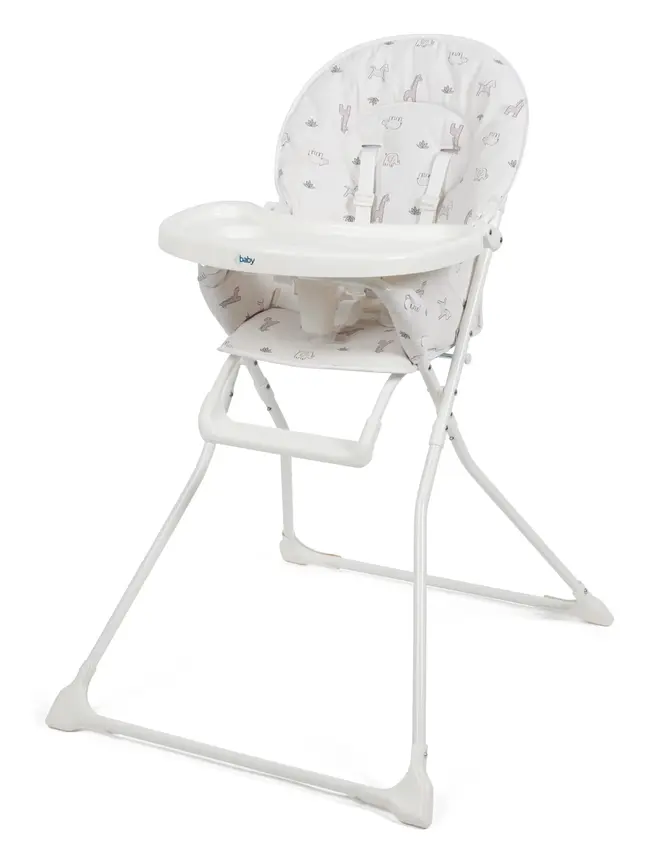
Before you use second-hand baby gear, check if it is still safe. Safety rules change over time. Old cots, high chairs, and safety gates may lack modern locks or safe bar spacing.
Check the official recall list in your country before buying or borrowing used gear. Product Safety Australia, the UK Office for Product Safety and Standards (OPSS), the US Consumer Product Safety Commission (CPSC), and Health Canada all keep free recall lists online.
Living room and bedroom safety
Your baby will spend lots of awake time in the living room and bedrooms. These rooms hold some of the biggest hidden dangers in a home.
Stop furniture and TVs from tipping over
Toddlers love to climb. When a child pulls out a bottom drawer to step up, the whole chest of drawers can tip forward. A heavy bookcase or TV can fall in a split second and cause serious harm.
Product Safety Australia and the US CPSC both warn parents to anchor heavy furniture to the wall. Follow these steps for every room:
- Attach chests of drawers, wardrobes, and bookcases to wall studs using metal brackets or strong straps.
- Mount flat-screen TVs to the wall, or strap them to a heavy, anchored stand.
- Never put toys, remotes, or snacks on top of a TV or tall unit. Kids climb to reach them.
- Store heavy items in the bottom drawers so furniture stays bottom-heavy.
- Avoid using sticky pads or plastic glue hooks for heavy units. Use screws into solid wall studs or masonry.
Make blinds and curtains safe
Loose blind and curtain cords are a major strangulation risk for babies and toddlers. A child can get tangled in a loop within seconds without making a sound.
In Australia, the UK, the US, and Canada, safety bodies urge parents to choose cordless blinds where possible. If you already have corded blinds:
- Fit cord tensioners or cleats high on the wall, well out of a child's reach.
- Never let a cord hang in a loop. Cut loops or fit safety breakaway tassels if needed.
- Move cots, beds, sofas, and playpens away from windows and cords.
- Check guest rooms and grandparents' homes too.
Secure windows and balconies
Open windows and balconies are a serious fall risk once babies start pulling up and climbing. Flyscreens are built to keep bugs out, not to hold a child's weight. A child leaning on a flyscreen can push right through it.
- Fit window locks or latches so windows cannot open wider than 10 centimetres (about 4 inches).
- Open double-hung windows from the top rather than the bottom when you can.
- Keep beds, chairs, toy boxes, and pot plants away from windows and balcony railings.
- Check balcony rails. Vertical bars should have narrow gaps so a child cannot squeeze through or get their head stuck.
Safety gates and stairs
Stairs look like a fun climbing frame to a crawling baby. Fit safety gates before your baby starts moving around the floor.
There are two main kinds of safety gates. Picking the right one for the right spot matters:
- Hardware-mounted gates: These screw into the wall or stair post. Always use a hardware-mounted gate at the top of stairs. Pressure gates can pop loose if a child leans or pushes hard on them.
- Pressure-mounted gates: These press between two walls without screws. They are handy for doorways or the bottom of stairs. Never use them at the top of stairs.
Look for gates with vertical bars rather than wide diamond mesh. Mesh or horizontal bars give little toes a foothold to climb over. In the UK and Europe, safety gates follow BS EN 1930. Check the label to make sure the gate suits your child's age and weight.
Remember that safety gates stop working once a child learns to climb over them. Keep a close eye on toddlers near stairs and teach them how to crawl down backwards safely.
Electrical outlets, cords, and heaters
Babies love poking fingers into small holes. Power points and dangling cables attract curious hands right away.
- Cover unused power points with tight safety plugs, or fit sliding safety outlet covers.
- Make sure plug-in covers are not loose. A loose cover can become a choking hazard if a baby pulls it out.
- Hide power boards behind heavy anchored furniture or inside cord boxes.
- Put guards around heaters, fireplaces, and wood stoves. Keep babies well clear of hot glass or metal.
- If you use portable fans, pick ones with narrow grille gaps or blade-free designs, and keep them high up.
Nursery and sleep space safety
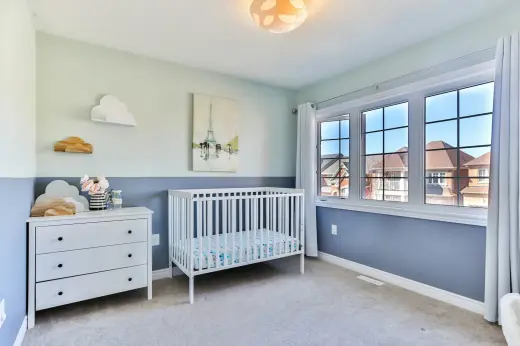
Your baby sleeps for many hours each day. Making the sleep space safe is one of the most important jobs in baby-proofing.
Set up a safe cot or crib
Health groups across Australia (Red Nose), the UK (The Lullaby Trust), the US (American Academy of Pediatrics), and Canada (Health Canada and the Canadian Paediatric Society) share the same core rules for safe sleep:
- Always put your baby on their back to sleep, for every nap and at night.
- Use a firm, flat mattress that fits the cot tightly, with no gaps around the edges.
- Keep the cot completely clear. No pillows, quilts, cot bumpers, loose blankets, or soft toys.
- Place the cot away from windows, heaters, lamps, and blind cords.
Check that your cot meets your country's safety standard. Look for AS/NZS 2172 in Australia, BS EN 716 in the UK, or ASTM F1169 in the US. In Australia, cot mattresses can also be checked against AS/NZS 8811.1 for firmness. Lower the mattress to its lowest setting as soon as your baby can sit up or pull to stand.
Keep baby monitor cords clear
Baby monitors help you hear and see your baby, but their power cords are a hidden danger. Both Product Safety Australia and the US CPSC warn that babies can pull monitor cords into the cot and get tangled.
Place the monitor and its cord at least 1 metre (about 3 feet) away from the cot. Use cord covers fixed to the wall if a cable runs near the sleep area. Even better, pick a cordless battery camera if you mount one near the cot.
Change table safety
A baby can roll off a change table in a second, even before they can roll well on the floor. Never walk away from a baby on a raised surface, not even to grab a fresh nappy.
- Keep nappies, wipes, and creams within arm's reach before you put your baby down.
- Always keep one hand on your baby. Safety straps help, but they do not replace your hand.
- If you have to step away, take your baby with you or lay them safely on the floor.
- In the UK, changing units follow BS EN 12221.
Many parents skip change tables altogether and use a change mat on the floor. A mat on the floor removes the fall risk completely.
Kitchen, bathroom and laundry safety
These three rooms hold water, heat, sharp tools, and strong chemicals. Keep babies out of these rooms when you are not right beside them.
Kitchen burns, scalds, and sharp tools
Hot drinks and cooking pots are top causes of burns in babies and toddlers. A splash of hot tea or coffee can burn a baby's thin skin in less than a second.
- Never hold a hot drink while holding your baby. Put hot mugs well back from table edges.
- Skip tablecloths and placemats that hang over the edge. A baby can pull them down along with hot food.
- Cook on the back burners of the stove and turn pot handles inward so little hands cannot grab them.
- Use stove knob covers or an oven door lock if your toddler can reach the cooker.
- Keep knives, scissors, peelers, and glass jars in high drawers or locked low drawers.
- Fit locks on the fridge, dishwasher, and rubbish bin if your child tries to open them.
Poisons, cleaners, and laundry pods
Brightly coloured bottles and soft laundry pods look like toys or lollies to a young child. Dishwasher tablets, bleach, drain cleaners, and toilet blocks are very toxic.
- Store all cleaning products, garden sprays, and laundry pods in a high, locked cupboard.
- Never pour cleaners into old drink bottles or food jars. Keep everything in its original container with the label on.
- Keep medicines, vitamins, and iron pills locked up high. Remember that child-resistant caps are only child-slowing, not child-proof.
- Check visitor handbags too. Guests often carry painkillers, inhalers, or loose coins in bags left on the floor.
Water and drowning risks
Babies and toddlers can drown quietly in very shallow water. A child's head is heavy compared to their body. If they tip forward into a bucket or toilet, they may not be able to push back up.
Royal Life Saving Australia, the US CDC, the Royal Life Saving Society UK, and the Canadian Paediatric Society all stress active, hands-on watching around water:
- Stay within arm's reach for the whole bath. Never leave an older sibling to watch a baby in the bath.
- Empty the bath, paddling pool, and mop buckets right after use.
- Keep bathroom and laundry doors shut, or fit high latches and toilet locks.
- Test bath water before putting your baby in. Aim for warm, not hot, around 37 to 38°C. Set your home hot-water system to a safe maximum temperature if you can.
- If you have a pool or spa, use a proper pool fence with a self-closing, self-latching gate. Check the latch often and never prop the gate open.
Choking hazards, button batteries, and magnets
Babies explore the world with their mouths. Anything small enough to fit inside a toilet roll tube can block a baby's airway.
- Keep small items off the floor and low tables. Watch out for coins, marbles, pen lids, and small toy parts from older siblings.
- Check all toys for loose eyes, buttons, or small magnets. High-powered small magnets can cause severe harm inside the body if swallowed.
- Lock away nappy sacks (plastic nappy bags). RoSPA in the UK warns that babies can pull lightweight plastic bags over their face and suffocate.
Button batteries need special care. Flat, shiny coin batteries sit inside TV remotes, car keys, kitchen scales, musical greeting cards, and flameless candles. If a child swallows a button battery, it can burn through tissue inside the throat in just two hours.
Product Safety Australia and the US CPSC tell parents to:
- Check every battery cover in your home. Secure battery doors need a screw or two separate moves to open.
- Tape over any weak battery covers until you can replace the item, or keep those items out of reach.
- Store spare and dead button batteries in a locked container up high. Wrap flat batteries in sticky tape before throwing them out or recycling them.
- If you think your child swallowed a button battery, go to an emergency room right away. Do not wait for signs of pain.
Baby-proofing gear: what helps and what to skip
You do not need to buy every safety gadget in the shop. Focus on a few reliable tools that fix real dangers.
| Safety item | Where to use it | Does it work well? | Watch out for |
|---|---|---|---|
| Furniture wall straps or brackets | Chests of drawers, bookcases, TVs | Yes, essential | Must screw into wall studs or brick, not just plasterboard |
| Hardware-mounted safety gate | Top of stairs, busy doorways | Yes, very safe | Check wall fixings often and keep gate latched shut |
| Pressure-mounted safety gate | Bottom of stairs, flat doorways | Yes, for flat ground | Never use at top of stairs; bottom bar can be a trip risk |
| Cupboard and drawer locks | Cleaners, knives, medicines | Yes, slows toddlers down | Some older toddlers figure out weak plastic latches |
| Power point covers | Unused wall outlets | Helpful | Pick tight-fitting ones so they do not become a choking risk |
| Corner and edge guards | Sharp coffee tables, hearths | Helps soften bumps | Make sure foam pieces do not peel off into small bite-sized bits |
| Door pinch guards | Hinged bedroom and living doors | Good for small fingers | Place high on the door edge so baby cannot pull them off |
Skip gimmicky products that give false comfort. Do not buy sleep positioners, cot bumpers, or weighted sleep sacks. Health bodies in all four countries warn that these items raise sleep risks rather than lowering them.
Official safety rules in Australia, the UK, the US and Canada
BabyGearFinder serves families across Australia, the UK, the US, and Canada. The core rules of home safety are the same everywhere, even when words differ (like cot and crib, or nappy and diaper).
| Country | Main product safety body | Child health and sleep bodies | Key home safety focus |
|---|---|---|---|
| Australia | ACCC / Product Safety Australia | Red Nose, Raising Children Network, Kidsafe Australia | Mandatory cot (AS/NZS 2172), button battery, blind cord, and toppling furniture rules |
| United Kingdom | Office for Product Safety and Standards (OPSS) | NHS, The Lullaby Trust, RoSPA | Clear cot rules, BS EN 716 cots, BS EN 1930 gates, BS EN 13120 blinds, nappy sack safety |
| United States | Consumer Product Safety Commission (CPSC) | American Academy of Pediatrics (AAP), CDC | Anchor It! furniture campaign, ASTM F1169 cribs, cordless blinds, water and button battery rules |
| Canada | Health Canada | Canadian Paediatric Society (Caring for Kids), Parachute | Strict crib and corded blind rules, product recall alerts, water and poison safety |
Check your local safety website once or twice a year for recalls. A quick five-minute check can catch unsafe cots, gates, or toys before they cause harm.
Common baby-proofing mistakes to avoid
Even careful parents miss a few common traps. Keep an eye out for these:
- Using a pressure gate at the top of the stairs: A pressure gate can slip out of the frame if a toddler shakes it. Always screw stair-top gates into the wall.
- Assuming child-proof locks mean no watching: Locks and latches only buy you extra time. Smart toddlers learn to open latches fast.
- Forgetting guests' bags and coats: Visitors often leave handbags on the floor. Bags can hold loose pills, mints, coins, or small batteries.
- Leaving button batteries in everyday remotes: Parents lock away spare batteries, then forget the TV remote or car key sitting on the coffee table.
- Thinking flyscreens keep kids inside: Flyscreens push out easily. Fit real window locks that limit how far the window opens.
- Using baby walkers with wheels: The AAP and Kidsafe warn against wheeled baby walkers. They tip easily on rugs and roll fast toward stairs, stoves, and hot drinks.
- Waiting too long to lower the cot mattress: Lower the mattress before your baby can pull up to stand. Once they stand, they can tumble right over the rail.
Frequently asked questions
When should I start baby-proofing my home?
Start before your baby is born by setting up a safe sleep space and anchoring heavy bedroom furniture. Baby-proof the rest of the house by the time your baby is 3 to 4 months old, before they start rolling and grabbing.
Do I need to cover every power point?
Cover every unused power point that your baby can reach. Choose covers that fit tightly so a baby cannot pull them out and put them in their mouth. Better yet, block unused outlets with heavy anchored furniture.
What is the safest way to stop furniture from tipping over?
Bolt tall furniture to the wall using metal brackets or strong safety straps screwed into a wall stud or brick. Do not rely on sticky pads. Put heavy items in the bottom drawers and keep toys off the top.
Are pressure-mounted safety gates safe for stairs?
No, never put a pressure-mounted gate at the top of stairs. A child leaning against it can push the gate loose and fall down the stairs. Always use a hardware-mounted gate screwed into the wall at the top of stairs.
How do I check if a small toy or object is a choking hazard?
Use a standard cardboard toilet paper roll. If an object fits completely inside the tube, it is too small for a baby or child under three. Keep it out of reach.
What should I do if I think my child swallowed a button battery?
Treat it as an emergency and go to the nearest hospital emergency department straight away. Do not wait to see if your child looks sick or feels pain. Do not make them vomit.
What about pets and babies at home?
Never leave a baby or toddler alone with a dog or cat, even a gentle family pet. Keep pet food bowls, water bowls, and litter trays behind a gate or closed door. Babies often crawl straight for pet food and water.
Sources
- Product Safety Australia – Toppling furniture and televisions guide
- Product Safety Australia – Button batteries guide
- Product Safety Australia – Safety gate guide
- Product Safety Australia – Blinds, curtains and window fittings guide
- Raising Children Network – Falls prevention: babies and young children
- NHS – Baby and toddler safety
- HealthyChildren.org (AAP) – Childproofing your home
- Caring for Kids (Canadian Paediatric Society) – Water safety
Related guides
More Health & Safety Gear →
Baby-Proofing Your Home: Practical Steps for a Safer Space

Baby Proofing Checklist: Simple Ways to Make Your Home Safer

Baby-Proofing Your Home: Essential Gear and Room-by-Room Safety Tips
