










Baby Nasal Aspirators: How to Clear a Stuffy Nose Safely
Learn when a baby nasal aspirator may help, how to use and clean one safely, what to compare, and when congestion needs medical care.

On this page
- What a nasal aspirator does
- When suction may help
- Choosing between manual and electric types
- What to check before buying
- Using an aspirator gently
- How often to use it
- Cleaning and storage
- Age and stage guidance
- When to get medical help
- Advice across Australia, the UK, the US and Canada
- Common mistakes to avoid
- Frequently asked questions
- Sources and further help
- Sources
Short answer: A nasal aspirator can remove some mucus from your baby's nose. It may make feeding or resting easier for a while. It does not treat the cause of congestion. Saline drops may loosen thick mucus first. Use gentle suction only when needed, and follow the device instructions. Stop if your baby seems hurt or distressed. Ask a health professional if breathing, feeding, or your baby's condition worries you.
Advice for families is available in Australia from Healthdirect and Pregnancy, Birth and Baby; in the UK from the NHS; in the US from the American Academy of Pediatrics; and in Canada from the Canadian Paediatric Society and Caring for Kids. These bodies offer health guidance. They do not certify every nasal aspirator on sale.
What a nasal aspirator does
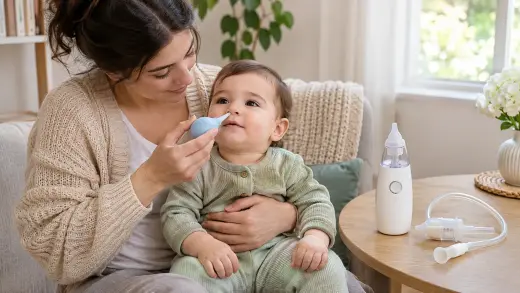
A nasal aspirator is a small device that draws mucus from the front of a baby's nose. It may be manual or electric. Manual types use a squeeze bulb or suction through a tube. Electric types use a motor to create suction.
Babies cannot blow their noses. Mucus can make the nose feel blocked. A baby may sound snuffly, pause during a feed, or wake often. Gentle suction may clear some mucus from the nostril opening. It cannot reach deep into the nose, and it should not be pushed deep.
Congestion can happen with a cold or other illness. Dry air, smoke, dust, or other irritants may also bother the nose. The sound of a stuffy nose does not show how ill a baby is. Look at breathing, feeding, alertness, wet nappies, and your baby's usual behaviour too.
An aspirator is a comfort tool. It does not cure a cold, prevent an ear infection, or replace medical care. Claims that a device gives instant, complete, or lasting relief should be treated with care. Each baby and each bout of congestion can be different.
When suction may help
Consider suction when mucus seems to block the front of the nose and your baby is struggling to feed or settle. It may help before a feed or sleep if congestion is getting in the way. Use it only when there is a clear reason. A noisy nose alone may not need treatment.
Saline drops or spray made for babies can help loosen thick mucus. Ask a pharmacist, nurse, or doctor which product suits your baby's age. Follow its label. Do not put homemade mixtures, oils, or medicines into the nose unless a health professional advises you.
Try saline first, if advised, and give it time to soften mucus. Then use gentle suction at the nostril opening. Do not keep suctioning just because the nose still sounds noisy. The nose may remain a little stuffy, even after visible mucus is removed.
Babies breathe through both their nose and mouth. A stuffy nose may feel harder for a very young baby during feeding. If your baby cannot feed well, is breathing with effort, or seems unwell, seek medical advice. Do not rely on an aspirator to manage a serious problem.
Choosing between manual and electric types
There is no single best type for every family. A simple bulb may suit a parent who wants few parts. A tube aspirator lets the adult control suction by mouth, with a filter in many designs. An electric type creates suction with a motor. Each can be awkward if the baby moves or dislikes the feeling.
Compare the parts that affect safe use and cleaning. Check the age guidance, tip shape, suction control, noise, power source, and replacement parts. Read how the maker says to wash and dry every piece. Avoid paying extra for lights or music unless they matter to you.
| Type | How it works | What to check | Possible drawback |
|---|---|---|---|
| Squeeze bulb | Squeeze, place the tip at the nostril opening, then release. | Can the bulb open for proper cleaning and drying? | Some bulbs are hard to clean inside. |
| Tube with mouth suction | The adult draws air through a tube. A filter may catch mucus. | Check the filter, spare parts, and cleaning steps. | Some caregivers dislike using mouth suction. |
| Electric aspirator | A motor creates suction through a fitted tip. | Check gentle settings, noise, power, and removable parts. | It may need charging or batteries. It can also be noisy. |
Ask a health professional if you are unsure which type is suitable. A device can be simple and still need careful handling. Do not assume that more suction is better. Strong suction can irritate delicate skin inside the nose.
Health & Safety Gates worth a look
Real products from our catalogue. We don't show star ratings or review counts; check the current price, stock and reviews on Amazon before you buy.

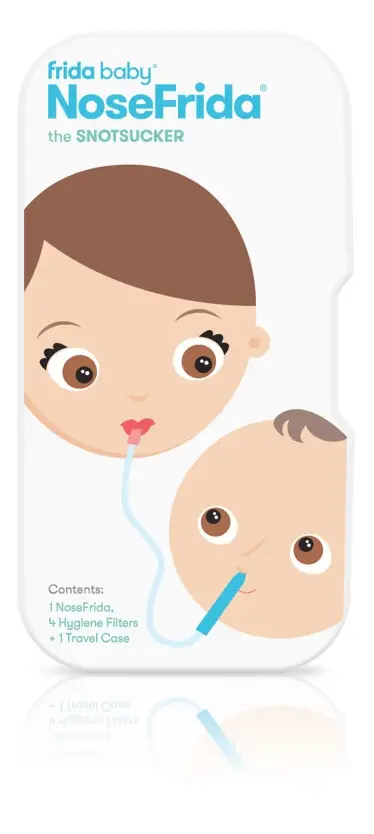
Frida Baby NoseFrida (with travel case)
A suction tube for clearing a blocked baby nose. A filter sits between the tube and your mouth.
Read our full review →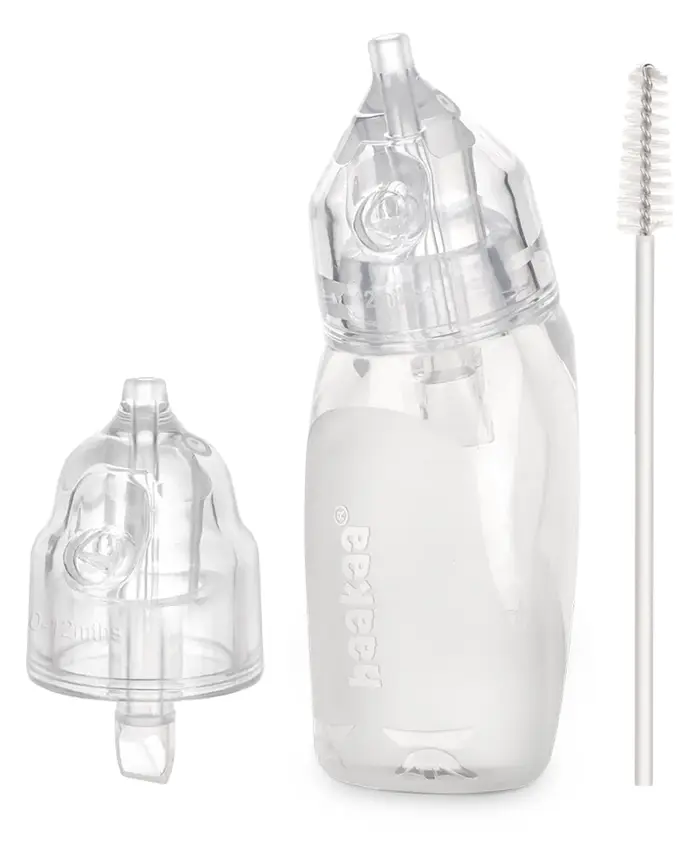

Snotty Noses Snotty Boss Nasal Aspirator Kit
A battery nasal aspirator kit with nozzles, a saline spray bottle, a carry pouch and a hygienic lid.
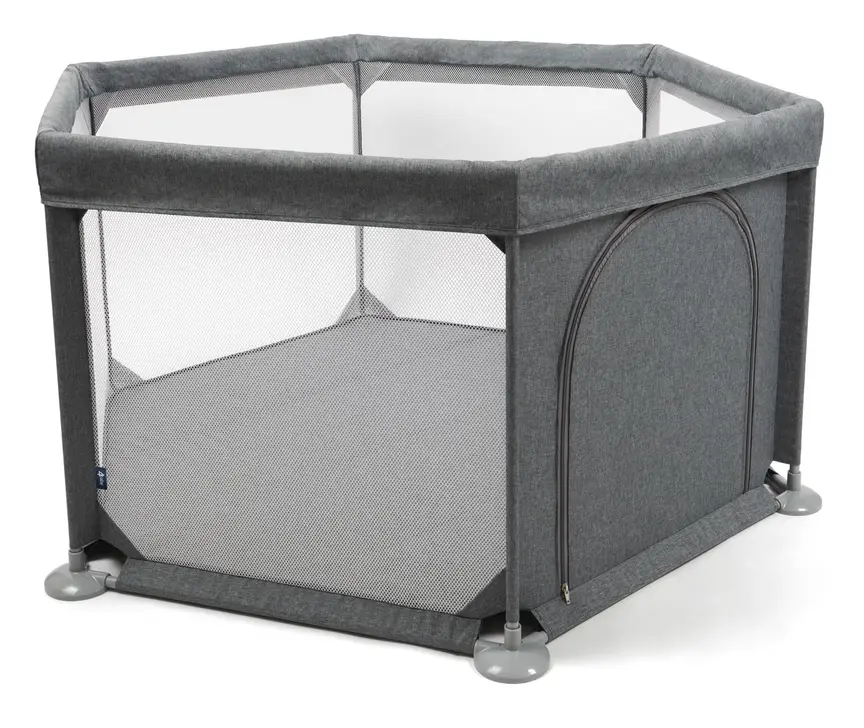
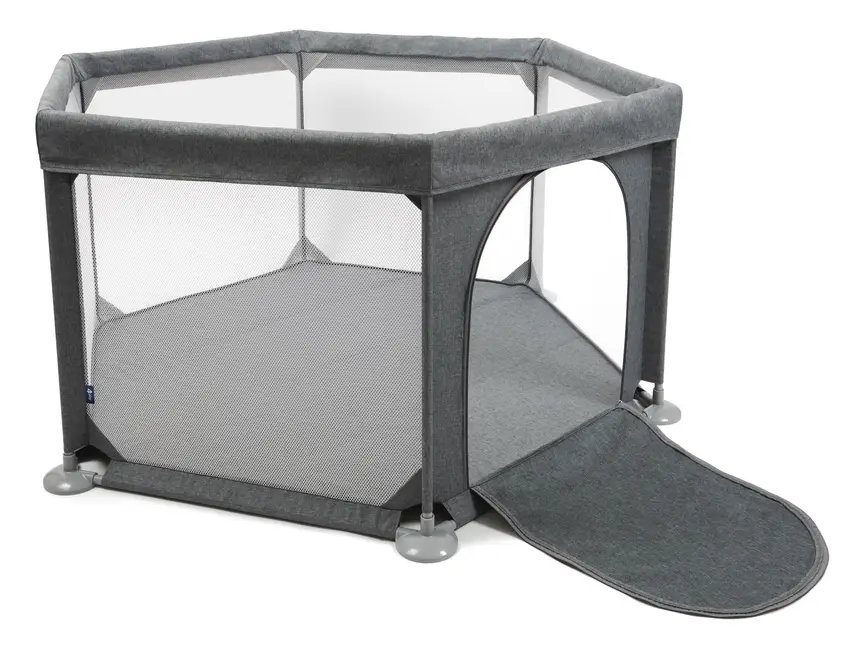
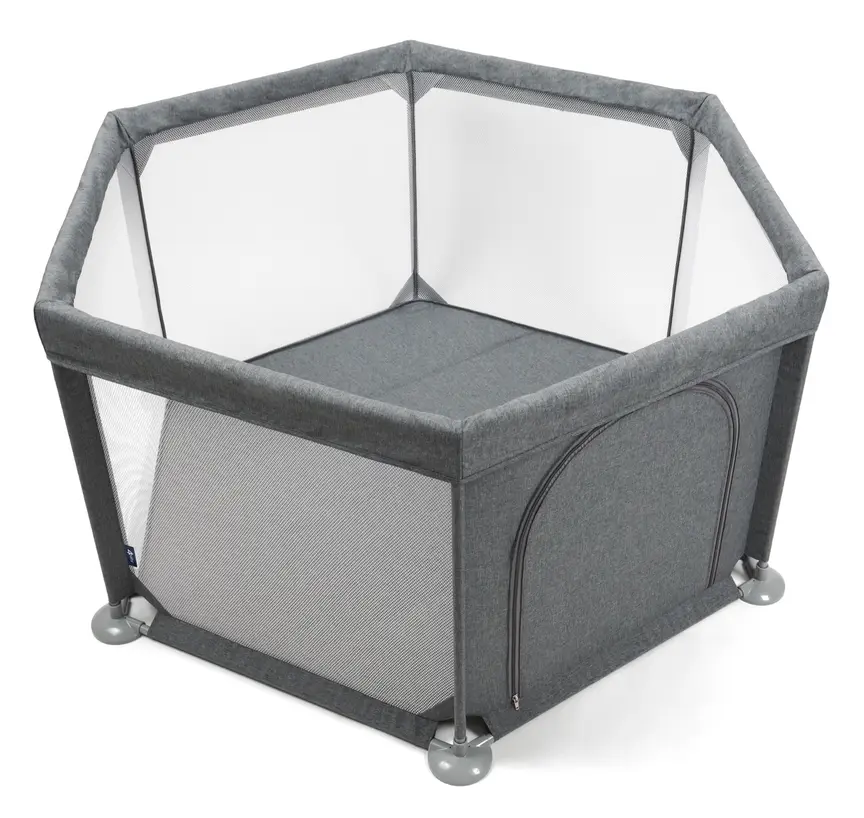
4baby Hex Playpen
A six-sided mesh playpen with a zip door. It packs into a carry bag.
Read our full review →What to check before buying
- Age guidance: Check the maker's stated age range. Ask a clinician about a newborn or premature baby.
- Tip: Look for a smooth tip made for a baby's nostril. It should rest at the opening, not go deep.
- Suction: The device should allow gentle use. Avoid models whose settings or instructions are unclear.
- Cleaning: Every part that touches mucus should come apart and be washable as directed.
- Drying: Check that parts can dry fully before storage. Moist parts can become dirty or musty.
- Power: See whether it uses replaceable batteries, a rechargeable battery, or no power.
- Noise: A motor sound may frighten some babies. If possible, learn how loud it is before buying.
- Parts: Check whether tips, filters, or seals can be replaced. See if they are easy to find.
- Instructions: Choose a product with clear steps for use, washing, drying, and storage.
- Recall checks: Look for safety notices in your country. Check the model name and maker.
Do not choose by suction level numbers alone. Makers may measure or describe suction in different ways. A larger number does not prove that a product is safer or more useful.
Using an aspirator gently
Read the instructions that came with your exact model. Parts and cleaning steps differ. If your baby's clinician has given different advice, follow that advice. Ask them to show you how to use the device if you feel unsure.
- Wash your hands. Set out a clean device and the saline product, if you plan to use it.
- Settle your baby. Hold your baby safely, with the head in a comfortable position. Ask another adult to help if needed.
- Loosen mucus if advised. Use only baby saline as directed on its label or by a clinician.
- Start gently. Place the tip at the nostril entrance. Do not push it inside.
- Use brief suction. Follow the device steps. Stop if your baby shows pain, bleeding, or strong distress.
- Clear the device. Empty and wash parts as the maker directs. Do not share a device between children without cleaning it.
- Dry and store it. Let parts dry fully. Keep the device clean and out of children's reach.
Do not block the other nostril unless the maker's instructions or a clinician specifically tell you to. Do not use repeated, forceful suction. If mucus does not come out easily, pause. A baby may cry or move, and that is a reason to stop and try later.
Some babies dislike the sound or feeling. Comfort your baby before and after. A short pause may work better than holding a distressed baby still. Never leave a baby unattended with the device or small parts.
How often to use it
Use suction only when it seems to help. Frequent suction can make the inside of the nose sore or swollen. That may make breathing feel more blocked. Follow the product directions for any limits, and ask a clinician if you feel you need it often.
There is no universal schedule that fits every baby. Do not suction before every feed or sleep as a routine if your baby is comfortable. Do not wake a sleeping baby just to clear a nose, unless a health professional has advised you to do so.
If congestion lasts, gets worse, or keeps disrupting feeds, contact a doctor or nurse. A clinician can check for causes and advise what care is suitable. Young babies can become unwell quickly, so seek timely advice when concerned.
Cleaning and storage
Follow the maker's cleaning directions for your model. Remove only the parts that the instructions say can be removed. Wash the mucus-contact parts as directed. Some parts may not be safe for boiling, a dishwasher, or a steriliser.
Rinse away soap if the instructions require it. Let parts dry completely before putting them together. Check small openings, filters, and seals for trapped mucus. Replace damaged or worn parts as the maker advises.
Do not share an unwashed aspirator. Do not use a part that has fallen onto a dirty surface until it has been cleaned. Keep the device away from dust, pets, and damp bathrooms. Store it in a clean, dry place.
For electric models, keep the motor and charging parts dry unless the instructions say they can get wet. Do not use a device with a cracked case, damaged cord, swollen battery, or loose battery cover. Follow the maker's advice for battery changes and disposal.
Side by side: more health & safety gates to compare
Real products from our catalogue. We don't show star ratings or review counts; check the current price, stock and reviews on Amazon before you buy.
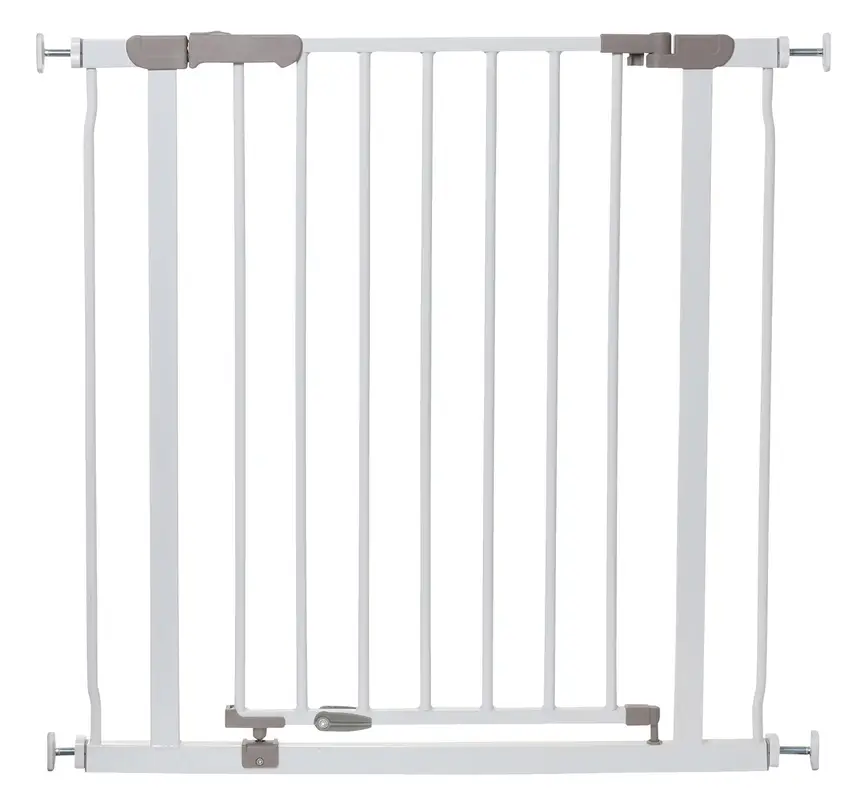
4baby Safety Gate
A low-cost pressure-mounted gate with a double lock. It opens both ways with one hand.
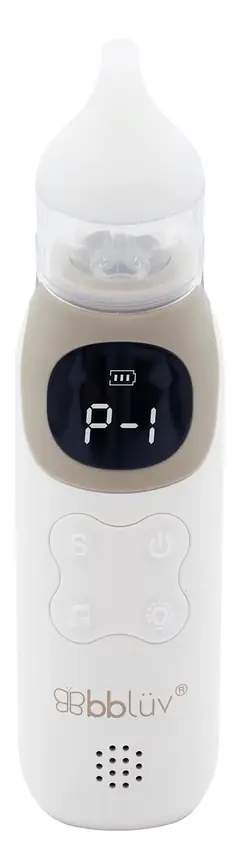

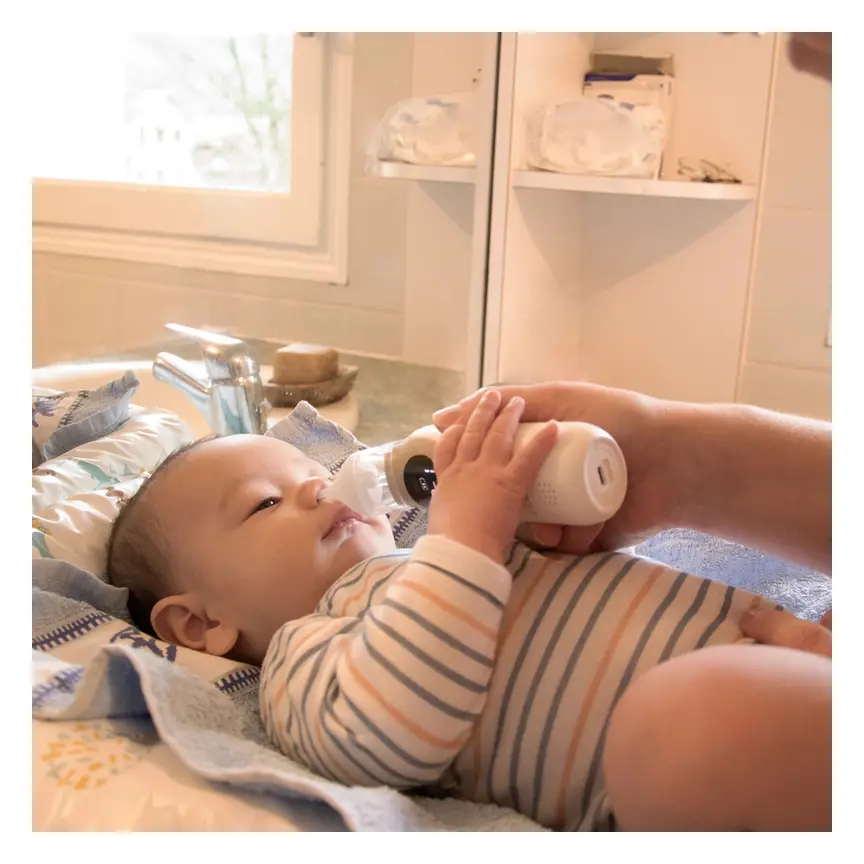

bbluv Rino Pro Nasal Aspirator
An electric nasal aspirator with 5 suction levels, soft silicone tips and a screen.
Read our full review →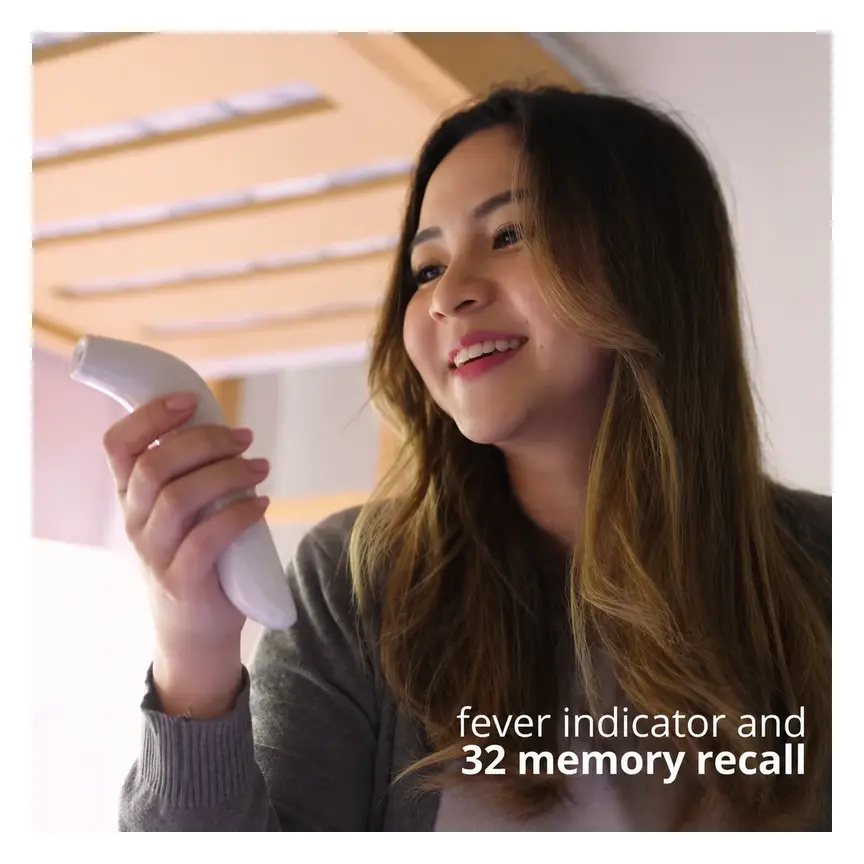
Cherub Baby 4-in-1 Ear and Forehead Thermometer
2-in-1 thermometer

Cherub Baby Ear & Forehead Thermometer
Reads the ear or forehead in about 1 second, with a colour fever light and a fever alarm.
Age and stage guidance
A newborn has small nasal passages and needs gentle handling. Ask a midwife, nurse, doctor, or pharmacist to show you the device if this is your first time. Premature babies and babies with health conditions may need personal advice.
As babies grow, they may wriggle more and resist having their nose touched. Do not force the tip into a moving baby's nostril. Pause and soothe them. Another adult can help hold the baby safely, but should not pin them down.
Toddlers may be able to blow their nose with help. Teach them gently, using a tissue and hand washing. Do not let a toddler play with the aspirator, batteries, tips, or filters. Small parts can be a choking risk.
Age labels are not a substitute for individual advice. Check the product label and ask a clinician if the baby was born early, has a breathing condition, or has a nasal problem. Do not use adult nasal devices or medicines on a baby unless a health professional says to.
When to get medical help
Seek urgent help if your baby is struggling to breathe, has pauses in breathing, turns blue or grey, or is very hard to wake. Follow your local emergency advice. Do not delay urgent care to try another round of suction.
Contact a doctor or nurse promptly if your baby is feeding much less, has fewer wet nappies than usual, seems unusually sleepy, or is getting worse. Ask for advice if your baby has a fever or is very young and unwell. A health professional can tell you how quickly your baby needs to be seen.
Get medical advice if there is blood from the nose, pain, or repeated irritation after suction. Also ask if congestion is persistent, keeps returning, or comes with a cough, noisy breathing, or other symptoms. These signs need context from a clinician.
Call your local emergency number for severe breathing trouble or another emergency. In Australia, Healthdirect can help with health questions. In the UK, contact NHS services. In the US, call your child's clinician or emergency services. In Canada, contact a health professional or local emergency services.
Advice across Australia, the UK, the US and Canada
For general baby health advice, families can consult Healthdirect and Pregnancy, Birth and Baby in Australia; the NHS in the UK; the American Academy of Pediatrics in the US; and the Canadian Paediatric Society through Caring for Kids in Canada. Local services can explain how to access care where you live.
These health organisations advise on infant care. The official product safety bodies have different roles. In Australia, Product Safety Australia and the ACCC handle consumer product safety information. In the UK, the Office for Product Safety and Standards is the product safety body. In the US, the Consumer Product Safety Commission handles consumer product safety. In Canada, Health Canada oversees consumer product safety.
The source library does not include specific guidance from these bodies about electric nasal aspirators. So this guide does not claim that one model meets a special nasal aspirator standard. Check the device label, instructions, recall notices, and advice from a local health professional.
Do not assume a product sold in one country has the same label or support in another. Check that the maker provides instructions for your market. Keep proof of purchase and note the model name in case you need to check for a recall.
Common mistakes to avoid
- Pushing the tip in: Keep it at the nostril opening. Deep insertion can hurt the nose.
- Using strong suction: More force can irritate the lining. Start gently and follow instructions.
- Using it too often: Repeated suction may cause swelling or soreness. Use it only when needed.
- Skipping cleaning: Mucus can remain in small parts. Wash and dry them as directed.
- Sharing without washing: Clean the device between children, following its instructions.
- Adding unapproved liquids: Use only products meant for babies, as advised by a clinician.
- Trusting marketing promises: An aspirator cannot cure illness or guarantee better sleep.
- Waiting through danger signs: Severe breathing trouble needs urgent help, not more suction.
- Leaving parts nearby: Keep tips, caps, batteries, and filters away from children.
- Using a damaged device: Stop using it if parts crack, leak, or no longer fit.
Frequently asked questions
Can an electric aspirator cure a cold?
No. It can remove some mucus near the nostril opening. It does not treat the cause of a cold. Seek advice if your baby is unwell or symptoms worry you.
Is an electric aspirator better than a bulb?
Not for every family. Electric models make suction with a motor. Bulbs use a squeeze action. Compare cleaning, ease of use, noise, and instructions. Choose one you can use gently and clean well.
Can I use saline drops first?
Saline may loosen thick mucus. Ask a pharmacist or clinician which baby product suits your child. Follow its label. Do not put oils, homemade mixtures, or medicines in the nose without professional advice.
How often can I suction my baby's nose?
Use it only when congestion seems to interfere with feeding or comfort. Follow the device instructions. Frequent suction may irritate the nose. Ask a clinician if you need to use it often.
Can the tip go inside the nostril?
Do not push it deep. Rest it at the opening and follow the maker's instructions. Stop if your baby seems hurt, there is bleeding, or the nose becomes sore.
Should I suction before every feed?
Only if congestion is getting in the way and gentle suction helps. It is not needed as a fixed routine. Ask a health professional if your baby is struggling to feed.
What if the aspirator makes my baby cry?
Pause and comfort your baby. Do not hold them down or force the device. Try later if needed. Ask a clinician for help if you cannot clear the nose safely.
Can I use an adult nasal aspirator?
Do not use an adult device on a baby unless a health professional says it is suitable. Use a product labelled for your baby's age and follow its instructions.
When should I call a doctor?
Get help if breathing looks difficult, feeding drops, wet nappies decrease, or your baby seems unusually sleepy or worse. Severe breathing trouble, blue or grey colour, or pauses in breathing need urgent help.
Does suction prevent ear infections?
There is no claim here that an aspirator prevents ear infections. It only removes some mucus from the nose. Ask a clinician about ear pain, fever, or other symptoms.
More options, from budget to premium
Real products from our catalogue. We don't show star ratings or review counts; check the current price, stock and reviews on Amazon before you buy.


Dreambaby Cosmopolitan Security Gate
A metal-and-timber pressure-fit gate that opens both ways and can stay open.
 Reviewed
Dreambaby Freedom Security Gate
A low-cost metal gate that opens both ways. A stopper can make it open one way only, for stairs.
Read our full review →Sources and further help
- Healthdirect Australia
- Pregnancy, Birth and Baby (Australia)
- NHS baby and toddler safety (UK)
- American Academy of Pediatrics, HealthyChildren.org (US)
- Caring for Kids, Canadian Paediatric Society
- Product Safety Australia recalls
- UK Office for Product Safety and Standards
- U.S. Consumer Product Safety Commission
Health disclaimer: This article gives general information, not medical advice. Ask a qualified health professional about your baby's symptoms and care. If you think your baby has an emergency, contact local emergency services.
Affiliate disclosure: BabyGearFinder may earn a commission from qualifying links. This does not change the price you pay. Product details and availability can change. Check current information with the seller.
Sources
Related guides
More Health & Safety Gear →
Baby Nasal Aspirators: When They Help and How to Use Them Safely

Clearing a Baby’s Nose Safely: What Helps, What to Avoid, and When to Get Help
Baby Nasal Aspirators: Electric, Bulb and Mouth-Suction Types Compared