














How to Choose a Safe Travel Crib or Portacot
How to choose a safe travel crib or portacot: firm flat mattress, locking sides, breathable mesh, and safety rules in Australia, the UK, the US and Canada.
On this page
- Key points
- What a travel crib or portacot is
- Types of travel cribs compared
- How to choose a safe travel crib
- Safety standards in Australia, the UK, the US and Canada
- Travel cribs by age and stage
- How to set up a travel crib safely away from home
- Common mistakes parents make with travel cribs
- Frequently asked questions
- Sources
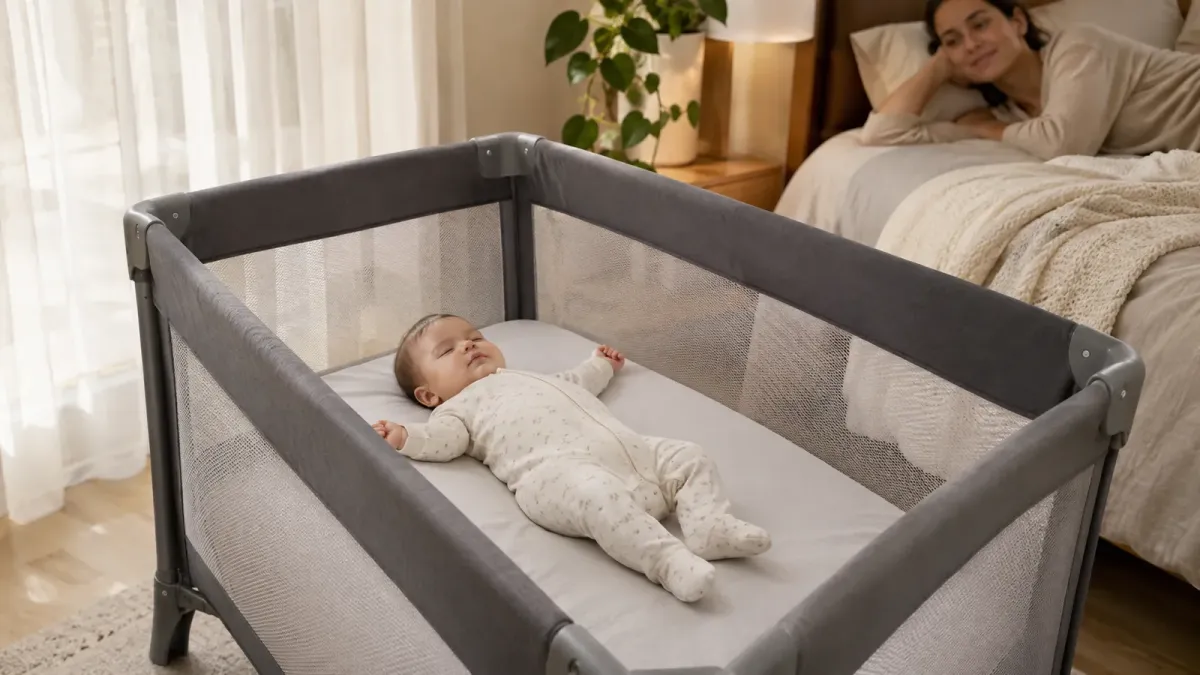
Short answer: Pick a travel crib that meets your country's safety standard. It must have a firm, flat mattress that came with the crib. Check that all four top rails lock firmly before you put your baby inside. Keep the sleep space completely bare, with your baby on their back.
Safe sleep rules are the same in Australia (Red Nose), the UK (The Lullaby Trust and NHS), the US (American Academy of Pediatrics) and Canada (Health Canada and the Canadian Paediatric Society). Whether you call it a portacot, a travel cot, a travel crib or a play yard, the basics do not change.
Key points
- Firm mattress only: Use only the thin, firm mattress made for that exact model. Never add a second mattress or folded blanket underneath.
- Lock every rail: All folding hinges and side rails must click and lock into place.
- Clear sleep space: Put your baby on their back with no pillows, bumpers, toys or loose blankets.
- Breathable sides: Look for strong mesh sides that let air flow through.
- Check the label: Look for a safety standard mark from Australia, the UK, the US or Canada.
- Watch the limits: Stop using a raised bassinet insert as soon as your baby can push up, roll or sit.
What a travel crib or portacot is
A travel crib is a portable bed for babies and young toddlers. Different countries use different names for it. In Australia, people often call it a portacot or folding cot. In the UK, it is usually called a travel cot. In the US and Canada, parents often call it a travel crib, play yard or playpen.
Most travel cribs fold up into a carry bag. You can pack them in a car boot or check them on a plane. They give your baby a safe, flat place to sleep when you are away from home.
A travel crib is made for short trips and visits. Health groups such as Red Nose and Raising Children Network advise using a standard household cot for everyday sleep at home when you can. A standard cot has a thicker, firmer mattress and a rigid wooden or metal frame.
Cots, Bassinets & Bedside Sleepers worth a look
Real products from our catalogue. We don't show star ratings or review counts; check the current price, stock and reviews on Amazon before you buy.
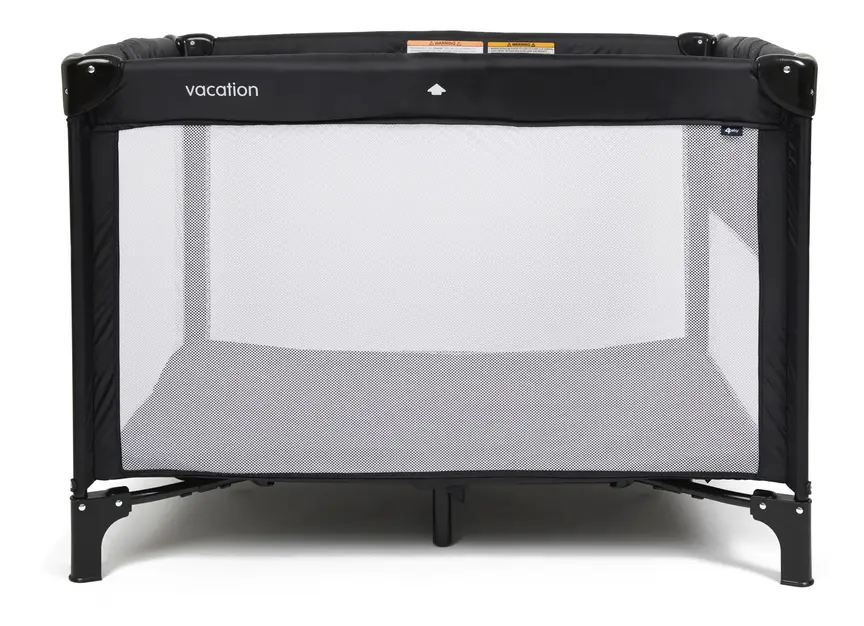
4baby Vacation Portacot
A low-cost portacot with a padded mattress and mesh sides.
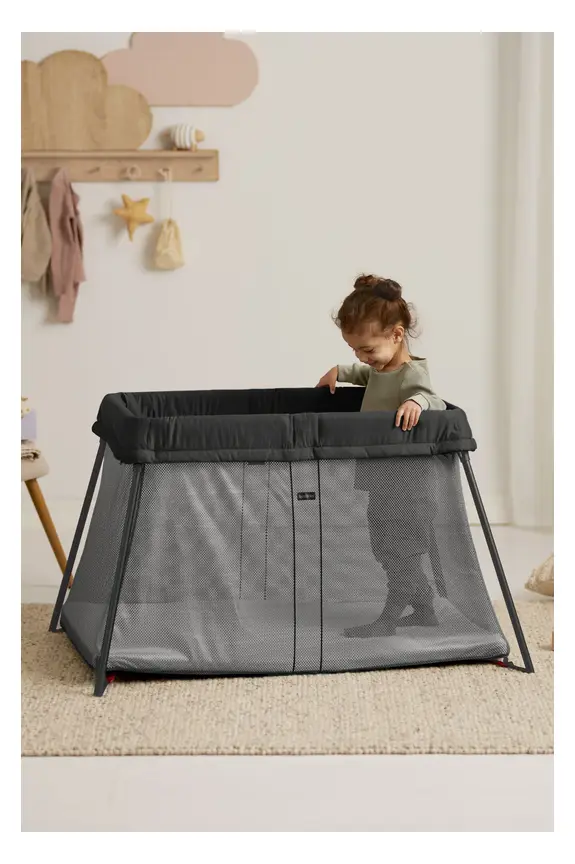
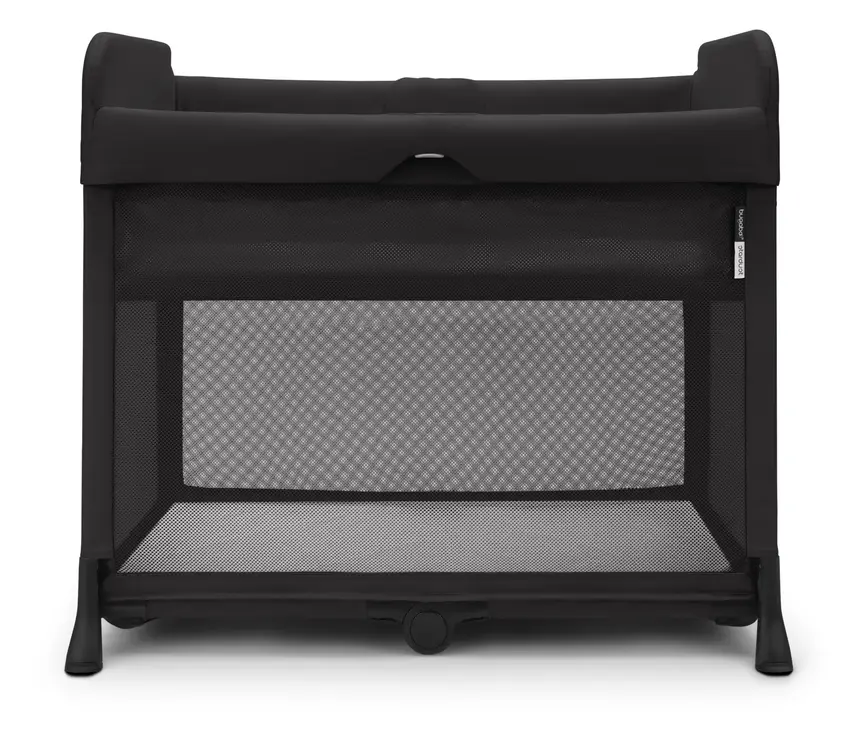

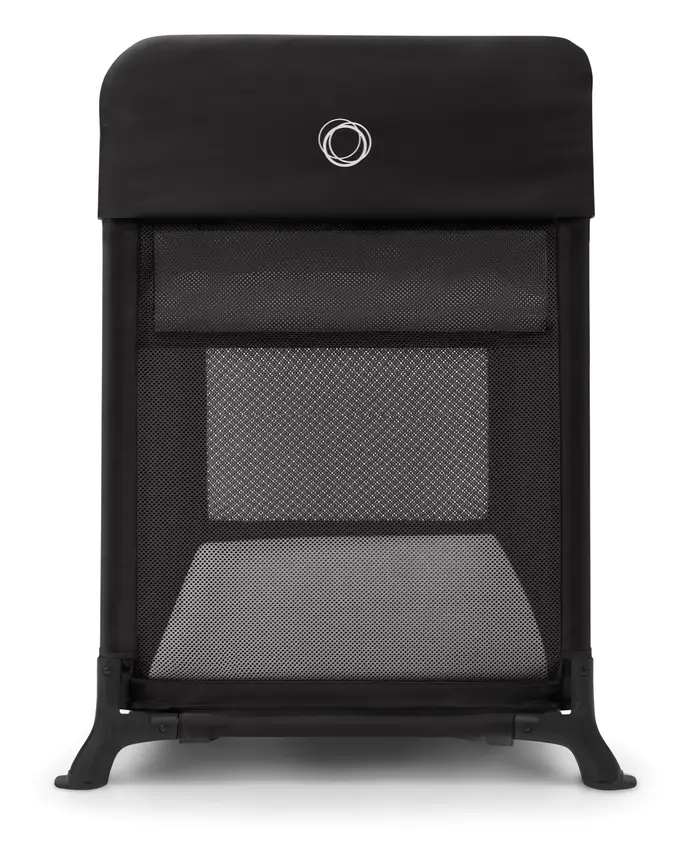
Bugaboo Stardust Plus
A pop-up portacot with a bassinet, for naps at home or away.
Read our full review →
Compare all cots, bassinets & bedside sleepers in our reviews →
Types of travel cribs compared
Not all travel cribs work the same way. Some are heavy and sturdy for car trips. Others are very light so you can carry them through an airport. Here is how the main types compare.
| Type | How it sets up | Best for | Things to watch |
|---|---|---|---|
| Standard folding portacot | Four side rails pull up and lock. The floor pushes down. | Car trips, grandparents' homes, longer stays. | Can be heavy to carry on foot. Check that the centre floor locks flat. |
| Lightweight zip or pop-up travel crib | Aluminium legs clip together or unfold. Fabric zips onto the frame. | Flights, train trips, small car boots. | Must sit flat on the floor. Check that the mattress is firm, not soft or spongy. |
| Travel crib with bassinet insert | A raised sling or clip-on floor sits higher up for newborns. | Newborns and young babies before they roll or push up. | Remove the insert as soon as your baby rolls, pushes up or hits the weight limit. |
| Hotel or holiday rental cot | Supplied by the hotel or host. Can be a folding cot or wooden cot. | Trips where you cannot pack your own crib. | Always inspect it yourself. Check locks, mattress fit and any damage before use. |
Some travel cribs have a mattress that sits right on the floor. Others hold the mattress on a raised frame above the floor. Both styles can be safe if they meet official standards and are set up properly.
How to choose a safe travel crib
When you shop for a travel crib, safety comes before extra features. You do not need music boxes, vibration units or clip-on toy bars. Focus on the structure, the mattress and the locks.
1. A firm, flat mattress that fits tightly
The mattress is the most important part of any travel crib. A soft mattress can let a baby's face sink in and block their breathing. This is why Australia uses a firmness test under AS/NZS 8811.1, and the UK, US and Canada also require firm sleep surfaces.
Travel crib mattresses look much thinner than home cot mattresses. That is normal. They are thin on purpose so a baby cannot get wedged between a thick pad and the soft mesh side.
Check these points before you buy or use one:
- The mattress must sit completely flat with no sag or dip in the middle.
- There must be no gaps around the edges where a baby's head, arm or leg could get trapped.
- The mattress must attach to the crib base with straps, Velcro or clips if the design includes them.
- Never use a travel crib without its matching mattress, and never swap in a mattress from another brand.
2. Strong locking mechanisms
A folding crib has moving joints. If a joint fails, the side rail can collapse like a V. That V-shape can trap a child's neck or chest.
Good travel cribs use dual-action locks. That means you must press a button and lift or twist at the same time to unlock a rail. A baby or toddler cannot undo that by accident.
Test the locks in the shop or at home before your trip. Push down hard on all four top rails after setup. None of them should bend, drop or click loose.
3. Breathable mesh sides
Look for strong, fine mesh on all four sides. Mesh lets air move freely around your baby. It also lets you see your baby clearly from your own bed.
Check that the mesh holes are tiny. A baby's fingers, toes or buttons on their clothes should not catch in the weave. Make sure there are no tears, loose threads or sagging panels.
4. No climbing footholds or trap hazards
As babies grow, they pull themselves up and try to climb. Look inside the crib for anything a toddler could step on. Avoid cribs with wide horizontal bars, padded ledges or thick corner pockets near the floor.
Also check the outside of the crib. There should be no long cords, dangling straps or loose fabric ties. Any carry-bag straps or mattress ties must tuck away cleanly out of reach.
5. Easy setup, weight and cleaning
A travel crib is only helpful if you can set it up while tired. Practice folding and unfolding it at home before you travel. Many folding portacots have a strict order of steps. Usually you lock the four top rails first, then push the centre of the floor down last. If you push the floor down first, the side rails will not lock.
Think about how you will clean it too. Babies dribble, leak through nappies and spit up. Wipe-clean frames and removable, washable mattress covers save a lot of stress on holiday.
6. Be careful with add-ons
Some travel cribs come with clip-on change tables, sun shades or bassinet layers. Check every add-on carefully:
- Change tables: Never leave a baby unattended on a clip-on change mat. Remove the change table before your baby sleeps in the crib.
- Bassinet inserts: Only use these for very young babies. Take the insert out as soon as your baby starts to roll, push up on hands and knees, or reaches the label's weight limit.
- Sun canopies or insect nets: Never leave a baby to sleep in a tent-style cover that traps heat or blocks airflow. Keep the crib indoors or in a safe, shaded, supervised spot with good air flow.
Safety standards in Australia, the UK, the US and Canada
Rules for travel cribs vary a little by country. Still, all four countries test for the same core dangers: collapses, gaps, soft mattresses and toxic parts. Always buy a crib sold for your own region so it meets local rules.
| Country | Main safety body | Safe sleep health body | Standard to look for |
|---|---|---|---|
| Australia | ACCC / Product Safety Australia | Red Nose Australia | AS/NZS 2195 (folding cots) and AS/NZS 8811.1 (mattress firmness) |
| United Kingdom | Office for Product Safety and Standards (OPSS) | The Lullaby Trust and NHS | BS EN 716 (children's cots and folding cots) |
| United States | Consumer Product Safety Commission (CPSC) | American Academy of Pediatrics (AAP) | ASTM F406 (non-full-size cribs and play yards) and federal play yard rules |
| Canada | Health Canada | Canadian Paediatric Society (Caring for Kids) | Canadian crib, cradle, bassinet and playpen safety laws |
In Australia, every folding cot sold new or second-hand must meet the mandatory standard based on AS/NZS 2195. Product Safety Australia warns that uncertified imports bought online from overseas may not meet this rule.
In the UK, The Lullaby Trust and OPSS advise checking for BS EN 716 on travel cots. In the US, the CPSC requires play yards and travel cribs to meet ASTM F406 and federal safety rules. In Canada, Health Canada sets strict rules for playpens and travel cribs, and warns against using unapproved sleep accessories inside them.
One special note on Canada: Health Canada does not recommend using a playpen for regular, unsupervised overnight sleep at home. When you travel, check that any portable crib you use is firm, flat and set up with no loose items inside. If you are staying somewhere for a long time, a standard crib that meets full cot rules (such as AS/NZS 2172 in Australia or full crib rules in your country) is the safest choice.
Side by side: more cots, bassinets & bedside sleepers to compare
Real products from our catalogue. We don't show star ratings or review counts; check the current price, stock and reviews on Amazon before you buy.
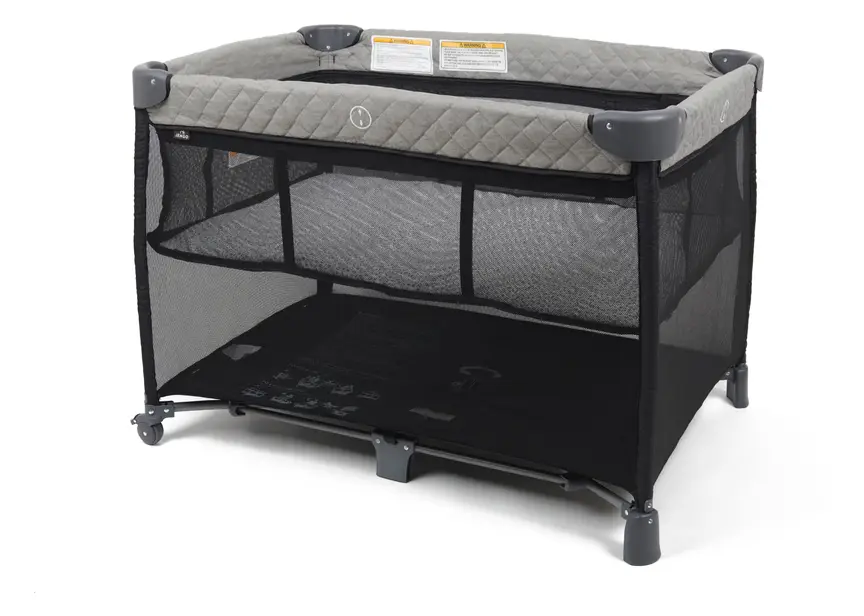
Jengo Voyager 3-in-1 Portacot
A portacot with a newborn bassinet level and a changer on top.
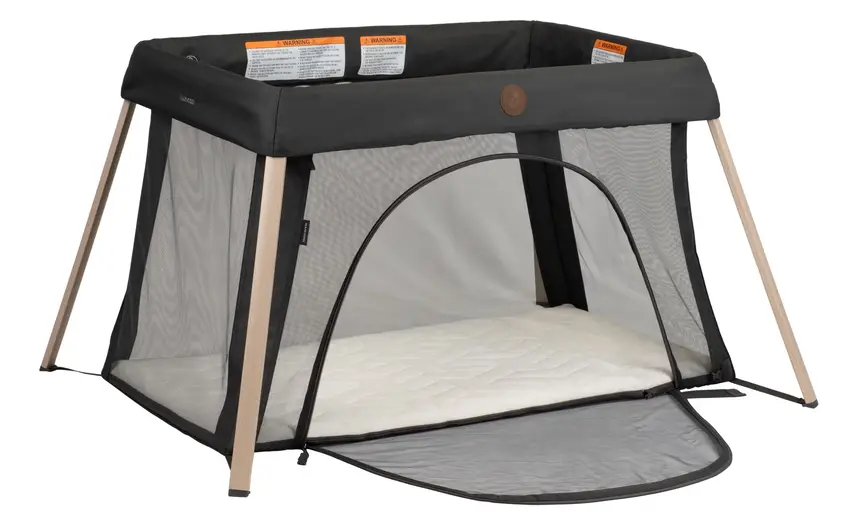


Maxi-Cosi Calao Light Travel Cot
A light travel cot with a newborn level and a toddler level, a side zip and a travel bag.
Read our full review →
 Reviewed
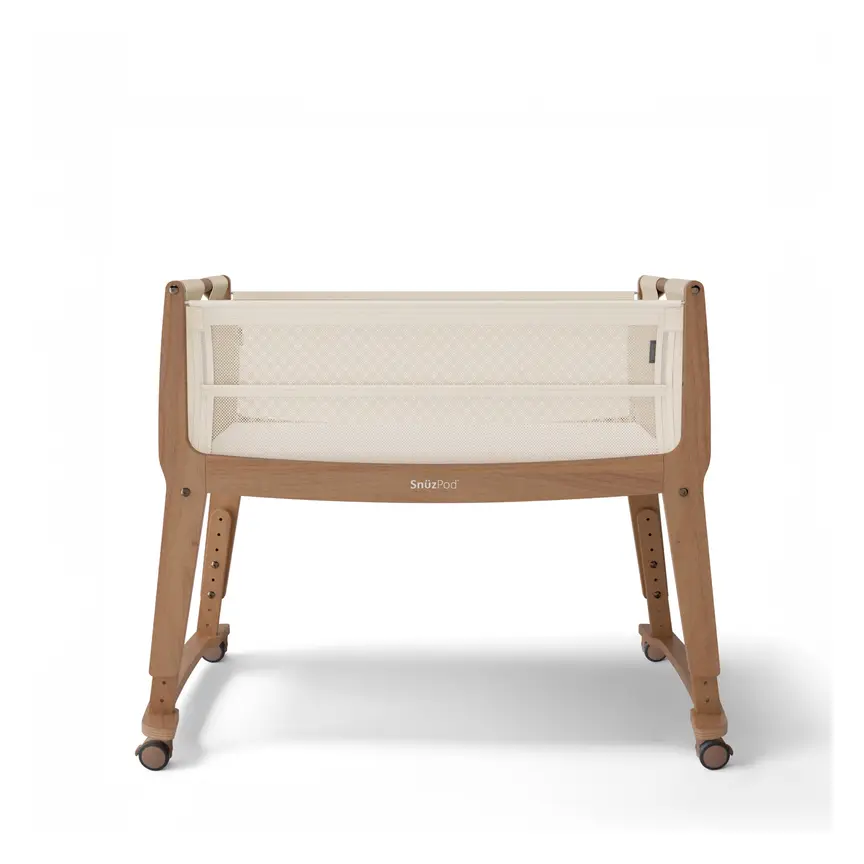
SnuzPod Studio
A bedside crib for night sleeps and naps, with panoramic mesh and a zip-down wall.
Read our full review →Compare all cots, bassinets & bedside sleepers in our reviews →
Travel cribs by age and stage
Your baby's needs change fast in the first two years. A setup that works for a newborn can become unsafe for a six-month-old. Use this stage guide to stay ahead of each milestone.
| Age stage | What baby is doing | What to do with the travel crib |
|---|---|---|
| Newborn to 3 months | Sleeping a lot. Cannot roll yet. Weak neck control. | Use the main base or a certified bassinet insert. Always place baby on their back on a firm, flat surface. |
| 3 to 6 months | Starting to kick, reach and roll over. | Remove any bassinet insert at the first sign of rolling or pushing up. Lower your baby to the main floor of the crib. |
| 6 to 12 months | Sitting up, pulling to stand, grabbing rails. | Use the main floor only. Keep the crib clear of toys and soft items. Move the crib away from curtain cords and furniture. |
| 12 months to toddler | Standing, bouncing and trying to climb. | Check the height and weight limits on the label. Move to a floor bed or standard bed once they can climb out or hit the limit. |
Age ranges are only a rough guide. Some babies roll early. Others learn to climb before they turn two. Always follow what your child can actually do, not just their age.
How to set up a travel crib safely away from home
Even the safest travel crib can become risky if it is put in the wrong spot or set up in a hurry. Follow these steps every time you arrive somewhere new.
- Pick a safe room spot. Put the crib on a flat, stable floor. Keep it well away from windows, blind cords, curtain cords, heaters, fans and power sockets.
- Check the room temperature. Try to keep the room comfortable, not too hot or too cold. The Lullaby Trust suggests around 16 to 20°C as a guide. Dress your baby in a safe sleep bag or light layers to suit the room.
- Lock the frame in the right order. Pull all four side rails up until they click. Then push the centre floor flat. Push down on every rail to make sure none of them give way.
- Check the mattress and sheet. Fit the original mattress firmly into the base. Use only a tight-fitting sheet made for that mattress size. Never use a loose adult pillowcase or folded sheet.
- Keep the crib completely empty. Put nothing in the crib except your baby. No pillows, no cot bumpers, no soft toys, no loose blankets and no sleep positioners.
- Check for nearby hazards. Look around at toddler height. Make sure your baby cannot reach lamps, phone chargers, bedside tables or hanging cords from inside the crib.
- Share the room, not the bed. Health bodies in Australia, the UK, the US and Canada all advise keeping your baby's crib in the same room where you sleep for at least the first six months.
Common mistakes parents make with travel cribs
Most travel sleep accidents happen because a well-meaning parent tries to make the crib look cosier or easier to use. Here are the mistakes to avoid.
Adding an extra mattress or folded blanket
Travel crib mattresses feel hard and thin to adults. Many parents feel tempted to slip a folded quilt, foam pad or second mattress on top to make it softer. Do not do this. Red Nose, The Lullaby Trust, the AAP and Health Canada all warn against extra mattresses or soft padding. A soft surface can conform to your baby's face. An extra pad can also leave a gap along the mesh wall where a baby can get wedged.
Trusting a hotel or rental cot without checking it
Hotels and holiday rentals often store travel cots in cupboards for years. Locks can rust or stick. Mesh can tear. Sometimes staff put a thick, mismatched foam pad inside the cot. Always inspect a borrowed cot from top to bottom before your baby sleeps in it. If anything looks broken, missing or unsafe, ask for another cot or use your own.
Letting baby sleep in a car seat, capsule or pram
Long travel days make it tempting to leave a sleeping baby in their car seat or stroller once you arrive. Red Nose, The Lullaby Trust and the AAP all warn that babies should not sleep for long periods in sitting devices. A baby's heavy head can slump forward and narrow their airway. As soon as you reach your room, move your baby onto their back in the flat travel crib.
Using a second-hand crib with no safety check
A second-hand travel crib can save money, but old models may not meet today's rules. Check the label for the brand, model name and standard mark. Search your country's recall site, such as Product Safety Australia, the US CPSC, UK OPSS or Health Canada Recalls. Never use a crib with missing parts, torn mesh, bent rails or a worn-out mattress.
Leaving the bassinet insert in too long
The raised bassinet level saves your back when you lift a newborn. Once your baby starts to roll or push up, that raised level is a fall risk. Take the insert out straight away and pack it away.
Putting the crib next to blind cords or heaters
Hotel rooms and guest bedrooms often have long curtain cords or portable heaters. A baby or toddler can reach through mesh or grab a cord hanging near the rail. Always leave a clear gap around all four sides of the travel crib.
More options, from budget to premium
Real products from our catalogue. We don't show star ratings or review counts; check the current price, stock and reviews on Amazon before you buy.
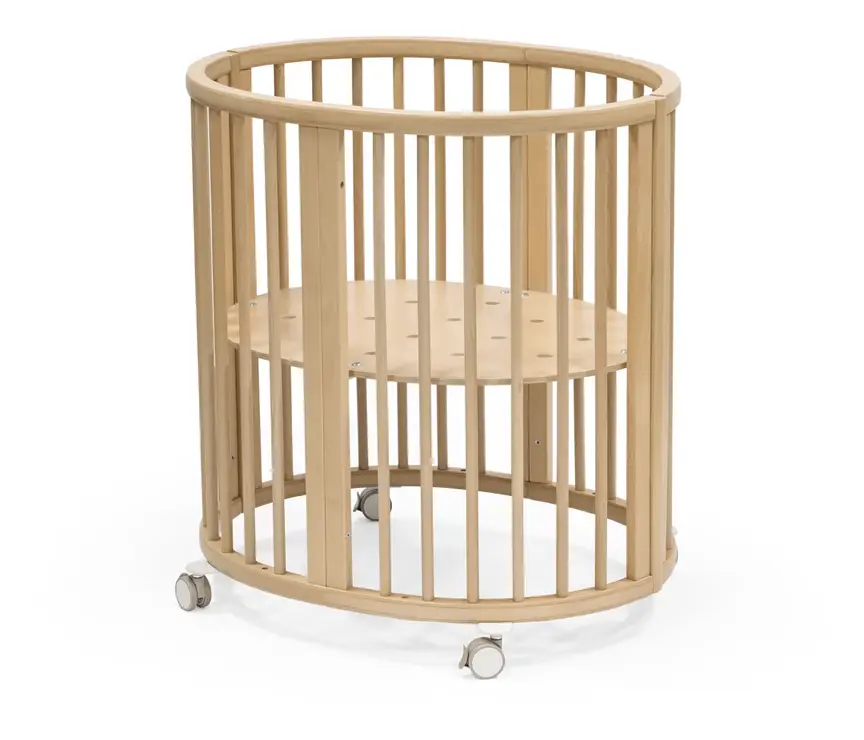
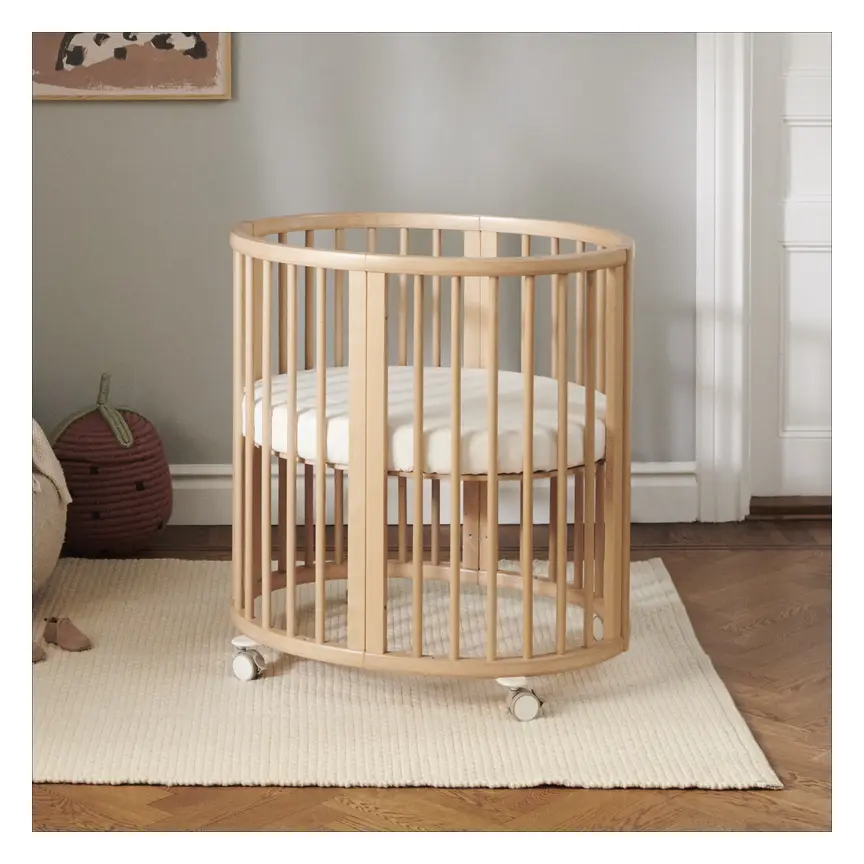
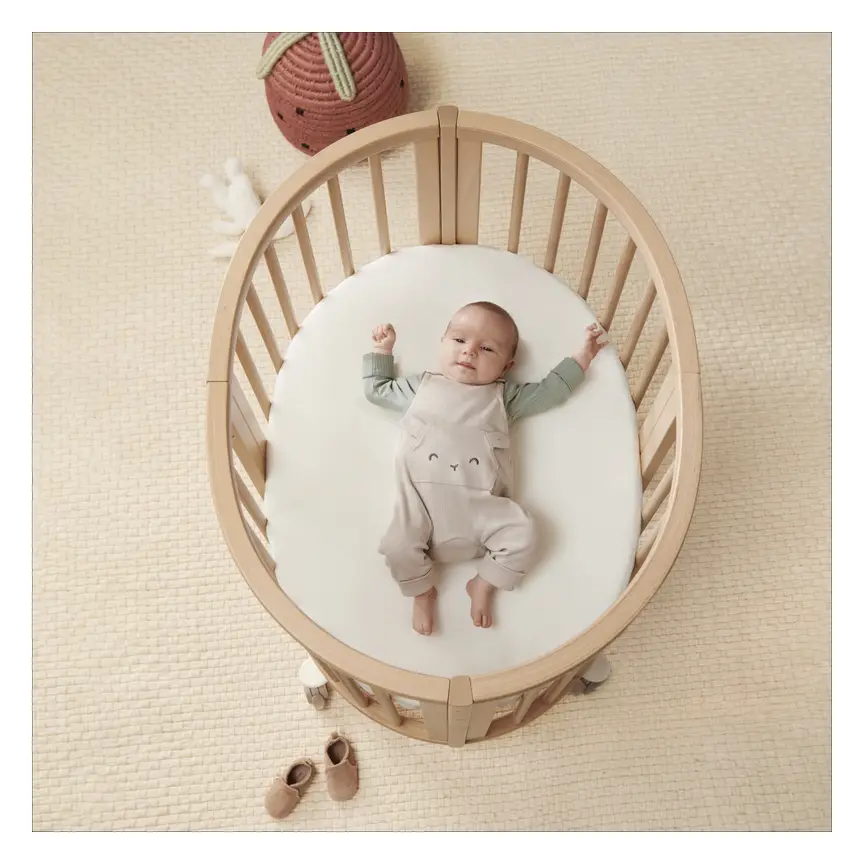

Stokke Sleepi Mini
A beech wood oval crib for newborns, with rods and a holed base for airflow.
Read our full review →
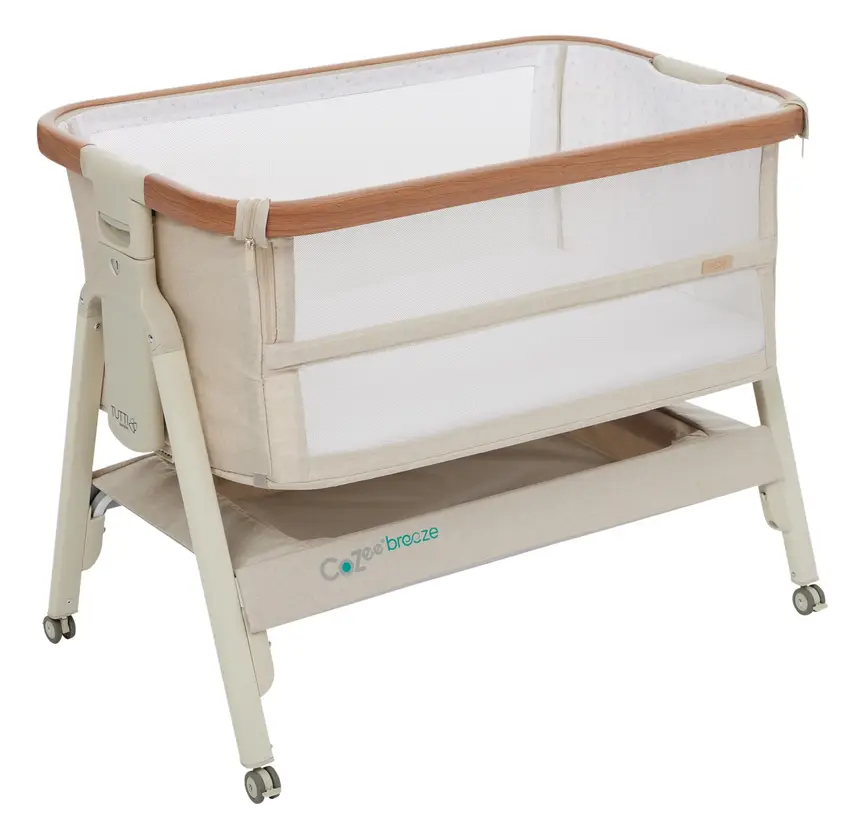
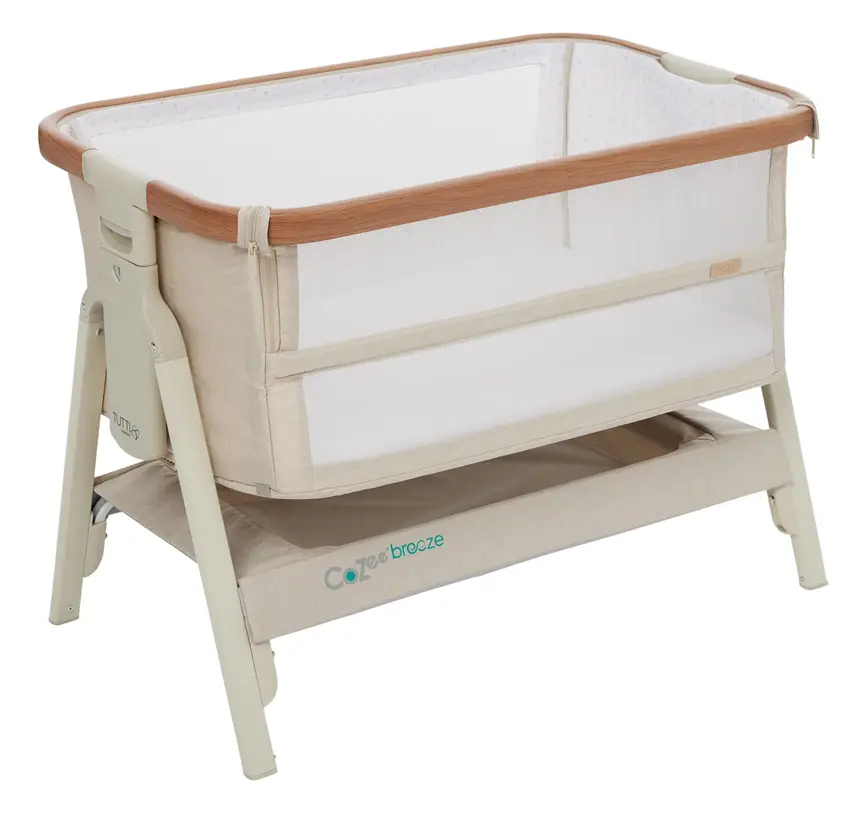
Tutti Bambini CoZee Breeze Lite
A bedside sleeper that opens or folds in about 30 seconds, with mesh sides and a travel bag.
Read our full review →
4baby Snuggle Cuddle Bedside Sleeper
A low-cost bassinet that turns into a bedside sleeper, with 4 heights and mesh sides.
Compare all cots, bassinets & bedside sleepers in our reviews →
Frequently asked questions
Can a newborn sleep in a travel crib every night?
A travel crib is fine for holidays and short visits. For everyday sleep at home, health groups like Red Nose and Raising Children Network recommend a standard household cot or certified bassinet. Standard cots are sturdier and built for daily, long-term use.
Can I put an extra mattress or pad in a travel crib?
No. Never add a second mattress, foam topper, sheepskin or folded blanket. Babies need a firm, flat surface. Extra padding raises the risk of suffocation and traps babies in gaps between the pad and the mesh sides.
Is it safe to use a hotel travel cot?
It can be safe, as long as you check it first. Look for a safety label, test all four rail locks, check that the mesh has no tears and make sure the mattress is firm, flat and fits tightly. If the hotel cot looks damaged or has a soft extra mattress inside, do not use it.
Can I buy a second-hand travel crib?
Yes, if you check it carefully. Make sure it has a current safety standard label, all original parts and clear instructions. Check that it has not been recalled in your country. Test every lock and inspect the mesh and mattress before you let your baby sleep in it.
When should my child stop using a travel crib?
Stop using the travel crib as soon as your child reaches the height or weight limit on the label, or tries to climb out. Once a child can climb over the rail, they risk a serious fall. At that stage, a floor mattress or safe toddler bed is a better choice.
What if my baby rolls over inside the travel crib?
Always put your baby down on their back at the start of every sleep. Once your baby can roll from back to tummy and back again on their own, they can find their own sleep position. Make sure you remove any bassinet insert, keep their arms free (no swaddling) and keep the travel crib completely bare.
Sources
- Product Safety Australia (ACCC) – Folding cots mandatory standard
- Red Nose Australia – Portable and folding cots
- Raising Children Network – Safe cots, portacots and mattresses
- The Lullaby Trust (UK) – Safer sleep on holiday
- The Lullaby Trust (UK) – Keeping a clear cot
- American Academy of Pediatrics (US) – A parent's guide to safe sleep
- CPSC (US) – Safe sleep: cribs and infant products
- Caring for Kids (Canadian Paediatric Society) – Safe sleep for babies
Related guides
More Car Seats & Travel →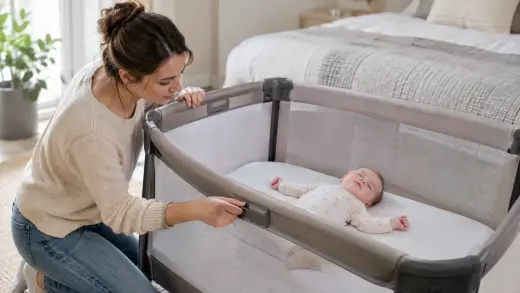
How to Make Sure a Travel Crib or Portacot Is Safe and Secure for Your Baby
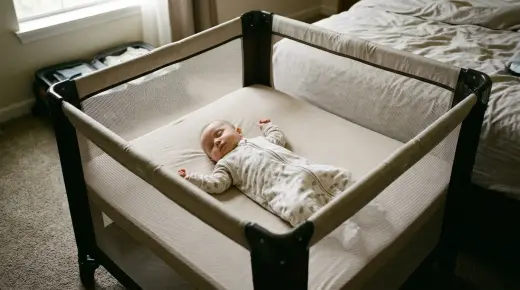
How to Choose a Safe Travel Crib or Portable Cot for Your Baby
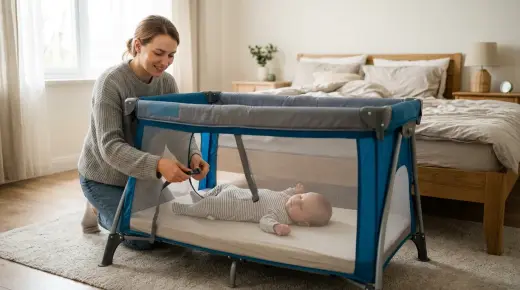
How to Choose a Safe Travel Cot for Your Baby
