






Stroller Sun Canopies and Peek-a-Boo Windows: Keeping Your Baby Safe from UV and Heat
How stroller UPF 50+ sun canopies and peek-a-boo windows protect babies from UV rays, why airflow matters, and what safety bodies say.
On this page
- Key points
- What a UPF 50+ stroller canopy does
- Why airflow matters as much as shade
- Peek-a-boo windows: magnetic, zip, or hook-and-loop
- Comparing stroller sun canopies and shade add-ons
- What to check before you buy a stroller canopy
- Sun and stroller safety by baby age
- Official sun and stroller advice in Australia, the UK, the US and Can…
- Common mistakes to avoid with stroller sun shades
- Frequently asked questions
- Sources
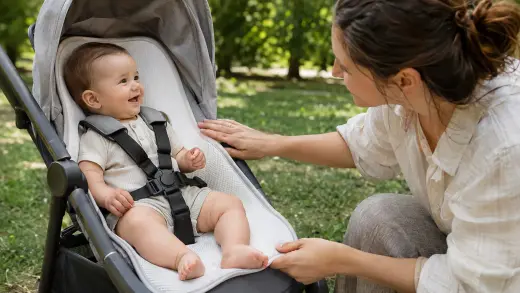
Short answer: A UPF 50+ stroller sun canopy blocks most harmful UV rays from reaching your baby. Look for a deep hood with mesh vents so air can move freely. A magnetic peek-a-boo window lets you check your baby quietly without waking them. Never drape a blanket or muslin wrap over the stroller, as it traps dangerous heat inside.
Health groups in Australia (Cancer Council Australia), the UK (NHS), the US (American Academy of Pediatrics) and Canada (Canadian Paediatric Society) all agree on one thing. Babies under 6 months should stay out of direct sunlight, and shade is the first line of defence for every child.
Key points
- UPF 50+: this rating means the canopy fabric blocks almost all UV rays that hit it.
- Airflow first: shade is only safe if warm air can escape through mesh panels or open sides.
- No draped blankets: covering a stroller opening with a cloth or wrap can make the inside dangerously hot.
- Peek-a-boo windows: magnetic flaps open quietly, while hook-and-loop strips can wake a sleeping baby.
- Mesh vs plastic: mesh windows let air through, while clear plastic windows can trap heat and let some UV through.
- Extra protection: a canopy alone does not block UV rays bouncing off footpaths, water, or sand.
What a UPF 50+ stroller canopy does
The sun sends out invisible light called ultraviolet radiation, or UV rays. You cannot see or feel UV rays, even on a cool or cloudy day. Yet UV rays can burn a baby's thin skin in just a few minutes and damage their eyes.
UPF stands for Ultraviolet Protection Factor. It measures how much UV radiation a piece of fabric blocks before it reaches the skin underneath. A higher number means stronger protection.
UPF 50+ is the top rating used for sun-protective fabric in Australia, the UK, the US and Canada. It means the canopy fabric is woven tightly enough to block almost all UV rays. This is different from SPF, which measures how well sunscreen protects bare skin.
Why babies need strong shade
A baby's skin is much thinner and softer than an adult's skin. It has very little melanin, which is the natural pigment that gives skin some mild protection from the sun. Because of this, babies burn much faster than older children or adults.
Health agencies in all four countries advise keeping babies under 6 months out of direct sun altogether. Sunscreen is generally not recommended for babies under 6 months, because their skin absorbs products easily and can react. That makes physical shade from a stroller canopy, clothing, and a hat your main tool.
How UV reaches a baby inside a stroller
Direct sunlight from above is only part of the problem. UV rays also bounce off surfaces around you. Concrete footpaths, white walls, sand, grass, and water all reflect UV rays back up into the stroller seat.
A shallow canopy only shades the top of your baby's head. When the sun is low in the morning or late afternoon, sunlight shines straight into the front of the seat. A deep, extendable canopy curves further forward to shield your baby's face, chest, and legs.
Prams & Strollers worth a look
Real products from our catalogue. We don't show star ratings or review counts; check the current price, stock and reviews on Amazon before you buy.
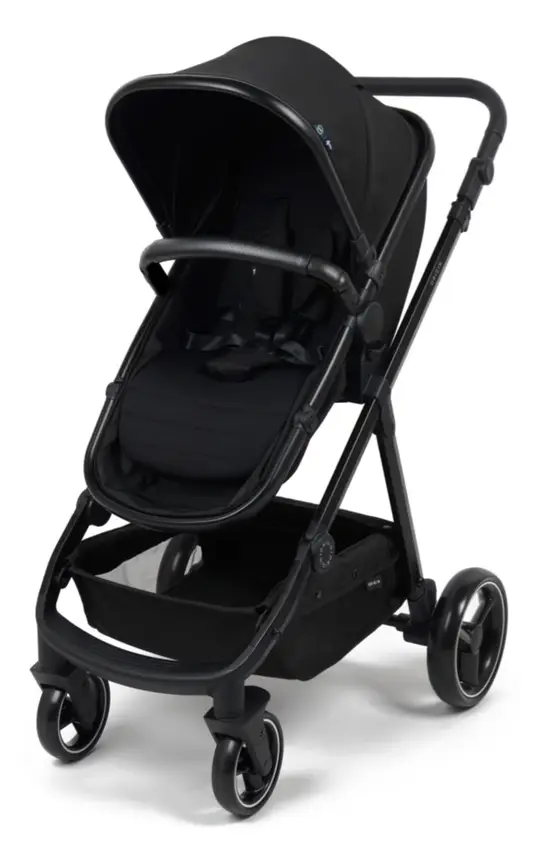
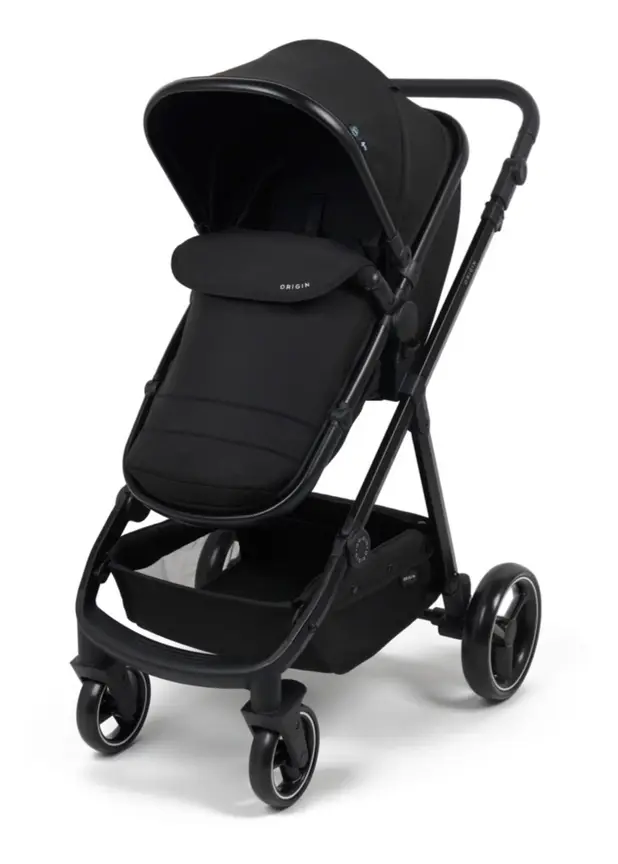
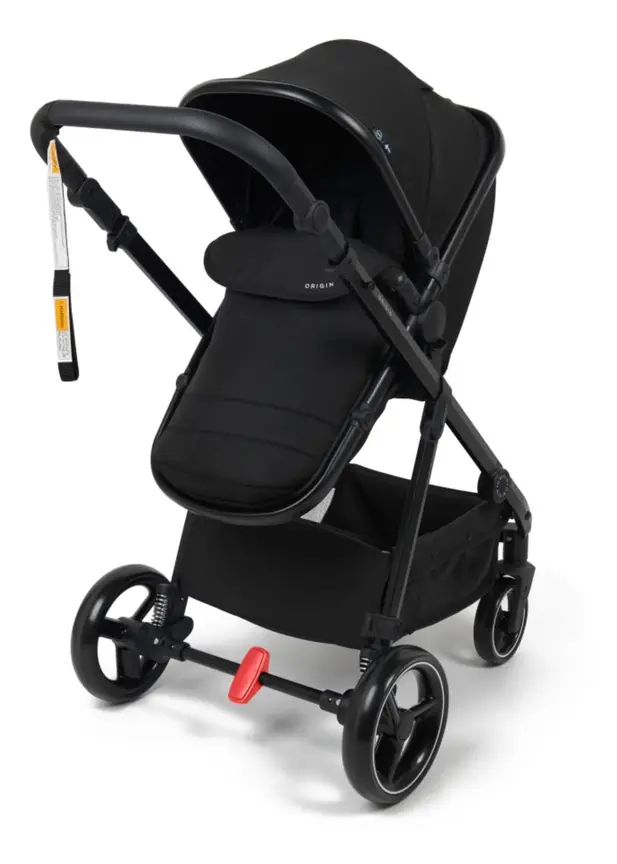
4baby Origin Stroller
A budget pram whose seat turns into a bassinet. The seat can face you or face the world.
Read our full review →
Baby Jogger City Mini GT2
Long-running, lighter all-terrain stroller with a famously simple one-hand strap fold.
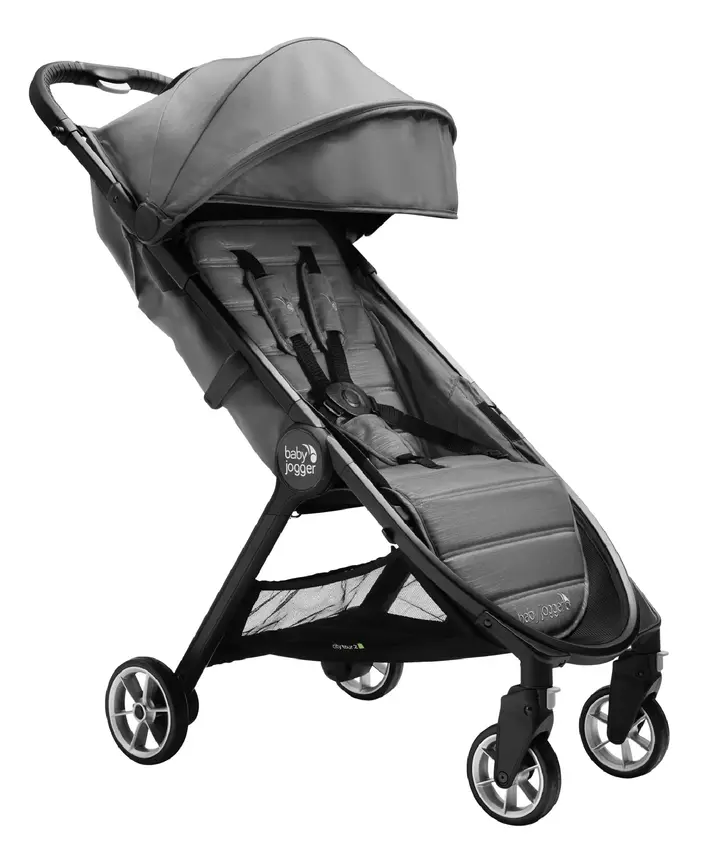 Reviewed
Baby Jogger City Tour 2
A 6.5 kg stroller with a near-flat recline. It folds small and comes with a carry bag.
Read our full review →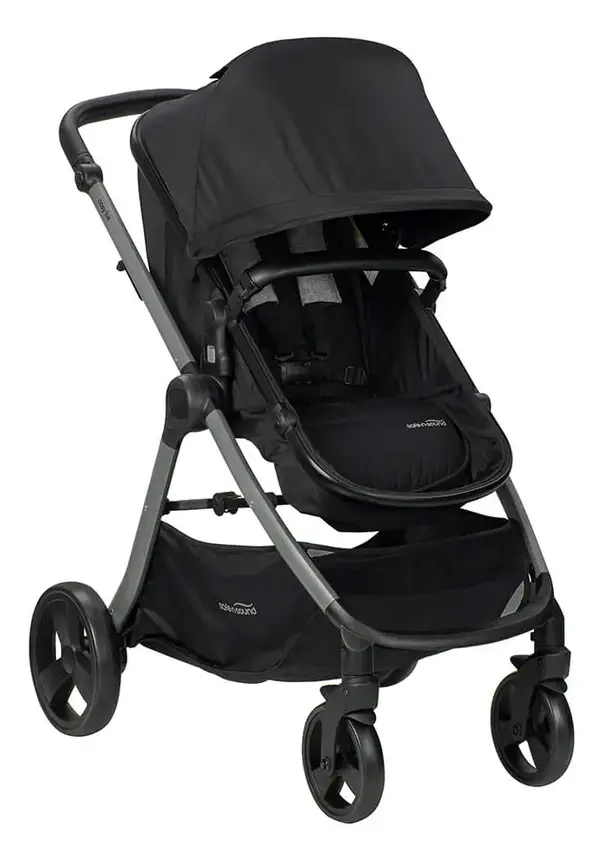
Why airflow matters as much as shade
Shade stops direct sun, but it does not automatically keep a stroller cool. Babies cannot cool themselves down as well as adults can. They do not sweat as effectively, so their body temperature can rise quickly in warm weather.
When a stroller hood is closed tight with no air vents, warm air gets trapped around your baby. Even on a mild day, the air inside an enclosed stroller can get much hotter than the air outside. This puts your baby at risk of overheating and heat stress.
Why you should never drape a blanket over a stroller
Many parents drape a muslin wrap, towel, or light blanket over the front of a pram to block the sun or help a baby sleep. Safety groups across Australia, the UK, the US and Canada strongly warn against this.
Even a thin cotton cloth blocks air movement. It turns the inside of the stroller into a small, stuffy tent. Temperature inside can climb fast, and you cannot easily see your baby's face to check if they are flushed or sweating.
Instead of draping a cloth over the opening, use a built-in extendable canopy with mesh vents. You can also turn the stroller handle or seat so the sun is behind the hood, or walk on the shady side of the street.
What good stroller ventilation looks like
A well-designed sun canopy balances deep shade with steady airflow. Look for these features when checking a pram or stroller:
- Side or back mesh panels: zip-open or fold-back panels let fresh air flow through the hood without letting direct sun hit your baby's face.
- Open front gap: the canopy should shield your baby's body while leaving open air space around the front and sides.
- Breathable seat fabric: light, airy seat liners help sweat evaporate from your baby's back.
- Removable rear flap: on hot days, rolling up the back panel of a bassinet or seat lets a breeze pass right through.
Signs your baby is getting too hot
Check your baby often during warm walks. Touch the back of their neck or their tummy to feel their temperature. Hands and feet often feel cool even when a baby's core is too warm, so do not rely on hands alone.
Watch for warning signs of overheating:
- Sweating or damp hair around the forehead and neck.
- Red, flushed cheeks or chest.
- Fast breathing or restlessness.
- A baby who seems unusually floppy, drowsy, or hard to wake.
If you notice these signs, move to a cool, shady place right away. Take off extra layers, offer breastmilk or formula (or water if your baby is over 6 months), and cool their skin gently with a damp cloth.
Peek-a-boo windows: magnetic, zip, or hook-and-loop
A peek-a-boo window is a small viewing panel built into the top or back of the stroller canopy. It has a fabric flap on the outside that you can lift up to look in at your baby while you push.
When a stroller seat faces forward, you cannot see your baby's face from behind the handle. A peek-a-boo window lets you check if your baby is asleep, calm, or slipping down in the harness without stopping and walking around to the front.
Why magnetic closures are popular
Stroller makers use three main ways to hold a peek-a-boo flap closed: magnets, hook-and-loop strips (often called Velcro), and zips. Each one feels very different in daily life.
Magnetic flaps have small magnets sewn inside the fabric hem. When you lift the flap, it opens silently. When you let it go, it drops back into place with a soft click or no sound at all. For parents walking with a light sleeper, silent opening is a huge help.
Hook-and-loop strips make a loud ripping sound every time you peel them open. That sharp noise can startle a newborn or wake a baby who just fell asleep. Hook-and-loop strips can also wear out over time or catch on knitwear and muslin wraps.
Zippered windows are quiet if you pull them slowly, and they stay shut in strong wind. However, you often need two hands to unzip and zip them back up, and metal zip pulls can rattle.
Mesh vs clear plastic peek-a-boo windows
The window itself is usually made from either dark mesh or clear plastic (vinyl). Both have clear pros and cons.
Mesh peek-a-boo windows:
- Let hot air rise and escape through the top of the canopy.
- Do not turn yellow, crack, or fog up over time.
- Filter out some glare while still letting you see your baby clearly.
- Let a tiny bit of dappled light through when the flap is open, so keep the flap closed in direct sun.
Clear plastic peek-a-boo windows:
- Block wind and light rain when the flap is open.
- Give a clear view of your baby's face.
- Trap heat inside the canopy because air cannot pass through plastic.
- Can let UV rays pass right through unless the plastic is specially treated.
- Can crack, crease, or turn cloudy after months in the sun.
Magnet safety in stroller canopies
Small, loose magnets are a serious swallowing hazard for babies and young children. If a child swallows more than one strong magnet, the magnets can stick together inside the tummy and cause life-threatening injuries.
In a quality stroller, canopy magnets are sewn firmly inside strong fabric pockets. Even so, check the flap seams every few months. If the stitching comes loose or you can feel a magnet shifting near a torn edge, stop using that flap and repair or replace the canopy right away.
Comparing stroller sun canopies and shade add-ons
Not all stroller shade options work the same way. Some come built into the pram, while others clip on later. This table compares the main choices side by side.
| Shade option | UV protection | Airflow | Ease of use | Safety notes |
|---|---|---|---|---|
| Built-in extendable UPF 50+ canopy | High, when pulled all the way forward | Good, if it has mesh vents or open sides | Very easy, folds with the stroller | Check that side gaps do not let low sun in |
| Standard short built-in hood | Low to medium, leaves legs and face exposed | Very good, open front | Easy, always attached | Often needs a sunhat or shady route |
| Breathable mesh clip-on sun cover | Medium to high, check the label | Good, air passes through fine mesh | Takes a minute to fit and remove | Make sure it fits snugly with no loose cords |
| Clip-on stroller parasol or umbrella | Medium, only shades a small spot | Excellent, completely open around baby | Needs adjusting every time you turn | Keep the metal spokes away from baby's hands and eyes |
| Draped blanket or muslin wrap | Low to medium, varies by weave | Very poor, traps hot air inside | Quick to throw on, blows off in wind | Unsafe, raises risk of overheating and hides baby |
What to check before you buy a stroller canopy
A stroller hood can look big in a shop and still fall short outside in bright sun. Use this checklist when testing a pram or reading product details.
1. How far forward the hood reaches
Pull the canopy all the way forward in the shop. Does it stop above the baby's head, or does a zip-out panel extend down past the bumper bar? A multi-stage or extendable hood gives far better cover when your baby is reclined for a nap.
2. Rear-facing and forward-facing use
Many prams let you turn the seat to face you or face the world. Test the canopy in both positions. Facing you helps you shield your baby from wind and glare, and you can watch their face without a window. Facing forward lets older babies look around, so a quiet peek-a-boo window becomes much more useful.
3. Genuine UPF 50+ fabric
Look for a clear UPF 50+ label from the maker, not just vague words like "sun shade" or "UV cover". In Australia and New Zealand, sun-protective textiles are tested under standard AS/NZS 4399. While prams themselves follow stroller safety standards, good canopy makers test their hood fabrics to the same UPF rules.
4. Fabric colour and weave
Hold the canopy fabric up to a bright shop light. If you can see a lot of light shining through tiny pinholes in the weave, UV rays can get through too. Tightly woven fabrics block more UV.
Dark colours like black or navy absorb more UV than very pale colours, which helps block rays. At the same time, dark fabric can feel slightly warmer to the touch in direct sun. A medium or dark UPF 50+ fabric paired with good mesh vents and a light-coloured inner lining gives a great balance.
5. Wind stability and clips
Push the stroller and gently wiggle the hood. A floppy canopy can blow backwards in a gust of wind and leave your baby in full sun. Look for sturdy hood ribs that click firmly into place. If you buy an add-on sun shade, check that its straps stay tight and cannot dangle near your baby's neck.
6. Washable, wipe-clean fabric
Canopies pick up dust, sunscreen marks, and sticky fingerprints. Check if the hood fabric unzips or unclips for gentle washing, or if it wipes clean easily with warm soapy water. Avoid harsh bleach, which can break down UV-blocking fibres over time.
Side by side: more prams & strollers to compare
Real products from our catalogue. We don't show star ratings or review counts; check the current price, stock and reviews on Amazon before you buy.


Jengo Eden Compact Stroller
A budget compact stroller from birth to 22 kg. It folds with one hand and has a big basket.
Read our full review →
Joie Nitro Stroller
A light, low-cost umbrella stroller with a flat recline, so it works from birth.
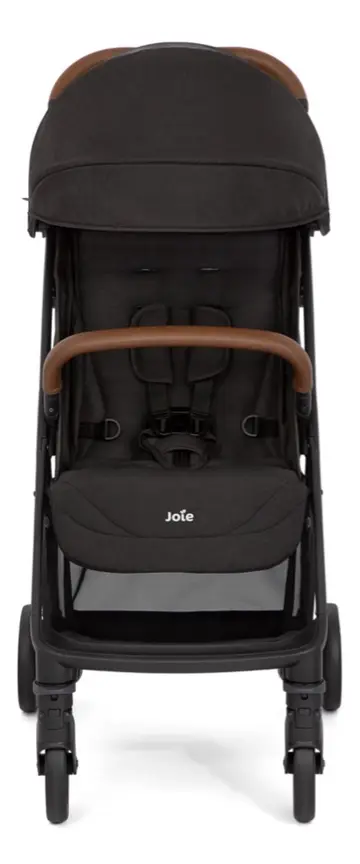
Joie Pact Pro
A 6.3 kg travel stroller from birth to 22 kg. You can clip a Joie Gemm or i-Gemm capsule on top.


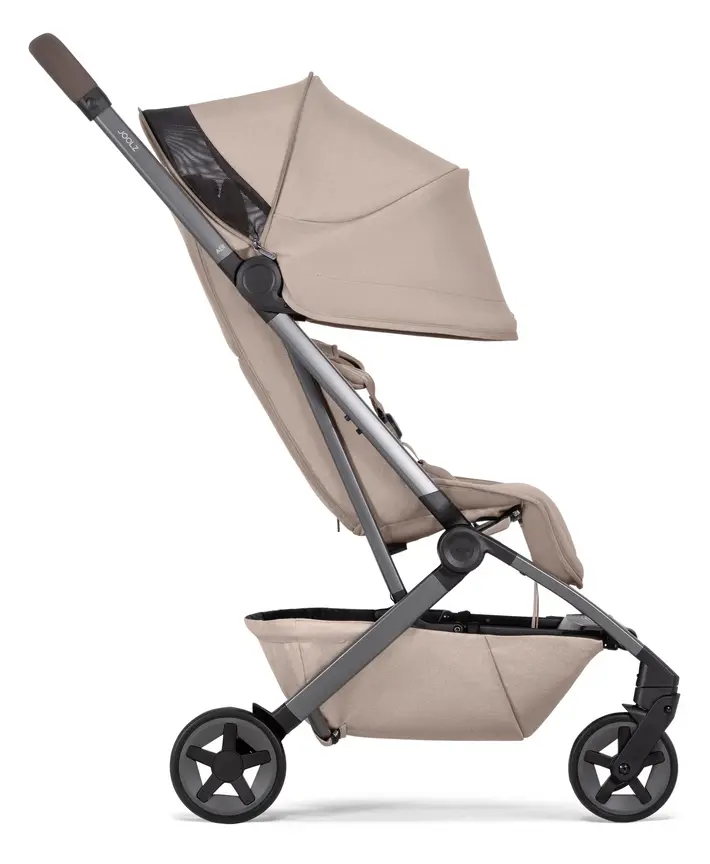


Joolz Aer2
A 6.5 kg stroller with a fast one-hand fold, deep recline from newborn and a UPF50+ sun hood.
Read our full review →Sun and stroller safety by baby age
Your baby's sun protection needs change fast in the first three years. What works for a tiny newborn lying flat will not be enough for an active toddler climbing in and out of the stroller.
| Age stage | How baby travels | Best canopy and sun steps |
|---|---|---|
| Birth to 6 months | Flat in a bassinet or fully reclined seat, usually facing parent | Use a deep UPF 50+ hood with open mesh vents. Keep baby out of direct sun. Dress in light, long-sleeve cotton layers. No sunscreen unless advised by a doctor. |
| 6 to 12 months | Sitting upright or semi-reclined, often facing forward | Use the extendable canopy and magnetic peek-a-boo window. Add a soft, wide-brimmed sunhat. Apply baby-safe broad-spectrum sunscreen to exposed skin like hands and cheeks. |
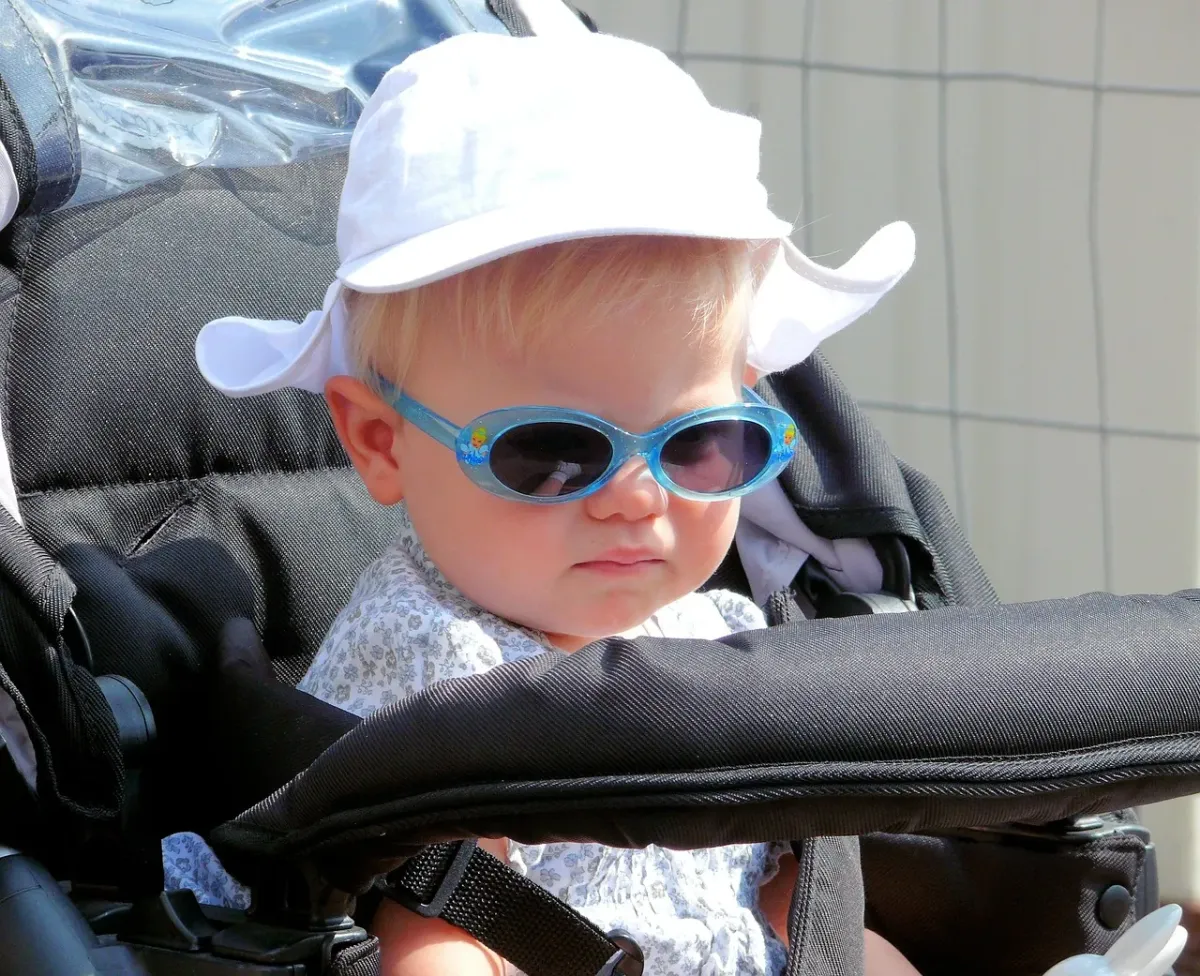
| 1 to 3 years | In and out of the stroller to walk and play | Keep the canopy up during stroller naps. Put on a legionnaire or wide-brimmed hat and wrap-around sunglasses before lifting your child out into the sun. |
Choosing hats and sunglasses for stroller rides
When your baby sits upright, the canopy often misses their knees, arms, and chin. A soft, broad-brimmed or legionnaire-style hat shades the face, ears, and back of the neck. Look for a soft brim that does not push awkwardly against the back of the stroller seat.
Be careful with chin straps on baby hats. Long, loose ties can be a strangulation risk if they catch on stroller parts. Choose hats with a soft, short elastic strap or a breakaway toggle, and take hats off for sleep.
Baby sunglasses with a soft strap can protect young eyes from bright glare. In Australia and New Zealand, look for sunglasses that meet standard AS/NZS 1067 or AS/NZS 1067.1, or ISO 12312 internationally, which ensures proper UV filtering.
Official sun and stroller advice in Australia, the UK, the US and Canada
Stroller safety rules and sun health advice are very similar across Australia, the UK, the US and Canada. Official bodies in all four countries stress two main ideas: keep young babies out of direct sun, and keep airflow clear inside the pram.
| Country | Sun and heat health bodies | Product safety and stroller standards | Key guidance for parents |
|---|---|---|---|
| Australia | Cancer Council Australia, SunSmart, Pregnancy, Birth and Baby, Red Nose | Product Safety Australia (ACCC), stroller standard AS/NZS 2088, UPF standard AS/NZS 4399 | Keep babies under 12 months out of direct sun when UV is 3 or higher. Never cover a pram with a blanket or wrap. Use shade, clothing, hats, and sunscreen from 6 months. |
| UK | NHS, The Lullaby Trust | Office for Product Safety and Standards (OPSS), stroller standard BS EN 1888 | Keep babies under 6 months out of direct strong sunlight. Attach a parasol or sunshade that lets air circulate, not a blanket. |
| US | American Academy of Pediatrics (AAP / HealthyChildren.org) | U.S. Consumer Product Safety Commission (CPSC), stroller standard ASTM F833 | Keep infants under 6 months out of direct sunlight under a canopy, tree, or umbrella. Dress in light clothing that covers arms and legs. |
| Canada | Canadian Paediatric Society (Caring for Kids) | Health Canada | Keep babies under 1 year out of direct sun. Use a stroller canopy, shade, hats, and protective clothing. Avoid sunscreen under 6 months. |
Notice how every country backs up the same core rule. A stroller canopy is great for blocking UV rays, as long as air can still move freely around your baby. Whenever you buy a pram or an add-on shade, check that the stroller meets your country's safety standard (AS/NZS 2088 in Australia, BS EN 1888 in the UK, ASTM F833 in the US, or Health Canada rules in Canada).
Common mistakes to avoid with stroller sun shades
Even careful parents can make small mistakes that reduce sun safety or raise heat inside a stroller. Here are the most common traps and how to avoid them.
1. Leaving the plastic rain cover on in sunny weather
A clear plastic rain cover is made for wind and rain, not sun. Leaving it on during a sunny or warm walk turns the stroller into a greenhouse. Heat builds up in minutes, and clear plastic does not block all UV rays. Take the rain cover off as soon as the rain stops.
2. Forgetting that UV is high on cloudy days
Clouds block heat and brightness, so a breezy, overcast day feels cool. Yet UV rays still pass through light cloud cover. Keep the UPF 50+ canopy pulled forward even when the sky looks grey, especially between late morning and mid-afternoon.
3. Ignoring the gap at the bottom of the seat
A stroller hood mostly shades the upper body. When a baby kicks off their socks or wears shorts, their lower legs and feet often stick out into direct sun. Dress your baby in light, long cotton pants or pull a breathable canopy extension down further if your stroller has one.
4. Walking at peak UV times without extra cover
UV levels are strongest in the middle of the day. If you can, plan longer stroller walks for early morning or late afternoon. When you do go out around midday, stick to shady paths under trees or verandas so the stroller canopy does not have to do all the work alone.
5. Letting add-on clips or straps dangle
Universal clip-on shades and toy straps can add extra loops inside the stroller. Keep any cords, straps, or clips short and secured to the outside of the frame. Never leave loose fabric or long straps inside the bassinet or seat where a baby could pull them over their face.
6. Skipping the 5-point harness under the shade
When a deep canopy hides a baby from view, it is easy to forget to fasten the shoulder straps on a quick trip. Always buckle the full harness whenever your baby sits in a stroller, and use the peek-a-boo window to check they are still sitting safely.
More options, from budget to premium
Real products from our catalogue. We don't show star ratings or review counts; check the current price, stock and reviews on Amazon before you buy.


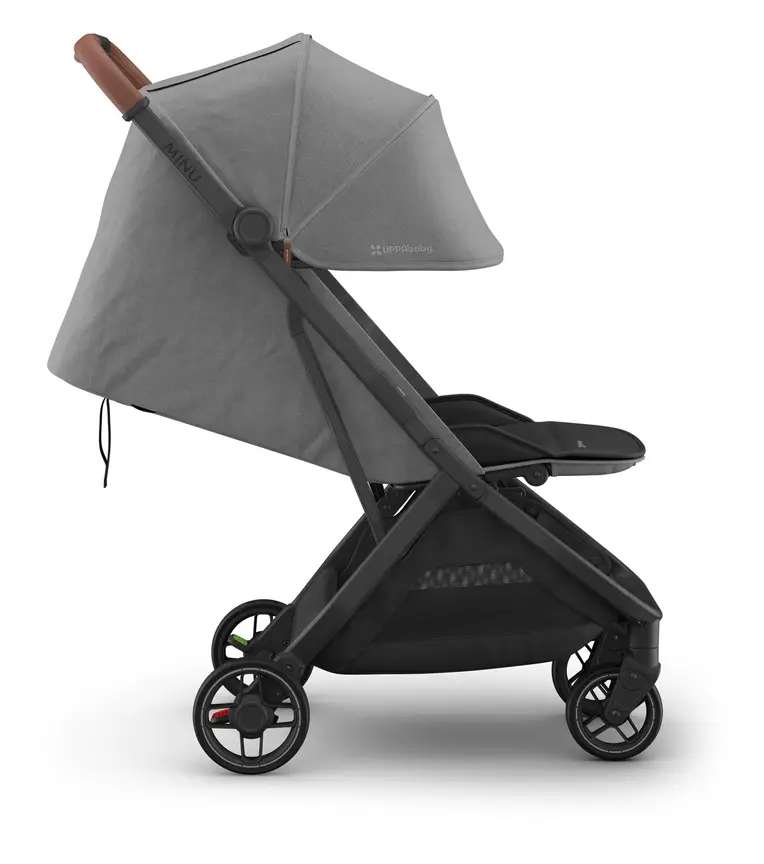


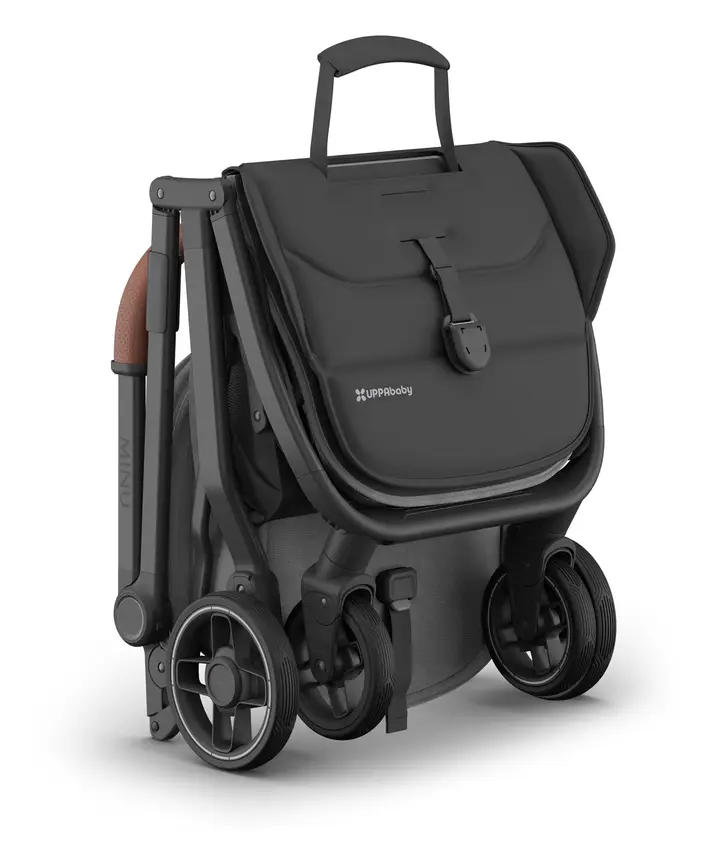
UPPAbaby Minu V3
A slim travel stroller that folds with one hand, stands on its own and is sized for plane overhead lockers.
Read our full review →
Frequently asked questions
Can I drape a muslin wrap over the stroller for extra shade?
No. Even a thin muslin wrap blocks airflow and traps heat around your baby. It also hides your baby from your sight, so you cannot spot signs of heat stress. Use the stroller's built-in UPF 50+ canopy with open mesh vents instead, or move into natural shade.
Is a dark canopy hotter than a light canopy?
A dark fabric can absorb more warmth from direct sunlight on its outer surface. However, dark fabrics also tend to block UV rays very well. The biggest factor for your baby's comfort is airflow, not fabric colour. A dark UPF 50+ canopy with large mesh side vents will stay much cooler inside than a pale canopy with no vents at all.
Do clear plastic peek-a-boo windows block UV rays?
Not always. Standard clear vinyl or plastic can let UV rays pass through onto your baby's face, and it traps warm air underneath. Always keep the fabric flap closed over a plastic window when walking in direct sun, and only lift it briefly to check on your baby.
Are magnetic peek-a-boo windows safe for babies?
Yes, as long as the magnets stay completely sealed inside the canopy fabric. Magnetic closures are helpful because they open silently without waking a sleeping baby. Check the stitching around the magnets now and then. If the fabric ever tears and a magnet feels loose, stop using the canopy until it is fixed.
Does my baby still need sunscreen and a hat under a UPF 50+ canopy?
Babies under 6 months should stay out of direct sun and usually should not wear sunscreen unless a doctor recommends it. For babies 6 months and older, a broad-brimmed hat and sunscreen on exposed skin (like hands, cheeks, and feet) are still needed. UV rays bounce off paths and walls into the stroller, and your baby will also spend time out of the seat.
How do I know if a stroller canopy is really UPF 50+?
Check the sewn-in care label inside the hood or the maker's manual for a clear UPF 50+ statement. In Australia and New Zealand, look for testing linked to AS/NZS 4399. You can also do a quick light check: hold the fabric up to a bright window or lamp. If lots of light dots shine straight through the weave, the fabric will not block UV well.
What if my stroller only has a short hood?
If your stroller has a short canopy, you can improve shade safely without blocking air. Turn the seat to face away from the sun, walk on shady streets, or attach a clip-on parasol high above the seat so air flows freely. You can also use a fitted, breathable mesh sun cover made specifically for your stroller model, making sure it leaves air gaps and has no loose cords.
Sources
- Cancer Council Australia – Fact sheet: Sun protection and babies
- Pregnancy, Birth and Baby – Sun and heat protection for babies and kids
- Product Safety Australia – Prams and strollers guide
- NHS – Sunscreen and sun safety
- NHS – Heatwave: how to cope in hot weather
- American Academy of Pediatrics (US) – Sun safety: information for parents
- Caring for Kids (Canadian Paediatric Society) – Sun safety
Related guides
More Prams & Strollers →
Newborn Bassinet vs Reclined Pram Seat: Keeping Your Baby's Airway Safe

Stroller Parasols vs. Sun Sails: How to Shade Your Baby Without Trapping Heat
Stroller Ride-On Boards: How to Choose a Safe Fit for Your Toddler
