













Self-Standing Fold Strollers: Keeping Handlebars and Canopies Off Dirty Floors
How self-standing fold strollers keep handlebars and canopies off wet or dirty floors, what to check in-store, and safety rules in AU, UK, US and Canada.

On this page
- Key points
- What a self-standing fold stroller is
- How different folds protect handlebars and canopies
- Side-by-side comparison of stroller fold styles
- What to check before you buy
- Safety standards in Australia, the UK, the US and Canada
- Age stages and how your needs change
- Keeping handlebars and canopies clean on the go
- Common mistakes parents make
- Frequently asked questions
- Sources
Short answer: A self-standing fold stroller balances upright on its wheels or a built-in stand when folded. This keeps the handlebar and sun canopy (hood) off wet car parks, muddy paths, and public toilet floors. For the cleanest fold, pick an inward fold where the seat fabric tucks inside the frame. Always check that the stroller meets safety rules in your country and has a firm automatic lock.
Safety advice for prams and strollers is similar across Australia (Product Safety Australia and Kidsafe), the UK (Office for Product Safety and Standards and RoSPA), the US (CPSC and the American Academy of Pediatrics), and Canada (Health Canada).
Key points
- Stands upright: Only the tyres or small plastic feet should touch the ground when folded.
- Handlebar height: A good standing fold holds the push bar well above puddles and grime.
- Inward vs outward fold: Inward folds hide the seat and canopy inside. Outward folds leave fabric facing out.
- Auto-lock matters: A frame must click shut on its own so it does not spring open when you lift it.
- Flat ground only: Even a standing stroller can tip over on a steep driveway, a bumpy kerb, or in strong wind.
- Hands-free check: Test the fold in a shop with one hand while holding a bag.
- Check recalls: Always check official recall lists before buying any new or second-hand stroller.
What a self-standing fold stroller is
Many older strollers collapse into a flat heap on the ground. When you fold them in a car park, the handlebar often drops straight onto the concrete. The sun canopy (the fabric hood that shades your baby) can also drag in oil, water, or dirt.
A self-standing fold stroller is built to stay upright after you fold it. Once the frame locks, it rests on its back wheels, front wheels, or a small plastic stand. You do not need to lean it against a dirty wall or lay it flat on a wet floor.
Why does this matter in daily life? Think about where parents actually fold a stroller:
- Next to the car boot in a rainy shopping centre car park.
- Inside a small public toilet cubicle while holding a toddler.
- At a busy cafe doorway where floor space is tight.
- Inside a narrow front hallway at home on a muddy day.
- Beside bus or train seats during the morning rush.
In all these places, the ground is rarely clean. Your hands touch the handlebar every time you push your child. Your baby sits right under the canopy and often touches or chews the fabric edges. Keeping those parts off the floor saves you time cleaning and helps keep germs away from your child.
How the standing balance works
Strollers stand in a few different ways. Some balance on all four wheels with the seat tucked between them. Others rest on the rear tyres plus a small bumper bar or plastic foot on the chassis (the main metal frame). A few compact travel strollers fold into a small rectangle and stand on one edge of the frame.
Not every standing fold is equally stable. A wide base with four points touching the floor usually stands steadier than a narrow two-wheel balance. Heavy items left in the under-seat basket can also shift the weight and make a folded stroller tip forward.
Prams & Strollers worth a look
Real products from our catalogue. We don't show star ratings or review counts; check the current price, stock and reviews on Amazon before you buy.

Baby Jogger City Mini GT2
Long-running, lighter all-terrain stroller with a famously simple one-hand strap fold.
 Reviewed
Baby Jogger City Tour 2
A 6.5 kg stroller with a near-flat recline. It folds small and comes with a carry bag.
Read our full review →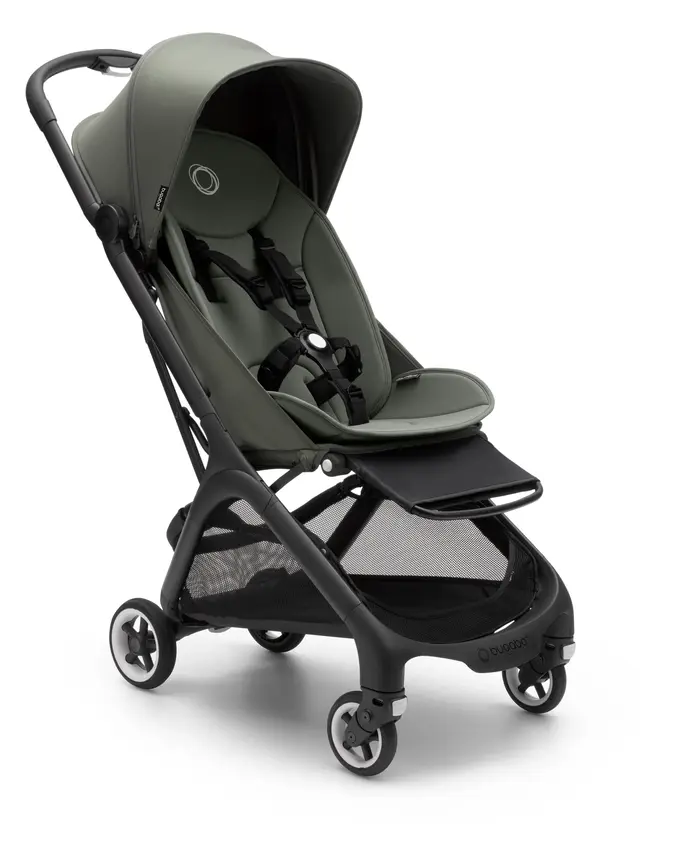


Bugaboo Butterfly
Bugaboo's cabin-friendly compact stroller with a one-second fold — the travel partner to a Fox, not a replacement for it.
Bugaboo Butterfly 2
The newer Butterfly. It folds in about one second, has a lay-flat seat and a bigger basket with a back pocket.
Read our full review →How different folds protect handlebars and canopies
Not all folding strollers treat your fabric and push bar the same way. Understanding the main fold types helps you spot dirt traps before you buy.
1. Inward fold (clam-shell fold)
In an inward fold, the seat and backrest fold together like a closed book. The fabric where your baby sits stays on the inside. The sun canopy usually tucks between the frame tubes.
When this style stands up, the outer frame and tyres take the dirt. The seat cushion, harness straps, and canopy stay protected inside. Most inward-fold strollers hold the handlebar upright at waist or knee height, far away from puddles.
2. Outward fold
In an outward fold, the seat folds the other way. The seat fabric and canopy stay on the outside of the folded bundle. If the stroller stands upright on its wheels, the fabric stays off the floor.
However, if it tips over or leans against a wall, the seat and hood touch the dirty surface first. If you lay an outward-fold stroller in a muddy car boot, the dirt goes straight onto the seat pad.
3. Flat fold (non-standing)
Many full-size prams and running strollers fold flat without a standing lock. When you set them down, the handlebar foam or leatherette wrap often rests directly on the ground. Some makers add small plastic bumpers to the handlebar to lift it a centimetre off the floor. Even with bumpers, deep puddles or gravel can still reach the grip and canopy.
4. Umbrella fold
Umbrella strollers fold long and thin, like a large rain umbrella. Most cannot stand on their own. You have to lean them against a wall, a bench, or your leg. Because they are top-heavy, they often slide down and land on the handlebar or canopy.
A few umbrella strollers have a small stand or wide rear wheels that let them balance briefly. Even then, a light bump can knock them over.
5. Compact cabin-style fold
Travel strollers often fold twice or three times into a small square. Many of them stand upright on their rear wheels and a frame bar. Because they are small and light, the handlebar sits closer to the ground than on a full-size pram. Check carefully that the handlebar grip does not touch the floor when it is folded.
Side-by-side comparison of stroller fold styles
This table shows how the main fold styles compare for cleanliness, balance, and daily use.
| Fold style | Stands on its own? | Handlebar stays off floor? | Canopy stays clean? | Best for |
|---|---|---|---|---|
| Self-standing inward fold | Yes, usually steady on wheels or stand | Yes, held high on most models | Yes, tucks inside the frame | Wet car parks, small cafes, public toilets |
| Self-standing outward fold | Yes, while upright | Usually yes, check grip height | Only while upright; exposed if it tips | Quick boot loading on dry ground |
| Flat fold (no stand) | No, must lie flat or lean | Often touches ground unless bumpers help | Can drag on ground when set down | Large car boots and home garages |
| Umbrella fold | Rarely; usually needs a wall | Often slides and hits the floor | Canopy can touch walls or ground | Quick dry trips if you carry a hook or bag |
| Compact travel fold | Often yes, on wheels or frame edge | Usually yes, though sits lower | Depends on whether it folds inward | Airports, buses, and tight spaces |
What to check before you buy
Shop floors are flat, dry, and clean. A car park in the rain is not. Use this step-by-step check in the store to see how a stroller really behaves.
- Do the one-hand test. Hold a heavy handbag or nappy bag in one arm. Try to fold the stroller with your other hand. Many parents fold a stroller while holding a baby on one hip.
- Watch where the handlebar goes. As the frame collapses, watch the push bar. Does it swing down towards the floor first, or stay up high? Some strollers dip the handlebar close to the ground mid-fold before locking upright.
- Look at the contact points. Crouch down once the stroller is folded. Only the tyres and hard plastic frame feet should touch the carpet. If fabric, leatherette, or foam touches the floor, it will get wet outside.
- Check the canopy length. Pull the sun canopy all the way out, then fold the stroller. Many canopies stay clean when pushed back, but drag on the ground if you forget to close them first.
- Test the gentle nudge. Give the standing folded stroller a light tap with your foot. Does it wobble and fall over, or settle back onto its wheels? A stroller that tips from a tiny bump will fall in a busy car park.
- Check the automatic lock. A frame lock should click into place by itself when folded. Lift the stroller by the carry handle. If the frame starts to open, the lock is weak or manual.
- Try both seat directions. If the seat can face you or face forward, fold it both ways. Many strollers only stand properly when the seat faces forward.
- Test the brakes before folding. Check that the rear brake is easy to lock with closed shoes or sandals. You should always lock the brake before folding on a slope.
Extra features that help keep gear clean
A few small design details make a big difference on wet days:
- Rubber frame bumpers: Hard plastic or rubber caps on the fold edge stop metal tubes from scratching and keep handles off puddles.
- Wipeable handlebar covers: Faux-leather or sealed rubber grips wipe clean faster than porous foam, which soaks up water and grime.
- Zip-off canopy fabric: Canopies you can unclip or unzip are much easier to wash after a messy outing.
- Included carry strap or bag: A shoulder strap lets you lift a folded stroller straight over wet kerbs without dragging it.
Safety standards in Australia, the UK, the US and Canada
Cleanliness is helpful, but child safety always comes first. A stroller must have safe hinges, strong brakes, and a secure harness. Never buy a stroller just for its fold if it fails basic safety checks.
Here is how the four countries regulate prams and strollers.
Australia
In Australia, Product Safety Australia (part of the Australian Competition and Consumer Commission, or ACCC) enforces the mandatory safety standard for prams and strollers. The technical standard is AS/NZS 2088.
Key rules under Australian law include:
- A parking brake that locks at least two wheels (or the main wheels) and is coloured red so it is easy to spot.
- A tether strap (wrist strap) attached to the handle so the stroller cannot roll away from you on a slope or near traffic.
- A five-point harness (straps over both shoulders, around the waist, and between the legs) to stop a child from climbing out or slipping down.
- Two separate actions (or a child-resistant lock) to fold the frame, so a child cannot collapse it by accident.
- Warning labels and clear locks to prevent finger traps in folding hinges.
Kidsafe Australia also reminds parents never to leave a child unattended in a stroller and always to use the harness, even for short walks.
United Kingdom
In the UK, the Office for Product Safety and Standards (OPSS) oversees product safety. Pushchairs and prams are tested against BS EN 1888. This standard covers frame strength, wheel brakes, stability so the stroller does not tip easily, and safe gaps so small fingers do not get trapped.
The Royal Society for the Prevention of Accidents (RoSPA) advises parents to check that locking devices click firmly into place before putting a baby inside. Always use the five-point harness and never overload the handles with heavy bags.
United States
In the US, the Consumer Product Safety Commission (CPSC) enforces federal safety rules for carriages and strollers, based on ASTM F833. This standard checks brakes, wheel strength, latch locks so the frame does not collapse, and safe openings so a baby's head or fingers cannot get stuck.
The American Academy of Pediatrics (AAP) advises parents to keep babies strapped in whenever they are in the stroller, lock the wheels whenever parked, and keep bags off the handlebar so the stroller does not tip backwards.
Canada
In Canada, Health Canada enforces federal safety rules for carriages and strollers under national consumer product safety laws. Strollers sold in Canada must pass tests for frame locks, wheel brakes, stability, and small parts that could choke a child. Health Canada also runs an online recall portal where parents can check if a model has been recalled for hinge, latch, or brake faults.
| Country | Main safety body | Stroller standard or rule | Key safety checks |
|---|---|---|---|
| Australia | ACCC / Product Safety Australia, Kidsafe | AS/NZS 2088 (mandatory standard) | Red parking brake, tether wrist strap, five-point harness, two-step fold lock |
| United Kingdom | Office for Product Safety and Standards (OPSS), RoSPA | BS EN 1888 | Frame strength, stability test, parking brake, finger-trap protection |
| United States | Consumer Product Safety Commission (CPSC), AAP | ASTM F833 (federal stroller rule) | Hinge and latch locks, wheel brakes, restraint system, no entrapment gaps |
| Canada | Health Canada | Federal carriage and stroller safety rules | Locking mechanisms, brakes, stability, harness, recall checks |
If you buy a stroller online from an overseas seller, be careful. A stroller built for one country might not include features required in another, such as Australia's mandatory wrist tether strap or red brake lever.
Side by side: more prams & strollers to compare
Real products from our catalogue. We don't show star ratings or review counts; check the current price, stock and reviews on Amazon before you buy.
 Reviewed
Bugaboo Fox 5
Bugaboo's flagship all-terrain pram: big-wheel suspension ride, one-piece fold, bassinet from birth and a seat rated to 22 kg.
Read our full review →


Jengo Eden Compact Stroller
A budget compact stroller from birth to 22 kg. It folds with one hand and has a big basket.
Read our full review →


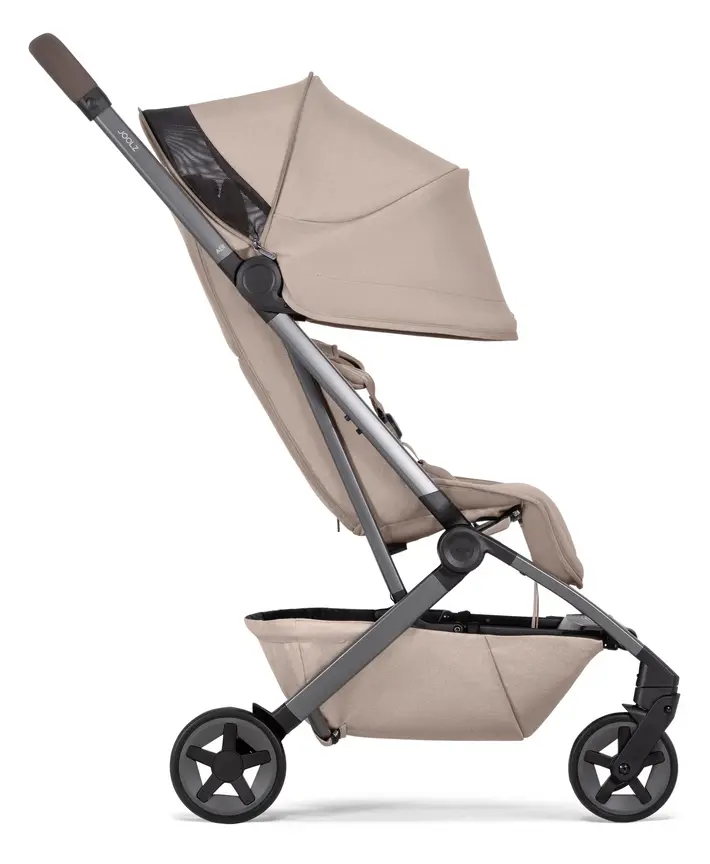


Joolz Aer2
A 6.5 kg stroller with a fast one-hand fold, deep recline from newborn and a UPF50+ sun hood.
Read our full review →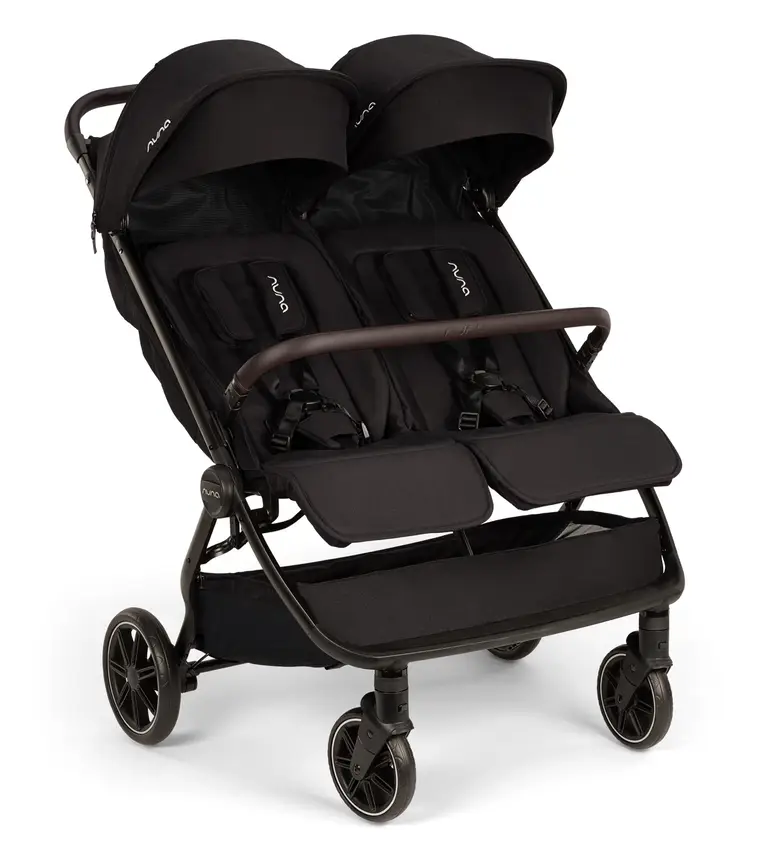


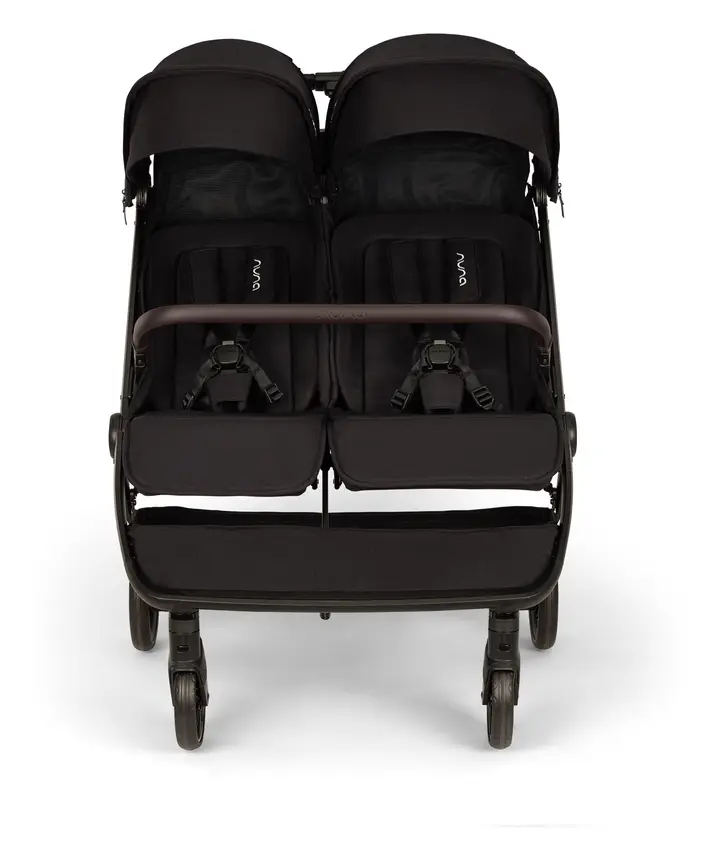


Nuna TRVL Dubl
A side-by-side double that folds with one hand and stands up. Each seat holds up to 22.7 kg.
Read our full review →Age stages and how your needs change
Your baby grows fast, and the way you use a standing fold changes at each stage.
Newborn to 6 months
Young babies have weak neck muscles and need to lie completely flat. Many parents use a bassinet (carrycot) or a stroller seat that reclines fully flat.
Here is a common surprise: most strollers with a bassinet attached cannot do a self-standing fold. You usually have to unclip the bassinet, set it somewhere clean (like on the car seat), and then fold the frame on its own. If you want a one-piece standing fold from birth, look for a stroller with a built-in lay-flat seat rather than a separate rigid bassinet.
Red Nose Australia also warns parents not to use unsafe social media hacks, such as rolling up blankets in a stroller or placing a baby on their tummy to sleep in a pram. Always follow safe sleep rules and never leave a sleeping baby alone in a stroller.
6 to 12 months
Once your baby can sit with support, you will switch to the upright stroller seat. This is when a self-standing fold shines. You do not need to take the seat off to fold the frame. You can fold the whole stroller in one piece, stand it beside the car, and buckle your baby into their car seat first.
1 to 3 years and beyond
Toddlers want to walk, then suddenly want to be carried. You will fold and unfold the stroller many times a day at shops, parks, and public toilets. A quick standing fold lets you park the stroller neatly in a corner without blocking the aisle or getting mud on the push bar.
At this age, toddlers also love to climb and grab. Always keep a folding stroller out of reach of curious hands, and never fold or unfold it while a toddler is standing close to the hinges.
Keeping handlebars and canopies clean on the go
Even with a great standing fold, messy outings happen. A few simple habits keep your stroller clean and extend its life.
- Close the canopy before folding. Fold the sun hood back towards the frame before you hit the fold button. This tucks the fabric safely out of the way.
- Lock the brake first. On even a slight slope, press the parking brake before you fold. If the wheels can roll while folded, the stroller can slide and fall onto its handle.
- Keep a small microfibre cloth in the basket. A quick wipe dries rainwater off the frame feet before you lift the stroller into your car.
- Use a removable handlebar cover. Zip-on fabric or faux-leather sleeves protect foam grips from sunscreen, sticky snacks, and dirty hands. You can take them off and wash them.
- Check the care tag on the canopy. Many sun canopies have special UV-blocking coatings. Harsh scrubbing, bleach, or hot machine washing can damage that coating and fade the fabric. Most makers suggest cool water, mild soap, and air drying in the shade.
- Dry it before storing. If the tyres or frame got wet in the rain, wipe them down and let the stroller dry open at home. Folding a wet canopy away in a dark boot can lead to mould.
Common mistakes parents make
These everyday mistakes can ruin a clean fold or create a safety hazard.
1. Trusting a standing fold on a slope or in wind
A folded stroller stands well on a flat indoor floor. Outside on a sloped driveway, a bumpy footpath, or a windy car park, it can tip over fast. If it falls, it can land on your car, smash the handlebar, or hit a child nearby. On uneven ground, hold the frame or lay it flat on a clean boot mat.
2. Leaving a heavy bag on the handlebar
Hanging a heavy nappy bag or shopping bag on the push bar makes a stroller tip backwards, both when open and when folded. Always take bags off the handle before folding. Use the under-seat basket instead, and check the basket weight limit in your manual.
3. Skipping the lock check
If the fold latch does not click all the way shut, the stroller can pop open while you carry it or pull it out of the car. Listen for the click and give the frame a gentle tug before lifting.
4. Folding near little fingers
Stroller hinges act like scissors when they close. Kidsafe Australia and RoSPA both warn about finger-trap injuries around folding baby gear. Move your baby and any older siblings well back before you release the fold latch.
5. Buying second-hand without checking recalls
A second-hand stroller might have worn-out latches, cracked plastic stand feet, or an active safety recall. Before you buy used gear, check the model name on Product Safety Australia, the UK OPSS recall list, the US CPSC website, or Health Canada's recall database. Test the brakes, harness, and standing lock in person.
More options, from budget to premium
Real products from our catalogue. We don't show star ratings or review counts; check the current price, stock and reviews on Amazon before you buy.


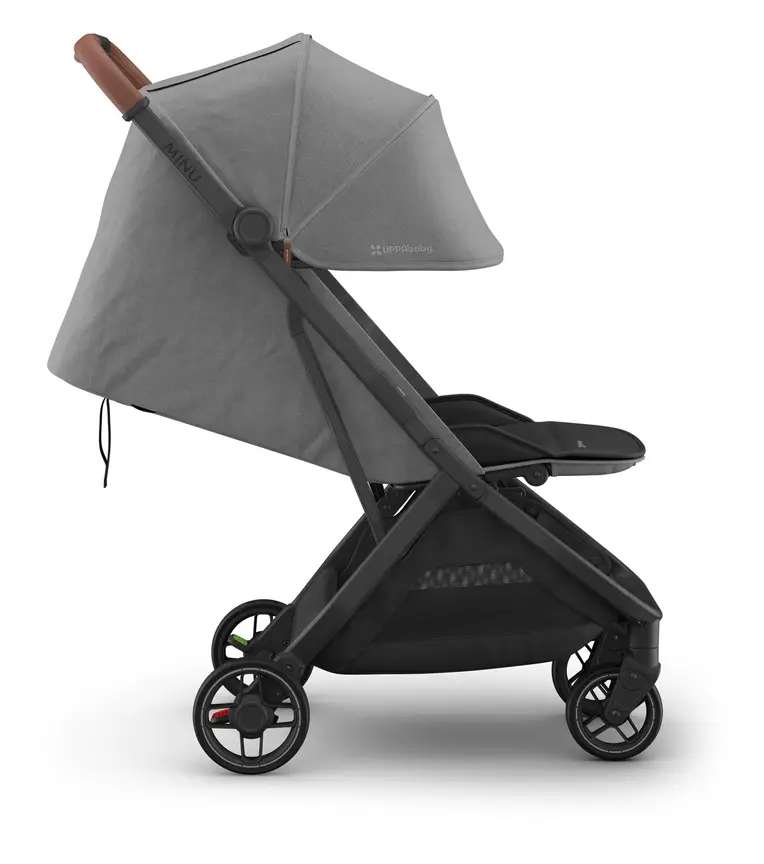


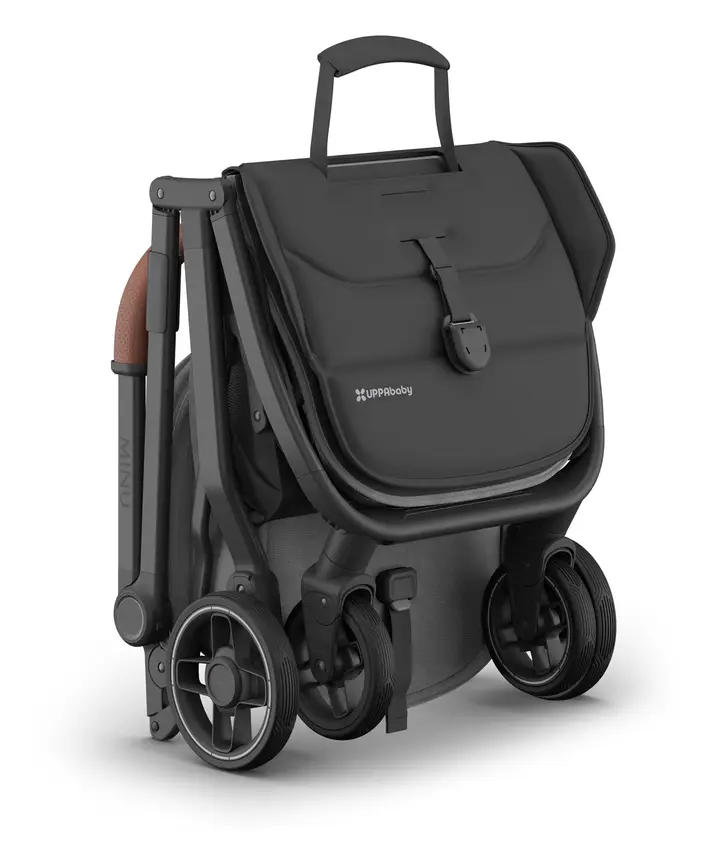
UPPAbaby Minu V3
A slim travel stroller that folds with one hand, stands on its own and is sized for plane overhead lockers.
Read our full review →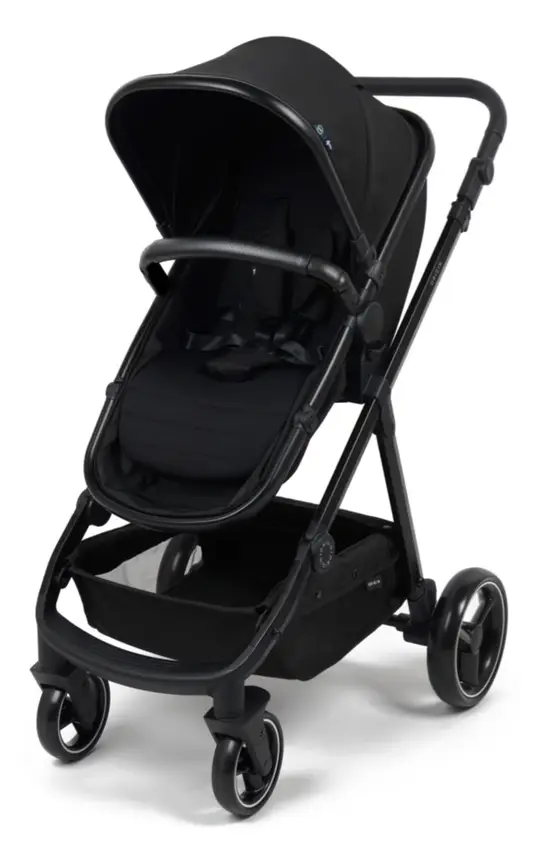
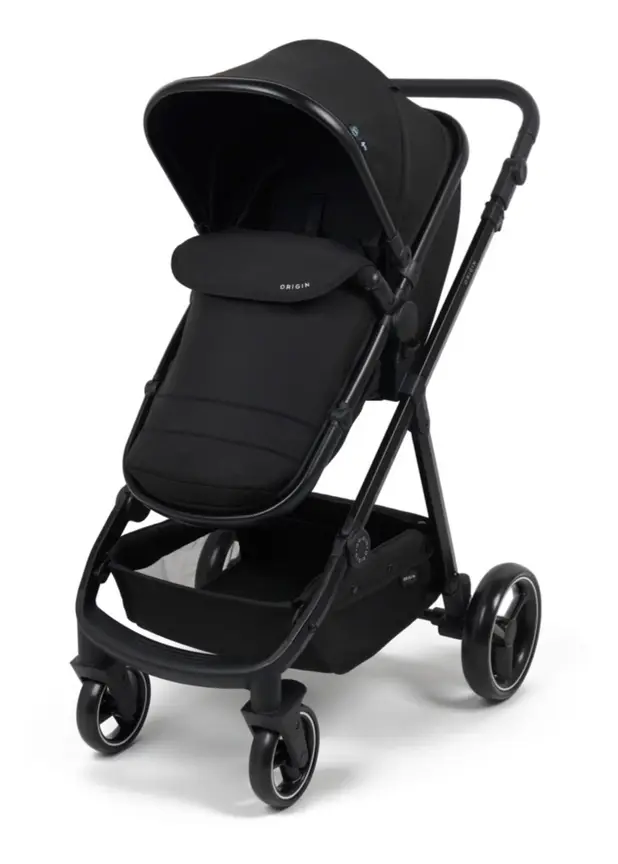
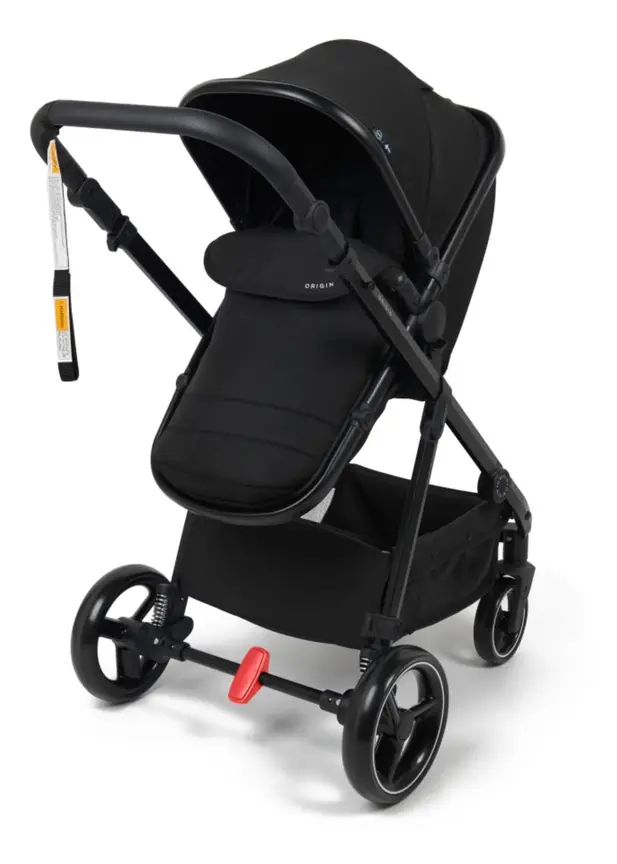
4baby Origin Stroller
A budget pram whose seat turns into a bassinet. The seat can face you or face the world.
Read our full review →
Frequently asked questions
Do all self-standing strollers stand on uneven ground?
No. Most self-standing strollers are tested on flat, level floors. Rough gravel, grass, tree roots, or sloped car parks can make them tip over. Always lock the brake first and keep a hand on the frame if the ground is not flat.
Can a self-standing stroller still tip over?
Yes. Heavy bags in the basket, wind, or a bump from a passing trolley can knock a standing stroller down. Treat the standing fold as a helpful way to keep handles clean for a minute or two, not as a permanent park on busy walkways.
Does a self-standing fold work with a bassinet attached?
Usually not. Most rigid bassinets are too long and bulky to let the frame close and lock. You normally have to take the bassinet off first, then fold the frame on its own. If you need a one-piece standing fold from birth, choose a stroller with a flat-reclining seat instead of a separate bassinet.
Is an inward fold better than an outward fold for keeping fabric clean?
Yes, in most cases. An inward fold tucks the seat cushion, harness, and canopy inside the frame. Only the tyres and outer metal tubes face the world. An outward fold leaves the seat fabric exposed to car boot dirt, walls, and wet floors if the stroller tips.
How do I clean a stroller handlebar after it touches a dirty floor?
Wipe it right away with a baby wipe or a damp cloth and mild soap, then dry it with a clean towel. Avoid strong alcohol wipes or harsh bleach on foam or faux-leather grips, as they can crack or peel the surface over time. Check your stroller manual for safe cleaning products.
Are self-standing strollers safe for newborns?
They can be, as long as the stroller is rated from birth. That means it either takes a newborn bassinet or has a seat that reclines fully flat with a safe five-point harness. Always check the age and weight label, make sure your baby's airway stays open and clear, and follow safe sleep advice from Red Nose, the Lullaby Trust, the AAP, or Health Canada.
Sources
- Product Safety Australia – Prams and strollers guide
- Product Safety Australia – Prams and strollers mandatory standard
- Kidsafe Australia – Falls
- UK Office for Product Safety and Standards
- RoSPA – Preventing accidents to children
- HealthyChildren.org (American Academy of Pediatrics) – Home safety: tips for families with young children
- Health Canada – Recalls and safety alerts
Related guides
More Prams & Strollers →
Stroller Sun Canopies and Peek-a-Boo Windows: Keeping Your Baby Safe from UV and Heat

Full-Coverage Zip-Out UPF 50+ Stroller Canopies: Side Mesh and Low Sun
Multi-Sport Bike Trailers and Cross-Country Ski Strollers: Roll Cages, Hitch Pins, and Safety Flags
