













Drawbacks of Using a Food Processor for Baby Food (And Better Ways to Mash and Blend)
A food processor can leave hidden lumps, trap food in seals, and keep babies on smooth puree too long. Learn safer, easier ways to make homemade baby food.

On this page
- Key takeaways for parents
- Why many parents reach for a food processor first
- Drawback 1: Uneven blending and hidden choking hazards
- Drawback 2: Keeping your baby on smooth purees for too long
- Drawback 3: Over-working starchy foods into glue
- Drawback 4: Heat, air, and nutrient loss
- Drawback 5: Hidden mould and bacteria traps
- Drawback 6: Hot food, plastics, and chemical safety
- Drawback 7: Extra water dilutes the nutrition
- Comparing baby food prep tools side by side
- How to prepare baby food by age and stage (without a processor)
- Introducing common allergy foods safely
- Official guidance across Australia, the UK, the US, and Canada
- If you already own a food processor: how to use it safely
- Food hygiene, cooling, freezing, and reheating rules
- Foods to avoid in the first year (no matter how you prep them)
- Common mistakes parents make when prepping baby food
- Frequently asked questions
- Sources
Short answer: You do not need a food processor to make baby food. A big food processor often leaves hidden lumps in small batches. It has lots of small parts that trap old food and bacteria. It can also tempt you to blend food too smooth for too long. Most babies only eat smooth puree for a few weeks. After that, a simple fork, potato masher, or stick blender works better and is much faster to clean.
Health authorities in Australia (National Health and Medical Research Council and Raising Children Network), the UK (NHS), the US (American Academy of Pediatrics), and Canada (Health Canada and the Canadian Paediatric Society) all give the same core advice. Start solids around 6 months. Move quickly from smooth food to mashed and lumpy textures. Always follow strict kitchen hygiene.
Key takeaways for parents
- Big bowls struggle with small meals: A standard food processor bowl is too big for one baby meal. Food flies up the sides and misses the blades.
- Hidden chunks are a choking risk: Because food sticks to the walls, unblended pieces can hide in smooth puree.
- Babies need lumps soon: Babies only need smooth puree at the very start. Staying on machine-blended puree too long can make babies fussy with textures later.
- Cleaning takes a long time: Hollow blade shafts, rubber seals, and lid locks trap wet food. Mould and bacteria grow fast in these hidden spots.
- Hot food and plastic do not mix well: Blending piping hot food in a plastic bowl can wear down the plastic and build up steam pressure.
- Simple tools win: A fork, a potato masher, a fine metal sieve, or a stick blender will handle almost every meal.
Why many parents reach for a food processor first
Making your own baby food at home is a great choice. You know exactly what goes into the bowl. You can skip added salt and sugar. You can feed your baby the same fresh food the rest of the family eats. It also costs much less than buying rows of shop-bought pouches.
When parents get ready for solid foods, they often pull out the big kitchen food processor. Some parents even buy a special baby food maker that steams and blends in one plastic jug. Marketing makes it look like babies need silky, machine-blended purees for many months.
In real life, a food processor often creates extra work. It also brings a few hidden safety and feeding drawbacks that nobody tells you about before you start weaning. Understanding these drawbacks helps you save time, keep your baby safe, and build good eating habits from day one.
Drawback 1: Uneven blending and hidden choking hazards
A standard food processor is built for big family jobs. It is made to chop a whole bowl of vegetables or mix pastry dough. The blade sits a small distance above the bottom of a wide bowl.
A 6-month-old baby eats very little at first. Often, a meal is just one or two teaspoons of food. If you put one steamed carrot or half a pear into a wide processor bowl, the spinning blade flings the food straight against the walls. The food sits above the blade and never gets chopped.
To make the machine work, you have to stop, open the lid, and scrape the sides down with a spatula. Even when you do this many times, small firm pieces often hide under the blade hub or stick to the top rim. When you scoop the puree into your baby's bowl, those hard chunks can slip in unseen.
Why surprise lumps are a problem
Babies can handle soft lumps when they expect them. Their tongue and gums know it is time to mash and chew. A surprise hard chunk hiding inside a smooth liquid puree is different. A baby sucks smooth puree straight to the back of the mouth. If a hard piece of apple or meat is hiding in that spoonful, the baby can suck it into their airway before they know it is there.
The NHS in the UK, the American Academy of Pediatrics (AAP) in the US, Raising Children Network in Australia, and Caring for Kids in Canada all warn parents to watch out for hard pieces in early food. If you blend food, always stir it well with a spoon and check it with your fingers or eyes before serving.
Drawback 2: Keeping your baby on smooth purees for too long
When you own a powerful machine, it is easy to blend every meal into a smooth soup. Babies swallow smooth puree very easily. Mealtime feels neat and quick. Because of this, many parents keep blending every meal for months.
This is one of the biggest traps in baby feeding. Smooth puree is only meant to be a very short first step. Some families skip smooth puree altogether and start with soft finger foods or mashed food.
Why texture progression matters
Moving from smooth food to mashed, lumpy, and chopped food teaches your baby how to chew. Chewing builds strong jaw and tongue muscles. Those same muscles help your baby learn to speak later on. Learning to move lumpy food around the mouth also helps prevent picky eating in toddlerhood.
Official bodies in Australia, the UK, the US, and Canada all agree on moving textures forward:
- Australia: The National Health and Medical Research Council (NHMRC) Infant Feeding Guidelines say to start with iron-rich puree or mashed food around 6 months. Then move quickly to minced, chopped, and finger foods. By 12 months, your baby should eat family foods with the rest of the household.
- United Kingdom: The NHS says to move from smooth or mashed food to lumps and finger foods as soon as your baby is ready. The NHS notes that babies who are not given lumpy food before 9 to 10 months are harder to feed later and are more likely to refuse new foods.
- United States: The American Academy of Pediatrics (AAP) says babies do not need teeth to mash soft foods. Their gums are very strong. The AAP advises offering soft mashed foods and finger foods early in the second half of the first year.
- Canada: Health Canada and the Canadian Paediatric Society (CPS) state that babies can start with a mix of smooth, mashed, ground, and soft finger foods right from 6 months. They urge parents not to delay lumpy textures past 9 months.
A food processor is very bad at making gentle, soft textures. It usually has two results: either it leaves hard raw-style chunks, or it turns everything into a runny paste. A simple fork or potato masher lets you control the exact texture every single day. In week one, you can mash ten times. In week three, you can mash four times and leave soft bumps.
Baby Food Makers & Steamers worth a look
Real products from our catalogue. We don't show star ratings or review counts; check the current price, stock and reviews on Amazon before you buy.

Babymoov Nutribaby(+) 6-in-1 Baby Food Processor
Steamer blender

Baby Brezza One Step Baby Food Maker Deluxe
Steam-and-blend baby food maker
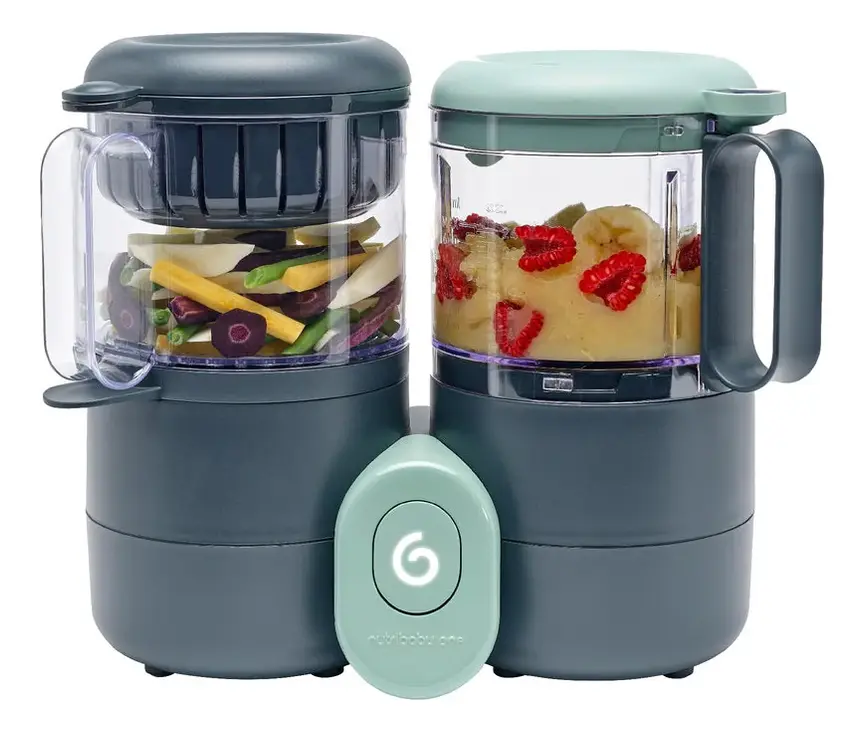
Babymoov Nutribaby One 4-in-1 Baby Food Maker
Steamer blender

Drawback 3: Over-working starchy foods into glue
Many popular baby foods are full of starch. White potato, sweet potato, pumpkin, parsnip, taro, and cooked rice are common examples. When you cook these foods, the starch cells swell up with water.
If you mash cooked potato gently with a fork or push it through a sieve, the starch cells stay whole. The food comes out light, fluffy, and easy for a baby to swallow.
If you spin cooked potato in a food processor, the fast steel blades rip the starch cells open. Sticky starch spills out and links together. Within seconds, the potato turns into a thick, stretchy, gluey paste. It sticks to the roof of your baby's mouth and can make them gag. Sweet potato, oats, and pasta can also turn gummy when spun at high speed.
You should never put white potatoes in a food processor. A fork or potato masher takes twenty seconds and keeps the texture light and pleasant.
Drawback 4: Heat, air, and nutrient loss
Fresh fruits and vegetables give your baby important vitamins and minerals. Some vitamins are tough, while others are delicate. Vitamin C and folate (a B vitamin needed for healthy growth) break down easily when exposed to heat, water, air, and light.
When a food processor spins at high speed, it whips lots of air into the warm food. This process is called oxidation. You can see oxidation happen when a blended apple or avocado turns brown in the bowl. Whipping air into warm puree speeds up the breakdown of vitamin C. Running a motor for a long time also adds friction heat to the food.
Cooking methods matter even more than blending
While over-blending wastes some vitamins, how you cook the food matters even more. Food science research, including a 2018 study by Lee and colleagues on vitamin retention in vegetables, shows that boiling vegetables in a pot of water washes away a large amount of water-soluble vitamins like vitamin C. The vitamins leak out into the cooking water.
Steaming or microwaving with just a splash of water keeps far more vitamins inside the vegetable. If you do boil vegetables, use only a tiny bit of water and use that leftover cooking water to thin out the mash. Then mash by hand with a fork instead of whipping air into the food with a fast blade.
Drawback 5: Hidden mould and bacteria traps
Babies have young immune systems. Tummy bugs that give an adult a mild stomach ache can make a baby very sick and dehydrated. The Food Safety Information Council in Australia, the NHS in the UK, FoodSafety.gov in the US, and Health Canada all stress strict hygiene when making baby food.
A food processor is one of the hardest kitchen machines to clean properly. Look closely at all the parts that touch food:
- The hollow blade post: The plastic post in the middle of the S-blade is hollow inside. When you blend runny puree, liquid squeezes up inside that narrow tube. Dishwashers often cannot spray water all the way to the top of the tube.
- Rubber and silicone gaskets: Many processor bowls and baby food makers have rubber rings to stop leaks. Puree seeps under the rubber lip. If you do not pry the seal off after every use, black mould and bacteria grow underneath within days.
- Safety lock grooves: Food processors have deep plastic slots around the rim and handle so the motor will only run when locked. Splashed food dries inside these narrow slots where a normal sponge cannot reach.
- Feed tubes and pushers: The lid has hollow tubes and corners that collect sticky residue.
By comparison, a stainless steel fork or masher is one solid piece of metal. It has no seals, no hollow tubes, and no hidden corners. You can see right away if it is clean. It washes in five seconds under the tap or in the dishwasher.
Drawback 6: Hot food, plastics, and chemical safety
Most food processor bowls are made of hard clear plastic. When parents batch-cook baby food, they often tip boiling hot steamed vegetables straight from the pot into the plastic processor bowl.
There are three problems with blending very hot food in a plastic food processor:
1. Steam pressure and scald burns
When you seal hot food inside a processor lid and turn on the blade, hot steam builds up fast. The trapped steam can blow the lid open or spray scalding puree out through the feed tube. This can burn your hands, face, or any child standing near the bench.
2. Plastic wear and microplastics
Spinning hard food, fruit stones, or ice against a plastic bowl leaves tiny scratches on the inside walls. Heating plastic and exposing it to strong acids (like tomato or citrus) or fats wears the surface down faster. Food Standards Australia New Zealand (FSANZ), the US Food and Drug Administration (FDA), and the World Health Organization (WHO) note that worn plastics can shed tiny plastic particles called microplastics into food and liquid, especially when heated.
3. Bisphenol A (BPA) and phthalates in older appliances
Many parents get given a second-hand food processor by a relative or buy one from a thrift shop. Older clear rigid plastic bowls were often made with polycarbonate plastic, which contains Bisphenol A (BPA). Other older plastic parts used chemicals called phthalates to make them flexible. Heat and scratches make it easier for these chemicals to move from old plastic into hot food.
If you use any blender or food processor for baby food, let the cooked food cool down a little before blending. Better yet, mash hot food in a ceramic bowl, a glass dish, or a stainless steel pot using a metal fork or masher.
Drawback 7: Extra water dilutes the nutrition
Babies have tiny tummies. Every spoonful needs to count. Around 6 months, the iron stores a baby was born with start to run low. That is why health authorities in Australia (NHMRC), the US (AAP), the UK (NHS), and Canada (CPS) all say first foods must be rich in iron and energy. Good examples include cooked meat, poultry, fish, eggs, lentils, beans, tofu, and iron-fortified baby cereal.
When you try to blend meat, lentils, or thick vegetables in a wide food processor, the blades often stall. The mixture is too dry to move around the bowl. To get the blades moving, parents pour in half a cup of water.
Adding lots of water makes the machine spin, but it waters down the meal. Now your baby's small tummy fills up on water instead of iron, protein, and healthy fats. If you need to thin out baby food, use a tiny splash of your baby's usual milk (breast milk or prepared infant formula) or a spoonful of cooking water, and mash by hand so you only add what is truly needed.
Comparing baby food prep tools side by side
You probably already own the best tools for making baby food in your kitchen drawer. Here is how a food processor compares with simpler, cheaper tools.
| Tool | Best baby stage | Texture control | Works for 1 small portion? | Ease of cleaning | Main pros and cons |
|---|---|---|---|---|---|
| Fork or potato masher | 6 months to toddler | Excellent (smooth mash to chunky) | Yes | Very easy (1 piece, no seals) | Free, safe with hot food, builds chewing skills. Cannot puree tough meat alone. |
| Fine metal sieve and spoon | Around 6 months (first tastes) | Very smooth and fluffy | Yes | Easy (scrub mesh under tap) | Makes silky puree without whipping air or turning potato gluey. Takes a minute of elbow grease. |
| Stick (immersion) blender | 6 to 8 months | Smooth to lightly pulsed | Yes (in a narrow cup or pot) | Easy (rinse metal wand right away) | Blends small amounts right in the saucepan. Stainless steel wand handles warm food safely. |
| Box grater or microplane | 6 to 12 months | Fine shreds or minced texture | Yes | Easy (rinse right after use) | Great for raw apple, pear, cheese, or frozen meat. Watch your knuckles when grating. |
| Full-size food processor | Big batch freezing only | Poor (runny paste or hidden chunks) | No (bowl is too wide) | Hard (many parts, seals, hollow blades) | Only useful if making huge batches of soup or sauce for the whole family. |
| All-in-one baby food steamer-blender | 6 to 7 months only | Mostly smooth puree | Yes | Hard (water tank scale and blade seals) | Expensive, short useful life, water tanks can grow mould if not descaled often. |
Side by side: more baby food makers & steamers to compare
Real products from our catalogue. We don't show star ratings or review counts; check the current price, stock and reviews on Amazon before you buy.

Beaba Babycook Neo
Steam-and-blend baby food maker with a glass bowl and stainless steel steam basket.
 Reviewed
Cherub Baby Food Maker & Steriliser
Steams then blends food. It can also defrost, warm bottles and sterilise.
Read our full review →

NutriBullet Baby Bullet
A small 200 W blender kit with date-dial cups and a freezer tray for batch cooking.
Read our full review →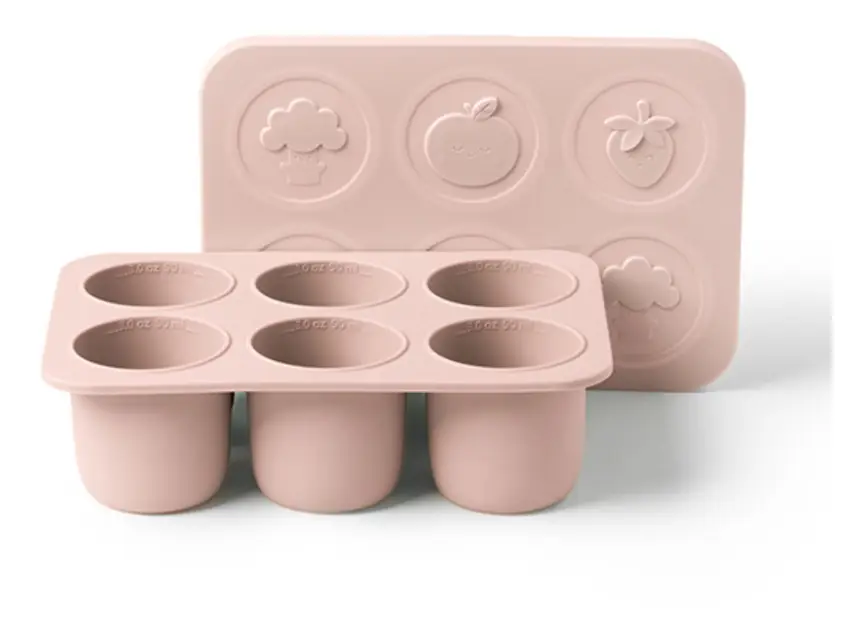
Annabel Karmel Silicone Freezer Food Tray
A silicone tray for freezing small portions of home-made baby food.
How to prepare baby food by age and stage (without a processor)
Every baby learns at their own pace. Use your baby's readiness signs, not just the calendar, to guide you. Health authorities in Australia, the UK, the US, and Canada say babies are ready for solids around 6 months when they can sit up with support, hold their head steady, reach out to grab food, and open their mouth when food comes near.
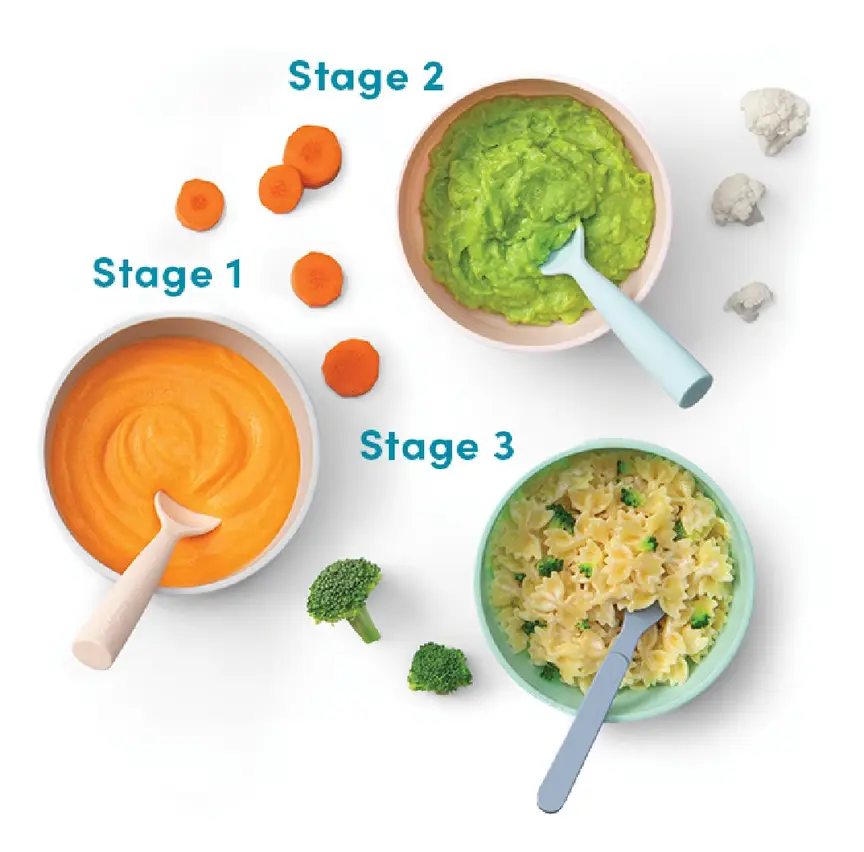
Stage 1: First tastes (around 6 months)
At the start, your baby is just learning how solid food feels in their mouth. Most of their nutrition still comes from breast milk or infant formula.
- Soft fruits and veggies: Steam pumpkin, sweet potato, carrot, broccoli florets, apple, or pear until you can squish a piece easily between two fingers. Mash it well with a fork. If you want it extra smooth for the first few days, push it through a fine metal sieve with the back of a metal spoon.
- No-cook foods: Ripe avocado and ripe banana need no cooking at all. Just peel and mash with a fork on a clean plate.
- Iron-rich meat and legumes: Slow-cook or poach beef, lamb, chicken, or lentils until very tender. If you want a smooth texture, put a small portion in a narrow jug with a splash of cooking water and buzz it for five seconds with a stick blender. You can also grate cooked meat finely or stir well-mashed lentils into sweet potato.
Stage 2: Mashed and lumpy textures (around 6 to 7 months)
After a few weeks of smooth mash, stop pushing food through a sieve and stop blending it smooth. Use a fork to mash food so tiny soft lumps remain.
- Grated foods: Grate raw soft pear or apple on the fine side of a box grater. Grate mild cheddar cheese into warm mashed vegetables.
- Flaked fish: Cook salmon or white fish and flake it with your fingers. Rub every flake between your thumb and finger to make sure there are zero bones.
- Scrambled egg and tofu: Cook egg all the way through and mash it with a fork. Mash silken or firm tofu right into vegetable mash.
- Soft finger foods alongside mash: Offer soft cooked vegetable sticks (the size of your own finger) so your baby can practise picking food up and munching with their gums.
Stage 3: Minced and chopped family foods (around 8 to 9 months)
By now, your baby does not need any blending at all. A sharp kitchen knife and a fork do the whole job.
- Minced meat and bolognese: Cook family mince dishes without added salt. Chop the meat finely with a knife if the pieces are large.
- Soft pasta and rice: Cook small pasta shapes or rice until soft. Serve with mashed beans or vegetable sauce.
- Bite-sized pieces: Cut soft fruit, cooked veggies, toast fingers, and pancakes into small pieces your baby can pick up as their pincer grasp develops.
Stage 4: Family meals (from 12 months onwards)
At 12 months, your child can eat the same meals as the rest of the family. Keep salt low, skip added sugar, and keep cutting high-risk choking foods (like whole grapes, cherry tomatoes, and sausages) lengthwise into small quarters.
Introducing common allergy foods safely
You do not need a food processor to prepare common allergy foods like peanut, egg, cow's milk (in cooking or yoghurt), tree nuts, wheat, soy, sesame, fish, and shellfish.
The Australasian Society of Clinical Immunology and Allergy (ASCIA), the NHS, the AAP, and the Canadian Paediatric Society all recommend introducing common allergy-causing foods around 6 months (and before 12 months), once your baby has started solids. Waiting longer does not prevent food allergies.
Here is how to prepare them safely without a food processor:
- Peanuts and tree nuts: Never give whole nuts or chunks of nuts to children under 5 years old because they are a major choking hazard. Instead, buy smooth 100% nut butter (with no added salt or sugar). Stir half a teaspoon of smooth peanut butter into warm water, breast milk, or warm fruit mash until it is thin and runny. Never give a thick lump of peanut butter on a spoon, as it can stick in the throat.
- Egg: Boil an egg until both the white and yolk are firm. Mash it with a fork and mix with a little warm water, milk, or mashed avocado.
- Fish: Poach a small piece of boneless fish fillet and mash it with a fork, checking carefully with your fingers for any tiny bones.
Official guidance across Australia, the UK, the US, and Canada
While kitchen appliances are sold worldwide, official health and product safety guidance is set by national authorities. Here is how the four main English-speaking regions line up on making and storing homemade baby food.
| Topic | Australia | United Kingdom | United States | Canada |
|---|---|---|---|---|
| Lead health bodies | NHMRC, Raising Children Network, ASCIA, Pregnancy Birth and Baby | NHS, Start for Life, Office for Product Safety and Standards (OPSS) | American Academy of Pediatrics (AAP), CDC, FDA, CPSC | Health Canada, Canadian Paediatric Society (Caring for Kids) |
| When to start solids | Around 6 months (not before 4 months) | Around 6 months | Around 6 months | Around 6 months |
| First food focus | Iron-rich foods (meat, poultry, fish, legumes, iron-fortified cereal) | Vegetables, fruit, starchy foods, protein and iron-rich foods | Iron and zinc-rich foods (meats, iron-fortified cereals, beans) | Iron-rich foods offered two or more times a day |
| Texture advice | Pureed or mashed first, moving quickly to lumpy and finger foods | Move to mashed and lumpy foods as soon as ready; do not delay past 9–10 months | Progress quickly from purees to soft mashed and finger foods | Offer soft mashed, ground, lumpy, and finger foods right from 6 months |
| Fridge storage for homemade food | Up to 24 to 48 hours in a sealed container in the back of the fridge | Up to 24 to 48 hours in a covered container at 5°C or below | Up to 24 to 48 hours in the fridge (40°F / 4°C or below) | Up to 24 to 48 hours in a cold refrigerator (4°C or below) |
| Reheating rule | Heat until steaming hot all the way through, then cool and test; reheat only once | Heat until piping hot all the way through, stir, cool, and test; never reheat more than once | Heat thoroughly, stir to remove hot spots, test temperature; discard leftovers | Heat until steaming hot, stir well, test before serving; reheat only once |
Appliance and food-contact material rules
In Australia, Food Standards Australia New Zealand (FSANZ) regulates materials that touch food, and Product Safety Australia (part of the ACCC) oversees consumer appliance recalls. In the UK, the Office for Product Safety and Standards (OPSS) and the Food Standards Agency oversee kitchen electrical safety and food-contact plastics. In the US, the Food and Drug Administration (FDA) regulates food-contact plastics (and banned BPA in baby bottles and sippy cups), while the Consumer Product Safety Commission (CPSC) handles appliance recalls such as chipped blender blades. In Canada, Health Canada regulates food-contact materials and posts recalls for kitchen appliances that pose laceration or choking risks.
Across all four countries, consumer regulators have issued recalls over the years for food processors and baby food blenders where metal blades cracked or broke off into the food bowl during spinning. If you ever use a bladed machine, inspect the metal blade for tiny cracks before and after blending.
If you already own a food processor: how to use it safely
You do not have to throw your food processor away. If you want to use it for making a big batch of family soup or batch-cooking purees to freeze, follow these safety steps every single time:
- Check the blade first: Look closely at the metal blade before you start and after you finish. Make sure the metal is not cracked, chipped, or loose on its plastic hub.
- Let hot food cool down: Wait 10 to 15 minutes after steaming before putting food into a plastic processor bowl. Never seal boiling liquid inside a closed blender.
- Pulse instead of running non-stop: Use short 2-second pulses rather than leaving the motor running. Pulsing keeps heat down, whips in less air, and lets you stop while there is still some soft texture.
- Sieve or fork-check the finished batch: Pour the blended food into a separate bowl. Stir through every spoonful with a fork to check that no hard chunks were hiding under the blade.
- Take every seal apart right away: As soon as you finish, take the blade out, pull off any rubber rings, and wash every groove in hot soapy water with a small bottle brush. Let all parts air-dry completely before putting the machine away.
- Retire the machine early: Use it only for the first couple of weeks of weaning (or for big freezer batches), then switch to a fork and masher so your baby learns to chew lumps.
Food hygiene, cooling, freezing, and reheating rules
Whether you mash food with a fork or blend it with a stick blender, safe food handling protects your baby from food poisoning. Follow these rules backed by the NHS, Raising Children Network, the AAP, and Health Canada:
- Wash hands and benches: Wash your hands with soap and warm water before touching food. Use clean chopping boards. Keep raw meat away from cooked food and fruit.
- Cool cooked food fast: Do not leave warm baby food sitting on the kitchen bench for hours. Bacteria multiply fast at room temperature. Cool the food within 1 to 2 hours and put it straight into the fridge or freezer.
- Freeze in small portions: Spoon cooled mash into clean silicone ice cube trays with lids. Once frozen solid, pop the cubes into a labelled freezer bag with the food name and date. Use frozen baby food within 1 to 3 months for best quality.
- Defrost safely: Thaw frozen cubes overnight in the fridge, or defrost them in the microwave right before serving. Never defrost baby food by leaving it out on the kitchen counter all day.
- Reheat until steaming hot: If you reheat cooked food, heat it until it is steaming (piping) hot all the way through to kill any bacteria. Then let it cool down before feeding your baby.
- Stir to fix microwave hot spots: Microwaves heat unevenly. A spoonful can feel cool on top while hiding a boiling pocket in the middle that can burn your baby's mouth. Always stir reheated food well and test a drop on the inside of your wrist. It should feel lukewarm, not hot.
- Throw away touched leftovers: Once your baby's spoon has gone from their mouth into the bowl, saliva and bacteria are in the food. Throw away any food left in your baby's bowl at the end of the meal. Never put half-eaten food back in the fridge for later.
Foods to avoid in the first year (no matter how you prep them)
Some foods are unsafe for babies under 12 months, even if you mash or blend them:
- Honey: Never give honey to a baby under 12 months old, even in cooked or baked food. Honey can contain spores of bacteria that cause infant botulism, a serious illness that causes muscle weakness and breathing problems.
- Added salt and salty foods: A baby's kidneys are too young to handle extra salt. Skip salt when cooking, and avoid stock cubes, gravy, soy sauce, bacon, and sausages.
- Added sugar and sweet drinks: Sugar causes tooth decay and teaches a sweet tooth. Skip sugar, fruit juice, cordial, and fizzy drinks.
- Whole nuts and hard raw foods: Whole nuts, raw carrot chunks, and hard raw apple chunks can block a child's airway. Grate, cook, or mash them instead.
- Whole grapes, cherry tomatoes, and large berries: Always slice round, firm fruits lengthwise into quarters before serving.
- Unpasteurised cheeses and raw meat or shellfish: Stick to pasteurised dairy and cook meat, fish, and eggs all the way through.
- Cow's milk as a main drink: You can use small amounts of full-fat cow's milk in cooking or on cereal from 6 months, along with full-fat plain yoghurt and cheese. Wait until 12 months before giving cow's milk as your baby's main drink.
More options, from budget to premium
Real products from our catalogue. We don't show star ratings or review counts; check the current price, stock and reviews on Amazon before you buy.

Cherub Baby Food Pouch Spoons (2 pack)
Spoon tops that screw onto food pouches, so you can spoon-feed on the go.
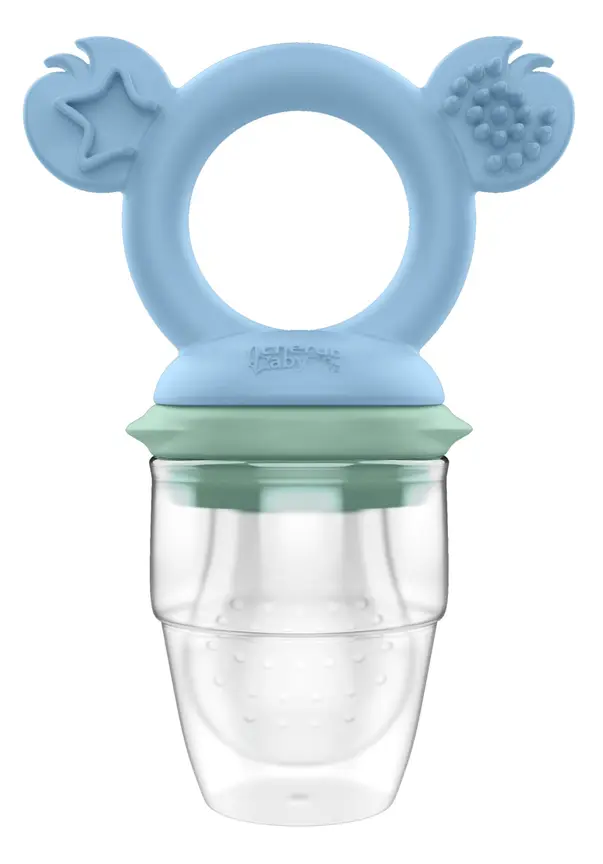


Cherub Baby Silicone Fresh Food Feeder
A silicone teat-style feeder. Babies can chew soft fruit or frozen breast milk through it.
Read our full review →

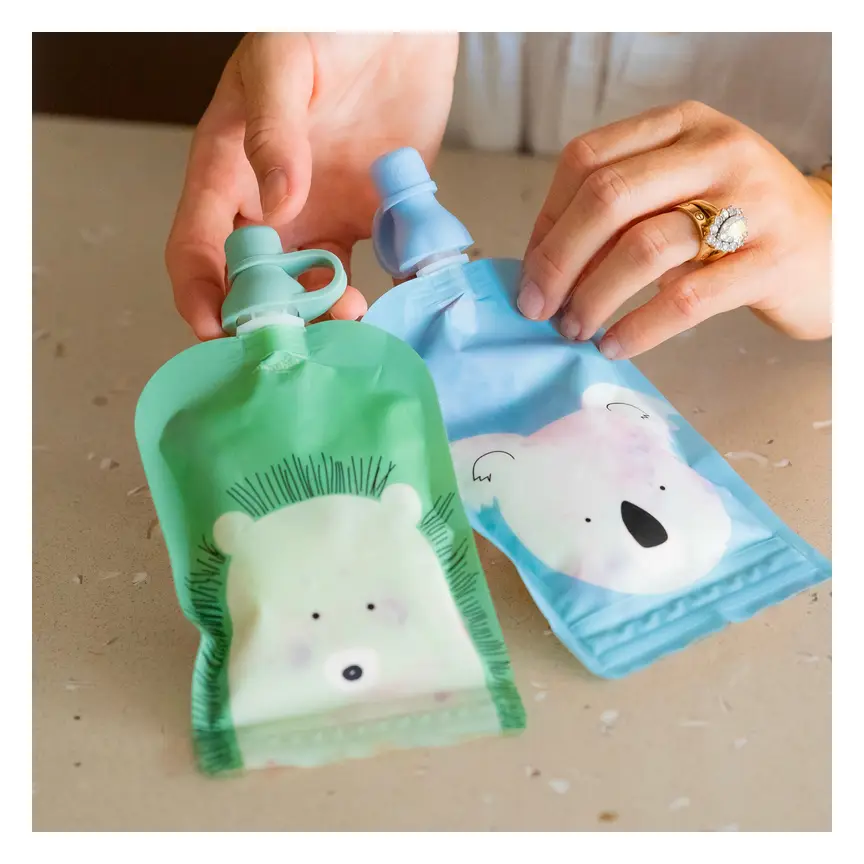
Cherub Baby Reusable Food Pouch Bundle
A kit of reusable silicone food pouches with a wide opening and double zip seal. They go in the dishwasher.
Read our full review →Common mistakes parents make when prepping baby food
- Buying an expensive baby food maker before baby even starts solids: Many parents spend hundreds of dollars on a single-use steamer-blender, only to find their baby prefers mashed banana and finger foods two weeks later. Wait until you start solids before buying any appliance.
- Blending giant freezer stashes of smooth puree: If you fill your whole freezer with 200 cubes of silky smooth puree at 6 months, you will still be trying to use them up at 9 months when your baby should be eating lumpy food. If you freeze food, freeze plain cooked veggies or plain cooked meat that you can mix into thicker meals later.
- Blending raw apple or raw carrot: Raw hard fruits and veggies do not blend smoothly in a food processor. They turn into tiny hard grit that can make a young baby gag or choke. Steam hard fruits and veggies until soft, or grate them finely for older babies.
- Leaving the blade sitting in the sink: Food processor blades are razor sharp. Leaving a loose S-blade at the bottom of a sink full of soapy water is a classic cause of deep hand cuts. Wash it right away while holding the plastic hub, never the metal edge.
- Forgetting to check under the rubber seal: Even when a processor bowl looks clean after the dishwasher cycle, wet food often sits trapped under the base gasket. Always pull removable seals off to clean and dry them.
Frequently asked questions
Can I make homemade baby food without any blender or food processor?
Yes. Generations of parents have made baby food with just a saucepan, a steamer basket, a fork, and a potato masher. Soft fruits like banana and avocado mash raw with a fork. Steamed vegetables like pumpkin, sweet potato, zucchini, and broccoli mash easily once cooked soft. For meat, you can slow-cook it until it shreds easily, mince it finely with a sharp knife, or grate cooked meat on a clean grater.
Is a stick blender better than a food processor for baby food?
Yes, for most families a stick (immersion) blender is much better than a food processor. A stick blender has a narrow head that can blend a tiny single portion inside a mug or small jug. You can buy one with a stainless steel wand so no plastic touches hot food. Best of all, there are no lids or rubber bowl seals to wash. You just rinse the metal wand under hot running water with a drop of dish soap right after using it.
How long should my baby eat smooth purees before moving to mashed food?
Most babies only need smooth puree for a few days to a couple of weeks at around 6 months. Some babies start straight on soft mashed food and soft finger foods. Health authorities in Australia (NHMRC), the UK (NHS), the US (AAP), and Canada (CPS) all recommend moving quickly to mashed, lumpy, and finger foods so your baby learns to chew before 9 months of age.
Why did my homemade potato puree turn sticky and gluey in the food processor?
Potatoes are full of starch granules. When a food processor blade spins at thousands of turns per minute, it slices open those swollen starch cells and releases sticky starch. That turns the potato into a stretchy paste like wallpaper glue. Always mash white potatoes, sweet potatoes, and parsnips by hand with a fork, a potato masher, or a potato ricer instead of using spinning blades.
How can I tell if my baby is gagging on lumps or actually choking?
Gagging is noisy and normal when babies learn to eat lumpy food. When a baby gags, their eyes may water, they push their tongue forward, they cough or retch, and their skin may turn red. Their airway is still open, and they are working the food back to the front of their mouth. Choking is when the airway is blocked. A choking baby is often silent, cannot cry or cough properly, looks panicked, and may turn blue or pale around the lips. Choking is a medical emergency that needs immediate infant back blows and chest thrusts.
Can I blend breast milk or infant formula into homemade baby food?
Yes. Adding a splash of expressed breast milk or prepared infant formula is a great way to thin out mashed vegetables or meat. It adds familiar flavour and extra nutrition without watering the meal down. Add the milk after cooking and cooling the food, as boiling breast milk destroys its helpful protective proteins. Keep in mind that if you use previously frozen breast milk to mash into food, that meal should be eaten right away and not refrozen.
Sources
- Raising Children Network – How to make baby food: in pictures
- NHMRC – Infant Feeding Guidelines
- NHS – Children's food: safety and hygiene
- NHS Best Start in Life (UK) – Storing and reheating food
- American Academy of Pediatrics (US) – Starting solid foods
- Caring for Kids (Canadian Paediatric Society) – Feeding your baby in the first year
- Food Standards Australia New Zealand – Bisphenol A (BPA)
- Lee et al. (2018), Food Science and Biotechnology – Effect of cooking methods on vitamin retention in vegetables (PubMed)
Related guides
More Parental Tips →
Can You Use a Regular Blender or Food Processor to Make Baby Food?

5 Easy and Healthy Baby Food Recipes to Make with Your Baby Food Processor
How to Choose a Baby Food Maker: Steam-and-Blend Machines, Kitchen Tools, and Food Safety
