








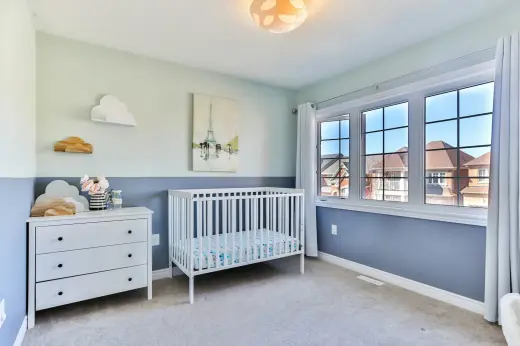

Setting Up a Safe Montessori Floor Play Space: Free Movement Without Container Syndrome
How to set up a safe Montessori floor play space for your baby. Encourage free movement, avoid container syndrome, and babyproof for each age.

On this page
- Key points
- What a Montessori floor play space is
- What container syndrome means and why floor time matters
- Floor play vs baby containers: a side-by-side look
- How to set up a safe floor play space step by step
- What to put in your play space by age
- How to babyproof the play room
- Safety standards and official guidance in Australia, the UK, the US a…
- Common mistakes to avoid
- Frequently asked questions
- Sources
Short answer: A Montessori floor play space is a safe, open spot on the floor where your baby can move freely. Use a firm, flat mat in a babyproofed room. Add a low shelf with three to five simple toys. Keep awake babies out of bouncers, swings, and seats as much as you can. Free floor time builds strong muscles and helps prevent container syndrome.
Health groups in Australia, the UK, the US, and Canada all agree on this. Babies need plenty of supervised floor time every day to grow strong and hit movement milestones.
Key points
- Floor first: Put your awake baby on a firm, flat floor mat instead of a seat or swing.
- Less is more: Offer three to five simple toys on a low shelf. Rotate them every week or two.
- Safety comes first: Anchor heavy shelves to the wall. Keep blind cords, small parts, and button batteries out of reach.
- Safe sleep rule: Play mats are for awake play only. Move a sleeping baby to a firm, flat cot or crib on their back.
- Skip baby walkers: Doctors and safety bodies in all four countries warn against wheeled baby walkers.
What a Montessori floor play space is
A Montessori floor play space is a calm corner of a room made just for your baby. Everything sits at your baby's height. There are no bars, straps, or buckets holding your child in place.
The idea comes from Dr Maria Montessori, an Italian doctor and teacher. She noticed that young children learn best when they can explore safely on their own. When a baby is free on the floor, they choose what to look at. They reach, stretch, roll, and crawl at their own pace.
You do not need expensive wooden furniture to do this. A clean rug or firm foam mat in your living room works well. A few safe household items and simple toys are enough.
Why babies love open floor spaces
Babies are curious from day one. On a flat mat, they can turn their head both ways. They can kick their legs and wave their arms freely. Later, they can pivot in a circle, roll over, and push up on their hands.
In a calm space without flashing lights or loud noises, your baby can focus better. They learn how their own body works. That builds confidence early on.
Montessori & Sensory Toys worth a look
Real products from our catalogue. We don't show star ratings or review counts; check the current price, stock and reviews on Amazon before you buy.

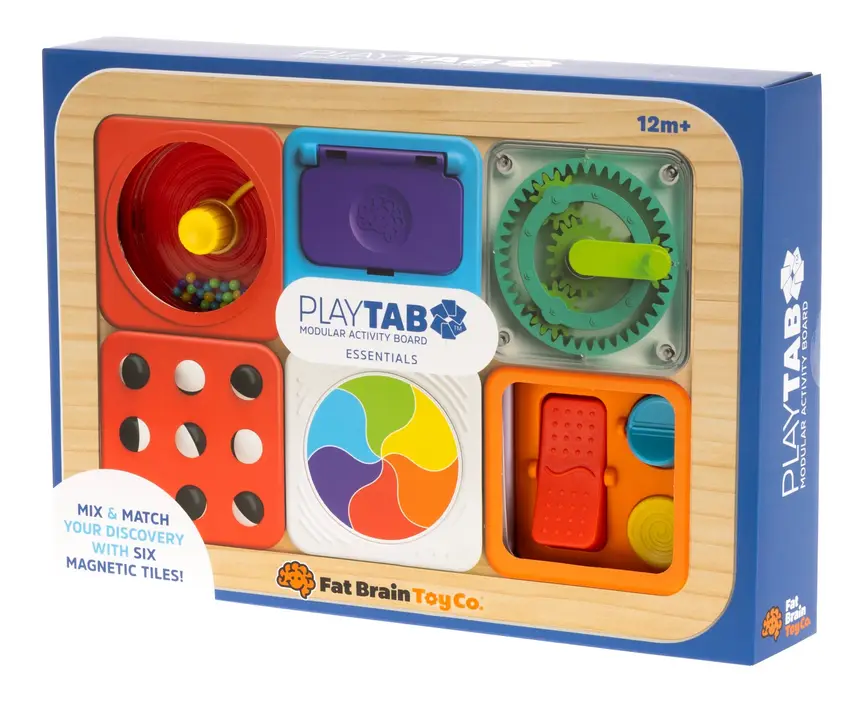
Fat Brain Playtab Essential Set
A set of activity tabs that click together into a busy board with things to spin, slide and press.
Read our full review →
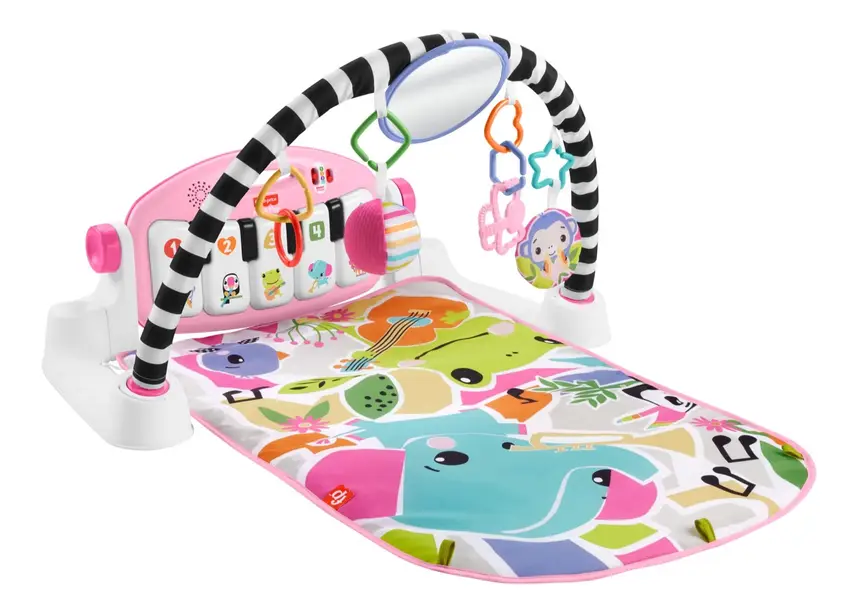

Fisher-Price Kick & Play Gym
A low-cost play gym with a small piano at the feet that plays when baby kicks.
Read our full review →
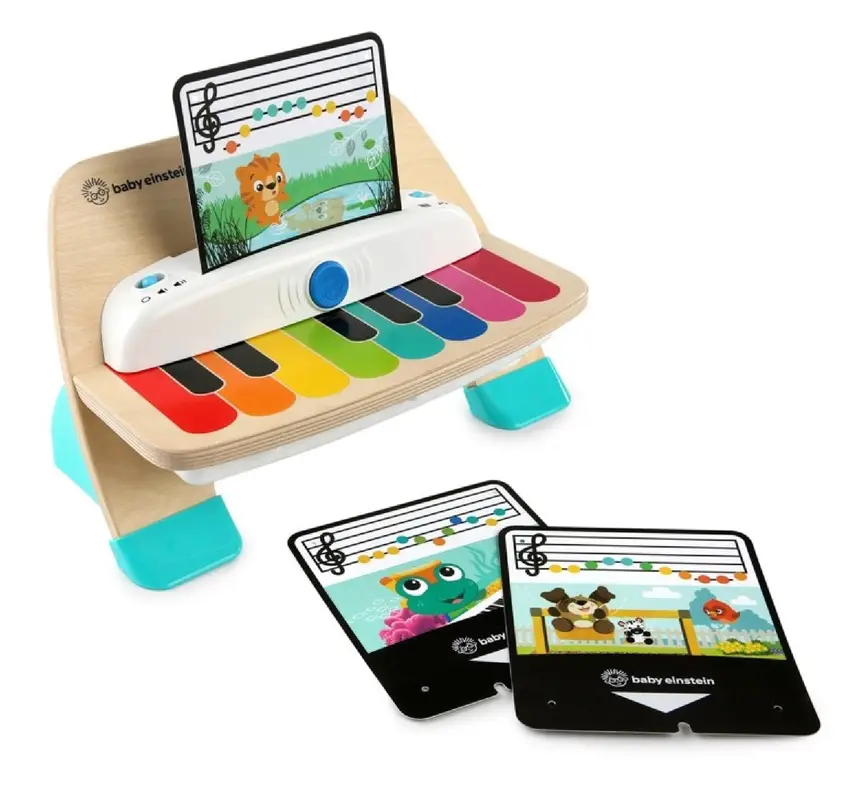
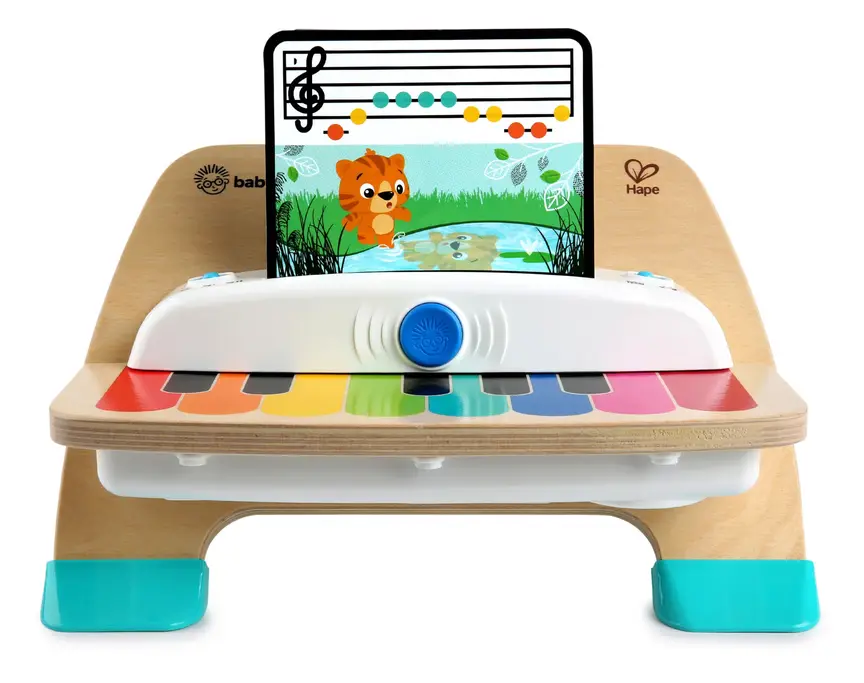
Baby Einstein × Hape Magic Touch Piano
A wooden toy piano you play by touching the wood. There are no buttons to press.
Read our full review → Reviewed
Lovevery The Play Gym
A play gym with 5 play zones, detachable toys and picture cards for the first year. A cover turns it into a play fort for toddlers.
Read our full review →What container syndrome means and why floor time matters
Container syndrome is a term used by children's physiotherapists and doctors. It describes movement delays and body shape problems caused by too much time in baby gear. A "container" is anything that holds a baby in one spot and limits movement.
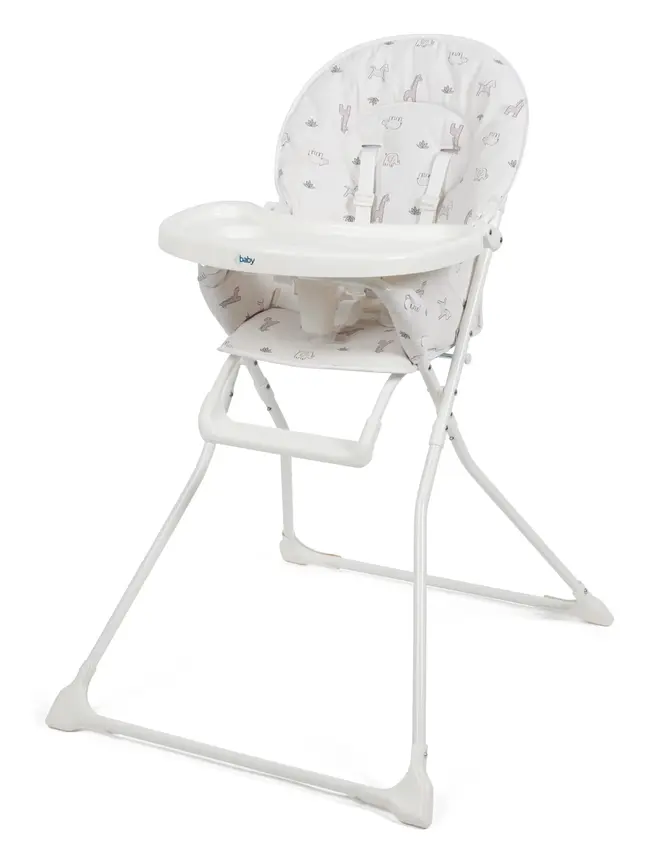
Common baby containers include:
- Bouncers and vibrating chairs
- Baby swings and rockers
- Floor seats and bumbo-style moulded chairs
- Activity centres, jumpers, and exersaucers
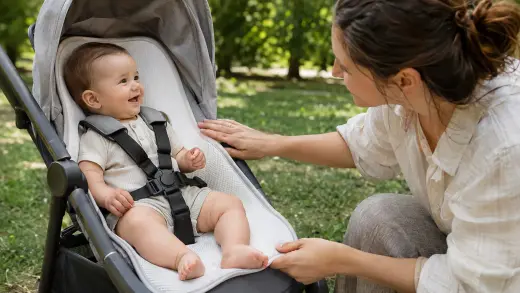
- Car seats used outside the car
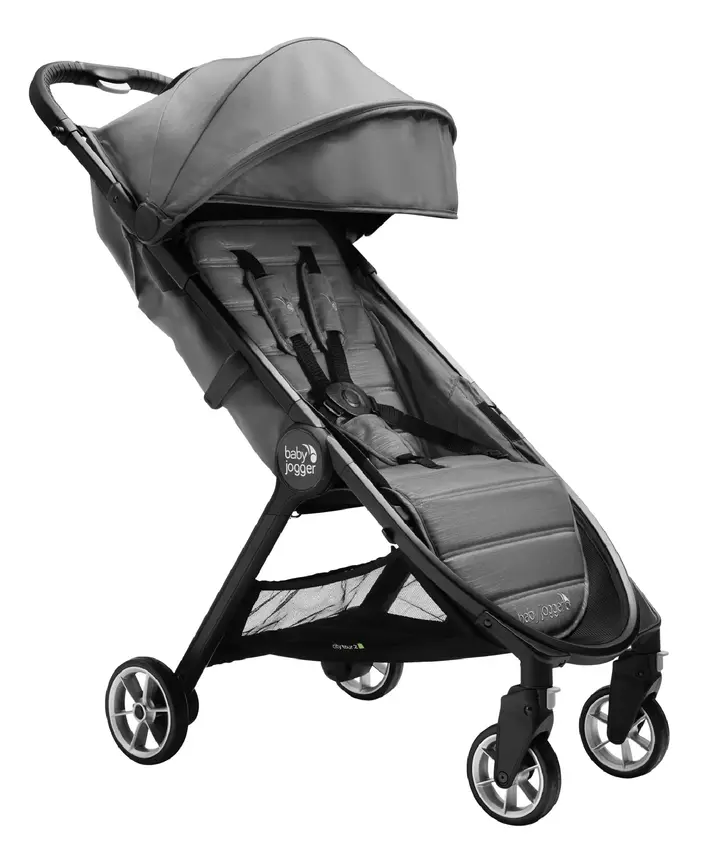
- Prams or strollers used for long stretches indoors
These products can be handy when you need two free hands for a short time. Using them for a quick shower or meal prep is fine. Problems start when a baby spends hours in containers every day.
How too much container time affects your baby
When a baby sits strapped into a seat, their head often rests against a hard or curved back. Their chest and hips stay flexed. They cannot roll, kick freely, or push up with their arms.
Too much time in containers can lead to several issues:
- Flat head spots: Doctors call this plagiocephaly or brachycephaly. Pressing the back of a soft skull against a seat for hours can flatten one side or the back of the head.
- Tight neck muscles: Doctors call this torticollis. A baby who cannot turn their head freely may favour one side, making one neck muscle tight.
- Slower motor skills: Babies need tummy time and floor time to build neck, back, core, and arm strength. Without it, rolling, sitting, and crawling can take longer.
- Hip and spine strain: Upright seats and jumpers can put pressure on hips and spines before a baby's muscles are ready to support them.
Why health bodies warn against baby walkers
Wheeled baby walkers are a special risk. The American Academy of Pediatrics (AAP), Health Canada, RoSPA in the UK, and Kidsafe in Australia all advise against using them.
Walkers let babies move fast before they know how to stop or steer. Babies in walkers can tip down stairs, reach hot stoves, or grab toxic items. Walkers also do not help babies learn to walk faster. In fact, they can delay independent walking because babies push with their toes instead of using their core and hip muscles properly.
Floor play vs baby containers: a side-by-side look
This table compares open floor play with common baby containers so you can plan your baby's day.
| Setup | Movement freedom | Muscle building | Main safety risk | Best use |
|---|---|---|---|---|
| Firm floor mat | Full freedom to turn, reach, roll, and crawl | Builds neck, back, core, arm, and leg strength | Room hazards if not babyproofed | Main awake play space every day |
| Bouncer or rocker | Strapped in; arms and legs move a little | Very low; back and head stay supported | Tipping if placed on high surfaces; sleeping risks | Short, supervised breaks only |
| Activity jumper | Legs bounce; hips and trunk stay held up | Pushes on toes; can miss core and balance skills | Hip and joint strain if used early or for long | Skip, or limit to very short turns once head control is strong |
| Wheeled baby walker | Fast rolling across rooms | Poor; trains toe-pushing instead of walking balance | Falls down stairs, burns, and grabbing hazards | Do not use; banned from sale in Canada and discouraged worldwide |
| Car seat indoors | Tightly strapped and curved | None | Breathing risk if baby sleeps slumped forward | Travel in the car only; take baby out once home |
How to set up a safe floor play space step by step
You can set up a safe Montessori play space in one afternoon. Follow these steps to make it practical and calm.
1. Pick the right spot
Choose a spot where you already spend time, like a corner of the living room. Babies want to be near you. If you can see your baby while you fold laundry or drink tea, you will use the space more.
Keep the mat away from windows with hanging blind cords. Keep it away from heaters, fireplaces, and heavy bookshelves.
2. Choose a firm, flat mat
Your baby needs a firm surface to push against. Hard tiles or cold floorboards can feel uncomfortable. Very thick, squishy mats or plush rugs make it hard for a baby to roll and push up.
Pick a low, firm play mat or a thin woven cotton rug with a non-slip backing. If you use interlocking foam tiles, check that the edges stay tight. Loose puzzle pieces can become a choking risk once your baby starts biting or pulling them apart.
Wipe the mat clean often. Babies dribble, spit up, and put their faces right on the floor.
3. Add a low, shatterproof mirror
In many Montessori spaces, parents mount a mirror low on the wall beside the mat. Babies love looking at faces, including their own. A mirror encourages your baby to lift their head during tummy time and track their own movements.
Safety comes first with mirrors:
- Use shatterproof acrylic mirror panels, not heavy glass.
- Screw the mirror frame firmly into wall studs or use strong, child-safe wall anchors.
- Never lean a loose mirror against a wall where a baby can pull it down.
4. Use a low, open shelf
A low wooden shelf, about waist height for a toddler, holds a few toys neatly. Open shelves let your baby see their choices without digging through a giant toy box.
Always anchor the shelf to the wall with anti-tip brackets or straps. Even a short shelf can tip over if a baby pulls up on the front edge to stand.
Leave space between each toy on the shelf. Empty space helps your baby see each item clearly.
5. Rotate three to five toys
Too many toys in one pile can overwhelm a baby. Put out three to five toys that match what your baby is learning right now.
Keep the rest of your toys in a cupboard or basket out of sight. Every week or two, swap out toys your baby ignores for fresh ones. You will often see your baby play with old toys like they are brand new.
6. Add a safe pull-up bar later
Once your baby starts pulling up to knees or feet, usually around seven to ten months, a horizontal pull-up bar helps. You can mount a sturdy wooden rail along the wall over the mirror or use a heavy, stable sofa edge.
Check that any wall-mounted bar is screwed into solid wall studs. It must hold your child's full weight without wobbling.
7. Keep lighting and sound calm
Natural daylight is great for babies. Avoid harsh glare shining straight into a newborn's eyes while they lie on their back. Soft curtains or moving the mat slightly out of direct sun fixes this.
Turn off background TV and screens during floor play. Health bodies in Australia, the UK, the US, and Canada recommend no screen time for babies under two, except video calls with family. Quiet rooms help babies hear your voice and focus on their toys.
What to put in your play space by age
Your baby's needs change fast in the first two years. Adjust the mat, toys, and room setup as your child grows.
Birth to 3 months: gentle sensory discovery
Newborns mostly lie on their backs or do short bursts of tummy time. Pregnancy, Birth and Baby in Australia and the AAP in the US recommend starting tummy time from birth. Begin with one or two minutes a few times a day while your baby is awake and calm.
Good items for this stage:
- High-contrast black-and-white cards propped safely along the wall
- A simple wooden play gym with one hanging ring or bell at chest level
- A small, soft rattle or fabric square to feel
- A shatterproof wall mirror for tummy time
Keep the mat clear of loose pillows, stuffed toys, and blankets. Your baby only needs a firm surface and your face nearby.
3 to 6 months: reaching, grasping, and rolling
Around three to six months, babies start batting at objects, grabbing with both hands, and rolling over. They need space to roll without bumping into hard corners.
Good items for this stage:
- Lightweight wooden or silicone grasping rings
- A simple wooden rattle or rainmaker
- A soft ball with texture to chase with their eyes
- A mirror to watch themselves roll and kick
Check that every toy is bigger than a toilet paper roll opening so it cannot be swallowed or block an airway.
6 to 12 months: sitting, crawling, and pulling up
Once your baby can sit and crawl, the whole room becomes their play space. At this stage, toys that move a short distance invite crawling.
Good items for this stage:
- Balls or rolling wooden cylinders that roll slowly across the mat
- An object permanence box where a ball drops in a hole and rolls out
- Stacking cups or large wooden rings
- Board books with real photos of faces, animals, and everyday objects
- A sturdy low shelf or wall bar for pulling up to stand
It is time to check the whole room at floor level. Get down on your hands and knees to spot anything your baby can reach or put in their mouth.
12 to 24 months: walking, carrying, and sorting
Toddlers love carrying heavy things, opening lids, and putting objects inside other objects. Their floor space can now include a small table and chair or a cosy reading cushion.
Good items for this stage:
- Simple wooden shape sorters and chunky peg puzzles
- Containers with lids to open and close
- Large wooden blocks
- A small basket of board books
- A sturdy push wagon for practising early walking
Keep small sibling toys, like tiny bricks or marbles, out of the toddler space until at least age three.
Floor play stages at a glance
| Age stage | Main movement goal | Helpful items | Key safety check |
|---|---|---|---|
| 0 to 3 months | Head control and short tummy time | Black-and-white cards, simple play gym, mirror | Firm, bare mat; no loose pillows or blankets |
| 3 to 6 months | Reaching, batting, and rolling | Grasping rings, light rattles, textured ball | Toys too large to choke on; clear space to roll |
| 6 to 12 months | Sitting, crawling, and pulling up | Rolling cylinders, stacking cups, pull-up bar | Anchor shelves; gate stairs; cover outlets |
| 12 to 24 months | Walking, carrying, and sorting | Shape sorters, chunky blocks, push wagon | Lock cupboards; keep sibling small parts away |
Side by side: more montessori & sensory toys to compare
Real products from our catalogue. We don't show star ratings or review counts; check the current price, stock and reviews on Amazon before you buy.


Magic Sensory Tissue Box
A soft box of fabric "tissues" to pull out again and again, so the real tissues are safe.
Read our full review →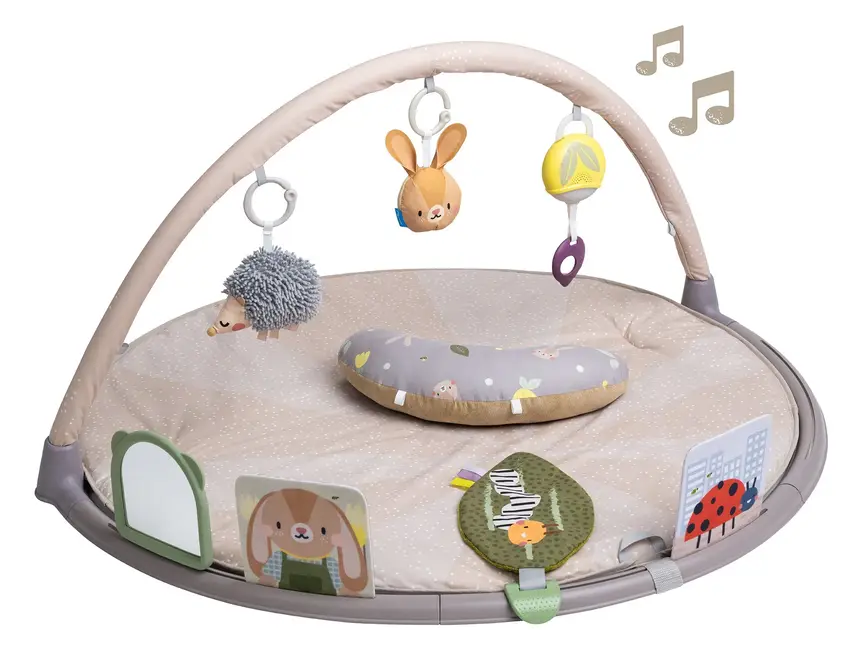 Reviewed
Taf Toys Tummy Time Activity Gym
A play gym with a half-hoop for tummy time that holds cards, a mirror and a crinkly leaf.
Read our full review →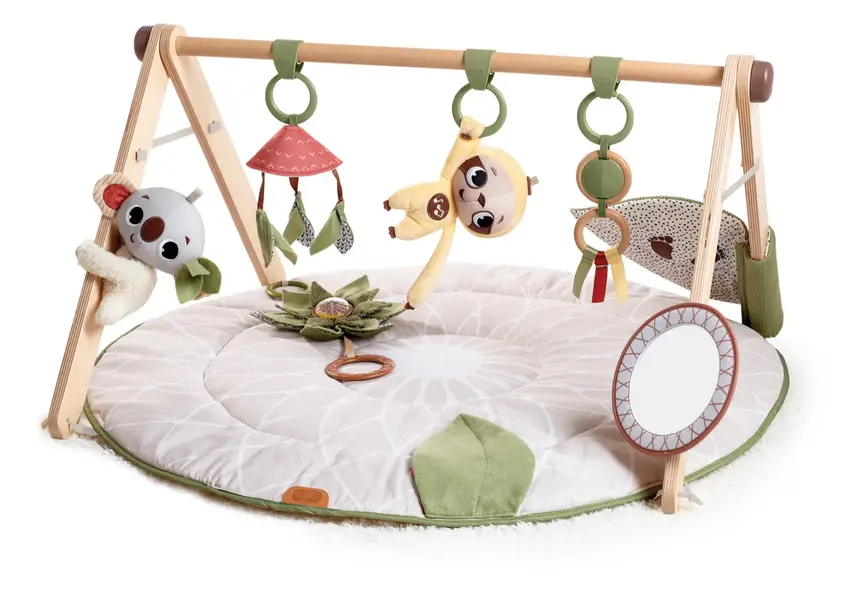
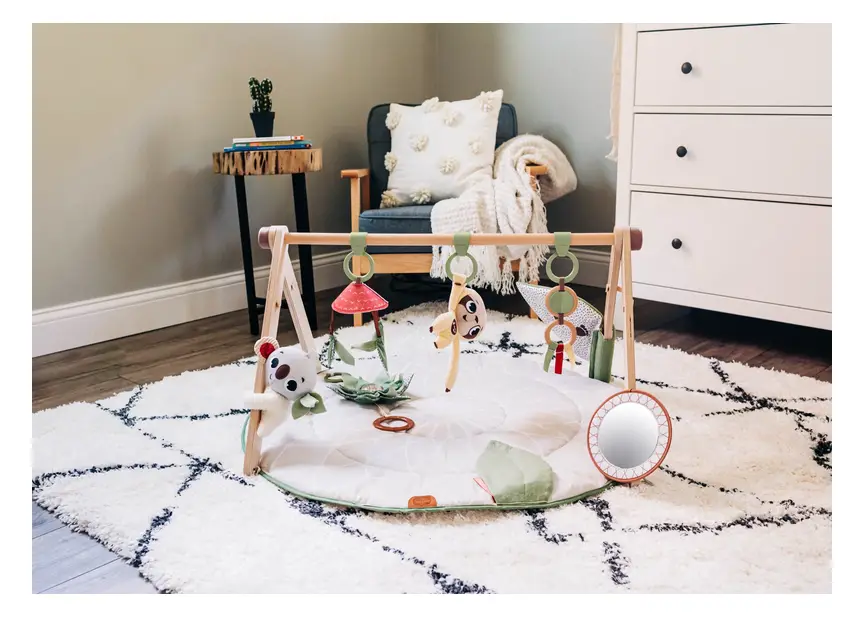
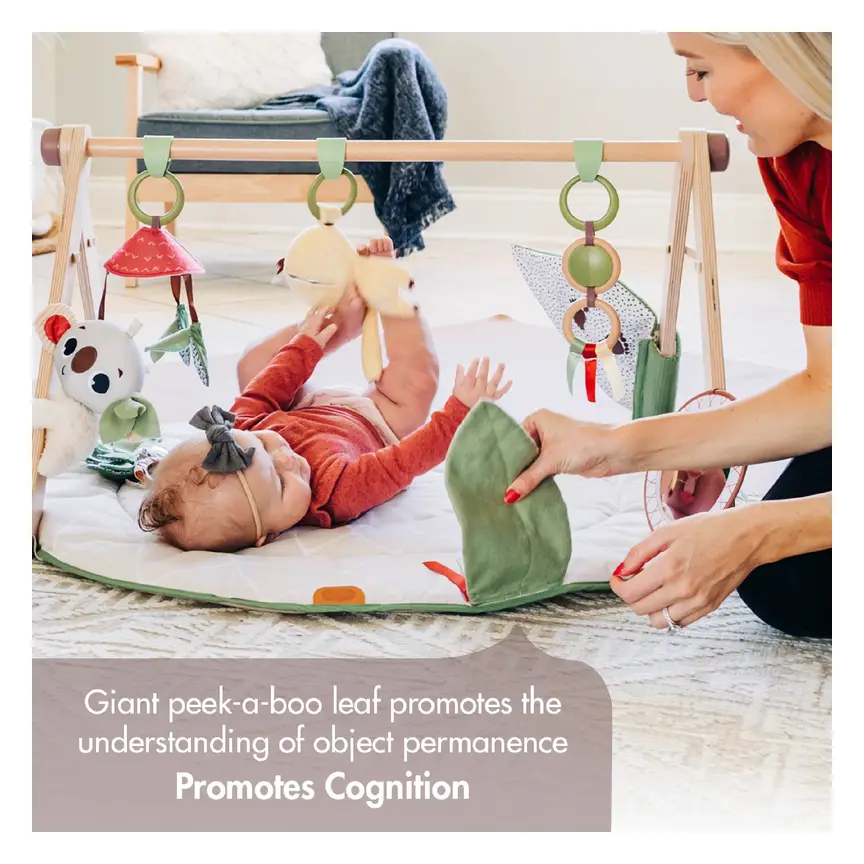
Tiny Love Boho Chic Luxe Gymini
A play gym with a wooden arch, a padded round mat and 20 activities.
Read our full review →
How to babyproof the play room
A free-moving baby needs a truly safe room. You do not need to cover every surface in plastic, but you must remove serious hazards. Product safety agencies in Australia, the UK, the US, and Canada all warn about the same top home dangers.
Anchor heavy furniture and TVs
Babies love to pull up on shelves, drawers, and TV stands. Unanchored furniture can tip over and cause fatal crush injuries.
- Screw bookcases, chests of drawers, and low play shelves into wall studs with metal brackets or straps.
- Mount flat-screen TVs to the wall or secure them with anti-tip straps.
- Keep heavy objects and trailing cords off low tables.
Secure blind and curtain cords
Loose window blind and curtain cords are a serious strangulation hazard for babies and toddlers. Never place a play mat, cot, or low chair under a window with dangling cords.
- Install cordless blinds where you can.
- If you have corded blinds, fit wall cleats or tension devices high up so cords stay tight and out of reach.
Lock away button batteries and small magnets
Button batteries are tiny, shiny, coin-sized batteries found in remote controls, scales, toys, and musical cards. If swallowed, a button battery can burn through a child's throat in as little as two hours.
- Keep all remote controls, key fobs, and spare batteries locked high up.
- Check that any battery-powered toy in the play space has a screw-secured battery cover.
- Avoid toys with small, high-powered magnets. Swallowing more than one magnet can pinch and tear the gut.
Check choking hazards at floor level
Babies explore the world with their mouths. Anything smaller than a child's windpipe can cause choking.
Before each play session, scan the floor for:
- Coins, hair clips, and earrings
- Pet food kibble and water bowls
- Peeling stickers or torn cardboard corners
- Small parts from older children's toys
- Loose pebbles or plant leaves from indoor pots
Cover power points and hide cords
Curious crawlers head straight for wall sockets and lamp cords.
- Use fitted safety plugs or sliding outlet covers on unused sockets.
- Tuck power cords behind anchored furniture or inside cord covers.
- Keep hot drinks, irons, and hair straighteners completely out of the play area.
Use safety gates for stairs and kitchens
If your play space opens onto stairs, a hallway, or a kitchen, install a hardware-mounted safety gate. Pressure-mounted gates can push loose at the top of stairs, so always use screw-in gates at stair tops.
Keep doors to bathrooms and laundries shut. Young children can drown quickly in very shallow water, including buckets and pet bowls.
Supervise pets closely
Even gentle family dogs and cats can get startled if a crawling baby grabs their fur or tail. Never leave a baby alone on the floor with a pet, even for a minute. Use a baby gate or playpen divider when you need to step out of the room.
Move a sleeping baby to a safe cot
Sometimes a baby falls asleep on the floor mat after hard play. Play mats, cushions, and sheepskins are not safe sleep surfaces.
If your baby falls asleep on the mat, gently pick them up and place them on their back in a safe cot, bassinet, or crib with a firm, flat mattress and no loose bedding.
Safety standards and official guidance in Australia, the UK, the US and Canada
Toy, furniture, and home safety rules are very similar across Australia, the UK, the US, and Canada. Naming the official bodies helps you check recalls and buy safe gear.
- Australia: Product Safety Australia (ACCC) sets mandatory safety rules for toys for children under three, button batteries, blind cords, and toppling furniture warnings. Toy safety follows AS/NZS ISO 8124. Red Nose, Kidsafe, Raising Children Network, and Pregnancy, Birth and Baby provide safe sleep, tummy time, and home safety advice.
- United Kingdom: The Office for Product Safety and Standards (OPSS) oversees product safety. Toys must meet BS EN 71, safety gates follow BS EN 1930, and reclined bouncers follow BS EN 12790. The NHS, The Lullaby Trust, and RoSPA publish clear guides on safe play, tummy time, and home babyproofing.
- United States: The Consumer Product Safety Commission (CPSC) enforces federal rules for toys (ASTM F963), cribs, button batteries, magnets, and furniture tip-over prevention through its Anchor It! campaign. The American Academy of Pediatrics (AAP) guides parents on tummy time, avoiding baby walkers, and safe sleep via HealthyChildren.org.
- Canada: Health Canada enforces toy and nursery rules under the Canada Consumer Product Safety Act. Canada bans the sale, import, and advertising of wheeled baby walkers. The Canadian Paediatric Society (Caring for Kids) and provincial health services like HealthLink BC share guidance on safe infant seating and active play.
| Topic | Australia | United Kingdom | United States | Canada |
|---|---|---|---|---|
| Toy safety rules | ACCC (AS/NZS ISO 8124) | OPSS (BS EN 71) | CPSC (ASTM F963) | Health Canada |
| Wheeled baby walkers | Discouraged by Kidsafe and health bodies | Discouraged by NHS and RoSPA | AAP warns against use | Banned from sale |
| Tummy time and floor play | Start from birth, supervised | Start from birth, supervised | Back to sleep, tummy to play from birth | Daily supervised floor time |
| Furniture tip-overs | ACCC mandatory warning labels; anchor to wall | RoSPA advises wall anchors | CPSC Anchor It! campaign | Health Canada safety alerts |
Common mistakes to avoid
Even well-meaning parents make a few common slips when setting up a floor play space. Watch out for these.
- Using a super-soft mat or duvet: Plush blankets, beanbags, and thick quilts bunch up under your baby. They make rolling harder and can block a baby's nose and mouth. Stick to a firm, flat mat.
- Putting out too many toys: A cluttered mat distracts your baby. Keep three to five toys on the shelf and store the rest away.
- Skipping tummy time when baby fusses: Many newborns complain during tummy time at first. Start with one or two minutes after a nappy change. Lie down face to face with your baby to keep them happy.
- Leaving baby in a bouncer all morning: Containers feel safe and easy when you are tired. Try setting a timer or keeping containers for short jobs like having a shower.
- Forgetting to re-check as baby grows: A space that was safe for a three-month-old is not safe for an eight-month-old who crawls and pulls up. Re-check the room every couple of months from your baby's eye level.
- Buying unlabelled cheap toys online: Cheap imports may have loose small parts, peeling paint, or unsafe button batteries. Buy toys that clearly meet your country's safety standard and check official recall lists.
More options, from budget to premium
Real products from our catalogue. We don't show star ratings or review counts; check the current price, stock and reviews on Amazon before you buy.


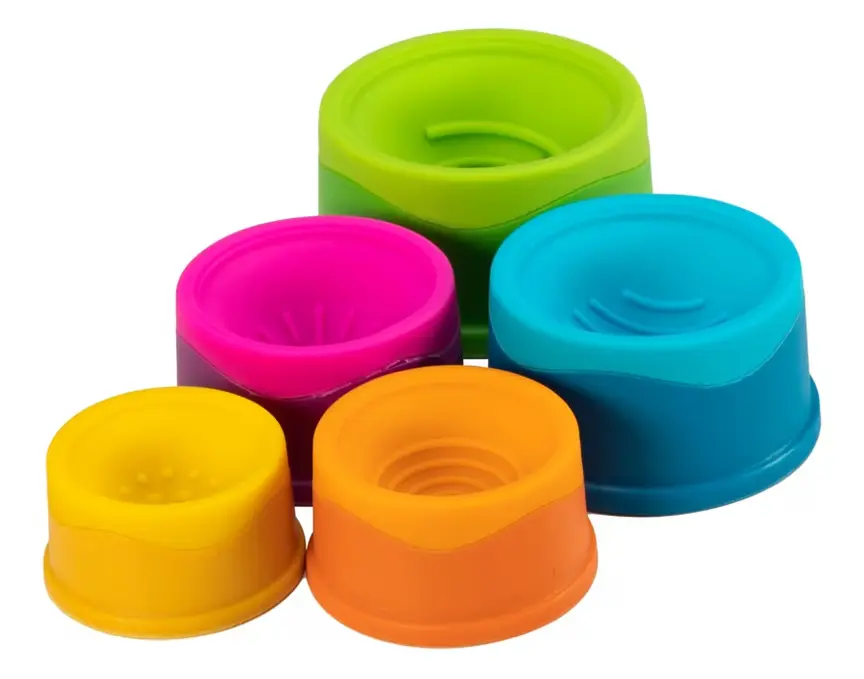
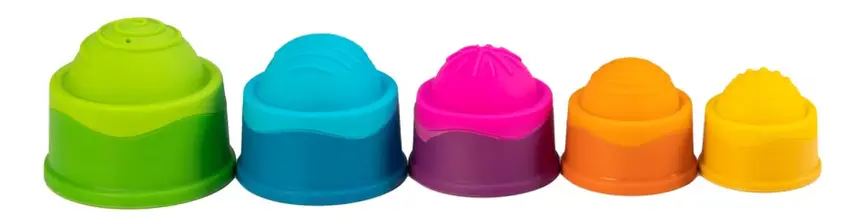
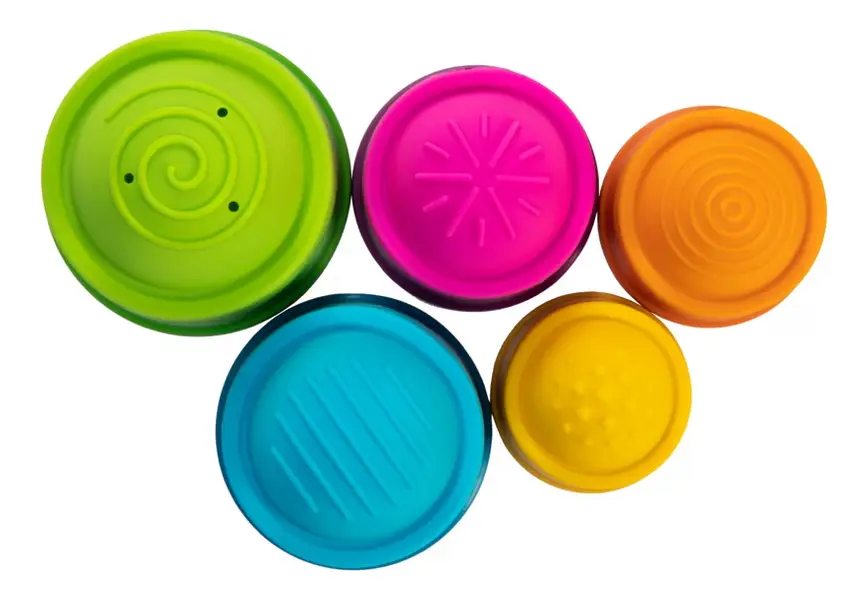
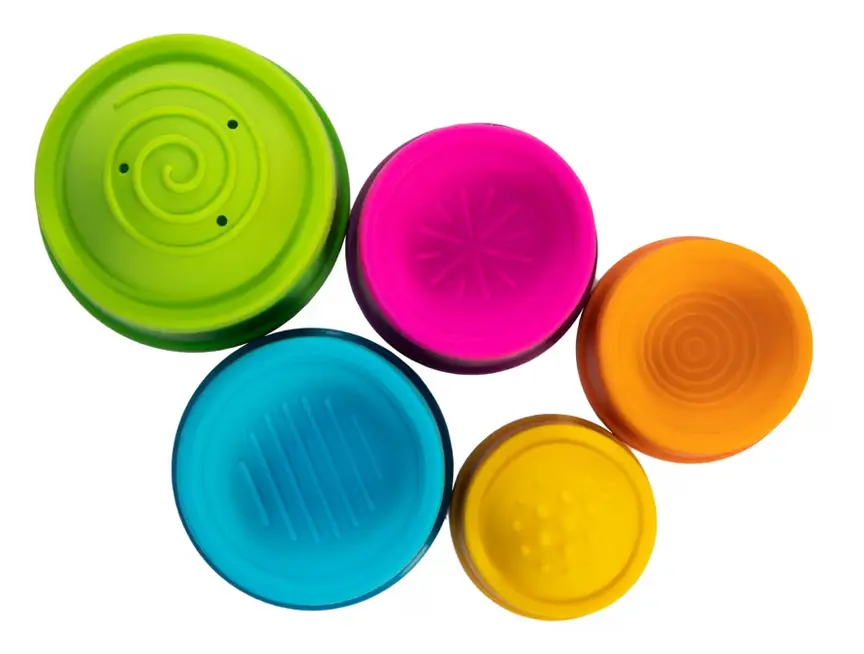
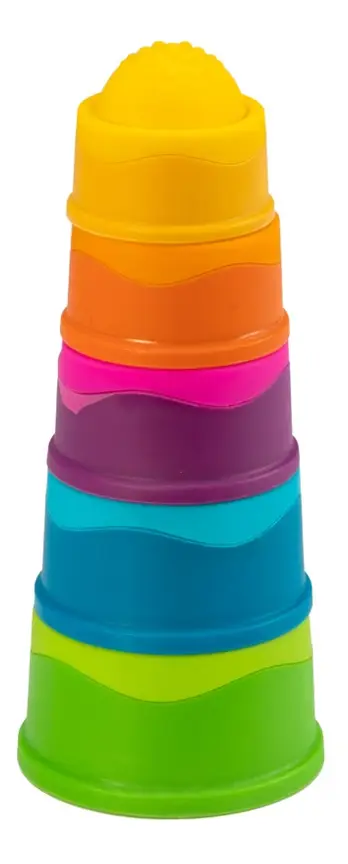
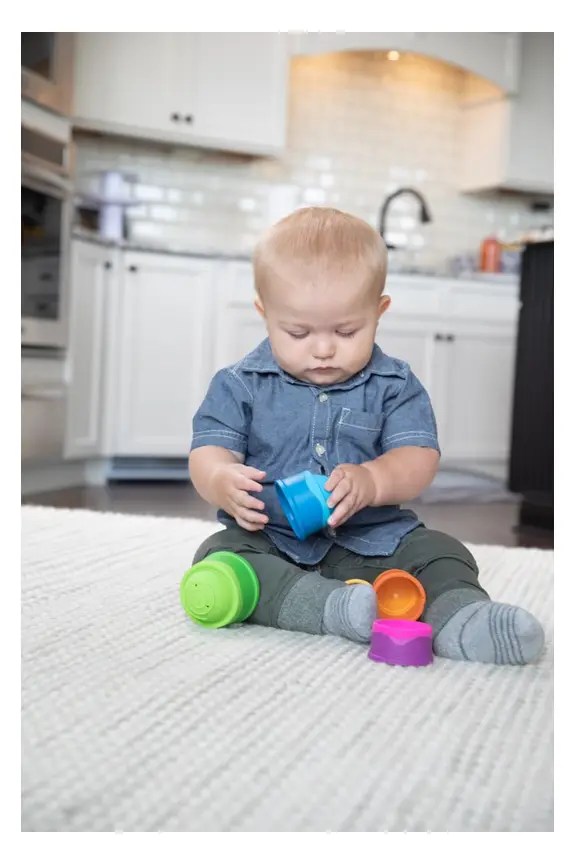
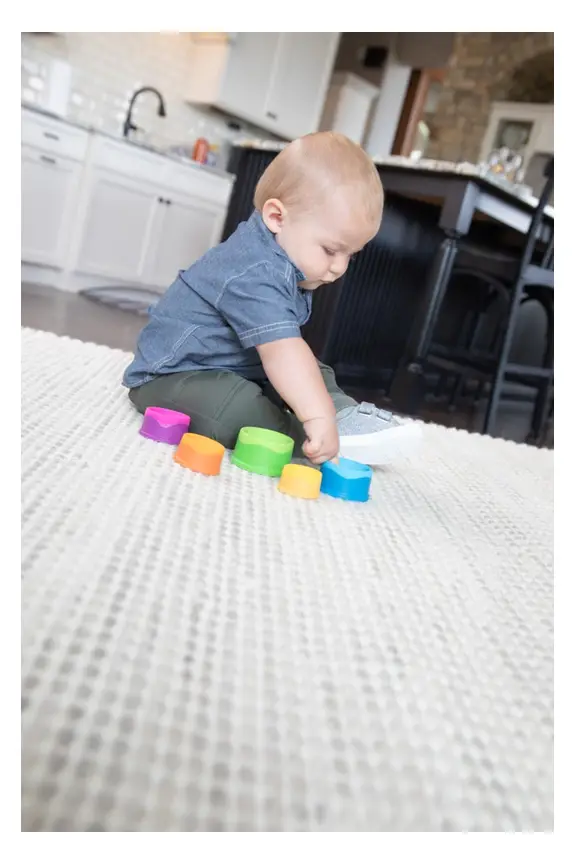
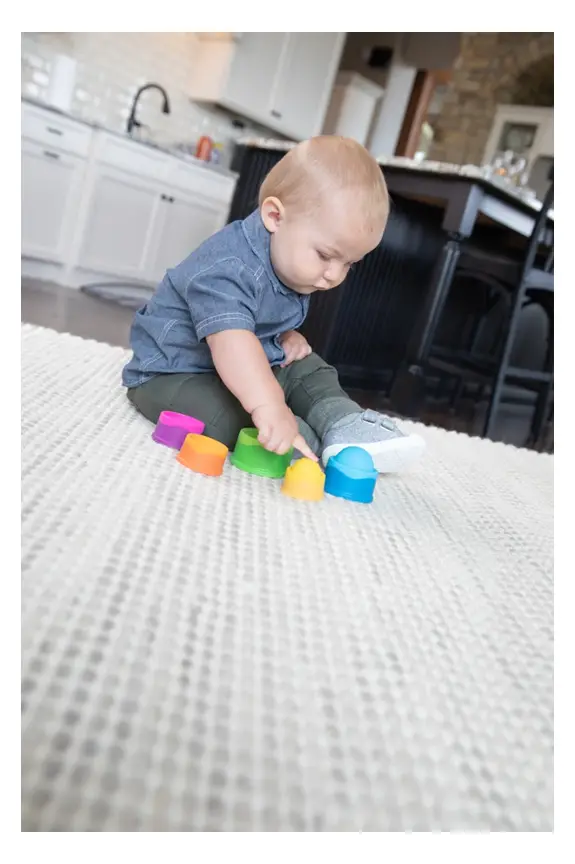
Fat Brain Dimpl Stack
Soft silicone stacking cups with poppable bubbles to push and feel.
Read our full review →Frequently asked questions
How much floor time does my baby need each day?
Your baby can spend most of their awake play time on the floor. For newborns, start with short bursts of tummy time from birth and build up slowly as they get stronger. Aim for plenty of free floor play spread across the day, mixed with cuddles and carrying.
Do I need a Montessori floor bed to have a Montessori play space?
No. A play space and a sleep space are separate things. Many families use a standard cot or crib that meets safety standards for sleep, and set up a Montessori floor mat in the living room for awake play.
Are foam play mats safe for babies?
Plain, firm foam play mats are widely used and fine for awake play. Avoid mats with small interlocking edge pieces that a teething baby can bite off and choke on. Always check your national product recall website before buying secondhand mats.
What if my baby hates tummy time on the floor?
Try shorter, more frequent turns, such as one to two minutes after every nappy change. Lay your baby across your chest while you lean back, or get down on the mat so they can see your face. A shatterproof mirror on the wall also keeps babies interested.
Can I use a baby bouncer or floor seat at all?
Yes, for short periods when you need both hands free, like taking a shower or cooking. Keep your baby supervised, use the harness straps, and always put the bouncer on the floor—never on a table, couch, or bed. Avoid letting your baby sleep in a bouncer.
When should I start a Montessori floor play space?
You can start from the first week at home. A clean, firm mat in a quiet spot gives your newborn a safe place to stretch, look at high-contrast cards, and enjoy short tummy time sessions.
How do I know if a toy is safe for my baby?
Check the age label and safety marks on the box, such as AS/NZS ISO 8124, BS EN 71, or ASTM F963. Pull gently on eyes, wheels, or bells to be sure nothing comes loose. Make sure the toy is too big to fit inside a toilet paper roll, and has no button batteries or loose magnets.
Sources
- Pregnancy, Birth and Baby – Tummy time
- Product Safety Australia – Toppling furniture and televisions guide
- Product Safety Australia – Button batteries guide
- NHS – Baby and toddler safety
- RoSPA – Child safety at home
- American Academy of Pediatrics (US) – Back to sleep, tummy to play
- HealthyChildren.org (AAP) – Baby walkers: a dangerous choice
- HealthLink BC (Canada) – Safe chairs for babies in the first year
Related guides
More Parental Tips →
Encouraging Your Baby's First Words: Montessori Talk and Play from 0 to 18 Months

Toddler Climbing Out of the Cot? What to Do: Sleeping Bags, Floor Beds and a Safe Room
Screen-Free Audio Players for Toddlers: Stories, Listening and Independent Play
