













Night-Time Toilet Training: Why Dry Nights Often Come After Daytime Readiness
Learn why night dryness can come later than daytime toilet skills, how to handle wet beds kindly, and when to seek health advice for your child.
On this page
- Key points
- Daytime readiness and night-time dryness are different
- Why a child may wet the bed while asleep
- Signs a child may be ready for daytime toilet learning
- How to support toilet learning without pressure
- What to do at bedtime
- Should you wake a child to use the toilet?
- Daytime learning and night dryness compared
- Age stages: what families may see
- Common mistakes that can make nights harder
- When to ask a health professional
- Official guidance in Australia, the UK, the US, and Canada
- Frequently asked questions
- Sources and further help
- Sources
Short answer: Daytime toilet learning and staying dry overnight are different skills. A child can use the toilet during the day and still wet the bed at night. This is common. It does not mean your child is lazy or doing it on purpose. Night dryness often comes later as a child’s body matures. Keep nights calm and practical. Offer the toilet before bed. Do not wake your child again and again to make them wee.
Advice for families comes from Pregnancy, Birth and Baby and Healthdirect Australia; the NHS in the UK; the American Academy of Pediatrics (AAP) in the US; and the Canadian Paediatric Society (CPS) in Canada. These groups support families with child health and sleep advice. Ask a local health professional about your child’s needs.
Key points
- Daytime toilet use does not mean a child is ready to stay dry all night.
- Night dryness develops at different times for different children.
- Wet nights are not usually a choice or a behaviour problem.
- Do not shame, punish, or compare children over wet beds.
- Use a waterproof mattress cover and keep spare clothes nearby.
- Offer the toilet before bed, but do not make repeated trips a nightly test.
- Do not restrict drinks to prevent wet sheets.
- Ask a health professional about sudden changes or other symptoms.
Daytime readiness and night-time dryness are different
Toilet learning is a gradual process. A child first needs to notice body signals. They then learn to pause play, reach the toilet, and manage clothing. They may need help with each step. These skills take time and practice.
At night, a child is asleep. Daytime signals work differently then. Their body must hold urine for longer. It may also need to make less urine during sleep. Some children wake when their bladder is full. These abilities develop over time. A child cannot simply choose to develop them sooner.
Some children stay dry at night soon after daytime learning. Others need nappies or pull-ups at night for much longer. Both paths can be normal. A child may have several dry nights, then wet the bed again. That does not erase their progress.
Think of night dryness as a body skill that is still growing. It is not a reward for good daytime behaviour. It is not proof that a child has tried hard enough.
Why a child may wet the bed while asleep
There is no single reason for every wet night. A child may sleep deeply and not wake when their bladder is full. Their bladder may still be small for the amount of urine made overnight. Their body may not yet make less urine during sleep. These changes happen at different times.
Parents may hear about antidiuretic hormone, shortened to ADH. This hormone helps the body make less urine during sleep. It is one part of normal body control. It is not a simple switch that parents can train. Do not give a child medicine or supplements for bedwetting without medical advice.
Other things can affect wet nights. Constipation can put pressure on the bladder. A change in routine, illness, or worry may affect toileting. A move or a new family situation can also be stressful. Some children wet more when they are very tired. None of these things mean the child is at fault.
Sometimes wetting is linked with a health issue. Seek advice if wetting starts suddenly, comes with pain, or appears with unusual thirst or other changes. A health professional can ask about the whole picture.
Signs a child may be ready for daytime toilet learning
No single sign proves a child is ready. Look for several signs over time. Your child may:
- stay dry for a while during the day;
- notice or tell you when they have a wet or dirty nappy;
- show interest in the toilet or potty;
- understand simple steps, such as sitting and getting up;
- tell you they need to go, even if they do not always get there in time;
- manage some clothing with help;
- sit comfortably on a potty or toilet seat;
- show a pattern in when they wee or poo.
Readiness can come and go. A child may be interested one week and less interested the next. Do not force the process. Keep the potty available and offer it gently. If your child becomes upset, take a break. You can try again later.
Your child does not need to master every daytime step before using a nappy or pull-up at night. Night dryness has its own pace. You can support daytime learning while keeping nights protected.
How to support toilet learning without pressure
If possible, choose a quiet time to begin. A move, new childcare setting, new sibling, or family stress can make change harder. Life does not always allow perfect timing. Keep expectations gentle when routines are busy.
Explain what will happen in simple words. Let your child choose a potty or toilet seat if both are safe and available. On a larger toilet, a footstool can help your child feel steady. A stable position may help them relax.
Offer toilet trips at useful times. These may include after waking and before leaving home. Avoid asking every few minutes. Too many reminders can turn toileting into a struggle. Notice effort and communication. Keep praise calm and clear. You could say, “You told me you needed the toilet.”
Accidents are part of learning. Help your child change and clean up without blame. You can say, “Your clothes are wet. Let’s get you dry.” This explains what happened without making your child feel bad.
Offer drinks as usual during the day. Do not restrict a child’s fluids to prevent wet sheets. Children need enough water for their health. Ask a health professional about unusual thirst or changes in urination.
What to do at bedtime
A simple bedtime routine can make nights easier. Invite your child to use the toilet before bed. Make it a normal step, like brushing teeth. If they do not need to go, do not turn it into a battle.
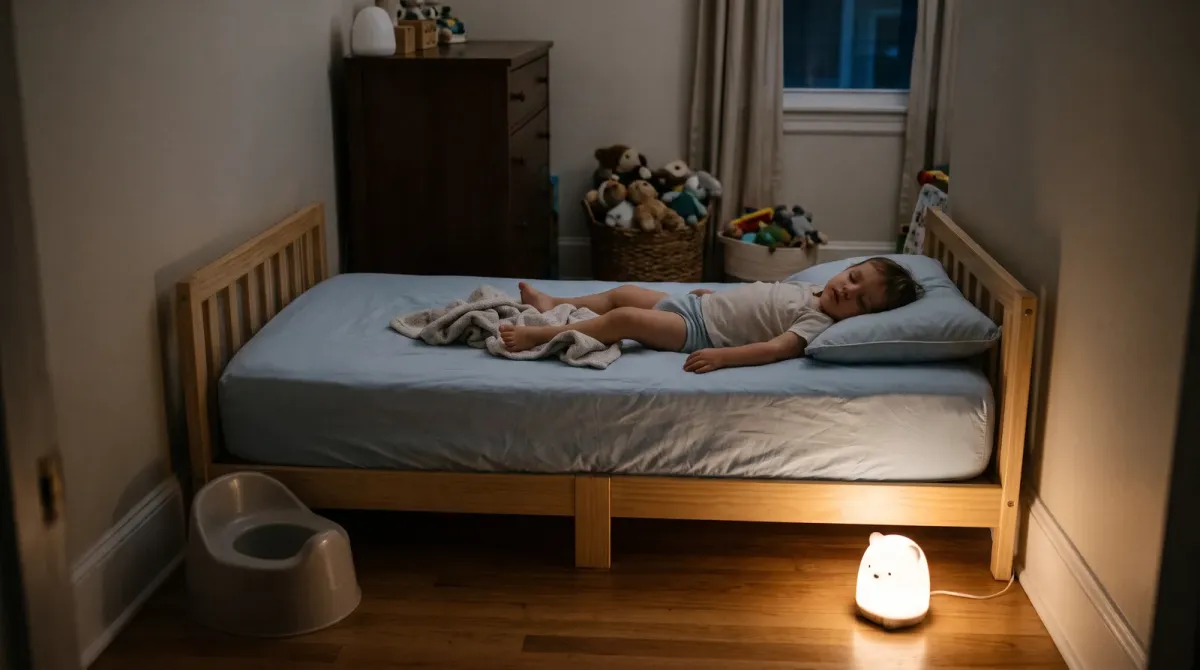
Keep the route to the toilet clear if your child is old enough to walk there safely. A low night-light may help if darkness worries them. Keep the light low and avoid turning the trip into playtime. Help young children as needed.
Use night nappies or pull-ups if they help your family rest. There is no need to stop using them because your child is dry during the day. If you try underwear at night, agree on a simple plan. Keep clean pyjamas and bedding close by.
A waterproof cover can protect the mattress. A spare sheet and pyjamas can save time during a night change. Some families use two layers. They place a waterproof cover and sheet on the bed, then add another cover and sheet. If the top layer gets wet, an adult can remove it quickly. Use bedding that fits the mattress and does not come loose.
For children who still sleep in a cot, follow safe sleep advice for their age. Do not add loose or bulky items to an infant sleep space to manage wet bedding. Ask a health professional if you are unsure about safe bedding.
Should you wake a child to use the toilet?
Waking a child at set times may mean the bed is dry when morning comes. It does not teach the body to stay dry through the night. It may also disturb sleep for the child and caregiver. Routine waking is not needed for every child.
If your child wakes and asks for help, guide them to the toilet. If they sleep through, change wet clothes and bedding calmly when needed. You do not need to set alarms through the night as a standard toilet learning method.
Some families choose a brief toilet trip before the adults go to bed. That is a family choice, not a cure. Do not frighten or fully wake a sleeping child. If this causes distress or harms sleep, stop and seek advice.
Daytime learning and night dryness compared
| Part of learning | Daytime toilet use | Night-time dryness |
|---|---|---|
| When it happens | While awake | While asleep |
| Main task | Notice the urge, pause, reach the toilet, and manage clothes | Hold urine during sleep, make less urine, or wake when the bladder is full |
| What adults can do | Offer a potty, explain steps, and support practice | Offer the toilet before bed, protect the bed, and respond kindly |
| Does success in one mean success in the other? | No. Daytime skills can come first. | No. Night dryness may come later. |
| What may help | Routine, easy clothing, access, and patience | Time, sleep, practical bedding, and calm support |
| What to avoid | Shaming, force, or too many reminders | Punishment, fluid restriction, and repeated forced waking |
Age stages: what families may see
Children develop at different speeds. Age alone cannot tell you when your child will stay dry overnight. These stages are a broad guide, not a deadline.
Before daytime toilet learning
Your child may show little interest in the toilet. They may not notice wetness or tell you when they need to go. Keep care simple. Talk about the toilet when it comes up. Do not expect independent use.
During early daytime learning
Your child may use the potty sometimes and have accidents at other times. They may need reminders before outings or after meals. Keep nights protected. A nappy or pull-up at bedtime does not stop daytime learning.
After daytime progress
Your child may stay dry for much of the day. You can keep offering the toilet before bed and in the morning. Wet nights may continue. Explain that bodies learn night dryness in their own time.
When dry nights begin
You may notice several dry mornings. You can talk with your child about trying underwear at night, if they want to. Keep protection ready. A wet night after dry ones can happen. Return to night nappies or pull-ups if that makes life easier.
When wetting continues or returns
Some older children still wet the bed. Some children who were dry for a time begin wetting again. Offer support without blame. Speak with a doctor or nurse if you are concerned. This is especially useful when wetting is new or comes with other symptoms.
Common mistakes that can make nights harder
- Expecting daytime success to end wet nights. These skills develop differently. Keep a separate plan for nights.
- Calling a child lazy. Wetting during sleep is not a choice. Use neutral words and help them get dry.
- Taking away drinks. Do not limit fluids to prevent accidents. Offer normal drinks through the day.
- Waking the child again and again. This can break sleep without teaching lasting dryness.
- Comparing siblings or friends. Children vary. Comparisons can cause shame and worry.
- Making a big deal of every wet night. A calm clean-up is usually enough. Save longer talks for daytime.
- Stopping night protection too soon. There is no need to rush. Use what helps your family rest.
- Assuming a setback means failure. Illness, stress, constipation, or routine changes can affect progress.
- Using punishment or rewards that create pressure. Praise effort, but do not make affection depend on a dry bed.
When to ask a health professional
Bedwetting is common, but some signs deserve advice. Contact a doctor, nurse, or local health service if your child has pain when urinating, fever, blood in the urine, or a sudden change in how often they wee.
Ask for help if your child is very thirsty, passes much more urine than usual, seems unwell, or loses weight. Also seek advice if wetting starts again after a long dry period. This matters more when other changes appear.
Constipation can affect bladder habits. Tell the health professional if your child has hard or painful poo, avoids doing a poo, or has soiling. Do not assume this is misbehaviour.
Seek support if wet nights cause strong distress, fear, or family conflict. A health professional can help you choose next steps. They can also check for causes that may need care.
For urgent symptoms or a child who seems very unwell, use your local urgent care or emergency service. If you are unsure how soon to seek help, call a local health advice line.
Official guidance in Australia, the UK, the US, and Canada
This topic is about child development and family support. It does not have one shared product safety rule or standard. Health advice should fit the child and the local health system.
| Country | Official or peak health body | How families can use it |
|---|---|---|
| Australia | Pregnancy, Birth and Baby; Healthdirect Australia | Use these services for child health information and guidance on when to seek care. |
| United Kingdom | National Health Service (NHS) | Use NHS guidance and contact your GP or health visitor with concerns. |
| United States | American Academy of Pediatrics (AAP), through HealthyChildren.org | Use its parent health information and ask your child’s clinician about symptoms. |
| Canada | Canadian Paediatric Society (CPS), through Caring for Kids | Use its family health information and speak with your child’s health provider. |
These bodies support families with health information. They do not mean every child will follow the same timetable. A local clinician can help assess symptoms and offer advice for your child.
Frequently asked questions
Is it normal for my child to be dry in the day but wet at night?
Yes. Daytime toilet use and night dryness are separate skills. Many children learn daytime steps first. Keep nights calm and practical.
Does bedwetting mean my child is being lazy?
No. A child who is asleep cannot choose to wet the bed. Avoid blame. Help them change and settle back to sleep.
Should I stop using night nappies once daytime learning starts?
No. You can keep using a night nappy or pull-up while daytime learning continues. Try a change when your child is often dry and feels ready.
Will waking my child prevent bedwetting?
It may help you reach the toilet that night, but it does not teach lasting night dryness. Repeated waking can disturb sleep. Ask a health professional if you are unsure what to try.
Should I give less water in the evening?
Do not restrict fluids to try to stop wet beds. Offer normal drinks through the day. Ask a health professional about unusual thirst or frequent urination.
What should I say after a wet night?
Keep it simple: “Your bed is wet. Let’s get you dry.” Avoid anger or a long talk at night. Discuss concerns during the day.
My child was dry and has started wetting again. What now?
Stay calm and look for changes, such as illness, stress, constipation, or a new routine. Ask a health professional if wetting continues, seems unusual, or comes with other symptoms.
When should I seek medical advice?
Ask for advice about pain, fever, blood in urine, unusual thirst, or a sudden change in urination. Also seek advice if wetting returns after a long dry spell. Get urgent help if your child seems very unwell.
Sources and further help
- Pregnancy, Birth and Baby (Australia)
- Healthdirect Australia
- NHS (UK) – Helping your baby to sleep
- American Academy of Pediatrics – Healthy sleep habits
- Canadian Paediatric Society – Healthy sleep for your baby and child
This article offers general information only. It does not replace advice from a doctor, nurse, or other qualified health professional. Always seek professional advice for concerns about your child’s health. This site may use affiliate links. If you buy through them, BabyGearFinder may earn a commission at no extra cost to you.
Sources
Related guides
More Parental Tips →
Protect Your Back After Birth: Safer Cot Transfers, Night Feeds and Nappy Changes

Returning to Work After Parental Leave: Pumping, Daycare and Time Together

Nighttime Potty Training vs Daytime Dryness: How ADH Hormone Works and When Kids Stay Dry