














Rolling, Sitting and Crawling: How to Avoid 'Container Baby' Habits With Bouncers, Swings and Seats
How much time in bouncers, swings and seats is too much? Simple, calm advice on floor play, tummy time and safe use of baby gear while your baby learns to…
On this page
- Key points
- What 'container baby' really means
- Why floor time helps your baby grow
- Tummy time: where it all starts
- How long is too long in a bouncer, swing or seat?
- Comparing common baby gear
- Why bouncers and swings are not for sleep
- Rolling: the first big move
- Sitting: not too early
- Crawling and moving about
- Make the home safe once your baby moves
- A sample day with a good balance
- Advice from official bodies in four countries
- Common mistakes to avoid
- When to talk to a health professional
- Frequently asked questions
- The bottom line
- Sources
Short answer: Babies learn to roll, sit and crawl by moving on a firm, flat floor. Bouncers, swings, car seats and high chairs are fine for short, supervised times. But they should not fill the day. Health groups in Australia, the UK, the US and Canada all say the same thing. Give your baby plenty of time awake on the floor. Keep time in baby gear short. Never leave a baby to sleep in a bouncer or swing.
People sometimes call it 'container baby syndrome'. This is not a medical diagnosis. It is a popular name for a simple worry. A baby who spends most of the day in seats and holders gets less chance to move. Less movement means less practice. This guide explains what that looks like and how to fix it. It is not about guilt. Every family uses baby gear. The aim is a good balance.
Key points
- Floor time matters: babies build strength by pushing, rolling and reaching on the floor.
- Gear is a tool, not a home: use it for short breaks, not for hours.
- Tummy time: start from birth, in short bursts, while your baby is awake and you are watching.
- Sleep: babies sleep flat on their back in a cot or bassinet. Not in a bouncer, swing or car seat at home.
- No walkers: baby walkers do not help babies walk. They cause injuries.
- Every baby is different: the ages in this guide are rough. Talk to your nurse or doctor if you are worried.
What 'container baby' really means
A container is anything that holds your baby in one place. Think of a bouncer, a swing, a car seat, a pram seat, a high chair, a play seat or a baby walker. Each one has a good use. Each one also limits how much your baby can move.
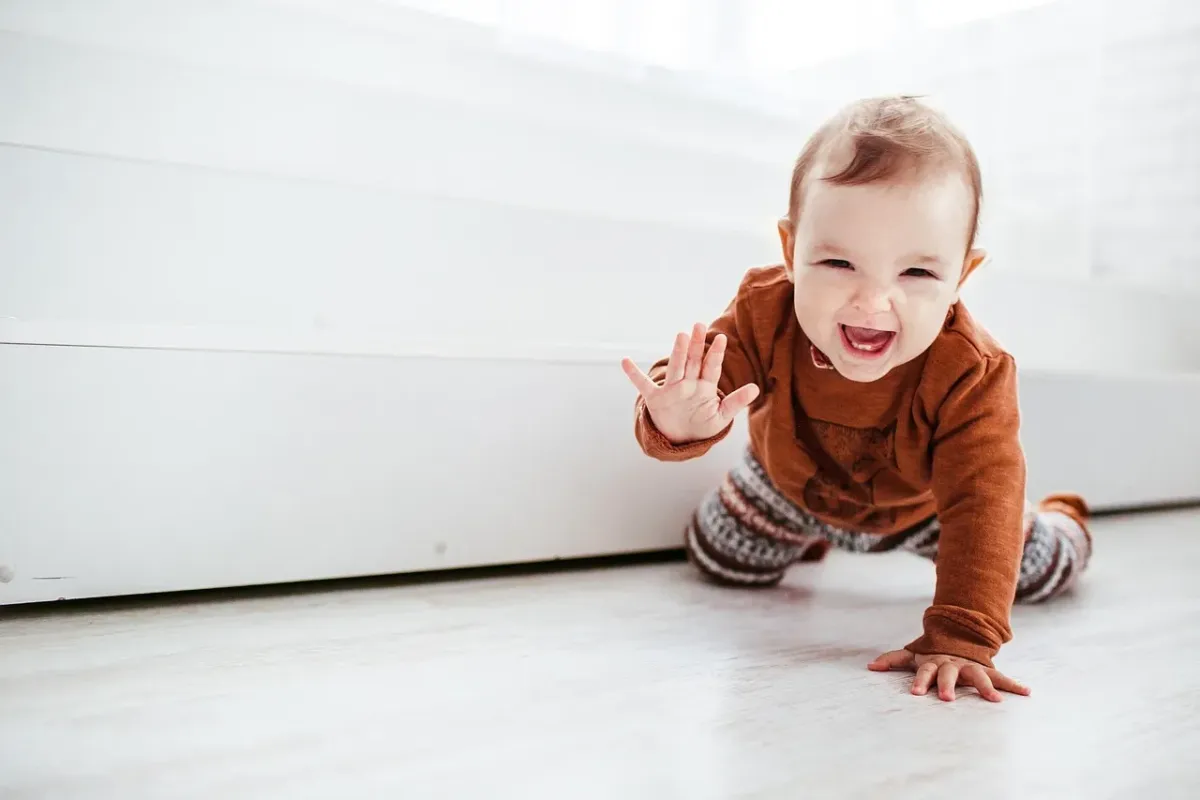
Babies are not born ready to sit or crawl. They get ready bit by bit. First they lift their head. Then they push up on their arms. Then they roll. Then they sit. Then they crawl. Each step builds the muscles for the next one. The practice happens when they are free to wriggle.
When a baby is held in a seat, the seat does the work. The seat holds up the back and head. The baby has less reason to push, twist or reach. A few minutes here and there does no harm. The worry is about the total across the whole day.
Why the term can feel unfair
Many parents hear this phrase and feel bad. That is not the point. Tired parents need a safe place to put a baby while they cook, shower or rest. That is normal. The goal is to make small changes, not to throw out your gear.
Why floor time helps your baby grow
The floor gives a baby something firm to push against. That push builds strength in the neck, shoulders, arms, back and tummy. These are the same muscles your baby needs for rolling, sitting and crawling.
Floor play also helps in other ways:
- Learning to move: your baby tries a movement, fails, and tries again. This is how the brain learns.
- Seeing the world: lying on the tummy gives a different view. Your baby can reach for toys and look at faces.
- Head shape: a baby who lies on the back in seats for many hours can develop a flat spot on the head. The NHS explains this as flat head syndrome. Time on the tummy and in your arms gives the head a break from pressure.
- Bonding: lying on the floor with your baby, face to face, is great play.
You do not need special toys. A clean, firm mat or blanket works well. A mirror, a rattle, a soft book and your face are enough.
Tummy time: where it all starts
Tummy time means placing your baby on their tummy while they are awake. Someone must watch the whole time. The American Academy of Pediatrics (AAP) says to start from the first days at home. Pregnancy, Birth and Baby in Australia gives the same message.
Short sessions are fine at first. A newborn may manage only a minute or two. Do it a few times a day. Slowly build up as your baby gets stronger and happier.
Tips if your baby hates it
- Try it after a nappy change, when your baby is alert and calm.
- Lie down on your back and place your baby tummy-down on your chest. This counts.
- Roll up a small towel under the chest and arms for a little support.
- Put a mirror or a bright toy at eye level.
- Lie on the floor face to face and talk or sing.
- Do not do it right after a feed. A full tummy can lead to spitting up.
- Stop if your baby is crying hard. Try again later.
Tummy time is for play, never for sleep
Tummy time is only for when your baby is awake and watched. If your baby falls asleep on their tummy, roll them onto their back at once. Red Nose in Australia, the Lullaby Trust in the UK, the AAP in the US and the Canadian Paediatric Society all say the same. Babies sleep on their back, on a firm, flat surface.
Bouncers, Rockers & Swings worth a look
Real products from our catalogue. We don't show star ratings or review counts; check the current price, stock and reviews on Amazon before you buy.


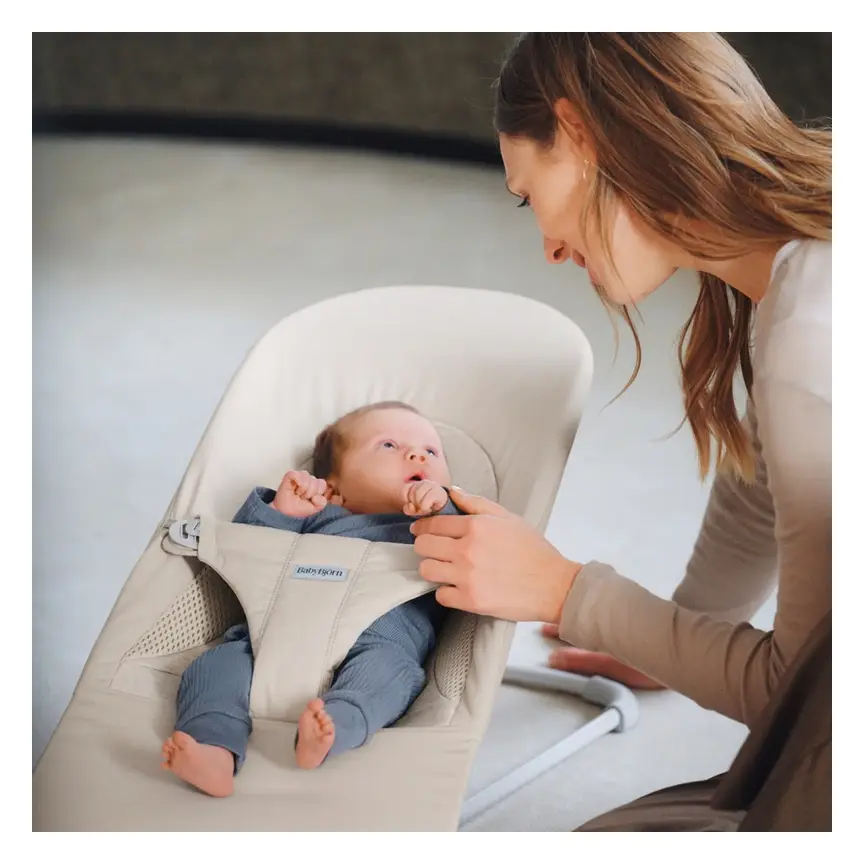
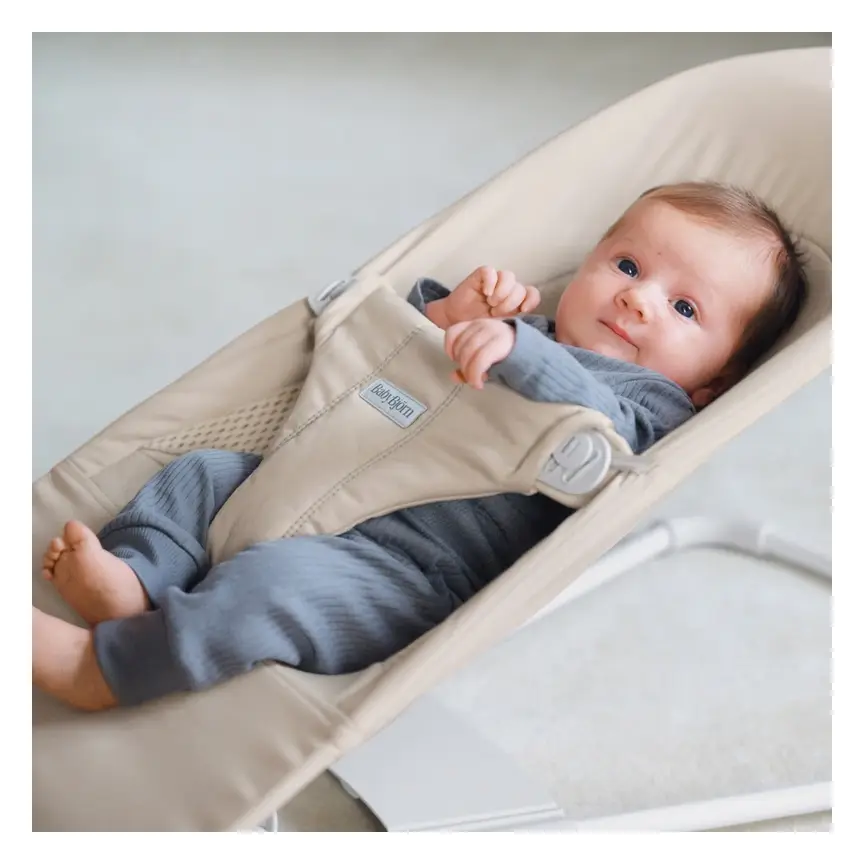

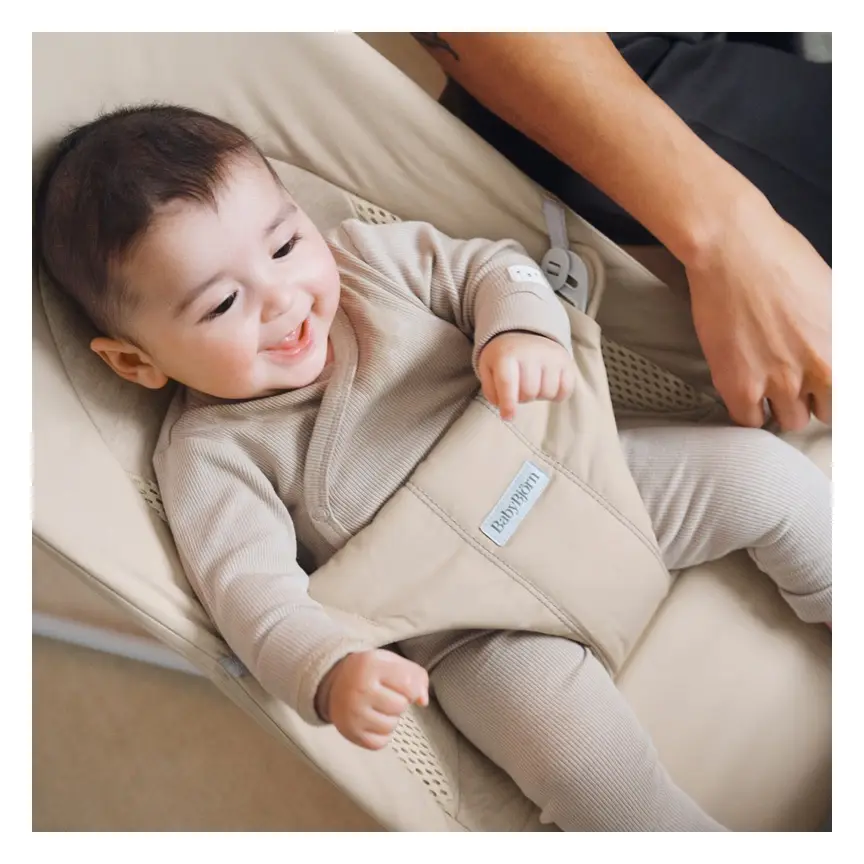

BabyBjörn Bouncer Balance Soft
A no-battery bouncer that moves with baby. It has 3 positions and folds flat.
Read our full review → Reviewed
BabyBjörn Bouncer Bliss
Battery-free bouncer that rocks with your baby's own movements and converts into a toddler seat. For supervised awake time, not sleep.
Read our full review →

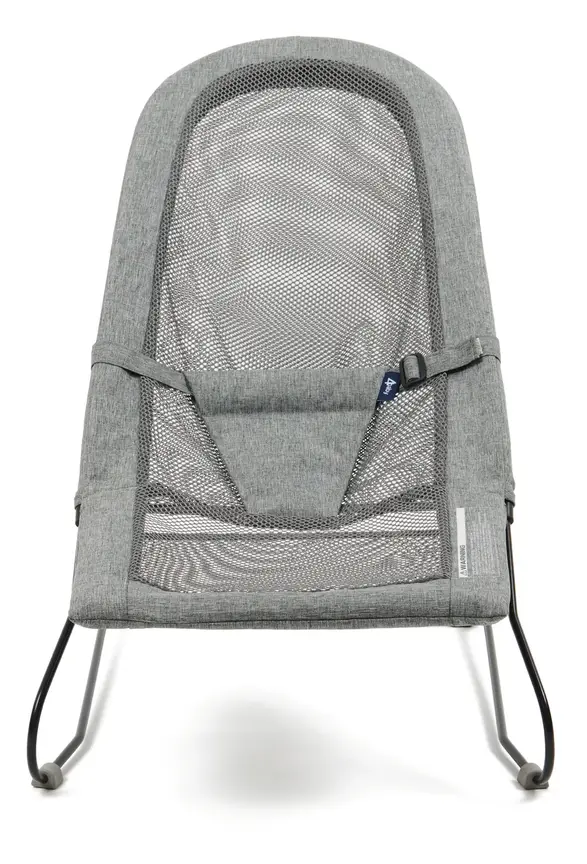
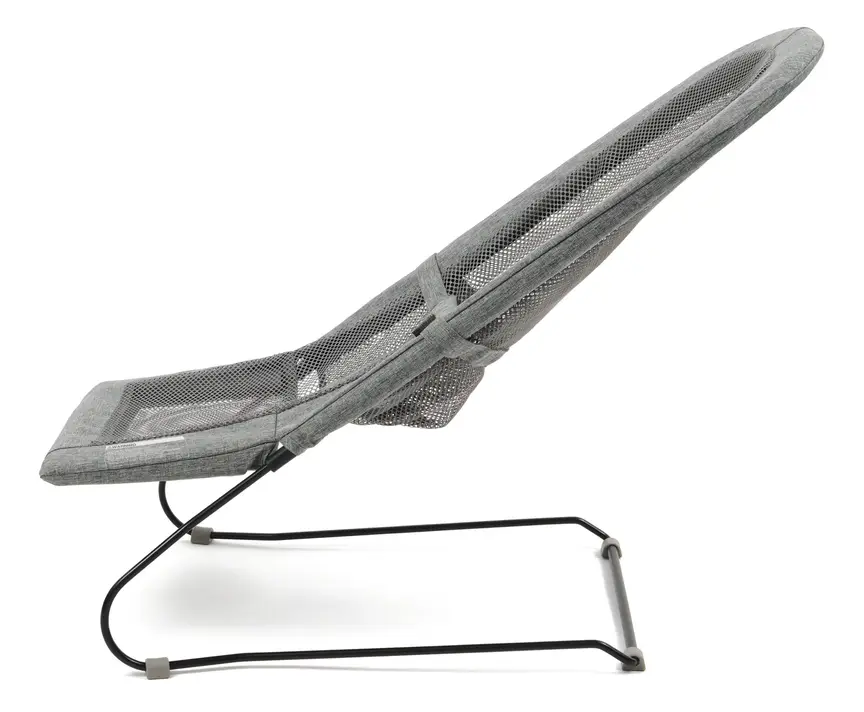
Ingenuity Nestle Vibrating Rocker
A light mesh rocker with vibration that folds flat. Stop using it at 9 kg or when baby tries to sit up.
Read our full review →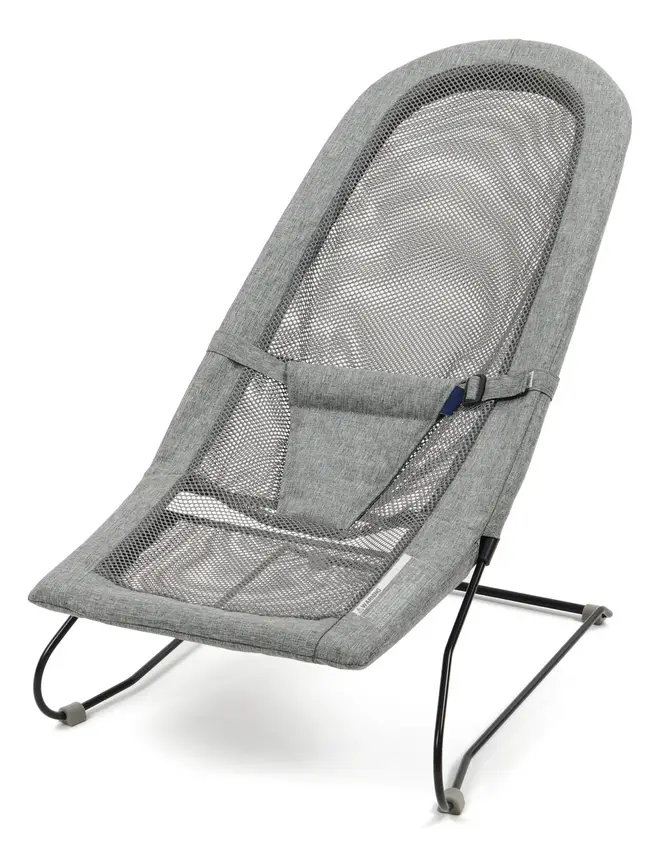
How long is too long in a bouncer, swing or seat?
There is no magic number that every health group agrees on. But Australian movement guidelines for babies under one year give a helpful rule. They say babies should not be held in one position, such as in a pram, high chair or car seat, for more than one hour at a time. They also ask for tummy time spread through the day for babies who are not yet moving on their own. Canadian movement guidelines give very similar advice.
Here is a simple way to think about it:
- Keep each stretch short. If your baby has been in a seat for a while, move them to the floor.
- Watch the whole day. Add up bouncer, swing, car seat, pram and high chair time. Is there enough floor time too?
- Match the gear to the need. A bouncer while you shower is fine. A bouncer for the whole afternoon is too much.
- Follow your baby. A happy, alert baby who loves floor play is a good sign. A baby who only settles in a seat may need more gentle practice on the floor.
Car seats need a special note. They are made for travel. They keep your baby safe in a crash. They are not a bed or a play seat. Take your baby out when you arrive. Red Nose has clear advice about not leaving babies to sleep in car seats at home.
Comparing common baby gear
This table shows what each item is good for and what to watch. It is general advice. It does not rate any brand.
| Item | Good for | Watch out for | Safe sleep? |
|---|---|---|---|
| Bouncer | A short, safe spot while you do a quick task | Long stretches. Placing it on a table or bench. Baby slumping forward. | No |
| Swing | A short settling break while baby is awake | Baby falling asleep in it. Using it for hours. Loose straps. | No |
| Car seat | Travel in the car only | Using it as a bed or a chair at home. | No, not at home |
| Pram or stroller seat | Outings | Long naps in a seat that is not fully flat. | Only if fully flat and made for sleep |
| High chair | Meals, once baby can sit up well | Staying in it after the meal. Baby not strapped in. | No |
| Play mat on the floor | Tummy time, rolling, reaching | Soft, thick surfaces. Small parts that can come loose. | No |
| Playpen or play yard | A safe space for older babies to play | Using it for hours. Mattress added that does not fit. | Only if made for sleep |
| Baby walker | Nothing. Experts advise against it. | Falls, burns, reaching hot or heavy things. | No |
Why bouncers and swings are not for sleep
Many babies fall asleep in a bouncer or swing. It happens. But these seats hold the baby at a slant. A sleeping baby can slump forward. Their chin can drop onto their chest. That can block their airway.
Red Nose says babies should sleep flat on their back in a safe cot, bassinet or portable cot. The US Consumer Product Safety Commission has warned about inclined products. The UK and Canadian health groups give the same message. If your baby falls asleep in a bouncer or swing, move them to a safe sleep space. Do this as soon as you can.
Also check these points:
- Use the straps every time.
- Keep the bouncer on the floor. Never on a table, bench or bed.
- Do not put it near stairs.
- Keep other children and pets away from it.
- Do not leave your baby alone in it.
Rolling: the first big move
Many babies start to roll somewhere around four to six months. Some do it earlier and some later. Often the first roll is by accident. A baby pushes up, shifts weight and flops onto their back. Then they do it again on purpose.
You can help rolling along:
- Lay your baby on a mat. Hold a toy to one side, just out of reach.
- Gently help the leg and hip across when your baby tries to follow it.
- Do lots of tummy time. Strong arms and neck make rolling easier.
- Let your baby wear light, loose clothes. Tight or thick clothes make it hard to move.
When rolling starts, sleep changes
Once a baby can roll, safe sleep needs a few changes. Red Nose says to stop wrapping (swaddling) at the first signs of rolling. A baby sleeping bag with arms out is the better choice. You still put your baby down on their back. If they roll on their own and can do it both ways, you do not need to keep turning them. Red Nose and the Lullaby Trust both have clear pages on this.
Rolling also brings a new risk: falls. A baby can roll off a bed, sofa or change table in a second. Never leave a baby alone on a raised surface, even for a moment. Kidsafe Australia and the NHS both stress this. Change nappies on the floor if you can.
Sitting: not too early
Most babies sit alone with no help at around six to eight months. Some are earlier and some later. Before that, they may sit with a bit of support and then tip over.
It is tempting to prop a young baby up in a seat or with cushions. Try not to. A baby who is placed in a sitting position before ready has weak core muscles. They may slump. They may also tip over and bump their head. Let your baby get there by their own effort.
Signs your baby is nearly ready to sit
- Good head control, with no wobble.
- Pushes up high on straight arms during tummy time.
- Rolls both ways.
- Likes being held in a sitting position on your lap.
- Can bear weight on their legs when held standing.
How to help
- Sit your baby between your legs on the floor. Let them lean on your shin or hold a toy.
- Place soft cushions around them for falls. Watch closely.
- Put toys in front, at a little distance. This makes your baby lean and balance.
- Let your baby practise for short spells, then lie back down. Sitting takes effort.
When your baby sits well, the high chair becomes useful for meals. HealthLink BC in Canada has useful advice on safe chairs for babies in the first year. Use the straps every time. Keep your baby in the chair for the meal only.
Side by side: more bouncers, rockers & swings to compare
Real products from our catalogue. We don't show star ratings or review counts; check the current price, stock and reviews on Amazon before you buy.
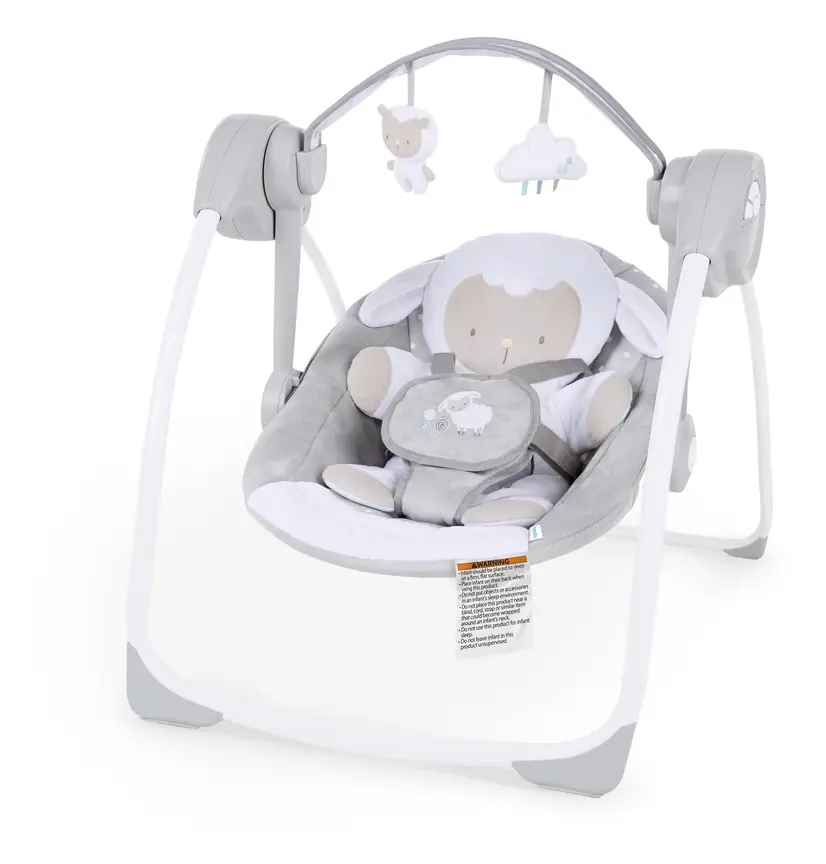

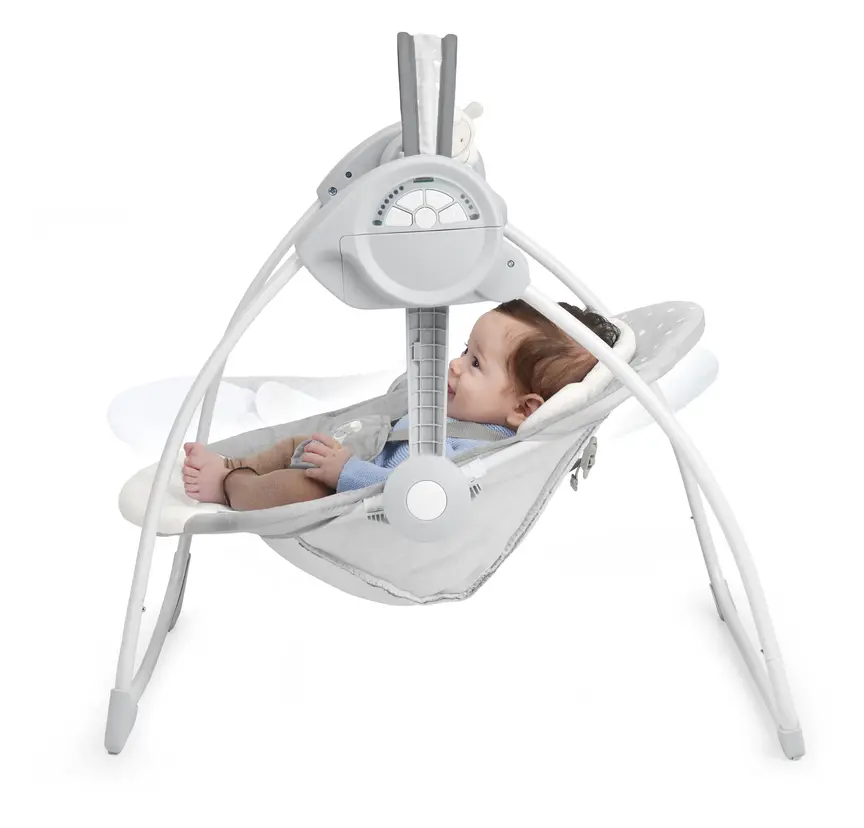
Ingenuity Comfort 2 Go Portable Swing
A folding swing with 6 speeds, a timer and 12 tunes.
Read our full review →
Ingenuity Keep Cozy 3-in-1 Bounce & Rock Seat
A bouncer, rocker and toddler seat in one, with vibration.
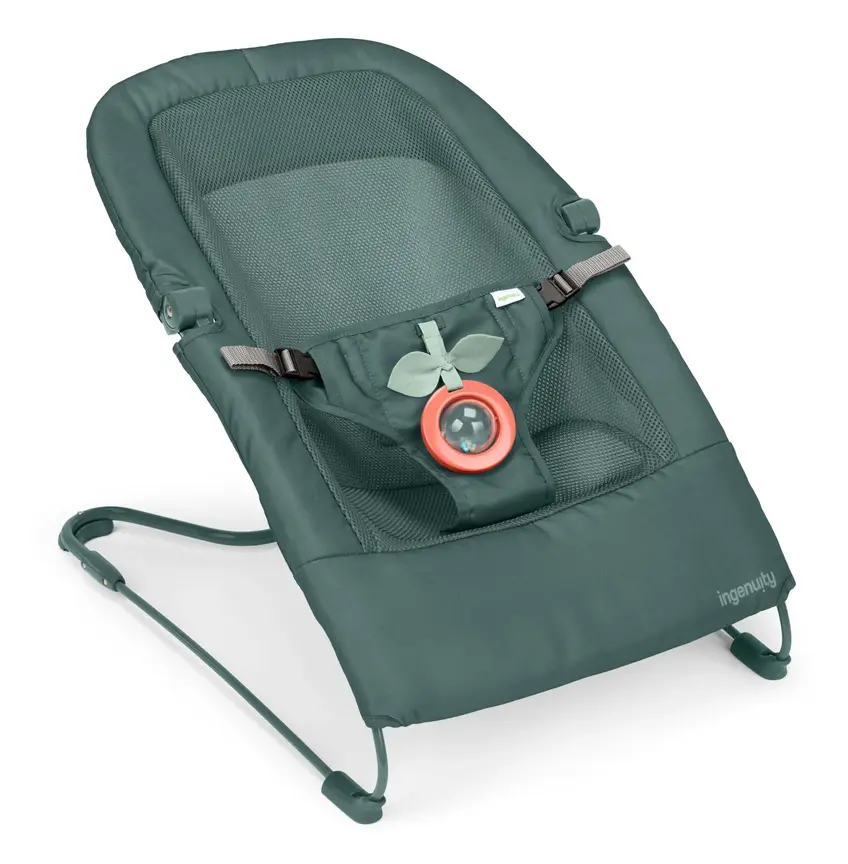
Ingenuity Stow & Go Compact Folding Baby Bouncer
Baby bouncer

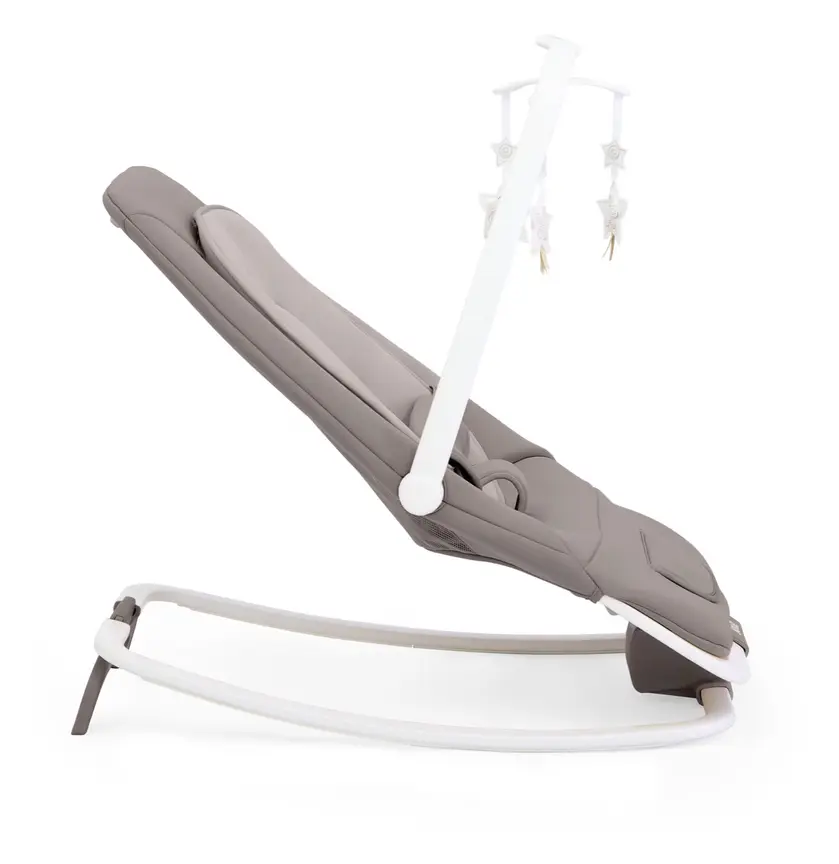
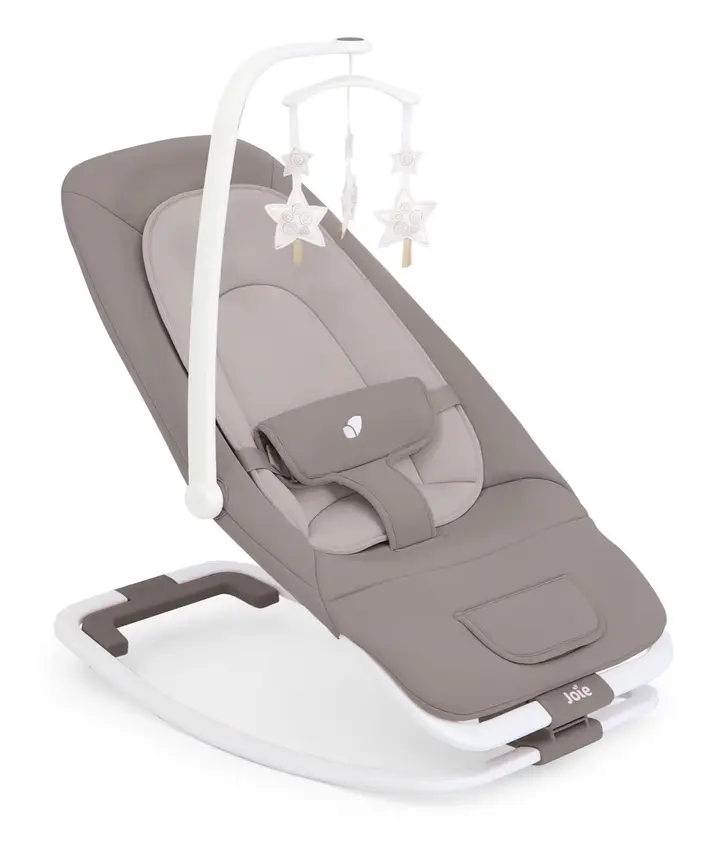
Joie Dreamer Bouncer
A slim-folding bouncer with vibration, lullabies and nature sounds.
Read our full review →Crawling and moving about
Crawling often starts between seven and ten months. Babies find many ways to move. Some crawl on hands and knees. Some bottom-shuffle. Some roll across the room. Some commando-crawl on their tummies. Some skip crawling and go straight to pulling up and walking. All of these are normal.
To help your baby get ready:
- Give lots of space on a safe, clear floor.
- Put favourite toys just out of reach.
- Get down and crawl with your baby. They love it.
- Place a rolled towel under the tummy to help lift the body if your baby is stuck.
- Keep your baby in bare feet or non-slip socks indoors. Bare feet help balance.
Do not use a baby walker
Some people think a walker helps a baby walk sooner. It does not. The AAP calls walkers a dangerous choice. Babies in walkers move fast. They can fall down stairs. They can reach hot drinks, stoves or heavy objects. Canada has banned the sale of baby walkers. Safety groups in other countries also advise against them. A play mat, a push toy for later, and floor time are safer choices.
Make the home safe once your baby moves
A baby who can roll, sit and crawl can reach more things. That is good for learning. It also means the house needs a check. Do it before your baby is on the move.
- Stairs: fit safety gates at the top and bottom. Product Safety Australia has a guide to choosing gates.
- Furniture: fix tall furniture and TVs to the wall. A baby who pulls up can tip them over. The US Anchor It! campaign and Product Safety Australia both explain how.
- Cords: tie up blind and curtain cords high out of reach. They can strangle a child.
- Small items: coins, batteries, magnets and small toy parts can cause choking or serious harm. Keep them out of reach.
- Hot things: keep hot drinks away from the edge of tables.
- Water: never leave a baby alone near a bath, bucket or pool.
- Floor: clear the play area. Check for small objects under the sofa.
Get down to your baby's level. Look at the room from the floor. You will spot hazards you missed.
A sample day with a good balance
This is only an example. Your day will look different. Babies change fast, so the plan will change too.
| Time of day | What your baby might do | Where |
|---|---|---|
| Morning wake-up | Nappy change, feed, play | Floor mat, tummy time or back play |
| Mid-morning | Nap | Cot or bassinet, flat on back |
| Late morning | Short outing | Pram or carrier, car seat for the drive |
| Lunch | Feed, quick tidy-up | Arms, or high chair if sitting |
| Early afternoon | Nap | Cot or bassinet |
| Mid-afternoon | Play, rolling, reaching | Floor mat |
| Cooking time | Short break while you cook | Bouncer on the floor in sight, for a short time |
| Evening | Bath, feed, story | Arms, then cot for sleep |
See how the seats appear for short breaks only? Most of the awake time is spent in your arms or on the floor.
Advice from official bodies in four countries
Health and safety groups in all four countries agree on the main points. The wording differs a little.
| Topic | Australia | UK | US | Canada |
|---|---|---|---|---|
| Tummy time | Daily, while awake and watched. Pregnancy, Birth and Baby and the Australian Government health department. | Daily, while awake. NHS. | Start from birth. American Academy of Pediatrics. | Daily, spread through the day. Canadian movement guidelines. |
| Time in seats | No more than one hour at a time in a restraint such as a pram or high chair. | Mix seat time with floor play. NHS. | Limit time in seats and holders. AAP. | Similar one-hour limit in movement guidelines. |
| Sleep in bouncers or swings | Not safe. Red Nose. | Not safe. Lullaby Trust. | Not safe. AAP and the Consumer Product Safety Commission. | Not safe. Canadian Paediatric Society and Health Canada. |
| Baby walkers | Experts advise against them. | Not recommended. | AAP says to avoid them. | Banned from sale. |
| Fall safety | Kidsafe Australia | RoSPA and the NHS | CPSC and the AAP | Health Canada and Parachute |
| Product safety rules | Product Safety Australia (ACCC) | Office for Product Safety and Standards | Consumer Product Safety Commission | Health Canada |
Standards for baby products differ from country to country. For example, UK cots follow BS EN 716, and Australian cots follow AS/NZS 2172. Baby toys follow standards such as BS EN 71 in the UK and ASTM F963 in the US. You do not need to memorise any of this. Look for the official safety label or mark that is right for your country. Check the recall pages of your national regulator before you buy second-hand gear.
Common mistakes to avoid
- Letting baby sleep in a bouncer or swing. Move them to a flat cot or bassinet.
- Using gear on raised surfaces. A bouncer on a table can fall in a flash.
- Skipping tummy time because baby cries. Try shorter sessions, or lie baby on your chest first.
- Propping a baby up too early. Wait until your baby can sit without help.
- Using a walker. It is not safe and does not speed up walking.
- Leaving baby in a car seat at home. Take them out once you arrive.
- Comparing babies. Your friend's baby may sit early. Yours may crawl early. Both are fine.
- Feeling guilty. Using a bouncer to shower is not a failure. Just keep the balance.
When to talk to a health professional
Babies learn at their own speed. But some signs are worth a check. Talk to your child health nurse, GP or doctor if:
- Your baby has very floppy or very stiff arms and legs.
- Your baby cannot hold their head up by about four months.
- Your baby does not reach for toys or follow things with their eyes.
- Your baby always turns the head to one side, or has a flat spot that is getting worse.
- Your baby uses one side of the body much more than the other.
- Your baby is not rolling, sitting or moving by the ages your nurse expects.
- You just have a worry. You know your baby best.
Early help is easy and often makes a big difference. Never wait if something feels wrong.
More options, from budget to premium
Real products from our catalogue. We don't show star ratings or review counts; check the current price, stock and reviews on Amazon before you buy.
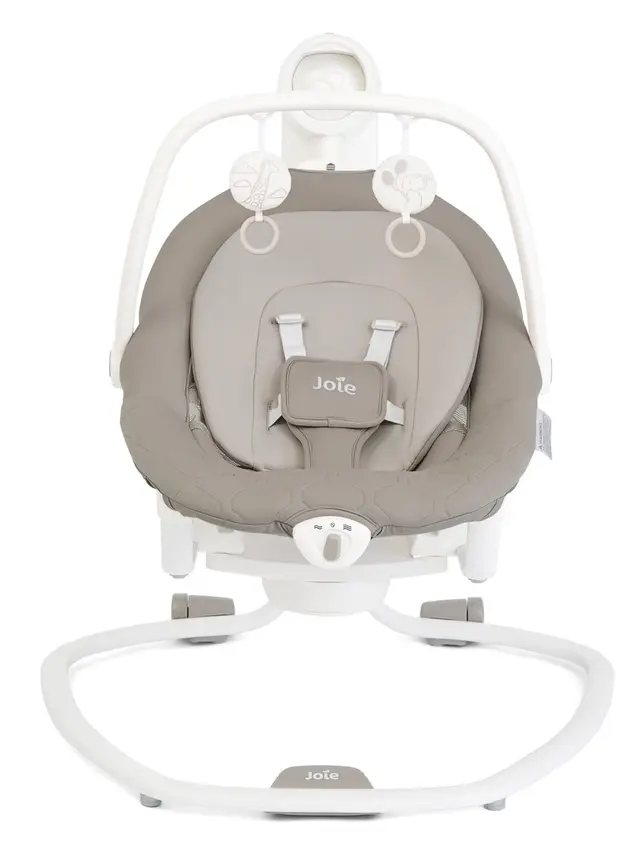


Joie Serina 2-in-1 Swing
A powered swing with 6 speeds. The seat lifts off to use as a rocker.
Read our full review →

 Reviewed
Maxi-Cosi Cassia Swing
A swing whose seat turns 360°. It can sense when baby is unsettled and start rocking.
Read our full review →Frequently asked questions
Is 'container baby syndrome' a real medical condition?
No. It is a popular phrase, not a diagnosis. It describes a baby who spends most awake time in seats, bouncers, swings and holders. The concern is real. Babies need to move to learn. But a few hours in gear will not harm a baby who gets plenty of floor time at other times.
How long can my baby stay in a bouncer or swing?
Keep each stretch short. Australian movement guidelines say babies should not be held in a restraint such as a pram or high chair for more than one hour at a time. Many parents stick to much shorter times for bouncers and swings. Always watch your baby, and use the straps.
Can my baby nap in a bouncer or swing?
No, not as a safe sleep place. Bouncers and swings are at a slant. A sleeping baby can slump and block their airway. If your baby falls asleep, move them to a flat cot or bassinet. Put them on their back.
My baby hates tummy time. What can I do?
Start with very short sessions of one or two minutes. Place your baby on your chest while you lie back. Use a mirror or a toy. Get down and face your baby. Try after a nappy change. Do it several times a day. Most babies get used to it. Talk to your nurse if your baby still struggles.
When should my baby be sitting, rolling and crawling?
Ages vary. Many babies roll between four and six months. Many sit alone around six to eight months. Many crawl between seven and ten months. Some skip crawling. Your nurse can check your baby's progress at regular visits.
Are baby walkers safe?
No. The American Academy of Pediatrics calls them a dangerous choice. Babies can fall down stairs or reach dangerous things. Canada has banned the sale of baby walkers. Choose floor play instead.
Does sitting my baby up early help them sit sooner?
No. Propping a baby before they are ready does not build the right muscles. They may slump or tip over. Floor play and tummy time work better. Let your baby get there on their own.
Can I use a car seat as a baby seat at home?
It is best not to. A car seat is made for travel. Take your baby out when you arrive. Do not let a baby sleep in a car seat at home, as Red Nose and the Lullaby Trust advise.
Do I need to buy special toys or mats?
No. A clean, firm floor surface with a blanket or simple mat is enough. A mirror, a rattle and your face are great. Safe, simple play is best.
The bottom line
Baby gear can make life easier. Use it with care and keep the time short. Your baby learns best on the floor with you close by. Offer tummy time from the start. Keep sleep flat and on the back. Make your home safe for the moves that come next. Then enjoy the show as your baby rolls, sits and crawls at their own pace.
Sources
- Australian Government Department of Health – Sleep guidelines for toddlers and preschoolers
- Pregnancy, Birth and Baby – Tummy time
- Red Nose Australia – What do we do now that our baby has started to roll over?
- American Academy of Pediatrics (US) – Back to sleep, tummy to play
- HealthyChildren.org (AAP) – Baby walkers: a dangerous choice
- NHS – Baby and toddler safety
- HealthLink BC (Canada) – Safe chairs for babies in the first year
- Kidsafe Australia – Falls
Related guides
More Parental Tips →
Dressing a Baby With a Fever at Night: Why Bundling Traps Heat and How to Use a 0.5 TOG Layer

Baby Rolling Onto Their Tummy in the Cot: What to Do, and When You Can Stop Turning Them Back
Flying with a Baby: Packing Checklist, Formula and Milk Through Security, and Pram Gate Check
