














Magnetic Cabinet Locks vs Spring Latch Locks: How to Choose and Fit Them
Compare magnetic and spring latch cabinet locks, learn how to fit and check them, and find safer ways to store medicines, cleaners and sharp tools.
On this page
- What cabinet locks can and cannot do
- How magnetic and spring latch locks work
- Comparison at a glance
- How to choose a lock for your cupboards
- Adhesive locks and pull strength
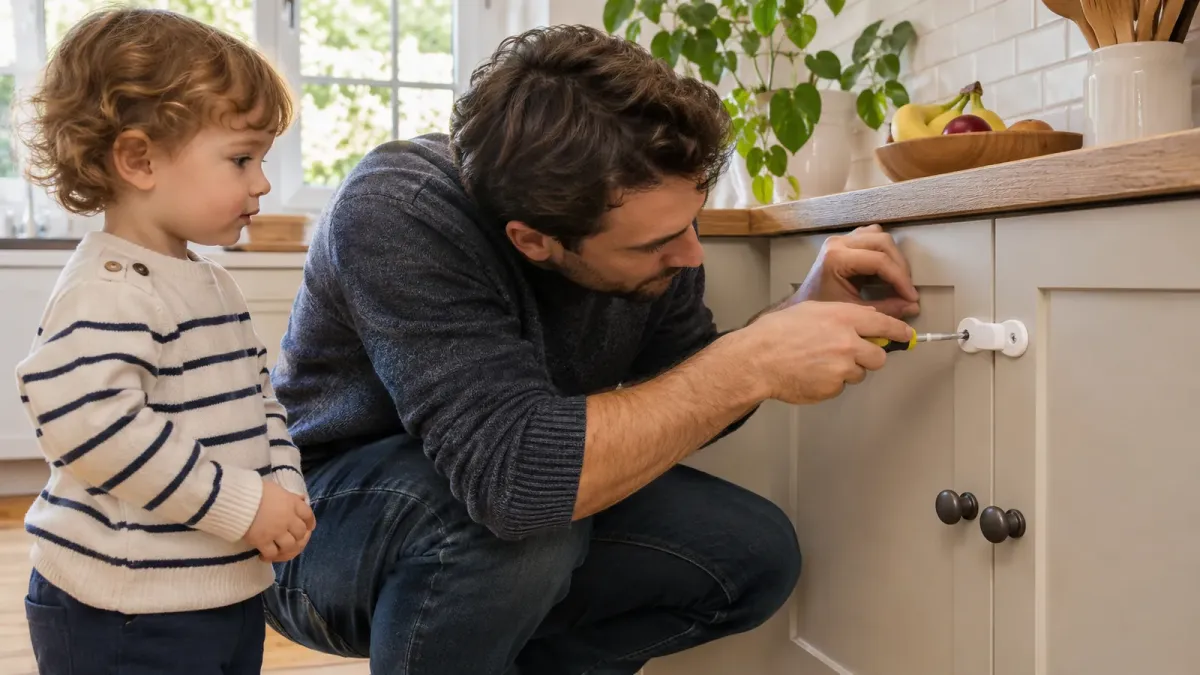
- Fitting a cabinet lock safely
- Age stages and changing needs
- What to lock away
- Standards and official guidance across four countries
- Common mistakes to avoid
- Frequently asked questions
- Sources
Short answer: Magnetic and spring latch locks can make some cupboards harder for a young child to open. Neither type makes a room fully childproof. Choose a lock that fits the cupboard, follow its own fitting instructions, and check it often. Keep medicines, cleaning products, knives and other dangerous items out of reach. Use supervision and other safety steps as well.
A magnetic lock holds the cupboard shut with a catch inside. An adult opens it with a separate magnetic key. A spring latch catches when the door closes. An adult opens it by pressing or moving the latch through a gap. Both types can be useful. The right choice depends on your cupboard, your child and the adults who use it.
What cabinet locks can and cannot do
A cabinet lock adds a barrier between a child and cupboard contents. It may slow a child who has started opening doors. It can also help prevent casual access to items that could hurt them.
A lock is only one part of home safety. Children learn by watching adults. They may find a key, work out a latch, pull hard, or open a different cupboard. Locks can also come loose or break. Store dangerous items high, locked away where possible, and in their original containers. Keep them away from food and drink.
Do not rely on a cabinet lock to keep a child safe near medicines, chemicals, alcohol, sharp tools, or small objects that could cause choking. Put these items in a secure place that children cannot reach. If a product has been swallowed, touched, or spilled, contact your local poison advice service or emergency service for help.
Childproofing changes as children grow. A baby may not yet open a cupboard. A crawling baby can reach lower shelves. A toddler may watch how adults open a lock and copy them. Check the room from your child's height and update your safety steps as their skills change.
How magnetic and spring latch locks work
A magnetic lock usually has a catch fitted inside the cupboard and a key held outside. The catch keeps the door shut. An adult places the key against a marked spot to move the catch and open the door. Some sets include a holder for the key. Put it somewhere children cannot reach.
The cupboard must have enough room inside for the catch. The door and frame must also line up well. A thick door, narrow frame, inset panel or unusual hinge can make fitting difficult. Check the product instructions and measure the available space before you buy.
A spring latch has a flexible catch. When the door closes, the catch holds it in place. An adult opens the door by pressing or moving the catch through the gap. Some models are fitted inside the cupboard. Others attach across the outside of two doors or around handles.
These locks differ in how an adult opens them. A magnetic lock needs a key in the right place. A spring latch needs a finger or hand movement at the latch. Neither method suits every adult or every cupboard. The instructions should say which doors and handles the lock can fit.
Comparison at a glance
| Feature | Magnetic lock | Spring latch lock |
|---|---|---|
| How it opens | Use a magnetic key on the outside of the door. | Press or move the catch through a gap, or release its outside strap. |
| What must fit | There must be room inside for the catch and a suitable spot for the key. | The catch must line up with the door, frame or handles. |
| What can be tricky | Adults must keep track of the key and know where to place it. | The catch may be hard to reach or operate on some cupboards. |
| What to check | Check the key releases the catch and the door stays shut. | Check the latch catches each time and the door cannot be pulled open. |
| Adhesive fitting | Some models use adhesive parts. Follow the product's surface and waiting instructions. | Some models use adhesive. Others attach by screws or around handles. |
| Key or tool | A separate magnetic key is needed to open many models. | Many models open by hand. Some need a separate release step. |
| Best starting point | Consider it when the door suits the catch and adults can store the key safely. | Consider it when the latch fits the door and adults can reach it easily. |
This table describes common designs. Products vary. Read the exact instructions before choosing or fitting one.
How to choose a lock for your cupboards
Start with the cupboard, not the lock type. Look at how the door opens and where its frame sits. Check whether there is a handle, knob, gap or raised edge. Look inside to see whether shelves or stored items will block a fitted catch.
- Check the door shape. A lock needs parts that can meet and work together. A cupboard with a frame may need a different design from a flat door.
- Check the space inside. Magnetic catches and some spring latches need clear space. Look for shelves, drawers and stored items in the way.
- Check how the door moves. Doors that slide, fold or meet at a corner may need a different kind of barrier.
- Think about adult access. An adult should be able to open the lock without force or a risky reach. Consider anyone who may have limited hand strength or movement.
- Consider the surface. Adhesive may not hold well on every finish. Follow the maker's guidance for the exact surface.
- Check the contents. A cupboard with hazardous items may need a stronger storage plan than a cupboard with safe, everyday items.
Take measurements if the instructions give limits for door thickness, frame depth or clearance. Do not guess from a product photo. If the lock does not fit the cupboard as described, choose another kind of barrier.
Adhesive locks and pull strength
Some locks use adhesive pads instead of screws. Adhesive can be affected by the surface, dust, grease, moisture, temperature and how the parts are fitted. A pad that looks attached may still lift at an edge. Do not assume that a strong hand pull proves the lock is safe for every cupboard or child.
There is no single home pull test that proves an adhesive lock will stay in place over time. Do not hang weight from the lock, pull sharply, or use tools to test it. Such a test could damage the cupboard or cause the lock to fail. Follow the product's fitting and care instructions.
Before fitting, clean and dry the surface as the instructions say. Do not use a cleaner that could damage the finish. Place the parts carefully. Press them for the time stated by the maker. If the instructions say to wait before use, keep the cupboard secured another way during that time.
Check the lock after fitting. Look for lifted edges, cracks, loose parts or a change in how the door closes. Open and shut the door in the way the instructions describe. If anything moves or fails to catch, stop relying on that lock. Refit it only if the maker allows this, or replace it with a suitable option.
Repeat these checks as part of normal home safety. Heat, steam, cleaning and repeated use can affect some fittings. There is no fixed check interval that suits every product. Follow the product instructions and inspect the lock whenever you clean the cupboard or notice a change.
Fitting a cabinet lock safely
Use the instructions that came with your exact lock. Designs differ, so one set of steps may not work for another. If the instructions are missing, look for them from the maker. Do not guess where parts should go.
- Empty the cupboard area. Move items away from the work area. Keep children out while you fit the lock.
- Check the parts. Make sure the kit has the listed pieces and that none are cracked or bent.
- Check the fit. Hold the parts in place as the instructions show. Confirm the door can close and open as intended.
- Prepare the surface. Clean and dry it only as directed. Avoid fitting over grease, dust or loose finish.
- Attach the parts. Use the marked positions and method in the instructions. Do not add extra glue or tape unless the maker says to.
- Wait if required. Some adhesive products need time before use. Keep risky items stored elsewhere during that time.
- Test normal use. Close and open the cupboard several times. Confirm the catch works each time and does not shift.
- Store keys safely. Put a magnetic key where adults can find it but children cannot reach it.
Do not fit a lock where it could trap fingers, block an emergency route, or create a snag hazard. Do not use a lock that stops an adult from reaching something needed in an emergency.
Age stages and changing needs
There is no exact age when every child starts opening cupboards. Children develop at different speeds. Use what your child can do as your guide.
| Stage | What may change | Useful action |
|---|---|---|
| Newborn to early infancy | Your baby may not reach cupboards yet. Adults still need safe storage habits. | Move medicines and chemicals to a secure place now. Check low cupboards before your baby becomes mobile. |
| Crawling and pulling up | Your baby can reach lower doors and may pull on handles. | Fit suitable locks on cupboards with unsafe items. Check the fit and keep small objects off low shelves. |
| Early toddlerhood | Your child may watch adults and try the same movements. | Check locks often. Keep dangerous items secured even if a lock seems to work. |
| Older toddler and preschool years | Your child may learn how a lock works or find a key. | Keep rules simple. Store hazards beyond reach and use a lock your child cannot operate. |
Locks do not replace teaching. As your child understands more, explain which cupboards are off limits. Keep the rule calm and consistent. Young children still need close adult supervision.
What to lock away
Think about the contents before choosing a lock. Some cupboard items can cause serious harm if a child reaches them. Store medicines, cleaning liquids, laundry products, sharp knives, alcohol, batteries and tools securely. Keep them in their original packaging where possible.
Do not move dangerous products into food containers. A child may mistake them for something safe. Keep products away from food preparation areas. Follow label directions for storage and use.
Some hazards do not sit inside cupboards. Secure furniture that could tip. Keep blind cords out of reach. Keep hot drinks, pans and appliance cords away from edges. A cabinet lock cannot prevent these risks.
Check the home from floor level. Look for bottles, small objects, cords, sharp edges and heavy items within reach. Make changes as your child gains new skills. A safe room today may need a new check next month.
Standards and official guidance across four countries
Cabinet locks are a home safety aid. The sources listed here do not set a single shared rule that chooses magnetic locks over spring latches. Check product details and recalls in your country. Follow local advice for storing medicines and chemicals.
| Country | Official body or trusted guidance | Useful point |
|---|---|---|
| Australia | Product Safety Australia (ACCC) and Kidsafe Australia | Check product recalls and use home safety advice to reduce falls and other hazards. |
| United Kingdom | Office for Product Safety and Standards (OPSS) and RoSPA | Check product safety notices and child safety advice for the home. |
| United States | Consumer Product Safety Commission (CPSC) and American Academy of Pediatrics (AAP) | Check recalls and guidance on childproofing and furniture tip-over risks. |
| Canada | Health Canada and the Canadian Paediatric Society | Check recalls and national safety advice. Ask a local health service for help when needed. |
These bodies offer broad safety information. Their advice does not mean that every cabinet lock has been tested or approved by them. Look for clear maker details, fitting instructions and a way to contact the seller or maker.
Search official recall pages if a lock breaks, has loose parts, or causes an injury. Stop using a product that appears damaged. Keep it away from children while you check for safety notices.
Common mistakes to avoid
- Choosing by appearance alone. A neat design may still fail to fit your cupboard. Check the measurements and door type.
- Skipping the instructions. The wrong position can stop a catch from working. Use the exact fitting steps.
- Trusting adhesive without checks. Pads can lift or shift. Look for changes and act if the lock moves.
- Leaving a key where a child can find it. A magnetic key is part of the lock system. Store it out of reach.
- Putting all hazards behind one lock. One missed cupboard can still contain dangerous items. Check the whole room.
- Using a broken lock. Cracks, loose parts or a failed catch mean it needs attention. Keep hazards secured another way.
- Assuming a child cannot learn it. Children copy adults and explore. Keep checking whether the lock still works for your child.
- Testing with a hard pull. A forceful test may damage the fitting. Use only the checks in the instructions.
Frequently asked questions
Are magnetic cabinet locks safer than spring latch locks?
Neither type is always safer. A lock is useful only if it fits, is fitted correctly and stays in working order. Choose the design that suits the cupboard and that adults can use. Keep dangerous items secured even when a lock is fitted.
Can I use an adhesive lock on any cupboard?
No. Adhesive and cupboard surfaces differ. Check the product instructions for suitable materials and shapes. Do not use the lock if the surface is unsuitable or the parts cannot line up as shown.
How do I know if an adhesive lock is holding?
Follow the maker's checks. Look for lifted edges, movement, cracks or a catch that no longer works. Do not hang weight from the lock or yank it. If it shifts, secure the cupboard another way while you fix the problem.
Where should I keep the magnetic key?
Keep it in a place adults can reach but children cannot. Do not leave it on the fridge, a low shelf or near the cupboard if your child can reach it. Make sure other caregivers know where it is.
Should I lock every cupboard?
Focus first on cupboards with medicines, cleaners, sharp tools, alcohol, batteries or other hazards. You may choose locks for other cupboards too. Check the whole room, because hazards can sit outside cupboards.
When should I fit cabinet locks?
Plan ahead, before your child can crawl or pull up. That gives you time to check fit and placement. Keep dangerous items secured while you install and check the locks.
What if my child opens the lock?
Move the dangerous items at once. Check whether the lock is loose, damaged, poorly placed or easy for your child to operate. Choose a better fitting barrier and keep the items secured beyond reach.
Do cabinet locks make a home childproof?
No. No single product can make a home fully safe. Use locks with safe storage, supervision and regular checks. Update your plan as your child grows and learns.
Disclaimer: This article gives general information only. It is not medical or product safety advice for your specific home. Follow product instructions and contact your local safety or health service if you need help. Some links may be affiliate links. BabyGearFinder may earn a commission if you buy through them, at no extra cost to you.
Sources
Related guides
More Health & Safety Gear →
Childproof Door Locks and Hinge Guards: How to Protect Little Fingers
Stove Knob Covers and Oven Door Locks: A Practical Kitchen Safety Guide

Merino Wool vs Organic Cotton vs Bamboo Viscose Sleep Sacks: How to Choose
