









Teething Relief: Safe Ways to Soothe Your Baby's Sore Gums
Learn safe ways to ease teething discomfort, what to avoid, when to seek help, and how Australia, UK, US and Canadian health bodies advise parents.

On this page
Short answer: Teething can make a baby's gums sore. Try a clean, cool washcloth or gently rub the gums with a clean finger. If your baby has started solids, offer a safe, chilled food they already eat while they sit upright and you watch closely. Keep small, hard foods away because they can cause choking. Avoid amber necklaces, teething gels, clove oil, alcohol, and frozen objects. Ask a health professional before giving medicine.
In Australia, ask a doctor, child health nurse, pharmacist, or Pregnancy, Birth and Baby. In the UK, contact your health visitor, pharmacist, dentist, or NHS service. In the US, ask your child's doctor or dentist. In Canada, contact your child's doctor, dentist, or local health service.
What teething is and what to expect
Teething is when a tooth moves through the gum. It happens during the first years of life. The timing differs from child to child. Many babies get their first tooth around six months, but earlier or later can be normal.
Front teeth often appear first. Other teeth follow over time. Most children have a full set of baby teeth by about age three. Each child has their own pace. A late first tooth by itself does not always mean a problem. Ask a dentist or doctor if you are worried about your child's teeth or growth.
A tooth may make one part of the gum look puffy or feel tender. Your baby may want to chew. They may drool more or seem unsettled for a short time. Some babies have few signs. Others need extra comfort.
Teething does not explain every change in a baby. A high temperature, diarrhoea, vomiting, or a baby who seems very unwell needs a different explanation. Do not assume these signs are caused by a tooth. Get advice from a health professional.
Sleep may change when your baby is uncomfortable. A calm cuddle, a feed if it is time, or a familiar bedtime routine can help them settle. Keep following safe sleep advice. Place your baby on their back in a clear cot or bassinet. Do not add a teething toy, cloth, food, or medicine to the sleep space.
Ten safe ways to ease sore gums
These are comfort ideas, not cures. They may help for a short time. Try one at a time and watch how your baby responds. Stop if your baby dislikes it or seems distressed.
1. Rub the gum gently
Wash your hands well. Use a clean finger to rub the sore area gently for a short time. Do not press hard. Stop if your baby pulls away or becomes upset. A clean finger is easier to control than a small object.
Check your finger first. Do not rub over a cut or sore. If your baby already has teeth, be careful not to get bitten. You can use a clean, damp cloth instead.
2. Offer a cool, damp washcloth
Wet a clean washcloth with cool water. Wring out extra water. Let your baby chew it while awake and watched. The cool feel may comfort the gum. Keep hold of the cloth so your baby cannot pull it fully into their mouth.
Use a cloth with no loose threads or damaged edges. Wash it after use. Do not leave it in the cot or give it to your baby during sleep.
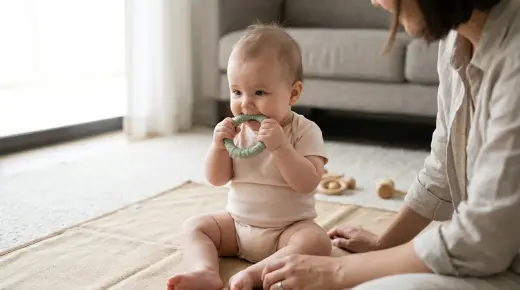
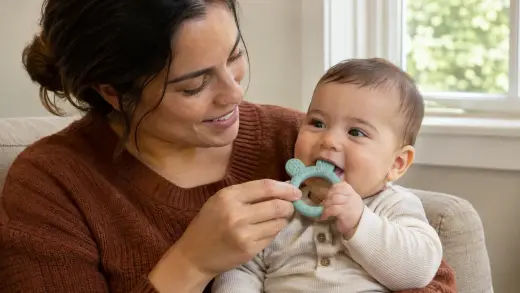
3. Offer a chilled teething ring
Choose a teething ring made for babies. Follow the age and use instructions on its packaging. Check it each time for cracks, holes, loose parts, or sticky spots. Throw it away if it is damaged.
Cool the ring in the fridge if its maker says that is safe. Do not freeze it unless the instructions clearly allow it. A very cold or frozen ring can hurt the mouth or gums. Do not tie the ring around your baby's neck or attach it with a cord.
4. Offer a safe, chilled food when your baby is ready
If your baby has started solids, a chilled food they already eat may feel soothing. Serve it in a form that matches your baby's eating skills. Keep your baby seated upright and stay close. Do not offer hard raw fruit or vegetables as something to chew. They can break into pieces and cause choking.
Do not leave your baby alone with food. Avoid putting food in a mesh feeder unless you understand how to use and clean it. A feeder does not remove every choking risk. Ask a child health nurse or dietitian if you need help with safe food shapes.
5. Offer breast or bottle feeds as usual
Some babies want to feed for comfort. Offer the usual breast or bottle if your baby seems hungry or wants soothing. Follow your normal feeding plan. Do not force a feed if your baby refuses.
If feeding suddenly becomes hard, your baby takes much less than usual, or wet nappies decrease, seek advice. Pain may not be the only reason. A health professional can check for other causes.
6. Give a cuddle and calm attention
Hold your baby, speak softly, or rock them gently if that usually helps. A baby may settle with comfort even when the gum still feels sore. You do not need a special product for every difficult moment.
If you feel overwhelmed, put your baby safely in their cot and take a short pause nearby. Ask another trusted adult to help. Never shake a baby.
7. Wipe drool gently
Drool can make the chin and cheeks sore. Pat the skin dry with a soft cloth. Avoid rubbing. If your baby has a rash, ask a health professional or pharmacist what care is suitable.
Change wet clothes or bibs when needed. Do not leave a bib on during sleep. A bib can become loose and cover the face or neck.
8. Keep the usual routine where you can
Teething may make a day feel harder. Keep meals, naps, and bedtime familiar when possible. A quiet room and your normal settling steps may help your baby relax.
Do not use sleep products or teething devices to keep your baby asleep. A baby who wakes because of pain needs comfort and safe care. Follow the same safe sleep steps each time.
9. Ask a pharmacist or doctor about pain medicine
If simple comfort is not enough, ask a doctor or pharmacist whether pain medicine is suitable. The right choice and amount depend on your baby's age, weight, health, and the product label. Never guess a dose or use another child's medicine.
Use only the measuring tool supplied with the medicine. Do not give adult medicine. Do not combine medicines unless a health professional tells you to. If you are unsure what your baby has already taken, call for advice before giving more.
10. Arrange a dental check when teeth appear
Teething is also a good time to plan dental care. Ask a dentist or child health professional when your baby should have a first check. Brush as soon as the first tooth appears, using a soft baby toothbrush and age-suitable toothpaste advice from your local health service.
Wipe or brush teeth as part of the daily routine. Avoid putting a baby to bed with a bottle of milk or a sweet drink. A dentist can explain care that fits your child's age and local guidance.
Compare comfort options
| Option | How to use it | Main safety point | When to get advice |
|---|---|---|---|
| Clean finger massage | Rub the sore gum gently while your baby is awake. | Wash hands and use light pressure. | If your baby seems very distressed or has signs of illness. |
| Cool damp cloth | Offer it to chew while you hold and watch. | Keep hold of it; remove it before sleep. | If the cloth irritates the mouth or skin. |
| Chilled teething ring | Use a baby ring as its instructions say. | Check for damage; do not tie it to the baby. | If the ring breaks or your baby may have swallowed a piece. |
| Chilled soft food | Offer only after solids have begun and while seated. | Stay beside your baby; avoid hard pieces. | If feeding is difficult or choking occurs. |
| Usual feed and cuddle | Offer comfort and the usual feed when wanted. | Keep to safe feeding and sleep routines. | If your baby drinks much less or has fewer wet nappies. |
| Medicine after advice | Use only the product and dose advised for your baby. | Measure carefully; do not guess or double dose. | Before use if your baby is young, unwell, or takes other medicine. |
What to avoid
Some popular teething ideas can hurt a baby or delay needed care. Avoid these options.
- Amber necklaces and bracelets: They do not safely treat teething pain. A bead or cord can cause choking or strangulation. Do not put jewellery around a baby's neck, wrist, or ankle.
- Teething gels with numbing medicine: Do not use them unless a health professional specifically advises it. Babies can swallow the gel. Numbing the mouth can also affect swallowing.
- Homeopathic teething tablets or drops: Do not assume a product is safe because it says natural or homeopathic. Ask a pharmacist or doctor before using any remedy.
- Clove oil or other essential oils: Do not put oils on your baby's gums. They can irritate or harm the mouth, and swallowing them can be unsafe.
- Alcohol, honey, or sugar: Do not rub these on gums. Alcohol is harmful. Honey is not for babies under one year. Sugar can harm teeth.
- Frozen rings, ice cubes, or frozen food chunks: These can be too hard or cold for a baby's mouth. They can also break into choking-sized pieces.
- Hard raw foods for chewing: Raw carrot, apple, and similar hard foods can break apart. Offer food only in a safe form for your baby's skills.
- Loose objects: Do not give coins, jewellery, small toys, or objects with detachable parts. They can be swallowed or breathed in.
- Unsupervised feeding: A baby should sit upright and be watched while eating. Do not let them chew food while lying down, crawling, or riding in a car seat.
Teething by age and stage
Age gives a rough guide only. Children grow at different speeds. Their feeding skills and ability to hold objects matter more than a birthday alone.
| Stage | What may be happening | Helpful steps |
|---|---|---|
| Birth to about six months | Most babies have no teeth at first. Some get a tooth earlier. | Use a clean finger, cool cloth, cuddles, and usual feeds. Ask before giving medicine. |
| About six to twelve months | Many babies get their first teeth during this time. Solids may also begin. | Use safe teethers. Offer suitable chilled food only after solids start. Watch closely while eating. |
| About one to three years | More baby teeth come through. Toddlers can move quickly and may chew small objects. | Keep small items away. Continue brushing and arrange dental advice. |
| Any age | Fever, poor feeding, or unusual sleepiness may have another cause. | Contact a health professional. Seek urgent care for severe symptoms. |
How to tell when it may not be teething
Teething signs are usually mild and short-lived. A sore gum, extra drool, or a wish to chew can fit with a tooth coming through. But these signs do not prove that teething is the cause.
Call a health professional if your baby has a fever, diarrhoea, vomiting, a rash that worries you, or seems to be getting worse. Also ask for help if your baby refuses feeds, has fewer wet nappies, or is unusually sleepy. Babies can become unwell quickly.
Seek urgent help if your baby has trouble breathing, is hard to wake, has a seizure, or looks seriously unwell. Use your local emergency service for urgent danger. Do not wait for a tooth to appear.
Trust your sense that something is wrong. A clinician can check for an ear problem, infection, mouth injury, or another cause. Share when symptoms began and what your baby has eaten or taken.
Safe teething care in four countries
Every family should use local health advice. The basic comfort steps are similar across countries. Keep objects safe, avoid unproven products, and get help when symptoms do not fit mild teething.
| Country | Official bodies and services | Where to ask for help |
|---|---|---|
| Australia | Healthdirect Australia; Pregnancy, Birth and Baby; state and territory health services. | Ask a GP, child health nurse, pharmacist, dentist, or Pregnancy, Birth and Baby. |
| United Kingdom | NHS; local NHS dental services and health visitors. | Ask your health visitor, pharmacist, dentist, GP, or NHS service. |
| United States | American Academy of Pediatrics; Food and Drug Administration; local public health services. | Ask your child's doctor, dentist, or pharmacist about symptoms and medicine. |
| Canada | Canadian Paediatric Society; Health Canada; provincial and territorial health services. | Ask your child's doctor, dentist, pharmacist, or local health service. |
Advice can differ by product and by a child's health. Use the label and local guidance. A product sold in one country may not be approved or advised in another.
Common mistakes to avoid
- Blaming every symptom on teething. A fever or tummy upset may have another cause. Ask for medical advice when symptoms worry you.
- Using too much pressure. A gentle rub is enough. Hard pressure can hurt tender gums.
- Freezing a teether until it is hard. Very cold items can hurt the mouth. Follow the product instructions.
- Giving food without watching. Babies can choke quickly. Sit close and keep your attention on them.
- Leaving a teether in the cot. Keep the sleep space clear. Take teethers and cloths away when your baby sleeps.
- Using a necklace because it is called natural. Natural materials can still create choking or strangulation hazards.
- Guessing a medicine dose. Check with a pharmacist or doctor. Use the correct measuring tool.
- Delaying dental care. Ask about brushing and a first dental visit when the first tooth appears.
Frequently asked questions
When do babies usually start teething?
Many babies get a first tooth around six months. Some get one earlier or later. Ask a health professional if you have concerns about your baby's teeth or development.
Can teething cause a fever?
Do not assume a fever is from teething. A baby with a fever may have an illness. Contact a health professional for advice, especially if your baby is very young or seems unwell.
Are amber necklaces safe for teething?
No. A necklace can catch around the neck or break into small beads. Both can cause serious harm. It does not provide a safe way to ease pain.
Can I use frozen fruit in a feeder?
Do not use frozen pieces unless a health professional has advised a safe method for your baby. Very cold food can hurt the mouth, and food can still cause choking. Offer only age-suitable food while your baby sits upright and you watch.
Can I use teething gel or clove oil?
Do not use a gel, oil, or herbal remedy without advice from a doctor or pharmacist. Some products can harm babies if swallowed or used incorrectly.
Should I give pain medicine?
Ask a doctor or pharmacist whether medicine suits your baby. The right medicine and amount depend on age, weight, and health. Never guess or use adult medicine.
What if my baby will not feed?
Offer the usual feed calmly. Do not force it. If your baby takes much less than usual, has fewer wet nappies, or seems unwell, contact a health professional promptly.
When should I take my baby to a dentist?
Ask a local dentist or child health professional when to book the first visit. Start brushing once the first tooth appears. Use advice that fits your child's age and country.
Sources and further advice
- Pregnancy, Birth and Baby (Australia)
- Healthdirect Australia
- NHS – Baby and toddler safety
- U.S. Food and Drug Administration – BPA information
- Canadian Paediatric Society – Feeding your baby in the first year
- American Academy of Pediatrics – Starting solid foods
Disclaimer: This article is general information. It does not replace advice from a doctor, dentist, pharmacist, or other qualified health professional. If your baby seems seriously unwell, seek urgent medical help. BabyGearFinder may earn a commission from some links. This does not change the information in this article.
Sources
Related guides
More Feeding & Baby Food →
Baby Teething: Gentle Ways to Soothe Sore Gums and Know When to Get Help
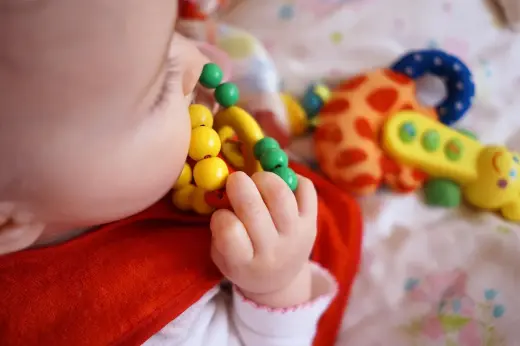
Baby Teething: Safe Ways to Ease Sore Gums
Teething Necklaces and Bracelets: Safer Ways to Soothe Your Baby