





How to Store and Organise Your Baby’s Meals Safely
Learn how to portion, label, chill and freeze baby food safely, choose useful containers, and reduce waste at home or when travelling.
On this page
- What baby food containers are for
- Start with your baby’s stage and meals
- How to choose useful containers
- Container types compared
- A simple meal preparation routine
- Cooling, chilling and freezing food
- Thawing and reheating
- Breastmilk and formula need separate guidance
- Food safety when feeding your baby
- Organising the fridge and freezer
- Taking food to childcare or on outings
- Common mistakes to avoid
- Official guidance in Australia, the UK, the US and Canada
- Frequently asked questions
- Sources and further guidance
- Sources
Short answer: Choose clean, food-safe containers with tight lids and useful portion sizes. Cool cooked food promptly, then refrigerate or freeze it in small portions. Write the food and date on each container. Thaw food in the fridge, and reheat only the portion you need. Follow local food safety advice and your health professional’s guidance for breastmilk and formula.
Food containers can make meal planning easier. They do not make food safe by themselves. Clean hands, clean tools, prompt chilling and careful reheating matter just as much. A simple system is often enough: keep a few small containers for the fridge, freezer-safe portions for later, and one insulated bag for outings.
What baby food containers are for
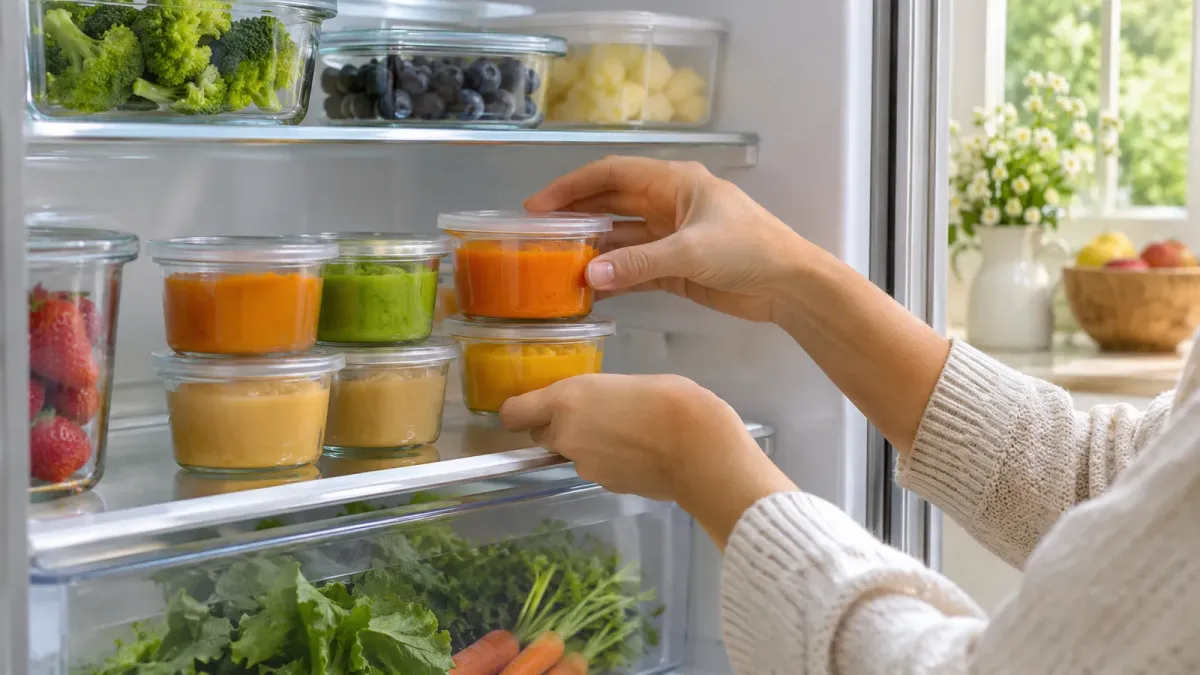
Containers hold food between preparation and serving. They help keep food covered, separate portions and mark when food was made. They can also make it easier to take a meal to childcare or on a trip.
There is no special container that makes food safe for a baby. A clean container made for food storage can work. It should be in good condition, close securely and suit the way you plan to use it. Follow the maker’s instructions for the fridge, freezer, dishwasher and microwave.
Do not assume that a product is safer because it says “baby” on the label. Check what it is made for, how it must be cleaned and whether it can be heated. If the label is missing or unclear, use another container for that task.
Start with your baby’s stage and meals
Babies do not all start solid food at the same time. Ask your health professional if you are unsure whether your baby is ready. Once your baby is eating solid food, offer textures and foods that suit their development. Storage does not replace safe feeding practices.
Early meals may be small. A few small containers can help you avoid opening a large batch each time. As your child eats more, you may want bigger portions or containers with separate sections. Let your routine guide what you buy.
- Milk feeding: Breastmilk and prepared formula need their own safe handling steps. Use guidance from a trusted health service for storage and transport.
- First tastes: Small portions can help reduce waste. Freeze food in portions you are likely to use.
- Growing appetite: Adjust portion size as your child’s meals change. Do not force a child to finish a portion.
- Childcare or outings: Ask the caregiver what they can store, label and reheat. Pack food in a way that keeps it cold until use.
Solids are not a reason to stop breastmilk or formula before you are ready. Feeding needs vary. Ask a doctor, nurse or dietitian for advice that fits your baby.
How to choose useful containers
Pick containers for the job you need them to do. You do not need a large matching set. A small mix of sizes may be easier to use and wash.
Check the intended use
Read the label or maker’s instructions. Look for clear guidance about food contact, freezer use, dishwasher cleaning and microwave use. A container that is safe in a fridge may not be safe in a freezer or microwave.
Do not heat food in a container unless the maker says it is suitable for that use. Even then, follow the heating instructions. Heat can spread unevenly, and some containers can become hot.
Choose a size you can use
Small containers suit small servings, sauces and snacks. Larger ones can hold a family meal or a batch you plan to divide. If a container is too large, it may tempt you to keep food after it has been served or handled.
Portion food after cooking, using a clean spoon. Keep the main batch covered and separate from the serving portion. This makes it easier to keep unused food clean.
Look for lids that close well
A lid should sit securely and be easy for an adult to open. Check that it has no cracks, loose parts or damaged seals. A lid that leaks can make a bag messy and may expose food to dirt.
Small lids can go missing. Choose shapes and sizes that are easy to match. Store lids together with their containers, or use one marked box for them.
Think about cleaning
Food can collect in corners, grooves and seals. Smooth shapes with few hard-to-reach places are often simpler to wash. Check whether the lid comes apart for cleaning.
Wash containers and utensils after use. Follow local food safety advice for cleaning and drying. Replace any container that is cracked, badly stained, warped or difficult to clean.
Pick a material that suits your routine
Glass and plastic containers each have useful features. Glass is heavy and can break if dropped. Plastic is light, but it can scratch or warp. The right choice depends on the task and the maker’s instructions.
Use only containers made for food storage. Do not reuse packaging if it was not designed for repeated use, heating or freezing. Do not use a container if you cannot tell what it is meant to hold.
Container types compared
This table gives general points to consider. Materials and products differ, so check the label for each item.
| Type | Useful for | Things to check |
|---|---|---|
| Small rigid containers | Fridge portions, snacks and packed meals | Secure lid, food storage use, cleaning directions and safe temperature range |
| Freezer-safe containers | Storing portions for later | Clear freezer instructions, room for food to expand and a lid that seals well |
| Glass containers | Fridge storage and some reheating tasks | Maker’s heating instructions, risk of breakage and adult handling |
| Plastic containers | Lightweight packing and everyday storage | Food-use label, heating limits and signs of scratches or warping |
| Food-safe silicone portions tray | Freezing small amounts, if designed for food | Freezer and cleaning instructions; cover the tray and transfer portions once frozen |
| Insulated food bag | Carrying chilled food for an outing | Use with cold packs and keep the bag closed; it does not chill food on its own |
These are storage options, not feeding toys. Keep lids, seals and any detachable parts away from children unless the item is meant for supervised use at that age.
A simple meal preparation routine
A small routine can make food easier to find and use. It does not need to involve cooking a full week of meals. Prepare only what you can store safely and use in time.
- Plan a few meals. Choose foods your child already eats or is ready to try. Note any advice from your health professional about allergies or texture.
- Clean the work area. Wash your hands, surfaces, utensils and containers. Keep raw foods away from ready-to-eat food.
- Cook and serve safely. Prepare food using safe cooking and handling practices. Make the texture suitable for your child.
- Set aside a serving. Put the amount you expect to serve into a clean bowl. Keep the rest away from the spoon used for feeding.
- Cool and store promptly. Divide extra food into shallow, small portions. Cover and chill or freeze it promptly, following local food safety advice.
- Label each portion. Write the food and preparation date on the container. Add a use-by note if your health guidance or food safety advice gives one.
- Use older portions first. Place newer food behind older food. Check labels before serving and discard food if you are unsure how it was stored.
Keep the routine flexible. If you have little time, prepare one extra portion rather than a large batch. Safe, fresh meals do not need a complicated plan.
Cooling, chilling and freezing food
Food left warm for too long can allow germs to grow. Follow food safety guidance where you live. In general, do not leave cooked food sitting out while you finish other tasks.
Small, shallow portions cool more quickly than a deep pot. Once food has cooled enough for safe handling, cover it and place it in the fridge or freezer. Keep the fridge cold and avoid crowding it so cold air can move around the food.
Write down when you made the food. Use local guidance for how long each food may be stored. There is no single safe storage time for every meal, fridge, freezer or household.
Freeze food in portions you can use at one meal. Leave space in a rigid container if the food may expand. Keep frozen portions covered and labelled. Do not refreeze food unless reliable local guidance says it is safe for that food and situation.
Thawing and reheating
Plan ahead when possible. Thaw a frozen portion in the fridge, or follow trusted local food safety guidance for another safe method. Do not thaw food on a bench for a long time.
Reheat only the amount you plan to serve. Heat it thoroughly, then stir well so there are no cold spots. Let it cool to a safe eating temperature before feeding your child.
Microwaves can heat food unevenly. Stir the food, check it carefully and test the temperature before serving. Never rely on the container feeling cool to judge the food temperature.
Do not repeatedly heat and cool the same portion. Discard leftovers that have been in your child’s bowl or touched by a used spoon. Saliva can move germs into the food.
Breastmilk and formula need separate guidance
Breastmilk and infant formula are not the same as cooked solids. They have their own preparation, storage and transport rules. Use guidance from a recognised health service in your country.
For expressed breastmilk, the Australian Breastfeeding Association explains safe preparation and storage. NHS guidance covers storing breastmilk in the UK. The US Centers for Disease Control and Prevention provides formula preparation and storage advice. In Canada, ask a health professional or local public health service for current guidance.
Do not use a general baby-food chart for milk. Follow the exact instructions for the milk, the container and the feeding method. If milk has been warmed or offered to your baby, check the relevant guidance before saving any remainder.
Powdered formula is not sterile. Prepare it carefully and follow the manufacturer’s and health authority’s instructions. Do not guess how long a bottle can stand at room temperature.
Food safety when feeding your baby
Wash your hands before handling food. Use clean utensils and a clean feeding bowl. Keep raw meat, fish and eggs separate from food that is ready to eat.
Check food before serving. If it smells unusual, has mould or was stored in a way you cannot confirm, throw it away. Food can be unsafe even when it looks normal, so follow time and temperature guidance.
Do not feed your baby directly from a storage jar if you plan to keep the rest. Put a small amount into a separate bowl first. Use a clean spoon each time.
Some foods can cause choking, especially when served in unsafe shapes or textures. Sit your baby upright and stay close while they eat. Learn age-appropriate food preparation and choking response from a trusted health source.
Introduce foods in a way that suits your baby’s development. If you have a family history of allergy, eczema, or a known allergy, ask your clinician how to introduce allergenic foods. Do not delay or avoid foods without medical advice.
Organising the fridge and freezer
Store baby portions in a place where they are easy to see. A small basket can keep them together. Keep raw foods separate from ready-to-eat meals.
- Put the newest portions behind older ones.
- Use clear labels with the food and date.
- Keep lids closed and containers upright.
- Do not overfill the fridge or block its vents.
- Check the freezer for forgotten portions when planning meals.
- Discard food if you cannot confirm how long it has been stored.
Keep cleaning products and medicines away from food storage. Do not put food containers next to chemicals or items that could leak onto them.
Taking food to childcare or on outings
Ask childcare staff what they need. Find out how meals should be labelled, packed and delivered. Ask whether they can refrigerate or reheat food, and how they handle leftovers.
For chilled food, use an insulated bag with cold packs. Keep it closed and out of direct sun. Put the food into a fridge when you arrive, if one is available.
For a longer trip, plan the journey and food storage before leaving. Do not assume a warm car will keep food safe. If you cannot keep food at a safe temperature, choose a safer feeding plan with advice from your health service.
Pack a clean spoon and bowl in a separate clean bag. Keep used utensils away from fresh food. Take only the amount you expect to need.
Common mistakes to avoid
- Buying too many containers: Start with a few useful sizes. Add more only when your routine shows a need.
- Using containers for the wrong job: Check the label before freezing or heating food.
- Leaving food out while busy: Store cooked food promptly. Set a reminder if that helps.
- Saving food from a used bowl: Discard food that has been fed from or touched by a used spoon.
- Forgetting the date: Label portions when you store them, not later.
- Trusting smell alone: Food may be unsafe without an obvious change. Follow storage guidance.
- Heating a sealed container: Follow the maker’s directions and allow steam to escape safely.
- Using damaged containers: Replace items that are cracked, warped or hard to clean.
- Freezing a large batch in one block: Small portions are easier to thaw and use.
- Leaving food in a hot bag or car: Use cold packs and get chilled food into a fridge promptly.
Official guidance in Australia, the UK, the US and Canada
Food rules and advice can differ by country. Check current guidance from the official body where you live. Ask your child’s health professional about feeding concerns.
| Country | Official bodies and useful guidance | What to check |
|---|---|---|
| Australia | Food Standards Australia New Zealand, the Food Safety Information Council, NHMRC and Pregnancy, Birth and Baby | Safe food handling for young children, introducing solids, and separate breastmilk or formula guidance |
| United Kingdom | NHS and NHS Best Start in Life | Children’s food hygiene, storing and reheating food, and milk feeding advice |
| United States | FoodSafety.gov, the Centers for Disease Control and Prevention, and the American Academy of Pediatrics | Food safety for children under five, formula storage, starting solids and choking prevention |
| Canada | Health Canada and the Canadian Paediatric Society’s Caring for Kids service | Infant feeding guidance, food safety and advice from local public health services |
These bodies provide general guidance. A doctor, nurse, dietitian or local health service can help with your child’s individual needs.
Frequently asked questions
Do I need containers made just for baby food?
No. A clean container made for food storage can work. Check its instructions for fridge, freezer and heating use. Choose a size that suits your portions.
Is glass or plastic better?
Neither is best for every family. Glass can break and is heavier. Plastic is lighter but may scratch or warp. Choose food-safe containers and follow their care instructions.
Can I freeze homemade baby food?
Many cooked foods can be frozen, but use local food safety guidance. Cool and portion food promptly. Label it with the food and date. Freeze only in containers designed for that use.
Can I reheat food in the microwave?
Only if the container is marked as suitable for microwave use. Stir food well after heating because microwaves can leave cold spots. Check the temperature before serving.
Can I save food left in my baby’s bowl?
It is safest to discard it. A used spoon can carry saliva and germs into the food. Serve a small amount, then add more from a clean container if needed.
How long can baby food stay in the fridge?
Storage time depends on the food and how it was handled. Follow current local food safety advice. Label the date and discard food if you are unsure.
Can I thaw food on the kitchen bench?
Avoid leaving food to thaw at room temperature for a long time. Thaw it in the fridge or use a method allowed by trusted local food safety guidance.
What should I pack for childcare?
Ask the centre about its rules. Usually, you will need labelled food in a clean container and a way to keep chilled food cold during transport. Follow the centre’s instructions.
Does “BPA-free” mean a container is safe for every use?
No. That label alone does not tell you whether a container can be heated, frozen or reused. Check the maker’s directions and replace damaged containers.
What if my baby has an allergy?
Ask your child’s doctor or allergy specialist for a safe plan. Keep foods separate when advised, label them clearly and tell every caregiver about the allergy.
Sources and further guidance
- Pregnancy, Birth and Baby – Food preparation and safety
- Food Safety Information Council – Infants and young children
- NHS – Children’s food: safety and hygiene
- NHS Best Start in Life – Storing and reheating food
- CDC – Infant formula preparation and storage
- FoodSafety.gov – Food safety for children under five
- Caring for Kids – Feeding your baby in the first year
BabyGearFinder provides general information, not medical advice. Ask a qualified health professional about your child’s feeding needs. Some links may be affiliate links. We may earn a commission if you buy through them, at no extra cost to you.
Sources
- Pregnancy, Birth and Baby – Food preparation and safety
- Food Safety Information Council (Australia) – Infants and young children
- NHS – Children's food: safety and hygiene
- NHS Best Start in Life (UK) – Storing and reheating food
- CDC – Infant formula preparation and storage
- FoodSafety.gov (US) – Food safety for children under five
- Caring for Kids (Canadian Paediatric Society) – Feeding your baby in the first year
Related guides
More Feeding & Baby Food →
How to Freeze and Store Homemade Baby Food Safely
Baby Food Makers: How to Choose, Prepare and Store Baby Food Safely
Homemade Baby Food Recipes with a Baby Food Maker: Safe, Simple Meals by Age