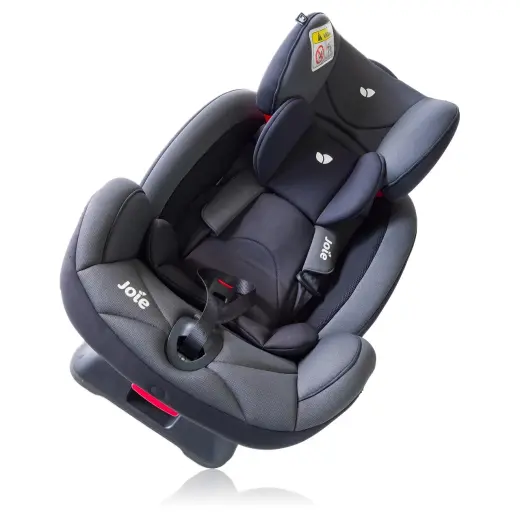
Booster Seats for Children Aged 4 to 8: Sash Guides, Side-Impact Tests and How Ratings Work
Booster seats for 4 to 8 year olds: when to move up, how the sash guide should sit, what side-impact crash tests and star ratings mean, and the laws by…
On this page
- Ages 4 to 8: harness seat or booster?
- The laws side by side
- The sash guide: getting the shoulder belt right
- Side-impact protection: what it means
- How booster crash ratings work
- High-back booster vs booster cushion for this age
- How to choose a booster for a 4 to 8 year old
- Helping your child sit properly
- Checklist: is the booster set up right?
- Common mistakes with 4 to 8 year olds
- FAQ
- Sources
Short answer: Most children aged 4 to 8 should be in either a forward-facing seat with a built-in harness or a booster seat, and many will need a booster until 10 to 12 years old. Move to a booster only when your child has outgrown their harness seat. In a booster, the sash (shoulder) part of the seat belt must run through the booster's sash guide so it crosses the middle of the shoulder. For side-impact protection, a high-back booster with side wings is the better choice, and independent crash ratings, like Australia's Child Car Seats ratings, show how real models performed in front and side crash tests.
Key points
- In Australia, children aged 4 to under 7 must use a forward-facing seat with a built-in harness or an approved booster seat. From 7, a booster is strongly recommended until the adult belt fits.
- Child Car Seats Australia recommends 145 cm as the minimum height to use an adult lap-sash belt. The AAP in the US uses the same figure (4 feet 9 inches).
- The sash guide holds the shoulder belt across the middle of the shoulder. Without it, the belt can sit on the neck or slip off.
- Australia's independent rating program crash tests boosters in a front crash and a side crash, where a "door" pushes into the seat.
- Ratings tested from 2021 can't be compared with older ratings, because the tests changed.
Ages 4 to 8: harness seat or booster?
Four is the age when many families start to think about boosters. But age is only the legal minimum. Kidsafe's national guidelines say keep your child in their current seat until they outgrow it, because a built-in harness spreads crash forces over the body better than a seat belt can. Young children's hip bones are also not fully formed, so a lap belt can slide up onto the tummy more easily.
Your child has outgrown a forward-facing harness seat when:
- their shoulders are above the top shoulder height marker for forward-facing use, or
- they go over the height or weight limit in the manual.
Some forward-facing harness seats now fit children up to about 8 years old. Kidsafe says these are an acceptable alternative to a booster for children who fit them.
Signs your child is ready for a booster
- They have outgrown the harness seat by its markers or limits.
- They are at least the minimum age and size for the booster you plan to use. In Canada, Transport Canada says boosters are for children who have outgrown their forward-facing seat and weigh at least 18 kg (40 lb).
- They can sit upright for the whole trip without slouching, leaning out of the belt or playing with it. If not, a harness seat is safer.
The laws side by side
| Country | What the law says for this age | When the adult belt can be used |
|---|---|---|
| Australia | Ages 4 to under 7: forward-facing seat with a built-in harness, or an approved booster seat. Under 7s can't sit in the front of a car with two or more rows unless the back seats are full of younger children in car seats. | From 7, if the belt fits. Child Car Seats Australia recommends 145 cm as the minimum height for an adult belt; Kidsafe uses the 5-step test. |
| United Kingdom | Children must use a child car seat until they are 12 years old or 135 cm tall, whichever comes first. | Over 12 or over 135 cm. |
| United States | Set by each state; check yours. | The AAP says booster until the belt fits, usually around 145 cm (4 feet 9 inches) and 8 to 12 years old. |
| Canada | Set by each province and territory; check yours. | When the belt fits correctly. Transport Canada explains how to check. |
The law is the minimum. All four countries' safety bodies say the safest choice is to stay in each stage as long as your child fits it.
Car Seats & Capsules worth a look
Real products from our catalogue. We don't show star ratings or review counts; check the current price, stock and reviews on Amazon before you buy.
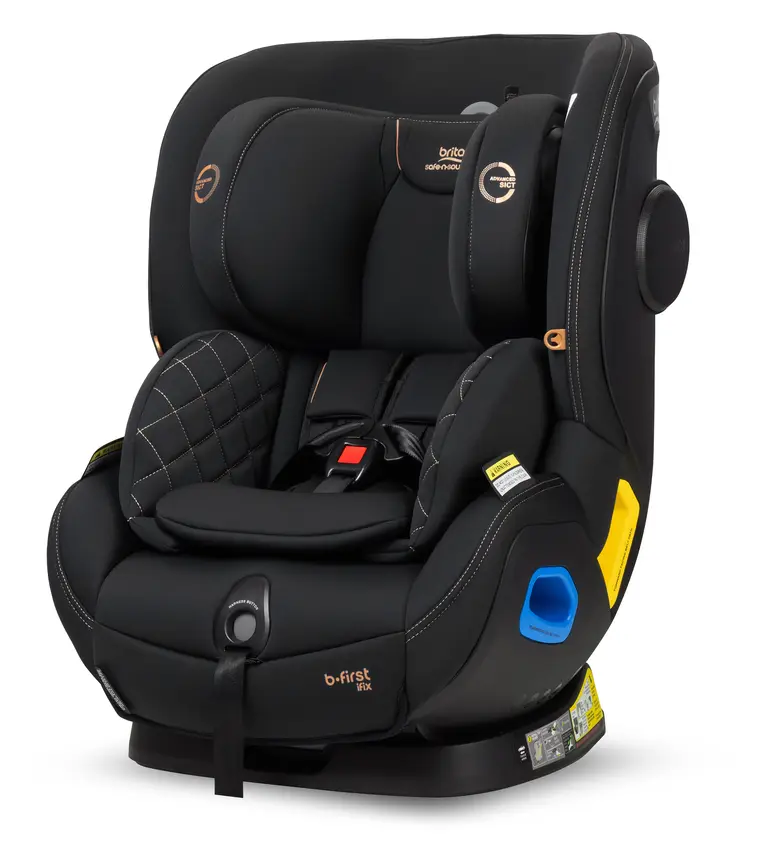
Britax Safe-n-Sound b-first+
Convertible seat from Britax's Australian Safe-n-Sound range with SICT deployable side-impact protection.
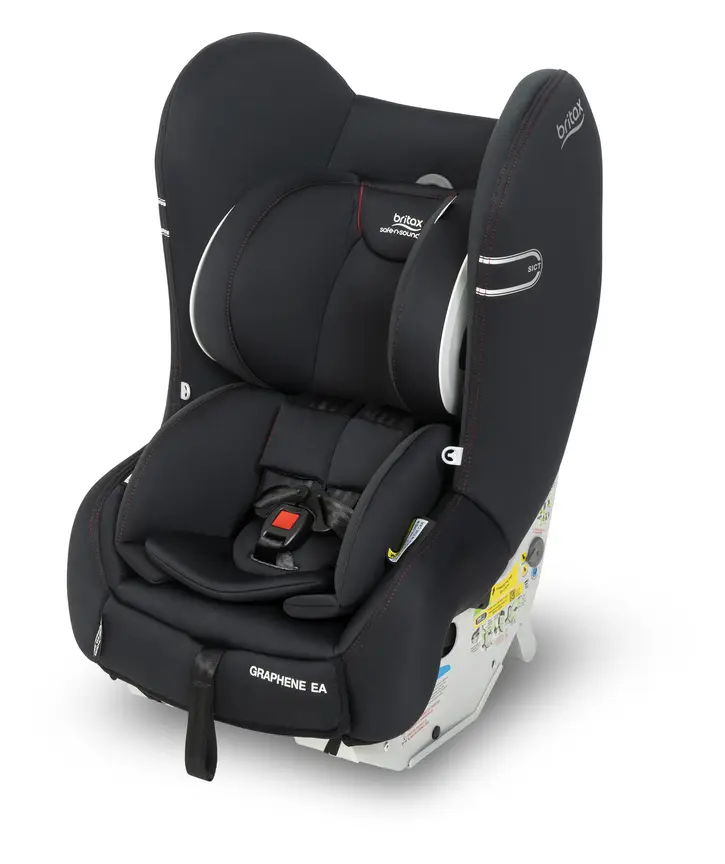
Britax Safe-n-Sound Graphene EA
Britax's Australian convertible seat with SICT side-impact technology, designed to reduce crash energy reaching your child's chest.


Joie Armour
A convertible seat with a steel inner shell and an extra side-impact panel you can switch on.
Read our full review →
Babylove ezymove Booster
A very light, low-cost booster for about 4 to 8 years. It folds flat for storage.
The sash guide: getting the shoulder belt right
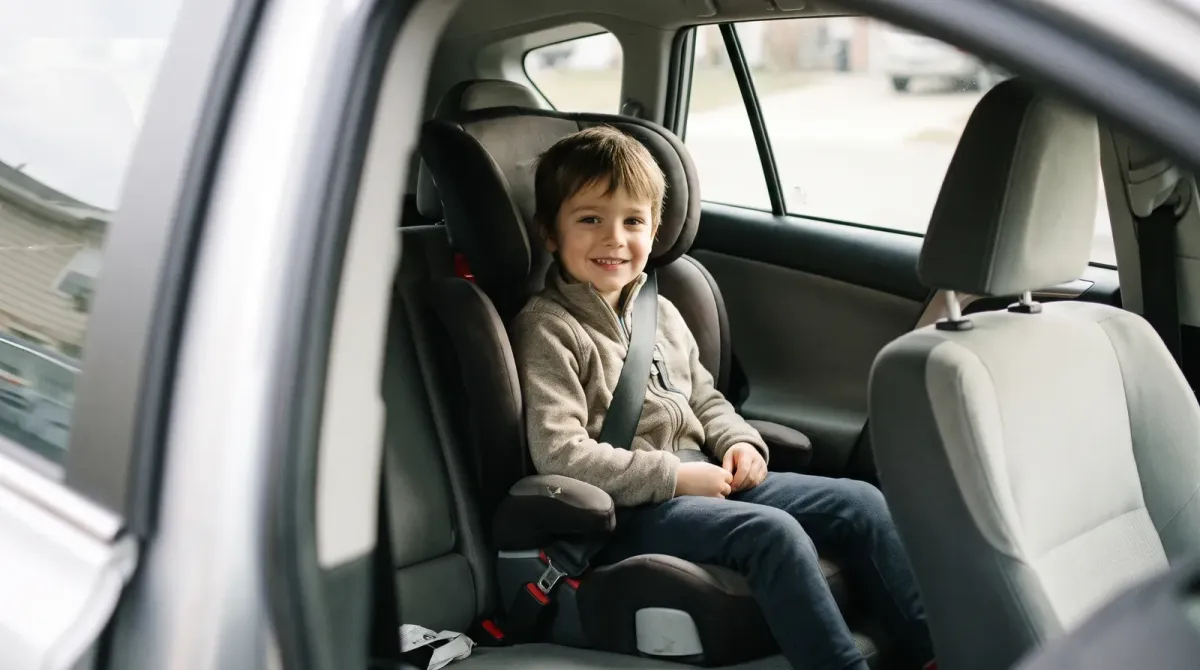
A booster does two jobs. It lifts your child so the lap belt sits low on the hips, and it guides the sash (the shoulder part of the belt) across the shoulder. The part that does the second job is the sash guide, also called a shoulder belt guide or positioning clip.
On a high-back booster, the sash guide is a slot or hook near the headrest. It moves up as you raise the headrest. On a few backless boosters, it's a separate clip on a strap.
How the sash should sit
- Across the middle of the shoulder, halfway between the neck and the edge of the arm.
- Flat across the chest, with no twists.
- Never under the arm or behind the back.
Kidsafe says a sash under the arm gives no protection to the upper body and puts all the crash force on the tummy, which can cause head, tummy and spine injuries. Australia's Child Car Seats website shows a crash test video of exactly this: in a 48 km/h crash, the belt slides down and tightens into the child's tummy.
How to adjust it
- Sit your child all the way back in the booster, bottom right against the back.
- Thread the sash through the guide and buckle the belt.
- Raise or lower the headrest until the guide sits just above your child's shoulder and the belt crosses the middle of the shoulder.
- Check the lap belt runs under the armrests, low over the hips, touching the thighs.
- Pull up on the sash near the buckle to take out any slack in the lap part.
- Check again every few months as your child grows.
Kidsafe's guidelines say any part made to position the belt, such as armrests, clips and guides, should always be used. Don't add belt adjusters or clips that didn't come with the booster.
Side-impact protection: what it means
Most crashes are front-on, but side crashes are dangerous for children because there is very little space between the child and the door. In a side crash, the head can hit the door, window or another passenger.
Kidsafe says boosters with high backs and side wings give more protection for the head in a side crash than booster cushions do. The wings help keep the head inside the booster and soak up some of the force. They work alongside the car's own curtain airbags.
Kidsafe also gives advice about airbags for older children: don't let them lean their head on the window or door where side and curtain airbags come out.
Where to sit
Kidsafe says children 12 and under are safest in the back seat. The middle of the back seat is furthest from both doors, but Kidsafe says a lap-sash belt matters more than the middle position. Never use a booster with a lap-only belt.
How booster crash ratings work
A safety standard is a pass or fail test. Every booster sold legally in your country has passed it. Independent rating programs go further: they crash test real models and score how well each one did, so you can compare them.
Australia: the Child Restraint Evaluation Program (CREP)
Australia's Child Car Seats website publishes CREP ratings. The program is run by a partnership of Transport for NSW, the Transport Accident Commission, the Victorian Department of Transport and Kidsafe Australia. Each booster gets two star ratings:
- Protection rating. How well the seat protected a crash test dummy in three tests: a front crash with the largest dummy the seat is made for, a front crash with the smallest dummy, and a side crash with the largest dummy.
- Ease of use rating. How easy the seat is to use correctly, looking at packaging, instructions, labels and securing the child. More stars means it's more likely to be used correctly.
The front crash test is at 56 km/h. The side crash test uses a door that pushes into the side of the seat, based on the European R129 test. The program says it scores things like how well the seat holds the dummy's head and body in place and manages the impact to the head in both front and side crashes.
One key thing to know: CREP changed its tests in 2021. The program says seats rated from 2021 can't be compared with seats rated under the older methods. When you compare two boosters, make sure both were rated under the same method.
Other countries
In the UK and Europe, the R129 (i-Size) standard itself includes a side impact test, which the UK Child Car Seats website points out. Consumer groups in Europe and the US also run their own tests of boosters. In the US and Canada, look at your national road safety agency and trusted consumer testers for current results. Ratings change as new models come out, so check the latest.
How to use ratings well
- Use the protection rating first, then ease of use.
- Check the rated version is the one sold in your country.
- Try the booster in your car. A top-rated booster that doesn't fit your car well, or that your child won't sit in properly, won't protect them as well.
- Don't rely on box claims like "side impact protection" alone. Look for independent results or the standard it was approved to.
High-back booster vs booster cushion for this age
| What to compare | High-back booster | Booster cushion (backless) |
|---|---|---|
| Sash guide | Built in, adjusts with the headrest | Usually none |
| Side protection for the head | Side wings | None |
| Keeps a sleeping child in place | Yes, much better | No |
| Rules | Recommended by Kidsafe for 4 to 8 year olds | UK: new models only for children over 125 cm and 22 kg. Australia: Kidsafe says cushions are being phased out |
| Best use | Everyday car for most 4 to 8 year olds | Older, taller children, in cars with good headrests, for short trips |
Kidsafe also says that for 4 to 8 year olds, add-on high-back boosters are better than boosters built into the car seat, because they give more support and have more proven protection.
Side by side: more car seats & capsules to compare
Real products from our catalogue. We don't show star ratings or review counts; check the current price, stock and reviews on Amazon before you buy.

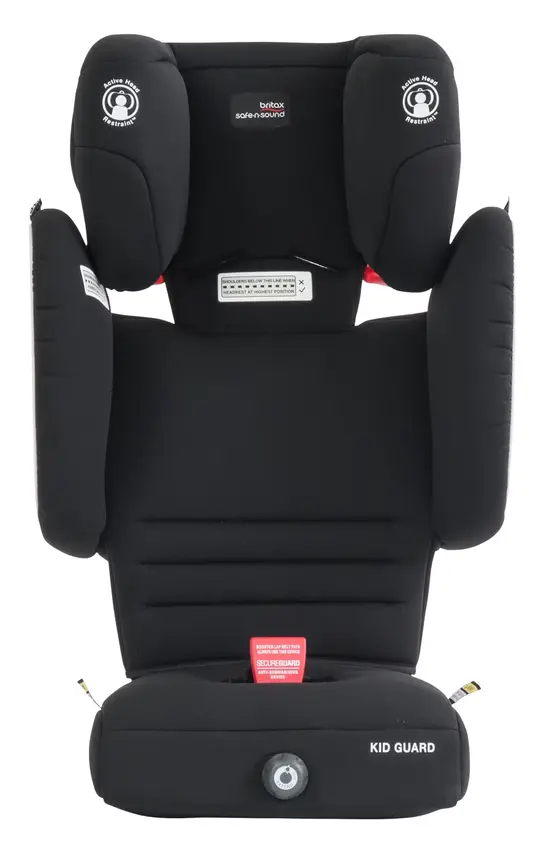
Britax Safe-n-Sound Hi Liner SG
A high-back booster for about 4 to 8 years. A clip keeps the seatbelt in the right place.
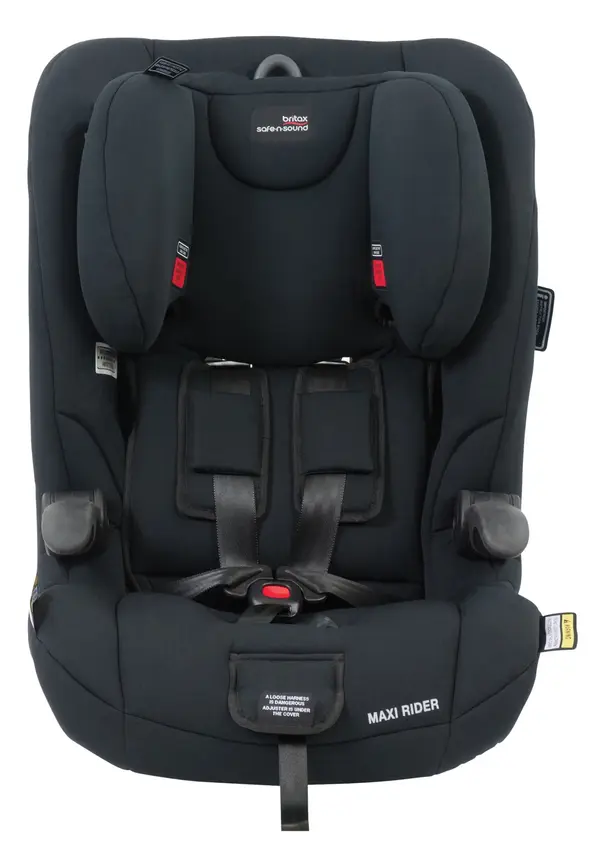


Britax Safe-n-Sound Maxi Rider
A seat with a harness from 12 months to about 4 years. Then it becomes a booster up to 6–8 years.
Read our full review →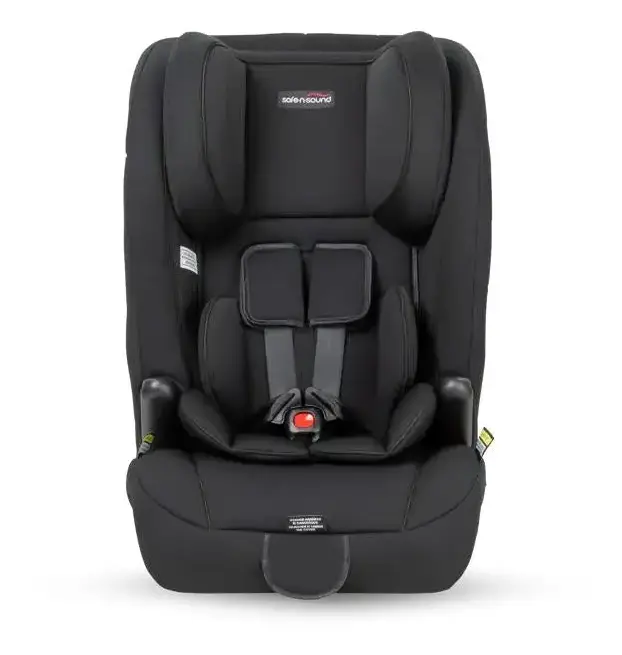
Britax Safe-n-Sound Atlas-GRO II Harnessed Car Seat
Harnessed booster seat
How to choose a booster for a 4 to 8 year old
- Pick one that will last. Kidsafe warns that some boosters are outgrown before a child is ready for an adult belt. Look for a tall top headrest setting, so your child can use it until the belt fits them, often 10 to 12 years old.
- Check the approval label. AS/NZS 1754 in Australia, an "E" mark with R129 or R44 in the UK, and FMVSS 213 or CMVSS 213 in the US and Canada.
- Look up independent ratings where you live, and compare models rated under the same method.
- Try it in your car. Kidsafe and Transport Canada both say to test fit before you buy. The back should sit against the car seat, and the sash guide should reach your child's shoulder.
- Check the buckle. Your child should reach the car's buckle easily, and wide side wings shouldn't cover it.
- Think about three across. If you have three children in the back, measure first. Kidsafe says one child's booster wings shouldn't push into another child's space.
- Clips or tether. Boosters that clip into ISOFIX or LATCH points, or attach to a tether, stay put when empty. Kidsafe notes loose empty boosters are a worry in a crash.
Helping your child sit properly
Children aged 4 to 8 wriggle, lean, fall asleep and sometimes unbuckle. A booster only works if your child sits in it the right way. These ideas help:
- Explain why. Tell them in simple words: "The belt has to sit on your shoulder and hips so it can hold you safely if we stop fast."
- Make it a rule. The car doesn't start until everyone is buckled and the belt is in the right place.
- Check before you drive. A quick look at the sash and lap belt every trip.
- Give them a job. Older children can learn to check their own belt: "middle of my shoulder, low on my hips".
- Plan for sleep. On long trips, a high-back booster helps keep a sleepy head in place. Kidsafe says encourage children to sit upright with their head back, but don't try to move them while you are driving. Pull over if needed.
- Take breaks. Children slouch more when they are bored or tired.
Checklist: is the booster set up right?
- Booster sits flat on the car seat, with its back resting against the car seat back.
- Car headrest raised or removed if it pushes the booster forward (check your car manual).
- Child sits all the way back, upright.
- Lap belt low over the hips, touching the thighs, under the armrests.
- Sash through the guide, across the middle of the shoulder.
- Belt flat, no twists, no slack.
- Bulky coat off.
- Booster clipped in or buckled when empty, so it doesn't fly around in a crash.
Common mistakes with 4 to 8 year olds
- Moving to a booster on their 4th birthday. Wait until they outgrow the harness seat.
- Sash behind the back or under the arm. Often because it rubs the neck. Fix the sash guide height instead.
- Leaving the guide unused. The belt then sits in the wrong place.
- Taking the back off too early. Many high-back boosters convert to cushions. The UK Child Car Seats site says it is far better to keep the back on.
- Letting a child slouch or lean out. If your child can't sit properly, they may need a harness seat a while longer.
- Front seat travel. In Australia, under 7s can't ride in the front of a car with two or more rows, except in limited cases. Kidsafe says 12 and under are safest in the back.
- Skipping the booster on short trips, in taxis or at a friend's place. Kidsafe says use the right restraint in every vehicle, every trip.
More options, from budget to premium
Real products from our catalogue. We don't show star ratings or review counts; check the current price, stock and reviews on Amazon before you buy.
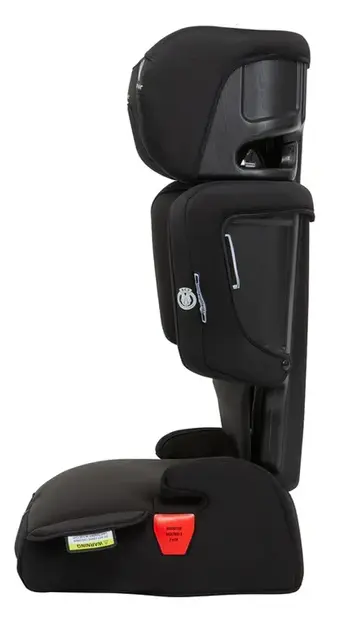
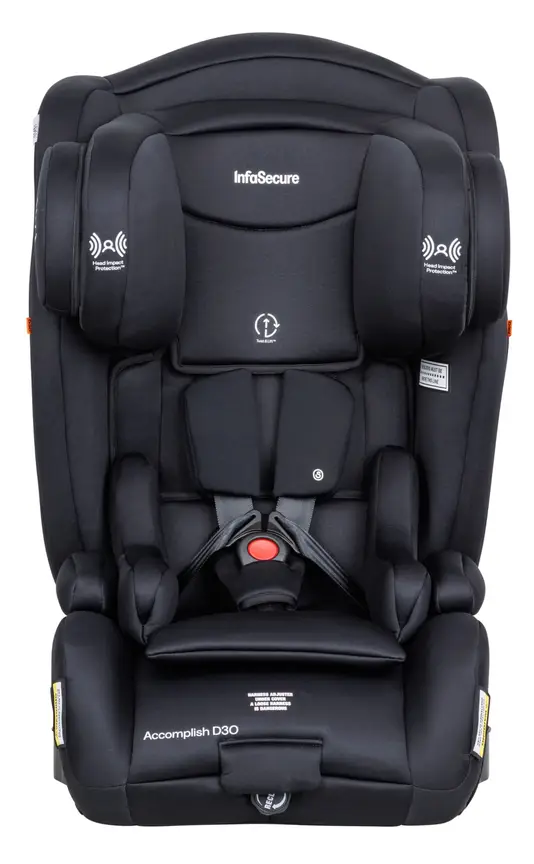

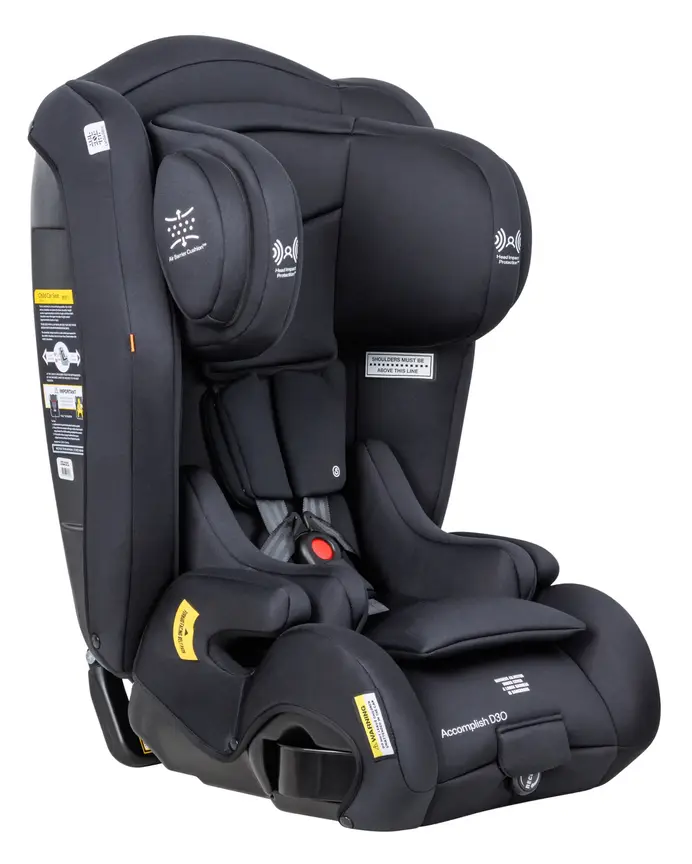
InfaSecure Accomplish D30
A seat with a built-in 6-point harness that can be used up to a large 8-year-old.
Read our full review →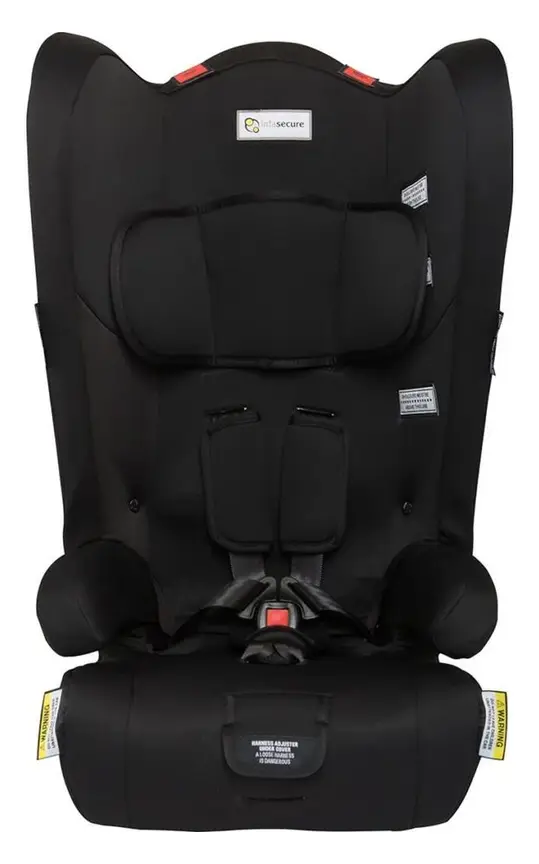
InfaSecure Roamer II Convertible Booster Seat
Harnessed booster seat
FAQ
Can a 4 year old use a booster seat?
In Australia, the law allows a booster from age 4, but only if your child has outgrown their harness seat and fits the booster. Kidsafe recommends keeping them in a harness seat for as long as they fit it.
What is a sash guide?
It's the slot, hook or clip on a booster that holds the shoulder part of the seat belt across the middle of your child's shoulder, away from the neck.
The belt rubs my child's neck. What should I do?
Adjust the headrest so the sash guide sits just above the shoulder. If it still rubs, try another seating position or another booster. Never let your child move the belt behind them.
Do star ratings mean one booster is "safe" and another is not?
Every legally sold booster has passed the national standard. Ratings show which models did better in extra tests, so they help you choose. Correct fitting and use matter just as much.
Why can't I compare a 2019 rating with a 2023 rating?
Australia's rating program changed its tests and test dummies in 2021. The program says seats rated from 2021 can't be compared with those rated before.
Is a forward-facing harness seat safer than a booster for a 6 year old?
If your child still fits it, yes, a harness spreads crash forces better. Kidsafe says seats made for extended harness use up to about 8 years are an acceptable alternative to a booster.
When can my child stop using a booster?
When the adult belt fits them properly in every car they ride in. Use Kidsafe's 5-step test: back against the seat, knees bent at the seat edge, lap belt on the hips, sash on the middle of the shoulder, and able to sit like that the whole trip. Most children reach this between 10 and 12.
Do booster seats expire?
Many do. Check the label and manual. Don't use a booster that has been in a crash, has missing parts or is too old.
Sources
- Child Car Seats Australia – Legal requirements
- Child Car Seats Australia – Testing explained (CREP crash tests)
- Child Car Seats Australia – Ratings explained
- Kidsafe Australia / NeuRA – National best practice guidelines for the safety of children in motor vehicles
- GOV.UK – Child car seats: the law
- Child Car Seats (UK) – i-Size seats (R129)
- AAP HealthyChildren.org – Car seats: information for families
- Transport Canada – Stage 3: booster seats
Related guides
More Car Seats & Travel →
Backless Booster vs High-Back Booster Seat: Belt Guides, Side Wings and Which Is Safer

Rotating 360-Degree Car Seats: Swivel Safety, Side-Impact Protection, and Back Relief

Dining Table Booster Seats: Chair Straps, Child Harnesses and Non-Slip Bases Explained