









Pram Sun Covers and Overheating: Why Draping a Blanket Is Unsafe and What to Use Instead
Covering a pram with a blanket traps heat and blocks airflow. Learn safer ways to shade your baby, what covers to use, and signs of overheating.
On this page
- Key points
- Why draping a blanket over a pram is dangerous
- Why babies overheat faster than adults
- Safer ways to shade your baby in a pram
- Comparing pram shade options side by side
- How to keep your baby cool on hot days
- Signs of overheating, heat exhaustion and heatstroke
- Official safety standards and advice in Australia, the UK, the US and…
- Common mistakes parents make with pram covers
- Frequently asked questions
- Sources
Short answer: Never drape a blanket, towel or heavy cloth over a pram or stroller. Even a thin muslin wrap can block airflow and trap hot air inside. Use the built-in sun hood, walk in the shade, and check your baby often.
Health and safety groups share this same advice across four countries. That includes Australia (Product Safety Australia, Cancer Council Australia, and Pregnancy, Birth and Baby), the UK (NHS), the US (American Academy of Pediatrics), and Canada (Canadian Paediatric Society).
Key points
- No draped cloths: Never hang a blanket, towel or wrap over the pram opening.
- Airflow matters: Trapped air heats up fast, even when it feels cool outside.
- Keep baby in sight: You should always be able to see your baby's face clearly.
- Better shade: Use the pram's built-in hood, a clip-on umbrella, or natural tree shade.
- Check the neck: Feel the back of your baby's neck or tummy to check for heat.
- Dress lightly: One thin layer of cotton is enough on warm days.
Why draping a blanket over a pram is dangerous
Many parents drape a cloth over a pram to block bright sun or help a baby sleep. It looks cosy from the outside. Inside the pram, it creates a dangerous heat trap.
When you cover the front of a pram, fresh air cannot get in. Warm air from your baby's body and the sun has nowhere to go. The space inside acts like a small greenhouse. Heat builds up fast, even on a mild day.
Even thin muslin wraps can trap heat
Muslin feels light in your hands. Many parents think air passes right through it. In reality, a muslin cloth stretched across a pram hood slows down the breeze. It still blocks airflow and holds warm air inside.
Dark cloths are even worse. Dark fabric absorbs sunlight and turns it into heat. That warmth then radiates straight down onto your baby.
You cannot see your baby
A draped blanket hides your baby from view. You cannot see if their face is flushed. You cannot see if they are sweating or struggling to breathe. You also cannot see if a loose corner of the cloth has slipped onto their face.
Loose fabric is a suffocation risk
A blanket clipped or tucked onto a pram hood can easily fall. Wind can blow it loose. A kicking baby can pull it down. Loose fabric over a baby's nose and mouth can block their airway.
Prams & Strollers worth a look
Real products from our catalogue. We don't show star ratings or review counts; check the current price, stock and reviews on Amazon before you buy.

Maxi-Cosi Zelia 3
A mid-price pram with a carrycot that changes into a seat, so one frame covers birth to toddler.
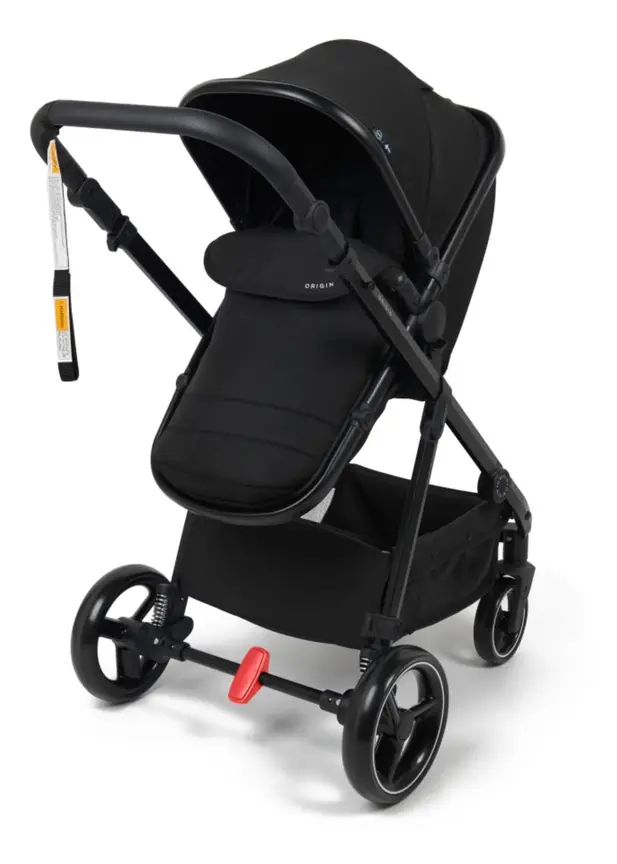
4baby Origin Stroller
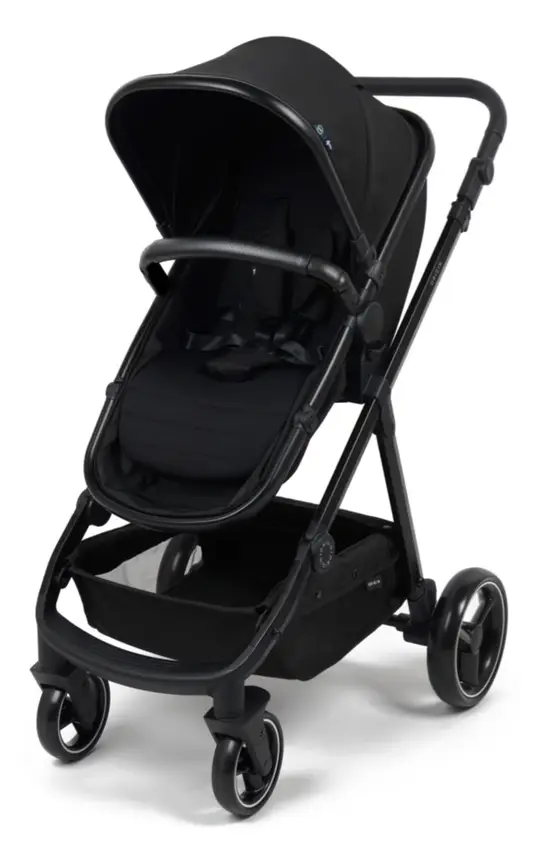
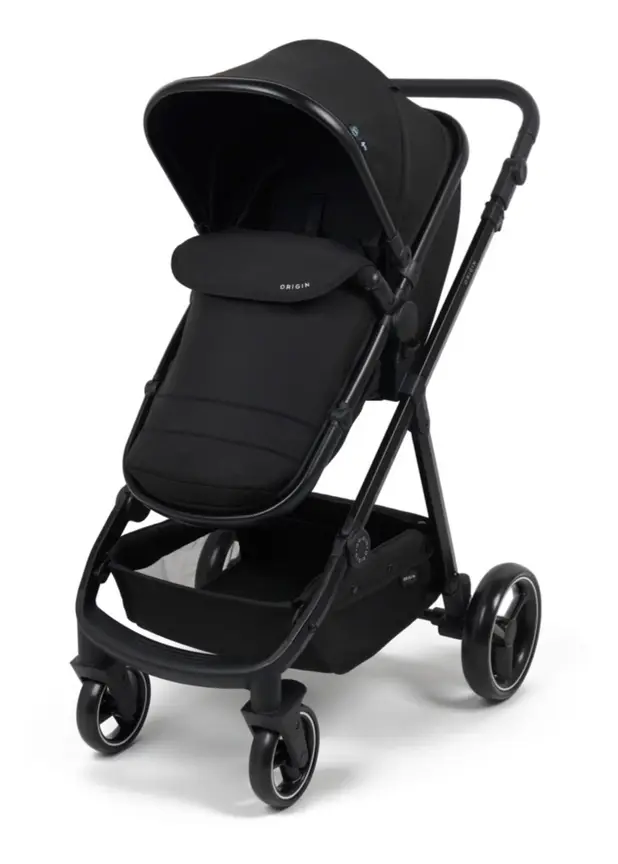
A budget pram whose seat turns into a bassinet. The seat can face you or face the world.
Read our full review →


Britax One2
A pram that starts as a single and can take a second child. The seat turns into a lie-flat bassinet.
Read our full review →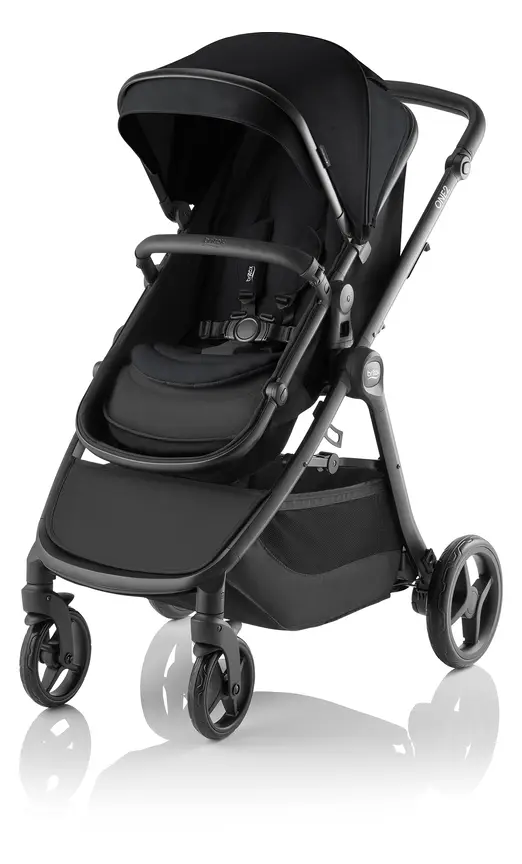
Why babies overheat faster than adults
Babies are not small adults. Their bodies handle heat very differently from ours.
- Small bodies: Babies gain heat quickly when the air around them is warm.
- Less sweat: Newborns and young babies do not sweat as well as older children. Sweating is how our bodies cool down.
- No way to speak up: A baby cannot tell you they feel too hot. They cannot take off a hat or push away a blanket.
- Parked prams heat faster: When you push a pram, a small breeze moves past the opening. When you stop in the sun, that breeze stops too.
Because of this, a baby can go from comfortable to overheated in a short time. Shade and moving air are both needed to keep them safe.
Safer ways to shade your baby in a pram
You still need to protect your baby's skin and eyes from the sun. Babies have thin, delicate skin that burns easily. The trick is to block the sun without blocking the air.
1. Use the built-in pram hood
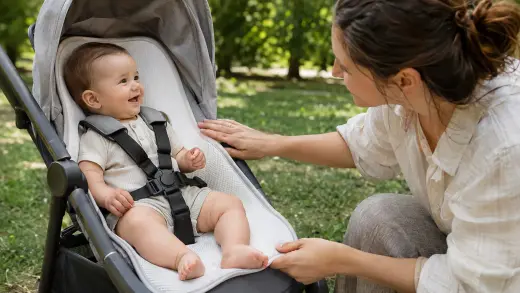
Most modern prams have an extendable sun canopy. Pull it out as far as it goes. Many hoods have a zip-open mesh panel at the back or sides. Open these vents on warm days so air can flow through.
If the sun is shining straight into the hood, turn the pram around. Many prams let you flip the seat to face you or face forward. You can also pull the pram backwards for a short stretch to keep the sun off your baby's face.
2. Clip on a pram umbrella or parasol
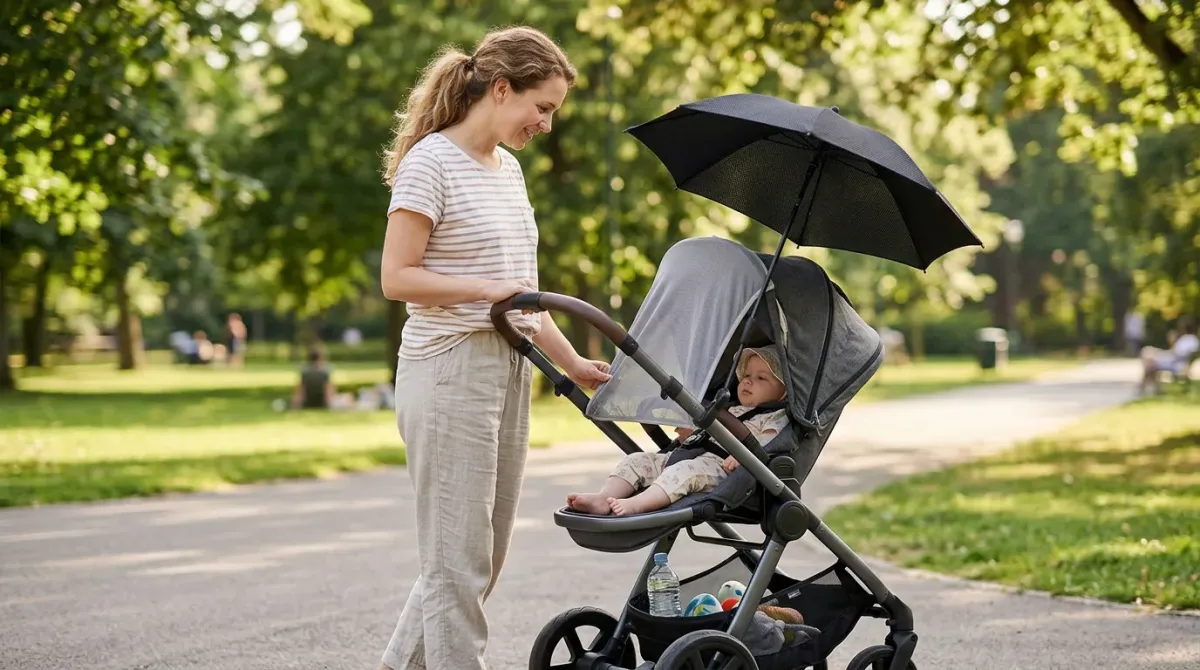
A clip-on pram umbrella attaches to the frame. You can angle it to block the sun from any side. Because an umbrella sits above the seat, all four sides stay open. Fresh air moves freely around your baby.
Check that the clamp is tight so it cannot fall onto your baby. Also keep the spokes well above your child's reach.
3. Choose a breathable mesh sun cover
Some sun covers are made just for prams. They use open mesh fabric that lets air pass through. Look for a cover that fits your exact pram model snugly.
Make sure the mesh has large enough openings for air to move. You should still be able to see your baby's face through it. Never use a thick, solid plastic rain cover in warm or sunny weather. Rain covers trap heat and humidity almost instantly.
4. Walk in natural shade
The safest shade is natural shade. Walk on the shady side of the street. Choose paths under trees or covered walkways. Plan your walks for early morning or late afternoon when the sun is lower and the air is cooler.
5. Dress for sun protection
Clothing is a great barrier against UV rays. UV stands for ultraviolet light, which is the part of sunlight that causes sunburn. Dress your baby in light, loose cotton clothes that cover their arms and legs.
Use a soft, wide-brimmed sun hat when your baby is awake. Make sure the hat does not have a tight chin strap that could catch on anything. Always take the hat off when your baby falls asleep, so their head can release heat.
6. Follow age rules for sunscreen
Health groups in Australia, the UK, the US and Canada give clear advice on sunscreen by age:
- Under 6 months: Keep your baby out of direct sun. Shade, clothing and hats come first. Ask a doctor or pharmacist before using sunscreen on a very young baby, or use it only on tiny areas that cannot be covered.
- 6 months and older: Use shade and protective clothing first. Apply a broad-spectrum, water-resistant sunscreen to any skin that is still uncovered, like hands and cheeks. Reapply it every two hours, or sooner if your baby sweats or gets wet.
Comparing pram shade options side by side
Different shade options work very differently for heat and airflow. This table compares the most common choices.
| Shade option | Airflow | Sun protection | Can you see baby? | Safety verdict |
|---|---|---|---|---|
| Draped blanket or towel | Very poor; traps hot air inside | Blocks light, but holds heat | No; baby is hidden | Unsafe; never do this |
| Muslin wrap clipped over front | Poor; slows breeze and warms air | Low; thin weave lets UV through | No; blocks your view | Unsafe; do not cover the opening |
| Plastic rain cover | Almost none; traps heat and damp air | None; lets sunlight straight in | Yes, though it fogs up | Unsafe in sun or warm weather |
| Built-in hood with mesh vents | Good when vents are open | Good overhead shade | Yes, from the front or peek window | Safe; best first choice |
| Clip-on pram umbrella | Excellent; all sides stay open | Good when angled well | Yes, completely clear | Safe; great for open airflow |
| Fitted mesh pram shade | Moderate to good if open-weave | Moderate; check UPF rating | Usually yes, through mesh | Safe only if breathable and snug |
UPF stands for Ultraviolet Protection Factor. It measures how much UV light a fabric blocks. A high UPF fabric blocks more sun, just like sunscreen does for skin.
How to keep your baby cool on hot days
Good shade is only part of keeping your baby safe in warm weather. What your baby wears, drinks and sits on also matters.
Dress in one light layer
On hot days, a single layer of loose cotton is enough. A short-sleeve bodysuit or just a nappy and singlet works well. Skip socks, booties and beanies indoors or in warm weather. Babies lose a lot of heat through their head and feet.
Check the pram seat fabric too. Some dark, padded liners hold body heat. A simple cotton pram liner can feel cooler against your baby's skin.
Offer extra feeds or fluids
Warm weather makes babies lose water faster. Keep them hydrated:
- Babies under 6 months: Offer breastfeeds or formula feeds more often. Breastfed babies do not need extra water. Formula-fed babies usually just need more frequent milk feeds, unless a doctor says otherwise.
- Babies 6 months and older: Keep offering milk feeds, plus small sips of water throughout the day. In Australia, the UK, the US and Canada, health advice on boiling tap water varies slightly by age and local water supply. Check your local health guide if you are unsure.
Be careful with clip-on stroller fans
A small battery fan can help move air around a pram on still days. If you use one, follow these safety steps:
- Choose a fan with soft foam blades or a very tight cage so tiny fingers cannot fit inside.
- Clip it firmly to the frame, well out of your baby's reach.
- Point it slightly to the side so it moves the air without blasting straight into your baby's eyes.
- Check the battery door. Make sure it has a screw so your child cannot open it. Never use a fan powered by loose button batteries.
Cool down gently
If your baby seems warm, move to a shady or air-conditioned spot right away. Wipe their arms, legs and neck with a cool, damp cloth. Never use ice, ice water or a cold bath, as sudden cold can shock a baby's body.
Never leave a baby alone in a parked car, even for a minute and even with a window cracked. Cars heat up far faster than prams and can become deadly within minutes.
Side by side: more prams & strollers to compare
Real products from our catalogue. We don't show star ratings or review counts; check the current price, stock and reviews on Amazon before you buy.
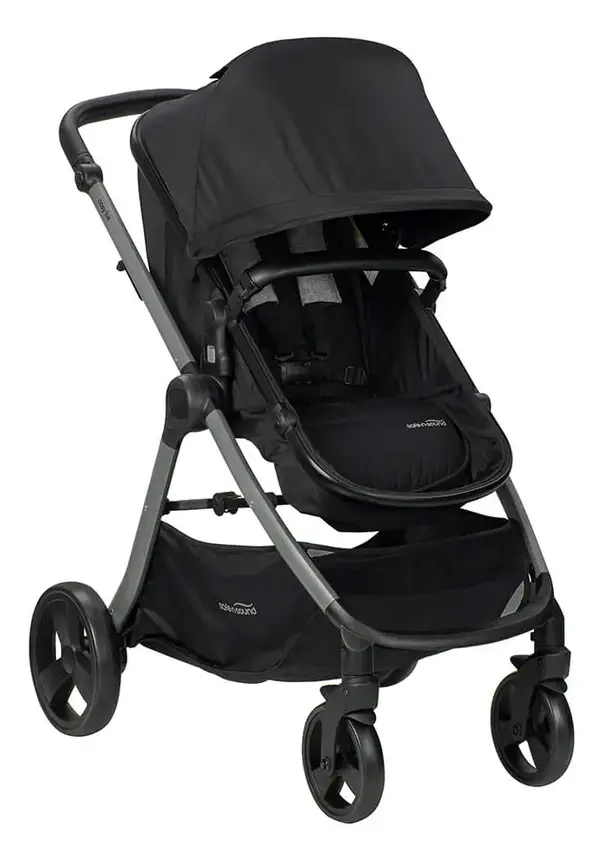
Bugaboo Donkey 5
Converts from single to side-by-side double (siblings or twins) by widening the frame.
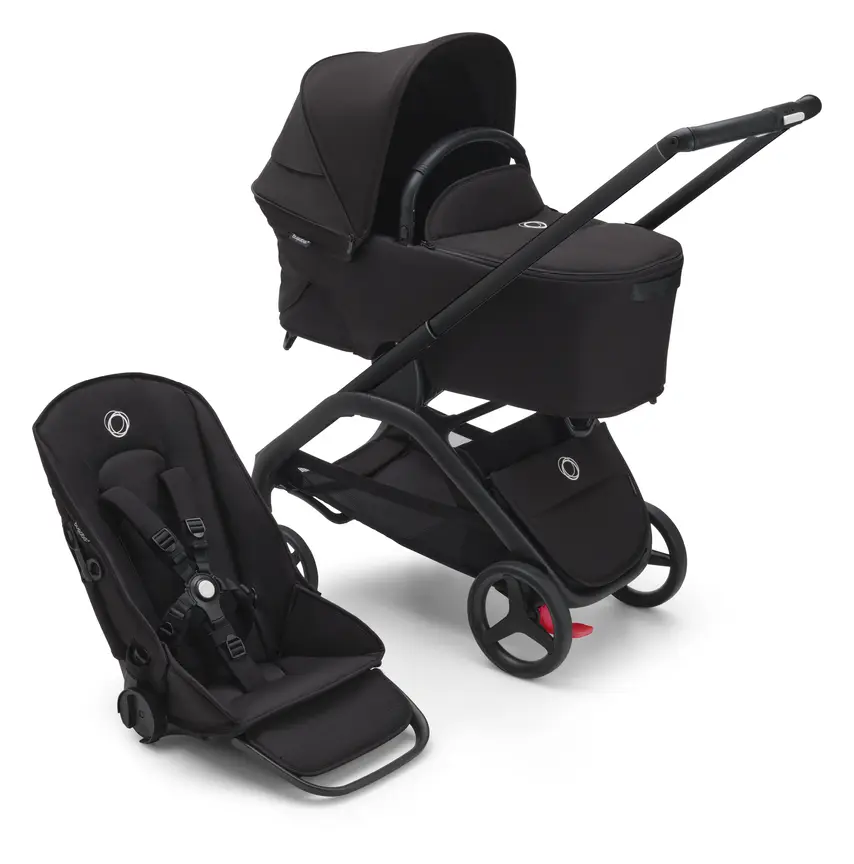
Bugaboo Dragonfly
Bugaboo's city pram: smaller footprint and lighter than the Fox, built for footpaths, lifts and car boots rather than bush tracks.
 Reviewed
Bugaboo Fox 5
Bugaboo's flagship all-terrain pram: big-wheel suspension ride, one-piece fold, bassinet from birth and a seat rated to 22 kg.
Read our full review →Signs of overheating, heat exhaustion and heatstroke
Know what to look for so you can act early. Feel the back of your baby's neck or their tummy with your hand. Hands and feet often feel cool even when a baby is too hot, so do not rely on them.
Early signs your baby is too hot
- The back of their neck or tummy feels hot or sweaty.
- Their cheeks or chest look red and flushed.
- Their hair is damp with sweat.
- They are breathing faster than usual.
- They seem fussy, restless or unusually sleepy.
If you notice these signs, move to a cool place, loosen or remove a layer of clothing, and offer a feed or drink.
Signs of heat exhaustion
Heat exhaustion happens when the body loses too much water and salt. Watch for:
- Pale, cool or clammy skin.
- Heavy sweating.
- Being very cranky, limp or hard to wake.
- Refusing to feed or drink.
- Fewer wet nappies than normal, or dark yellow urine.
Move your baby to a cool room, take off extra clothes, sponge them with cool water, and offer fluids. Call a doctor or nurse helpline right away for advice.
Signs of heatstroke (emergency)
Heatstroke is life-threatening. Call emergency services straight away (000 in Australia, 999 in the UK, 911 in the US and Canada) if your baby:
- Has very hot, red or dry skin.
- Is floppy, confused or does not respond to you.
- Is breathing very fast or struggling to breathe.
- Has a fit (seizure).
- Is vomiting and cannot keep fluids down.
Official safety standards and advice in Australia, the UK, the US and Canada
Prams and strollers must meet strict safety rules in each country. These rules cover frame locks, brakes, harnesses and stability. They also guide how hoods and fabrics are made.
In Australia, prams and strollers must meet the mandatory safety standard AS/NZS 2088, overseen by Product Safety Australia (ACCC). In the UK, prams follow BS EN 1888, with product safety overseen by the Office for Product Safety and Standards (OPSS). In the US, strollers must meet ASTM F833 under rules from the Consumer Product Safety Commission (CPSC). In Canada, Health Canada enforces national carriage and stroller safety rules under federal law.
Health bodies in all four countries agree on heat and sun safety for babies:
| Country | Official bodies | Key advice on pram heat and sun |
|---|---|---|
| Australia | Product Safety Australia (ACCC), Cancer Council Australia, Pregnancy, Birth and Baby, Red Nose | Keep babies out of direct sun. Do not cover prams with blankets or cloths that block air. Watch for overheating and check the back of the neck. |
| United Kingdom | NHS, The Lullaby Trust, OPSS, RoSPA | Never cover a pram with a blanket or cloth in warm weather. Keep babies in the shade, dress them lightly, and offer extra fluids. |
| United States | American Academy of Pediatrics (AAP), U.S. CPSC | Keep babies under 6 months out of direct sunlight. Use stroller canopies and open shade. Never block airflow around a sleeping or resting baby. |
| Canada | Health Canada, Canadian Paediatric Society (Caring for Kids) | Use a stroller canopy or umbrella instead of a blanket over the opening. Dress babies in light cotton and check them often in hot weather. |
Before you buy any add-on shade or clip-on accessory, check that it does not void your pram's safety. Heavy attachments hung on the handlebar can tip a pram backwards. Check your pram manual for weight limits.
Common mistakes parents make with pram covers
Most overheating mistakes happen when parents are trying to do the right thing. Here are the traps to avoid.
- Using a "breathable" muslin wrap: Parents hear that muslin is breathable and think it is safe to clip over the pram. It is fine for swaddling in a cool room, but not for sealing a pram opening in the sun.
- Leaving a sleeping baby in a parked pram: When you get home from a walk, move your baby to a safe cot or bassinet. A pram parked in a sunny hallway, backyard or cafe courtyard can warm up fast.
- Using a rain cover to block wind or sun: Clear plastic rain covers have very little airflow. Even on a cool but sunny day, sunlight through plastic warms the inside like a car windscreen.
- Adding blankets over a sleeping baby in the pram: Loose blankets inside a pram can slip over a baby's face and also make them too hot.
- Leaving a sun hat on during a nap: A hat keeps heat in and can slip over a baby's face when they turn their head. Take hats off once your baby is in full shade and asleep.
- Checking only hands and feet: A baby's hands and feet often feel cool because their blood flow is still developing. Always check the back of the neck or the tummy instead.
More options, from budget to premium
Real products from our catalogue. We don't show star ratings or review counts; check the current price, stock and reviews on Amazon before you buy.

Cybex Priam
Fashion-forward luxury pram with interchangeable seat/bassinet units and an all-terrain option.

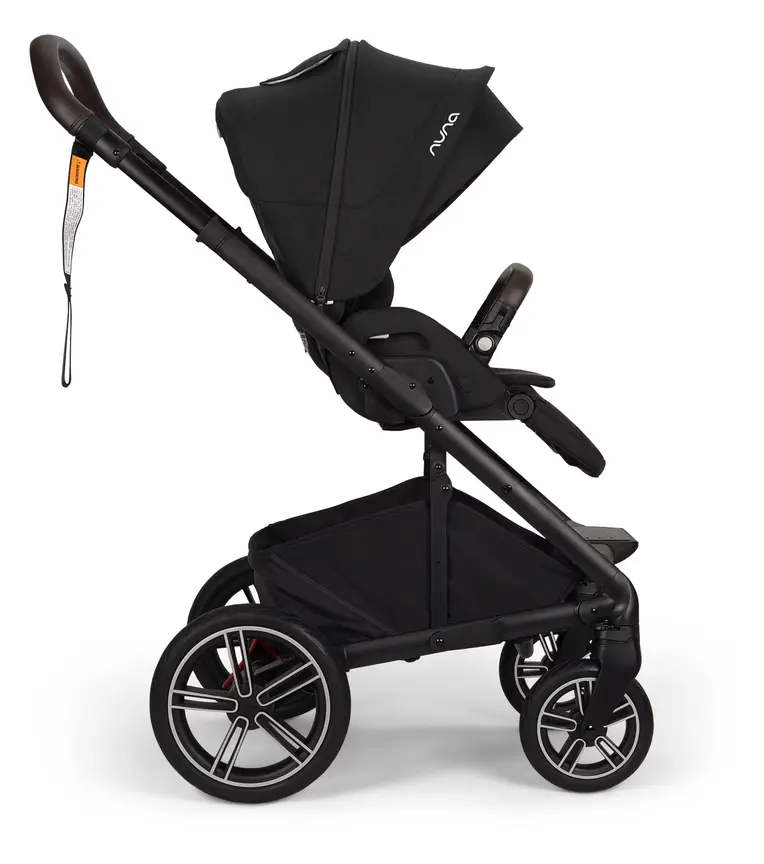


Nuna MIXX Next
A full-size pram with four ways to ride: capsule, bassinet, parent-facing seat or world-facing seat.
Read our full review →
Baby Jogger City Mini GT2
Long-running, lighter all-terrain stroller with a famously simple one-hand strap fold.
Frequently asked questions
Can I use a thin muslin wrap over the pram if it is breathable?
No. Even a thin cotton or muslin wrap slows down air movement and traps heat inside the pram. It also hides your baby so you cannot see if they are flushed or in trouble. Use the pram's own sun hood or a clip-on umbrella instead.
Are mesh pram sun covers safe to use?
Fitted mesh covers made for your pram are much safer than a draped blanket, because air can pass through the holes. Still, check that you can see your baby clearly through the mesh. On very hot or still days, keep the front open and walk in natural shade.
How do I check if my baby is too hot in the pram?
Slide your hand onto the back of your baby's neck or onto their tummy. The skin should feel warm, not hot or sweaty. If it feels damp or very hot, remove a layer, move into the shade, and offer a feed.
Should I use a clip-on fan on my stroller?
A clip-on fan can help on still, humid days when there is no breeze. Pick one with soft foam blades or a tight safety cage, and clip it well out of your baby's reach. Never leave a fan within reach of curious fingers or loose near the baby's face.
Can my baby sleep in the pram with the sun hood up?
Yes, as long as the front of the pram stays open for fresh air and you stay close by to watch them. Open any mesh vents in the hood. Once you get home, move your baby out of the pram and into a safe, flat cot or bassinet.
What should my baby wear in the pram on a hot day?
Dress your baby in one light layer of loose cotton, such as a short-sleeve bodysuit or just a nappy and singlet. Skip extra blankets, thick liners and beanies. If you feel comfortable in a T-shirt, your baby usually needs the same single light layer.
Sources
- Pregnancy, Birth and Baby – Sun and heat protection for babies and kids
- Pregnancy, Birth and Baby – Babies in hot weather
- Product Safety Australia – Prams and strollers guide
- Cancer Council Australia – Fact sheet: Sun protection and babies
- NHS – Heatwave: how to cope in hot weather
- NHS – Heat exhaustion and heatstroke
- American Academy of Pediatrics (US) – Sun safety: information for parents
- Caring for Kids (Canadian Paediatric Society) – Sun safety
Related guides
More Prams & Strollers →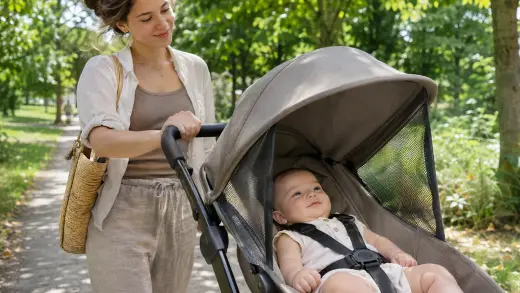
Pram Sun Shades and Canopy Airflow: How to Stop Your Baby Overheating in Hot Weather

How to Check a Used Pram: Frame, Brakes, Fold and Safety
Stroller Footmuff vs Snowsuit in a Pram: Why Zip-Top Footmuffs Work Better for Warm Shops
