












Bedside Co-Sleepers With Drop-Down Sides: Flat Surfaces, Safe Sleep Rules and Firm Mattresses
Bedside co-sleepers with drop-down sides: why the sleep surface must be flat, which safe sleep rules still apply, and how to check the mattress is firm.

On this page
- What a bedside co-sleeper is
- Why the sleep surface must be flat
- Drop-down sides: how to use them safely
- Mattress firmness: why it matters and how to check
- Safe sleep rules still apply
- Rules and standards side by side
- Co-sleeper vs bassinet vs cot: side by side
- A nightly check that takes one minute
- When to stop using a co-sleeper
- How to choose a bedside co-sleeper
- Common mistakes
- FAQ
- Sources
Short answer: A bedside co-sleeper is a small bassinet that sits right next to your bed. Many have one side that drops down so you can reach your baby easily. To be safe, the sleep surface must be flat (in Australia, tilted no more than 7 degrees; the AAP in the US says more than 10 degrees is unsafe), the mattress must be firm and fit snugly, and every normal safe sleep rule still applies: baby on their back, face uncovered, nothing soft in the sleeper. A drop-down side is only safe if the sleeper is locked tight against your mattress with no gap, or the side is back up.
Key points
- In Australia, infant sleep products, including co-sleepers, must have a sleep surface tilted no more than 7 degrees. Products that rock or swing must also stay within 7 degrees.
- The sleep surface and mattress must be firm. A soft mattress can raise the risk of a fatal sleep accident, says Red Nose.
- Only use the mattress that came with the sleeper. Never add a second mattress, a pillow-top or padding.
- The sleeper's mattress should be level with or just below your mattress, with no gap between the two.
- Even with a co-sleeper, your baby sleeps in their own space, not in your bed.
What a bedside co-sleeper is
A bedside co-sleeper (also called a bedside sleeper or side-car bassinet) is a baby bed that sits right up against the side of your bed. It has its own frame, its own mattress and its own walls. Many models have one side that unzips or slides down. You attach the sleeper to your bed frame with straps, and with that side down, your baby's sleep space sits right next to yours.
Parents like them because:
- it is easy to reach, settle and feed your baby at night, especially after a caesarean birth;
- your baby is in the same room as you, which safe sleep groups recommend for the first 6 to 12 months;
- your baby still has their own separate, firm, flat sleep space.
A co-sleeper is not the same as bed-sharing. Your baby should never roll or be moved from the sleeper into your bed to sleep. The sleeper is there so your baby can be close and separate.
Why the sleep surface must be flat
A baby who sleeps on a slope can slide down, curl up, or have their head tip forward onto their chest. This "chin to chest" position can squash their airway and make it hard to breathe. Tilted surfaces also make it easier for a baby to roll into a position they can't get out of.
That is why the rules are now strict:
- Australia: under the infant sleep products standard, a sleep surface must not be tilted more than 7 degrees from flat. A product that rocks or swings must also stay within 7 degrees. Businesses have had to follow this rule since 19 January 2026.
- United States: the AAP says any surface tilted more than 10 degrees is not safe for a baby to sleep on. US federal rules also cover bedside sleepers and bassinets, and the Safe Sleep for Babies Act banned inclined sleepers.
- UK and Canada: the NHS, the Lullaby Trust and Health Canada all say babies should sleep on a firm, flat surface.
Raised ends and "reflux" settings
Some older co-sleepers have a setting that raises one end of the mattress. Some parents also prop up the mattress for a baby with reflux. Don't. The AAP says babies with reflux should still sleep flat on their backs. Product Safety Australia says never put a baby to sleep in an inclined or propped position. If your sleeper has a tilt setting, keep it flat. If it won't sit flat, don't use it for sleep.
Check your floor and bed too
A sleeper can only be flat if it stands on a level floor and is set up the right way. If your bedroom floor slopes, or one leg of the sleeper is set to a different height, the surface can tilt. Put a small spirit level or a level phone app on the empty mattress to check.
Drop-down sides: how to use them safely
The drop-down side is the part that makes a co-sleeper different from a normal bassinet. It is also where most of the risk is, because a gap can open up between the sleeper and your bed.
- No gap. When the side is down, the sleeper must be pushed hard against your mattress and strapped to the bed frame, so there is no gap your baby's head or body could slip into.
- Heights line up. The sleeper mattress should be level with your mattress, or a little lower, as the maker says. It should never be higher, because your baby could roll towards your bed.
- Side up when not attached. If you move the sleeper away from the bed, even for a nap, put the side back up and lock it.
- Check the straps every night. Straps can loosen as you get in and out of bed.
- Soft-sided beds. Some adult mattresses are very soft or have thick toppers, which can sag and open a gap. Check the maker's list of bed types the sleeper works with.
Product Safety Australia's bassinet guide applies to bedside sleepers too. It says to check the sides are high enough and there are no gaps that could trap a baby's head, neck, arms, legs or fingers.
Cots, Bassinets & Bedside Sleepers worth a look
Real products from our catalogue. We don't show star ratings or review counts; check the current price, stock and reviews on Amazon before you buy.

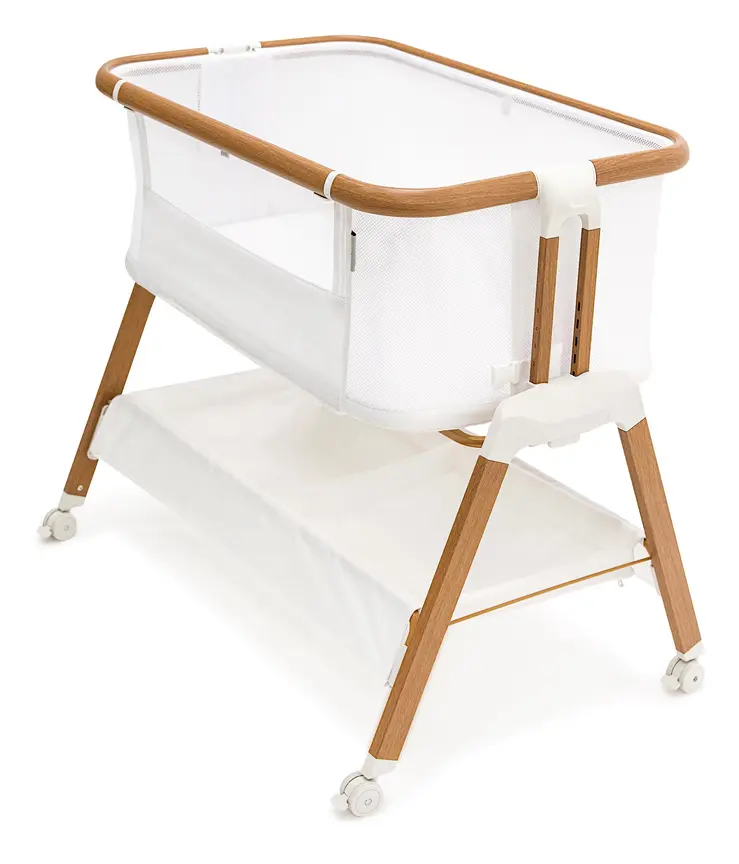
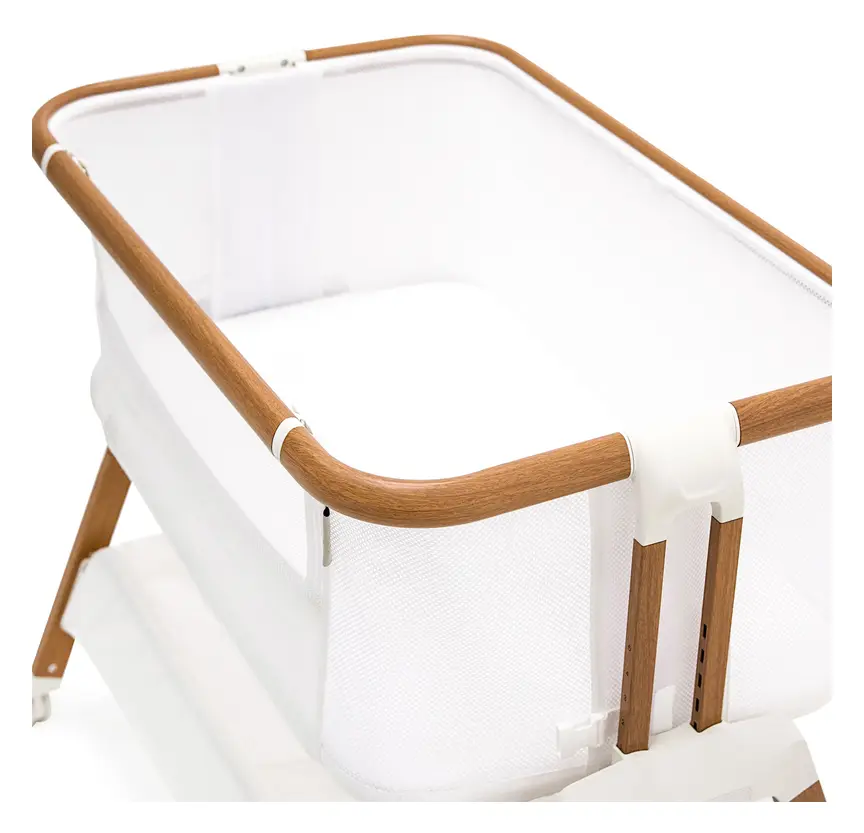
BabyRest Alfie2 Bedside Bassinet
A bedside bassinet with 5 heights, a drop-down side, wheels and an insect net.
Read our full review →
4baby Snuggle Cuddle Bedside Sleeper
A low-cost bassinet that turns into a bedside sleeper, with 4 heights and mesh sides.
 Reviewed
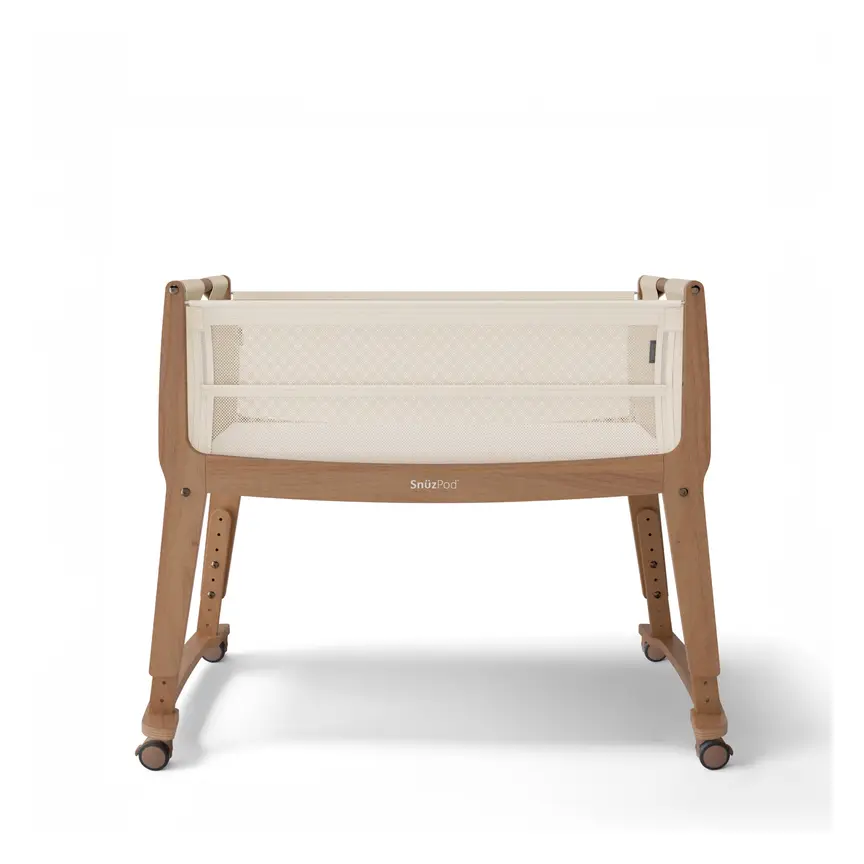
SnuzPod Studio
A bedside crib for night sleeps and naps, with panoramic mesh and a zip-down wall.
Read our full review →
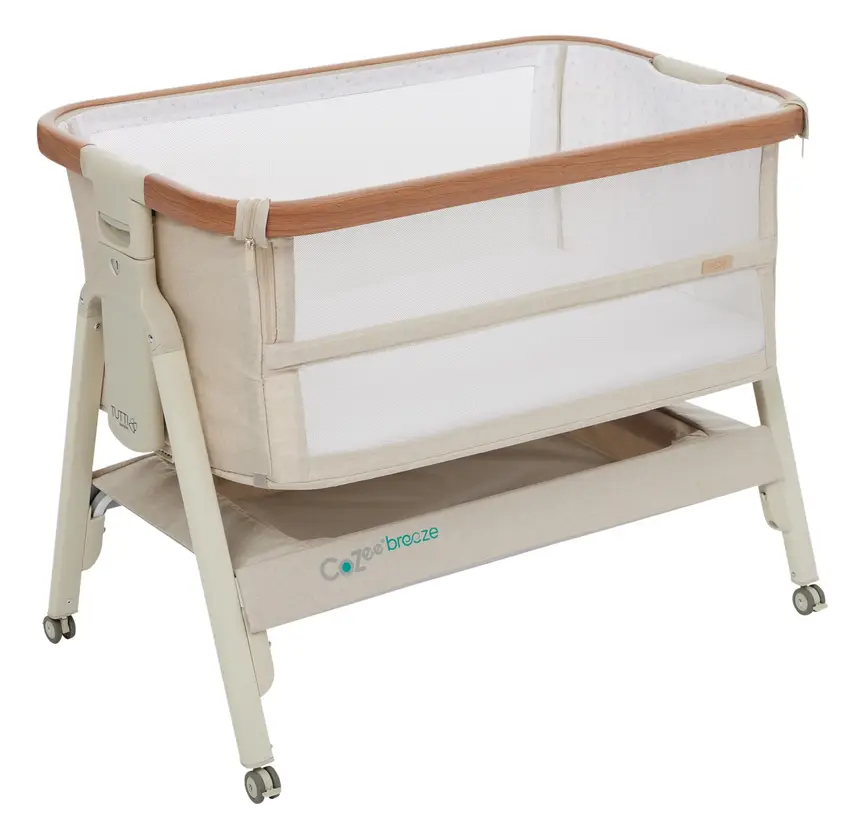
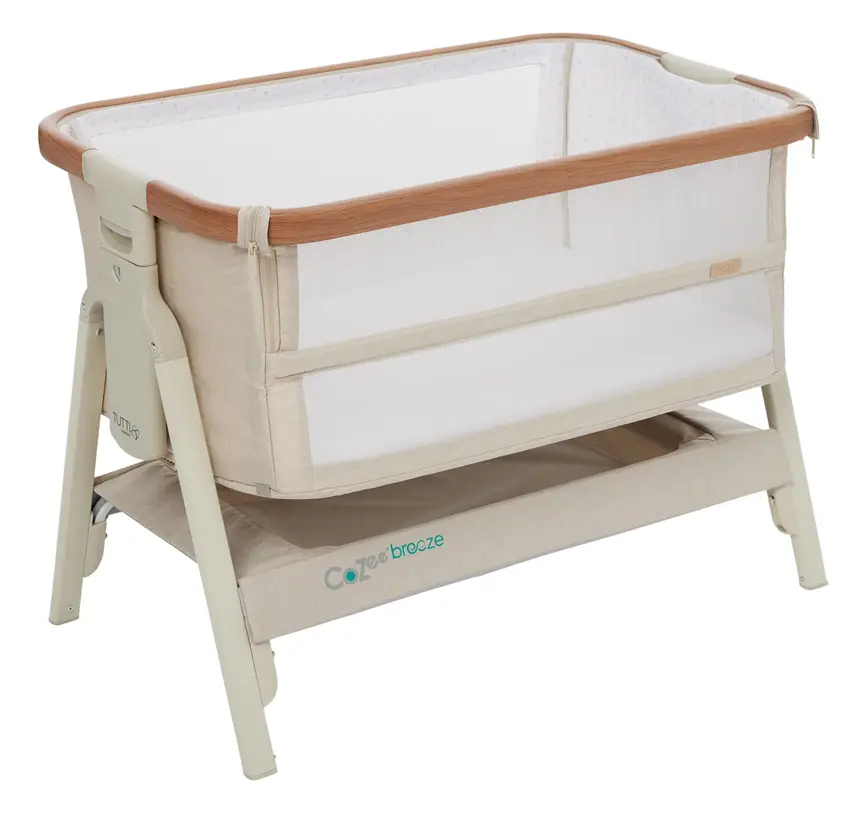
Tutti Bambini CoZee Breeze Lite
A bedside sleeper that opens or folds in about 30 seconds, with mesh sides and a travel bag.
Read our full review →Compare all cots, bassinets & bedside sleepers in our reviews →
Mattress firmness: why it matters and how to check
Red Nose explains that a soft mattress can increase the risk of a fatal sleep accident if the baby ends up on their tummy. A baby's face can sink into a soft surface, and they may breathe back their own used air. Product Safety Australia's standard says the sleep surface, including the mattress, must be firm and rigid.
What a safe sleeper mattress looks like
- It is the mattress that came with the sleeper, or an exact replacement from the same maker.
- It fits snugly. Red Nose says there should be no more than a 20 mm gap (about two finger widths) between the mattress edge and the sides of a cot. Use the same check for a sleeper.
- It is firm and flat, with no dips, tears or sagging.
- It is clean and dry.
- It is not thicker than the maker says. A thicker mattress lifts your baby closer to the top of the walls.
A simple at-home firmness check
In 2015, the Consumers' Federation of Australia shared an at-home test so parents could spot dangerously soft baby mattresses. The test is based on the Australian and New Zealand firmness test standard. The idea is simple: press on the softest parts of the mattress, while it is in the bed, and see how far it sinks and how fast it springs back. A safe mattress feels firm and springs back. A mattress that sinks a lot, or holds the shape of your hand, is too soft. Red Nose also suggests using a mattress that meets the voluntary standard for testing firmness.
Look up the full test on the Consumers' Federation website if you want the exact steps. If you are unsure, ask the maker, or replace the mattress with the one made for your sleeper.
Never add these
- A second mattress, mattress topper or foam pad.
- Pillows, cushions or a sofa cushion as a "mattress".
- Sheepskins, quilts or a folded blanket under the sheet.
- Baby nests, pods or positioners inside the sleeper.
Use a fitted sheet made for the sleeper's mattress, and nothing else.
Safe sleep rules still apply
A co-sleeper is only as safe as the way it is used. Red Nose's six safe sleep recommendations, and the advice from the NHS, the Lullaby Trust, the AAP and Health Canada, all agree on the basics:
- Back to sleep. Always put your baby on their back, for every sleep.
- Face and head uncovered. No hats in bed. Use a safe baby sleeping bag or tucked-in light blankets only as your country's advice allows.
- Smoke-free. Keep your baby away from smoke before and after birth.
- Safe sleep space. A firm, flat, well-fitting mattress, with nothing soft in the bed: no pillows, bumpers, soft toys or loose bedding.
- Same room. Sleep your baby in their own safe space in your room for the first 6 to 12 months (Red Nose). The NHS and the Lullaby Trust say for at least the first 6 months.
- Breastfeed if you can. Red Nose and other groups say breastfeeding lowers the risk.
Also avoid letting your baby get too hot. Remove extra layers and keep the room comfortable.
Rules and standards side by side
| Country | What applies to bedside co-sleepers | Where to check |
|---|---|---|
| Australia | Mandatory infant sleep products safety standard: flat surface (no more than 7°), firm mattress, firm mesh or fabric sides, no gaps or sharp edges, plus required warnings. In force for businesses from 19 January 2026. | Product Safety Australia, Red Nose |
| United Kingdom | Safe sleep advice from the NHS and the Lullaby Trust: firm, flat, waterproof mattress, baby in their own space in your room. | NHS, the Lullaby Trust, Office for Product Safety and Standards |
| United States | Federal safety rules for bedside sleepers and bassinets from the CPSC. AAP: no incline over 10° for sleep. | CPSC, AAP |
| Canada | Health Canada rules for cribs, cradles and bassinets, and its safe sleep advice. | Health Canada, Caring for Kids |
Buy a sleeper sold for your country, and keep the instructions. If you buy second-hand, check the product isn't recalled and still meets current rules.
Co-sleeper vs bassinet vs cot: side by side
| What to compare | Bedside co-sleeper | Bassinet | Cot |
|---|---|---|---|
| Where it sits | Strapped to the side of your bed | Anywhere in your room | Your room, then the nursery |
| Reaching baby at night | Easiest, especially after a caesarean | Easy if close by | Harder; need to get up |
| Main risks | Gap between sleeper and bed; wrong mattress height; tilt | Outgrown quickly; soft or extra mattresses | Soft bedding and toys; gaps with the wrong mattress |
| How long it lasts | Until baby can push up on hands and knees, or the weight limit | Same as a co-sleeper | Usually until about 2 to 3 years |
| Flat and firm needed? | Yes | Yes | Yes |
Side by side: more cots, bassinets & bedside sleepers to compare
Real products from our catalogue. We don't show star ratings or review counts; check the current price, stock and reviews on Amazon before you buy.
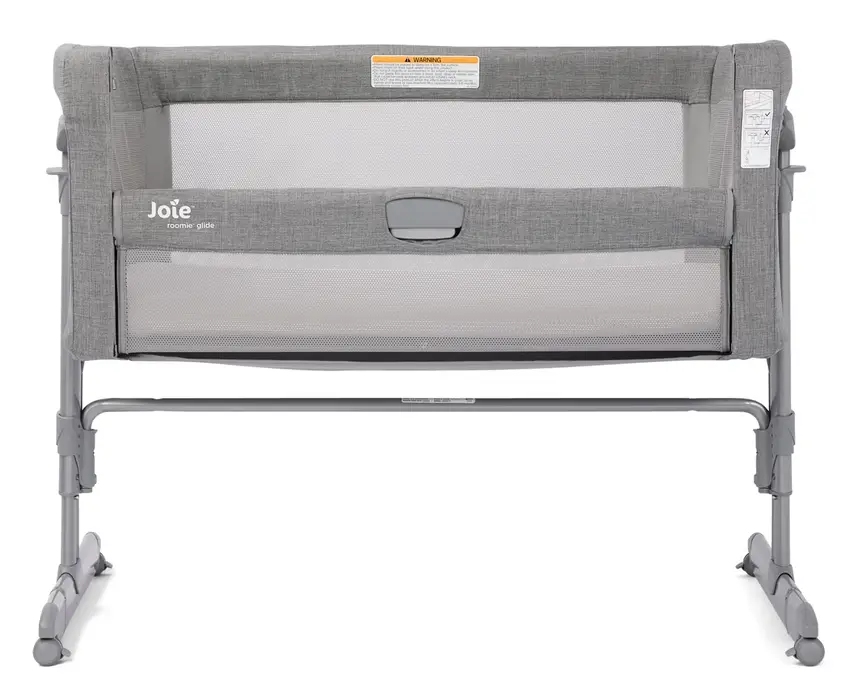
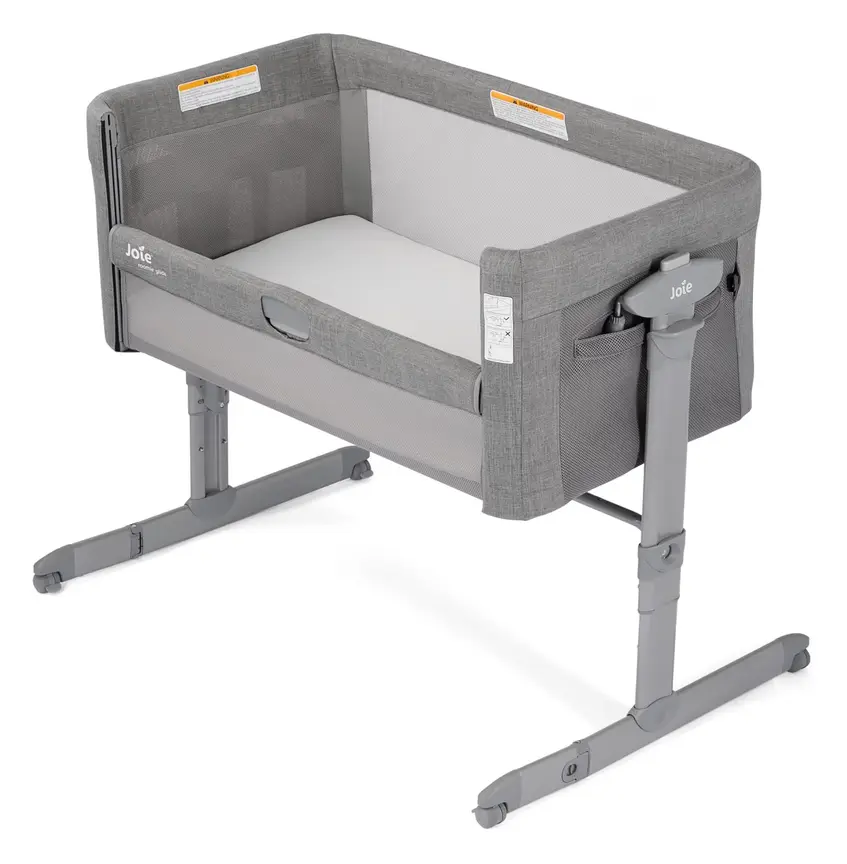
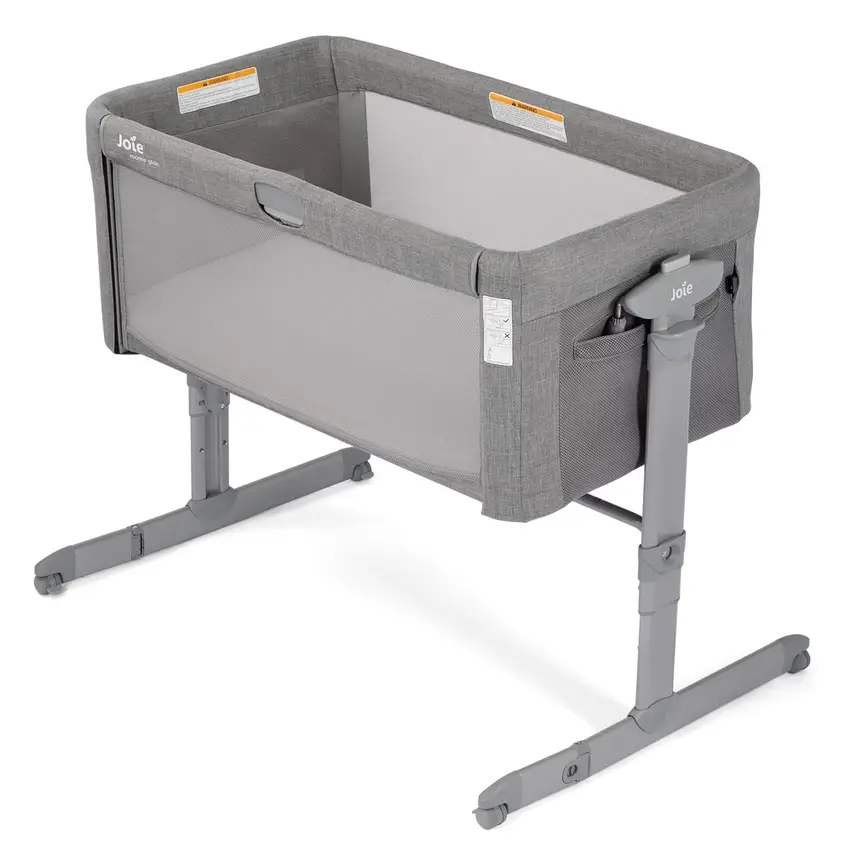
Joie Roomie Glide
A bedside sleeper that glides with one hand and has a gentle tilt.
Read our full review →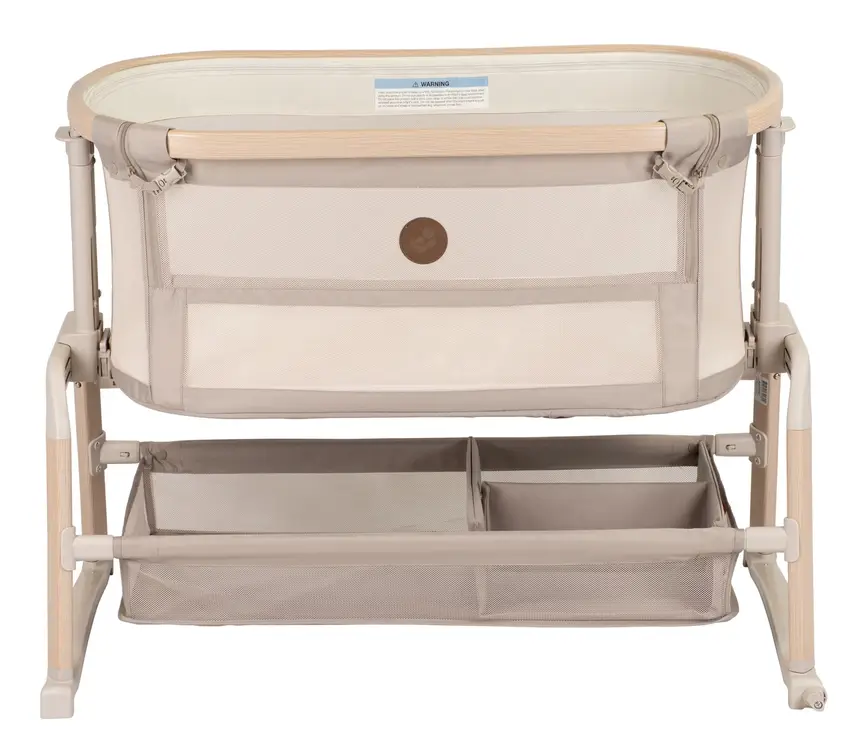 Reviewed
Maxi-Cosi Iora Lux
A bedside bassinet with 4 heights and 3 slide positions, with a 2-year warranty.
Read our full review →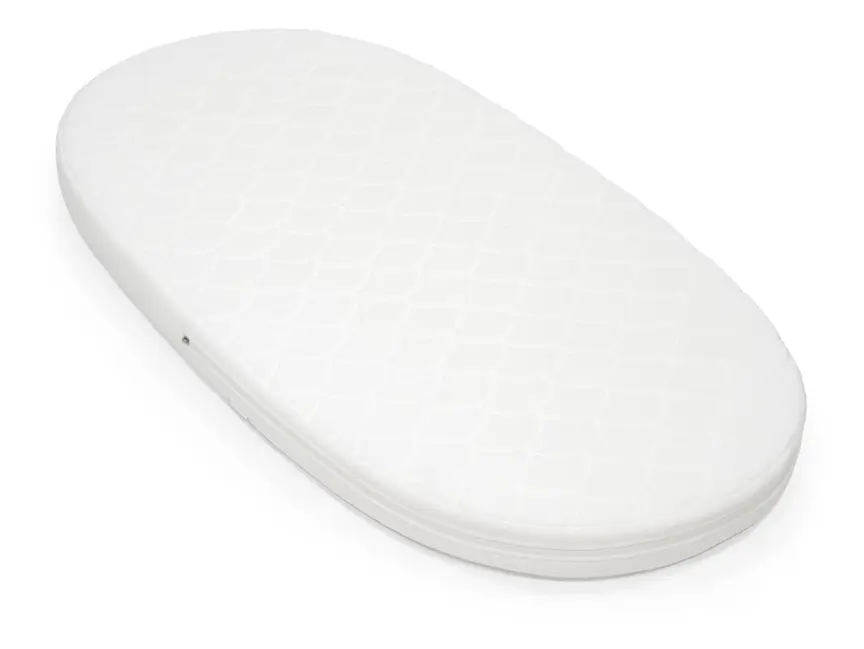
Stokke Sleepi Mattress
A firm mattress with breathable mesh layers, made to fit the Stokke Sleepi bed.


Tutti Bambini CoZee Sense
A bedside bassinet with a sensory bar for supervised awake time.
Read our full review →Compare all cots, bassinets & bedside sleepers in our reviews →
A nightly check that takes one minute
Things shift. Straps stretch, a parent bumps the frame getting into bed, and a mattress slides a little. A quick check each night before your baby goes down catches most problems.
- Push the sleeper towards your bed. It should not move away and open a gap.
- Look along the join. No space between the two mattresses that a hand could slide into.
- Check the height. The sleeper mattress is level with yours or a little lower, never higher.
- Press the sleeper mattress. Firm, flat, snug to the sides, with only a fitted sheet.
- Look inside. Nothing in there but your baby: no burp cloths, toys, dummies on ribbons or phones.
- Check your own bed. Move your pillows and doona away from the sleeper side, so they can't fall across.
If anything is wrong and you can't fix it, put the side up and use the sleeper as a normal bassinet for the night.
When to stop using a co-sleeper
Product Safety Australia says bassinets (and bedside sleepers that work like bassinets) must carry a warning to stop using them once your baby begins to push up on their hands and knees, or reaches the maker's maximum weight. Whichever comes first, it's time to move to a cot. Babies who can push up, roll and pull themselves around can climb or tip out of a small, low-sided bed.
Watch for these signs:
- your baby rolls over on their own;
- your baby pushes up on hands and knees;
- your baby is close to the weight or length limit on the label;
- your baby's head or feet touch the ends of the sleeper.
How to choose a bedside co-sleeper
- Check it meets your country's rules and comes with clear warnings and instructions.
- Check it fits your bed. Measure your bed height and mattress depth. Make sure the sleeper's height range lines up and its straps fit your bed frame.
- Look at the mattress. It should be firm, fit snugly, and be the one made for that sleeper. Check you can buy a replacement.
- Look at the sides. Mesh sides let air flow and let you see your baby. Product Safety Australia says mesh or fabric sides must be firm enough not to cover a baby's nose or mouth.
- Test the drop-down side. It should lock firmly in the up position and be easy for you, but not your baby, to work.
- Avoid tilt settings you might be tempted to use for sleep.
- Avoid soft extras. Skip models sold with padded inserts, pillows or nests.
Common mistakes
- A gap between the sleeper and your bed. Check it every night.
- Sleeper mattress higher than yours. Your baby could roll towards your bed.
- Adding a softer or thicker mattress. Only use the one made for the sleeper.
- Raising one end for reflux or a blocked nose. Keep it flat.
- Pillows, toys or bumpers in the sleeper. Keep it bare.
- Bringing baby into your bed after a feed and falling asleep. Put your baby back in the sleeper before you drift off. If there's a chance you'll fall asleep, Red Nose has tips to make your bed safer.
- Using it after baby can push up. Move to a cot.
- Leaving the side down when the sleeper isn't attached. Put it up and lock it.
More options, from budget to premium
Real products from our catalogue. We don't show star ratings or review counts; check the current price, stock and reviews on Amazon before you buy.
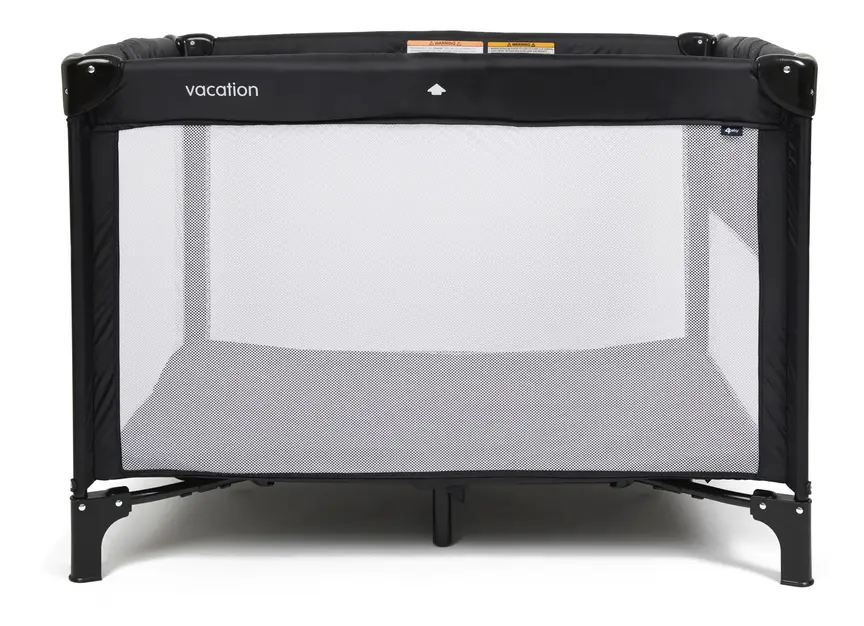
4baby Vacation Portacot
A low-cost portacot with a padded mattress and mesh sides.
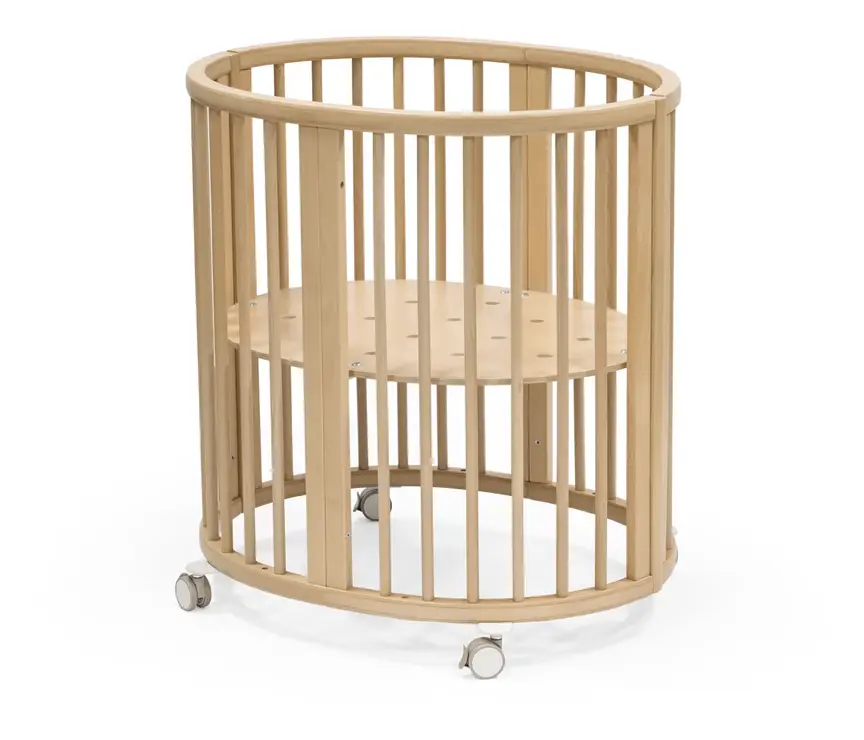
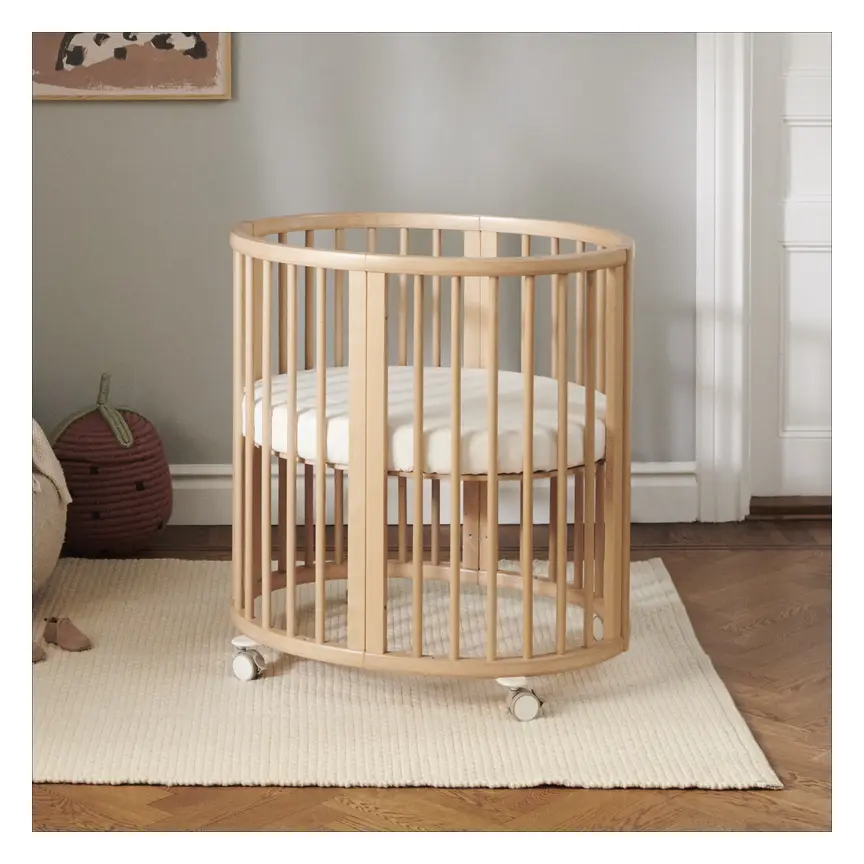
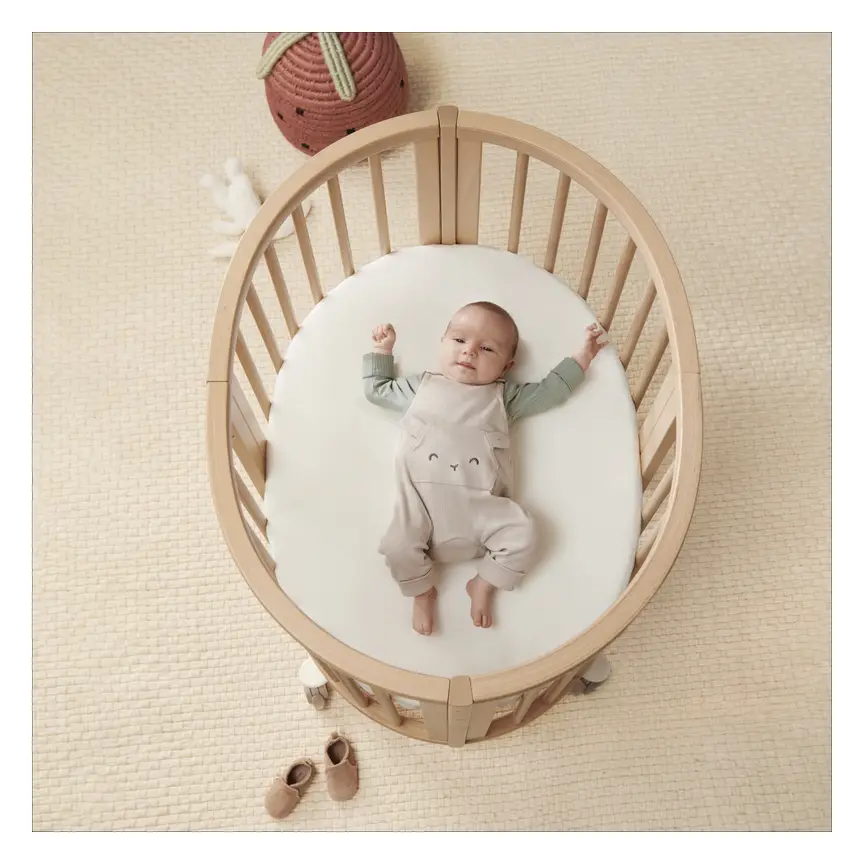

Stokke Sleepi Mini
A beech wood oval crib for newborns, with rods and a holed base for airflow.
Read our full review →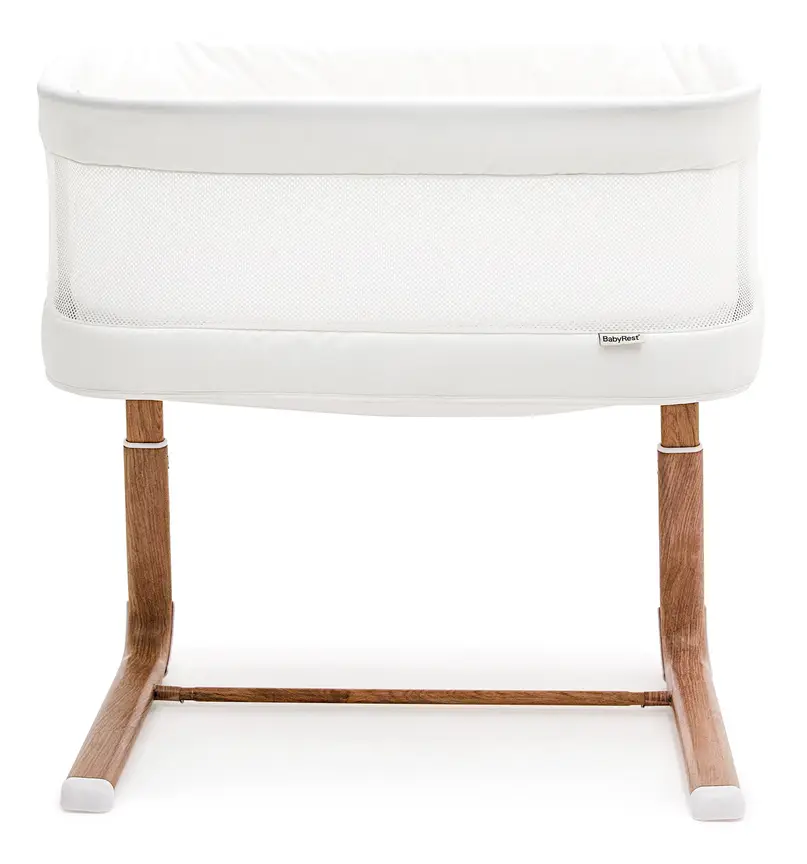


BabyRest Swan Smart Bassinet
A bassinet that rocks by itself when baby stirs, with 3 rocking levels, lullabies and a remote.
Read our full review →Compare all cots, bassinets & bedside sleepers in our reviews →
FAQ
Is a bedside co-sleeper safe?
It can be, when it meets your country's safety rules, is set up exactly as the maker says, has no gap against your bed, and is used with normal safe sleep practice. It is a separate sleep space for your baby, not a way to bed-share.
What tilt is allowed?
In Australia, no more than 7 degrees from flat for any infant sleep product. The AAP in the US says more than 10 degrees is unsafe. In practice: flat.
Can I raise the head end for reflux?
No. The AAP says babies with reflux should still sleep flat on their backs. Talk to your doctor or child health nurse about reflux.
How firm should the mattress be?
Firm enough that it doesn't sink much under your hand and springs back fast. It should not hold the shape of your hand. Use the mattress that came with the sleeper.
Can I buy a softer mattress for comfort?
No. Babies don't need a soft mattress to sleep well, and soft mattresses raise the risk of suffocation. Only use a replacement made for your sleeper.
Can I use my co-sleeper with a divan or ottoman bed?
Only if the maker says it works with that bed type and the straps can be fixed securely. If you can't get it tight with no gap, use the sleeper with the side up as a normal bassinet.
Should I put a blanket in the co-sleeper?
Many safe sleep groups prefer a well-fitted baby sleeping bag with no hood. If you use a blanket, follow your country's advice: feet to the foot of the bed and blanket tucked in firmly, no higher than the chest.
When should my baby move to a cot?
When they begin to push up on their hands and knees, or reach the maker's weight limit, whichever comes first.
Sources
- Product Safety Australia (ACCC) – Infant sleep products mandatory standards
- Product Safety Australia – Bassinets and cradles guide (includes bedside sleepers)
- Red Nose Australia – What is a safe mattress?
- Red Nose Australia – Six safe sleep recommendations
- Consumers' Federation of Australia – At-home test to identify dangerously soft baby mattresses
- The Lullaby Trust (UK) – Sleeping products
- NHS – Reduce the risk of sudden infant death syndrome
- AAP HealthyChildren.org – How to keep your sleeping baby safe
- CPSC (US) – Infant sleep products business guidance
- Health Canada – Cribs, cradles and bassinets
Related guides
More Sleep & Nursery →
How to Set Up a Safe Sleep Environment with a Bedside Bassinet

Merino Wool Baby Sleep Sacks: How They Work, How to Choose, and Safe Sleep Rules

Inclined Sleepers, Bouncers and Swings: Why Babies Should Not Sleep in Them, and What the Rules Say
