Newborn Safety Essentials: What You Need, What Helps, and What to Skip
A plain guide to newborn safety gear, from car seats and safe sleep to monitors, batteries and home checks, with advice from four countries.
On this page
- Start with the safety basics
- What a newborn safety checklist should cover
- Safe sleep gear: choose a safe place first
- Baby monitors: useful for some homes, optional for all
- Car seats and travel safety
- Home safety devices worth checking
- Feeding and care equipment
- Air cleaners, humidifiers, and sleep gadgets
- Compare common newborn safety products
- Safety advice across Australia, the UK, the US, and Canada
- Age stages: what changes over the first year
- Common mistakes to avoid
- A simple buying and setup plan
- When to get help
- Frequently asked questions
- Sources and further guidance
- Sources
Short answer: A newborn needs safe care and a few well-chosen items. A correctly fitted car seat matters for travel. A safe cot or bassinet matters for sleep. A working smoke alarm matters at home. A thermometer can help you check a temperature. A baby monitor may help you hear or see your baby, but it does not prevent harm. Many gadgets are optional. No monitor, sensor, or alarm can replace an adult's care.
Useful advice comes from official health and safety groups. In Australia, these include Red Nose, Product Safety Australia, and health services. In the UK, the NHS, the Office for Product Safety and Standards, and The Lullaby Trust provide guidance. In the US, the Consumer Product Safety Commission and American Academy of Pediatrics are key sources. In Canada, Health Canada and the Canadian Paediatric Society offer advice. Rules for products can differ by country. Check local guidance before buying or using gear.
Start with the safety basics
New parents can face a long list of products. Some ads suggest that every problem needs a device. That can make shopping feel urgent and confusing. Start with the tasks your family needs to do each day. Make a safe place for sleep. Plan safe travel. Keep small hazards away. Learn how to get help if your baby seems unwell.
Safety often comes from simple habits. Put your baby down in a safe sleep space. Use a car seat that fits your baby and vehicle. Keep cords and small parts out of reach. Stay close during bathing and feeding. Follow the product's instructions. Check official recall notices. These steps matter more than extra sensors.
Buy only what you can use safely. Read the instructions before the first use. Ask a health professional or trained installer when you are unsure. Do not use a product with missing parts, damage, or unclear instructions. Keep the receipt and product details. They can help if the maker issues a recall.
What a newborn safety checklist should cover
- Sleep: A firm, flat, clear sleep space made for infant sleep.
- Travel: A suitable car seat installed and used as its maker directs.
- Home: Working smoke alarms and safe storage for medicines and batteries.
- Care: A thermometer, clean feeding items, and supplies that suit your family.
- Supervision: An adult close by during bathing, changing, and feeding.
- Information: Local health advice and product recall pages saved for easy access.
This list is a starting point. Your home, climate, travel needs, and baby's health may change what you need. A premature baby or a baby with a health condition may need a care plan from a clinician. Follow that plan. Do not rely on a consumer gadget to diagnose or treat a health problem.
Safe sleep gear: choose a safe place first
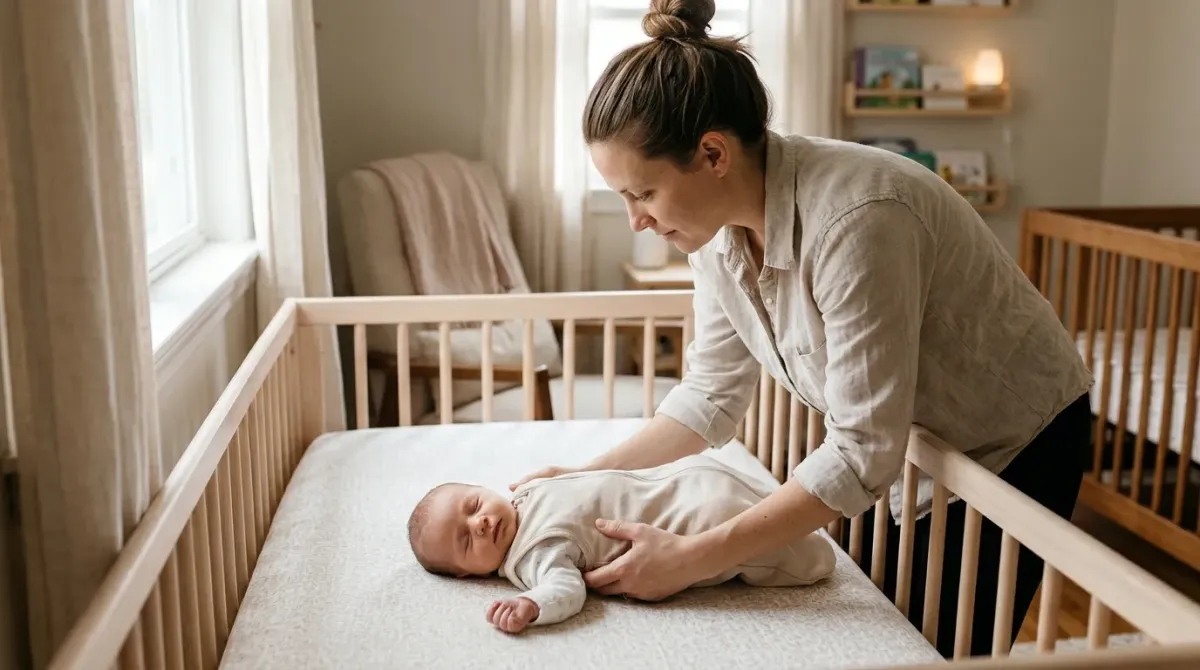
Most newborns sleep many times across the day and night. A cot, crib, or bassinet should meet the rules where you live. It should be stable and in good repair. Follow the maker's instructions for assembly. Use only the mattress designed for that sleep space. The mattress should fit snugly, without gaps at the edges.
Keep the sleep space clear. Do not add pillows, loose blankets, soft toys, positioners, or padded liners. These items can cover a baby's face or affect breathing. Place your baby on their back for every sleep. Use a sleep bag that fits well if you need a warm layer. Keep the baby's head uncovered indoors during sleep.
A cot is not a general holding place. Do not use it to store bags, laundry, or spare bedding. Check the frame, mattress, fasteners, and locks from time to time. Stop using it if a part is broken or loose. Do not change the cot or mattress with homemade parts.
Some products look like small beds but are not intended for sleep. Loungers, nests, inclined seats, and padded pods can create risks. Read the product's stated purpose. If it is not designed and approved as a sleep space where you live, do not use it for sleep. If your baby falls asleep in a seat or carrier, move them to a safe sleep space when practical.
How to choose a cot or bassinet
- Check the product against your country's current safety rules.
- Make sure the frame is stable and all parts are present.
- Use the mattress specified for that model.
- Check for gaps between the mattress and the sides.
- Follow height and weight limits, and stop when the maker says to.
- Look up recalls before buying new or used gear.
- Do not use a damaged, modified, or poorly assembled sleep product.
Second-hand gear needs extra care. Ask for the model name, instructions, and age. Search the product recall database in your country. Check that no parts are missing. Avoid a cot with unknown history or a mattress that is worn, soft, or the wrong size. If you cannot confirm it is safe and complete, choose another option.
Baby monitors: useful for some homes, optional for all
A monitor can let an adult hear or see a baby from another room. It may suit a large home or a caregiver who cannot stay within hearing range. A simple audio monitor may be enough. Video, movement, oxygen, or breathing features are not needed for every healthy baby.
Consumer monitors do not prevent sudden infant death. They can also give false alarms or miss a problem. A monitor reading is not a diagnosis. Do not change a doctor's advice based on a consumer device. If your baby has a medical need for monitoring, ask the care team which device to use and how to respond.
Place cords well away from the cot. Keep the monitor and its cable beyond your baby's reach. The US CPSC warns that monitor cords can strangle infants. A cord-free device still needs safe placement and regular checks. Secure the camera or base so it cannot fall into the sleep space.
Smart monitors connect to a network or phone. Change default passwords. Use a unique password and install updates. Review who can access the account. Turn off features you do not use. Keep the app and home router updated. In Australia, the UK, the US, and Canada, government cyber safety guidance can help with connected devices.
Choose a monitor for a clear reason. Think about range, battery life, charging, privacy, and ease of use. Check whether alerts can be heard from where adults sleep. Do not use a monitor as permission to leave a baby unattended for long periods. You still need to check on your baby in person.
Car seats and travel safety
Use a car seat that is approved for sale and use in your country. Check your local rules, because approval marks and legal requirements differ. The seat must suit your baby's size and the vehicle. Install it exactly as the seat and vehicle makers explain. If your area has a qualified fitting service, ask for help.
Keep a newborn rear-facing for as long as the seat allows. Follow the height and weight limits on the seat. Make sure the harness is snug and sits as the instructions show. Bulky coats can make a harness fit poorly. Use only inserts that came with the seat or that its maker approves.
A car seat is for travel. It is not a cot. Take your baby out when you reach your destination, especially before sleep continues. Do not leave a baby alone in a parked car. Heat can build quickly. Never use a car seat on a raised surface unless the maker specifically allows that setup.
Do not add mirrors, toys, pads, or straps unless the car seat maker approves them. Loose accessories may affect the seat or distract the driver. Check the seat for recalls and its use-by information. Follow local rules for replacing a seat after a crash. Ask the manufacturer if you are unsure.
Home safety devices worth checking
Smoke alarms
Working smoke alarms give an early warning of fire. Follow local rules for where to put them and how often to test them. Keep them clear of dust. Replace batteries or the whole alarm as its maker directs. Make a family escape plan. Practise it when your baby is older and other children can take part.
Carbon monoxide alarms
Carbon monoxide is a gas you cannot see or smell. It can come from faulty fuel-burning appliances. Use an alarm if local fire or health guidance recommends one for your home. Follow the alarm instructions. Arrange checks for fuel-burning heaters and appliances. An alarm does not replace proper maintenance.
Room thermometers
A room thermometer can show whether a room feels warmer or cooler. It is optional. Check your baby for signs of being too hot or cold. Dress your baby for the room, and avoid heavy layers. Do not treat one number as a medical measure. Ask a clinician if your baby seems unwell.
Thermometers for body temperature
A digital thermometer can help you measure a baby's temperature. Learn the method recommended by your health service. Use the thermometer as its instructions say. Clean it before and after use. Ask a nurse, doctor, or pharmacist if you need help reading it. Seek medical advice when your newborn has a fever or seems unwell.
Button batteries and chargers
Button batteries can cause severe injury if swallowed. Keep spare batteries, battery-powered gadgets, and broken devices away from children. Choose devices with secure battery compartments. Store batteries in their packaging. Recycle them safely. Keep charging cables and power banks out of the cot and away from your baby.
Feeding and care equipment
Feeding gear depends on how your family feeds. Breastfeeding families may need little equipment. A clean container can help store expressed milk. Bottle-feeding families need bottles, teats, and a safe way to clean them. Follow trusted local instructions for making and storing formula. A kettle, warmer, steriliser, or app is optional unless your care team says otherwise.
Do not use a gadget to guess whether milk is safe. Follow the instructions on formula packaging and health service advice. Clean feeding parts after use. Store milk and formula safely. Do not heat a bottle in a microwave. It can make hot spots that burn a baby's mouth.
A changing mat can make nappy changes easier. It does not make a high surface safe. Keep one hand on your baby when they are on a table or bed. Gather supplies before you start. Put your baby on the floor if you need both hands or must step away. Never leave a baby alone on a raised surface.
A bath thermometer is optional. Test the water with your hand and follow local bathing advice. Keep a hand on your baby throughout the bath. A baby can drown in a small amount of water. Never leave them alone, even for a moment. Take your baby with you if you must answer the door or phone.
Air cleaners, humidifiers, and sleep gadgets
An air cleaner may help with some indoor particles. It does not make an unsafe room safe. First remove smoke, mould, and other sources where possible. Follow public health advice during smoke events. A humidifier may add moisture, but it needs regular cleaning. A dirty humidifier can spread germs or irritants.
Do not use a humidifier to treat a newborn without medical advice. Do not add oils or medicines unless a clinician tells you to. Keep warm mist devices away from children because hot water or steam can burn. Follow the maker's cleaning and placement instructions.
White-noise machines and night lights are comfort items. They are not safety devices. Keep machines away from the cot and set the volume low. Keep cords out of reach. Use a dim light if you need to check on your baby. No light colour or sound setting can guarantee better sleep.
Do not buy a device because it claims to prevent SIDS, suffocation, or illness. Ask what evidence supports the claim. Check whether a recognised health service recommends the product. If the claim sounds certain or frightening, pause and seek independent advice.
Compare common newborn safety products
| Item | Main job | Needed? | Key safety check |
|---|---|---|---|
| Cot or bassinet | Provides a sleep space | Yes, plan a safe sleep place | Use a suitable product and fitted mattress |
| Car seat | Protects baby during car travel | Yes, for car trips | Use a locally approved seat and fit it correctly |
| Baby monitor | Lets an adult hear or see from another room | Optional | Keep cords away and protect account access |
| Body thermometer | Measures temperature | Useful, not a treatment | Use the method advised by your health service |
| Room thermometer | Shows room temperature | Optional | Use it as a guide, not a medical reading |
| Air cleaner | Filters some airborne particles | Depends on home needs | Choose and maintain it for the room |
| Humidifier | Adds moisture to air | Usually optional | Clean it often and prevent burns |
| Bath thermometer | Measures bath water | Optional | Never replace close adult supervision |
| Car seat mirror | Shows a rear-facing baby to the driver | Optional | Check local advice and avoid driver distraction |
Safety advice across Australia, the UK, the US, and Canada
Product rules are not identical across countries. A product sold in one country may not meet another country's rules. Check the product label, maker's instructions, and local regulator before buying. Use local guidance for safe sleep, car travel, and recalls.
| Country | Product safety body | Health and safe sleep guidance | What parents can check |
|---|---|---|---|
| Australia | Product Safety Australia and the ACCC | Red Nose and Pregnancy, Birth and Baby | Product alerts, local car seat rules, and safe sleep advice |
| United Kingdom | Office for Product Safety and Standards | NHS and The Lullaby Trust | Product safety notices, car seat rules, and safer sleep advice |
| United States | Consumer Product Safety Commission | American Academy of Pediatrics and Safe to Sleep | Recalls, product guidance, and advice from your baby's clinician |
| Canada | Health Canada | Canadian Paediatric Society and local health services | Recalls, car seat rules, and safe sleep guidance |
Australia's product safety regulator publishes recalls and safety alerts. The UK has product safety advice through its government office. The US CPSC shares recalls and product guidance. Health Canada lists recalls and safety alerts. Check the relevant source before buying used gear and again if a product seems unsafe.
Safe sleep advice also comes from trusted health groups. Red Nose serves Australian families. The Lullaby Trust and NHS serve families in the UK. The American Academy of Pediatrics and the Safe to Sleep campaign provide US guidance. The Canadian Paediatric Society shares advice for Canadian families. Ask your local health service if guidance differs or your baby has special needs.
Age stages: what changes over the first year
| Stage | What to review | Useful action |
|---|---|---|
| Before birth | Sleep space, travel plan, alarms, and feeding needs | Assemble gear and read instructions before you need it |
| First weeks | Safe sleep, feeding, temperature, and car seat fit | Keep routines simple and ask for help early |
| Early months | Growth, rolling signs, and product limits | Check the cot, sleep clothing, and car seat fit often |
| As baby moves more | Falls, cords, small objects, and furniture | Lower hazards and supervise floor play |
| When sitting and eating | High chair stability and choking risks | Use a stable seat and stay with your baby while eating |
These stages are guides, not deadlines. Babies develop at different speeds. Follow product limits and your clinician's advice. A gadget designed for one stage may become unsafe when your baby can roll, sit, crawl, or pull up.
Common mistakes to avoid
- Buying by fear: Ads can make optional gear sound essential. Check trusted advice first.
- Treating a monitor as a guard: A monitor cannot replace an adult checking the baby.
- Adding cot accessories: Keep the sleep space clear and follow safe sleep guidance.
- Using a seat for sleep: Move a sleeping baby to a safe sleep surface when practical.
- Leaving a baby on a change surface: Keep one hand on your baby or place them on the floor.
- Using unapproved car seat extras: They can affect the fit or function of the seat.
- Ignoring cords and batteries: Keep both away from children and sleep spaces.
- Skipping recall checks: Search the official database for new and second-hand products.
- Trusting vague safety claims: Ask who tested the product and which local rule applies.
- Using damaged gear: Stop if parts are missing, broken, or no longer lock securely.
A simple buying and setup plan
- Write down daily needs. Note sleep, travel, feeding, and home care.
- Buy core items first. Focus on a safe sleep space and car seat if you travel by car.
- Check local rules. Search the national product safety and health sources.
- Read the instructions. Learn assembly, cleaning, limits, and safe placement.
- Set up before use. Check stability, straps, locks, batteries, and cords.
- Keep records. Save model names, receipts, and recall information.
- Review as baby grows. Recheck fit and stop using items at their stated limits.
Keep the plan small. A safe home does not require a room full of technology. A few suitable items, used correctly, can support daily care. Advice from a health professional is more useful than an app when you are worried about your baby's health.
When to get help
Call your local emergency number if your baby is struggling to breathe, is unresponsive, or has another urgent problem. For a newborn who has a fever or seems unusually sleepy, weak, or unwell, contact a health professional promptly. Use the urgent care service in your area if you cannot reach your usual clinician.
If a product breaks, overheats, sparks, or causes an injury, stop using it. Keep it away from children. Contact the maker and your country's product safety regulator. Report the problem through the official channel. A report can help other families learn about a hazard.
Frequently asked questions
What safety gadgets does every newborn need?
No gadget list fits every family. Plan a safe sleep space and a suitable car seat for car travel. Working smoke alarms matter in every home. A thermometer can be useful. Monitors and other sensors are optional for many healthy babies.
Can a baby monitor prevent sudden infant death?
No. A consumer monitor does not prevent sudden infant death. It can also give false or unclear readings. Follow safe sleep guidance. Ask your clinician about medical monitoring if your baby has a health need.
Should I buy a breathing or oxygen monitor?
Most healthy newborns do not need a consumer breathing or oxygen monitor. A clinician may recommend medical equipment for a specific reason. Ask the care team before buying a device that claims to track health.
Is a car seat safe for a baby to sleep in?
A car seat is for travel. It is not a cot. Take your baby out when you reach your destination. Move them to a safe sleep space if sleep will continue.
Do I need a smart nursery camera?
No. A camera is optional. If you choose one, secure the account, update the software, and keep every cord away from the cot. Do not use it instead of checking your baby in person.
Are room thermometers essential?
No. A room thermometer is optional. It can help you notice a very warm or cool room. Use local health advice and check your baby. A room reading does not tell you whether your baby is ill.
Can I use second-hand baby gear?
Sometimes, if it is complete, in good condition, and still meets local rules. Check the model and recall notices. Ask for the instructions. Avoid gear with unknown history, missing parts, or damage.
What should I do if a monitor gives an alarm?
Check your baby in person first. Follow the device instructions and any medical plan. If your baby seems unwell, contact a health professional. Do not assume a consumer monitor can tell you what is wrong.
Do I need an air purifier in the nursery?
Not every home needs one. First deal with smoke, mould, or other pollution sources. If you use a purifier, follow public health advice and the maker's instructions. It does not replace fresh air or medical care.
Where can I check product recalls?
Use your country's official recall service. Australia has Product Safety Australia. The UK has government product safety notices. The US has the CPSC. Canada has Health Canada's recalls and safety alerts.
Sources and further guidance
- Red Nose Australia – What is a safe sleeping environment
- Product Safety Australia – Settle baby to sleep safely
- The Lullaby Trust – Baby monitors
- U.S. Consumer Product Safety Commission – Infants and toddlers can strangle in baby monitor cords
- American Academy of Pediatrics – A parent's guide to safe sleep
- Canadian Paediatric Society – Safe sleep for babies
- Health Canada – Recalls and safety alerts
Disclaimer: This article provides general information only. It does not replace advice from your doctor, nurse, or other health professional. Follow local laws, product instructions, and current guidance from trusted health and safety bodies. If you are concerned about your baby, seek professional advice. This article may contain affiliate links. BabyGearFinder may earn a commission if you buy through them, at no extra cost to you.
Sources
- Product Safety Australia – Settle baby to sleep safely
- U.S. Consumer Product Safety Commission – Infants and toddlers can strangle in baby monitor cords (Publication 5066)
- American Academy of Pediatrics (US) – A parent's guide to safe sleep
- Caring for Kids (Canadian Paediatric Society) – Safe sleep for babies
- Health Canada – Recalls and safety alerts
Related guides
More Health & Safety Gear →
Baby Gear Safety Apps: What Helps, What Does Not, and How to Choose

Smart Home Safety for Babies: What Technology Can—and Cannot—Do

Clearing a Baby’s Nose Safely: What Helps, What to Avoid, and When to Get Help