










Tamper-Resistant Outlet Covers vs Sliding Box Plates: How to Protect Crawlers from Power Points and Cords
Compare tamper-resistant outlet covers, sliding box plates, and cord safety tips to protect crawling babies from power points in AU, UK, US, and Canada.

On this page
- Key points
- Why babies are drawn to outlets and cords
- What tamper-resistant outlet covers are
- What sliding box plates are
- What lockable outlet boxes are
- Side-by-side comparison: outlet covers and plates
- How socket types differ in Australia, the UK, the US and Canada
- Official safety bodies by country
- Protecting crawlers from electrical cords
- Safety by age and stage
- How to choose and install the right cover
- Common mistakes parents make
- Frequently asked questions
- Sources
Short answer: Sliding box plates and built-in tamper-resistant outlets are safer than loose plastic plug-in caps. Loose caps can be pulled out by toddlers and become a choking hazard. For outlets that stay plugged in all day, use a lockable outlet box cover instead. Always hide or secure loose cords too, because crawlers love to pull and chew them.
Your best choice depends on where you live. Australia, the UK, the US and Canada use different wall sockets. Before buying any cover, check how your home sockets work and what your national safety body advises.
Key points
- Built-in tamper-resistant outlets: These wall sockets have internal shutters. Both plug prongs must push at once to open them.
- Sliding box plates: These replace your wall faceplate. A spring-loaded door snaps shut as soon as you pull a plug out.
- Lockable outlet boxes: These fit over the whole socket. They keep plugs and cords locked away while appliances stay plugged in.
- Plug-in plastic caps: Small caps can pop out and pose a choking risk. In the UK, safety groups warn against using them at all.
- Cord safety matters just as much: Keep cords short, tucked behind furniture, or inside wall cord channels.
Why babies are drawn to outlets and cords
Once a baby starts to roll and crawl, the world opens up at floor level. Wall sockets sit right at eye height for a crawling baby. Their bright slots and switches look like buttons or toys.
Babies learn by touching and tasting everything. A baby may poke a finger, key, or toy into an open slot. They also grab dangling power cords and pull on them.
Pulling a cord causes two dangers. First, a baby can pull a heavy lamp, kettle, or monitor down onto their head. Second, chewing on a live cord can cause a bad burn or electric shock.
Electrical safety starts long before your baby crawls. Setting up your rooms early gives you time to fix old sockets and tidy up cords.
What tamper-resistant outlet covers are
People use the phrase "tamper-resistant outlet cover" to mean two different things. It helps to know the difference before you shop.
1. Built-in tamper-resistant outlets
A tamper-resistant outlet is a wall socket with spring-loaded shutters inside the holes. The shutters stay closed when nothing is plugged in.
When you push a normal plug in, both prongs press the shutters at the same time. That equal pressure opens the shutters so the plug slides in. If a child pokes a fork, hairpin, or single plastic toy into one side, the shutters stay locked shut.
In the US and Canada, building rules now require tamper-resistant outlets in most new homes. In the UK, standard three-pin wall sockets already have built-in shutters on the live holes. In Australia and New Zealand, many modern power points also include safety shutters and individual wall switches.
2. Plug-in plastic outlet caps
Plug-in caps are small plastic pieces that push into empty socket holes. They are cheap and easy to find in baby shops.
However, they have two big downsides:
- Adults forget to put them back: When you unplug a vacuum or phone charger, it is easy to leave the cap on a table.
- Toddlers can pull them out: Strong little fingers can grip and pry out loose caps. Once out, a small cap fits right into a child's mouth and becomes a choking hazard.
If your home already has modern shuttered sockets, you do not need plug-in caps. In the UK, RoSPA (the Royal Society for the Prevention of Accidents) warns parents not to use plug-in socket covers, as they can actually damage or bypass the socket's built-in shutters.
What sliding box plates are
A sliding box plate is a special faceplate that replaces the normal plastic plate on your wall. You unscrew the old faceplate and screw the sliding plate on in its place.
Each outlet opening has a spring-loaded sliding door over it. When you want to plug something in, you line up the plug prongs with the dimples on the cover. Then you slide the cover sideways and push the plug in.
When you unplug the cord, the spring snaps the door shut right away. You never have to remember to put a cap back in. There are no loose plastic parts lying on the floor for a baby to swallow.
Limits of sliding box plates
Sliding plates work well for spare outlets you use now and then, like for a vacuum cleaner. They do not protect an outlet while a cord is plugged in. Once a plug is inside, a crawling baby can still grab the plug and pull it out.
They also depend on your wall plate shape. Most sliding box plates are made for standard North American rectangular or rocker-style wall boxes. They do not fit most UK or Australian switched power points.
What lockable outlet boxes are
Some plugs need to stay in the wall all day. Think of a nursery lamp, a white noise machine, a Wi-Fi router, or a baby monitor.
For these spots, a sliding plate or plastic cap will not work. Instead, you need a lockable outlet box cover. This is a clear or white plastic box that mounts over the entire socket.
You plug your cords in, tuck any spare wire inside, and close the hinged door. A small notch at the bottom lets the cord pass through safely. Most boxes have a two-step latch that takes adult fingers to squeeze and open.
Things to check before buying a box cover
- Plug size: Bulky power bricks and phone chargers may not fit inside a shallow box. Measure your largest plug first.
- Wall switches: In Australia and the UK, most outlets have switches on the faceplate. Make sure the box leaves room to turn switches on and off, or fits over the whole switch plate cleanly.
- Screw mounting: Screw-on boxes hold much better than stick-on tape boxes. Toddlers can often rip sticky tape off painted drywall.
Side-by-side comparison: outlet covers and plates
This table compares the four main ways parents cover wall sockets. Pick the one that matches your socket type and whether a cord stays plugged in.
| Feature | Built-in tamper-resistant outlet | Sliding box plate | Lockable outlet box cover | Plug-in plastic cap |
|---|---|---|---|---|
| How it works | Internal shutters block single objects | Spring door slides shut when unplugged | Hard box locks over the socket and plugs | Plastic plug fills empty socket holes |
| Protects while plugged in? | No, baby can pull plug out | No, baby can pull plug out | Yes, plug stays locked inside | No, must be removed to use outlet |
| Choking hazard? | None | None | None when fitted well | Yes, if pulled out by a child |
| Adult ease of use | Very easy, works like a normal outlet | Moderate, needs a firm slide to plug in | Moderate, needs two hands to open latch | Low, easy to lose or forget to put back |
| Who installs it? | Licensed electrician | Adult with a screwdriver | Adult with a screwdriver (or adhesive) | Any adult, pushes straight in |
| Fits AU / UK / US / CA? | Available in all four countries | Mostly US and Canada wall plates | Check shape for AU, UK, US, or CA | Different pin shapes per country; unsafe in UK |
How socket types differ in Australia, the UK, the US and Canada
Parents often buy baby gear online from overseas stores. With electrical covers, buying from the wrong country can be a real mistake. Wall sockets look and work differently across Australia, the UK, the US and Canada.
Australia and New Zealand
Australian power points use three flat pins, with two angled like an upside-down V. Most wall outlets also have an on-off switch right next to the socket. Many modern Australian sockets already have built-in safety shutters inside the holes.
Safety switches, often called RCDs (residual current devices), are also common in Australian homes. An RCD cuts the power fast if a fault happens. Remember that an RCD is a backup, not a substitute for covering cords and keeping kids safe.
If you buy outlet covers in Australia, check that they fit angled pins and leave wall switches safe. For product safety rules and recalls, check Product Safety Australia (run by the ACCC).
United Kingdom
UK wall sockets have three rectangular pin holes and usually a wall switch. By national safety rules, UK sockets already have built-in plastic shutters inside the live and neutral holes. Those shutters only open when the longer top earth pin pushes in first.
Because UK sockets already have strong shutters, RoSPA and UK safety experts tell parents not to use plug-in socket covers. A plastic cover pushes into the earth hole and opens the internal shutters. If a child snaps the cover or turns it upside down, they can leave the live holes wide open.
In the UK, leave unused sockets alone and switch them off at the wall. For sockets in use, a proper lockable UK socket box or heavy furniture in front works much better.
United States and Canada
US and Canadian outlets have two vertical flat slots and a round earth hole below them. Most wall outlets do not have on-off switches. Older homes often have open slots with no built-in shutters at all.
In newer US and Canadian homes, electrical rules require tamper-resistant outlets in living spaces. If your home is older, upgrading to tamper-resistant outlets is a smart step. Sliding box plates are also very popular in North America because they fit standard US and Canadian faceplates cleanly.
For sockets in constant use, use a screw-mounted outlet box cover made for North American outlets. Look for independent safety testing marks on any electrical product you buy.
Official safety bodies by country
Here is where to check official home safety advice and product recalls in each country.
| Country | Product safety and recalls | Child safety and health advice |
|---|---|---|
| Australia | Product Safety Australia (ACCC) | Kidsafe Australia, Red Nose Australia, Pregnancy, Birth and Baby |
| United Kingdom | Office for Product Safety and Standards (OPSS) | RoSPA, NHS |
| United States | U.S. Consumer Product Safety Commission (CPSC) | American Academy of Pediatrics (HealthyChildren.org) |
| Canada | Health Canada | Canadian Paediatric Society (Caring for Kids), Parachute Canada |
Protecting crawlers from electrical cords
Covering the wall socket is only half the job. A crawling baby is much more likely to grab a loose cord than to pick a lock on a wall box.
Follow these simple steps to make cords safe in every room.
Hide cords behind heavy furniture
Push your couch, bookshelf, or chest of drawers in front of outlets when you can. Make sure tall furniture is anchored to the wall so a toddler cannot pull it over. Keep a small gap so the plug does not bend or get crushed against the wall.
Shorten and secure loose cords
Never leave loops of extra wire lying on the floor. Use cord shorteners or Velcro ties to wrap up extra length. Then tack the cord flat along the skirting board using plastic cord clips or stick-on cord channels (also called raceways).
Cord channels are hollow plastic strips that stick or screw to the wall. You tuck the cord inside and snap the lid shut. Paint them the same colour as your wall so your baby stops noticing them.
Never run cords under rugs
It is tempting to hide a long cord under a play mat or rug. Do not do this. Walking on a covered cord wears down the plastic coating over time. Trapped heat can also start a fire.
Lock away power boards and extension leads
Power boards (also called power strips or multi-plugs) are like magnets for toddlers. They sit flat on the floor with bright red switches and lots of open slots.
- Skip extension cords for everyday use whenever possible.
- If you must use a power board, put it inside a hard cord-organiser box with a child-safe lid.
- Better yet, mount the power board high on a wall behind a desk or TV unit, well out of reach.
- Never plug one power board into another.
Keep cords far away from the cot
Babies can reach further than parents expect. Never place a cot, bassinet, or playpen within reach of any power cord, lamp cord, or baby monitor wire. A baby can wrap a loose cord around their neck.
Keep baby monitor cameras and their cords at least one metre away from the cot, and run the wire down inside a fixed wall channel. Check our home safety checklist when moving from a cot to a bed too, as toddlers suddenly gain access to the whole bedroom.
Watch out for cords on hot or heavy items
In the kitchen and living room, keep cords for kettles, toasters, irons, and hair straighteners pushed right to the back of the bench. Never let a cord hang over the edge of a table or kitchen counter. One quick tug from a crawler can bring hot liquid or a heavy iron crashing down.
Safety by age and stage
Your baby's skills change fast in the first three years. What stops a six-month-old will not always stop a two-year-old.
| Age stage | What your child can do | What to check and do |
|---|---|---|
| Birth to 5 months | Cannot crawl yet, stays where placed | Best time to fit sliding plates, outlet boxes, and cord channels before baby moves |
| 6 to 11 months | Rolls, crawls, sits up, puts everything in mouth | Get down on hands and knees to spot low sockets and dangling wires; remove loose plug-in caps |
| 12 to 24 months | Walks, copies adults, pulls plugs and switches | Check latches on outlet boxes; hide power boards inside locked cord boxes; anchor TVs and lamps |
| 2 to 4 years | Climbs chairs, understands rules, strong fingers | Teach simple rules like "plugs are for grown-ups"; upgrade old outlets to built-in tamper-resistant ones |
How to choose and install the right cover
Follow this simple plan to pick the right gear for each room without wasting money.
Step 1: Do the crawl test
Get down on your hands and knees in your living room, bedroom, and kitchen. Look at the room from your baby's height. Count every wall socket, power board, and dangling cord you can see.
Step 2: Split outlets into two groups
Mark each outlet on a piece of paper as either unused or always plugged in.
- Unused outlets: In the US or Canada, fit sliding box plates or ask an electrician to install tamper-resistant outlets. In Australia, use modern shuttered power points or child-safe covers made for Australian sockets. In the UK, switch unused sockets off and leave the built-in shutters to do their job.
- Always plugged in: Use a screw-mounted lockable outlet box cover. Tuck extra wire inside a wall cord channel.
Step 3: Check what fits your wall
Before you buy a pack of sliding plates, check your wall plate style. In North America, faceplates are either standard toggle style (two oval openings) or Decora style (one big rectangle). You must buy the matching style.
Also check if your outlet is a GFCI (ground-fault circuit interrupter) outlet with test and reset buttons. Most sliding plates do not fit over GFCI outlets, because the buttons stick out. You may need a deeper outlet box cover there instead.
Step 4: Install safely
If you are just changing a plastic faceplate for a sliding box plate, turn off the power at the main fuse box or circuit breaker first. Test the outlet with a lamp to make sure the power is truly off. Then undo the centre screw, swap the plate, and tighten the new screw snugly.
Never touch bare wires or try to replace an entire wall socket yourself unless you are a licensed electrician. In Australia and the UK, DIY electrical wiring is illegal as well as dangerous. Always hire a licensed electrician to swap old outlets for built-in tamper-resistant ones or to add safety switches.
Step 5: Check product recalls
Before you buy covers—especially second-hand or from online marketplaces—check your national recall list. Check Product Safety Australia, the UK Office for Product Safety and Standards, the US CPSC, or Health Canada. Cheap, unbranded covers can snap easily and leave sharp edges or small choking parts.
Common mistakes parents make
Even careful parents slip up on small details. Watch out for these common mistakes:
- Putting plug-in covers in UK sockets: They can defeat the built-in safety shutters and create a shock risk.
- Leaving loose caps near the floor: If a cap drops out when you vacuum, a crawling baby can find it within seconds and choke.
- Relying only on sticky tape: Adhesive covers often peel off warm walls or plasterboard when a toddler tugs on them. Screw-mounted plates and boxes hold far better.
- Forgetting the bathroom, laundry, and hallway: Parents often babyproof the nursery and living room, then forget hallway outlets or the spare bedroom.
- Leaving phone chargers plugged into the wall: Even with no phone attached, the live end of a phone charger sits at floor level. A baby who sucks on the wet metal tip can get a painful mouth burn. Unplug chargers when not in use.
- Forgetting that covers are just one layer: No outlet cover replaces active supervision and a working safety switch in your home fuse box.
Frequently asked questions
Are plug-in plastic outlet caps safe for babies?
They are better than leaving an old, unshuttered US or Canadian outlet wide open, but they are not the safest choice. Curious toddlers can often pry them out, and the small plastic pieces are a choking hazard. In the UK, safety groups advise against plug-in caps altogether because they can interfere with built-in socket shutters. Sliding box plates or built-in tamper-resistant outlets are much safer.
Should I use socket covers in the UK?
No. RoSPA and UK safety experts advise against using plug-in socket covers in standard UK three-pin wall sockets. UK sockets already have built-in shutters that block the live holes until an earth pin enters. A plastic cover can push those shutters open or break inside the socket. Switch unused sockets off at the wall instead.
What is the difference between a tamper-resistant outlet and a sliding box plate?
A tamper-resistant outlet has safety shutters built right inside the wall socket, installed by an electrician. A sliding box plate is a spring-loaded cover you screw onto the outside of the wall in place of the normal faceplate. Both close on their own when you unplug a cord, and neither leaves loose plastic caps on the floor.
How do I babyproof an outlet that always has something plugged in?
Use a lockable outlet box cover. It fits over the whole socket and closes with a child-safe latch, while leaving a small slot at the bottom for the cord to exit. Pair it with a wall cord channel or place heavy, anchored furniture in front so your baby cannot pull the cord.
Can I install a sliding box plate myself?
Yes, in most cases you only need a screwdriver, as you are only swapping the outer plastic faceplate. Always turn off the power to that circuit at your fuse box before you start, and never touch the wires inside the wall. If you want to change the actual socket inside the wall, call a licensed electrician.
How do I keep my crawler from chewing on power cords?
First, unplug phone chargers and appliances when you are not using them. Next, tuck needed cords behind anchored furniture or inside hard plastic cord channels fixed to the wall. Keep power boards inside locked cord boxes or mounted high up out of reach. Never leave dangling loops of wire on the floor.
Sources
- Product Safety Australia – Recalls
- Pregnancy, Birth and Baby – Preparing your home for when your baby arrives
- RoSPA – Child safety at home
- NHS – Baby and toddler safety
- HealthyChildren.org (AAP) – Childproofing your home
- HealthyChildren.org (American Academy of Pediatrics) – Home safety: tips for families with young children
- Health Canada – Recalls and safety alerts
Related guides
More Health & Safety Gear →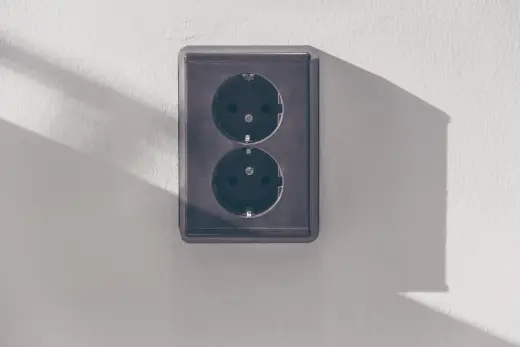
Childproof Outlet Box Covers vs Sliding Outlet Plates: Keeping Nursery Plugs Safe

Baby Sunglasses and UV400: How to Protect Your Baby's Eyes From the Sun

Childproof Door Locks and Hinge Guards: How to Protect Little Fingers