











Wipeable PU Foam vs Fabric Changing Pads: Hygiene and Safety
Compare wipeable foam and fabric changing pads. Learn about cleaning, fit, straps, falls, and safer nappy changes at home or away.

On this page
- What these changing pads are
- Wipeable foam or fabric: how to choose
- Side-by-side comparison
- Cleaning each type safely
- Straps, raised sides, and fall prevention
- Using a changing pad by age and stage
- Comfort, skin, and room temperature
- Materials and product claims
- Official guidance across four countries
- Common mistakes to avoid
- Frequently asked questions
- Sources and further guidance
- Sources
Short answer: A wipeable changing pad is often quicker to clean after a nappy change. A fabric pad may feel softer and can be easier to wash. Either type needs a safe, stable place to use it. Keep one hand on your baby whenever they are on a raised surface. Straps do not make a changing table safe if you step away.
The right choice depends on where you change your baby, how you clean the pad, and what its maker says. A pad is not a cot mattress, sleep space, or substitute for adult supervision.
What these changing pads are
A changing pad gives your baby a clean place to lie during a nappy change. Some pads have a smooth, wipeable surface over foam. Others have a fabric cover over a padded centre. Many are contoured, with raised sides. Some have a strap that goes across the baby.
These features vary by product. A pad may be made to sit on a changing table, a dresser, or another firm surface. Some are portable. Check the instructions for the exact pad you own. Do not assume that a pad can be used on every surface.
“PU” means polyurethane. It is a kind of plastic foam. A wipeable pad may have a PU surface that can be cleaned with a damp cloth. The label should say which cleaners are safe. A strong cleaner can damage some surfaces.
A fabric pad usually has a removable cover, though some covers are fixed. The care label explains whether it can go in a washing machine. A waterproof layer may sit below the fabric. Check if that layer can be removed or cleaned separately.
Neither material is automatically safer. Safe use depends on the pad’s design, condition, correct setup, and your attention during the change.
Wipeable foam or fabric: how to choose
Start with the place where you will use the pad. A raised changing table needs a pad made to fit it securely. A pad that slides or overhangs the edges can create a fall risk. If you change your baby on the floor, use a clear, clean area. A fall from floor level is less likely to cause serious harm than a fall from a raised surface.
Think about the messes you deal with most. Nappy changes can involve urine, poo, creams, and water. A smooth surface is usually simple to wipe. Fabric may need a full wash after a larger spill. Keeping a spare cover or clean cloth nearby can help.
Look at the care instructions before buying. Ask yourself whether you can clean the pad as often as needed. Check whether cleaning products may damage it. Follow the maker’s directions, and let the surface dry before use if the instructions call for it.
Then check the fit. The pad should match the surface it is made for. It should lie flat and stay in place during ordinary use. Do not add an extra cushion, rolled towel, or loose cover unless the maker allows it.
Finally, look at the pad itself. Check its seams, surface, shape, and strap. Do not use it if the foam is exposed, the surface is split, or a fastening is broken. Contact the maker if the instructions are missing or unclear.
Side-by-side comparison
| Feature | Wipeable foam pad | Fabric pad |
|---|---|---|
| Everyday cleaning | Usually wiped with the approved cleaner or a damp cloth. | May need spot cleaning or a machine wash, based on its label. |
| Large messes | Can be quick to wipe, if liquid has not entered a seam or tear. | A removable cover can be washed, if the care label allows it. |
| Drying | May be ready after wiping and drying the surface. | A washed cover needs time to dry before use. |
| Feel | Often has a smooth surface. Feel differs across products. | Has a fabric surface. Softness and padding differ across products. |
| Fit and grip | Depends on shape, base, and the changing surface. | Depends on shape, base, cover, and the changing surface. |
| Care checks | Check cleaner guidance, seams, and surface for damage. | Check washing guidance, stitching, and the cover’s fit. |
| What can go wrong | A damaged surface may trap dirt or expose foam. | A loose cover or wet padding can be uncomfortable and harder to clean. |
| Best fit for | Caregivers who want a quick wipe between changes. | Caregivers who prefer a fabric feel and can wash the cover. |
This table describes common features, not a guarantee about every product. Read the product label and instructions before use.
Cleaning each type safely
Clean a changing surface when it is dirty. Clean it before use if you can see dirt or if another child has used it. Wash your hands after changing a nappy. If your baby has a rash or infection, ask a health professional how best to clean shared items.
Cleaning a wipeable pad
- Move your baby to a safe place before cleaning the pad.
- Remove any visible mess with disposable paper or a washable cloth.
- Use the cleaner and method stated in the product instructions.
- Wipe off any residue if the label tells you to do so.
- Let the surface dry fully before putting your baby on it.
- Check seams, edges, and the surface for cracks or peeling.
Do not pour cleaner onto the pad unless the maker says that is safe. Avoid harsh products, solvents, or rough scrubbers unless the instructions allow them. They can wear the finish or leave residue. Keep cleaners out of your baby’s reach.
A wipeable surface is not clean just because it looks smooth. Follow the stated cleaning method. If mess gets into a split seam or an area you cannot clean, stop using the pad until you know how to deal with it.
Cleaning a fabric pad
- Read the care label before washing the cover or pad.
- Remove the cover only if the maker designed it to come off.
- Use the stated wash temperature and detergent guidance.
- Dry every layer fully before putting the pad back together.
- Check that the cover fits snugly and does not bunch up.
Do not put a cover in a dryer unless its care label allows it. Heat can shrink fabric or damage a waterproof layer. Do not use a cover that has stretched, torn, or no longer fits well.
If the padding becomes wet, clean and dry it as directed. Damp material can smell and may be harder to keep clean. Replace a pad that cannot be cleaned or dried properly.
Straps, raised sides, and fall prevention
Changing tables and other raised surfaces can lead to falls. A baby can move suddenly, even before they can roll. They may wriggle, kick, or turn while you reach for a nappy. Stay beside your baby and keep a hand on them when they are raised.
A strap can help keep a baby in position when used as the instructions say. It does not replace your hand or attention. Never leave a baby alone on a changing table, even for a moment. If you need to fetch something, take your baby with you.
Prepare what you need before you start. Keep nappies, wipes, clean clothes, and a safe place for used items within reach. Keep them away from the edge. Do not let other children climb onto the table or play beside it.
Use the pad only on the surface named by its maker. Follow instructions about attachment points and straps. Do not tie the pad to furniture with improvised cords or add hardware. If the pad moves or does not fit, change your setup.
Raised sides can help centre a baby. They do not stop a determined baby from moving or falling. Do not treat the sides as a barrier. Keep your hand on your baby during every change.
For a baby who is wriggly or starting to roll, a floor-level change may be easier to manage. Put a clean mat on the floor, away from pets, cords, and small objects. Stay close and keep your baby within reach.
Using a changing pad by age and stage
There is no single age when every baby should stop using a changing pad. Babies gain movement at different times. Follow the pad’s size and weight limits. Also watch how your baby moves.
| Stage | What may change | Safer approach |
|---|---|---|
| Newborn | Your baby may be small and have little head control. | Keep the surface clear. Support your baby and stay within arm’s reach. |
| Early movement | Your baby may kick, twist, or start rolling. | Keep a hand on them. Consider changing on the floor if they move a lot. |
| Rolling and wriggling | Your baby may turn quickly or resist lying still. | Use a floor-level area if that makes the change easier to manage. |
| Standing or climbing | Your child may try to stand up or climb off. | Change on the floor or another low, clear surface. Do not rely on straps. |
These stages are guides, not rules. If your baby is hard to manage on a raised table, move the change to the floor. Use the manufacturer’s limits and instructions for the pad.
Comfort, skin, and room temperature
A changing pad should feel comfortable enough for a short nappy change. Your baby may dislike a cold surface. You can warm it with your hand before placing them down. Do not use a hot water bottle, heating pad, or warmed cloth that could burn them.
Keep the change calm and brief. Talk to your baby or offer a safe toy while you work. Keep small items away from their mouth. Never leave a baby alone with a toy or any item that could cause choking.
After a nappy change, clean your baby gently and dry the skin as needed. If a rash does not improve, spreads, or seems painful, seek advice from a health professional. The Canadian Paediatric Society’s Caring for Kids page gives guidance on diaper rash. Pregnancy, Birth and Baby has advice on nappy rash.
A changing pad is for changing. Do not use it as a sleep surface. If your baby falls asleep during a change, move them to their usual safe sleep space. Keep sleep spaces firm, flat, and clear, following local safe sleep advice.
Materials and product claims
Product labels may use words like “waterproof”, “non-toxic”, or “easy clean”. These words do not tell you how to use or care for a pad. Look for clear instructions, maker details, and a way to contact the seller or maker.
Do not assume that a pad is safe because it has a logo or a broad claim about standards. The standards for cots, car seats, or prams do not automatically apply to a changing pad. A standard for one kind of product does not certify a different kind.
Do not assume that a smooth plastic surface is free from every chemical of concern. The old article made broad claims about materials without evidence. This guide does not repeat those claims. If you have a specific concern, check the product details and ask the maker or your local product safety body.
Buy from a seller who provides instructions and contact details. Check official recall notices if you are unsure about a product. In Australia, Product Safety Australia lists recalls and safety information. In Canada, Health Canada has a recalls and safety alerts page.
Official guidance across four countries
Advice about a pad’s exact design can differ by product. The basic fall prevention message is clear: stay with your baby during a change. Use the pad as directed, and do not leave a baby on a raised surface alone.
| Country | Relevant body | Useful guidance |
|---|---|---|
| Australia | Product Safety Australia, part of the Australian Competition and Consumer Commission (ACCC) | Its change tables guide explains safer use and fall prevention. Check its recalls page for product notices. |
| United Kingdom | Office for Product Safety and Standards (OPSS); RoSPA gives home safety advice. | Use government product safety advice and follow the maker’s instructions. RoSPA covers accidents to children and home safety. |
| United States | U.S. Consumer Product Safety Commission (CPSC) | Check product safety information and recalls. Follow the product label and keep your baby within reach. |
| Canada | Health Canada; the Canadian Paediatric Society (CPS) offers health guidance. | Check recalls and safety alerts. Caring for Kids provides advice on diaper rash and infant care. |
These bodies do not make every changing pad identical. The product’s own instructions matter. If instructions conflict with a safe, attentive setup, do not use the pad on a raised surface.
Common mistakes to avoid
- Turning away for a moment: Take your baby with you if you need to leave.
- Trusting the strap alone: A strap is not a replacement for close supervision.
- Using the wrong surface: A pad made for a table may not fit a dresser or bed.
- Adding loose layers: A loose towel or blanket can bunch up or slide.
- Using a damaged pad: Cracks, tears, broken straps, and exposed foam are signs to stop.
- Ignoring the care label: A wrong cleaner or wash method can damage the pad.
- Putting a baby to sleep on it: A changing pad is not a sleep space.
- Leaving supplies at the edge: Keep items close to you, but away from your baby’s reach.
- Assuming “contoured” means contained: Raised sides do not prevent falls.
- Assuming “wipeable” means germ-proof: Clean the surface as the maker directs.
Frequently asked questions
Are wipeable foam pads more hygienic?
They can be quicker to clean after a small mess. That does not make every wipeable pad more hygienic in every situation. Clean it as directed, and stop using it if the surface is split or cannot be cleaned well.
Are fabric pads less safe?
No. A fabric pad is not automatically less safe. Check its fit, condition, and care instructions. Keep your baby close, especially on a raised surface.
Can I use a changing pad on a bed?
Only if the maker says it is suitable and it stays stable. A soft mattress may let the pad shift or sink. A clear floor area is often easier to manage. Never leave your baby alone on a bed.
Should I use the strap every time?
Use the strap as the maker instructs. Keep a hand on your baby while they are on a raised surface. The strap cannot take the place of supervision.
Can I put a towel over a wipeable pad?
Check the instructions first. A loose towel can bunch or slide. If the maker allows a cover, make sure it fits well and does not block any fastening or safety feature.
How often should I wash a fabric cover?
Follow the care label. Wash it when it is dirty, and dry it fully before use. Keeping a spare clean cover can help while one is being washed.
Can my baby nap on a changing pad?
No. A changing pad is made for nappy changes, not sleep. Move a sleeping baby to a safe sleep space that follows guidance in your country.
When should I stop using a raised changing table?
Stop when your child’s movement makes the table hard to use safely, or when the product limit says to stop. Many families find floor-level changes easier once a child rolls, stands, or tries to climb.
What should I do if the pad has no instructions?
Ask the seller or maker for the correct instructions. Do not guess how to attach it or which cleaner to use. If you cannot confirm how to use it safely, choose another setup.
Sources and further guidance
- Product Safety Australia (ACCC): Change tables guide
- UK Office for Product Safety and Standards
- RoSPA: Preventing accidents to children
- U.S. Consumer Product Safety Commission: Safe sleep and infant products
- Health Canada: Recalls and safety alerts
- Canadian Paediatric Society: Diaper rash
- Pregnancy, Birth and Baby: Nappy rash
BabyGearFinder provides general information, not medical advice. Ask a health professional about your baby’s care. Some links may be affiliate links, which can earn us a commission at no extra cost to you.
Sources
- Product Safety Australia – Change tables guide
- UK Office for Product Safety and Standards
- RoSPA – Preventing accidents to children
- CPSC (US) – Safe sleep: cribs and infant products
- Health Canada – Recalls and safety alerts
- Caring for Kids (Canadian Paediatric Society) – Diaper rash
- Pregnancy, Birth and Baby – Nappy rash
Related guides
More Bath, Nappies & Changing →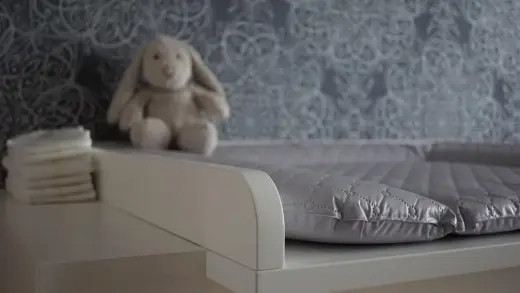
Smart Changing Pads With Scales: How They Work and If You Need One
Steel vs Plastic Nappy Bins (Diaper Pails): Odour Seals, Refill Costs, and Safety
Bath Kneeler and Elbow Rest Pads: How to Choose Safe, Non-Slip Pads for Baby Bathtime
