






Padded Training Underwear vs Pull-Ups: Helping Toddlers Notice Wetness
Compare padded training underwear and pull-ups, learn what each can do, and choose a calm, practical approach to toilet learning with your toddler.
On this page
- What these products are designed to do
- How feeling wetness may help
- Look for readiness, not a birthday
- Compare padded underwear and pull-ups
- Choosing training underwear
- Choosing pull-ups
- Use the product to support practice
- Age and stage: a flexible guide
- At home, childcare, and on outings
- Skin comfort and cleaning
- Common mistakes to avoid
- Guidance in Australia, the UK, the US, and Canada
- Frequently asked questions
- A simple way to choose
- Sources
Short answer: Padded training underwear and pull-ups serve different purposes. Training underwear feels more like ordinary underwear. It may let a child notice dampness after a small accident. Pull-ups are disposable absorbent pants. They can contain more liquid and make changes easier away from home. Neither product teaches a child to use the toilet by itself. Watch your child’s cues, offer gentle chances to try, and choose what fits your family’s day.
There is no single right product or toilet learning timetable. Children gain body awareness and control at different times. A child may stay dry for part of the day and still need a nappy or pull-up at night. Keep the process calm. Accidents are part of learning.
What these products are designed to do
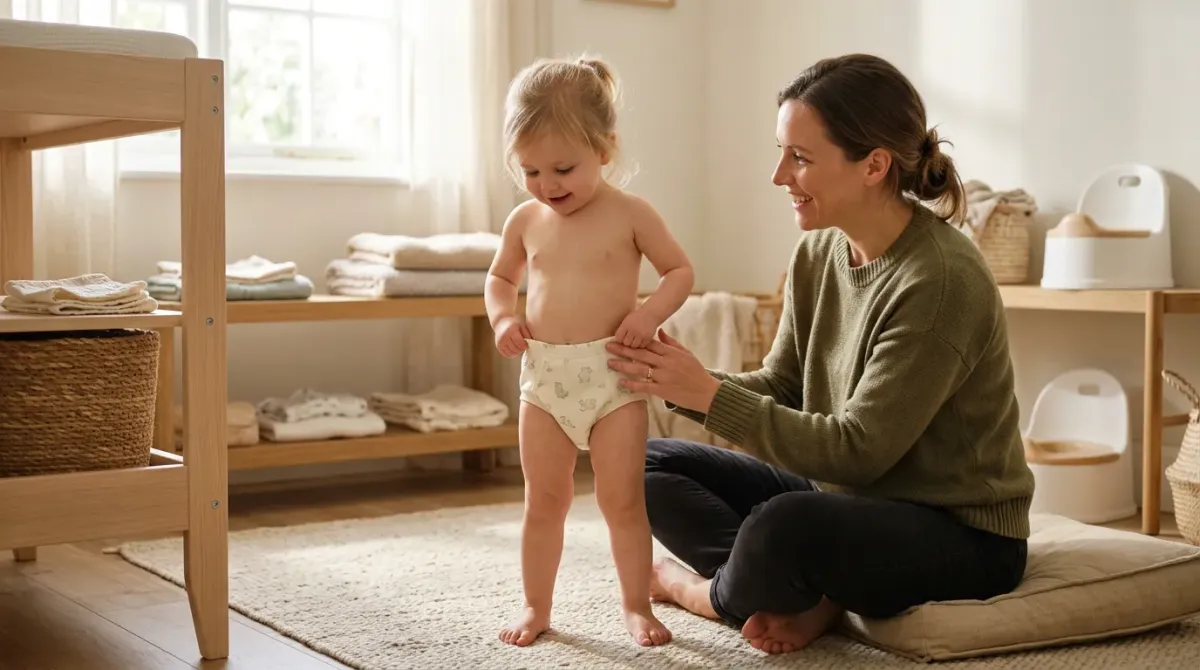
Padded training underwear looks and feels like underwear. It has an absorbent layer sewn into the crotch. The layer can catch a small leak. It usually cannot hold as much as a disposable nappy or pull-up. The child may feel some dampness, though the amount varies by garment and accident.
Pull-ups are disposable pants with an absorbent inner layer. A child can often pull them up and down. Many have stretchy sides. Some can be torn open for removal. They are designed to hold urine and sometimes bowel movements, like a disposable nappy. The exact absorbency depends on the product.
Both can be useful. Training underwear may suit home practice, when an adult can help with quick changes. Pull-ups may suit travel, childcare, naps, or times when changing clothes is hard. Some families use both in different situations.
Product names can be confusing. Some brands call disposable pants “training pants.” Check the label and construction. Reusable cloth underwear can be washed. Disposable pull-ups are thrown away after use.
How feeling wetness may help
Some parents choose training underwear because it feels closer to ordinary underwear. A child may notice that their clothes feel damp after a leak. That experience can help them connect the feeling of needing the toilet with what happens next. This is not guaranteed. Children differ in what they notice and when they notice it.
A thick absorbent layer may keep wetness away from the skin. A thinner layer may let the child feel damp sooner, but it may catch less. These are practical differences, not a promise about learning speed. There is no need to make a child stay in wet clothing to teach a lesson.
Change wet or soiled clothing promptly. Clean and dry the skin gently. If your child has ongoing soreness, a rash, pain when passing urine, or another health concern, ask a health professional for advice.
A pull-up can make wetness less noticeable because it is designed to absorb liquid. That can be helpful when an accident would otherwise soak clothes or a car seat cover. It does not mean the child cannot learn while wearing one. Adults can still name the body cue, offer the toilet, and praise trying.
Try simple words. For example: “Your pants feel wet. Let’s get dry.” Or: “You said your tummy feels funny. Would you like to sit on the toilet?” Avoid blame, shame, or pressure.
Look for readiness, not a birthday
Age alone cannot tell you whether a child is ready. Some children show interest and body cues earlier than others. Some need more time. A child may be ready for daytime practice but not ready to stay dry overnight.
Possible signs of readiness include showing interest in the toilet, noticing a wet or dirty nappy, telling an adult before or after a wee or poo, or staying dry for a stretch. A child may also be able to follow a simple request, sit comfortably, and help with clothing. These signs are clues, not a checklist your child must pass.
Readiness can change. Illness, travel, a new baby, a move, or changes in childcare may make toilet learning harder for a while. If your child resists, pause and try again later. A break does not erase what they have learned.
Consider your child’s movement and clothing skills. Pants with an elastic waist can be easier than buttons or tight leggings. A stable step or child toilet seat may help, if used with an adult nearby. Keep the bathroom safe and comfortable. Do not leave a young child alone on a high toilet or stool.
Compare padded underwear and pull-ups
The best choice depends on the setting, the amount of support available, and your child’s comfort. Use this table as a practical guide. Product designs vary, so read the care and use instructions.
| Feature | Padded training underwear | Disposable pull-ups |
|---|---|---|
| How it feels | More like ordinary underwear; may feel damp after a leak | Soft disposable pants; absorbent layer may hide some wetness |
| What it can hold | Usually suited to small leaks; may not contain a full wee | Often holds more liquid; check the product label |
| Changing | Remove, change, and place in laundry | Pull down or tear the sides, then dispose of it |
| Toilet practice | Can support practice when an adult can help with quick changes | Can still support toilet visits and body cue conversations |
| Outings | Needs spare clothing and a plan for wet garments | Can be easier when laundry or a quick change is not available |
| Cost pattern | Reusable; washing is needed | A new product is needed after use |
| Waste | Creates laundry and uses water and energy for washing | Creates disposable waste |
| Night use | May not hold enough for overnight wetting | May be more practical overnight, depending on the child and product |
| Useful question | Can we change promptly if it gets wet? | Can we keep offering the toilet without pressure? |
Neither option is a measure of your parenting or your child’s progress. You can change the plan as needs change. It is also fine to use ordinary underwear at home and a pull-up for a long trip, if that suits your child.
Choosing training underwear
Check the size guide and garment fit. Underwear that is too tight can rub. A loose fit may shift and catch less. The waistband and leg openings should sit comfortably without digging into the skin.
Check the care label before buying. Some garments need a cold wash or a separate rinse. Others can go in a normal laundry load. Follow the maker’s washing instructions. Do not assume that every fabric can be tumble-dried or treated with stain remover.
Think about how many pairs your household can wash and keep ready. A small set may work if your child has few accidents and laundry is frequent. More pairs may help when changes happen often or laundry is less frequent. There is no required number.
Look for a smooth inner layer and seams that do not bother your child. If your child dislikes the feel, try another fit or style. The goal is clothing they can wear comfortably, not a product they must tolerate.
Some products use words such as “leak-proof” or “waterproof.” Treat these as product claims, not a guarantee against every accident. Check the product description and reviews carefully, and keep spare clothes available. We do not make claims about a specific brand here.
Choosing pull-ups
Check the weight or size range on the package. Fit matters for comfort and leaks. The waist should not pinch. The leg openings should sit close to the body without leaving painful marks.
Read how the product should be put on and removed. Some designs pull down like underwear. Some have tear-away sides. Practise opening one before an urgent change, if the design is unfamiliar.
Take account of your child’s skin. Change a wet or soiled pull-up when you can. Clean the area gently and let it dry. If a product seems to cause irritation, stop using it and ask a health professional if the irritation persists or concerns you.
Consider how you will talk about it. You might say, “This is for the car ride. We will still stop for toilet tries.” That helps keep the pull-up from becoming a signal that toilet visits no longer matter.
Use the product to support practice
Offer the toilet at calm, familiar times. These might include after waking, before leaving home, or when your child says they need to go. Avoid constant reminders that interrupt play. Watch for your child’s own signals too.
Make the toilet easy to reach. Keep a potty in a safe, steady place, or use a properly fitted child seat. Help your child climb and sit. Stay close enough to support them. A relaxed, short sit is enough. Do not make them sit until they wee.
Let your child choose underwear when possible. A choice between two pairs can give them a sense of control. Avoid making clothing, charts, stickers, or treats a test. If rewards suit your family, praise effort and communication rather than only dry pants.
When an accident happens, respond in a steady way. Say what happened without judgement. Help your child change. Invite them to try the toilet next time. Keep the clean-up simple and private. Do not scold or tease.
Children learn at different speeds. A dry morning does not mean the next day will be dry. Accidents do not mean your child has failed. They may be tired, busy, unwell, or still learning to notice body signals.
Age and stage: a flexible guide
Toilet learning is not a race. This guide describes common stages, not deadlines. Your child may move between stages or need a pause.
| Stage | What you may notice | Possible approach |
|---|---|---|
| Showing interest | Your child watches others, asks about the toilet, or notices nappies | Use simple words, read a book, and let them explore the potty with help |
| Beginning practice | Your child sometimes tells you, sits briefly, or has some dry periods | Offer calm toilet chances and try underwear at home if practical |
| Building the routine | Your child remembers some toilet visits but still has accidents | Keep clothes easy to remove; use a pull-up for settings that need it |
| More independent days | Your child asks to go and manages more steps with help | Keep a spare outfit and continue gentle support |
| Sleep and night-time | Your child may wake dry or may wet while asleep | Use suitable night protection until your child is ready to stay dry |
Daytime and night-time dryness are separate skills. A child may use the toilet by day and still need protection at night. Do not withhold needed sleep protection to teach a lesson. If you have concerns about persistent wetting, pain, constipation, or a sudden change, speak with a health professional.
At home, childcare, and on outings
Talk with childcare staff before changing your child’s routine. Ask what clothing they can manage and how they handle wet clothes. Share the words your child uses for the toilet. Agree on a calm approach that does not shame or single them out.
Pack spare underwear, trousers, socks, and a bag for wet clothing. A pull-up may be useful for travel, long waits, or places where changing is difficult. Keep offering toilet breaks when suitable. A pull-up can be a backup, not a reason to ignore a request.
For a short outing, plan a toilet stop before leaving. Find out where toilets are when you arrive. Bring wipes or cloths if your family uses them, and dispose of waste responsibly. Never flush wipes or disposable pants unless the product and local plumbing guidance clearly allow it.
At home, keep a simple change area ready. Store clean clothes within adult reach. Keep cleaning products and plastic bags away from children. Supervise your child during changes, especially around stairs, baths, and furniture.
Skin comfort and cleaning
Wet clothing can bother some children’s skin. Change damp garments when practical. Wash reusable underwear as the label directs. Rinse or store soiled items in a way that keeps them away from children and food areas.
Clean your child gently after a bowel movement. Wipe from front to back, especially for children with a vulva. Dry the area before putting on clean underwear. Avoid strongly scented products if they seem to irritate the skin.
Rashes can have many causes. A rash that is severe, spreading, painful, or not improving deserves advice from a doctor or nurse. Seek help sooner if your child seems unwell or has pain when passing urine.
Use a safe laundry routine. Keep detergent capsules and cleaning products in their original containers, out of reach and sight. Follow the product label. Do not mix cleaning products. If a child swallows a cleaning product, contact your local poison centre or emergency service.
Common mistakes to avoid
- Expecting one product to work everywhere. Home, childcare, sleep, and travel may need different plans.
- Assuming padded underwear prevents all leaks. It may catch only a small amount.
- Assuming a pull-up stops learning. Toilet practice and body cue talk can continue while wearing one.
- Leaving a child wet to teach a lesson. Change them and keep the tone kind.
- Pressuring a child to sit. Offer a chance, then move on if they refuse.
- Starting during a stressful change. A pause may make practice easier for everyone.
- Using difficult clothing. Tight layers, buttons, and fasteners can slow a child who needs help.
- Comparing children. Siblings and friends can learn at different times.
- Expecting night dryness to follow daytime learning. Sleep dryness may come later.
- Treating accidents as misbehaviour. A calm response helps protect trust and confidence.
Guidance in Australia, the UK, the US, and Canada
Training underwear and pull-ups are everyday clothing and hygiene products. The source library for this article does not include a toilet learning guide or a specific product standard for these items. We therefore do not claim that one product is certified, safer, or more effective under a named standard.
In Australia, families can seek general child health advice from Pregnancy, Birth and Baby and Healthdirect Australia. Product Safety Australia shares consumer product safety information. In the UK, the NHS provides child health advice, and the Office for Product Safety and Standards handles product safety matters. In the US, the American Academy of Pediatrics offers child health information through HealthyChildren.org, while the Consumer Product Safety Commission oversees consumer product safety. In Canada, the Canadian Paediatric Society provides parent information through Caring for Kids, and Health Canada oversees consumer product safety.
These bodies do not make the same product-specific claims about training underwear in the sources listed here. For individual concerns about toilet learning, skin, pain, or development, ask your child’s doctor, nurse, or local child health service. For a product concern or recall, contact the relevant product safety body in your country.
| Country | Child health information | Product safety body |
|---|---|---|
| Australia | Pregnancy, Birth and Baby; Healthdirect Australia | Product Safety Australia |
| United Kingdom | NHS | Office for Product Safety and Standards |
| United States | American Academy of Pediatrics, through HealthyChildren.org | U.S. Consumer Product Safety Commission |
| Canada | Canadian Paediatric Society, through Caring for Kids | Health Canada |
Frequently asked questions
Does padded training underwear teach my toddler to notice wetness?
It may help some children notice dampness after a leak. The feel depends on the garment and the amount of urine. It cannot teach toilet use by itself. Talk about body cues and offer calm toilet chances.
Are pull-ups bad for toilet learning?
No. A pull-up can be useful on outings, at childcare, or during sleep. Keep responding when your child asks for the toilet. You can explain when the pull-up is being used and keep the same gentle routine.
Should my child wear underwear all day?
There is no rule that says they must. Some families try underwear at home and use a pull-up elsewhere. Choose what lets your child practise without creating stress or leaving them uncomfortable.
Can training underwear hold a full wee?
Do not assume it can. Many padded styles are made for small leaks. Check the maker’s description, and plan for a change of clothes. Product designs differ.
When should I switch from pull-ups to underwear?
There is no set age or required date. You could try underwear when your child shows interest and you can manage changes. If the change causes distress, return to a familiar option and try again later.
Can my child use a pull-up and still practise sitting on the toilet?
Yes. Offer a toilet visit at a calm time. Let your child choose whether to sit. A pull-up can remain a backup while they learn the routine.
What should I do after an accident?
Stay calm. Tell your child they are safe and help them change. You can say, “Your pants are wet. Let’s get dry.” Avoid punishment or shame. Offer the toilet next time they show a cue.
What if my child refuses the toilet?
Do not force them to sit. Keep the potty available and use simple, neutral words. Take a break if practice becomes a struggle. Try again when your child seems interested or circumstances feel calmer.
Are night-time pull-ups a setback?
No. Night-time dryness can develop separately from daytime toilet use. A pull-up or other suitable sleep protection can help keep your child comfortable. Continue daytime practice at their pace.
When should I ask for health advice?
Ask a health professional if your child has pain, a new sudden change, ongoing constipation, or trouble passing urine. Also ask if you are worried about development or repeated skin problems. A professional can consider your child’s full health history.
A simple way to choose
Choose padded training underwear if your child is comfortable in it, you want a washable option, and you can change small leaks promptly. Choose pull-ups when extra absorbency or easier changes matter more. You can use both for different parts of the day.
Keep the focus on your child’s cues and comfort. Offer the toilet without pressure. Change wet clothes promptly. Treat accidents as ordinary parts of learning. If something worries you, ask a child health professional.
Disclaimer: This article is general information, not medical advice. Children develop at different rates. Speak with a qualified health professional about health concerns. Some links may be affiliate links. If you buy through them, BabyGearFinder may earn a commission at no extra cost to you. We do not accept payment for medical advice.
Sources
- Pregnancy, Birth and Baby (Australia)
- Healthdirect Australia
- NHS – Baby and toddler safety
- UK Office for Product Safety and Standards
- AAP HealthyChildren.org – Safety for your child: 2 to 4 years
- CPSC (US) – Safe sleep: cribs and infant products
- Caring for Kids (Canadian Paediatric Society) – Diaper rash
- Health Canada – Recalls and safety alerts
Related guides
More Bath, Nappies & Changing →
Quick-Dry Microfibre vs Turkish Cotton Beach Ponchos for Toddlers
Two-Step Bathroom Stools for Toddlers: Choosing and Using One Safely
Smart Nappy Sensors and Wetness Indicators: Do You Really Need One?