Single-to-Double Strollers: Upper vs. Lower Seat Weight Limits Explained
Why upper and lower seat weight limits matter on single-to-double strollers before baby two arrives, plus safety rules for AU, UK, US and Canada.

On this page
- Key points
- What a single-to-double convertible stroller is
- Why upper and lower seat weight limits are different
- How weight limits affect your family as your children grow
- Upper seat vs. lower seat: side-by-side comparison
- Planning your setup by child stage
- How to choose the right convertible stroller
- Safe sleep and harness rules in double strollers
- Safety standards in Australia, the UK, the US and Canada
- Common mistakes parents make with convertible strollers
- Frequently asked questions
- Sources
Short answer: On many single-to-double strollers, the lower seat holds less weight than the upper seat. A toddler often outgrows the lower seat before a new baby is ready to sit up. Always check the weight and height limits for both seats before you buy.
This guide explains how upper and lower seat limits work. It covers what happens as your children grow and how to avoid a costly mistake. It also shares stroller safety rules for Australia, the UK, the US and Canada.
Key points
- Two seats, two limits: The upper seat usually holds more weight than the lower seat.
- Balance matters: Putting the heavier child low and far forward makes the stroller hard to steer and easier to tip.
- The bassinet trap: Many parents want the newborn close to them on top. That often pushes the older child into a lower seat they are too heavy for.
- Height counts too: A tall toddler can hit the lower canopy or run out of legroom before they hit the weight limit.
- Check the total load: The frame has a limit for both children plus the basket combined.
- Safe sleep rules apply: A stroller is for walks, not unsupervised sleep. Move a sleeping baby to a flat, clear cot when you get home.
What a single-to-double convertible stroller is
A single-to-double convertible stroller starts as a pram for one baby. Later, you add a second seat, a bassinet, or a baby car capsule to carry two children.
Most convertible strollers use an inline design. Inline means one child sits above or behind the other child. People also call this a tandem stroller.
This differs from a side-by-side double stroller. A side-by-side pram has two seats next to each other on a wider frame. An inline stroller stays narrow like a single pram, so it fits through standard doors and shop aisles.
Many first-time parents buy a convertible stroller because they plan to have another child. It feels like a smart way to buy one frame that lasts for years. That plan works well, but only if the second seat fits your older child when baby two arrives.
Prams & Strollers worth a look
Real products from our catalogue. We don't show star ratings or review counts; check the current price, stock and reviews on Amazon before you buy.


Britax One2
A pram that starts as a single and can take a second child. The seat turns into a lie-flat bassinet.
Read our full review →


Joie Aire Twin
A lower-cost side-by-side double. Each seat lies flat and reclines on its own.
Read our full review →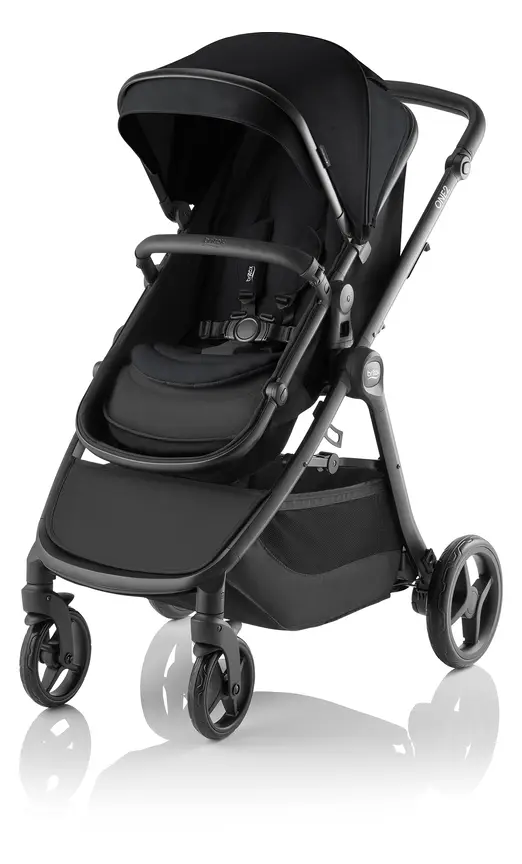
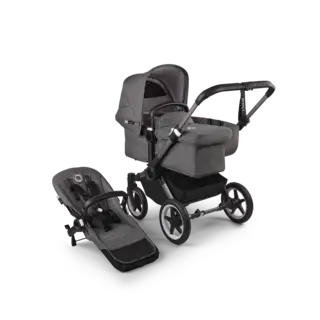
Bugaboo Donkey 5
Converts from single to side-by-side double (siblings or twins) by widening the frame.
Why upper and lower seat weight limits are different
A stroller frame does not carry weight evenly across every spot. Where a child sits changes how the frame bends, steers, and balances.
Frame strength and balance
The upper seat sits right over the strongest part of the frame. It rests close to the rear axle, which is the metal bar connecting the back wheels. This spot can carry a heavier load without bending the frame.
The lower seat sits lower down and further forward. It often clips onto plastic or metal adapters near the front wheels. Those lower brackets carry less load than the main frame.
Think of it like carrying a heavy box. It is easy to hold a heavy box close to your chest. It is much harder to hold that same box out at arm's length. A stroller works the same way.
Steering and tipping risk
The centre of gravity is the balance point of the stroller. When the heavier child sits high and close to the rear wheels, the balance point stays near you. You can push down on the handle to lift the front wheels over a kerb.
When a heavy toddler sits in the lower front seat, the balance point shifts forward. The front wheels press hard into the ground. Lifting the front wheels up a step takes much more effort.
Turning corners also feels heavier. On slopes or bumpy footpaths, a front-heavy stroller can feel unstable. If a child leans forward in an overloaded lower seat, the stroller is more likely to tip.
Seat size and harness height
Many lower seats are slightly smaller than the main upper seat. The backrest may be shorter. The footrest may sit closer to the ground or right inside the storage basket.
The shoulder straps on the harness may also sit lower. If the top harness slot is below your toddler's shoulders, the fit is no longer right. Check both weight and height before you assume a toddler fits.
How weight limits affect your family as your children grow
Most parents test a convertible stroller in a shop with one baby or an empty seat. Everything looks neat and easy. The real test happens two years later when your second baby is born.
The bassinet swap problem
When a newborn arrives, most parents want the baby close to them. They want to see the baby's face and reach them quickly. So they naturally want to put the newborn bassinet in the upper position.
That forces the older toddler into the lower seat. On many strollers, the lower seat has a lower weight limit than the main seat. A two-year-old or three-year-old may already be near or over that lower limit.
If your toddler is too heavy for the lower seat, you cannot put the bassinet on top. You have to put the toddler in the upper seat and the newborn bassinet on the bottom.
What happens when the baby goes on the bottom
Putting the bassinet on the bottom is safe if the stroller maker approves that layout. Still, many parents find it awkward in daily life.
- You have to bend down low to check on your newborn or pick them up.
- The toddler seat above can block your view of the baby below.
- The bassinet often takes up most of the storage basket, leaving little room for a nappy bag.
- On some frames, the upper seat cannot face you while a bassinet sits underneath.
How your age gap changes what you need
The gap between your first and second child matters a lot.
- Small gap (12 to 18 months): Your first child is still light. They will likely fit the lower seat for a while. Both children will need seats at the same time for a long stretch.
- Medium gap (2 to 2.5 years): This is the most common trap. Your toddler may be close to the lower seat weight limit right when the baby arrives. Check if the toddler can sit up top while the baby uses the lower spot.
- Larger gap (3 years or more): Your older child may already be close to outgrowing a stroller seat. A standing toddler board (also called a buggy board) may be better than buying a second seat.
Upper seat vs. lower seat: side-by-side comparison
Every stroller model has its own numbers and rules. Even so, most inline convertible strollers follow the same pattern. This table compares the upper seat and lower seat across key daily features.
| Feature | Upper (main) seat | Lower (second) seat |
|---|---|---|
| Weight limit | Higher. Built to hold an older toddler safely. | Often lower. May be several kilograms less than the upper seat. |
| Frame position | Sits over the strong main frame and near the rear axle. | Hangs lower and closer to the front wheels on adapters. |
| Steering and kerbs | Easier to steer and lift over kerbs when the heavier child sits here. | Feels heavy at the front if an older child sits here. |
| Parent access | Easy to reach, feed, soothe, and see your child. | Requires bending down. Upper seat may block your view. |
| Seat size and legroom | Usually taller backrest and more space under the hood. | Often shorter backrest. Feet may sit close to the basket or ground. |
| Basket space | Leaves the storage basket mostly open underneath. | Takes up part or most of the basket, especially with a bassinet. |
| Airflow and shade | Higher off the ground, away from hot footpaths and dust. | Closer to the ground. Needs good mesh vents in warm weather. |
Always check the exact manual for any stroller you are thinking of buying. Some strollers give both seats the same weight limit, while others have a big gap between the two.
Planning your setup by child stage
Your stroller layout will change several times during the first three years with two kids. Here is how each stage usually works.
| Stage | What is happening | What to check on the stroller |
|---|---|---|
| Newborn + toddler | Baby needs a flat bassinet or capsule. Toddler needs a full seat. | Check if the toddler seat can stay on top while the bassinet or capsule goes below. |
| Baby (6 to 12 months) + older toddler | Baby can sit upright in a toddler seat. Older child walks more but still tires. | Check the weight of both children. Keep the heavier child in the higher-rated seat. |
| Two toddlers (1 to 3+ years) | Both children use upright seats. Total weight on the frame is at its peak. | Check the combined weight limit for two seats plus the basket. |
| Preschooler + younger sibling | Older child walks most of the time and rides only when tired. | Check if the frame supports a ride-on board and what its weight limit is. |
Side by side: more prams & strollers to compare
Real products from our catalogue. We don't show star ratings or review counts; check the current price, stock and reviews on Amazon before you buy.
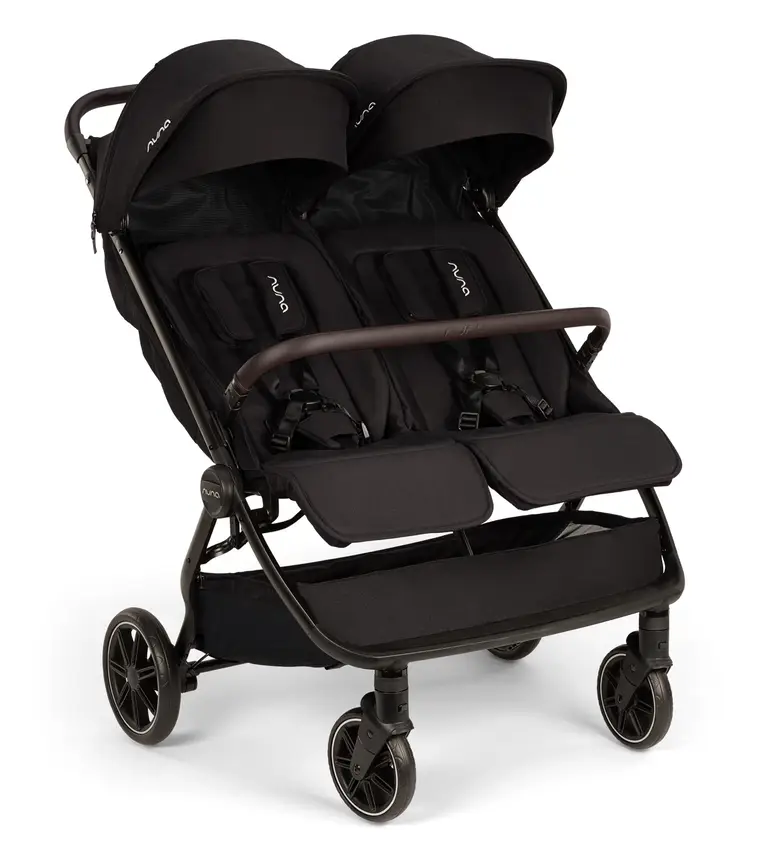


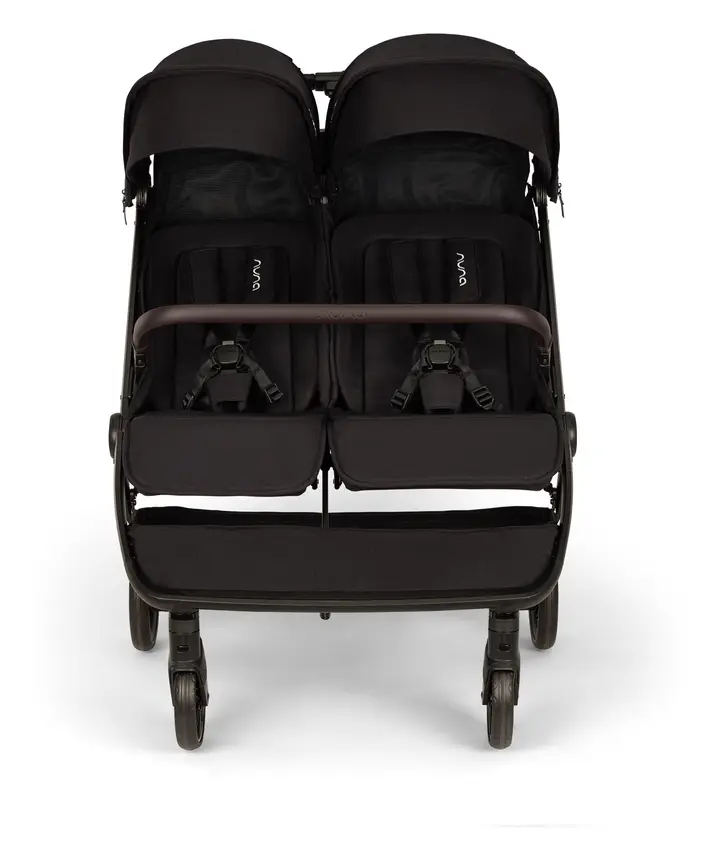


Nuna TRVL Dubl
A side-by-side double that folds with one hand and stands up. Each seat holds up to 22.7 kg.
Read our full review →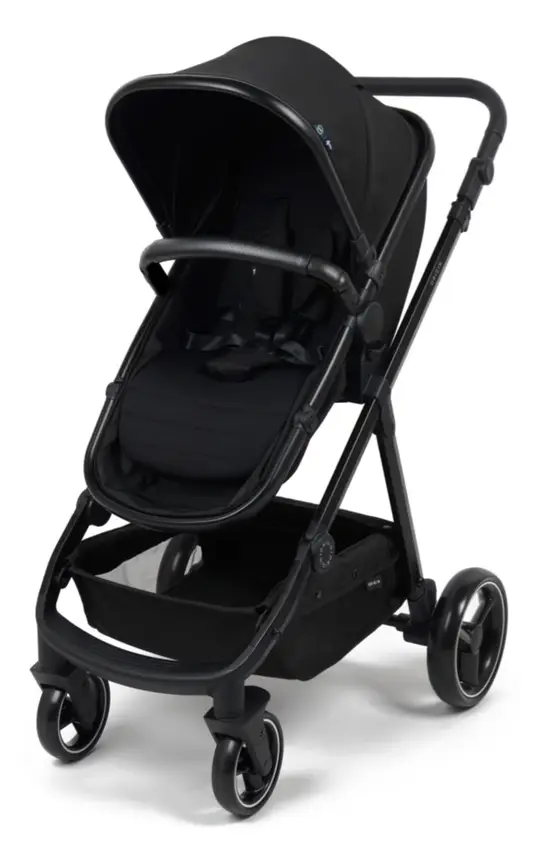
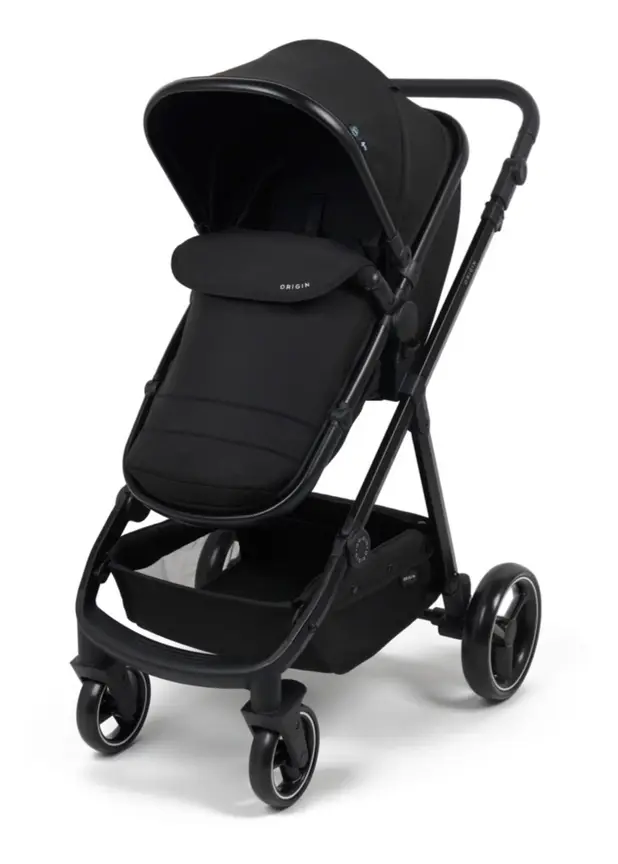
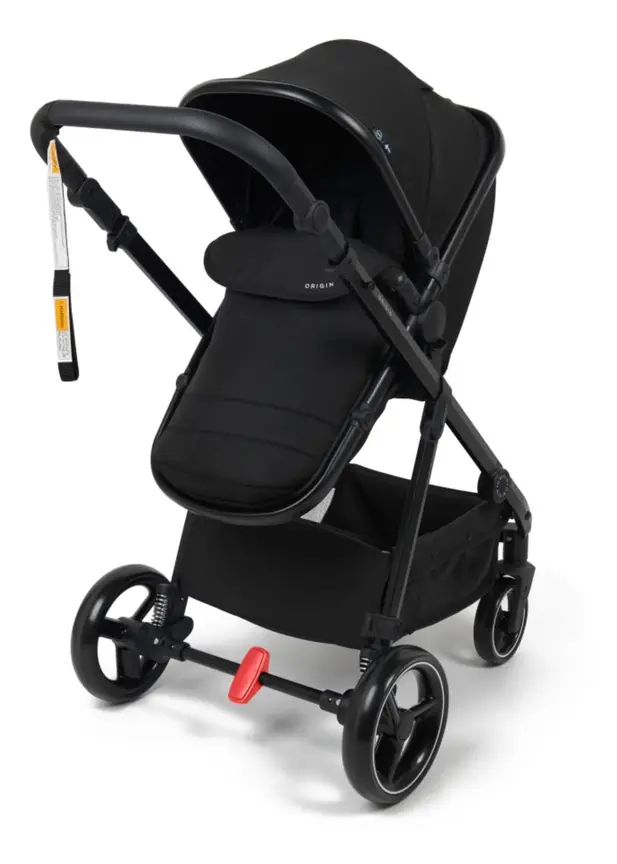
4baby Origin Stroller
A budget pram whose seat turns into a bassinet. The seat can face you or face the world.
Read our full review →
Baby Jogger City Mini GT2
Long-running, lighter all-terrain stroller with a famously simple one-hand strap fold.


Bugaboo Butterfly 2
The newer Butterfly. It folds in about one second, has a lay-flat seat and a bigger basket with a back pocket.
Read our full review →How to choose the right convertible stroller
Do not rely on marketing photos when you shop. Photos often show one neat setup with two small dolls. Follow these steps to test how a stroller works in real life.
1. Read the manual for both seats
Look up the owner manual online before you buy. Find the maximum weight for the main seat. Then find the maximum weight for the second seat when used with adapters.
Check if the weight limit changes when the seat faces you versus facing the world. On some models, facing one way changes the limit. Also check the limit for the bassinet and any car capsule adapters.
2. Check the total frame load
A stroller frame has a total weight limit too. That total covers child one, child two, and everything in the storage basket. Even if each child is under their seat limit, a heavy nappy bag and groceries can push the frame over its safe load.
3. Measure seat height and canopy clearance
Weight is only half the story. Ask to measure the seat back from the bottom cushion to the top of the hood. Look at how much space is left above the headrest.
If your first child is tall for their age, they may hit their head on the canopy long before they reach the weight limit. Check where their feet will go in the lower seat too. Make sure their knees do not press into the back of the upper seat.
4. Test every layout in the shop
Ask the shop staff to fit the second seat and adapters onto the floor model. Try all the layouts you think you will use.
- Put the bassinet on top and the seat on the bottom.
- Put the seat on top and the bassinet on the bottom.
- Put two toddler seats on, both facing forward and facing each other.
Check if the seats bump into each other when you recline them. On many inline strollers, you cannot fully recline both seats at the same time.
5. Test the kerb pop with weight inside
An empty stroller always feels light and smooth. Ask if you can place a weighted test bag in the front seat, or test it with your older child if safe to do so. Push the handle down to lift the front wheels.
If it feels like a workout on a flat shop floor, it will feel much harder on a sloped footpath with a nappy bag.
6. Check the fold and lift weight
A single-to-double stroller gets much heavier when you add a second seat and metal adapters. Check whether the frame folds with both seats attached. Many models require you to take one or both seats off before the frame fits in a car boot.
Lift the folded frame yourself. Make sure you can lift it safely into your car without straining your back.
Safe sleep and harness rules in double strollers
Weight limits are only one part of keeping two children safe in a stroller. Safe sleep, airflow, and straps matter just as much.
Safe sleep on walks
Newborns do not have strong neck muscles. Their heads are heavy for their bodies. If a young baby slumps forward in an upright seat, their chin can press onto their chest and block their airway.
Use a flat, firm bassinet or a seat that reclines fully flat for a newborn. Do not use soft pillows, loose blankets, or thick padded liners inside the bassinet or seat. Red Nose Australia, the Lullaby Trust in the UK, the American Academy of Pediatrics (AAP) in the US, and Caring for Kids in Canada all advise a firm, flat, clear surface for baby sleep.
Do not leave a baby to sleep in a stroller or car capsule once you get home. Move your sleeping baby into a safe cot or crib right away. Always keep your baby in sight while they are in the stroller.
Keep airflow clear
Never drape a blanket, towel, or thick muslin cloth over the stroller hood to block the sun. Covering the opening traps hot air inside and blocks airflow. Raising the heat inside the stroller puts a baby at risk of overheating.
This matters even more for a child in the lower seat. The lower seat sits close to hot concrete or asphalt. Use the built-in sun hood and mesh vents instead, and park in the shade whenever you can.
Use the harness and tether strap every time
Always buckle the 5-point harness for both children, even on a two-minute walk. Toddlers in a lower seat can reach out towards wheels, kerb edges, or shop shelves. A snug harness keeps them safely inside the seat.
Check that the shoulder straps sit at or just above your child's shoulders, or follow the manual's exact slot guide. Do not leave loose straps hanging where a child can get tangled.
Put your wrist through the tether strap on the handlebar every time you push the stroller. If you trip or let go on a hill, the tether stops a heavy double stroller from rolling away. Always engage the parking brake when you stop, even on flat ground.
Keep bags off the handlebar
Never hang heavy handbags or shopping bags on the stroller handlebar. Even a light bag changes the balance point backwards. When you take the heavier child out of the front seat first, the stroller can tip straight backwards.
Store bags in the lower basket instead, within the basket's weight limit. Take the child out of the lighter or higher-risk seat first when unloading, or hold the frame steady as each child gets out.
Safety standards in Australia, the UK, the US and Canada
Strollers are tested for stability, brakes, locking latches, and harness strength. Each country has its own official body and rules. Always buy a stroller that meets the standard for where you live.
| Country | Official body | Standard or rule | What to check when buying |
|---|---|---|---|
| Australia | ACCC and Product Safety Australia (with Standards Australia) | AS/NZS 2088 | Mandatory safety standard. Look for the compliance label, red parking brake, and tether strap. |
| United Kingdom | Office for Product Safety and Standards (OPSS) | BS EN 1888 | Look for the standard mark on the frame or manual. Check UK product recall lists before buying used. |
| United States | U.S. Consumer Product Safety Commission (CPSC) | ASTM F833 | Mandatory federal rule for carriages and strollers. Register your stroller for recall alerts. |
| Canada | Health Canada | Canadian carriages and strollers regulations | Meets Health Canada rules for brakes, stability, and latches. Check Health Canada recalls before buying second-hand. |
Be careful when buying a stroller online from an overseas seller. A stroller sold in another country may not meet your local mandatory standard. For example, Australia's AS/NZS 2088 requires a wrist tether strap and specific parking brake markings that some overseas models lack.
Be careful with second-hand strollers and unbranded adapters too. Old plastic adapters can crack under the weight of a second child. Cheap copycat adapters bought online are not tested with the frame and can fail mid-walk. Always use adapters made by the stroller brand for your exact model year, and check official recall sites before you buy used gear.
Common mistakes parents make with convertible strollers
Many parents run into the same problems when they switch a single pram into a double. Knowing these traps early saves money and stress.
- Buying for baby one without checking baby two limits: Parents fall in love with how a stroller pushes as a single. They never check the lower seat weight limit until they are pregnant with baby two.
- Overloading the lower seat for convenience: It is tempting to put the toddler in the bottom seat so you can see the newborn on top. If the toddler is over the lower weight limit, this risks breaking the adapters or tipping the pram.
- Forgetting the basket weight: Two kids plus a full nappy bag, water bottles, and groceries add up fast. Always count what is in the basket toward the total frame limit.
- Using mismatched adapters: Stroller brands sometimes change frame clips between model years. An adapter from a newer or older year may look close but not lock properly.
- Skipping the recline check: Some parents buy a second seat and then find out the seats clash when one child wants to nap.
- Ignoring the parking brake check: With two children on board, a weak brake is dangerous. Test the brake on a gentle slope with weight in both seats.
More options, from budget to premium
Real products from our catalogue. We don't show star ratings or review counts; check the current price, stock and reviews on Amazon before you buy.
 Reviewed
Bugaboo Fox 5
Bugaboo's flagship all-terrain pram: big-wheel suspension ride, one-piece fold, bassinet from birth and a seat rated to 22 kg.
Read our full review →
Cybex Priam
Fashion-forward luxury pram with interchangeable seat/bassinet units and an all-terrain option.

Maxi-Cosi Zelia 3
A mid-price pram with a carrycot that changes into a seat, so one frame covers birth to toddler.
Frequently asked questions
Can I put my heavier toddler in the lower seat if it is only for short walks?
No. Never go over the weight limit printed on the seat or in the manual, even for a short walk. Adapters and frame clips can snap under extra load, and the stroller can tip on kerbs or uneven paths. Put the heavier child in the seat with the higher weight limit, or use a different stroller setup.
Why do many parents put the bassinet on the bottom seat?
On many convertible strollers, the upper seat has a higher weight limit than the lower seat. When a toddler is already near the lower seat limit, the toddler has to stay in the upper seat. That leaves the lower position for the newborn bassinet or car capsule.
What happens if my toddler is under the weight limit but too tall for the lower seat?
Your toddler has outgrown that seat. If their head presses into the canopy or their shoulders sit above the top harness slots, the seat is no longer safe or comfortable. Move them to the upper seat if it fits, switch to a side-by-side double, or try a toddler ride-on board.
Are side-by-side double strollers better than inline convertible strollers?
Neither type is better for every family. Inline strollers are narrow and start as a single pram, which helps if you only have one child right now. Side-by-side strollers are wider, but both seats usually have the same weight limit, equal legroom, and easier access to both children.
Is a toddler board (buggy board) a safer option than a lower seat?
A toddler board can be a great option if your older child is around three years old or more and likes to walk. It does not require a second seat, and it leaves the main seat free for the baby. Just check the board's weight limit and make sure your child holds on with both hands while moving.
Should I buy the second seat and adapters at the same time as the stroller?
If you plan to have another child within two or three years, check if the brand keeps parts in stock for older models. Some brands change designs every few years, making old adapters hard to find. Still, you do not have to buy the second seat on day one if the brand confirms parts stay available. Just check the lower seat weight limit before you buy the main stroller.
Sources
- Product Safety Australia – Prams and strollers guide
- Product Safety Australia – Prams and strollers mandatory standard
- Raising Children Network – Falls prevention: babies and young children
- Red Nose Australia – What is a safe sleeping environment
- NHS – Baby and toddler safety
- UK Office for Product Safety and Standards
- HealthyChildren.org (American Academy of Pediatrics) – Home safety: tips for families with young children
- Health Canada – Recalls and safety alerts
Related guides
More Prams & Strollers →
Under-Seat Stroller Basket Capacity: Weight Limits, Access Panels, Grocery Fit, and Tipping Safety

Stroller Weight Limits and Tall Toddler Headroom: How to Measure Seat-Back Height and Canopy Space

Stroller Wagons vs Double Strollers: How to Choose for Daily Trips and Theme Parks