













City vs Suburbs: Which Stroller Is Best for Your Lifestyle?
City vs suburbs stroller guide: compare weight, wheels, fold size, and comfort. Plus safety rules for Australia, the UK, the US, and Canada.

On this page
- Key points
- What makes city and suburban strollers different?
- What city parents need in a stroller
- What suburban parents need in a stroller
- City vs suburbs stroller comparison
- How your baby's age changes what you need
- Wheels, tyres, and suspension explained simply
- Weight, folding, and your own body
- Safety features every stroller must have
- Safety standards in Australia, the UK, the US, and Canada
- Common mistakes parents make when buying a stroller
- How to test a stroller before you buy
- Frequently asked questions
- Sources
Short answer: City parents usually do best with a light, narrow stroller that folds fast. Suburban parents usually do best with a sturdy stroller that has big wheels and a large basket. Your daily routine matters more than your postcode. Think about where you walk, how you travel, and where you store the pram.
Safety rules for strollers are strong in Australia (ACCC), the UK (OPSS), the US (CPSC), and Canada (Health Canada). Always check that your stroller meets your country's rules and fits your baby's age.
Key points
- City living: Pick a light frame, a narrow width, and a quick one-hand fold.
- Suburban living: Pick larger wheels, soft suspension, and a roomy basket under the seat.
- Newborns: Babies under six months need a flat-lying seat or a bassinet.
- Safety first: Check for a five-point harness, strong brakes, and a wrist tether strap.
- Airflow: Never drape a blanket or muslin cloth over the hood in warm weather.
- Car capsules: Keep car seat trips short. Move your baby to a flat bed to sleep.
What makes city and suburban strollers different?
A stroller is a big daily tool. You push it every day. You lift it, fold it, and park it.
Where you live changes what feels easy and what feels hard. A great pram in a quiet suburb can feel awful on a crowded train. A tiny travel stroller can feel bumpy on a cracked path.
City life means tight spaces. You face narrow shop aisles, small lifts, and busy footpaths. You may carry the pram up stairs to a flat. You may hop on and off buses or trams.
Suburban life means more space and longer walks. You often load the pram into a car boot. You push over kerbs, tree roots, gravel, and park grass. You may carry a full week of shopping in the basket.
Some families live a mix of both. You might live in the suburbs but take the train to work. Or you might live in an inner-city house with a car and big parks nearby. Match the stroller to your real week, not just your address.
What city parents need in a stroller
City streets test a stroller in specific ways. Space is tight and floors change fast.
Light weight for stairs and trains
If you live in a walk-up flat, you will carry the stroller. Even a few steps feel heavy when you also hold a baby and a nappy bag. A lighter frame saves your back and arms.
Public transport also calls for a lighter pram. You may need to lift it onto a bus or train. You may need to fold it fast when a train gets packed.
Narrow width for tight spots
Old cafes, corner shops, and train gates can be narrow. A wide frame gets stuck between tables or through shop doors. A slim frame lets you glide past without knocking things over.
A fast, compact fold
City homes often have small hallways and little storage. A stroller that folds flat can stand behind a door or fit in a cupboard. A one-hand fold is handy when you hold your baby on your hip.
Sharp turning
Crowded footpaths mean lots of sudden stops and turns. Small front swivel wheels turn on the spot. They make it easy to dodge people, poles, and street signs.
Prams & Strollers worth a look
Real products from our catalogue. We don't show star ratings or review counts; check the current price, stock and reviews on Amazon before you buy.

Baby Jogger City Mini GT2
Long-running, lighter all-terrain stroller with a famously simple one-hand strap fold.
 Reviewed
Baby Jogger City Tour 2
A 6.5 kg stroller with a near-flat recline. It folds small and comes with a carry bag.
Read our full review →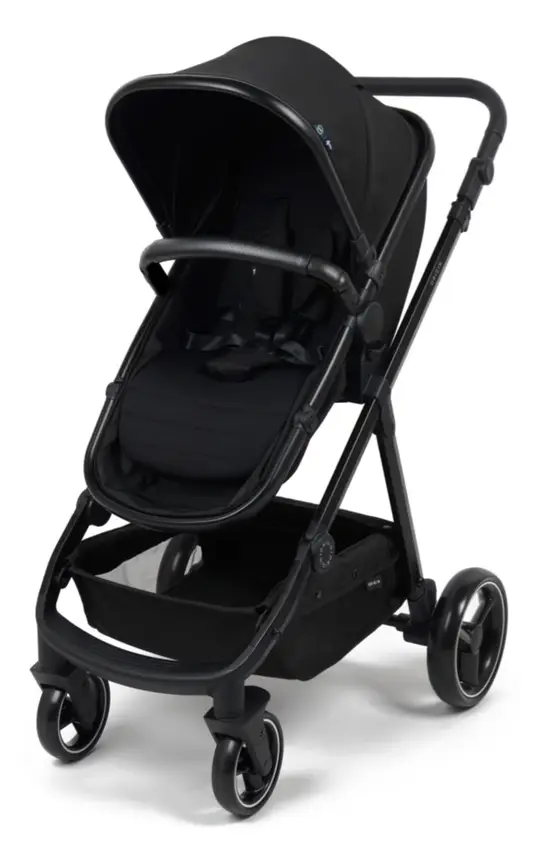
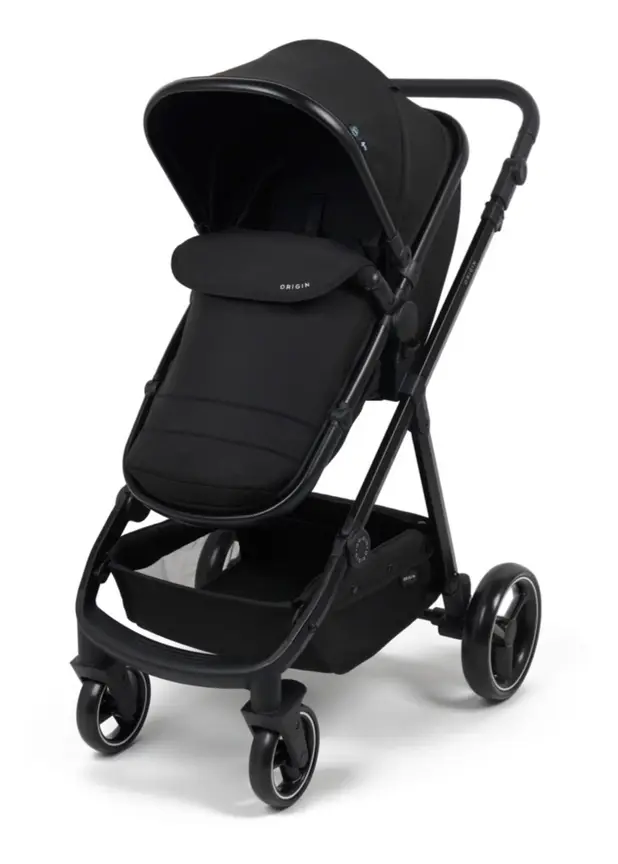
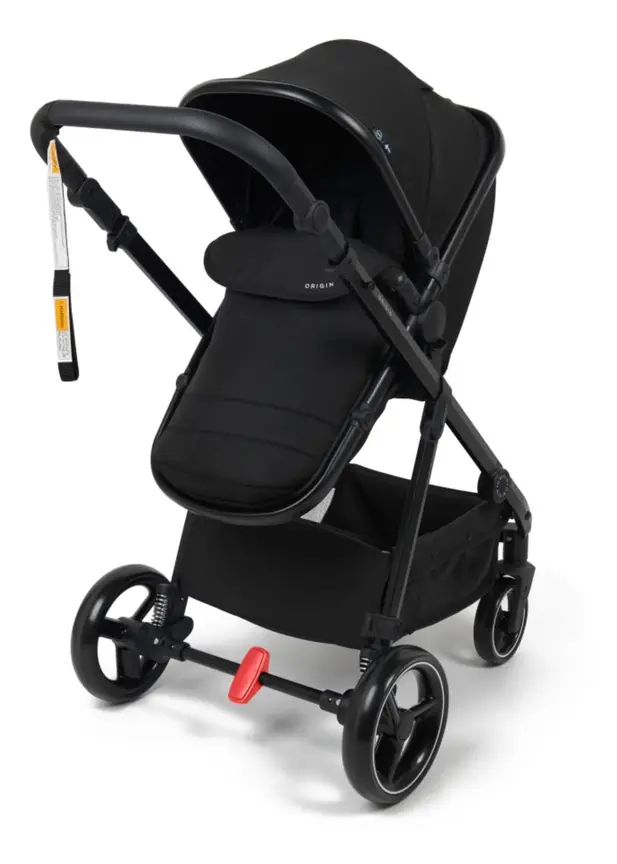
4baby Origin Stroller
A budget pram whose seat turns into a bassinet. The seat can face you or face the world.
Read our full review →
What suburban parents need in a stroller
Suburban life brings different challenges. You spend more time driving and walking on rough ground.
Bigger wheels for uneven paths
Suburban footpaths often have tree roots, cracks, and steep kerbs. Parks have grass, dirt, and gravel. Small plastic wheels catch on bumps and shake your baby. Larger wheels roll right over them.
Good suspension for a smooth ride
Suspension works like shock absorbers on a car. It softens the jolt when you roll off a kerb or over bumpy ground. Your baby stays comfortable and sleeps better on walks.
A large under-seat basket
In the suburbs, you may walk to the shops or spend hours at a park. You need room for groceries, jackets, water bottles, and spare nappies. A big, easy-to-reach basket stops you from hanging heavy bags on the handle.
A comfortable seat for long outings
Suburban walks can be long. A padded seat, a tall backrest, and an extendable sun hood help your child stay happy. A reversible seat lets young babies face you while you walk.
Easy car boot loading
Suburban parents lift the stroller into a car boot many times a week. You do not need the lightest travel stroller, because you are not carrying it up three flights of stairs. Still, the frame must fit your car boot with room left for groceries.
City vs suburbs stroller comparison
This table shows how city-focused and suburban-focused strollers compare side by side.
| Feature | City-focused stroller | Suburban-focused stroller |
|---|---|---|
| Weight | Light and easy to carry up stairs | Heavier and sturdier on the ground |
| Width | Slim for narrow doors and aisles | Wider for a roomy seat and big wheels |
| Fold size | Small and flat for hallways and buses | Larger fold made for a car boot |
| Wheels | Small swivel wheels for sharp turns | Large rear wheels for bumps and grass |
| Suspension | Basic, best on smooth pavement | Stronger, built for kerbs and paths |
| Storage basket | Small to medium | Large and easy to reach |
| Newborn setup | Often needs a bassinet add-on or flat recline | Often includes a bassinet or full flat recline |
| Best for | Trains, buses, flats, tight cafes | Car boots, long walks, parks, big shops |
Many mid-size strollers sit in the middle of these two groups. They offer medium wheels, a moderate weight, and a decent basket. These all-rounders suit families who split their time between driving and walking in town.
How your baby's age changes what you need
A baby grows fast in the first three years. What works for a newborn may not suit a busy toddler.
Birth to around six months
Newborn babies have weak neck muscles and heavy heads. They cannot hold their heads up on their own. If a newborn slumps forward, their chin can press on their chest. That can block their airway and make it hard to breathe.
Because of this, newborns must lie flat on their back. Look for a bassinet attachment or a seat that reclines fully flat. Never put a newborn upright in a stroller seat.
Red Nose Australia also warns against letting babies sleep on their tummy in a stroller. Always place your baby on their back, with no loose blankets, pillows, or soft toys around their face.
Six to twelve months
Most babies start sitting up with support around six months. Once your baby has steady head and neck control, they can move into the upright stroller seat. Keep the seat slightly reclined at first if they still wobble.
At this stage, many babies like facing you. Facing the parent helps you talk to your baby and watch them closely. As they grow more curious, they may enjoy facing forward to see the world.
One to three years
Toddlers walk more, get tired fast, and climb in and out of the pram. A sturdy footrest helps them climb safely with your help. A strong five-point harness keeps wriggly toddlers from standing up or climbing out.
Check the maximum weight limit on your stroller label. Every stroller has a top weight for the seat and a separate limit for the basket. Never go over those limits.
| Age stage | What your baby can do | What your stroller needs |
|---|---|---|
| Birth to 6 months | Weak neck control. Sleeps a lot. | Flat bassinet or full flat recline. Firm, flat base. |
| 6 to 12 months | Sits up. Looks around. | Upright seat with recline. Five-point harness. |
| 1 to 3 years | Walks, climbs, gets heavy. | High weight limit, sturdy footrest, strong brakes. |
Wheels, tyres, and suspension explained simply
Wheels make the biggest difference to how a stroller feels to push. You do not need to know fancy terms to pick the right ones.
Small solid plastic or EVA wheels
Many light city strollers use small wheels made of hard plastic or firm foam (called EVA). They weigh very little and never go flat. They spin easily on smooth shop floors and flat pavements. On gravel, grass, or bumpy paths, they can rattle and stick.
Large foam-filled rubber wheels
Many suburban and all-round strollers use large rubber tyres filled with foam. They feel softer than plastic wheels and grip wet paths better. Best of all, you never need a bike pump and they cannot puncture. They are heavier than small city wheels, though.
Air-filled tyres
Some all-terrain and jogging strollers use real air-filled tyres, just like a bicycle. They give the smoothest ride on grass, gravel, and rough trails. The catch is upkeep. You have to pump them up now and then, and a sharp thorn can cause a flat tyre.
Swivel wheels and wheel locks
Front swivel wheels spin in a full circle. This helps you steer through tight city crowds with one hand. On bumpy paths or gravel, front swivel wheels can wobble or catch. A front wheel lock stops the wheel from spinning so it rolls straight ahead. That simple lock makes rough ground much easier to cross.
Side by side: more prams & strollers to compare
Real products from our catalogue. We don't show star ratings or review counts; check the current price, stock and reviews on Amazon before you buy.
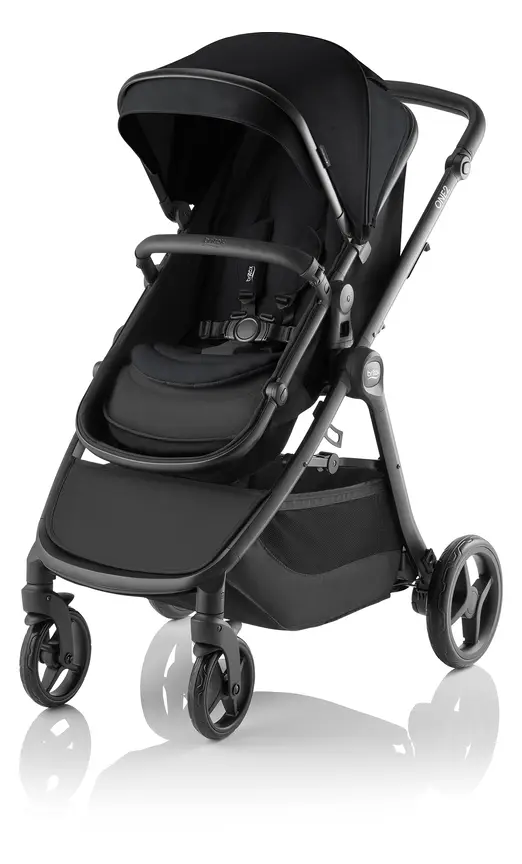
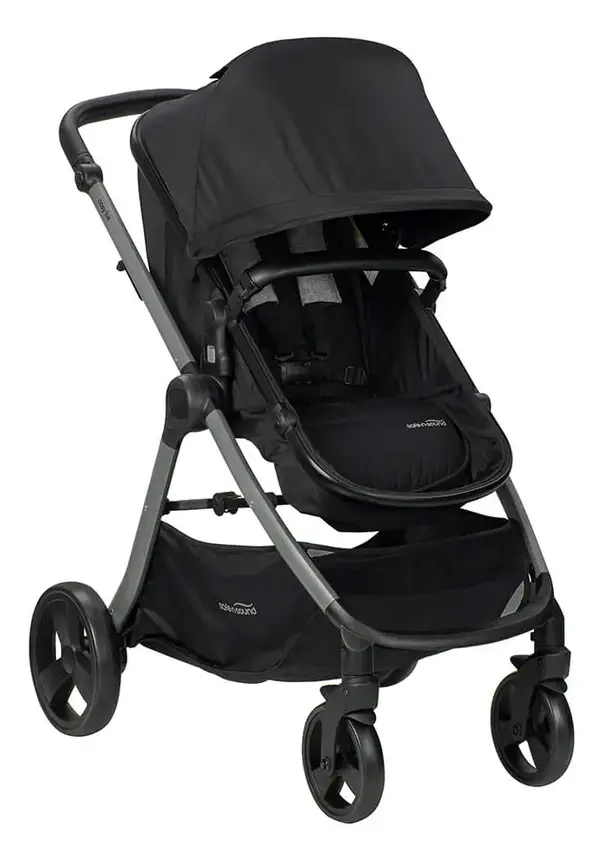
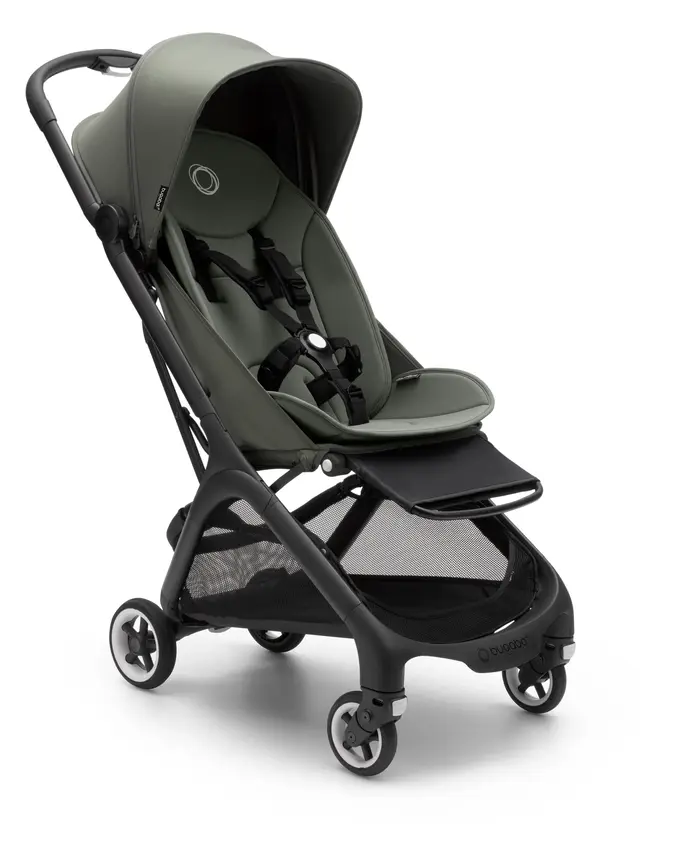


Bugaboo Butterfly
Bugaboo's cabin-friendly compact stroller with a one-second fold — the travel partner to a Fox, not a replacement for it.
Bugaboo Butterfly 2
The newer Butterfly. It folds in about one second, has a lay-flat seat and a bigger basket with a back pocket.
Read our full review →Weight, folding, and your own body
Parents often focus only on the baby's comfort. Your own body matters too. You will push, turn, and lift this stroller hundreds of times.
Protect your back when lifting
Lifting a heavy stroller in and out of a car boot can strain your back and wrists. Check the real weight of the stroller with the seat attached. Some brands list only the frame weight, without the seat or canopy.
When you lift a folded stroller, bend your knees and keep the frame close to your body. Ask yourself if you could lift it after a poor night's sleep. If it feels too heavy in the shop, it will feel worse at home.
Check the handle height
If two parents or carers have very different heights, look for an adjustable handle. A handle that is too low makes tall parents hunch over. A handle that is too high makes shorter parents strain their shoulders. Your elbows should bend comfortably when your hands rest on the bar.
Check your walking stride
Take a few normal steps behind the stroller before you buy. Make sure your toes do not kick the rear axle or the brake bar. Tall parents often kick the back bar on compact city strollers.
Safety features every stroller must have
Whether you live in a busy city or a quiet suburb, safety rules never change. Always check these core features before you use any pram or stroller.
A five-point harness
A five-point harness has two shoulder straps, two waist straps, and one strap between the legs. All five meet at a central buckle. It stops your child from sliding down or climbing out. Kidsafe Australia reminds parents to always buckle the harness, even for a short trip across a car park.
Strong, easy-to-use parking brakes
Every stroller needs a parking brake that locks the wheels firmly. Test the brake with your shoes on, including sandals or thongs. Some brakes are hard to flip up in open shoes. Always put the brake on whenever you stop, even on flat ground. A slight slope or a gust of wind can roll an unlocked pram away.
A wrist tether strap
A tether strap loops around your wrist and attaches to the stroller handle. If you trip or let go by mistake, the stroller cannot roll into traffic or down a hill. In Australia, a tether strap is required by law on prams and strollers. Use it every time you walk near roads, hills, or train platforms.
Safe folding hinges
Folding frames must lock open securely so they cannot collapse with your baby inside. They should need two separate actions to fold, so a child cannot unlock them by accident. Keep little fingers well clear when you fold or unfold the frame.
Sun canopy, shade, and airflow
Babies overheat faster than adults. Health groups in Australia, the UK, the US, and Canada all warn parents to keep prams cool and airy. Never drape a blanket, towel, or muslin wrap over the stroller hood to block the sun. Covering the opening traps hot air inside and blocks airflow.
Instead, use the built-in sun canopy, park in the shade, and dress your baby in light, loose clothes. The American Academy of Pediatrics and the Canadian Paediatric Society both advise keeping babies under six months out of direct sun. When shade is scarce, use a wide-brimmed hat and sun-safe clothing.
Car capsules on strollers
Many city and suburban parents clip an infant car capsule onto a stroller frame. This is handy for quick errands when you do not want to wake a sleeping baby. However, car seats are designed for car travel, not long naps.
The Lullaby Trust in the UK and Red Nose in Australia both advise moving your baby out of a car seat onto a firm, flat surface as soon as you reach your destination. Leaving a baby slumped in a car seat for long periods can strain their neck and affect their breathing. If you plan a long walk, use a flat bassinet or a fully flat stroller seat instead.
Safety standards in Australia, the UK, the US, and Canada
Product safety rules protect families in all four countries. The names of the rules and agencies differ, so here is how they line up side by side.
| Country | Main safety body | Stroller safety standard | Key things it checks |
|---|---|---|---|
| Australia | ACCC (Product Safety Australia) | AS/NZS 2088 | Brakes, five-point harness, tether strap, locks, warning labels |
| UK | Office for Product Safety and Standards (OPSS) | BS EN 1888 | Stability, brakes, harness strength, finger traps, small parts |
| US | Consumer Product Safety Commission (CPSC) | ASTM F833 | Hinge locks, brakes, restraint system, stability, tray gaps |
| Canada | Health Canada | Canada's national stroller safety rules | Brakes, restraints, locking devices, stability, warning labels |
Always buy a stroller sold for your country's market. A pram bought from an unverified overseas website may skip local safety checks. It may lack a tether strap, have weak brakes, or have gaps where tiny fingers can get pinched.
Before you buy any stroller—especially a second-hand one—check your country's official recall list:
- Australia: Product Safety Australia recalls page.
- UK: Office for Product Safety and Standards product recalls.
- US: Consumer Product Safety Commission recalls list.
- Canada: Health Canada recalls and safety alerts.
Common mistakes parents make when buying a stroller
It is easy to get caught up in colours and shiny features. Avoiding these common mistakes saves money and daily stress.
Buying for looks instead of daily life
A sleek frame looks lovely in a showroom. It feels very different when you carry it up two flights of stairs in the rain. Picture your hardest normal day, not a sunny holiday photo. Pick the stroller that handles your real routine.
Forgetting to measure the car boot or lift
Some suburban prams do not fit into small hatchback boots. Some wide double prams do not fit through older apartment lifts or front doors. Measure your boot, your front door, and your lift before you shop. Take a tape measure to the store.
Hanging heavy bags on the handle
Hanging a full nappy bag or shopping bags from the handle can tip a stroller backwards. This is a common cause of pram falls. Always put heavy items in the under-seat basket. If the basket is full, carry a backpack yourself.
Using a stroller as an overnight cot
A stroller seat or pram bassinet is for daytime outings while you are right there watching. It is not a safe place for unsupervised overnight sleep. At home, move your baby to a safe cot or bassinet that meets your country's sleep safety rules.
Ignoring second-hand wear and tear
Second-hand strollers can save money, but they need a careful check. Test the brakes, harness clips, and fold locks. Look for bent metal, frayed straps, or cracked plastic. Check the model name on your country's recall site before you hand over cash.
Buying extra accessories you do not need
Before you buy clip-on fans, cup holders, or handle organisers, check if they add weight or get in the way of the fold. Also check that any clip-on shade or rain cover has proper air vents so heat does not build up inside.
How to test a stroller before you buy
Do not rush your test drive in the shop. Spend ten minutes doing these simple checks.
- Fold and unfold it yourself. Ask the staff to step back. Try folding it with one hand while holding a bag in the other.
- Lift it into a pretend car boot. Pick up the folded frame at waist height. Check if the weight feels manageable.
- Push it with one hand. Pretend you are holding a coffee, an umbrella, or a toddler's hand. See if it drifts or steers smoothly.
- Test the brake. Lock it and give the handle a firm push. Release it while wearing normal shoes.
- Check the harness buckle. Make sure you can click it shut and pop it open easily, but a toddler cannot.
- Reach into the basket. Recline the seat fully flat first. Then see if you can still slide a nappy bag into the basket underneath.
- Adjust the handle and canopy. Check that the handle fits your height and the canopy covers the seat well.
More options, from budget to premium
Real products from our catalogue. We don't show star ratings or review counts; check the current price, stock and reviews on Amazon before you buy.
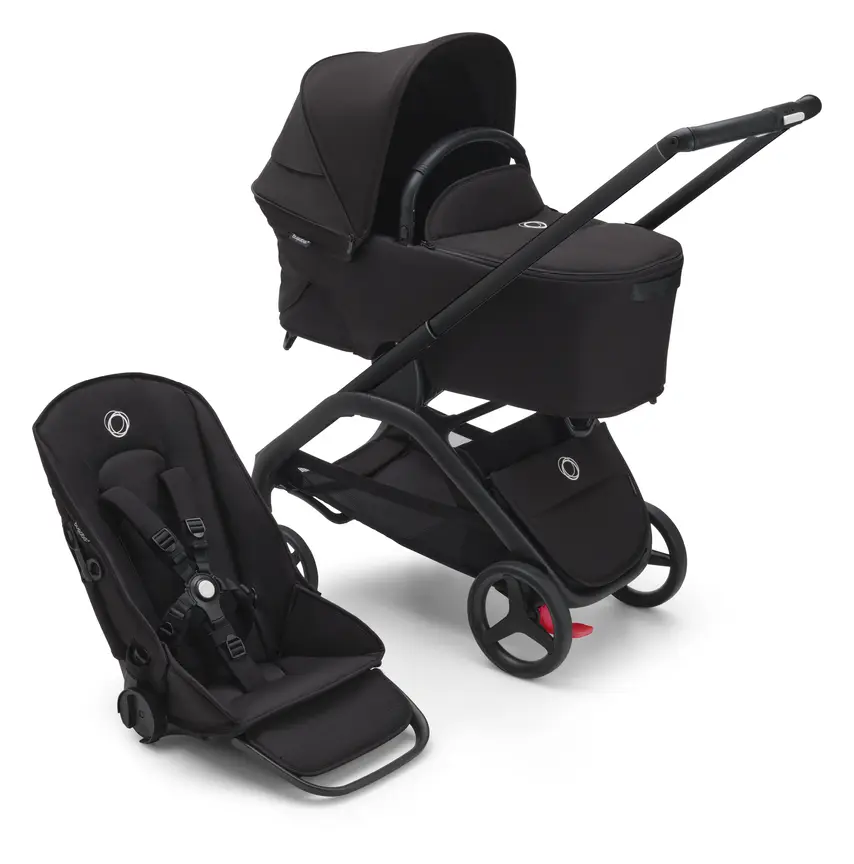
Bugaboo Dragonfly
Bugaboo's city pram: smaller footprint and lighter than the Fox, built for footpaths, lifts and car boots rather than bush tracks.


Jengo Eden Compact Stroller
A budget compact stroller from birth to 22 kg. It folds with one hand and has a big basket.
Read our full review →


Joie Aire Twin
A lower-cost side-by-side double. Each seat lies flat and reclines on its own.
Read our full review →Frequently asked questions
Can one stroller work for both the city and the suburbs?
Yes. A mid-size all-round stroller works well for many families. Look for medium foam-filled wheels, a moderate weight, and a flat-reclining seat. It will handle bumpy footpaths and still fit in most lifts and car boots. If you fly often or use stairs every day, you can add a cheap, light travel stroller later.
Do I need a bassinet for a city stroller?
You need either a bassinet or a seat that reclines fully flat. Newborns must lie flat on their backs so their airways stay open. Some compact city strollers fold flat with a newborn insert or soft cocoon. Others need a clip-on bassinet for the first six months. Check the maker's age and weight guide before you buy.
Are air-filled tyres better than foam-filled wheels?
Air-filled tyres give the softest ride on rough trails, thick grass, and gravel. However, they need pumping up and can get punctures. Foam-filled rubber wheels give a smooth ride on footpaths and parks with zero upkeep. For most suburban streets, foam-filled wheels are easier to live with.
How long can a newborn stay in a car capsule clipped to a stroller?
Keep it short. Health bodies such as the Lullaby Trust in the UK and Red Nose in Australia advise taking your baby out of a car seat when you arrive. Car capsules are handy for quick errands, not long walks or naps. For longer outings, use a flat bassinet or flat-reclining stroller.
What is better for public transport: an umbrella stroller or a compact-fold stroller?
A compact-fold stroller is usually easier to live with. Umbrella strollers fold long and thin, which can poke into seats on buses or take up boot space lengthwise. Many modern compact strollers fold into a small square that fits into tight spaces and stands on its own. Some even fit in a train luggage rack.
Is it safe to buy a second-hand stroller?
Yes, if you check it carefully first. Look up the brand and model on your national recall site (ACCC in Australia, OPSS in the UK, CPSC in the US, or Health Canada). Check that the brakes lock tightly, the five-point harness has no frays, and the frame locks securely. Skip any stroller with missing parts or broken latches.
What if I live in the suburbs but visit the city every week?
Start with your main daily routine. If you walk suburban paths five days a week and visit the city once a week, pick a suburban or mid-size stroller that still fits in your car boot. Check that its width is slim enough for city lifts and shops. That way you stay comfortable most days without struggling on weekend trips.
Sources
- Product Safety Australia – Prams and strollers guide
- Product Safety Australia – Prams and strollers mandatory standard
- Red Nose Australia – Warning on social media hacks for baby capsules
- UK Office for Product Safety and Standards
- The Lullaby Trust (UK) – Car seats
- HealthyChildren.org (American Academy of Pediatrics) – Sun safety and protection tips
- Health Canada – Recalls and safety alerts
- Caring for Kids (Canadian Paediatric Society) – Sun safety
Related guides
More Prams & Strollers →
City vs Suburbs: How to Choose a Stroller That Fits Both

Staying Fit and Active with Your Child Using a Running Pram or Jogging Stroller

Top 5 Safety Tips for Using a Bassinet Stroller with Your Baby
