








Anti-Theft Stroller Locks and Hidden Trackers for Theme Parks, Museums and Cafes
Keep your pram safe at theme parks, museums and cafes. Learn how cable locks, wheel locks and hidden trackers work, plus venue rules and child safety tips.
On this page
- Key points
- Why strollers get taken, and how locks help
- Types of stroller locks: cable locks vs wheel locks
- Where you can and cannot lock a stroller
- Hidden AirTag and tracker mounts: how they work
- How to choose a stroller lock and mount
- Using a lock safely at every age stage
- Safety standards and official guidance in Australia, the UK, the US a…
- Common mistakes parents make
- Step-by-step: how to park and lock your stroller
- Frequently asked questions
- Sources
Short answer: A stroller lock slows down thieves and stops mix-ups in busy places. Use a combination wheel lock at theme parks, because staff often need to move parked prams. Use a coated steel cable lock at cafes or museums when you can loop it to a fixed rail. Pair a lock with a hidden tracker mount, and keep the tracker battery well out of your child's reach.
No lock makes a pram theft-proof. Still, a simple lock makes your stroller much harder to grab than the unlocked one next to it.
Key points
- Pick the right lock for the place: Theme parks usually ban locking prams to fences. Lock two wheels together instead so staff can still move the stroller if needed.
- Skip keys: Choose a combination dial lock. You do not want to lose a tiny key while holding a tired child.
- Protect the frame: Pick a cable with a vinyl or rubber coat so it does not scratch the paint.
- Hide any tracker safely: Bluetooth trackers use coin batteries. Swallowing a button battery can cause severe burns inside a child's body in hours.
- Never lock a pram with a child inside: Only fit a lock when the stroller is empty and parked.
- Take valuables with you: Never leave phones, wallets, keys or cameras in the under-seat basket.
Why strollers get taken, and how locks help
Strollers are easy targets in busy family spaces. Many parents park their pram outside a ride, a gallery room or a cafe door. Scores of other prams sit in the same row.
Strollers go missing for two main reasons. The first reason is a simple mix-up. Many popular prams look almost identical in black or grey fabric. A tired parent can grab the wrong stroller by mistake.
The second reason is quick theft. Someone walks past, sees an unlocked pram, and wheels it away in seconds. In a crowd, nobody notices one more adult pushing a stroller.
A lock stops both problems right away:
- It stops mix-ups: When a wheel will not roll, another parent spots the mistake at once.
- It slows down thieves: Most thieves want an easy target. If your stroller cannot roll, or is tied to a post, they usually move on.
- It buys you time: Even a light cable takes tools and time to cut.
Prams & Strollers worth a look
Real products from our catalogue. We don't show star ratings or review counts; check the current price, stock and reviews on Amazon before you buy.
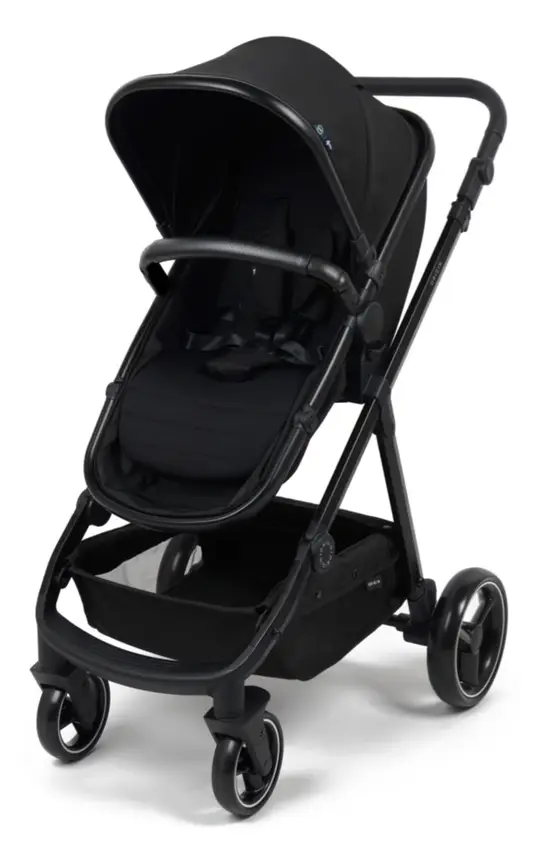
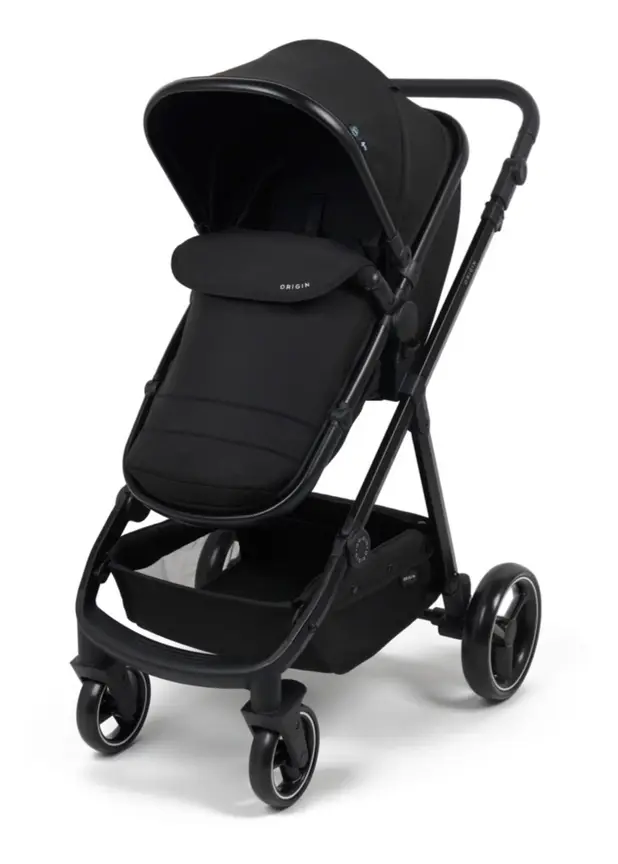
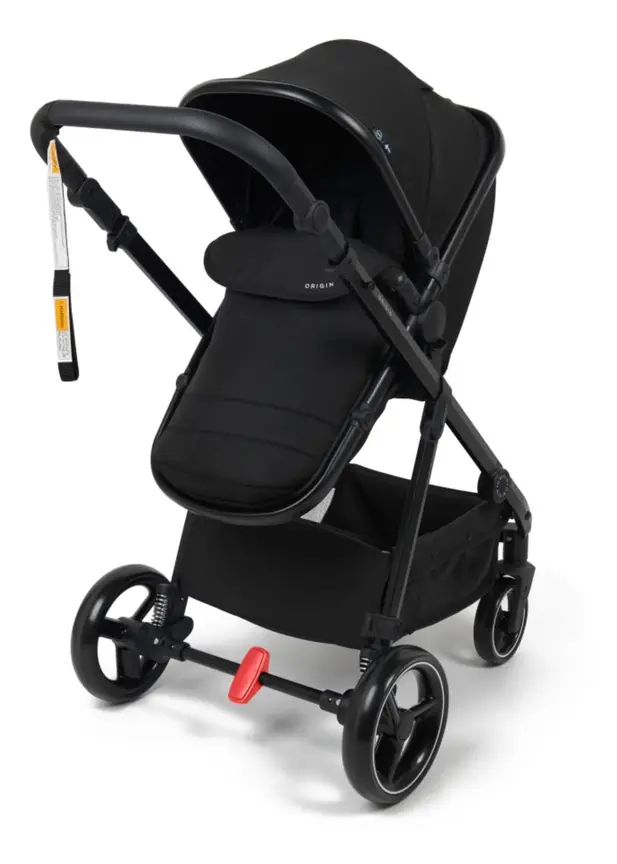
4baby Origin Stroller
A budget pram whose seat turns into a bassinet. The seat can face you or face the world.
Read our full review →
Baby Jogger City Mini GT2
Long-running, lighter all-terrain stroller with a famously simple one-hand strap fold.
 Reviewed
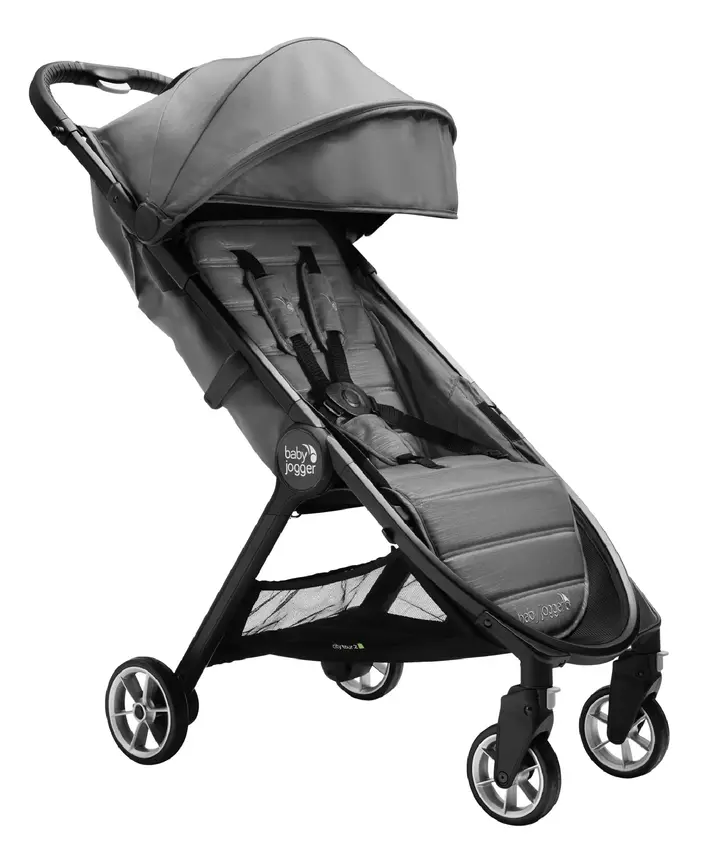
Baby Jogger City Tour 2
A 6.5 kg stroller with a near-flat recline. It folds small and comes with a carry bag.
Read our full review →
Types of stroller locks: cable locks vs wheel locks
Not all stroller locks work the same way. Some tie your pram to a solid object. Others stop the wheels from turning. A hidden tracker does not lock anything, but helps you find a missing pram.
Retractable combination cable locks
A retractable cable lock has a thin steel wire coiled inside a small plastic case. You pull the wire out, loop it through a frame bar and a fence, and click it into the lock body. A 3-digit or 4-digit dial sets the code.
These locks are light and fit in a pocket or nappy bag. They are best for quick cafe stops or stopping casual mix-ups. However, the thin wire is easy to snip with small wire cutters. Do not rely on one for long periods out of sight.
Coated steel cable locks
A heavier cable lock uses thicker braided steel covered in soft plastic or vinyl. Some are built like small bike locks with a built-in combination dial. Others are separate looped cables used with a small padlock.
Thicker cables are much harder to cut than thin retractable wires. They work well outside cafes, libraries and small shops where you can see the pram or lock it to a bike rack. The downside is extra weight in your bag.
Wheel and brake locks
A wheel lock stops the pram from rolling freely. You loop a short cable, strap or mini U-lock through the spokes of a rear wheel and around the frame. You can also lock two rear wheels together on a compact stroller.
This is the best style for theme parks. A thief cannot push the pram away smoothly. Yet a staff member can still tilt the stroller on its front wheels and roll it a few metres if they need to clear a path.
Hidden Bluetooth tracker mounts
A tracker mount holds a small Bluetooth tag, such as an AirTag or Tile, out of sight on the stroller frame. It does not stop someone from taking the pram. Instead, it sends a signal to nearby phones so you can see where the pram went on a map.
| Option | How it works | Best place to use it | Main limit |
|---|---|---|---|
| Retractable cable lock | Thin steel wire pulls out and locks with a dial | Short cafe stops, museums, stopping mix-ups | Thin wire can be cut with small tools |
| Thick coated cable lock | Heavy braided steel cable loops around a post | Bike racks, cafe patios, quiet streets | Heavier to carry; banned on theme park rails |
| Wheel or frame lock | Locks a rear wheel to the stroller frame | Theme parks, zoos, busy stroller bays | Someone could still lift the pram into a car |
| Hidden tracker mount | Hides a Bluetooth tag on the pram frame | Everywhere, alongside a physical lock | Does not stop theft; relies on nearby phones |
Where you can and cannot lock a stroller
Different venues have very different rules about parked prams. Knowing these rules saves you from coming back to a cut lock or a moved stroller.
Theme parks and zoos
Large theme parks have strict rules for stroller parking. Staff mark out painted parking zones near rides and shows. They often move prams around to keep fire exits and walkways clear.
Most major theme parks forbid locking a stroller to a fence, railing, bench or lamppost. If you lock your pram to a fixed rail, security staff may cut the lock to move it. They do this for crowd safety.
The smart fix at theme parks is a wheel lock. Loop a short cable through one back wheel and around the frame strut. Or lock the two back wheels together. Leave the front wheels free so staff can still tilt and shift the pram inside the bay.
Also keep your stroller easy to spot. A bright ribbon or luggage tag on the handle stops someone from taking yours by mistake.
Museums and art galleries
Many museums let you push a stroller through the rooms. Some historic buildings or busy special shows ask you to park prams outside the gallery.
Look for a staffed cloakroom or indoor stroller bay first. If the museum only has an open hallway bay, check with a staff member before locking to a handrail. Many museums treat handrails as safety exits and ask you not to block them.
If there is no fixed post you can use, a wheel lock works well indoors too. It keeps the pram from rolling away and stops accidental swaps.
Cafes and restaurants
Small cafes often have little room indoors for big prams. Staff may ask you to leave the stroller near the front door or on the outdoor patio.
Try to sit where you can see the stroller through the window. If you must park outside, use a coated cable lock around a sturdy table leg, bike rack or fixed fence. Check that the object cannot just be lifted over the top of the lock.
Do not block the footpath or doorway. Leave plenty of room for wheelchairs and other prams to pass.
Hidden AirTag and tracker mounts: how they work
A hidden tracker adds a second layer of protection. If a thief cuts a cable or carries a wheel-locked pram away, a tracker helps you and venue security locate it.
How Bluetooth trackers find a lost pram
Popular trackers do not use GPS satellites or mobile phone SIM cards. Instead, they send out a quiet Bluetooth signal. When someone else's phone walks past, that phone notes the location and sends it privately to your account.
This works very well in crowded places like theme parks, shopping centres and city museums. Hundreds of phones pass by every hour, so the map updates often.
Where to hide a tracker mount
If a thief sees a tracker dangling from the handlebar like a keyring, they will pull it off and drop it. A good mount hides the tag so it looks like part of the pram.
Common hiding spots include:
- Under the seat base: Screwed or zipped inside the fabric under the seat pan.
- Inside the under-seat basket trim: Tucked inside a zip pocket or sewn into a seam.
- Behind a frame joint: Clamped with tamper-resistant screws on the rear axle or lower frame tube.
- Inside a bottle holder or organiser mount: Built into a plastic bracket with hidden bolts.
Avoid hiding a tracker inside thick metal tubes. Metal blocks Bluetooth signals and cuts the range.
Warning: button battery safety
Most small Bluetooth trackers run on a coin-shaped lithium button battery. This is a serious hazard for babies and toddlers.
If a child swallows a button battery, it can burn through the throat or food pipe in as little as two hours. This can cause life-threatening injury or death. Product Safety Australia, the UK Office for Product Safety and Standards, the US Consumer Product Safety Commission and Health Canada all warn parents about coin batteries.
Follow these rules if you put a tracker on a pram:
- Choose a mount that locks shut with screws, not a snap-open plastic case.
- Never stick a tracker with glue or tape where a child can peel it off.
- Place the mount out of reach of the child sitting in the seat.
- Check the mount every week to make sure it is still tight and unbroken.
- Keep spare coin batteries locked high up at home, never loose in your nappy bag.
How to choose a stroller lock and mount
Look for practical features that match how you actually travel with a baby.
Dial locks vs key locks
A 3-digit or 4-digit combination lock is much easier for parents than a key lock. You can open it with one hand while holding a baby. You never have to dig through a nappy bag for a lost key.
Pick a lock with large, clear numbers that are easy to read in dim light. Avoid tiny dials that stick or jam when wet.
Cable coating and length
Bare steel wire will scratch aluminium and painted stroller frames fast. Always choose a cable wrapped in smooth vinyl, silicone or fabric.
Think about length too. A short 45 to 60 centimetre cable is neat for locking a wheel to the frame. A longer 90 to 120 centimetre cable is better if you need to loop around a thick post or lock two strollers together.
Weight and size
Heavy bike U-locks offer strong security, but they are bulky to carry all day at a zoo or museum. Most parents do better with a compact steel cable lock or a light frame lock that clips to the stroller basket when not in use.
Weather resistance
Strollers go out in rain, dust and beach sand. Look for locks with sealed dials or a small sliding cover over the keyhole or numbers. Wet grit can jam cheap metal springs.
Tracker mount fasteners
If you buy a bolt-on tracker mount, check how it attaches. Mounts that use security screws (such as hex or star-shaped heads) are harder for a thief to remove quickly. They are also much safer around curious toddlers than Velcro straps or clips.
Side by side: more prams & strollers to compare
Real products from our catalogue. We don't show star ratings or review counts; check the current price, stock and reviews on Amazon before you buy.
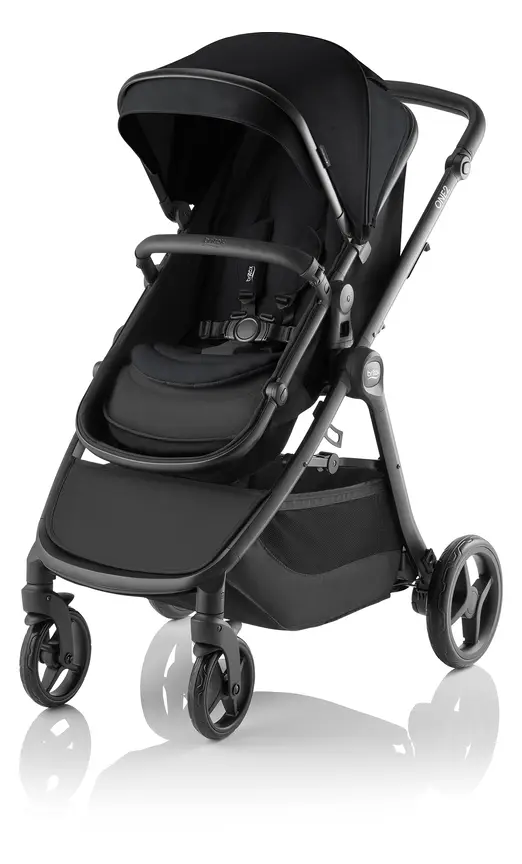
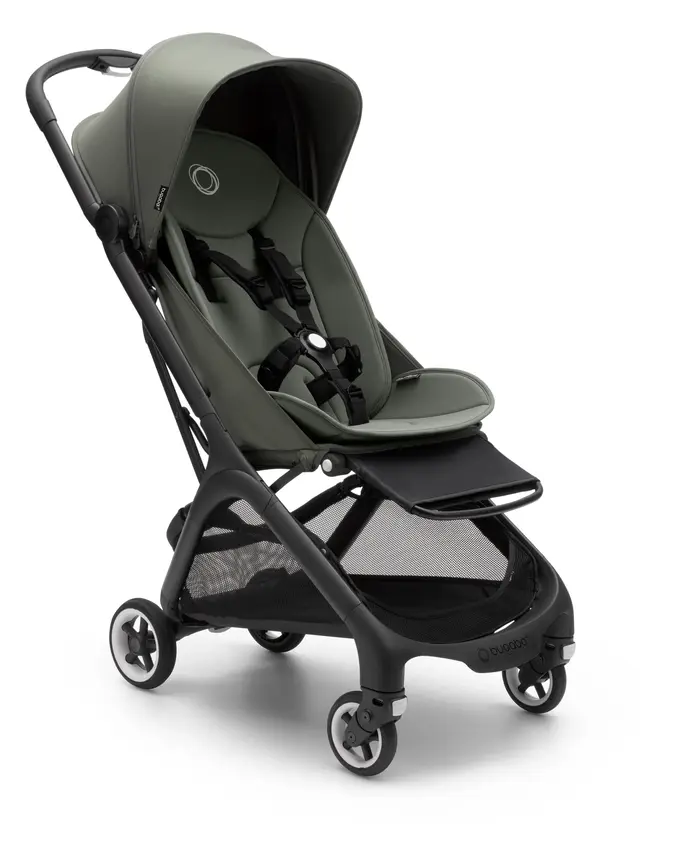


Bugaboo Butterfly
Bugaboo's cabin-friendly compact stroller with a one-second fold — the travel partner to a Fox, not a replacement for it.
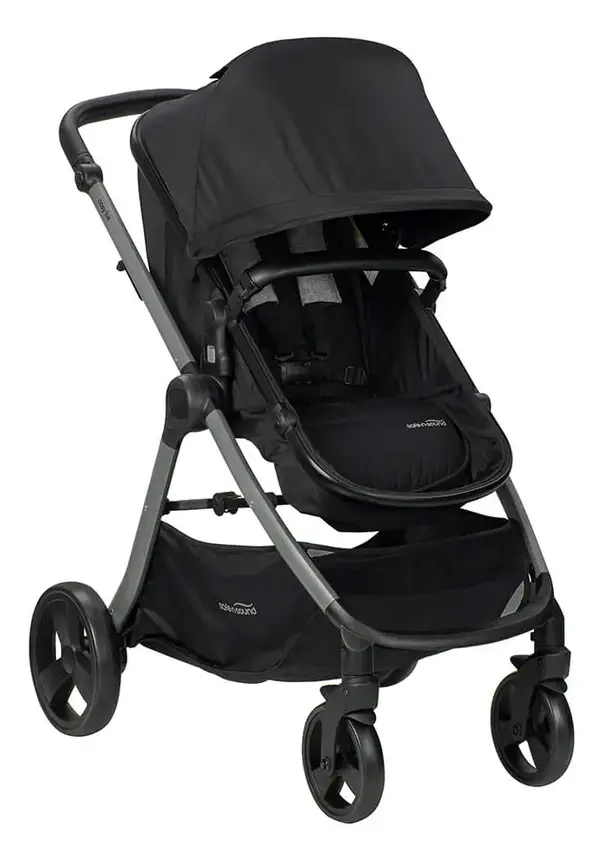
Bugaboo Butterfly 2
The newer Butterfly. It folds in about one second, has a lay-flat seat and a bigger basket with a back pocket.
Read our full review →Using a lock safely at every age stage
Your baby's age changes how you use a stroller and what hazards you need to watch for.
Newborn to 6 months (bassinet and capsule stage)
At this stage, your baby lies flat in a bassinet or sits in a rear-facing car capsule. You will rarely leave the pram out of sight for long, because your baby needs you close by.
Keep any lock stored inside the under-seat basket while walking. Never clip a heavy lock to the handlebar. Hanging weight on the handle can make a stroller tip backwards, especially with a small baby.
Always take your baby out before fitting a lock. Never leave a sleeping baby unattended in a locked pram.
6 to 12 months (sitting and grabbing stage)
Babies at this age love to reach out, grab and put things in their mouths. If you use a cable lock, store it in a zipped pocket when you are pushing the pram.
Do not let a cable dangle near the seat sides. Your baby could chew on the plastic coating or get fingers caught in a loop.
Make sure any hidden tracker mount is far from your baby's hands and feet. Under the rear axle or inside a zipped under-seat pouch is safer than the side of the seat frame.
1 to 3+ years (toddler stage)
Toddlers climb in and out of strollers on their own. They also love playing with numbers, dials and clasps.
Check that your lock cannot pinch little fingers. Keep combination locks tucked away when not in use so your toddler does not spin the dials and accidentally reset your code.
When parking at a cafe or museum, wind up any slack cable neatly. Loose loops on the ground are a trip hazard for toddlers running nearby.
Safety standards and official guidance in Australia, the UK, the US and Canada
There is no single safety standard written just for stroller cable locks. However, adding a lock or tracker to a pram still touches real baby gear safety rules.
Official product safety bodies in all four countries set strict rules for prams and for small parts like button batteries:
| Country | Main safety bodies | Pram standard | Key rules to know for locks and trackers |
|---|---|---|---|
| Australia | ACCC / Product Safety Australia, Kidsafe, Standards Australia | AS/NZS 2088 | Prams must have working brakes and a tether strap. Button battery products face strict laws for secure, screw-shut cases. |
| United Kingdom | OPSS (Office for Product Safety and Standards), RoSPA, GOV.UK | BS EN 1888 | Pushchairs must stay stable and free of finger traps or loose cords. Check OPSS alerts before buying cheap unbranded locks or mounts. |
| United States | CPSC (Consumer Product Safety Commission), AAP (American Academy of Pediatrics) | ASTM F833 | Strollers must meet federal tip-over, brake and pinch rules. Coin-battery items must have child-resistant compartments. |
| Canada | Health Canada, Parachute, Canadian Paediatric Society | Canadian stroller rules | Strollers are checked for frame strength, brakes and small parts. Check Health Canada recalls for unsafe battery mounts or cords. |
Here is what those standards mean in daily life:
- Do not drill the frame: Never drill holes into your stroller's metal tubes to fit a lock or tracker mount. Drilling weakens the frame and can void the safety warranty under AS/NZS 2088, BS EN 1888 or ASTM F833.
- Use your pram's own brakes: A wheel lock does not replace the foot brake. Always engage the stroller brake when stopped, and use the wrist tether strap on slopes.
- Watch for pinch and cord hazards: Long cords or loose loops near a child's seat can trap fingers or create a strangulation risk. Only fit a cable lock after your child is out of the pram.
- Buy from trusted sellers: Cheap, unbranded tracker cases sold online sometimes pop open easily if dropped. That leaves a deadly coin battery on the ground. Buy mounts with real screws from trusted brands.
Common mistakes parents make
Even careful parents run into trouble with stroller locks. Watch out for these common traps.
Locking to a fence at a theme park
It feels natural to chain your pram to a metal rail near a ride. At most theme parks, this breaks park rules. Staff move parked prams all day to keep paths clear. If your pram is chained to a fence, staff may cut the lock and move the pram to a holding area.
Using the factory default code
Many combination locks ship with the code set to 000 or 0000. Some parents forget to change it. Anyone who walks up can open the lock in two seconds. Set your own code as soon as you open the box.
Leaving bags and phones in the basket
A lock keeps the stroller frame safe, not the things sitting inside it. An open under-seat basket is easy to reach into. Always take your handbag, wallet, camera, phone and keys with you when you walk away.
Putting the tracker in an obvious spot
Clip-on keyrings and bright silicone tags tell a thief straight away that a tracker is there. They will simply unclip it and toss it in a bin. Hide the tracker inside a bolted mount or deep inside a sewn seam.
Forgetting to unlock before lifting
If you lock a back wheel to the frame, remember to unlock it before you fold the stroller or push it away. Forcing a locked wheel can bend plastic spokes or snap brake teeth.
Letting the cable wrap around brake lines
Some prams have thin brake cables running along the back axle. Never pull a tight steel lock against those brake wires. Loop the lock around a solid metal frame tube and a wheel spoke instead.
Step-by-step: how to park and lock your stroller
- Take your child out first. Never lock a stroller while a baby or toddler is in the seat.
- Grab your valuables. Take phones, wallets, keys and cameras in a small crossbody bag. Leave only bulky items like spare clothes or water bottles in the basket.
- Put the pram brake on. Always set the main foot brake so the stroller cannot roll into traffic or down a slope.
- Pick the right lock method. At a theme park or museum bay, loop the cable through one rear wheel and a solid frame bar. At a cafe, loop it around a fixed bike rack or heavy post if allowed.
- Keep the dial facing up. Spin the numbers so the lock is set, and tuck any extra cable away from passers-by.
- Add a clear visual marker. Tie a bright ribbon or name tag on the handle so other parents do not mistake your pram for theirs.
More options, from budget to premium
Real products from our catalogue. We don't show star ratings or review counts; check the current price, stock and reviews on Amazon before you buy.


Jengo Eden Compact Stroller
A budget compact stroller from birth to 22 kg. It folds with one hand and has a big basket.
Read our full review →


Joie Aire Twin
A lower-cost side-by-side double. Each seat lies flat and reclines on its own.
Read our full review →
Joie Nitro Stroller
A light, low-cost umbrella stroller with a flat recline, so it works from birth.
Frequently asked questions
Can I lock my stroller to a fence at a theme park?
Usually no. Most theme parks and zoos ask parents not to lock strollers to fences, rails or benches. Staff need to move parked prams to keep paths and emergency exits open. Instead, lock one rear wheel to the stroller frame so a thief cannot push it away easily, while staff can still tilt and shift it.
What is the best lock for a stroller at a cafe or museum?
A coated steel combination cable lock works best for cafes and museums. At a cafe, you can loop it around a bike rack or fixed rail while keeping your pram in sight. Inside a museum bay where rails are off-limits, you can use the same cable to lock a rear wheel to the frame.
Are AirTag mounts safe to put on a baby stroller?
They can be safe if you choose and place them carefully. Trackers use coin-shaped button batteries, which are a severe swallowing hazard for young children. Only use a mount that closes with screws, never a snap-on case or Velcro pouch. Put it under the seat or near the rear axle where your child cannot reach it.
Can a stroller lock stop someone from stealing my pram?
A lock will stop casual theft and accidental mix-ups, which are the most common problems. It will not stop a determined thief carrying heavy bolt cutters or loading a pram straight into a van. Using a lock plus a hidden tracker gives you the best protection without carrying heavy bike chains.
Will a cable lock scratch my stroller frame?
A bare metal wire or chain will scratch painted aluminium quickly. Choose a lock with a thick vinyl, rubber or fabric sleeve over the steel cable. Loop it gently without dragging metal lock heads across the frame.
What should I do if my stroller goes missing?
First, look around the nearby rows, as venue staff often move prams to tidy up a bay. Next, check your tracker app if you have one fitted. Tell venue security or guest services right away, and give them a photo of your stroller and any unique tags on it. If it was clearly stolen, report it to local police with the serial number from the frame sticker.
Sources
- Product Safety Australia – Prams and strollers guide
- Product Safety Australia – Button batteries guide
- UK Office for Product Safety and Standards
- UK Government – Buy safe, be safe
- AAP HealthyChildren.org – Safety for your child: 2 to 4 years
- Health Canada – Recalls and safety alerts
- Get Cyber Safe (Government of Canada) – Cyber security tips for your baby gear
Related guides
More Prams & Strollers →
Stroller Wagons vs Double Strollers: How to Choose for Daily Trips and Theme Parks

Theme Park Stroller Size Rules (31 x 52 Inch Max): Why Wagons Are Banned and How to Prep
Anti-Spill Stroller Cup Holders: Why Hot Coffee Needs an Enclosed Sleeve