









Pram Suspension vs Frame Flex: Smoothing Out Cobblestones and Gravel
Compare all-wheel spring suspension and frame-flex elastomers in prams. Learn how each handles gravel and cobblestones, plus safety rules.

On this page
- Key points
- What pram suspension does
- What all-wheel independent spring suspension is
- What frame-flex elastomers are
- Side-by-side comparison: spring suspension vs frame flex
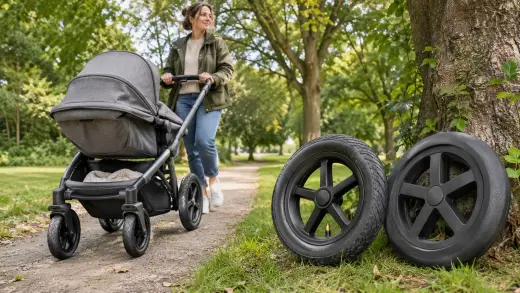
- Wheels and tyres matter just as much
- How suspension affects your baby by age
- How to test pram suspension in a shop
- Safety standards in Australia, the UK, the US and Canada
- Common mistakes parents make
- Frequently asked questions
- Sources
Short answer: All-wheel independent spring suspension uses a metal coil spring at each wheel. It absorbs big drops, kerbs, and deep gravel ruts best. Frame-flex elastomers are rubbery blocks built into the pram frame. They take the sting out of small, fast buzz on footpaths and cobblestones. If you walk mostly on rough tracks or gravel, pick all-wheel springs with large wheels. If you walk mostly on paved streets and old cobbles, frame-flex keeps the pram lighter and still softens the rattle.
Suspension also works alongside wheel size and tyre type. A pram with tiny hard wheels will still shake on gravel, even with springs. Safety rules for prams are set by the ACCC in Australia, the Office for Product Safety and Standards in the UK, the CPSC in the US, and Health Canada.
Key points
- Spring suspension: Metal coils at each wheel compress over bumps. Each wheel moves on its own.
- Frame-flex elastomers: Soft, bouncy blocks sit in the frame joints. They soak up tiny shakes and buzz.
- Big bumps vs small buzz: Springs handle potholes and kerbs better. Elastomers handle cobbles and rough concrete well.
- Weight trade-off: All-wheel springs add weight and bulk. Frame-flex keeps the folded pram lighter.
- Wheels matter most: Large, air-filled or foam-filled tyres do half the work on gravel.
- Safety first: Always check brakes, harness, and frame locks before you worry about ride feel.
What pram suspension does
When you push a pram over smooth shop floors, any frame feels great. Outdoors, the ground is rarely flat. Footpaths have cracks, tree roots, and raised edges. Old streets have cobblestones. Parks have loose gravel and grass.
Without suspension, every stone sends a jolt straight up the wheel. That jolt travels through the metal frame into the seat or bassinet. Your baby feels the bounce and rattle. Your hands and wrists also feel the buzz through the handlebar.
Suspension sits between the ground and your baby. Its job is to slow down and soften those jolts. It turns a sharp knock into a gentle rise and fall.
Two kinds of bumps
Rough ground creates two very different kinds of movement. Understanding both helps you pick the right pram.
- Big, single hits: Dropping off a kerb, rolling over a thick tree root, or hitting a pothole. The wheel needs room to move up and down.
- Fast, small buzz: Rolling over cobblestones, brick paving, or fine gravel. The wheel hits dozens of tiny ridges every second.
No single design solves both problems perfectly on a light frame. That is why pram makers choose between springs, frame flex, or a mix of both.
Prams & Strollers worth a look
Real products from our catalogue. We don't show star ratings or review counts; check the current price, stock and reviews on Amazon before you buy.
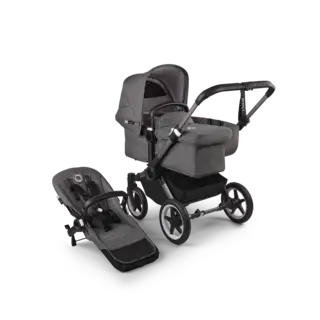
Bugaboo Donkey 5
Converts from single to side-by-side double (siblings or twins) by widening the frame.
 Reviewed
Bugaboo Fox 5
Bugaboo's flagship all-terrain pram: big-wheel suspension ride, one-piece fold, bassinet from birth and a seat rated to 22 kg.
Read our full review →
Maxi-Cosi Zelia 3
A mid-price pram with a carrycot that changes into a seat, so one frame covers birth to toddler.
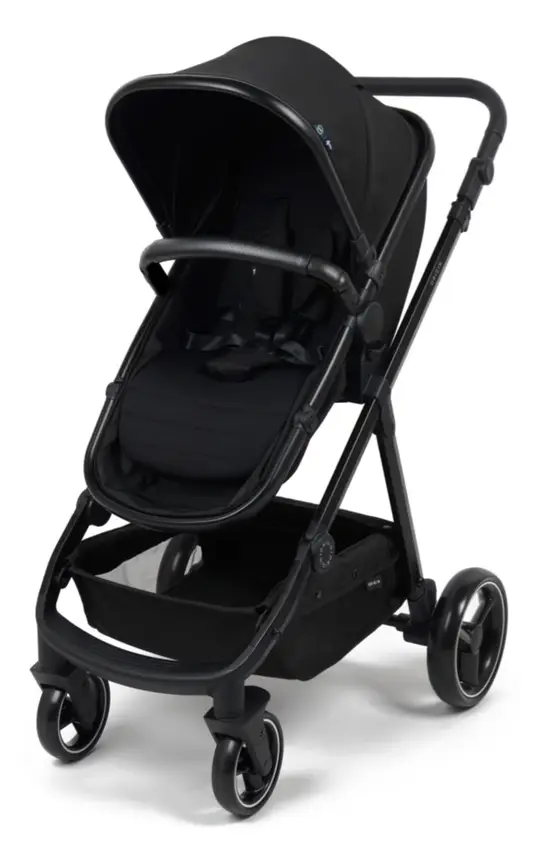
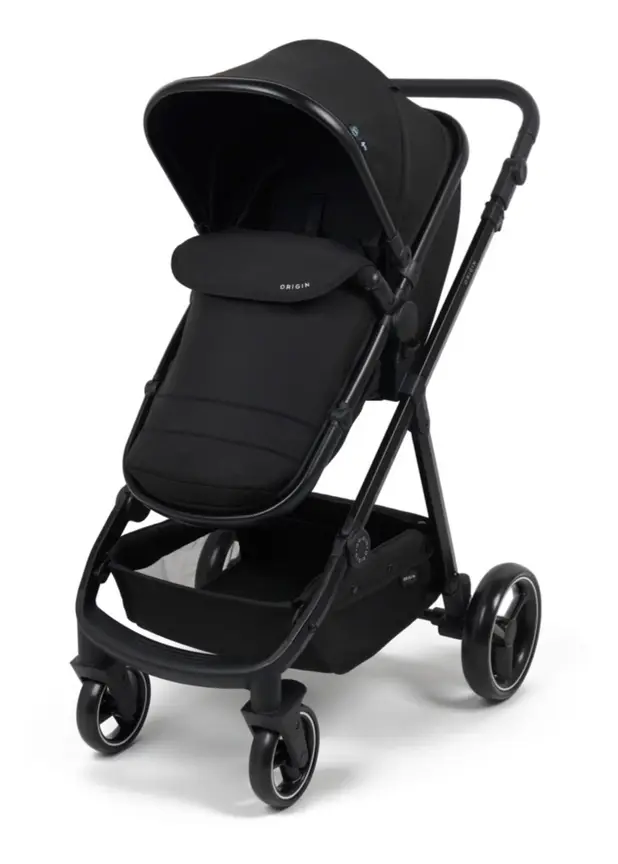
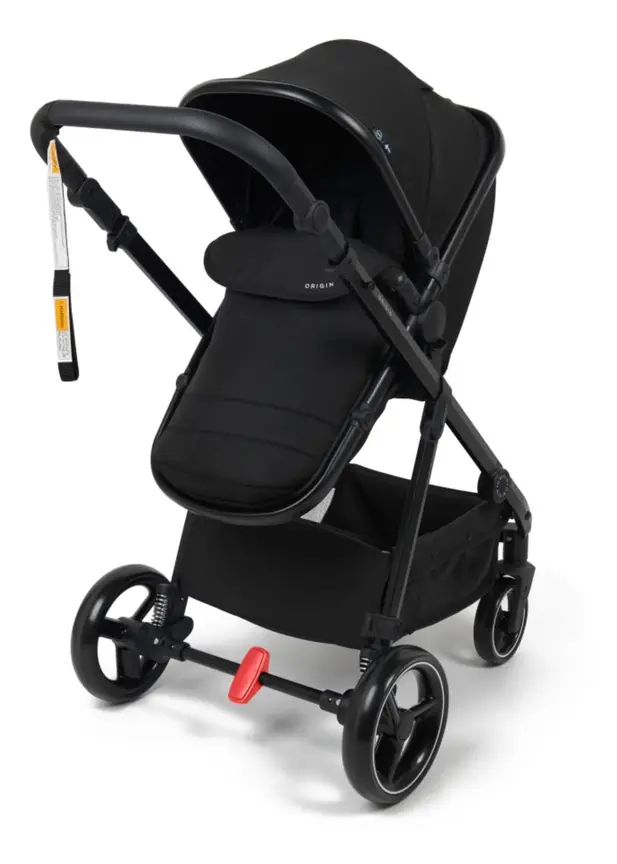
4baby Origin Stroller
A budget pram whose seat turns into a bassinet. The seat can face you or face the world.
Read our full review →What all-wheel independent spring suspension is
All-wheel independent spring suspension means each wheel has its own shock absorber. Usually, this is a metal coil spring tucked inside or near the wheel hub. "Independent" means the front-left wheel can bounce over a stone without lifting the front-right wheel.
When a wheel hits a rock, the spring squeezes down. The wheel moves up into its housing, while the pram frame stays much steadier. Once the wheel passes the rock, the spring pushes it back down onto the path.
Where spring suspension shines
Springs have more travel than rubber blocks. "Travel" just means how far the wheel can move up and down. More travel helps on uneven ground.
- Loose gravel and dirt tracks: Each wheel tracks the bumps on its own side. The bassinet stays level.
- Deep kerbs and steps: Springs cushion the landing when you drop the front wheels down.
- Heavy loads: Springs keep working well when your toddler grows heavier or the basket is full.
The downsides of all-wheel springs
Metal springs and strong wheel forks add weight. An all-terrain pram with four big spring units is harder to lift into a car boot. It also takes up more space when folded.
Open springs can trap grit, sand, and dried mud. If you walk near the beach or on muddy trails, you need to rinse and wipe them. Otherwise, they can start to squeak or feel stiff.
What frame-flex elastomers are
An elastomer is a tough, rubber-like plastic that bends and bounces back. Instead of metal coils at the wheels, some prams build elastomer blocks right into the frame joints or axles. You might see a small grey or black pad where the seat arm meets the main tube.
As you push over rough paving, the frame flexes slightly against these pads. The rubbery block squeezes a tiny bit and absorbs the energy. It acts like the cushioned sole of a running shoe.
Where frame-flex elastomers shine
Cobblestones and brick paths create fast, rhythmic shaking. A stiff metal frame rattles loudly on these surfaces. Elastomers excel at soaking up this high-speed buzz before it reaches the seat.
- Lighter weight: Rubber blocks weigh far less than four metal coil units.
- Compact fold: Without bulky spring housings, the frame folds flatter and narrower.
- Simple upkeep: There are no open coils to trap mud or rust in wet weather.
The downsides of frame-flex elastomers
Elastomers only compress a few millimetres. When you hit a big tree root or a deep gravel rut, the block hits its limit fast. You will feel a firmer thud than you would with long-travel springs.
Some rubbery materials also feel firmer in freezing winter air. If you live in a cold part of the UK, the US, or Canada, a frame-flex pram can feel stiffer in January than in July. Over many years of hard use, elastomer blocks can also flatten out or crack.
Side-by-side comparison: spring suspension vs frame flex
This table shows how the two systems compare in daily family life.
| Feature | All-wheel independent springs | Frame-flex elastomers |
|---|---|---|
| How it works | Metal coil spring at each wheel moves up and down | Rubbery blocks in frame joints flex slightly |
| Best surfaces | Gravel paths, grass, dirt trails, kerbs | Cobblestones, brick paths, cracked footpaths |
| Big bump handling | Strong; wheel moves freely over large stones | Limited; small movement range hits its limit |
| Small buzz dampening | Good, especially with soft tyres | Very good at stopping frame rattle |
| Pram weight | Usually heavier due to metal hardware | Usually lighter and easier to lift |
| Folded size | Often bulkier around the wheel arches | Cleaner, flatter fold for small car boots |
| Cleaning and care | Needs grit and sand wiped from springs | Very little upkeep; wipe with a damp cloth |
| Cold weather feel | Metal springs work the same in cold air | Some elastomers stiffen in freezing weather |
| Heavy toddler loads | Holds up well under higher weight | Can feel bottomed out if overloaded |
Many mid-size prams now use a mix of both. For example, a pram might have coil springs on the back wheels and small elastomer blocks or short springs on the front. This gives a useful middle ground for city parents who visit parks on weekends.
Wheels and tyres matter just as much
Suspension cannot fix bad wheels. Before you decide between springs and frame flex, look closely at the tyres and wheel size.
Wheel size
Large wheels roll over gaps and stones much more easily than small wheels. Think of a bike wheel compared to a shopping trolley wheel. A small front wheel drops into every crack between cobblestones. A large wheel bridges right across the gap.
If you walk on gravel often, look for large rear wheels and medium-to-large front wheels. Small wheels belong on smooth airport floors and shopping centres.
Tyre material
- Air-filled rubber tyres: These act like extra suspension. Air inside the tube squishes over stones and softens cobblestones. The downside is that they can get punctures and need pumping up.
- Foam-filled rubber tyres: These have a rubber outer tread with solid foam inside. They never go flat. They soften buzz fairly well, though not quite as softly as air tyres.
- Hard plastic or thin EVA foam wheels: These are very light and cheap. On cobblestones or gravel, they chatter loudly and pass every shake into the frame.
Front swivel locks
Front wheels usually swivel so you can steer with one hand. On loose gravel or deep cobbles, a swivelling wheel can catch on a stone and twist sideways. That stops the pram dead and shakes your baby.
Most outdoor prams have a switch to lock the front wheels straight ahead. Locking them stops the sideways wobble on rough paths. Just remember to unlock them when you get back to smooth pavements so you can turn easily.
Side by side: more prams & strollers to compare
Real products from our catalogue. We don't show star ratings or review counts; check the current price, stock and reviews on Amazon before you buy.


Britax One2
A pram that starts as a single and can take a second child. The seat turns into a lie-flat bassinet.
Read our full review →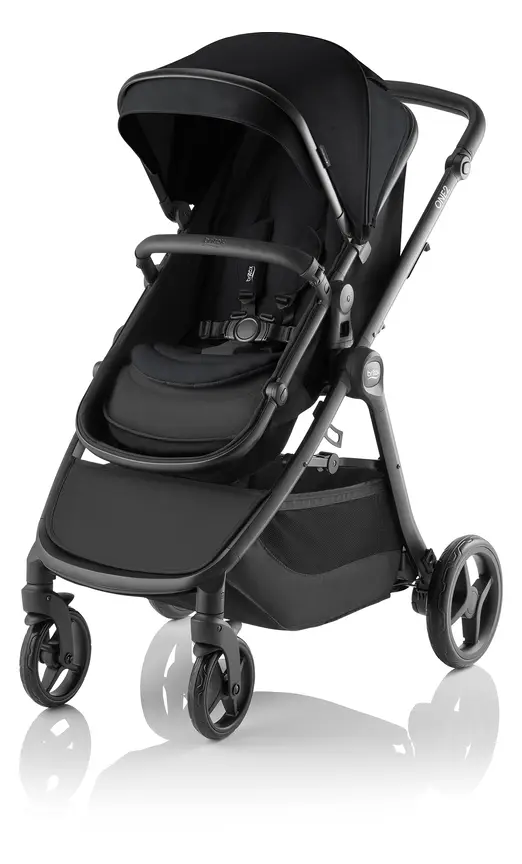
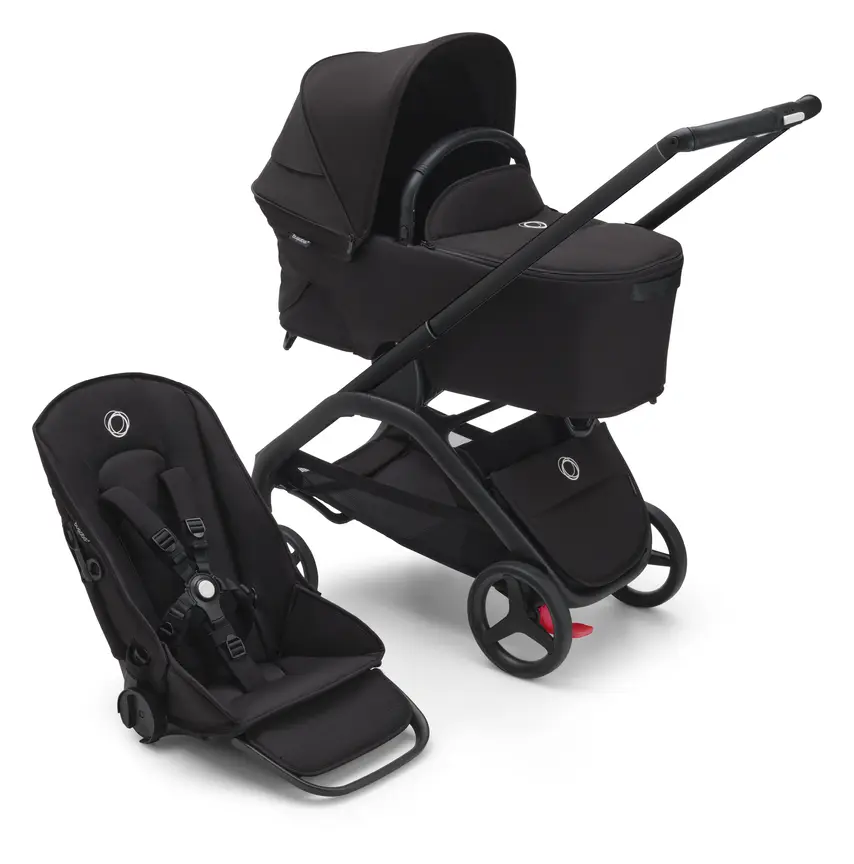
Bugaboo Dragonfly
Bugaboo's city pram: smaller footprint and lighter than the Fox, built for footpaths, lifts and car boots rather than bush tracks.
How suspension affects your baby by age
Your baby's neck, spine, and weight change fast in the first two years. What matters in a pram changes with them.
Newborn to 3 months
A newborn has very weak neck muscles and a heavy head. They cannot hold their head steady against sharp bounces. They also need to lie flat on a firm surface so their airway stays open.
At this age, a lie-flat bassinet or carrycot is safest for walks. Good suspension and soft tyres keep the bassinet from jostling your baby's head side to side. Never let a newborn sleep unsupervised in a pram seat or car capsule, even if the ride feels smooth.
3 to 6 months
Your baby starts to gain head control, though they still tire easily. If you move from a bassinet to a seat, check that it reclines deeply. Gentle suspension helps prevent their head from nodding forward when you cross a kerb or rough paving.
6 to 12 months
Most babies can sit up with support by this stage. They love looking out at trees and dogs. A smooth ride means fewer sudden jolts while they snack on soft finger foods or try to nap on the move. Keep the five-point harness snug at all times, especially on bumpy tracks.
Toddlers (12 months and up)
Toddlers weigh much more, and you probably carry more gear in the basket. On a lightweight frame-flex pram, extra weight can squash the rubber blocks flat. All-wheel springs usually cope better with a 15 kg child plus a heavy nappy bag.
How to test pram suspension in a shop
Shop floors are smooth, so every pram glides like silk indoors. You have to work a little harder to test how it will handle cobblestones and gravel.
- Do the push-down bounce test: Push down firmly on the handlebar, then press on the front seat frame. Watch the wheels. You should see the springs or frame blocks compress and rebound smoothly without a loud clunk.
- Test one side at a time: Lift one front wheel over a raised mat or the edge of a display platform. Does the whole pram tip stiffly, or does that wheel tuck up on its own?
- Listen for rattles: Shake the pram gently side to side. Loose plastic clips, rattling brakes, or wobbly fold joints will sound ten times louder on cobblestones.
- Feel the handlebar: Tap the front wheels against a doorway lip. Notice how much of that shock travels into your palms.
- Check the fold and weight: Fold the pram yourself and lift it to waist height. A dreamy suspension system does not help if the pram is too heavy for your back every day.
- Try with real weight: Ask the shop staff if you can place a weighted bag in the seat. An empty pram bounces differently from a pram carrying a baby.
Safety standards in Australia, the UK, the US and Canada
Suspension should never come at the cost of basic safety. A safe pram needs strong brakes, a secure five-point harness, safe fold locks, and no finger-trap gaps. Check the official rules for your country before you buy.
| Country | Official safety body | Standard or rule to look for | Key things checked |
|---|---|---|---|
| Australia | ACCC (Product Safety Australia) | AS/NZS 2088 | Parking brake strength, five-point harness, tether strap, safe fold locks, stability |
| United Kingdom | Office for Product Safety and Standards (OPSS) | BS EN 1888 | Frame strength, brakes, harness security, tipping stability, small parts |
| United States | Consumer Product Safety Commission (CPSC) | ASTM F833 | Latch locks, brake holding, restraint straps, pinch hazards, stability |
| Canada | Health Canada | Carriages and Strollers Regulations | Frame locks, wheel strength, brake performance, restraint straps, warning labels |
In Australia, a pram must also include a wrist tether strap so the pram cannot roll away from you on a slope. In every country, check recall lists before buying a second-hand pram. Old prams can have worn frame-flex blocks, cracked wheel hubs, or recalled fold hinges.
Red Nose Australia, The Lullaby Trust in the UK, the American Academy of Pediatrics, and Caring for Kids in Canada all share one vital sleep rule. A pram is for moving your baby, not for long, unsupervised sleep. Always keep your baby's face clear, buckle the harness, and move a sleeping baby to a firm, flat cot or bassinet when you get home.
Common mistakes parents make
Even careful shoppers get caught out by marketing words on pram boxes. Watch out for these common traps.
- Trusting the "all-terrain" label: Many small city strollers claim to have all-wheel suspension. If the springs are tiny and the wheels are hard plastic, they will still chatter on gravel.
- Ignoring wheel size: Buying a pram for its fancy suspension while ignoring tiny front wheels leads to stuck wheels on cobbles.
- Forgetting the front swivel lock: Leaving front wheels unlocked on rough gravel makes the pram veer sideways and shake.
- Overloading the basket: Packing heavy groceries under the seat pushes the suspension down before you even start walking. That leaves less travel for bumps.
- Skipping brake checks on slopes: Gravel shifts under parked wheels. Always set the parking brake and test that the pram stays put before letting go.
- Leaving the harness loose: On bumpy ground, a baby who is not buckled in properly can slump or slide out.
More options, from budget to premium
Real products from our catalogue. We don't show star ratings or review counts; check the current price, stock and reviews on Amazon before you buy.

Cybex Priam
Fashion-forward luxury pram with interchangeable seat/bassinet units and an all-terrain option.

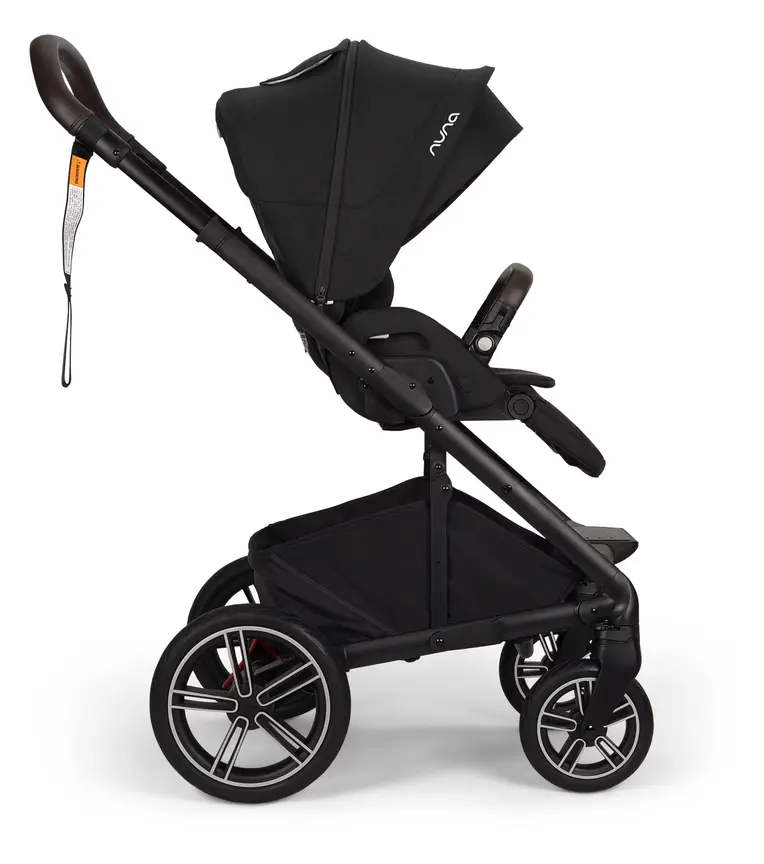


Nuna MIXX Next
A full-size pram with four ways to ride: capsule, bassinet, parent-facing seat or world-facing seat.
Read our full review →
Baby Jogger City Mini GT2
Long-running, lighter all-terrain stroller with a famously simple one-hand strap fold.
Frequently asked questions
Is spring suspension always better than frame flex?
No. All-wheel springs are better for deep gravel, tree roots, and rough park trails. Frame-flex elastomers are often better for city parents who walk on cobbles and cracked pavements but still need a light pram for stairs and small car boots.
Can a pram have both spring suspension and frame flex?
Yes. Many prams use coil springs at the back wheels and rubbery flex pads or shorter springs at the front. This mix keeps weight down while still softening bumps.
Do frame-flex elastomers wear out over time?
Yes, rubbery blocks can slowly harden, flatten, or crack after years of sun, rain, and heavy loads. If you buy a second-hand pram, check the joints for cracks and make sure the frame does not creak or sag.
Are air-filled tyres better than foam tyres for cobblestones?
Air-filled tyres give a slightly softer ride on cobblestones because the air inside absorbs tiny vibrations. Foam-filled tyres come close and never get a puncture. Hard plastic wheels are the worst choice for cobbles.
Should I lock the front wheels on gravel and cobblestones?
Lock the front wheels straight ahead on loose gravel, sand, and deep cobbles. This stops the wheels from twisting sideways when they hit a stone. Unlock them on smooth paths so you can steer around corners easily.
Do newborns really need pram suspension?
Yes, it helps a lot if you walk outdoors on uneven paths. Newborns have weak neck muscles, so a smoother ride keeps their head from bouncing around in the bassinet. Just remember that suspension never replaces safe sleep rules or a firm, flat bassinet base.
How do I care for spring suspension after muddy or sandy walks?
Brush off dry sand and dirt with a soft brush, or wipe the wheel housings with a damp cloth. Avoid spraying high-pressure water straight into wheel bearings. Let everything dry fully before folding the pram away.
Sources
- Product Safety Australia – Prams and strollers guide
- Product Safety Australia – Prams and strollers mandatory standard
- UK Office for Product Safety and Standards
- UK Government – Buy safe, be safe
- CPSC (US) – Safe sleep: cribs and infant products
- Health Canada – Recalls and safety alerts
- The Lullaby Trust (UK) – Sleeping products
- Red Nose Australia – What is a safe sleeping environment
Related guides
More Prams & Strollers →
How to Check a Used Pram: Frame, Brakes, Fold and Safety

How to Deep Clean a Muddy or Mouldy Stroller: Seat Fabrics, Wheels, Lubricant and Frame Care
Air-Filled vs Foam-Filled Pram and Stroller Tyres: Comfort, Punctures and How to Choose